Bluetick Coonhound
An athletic American scent hound whose voice, tracking interest, and outdoor needs deserve an honest plan before adoption.
How these guides are researched and reviewed
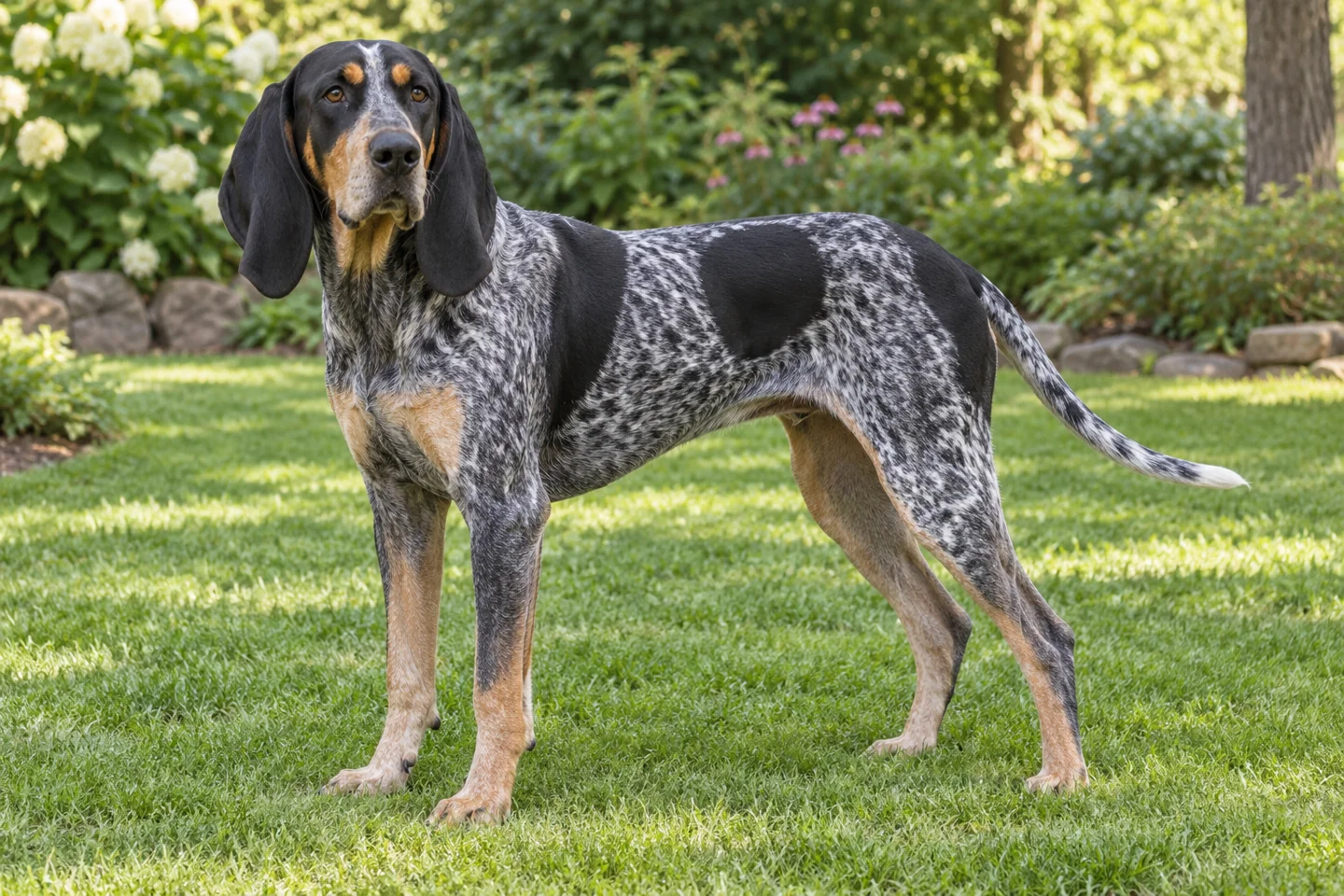
- Origin
- United States
- Coat
- Short dark ticking over white
- Care priorities
- Scent-led activity, baying, secure boundaries
General information for owners. These articles have not been reviewed by a veterinarian. Medical decisions need your dog's history and an examination.
A Bluetick Coonhound in everyday life
A Bluetick Coonhound needs a home that takes its nose, voice, and outdoor interests seriously. It may enjoy resting near familiar people, but that comfortable indoor picture leaves out the work of secure walking and managing excitement. Before adopting, consider where the dog will investigate safely, how neighbors might experience its calling, and who can provide care during an absence. A fenced property is useful only when the boundaries are sound and the household still supplies appropriate activity and companionship.
Speak with owners about weekdays rather than only hunting stories or favorite photographs. Ask how their dogs settle after an outing, whether they cope with being apart, and what happens when a cat runs nearby. An adult rescue may offer useful information from foster care, while a puppy's development remains uncertain. Choose the individual according to your real routines and available support. Enthusiasm for the breed should lead to careful preparation, including an honest decision about whether the setting can accommodate a hound's particular needs.
American scent-hound identity
The Bluetick is an American scent hound whose work centers on finding and following animal scent. It is distinct from the American English Coonhound and from other coonhound breeds, despite overlapping appearance and working history. Its familiar name refers to the mottled effect of dark ticking in the coat. A dog need not participate in hunting to retain a strong interest in trails. That interest can be directed into suitable activities, but a companion owner must still manage access to wildlife, livestock, and neighboring properties.
For an animal without reliable records, color and dropped ears cannot establish a precise pedigree. Ask how a rescue identification was reached and acknowledge an estimate as an estimate. Even documented ancestry does not reveal an individual's entire temperament or medical future. The more useful adoption information describes present behavior: response to handling, walking near other animals, resting indoors, and recovering after excitement. A working award demonstrates an achievement in its particular setting, rather than proving readiness for every household situation or every person who may need to handle the dog.
Ticking, ears, and a capable body
Dark ticking over a light background produces the coat's blue-looking effect, often alongside larger dark areas. Look past markings when assessing a dog. Clear skin, comfortable movement, and an ability to lie down and rise normally matter more than a dramatic color pattern. A lean athletic outline is different from unexplained weight loss, and added weight does not establish strength. Ask a veterinarian to help assess body condition if your impression is based mostly on photographs or comparisons with dogs from very different backgrounds.
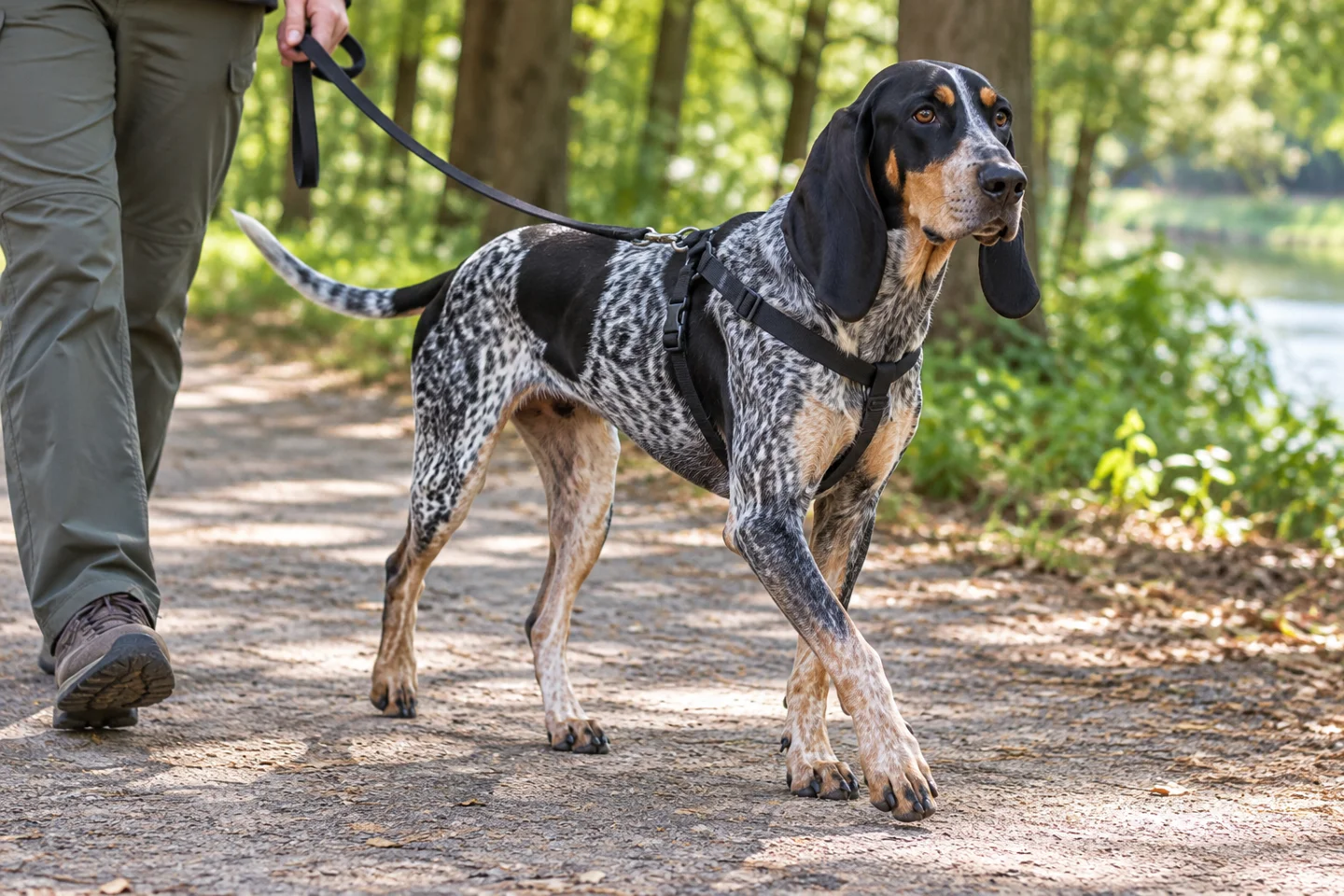
Fit collars and harnesses to the individual rather than selecting equipment by a generic breed size. Check clips and stitching before rural walks, especially if the dog has previously pulled strongly at scent. Its ears and coat should not become trapped under straps. Teach calm fitting in a quiet room first, then practice waiting while the outer door opens. A well-fitted lead arrangement gives the handler time to guide a turn. It cannot compensate for repeatedly placing a strong excited dog in situations where the person has no room to respond.
Scent-led walks without risky experiments
Plan routes that allow investigation within boundaries you can maintain. A woodland edge or quiet field margin can provide rich scent without requiring off-lead access. Keep the dog attached near roads, livestock, and places where a trail could lead beyond your control. Recall needs practice, but a promising response in a low-distraction area is not a reason to test it beside a dangerous attraction. Safe management lets training continue without making a single successful response responsible for preventing a serious accident.
A long line needs attention from the person holding it. Gather excess length before a corner, avoid tangling other walkers, and prevent an accelerating dog from hitting the end at speed. Let the animal sniff suitable places as part of the outing, using clear cues when it is time to move away. Scent games or structured classes can give the nose a job with an understandable beginning and finish. Choose instruction that supports humane handling and does not use contact with wildlife as an improvised test of ability.
Gates and the household's exit routine
Imagine someone taking rubbish through a gate while the dog discovers an interesting trail on the other side. A rule understood by only the primary owner will not prevent that escape. Arrange a clear handover: secure the hound first, open the gate second, then confirm it has latched before releasing access. Explain the routine to visitors and anyone providing maintenance. Check gaps, damaged wire, and objects near boundaries after storms or building work, rather than assuming the property remains as secure as it was last month.
Indoors, keep rubbish, medication, unsafe food, and swallowable objects inaccessible. Teach exchanges before the dog acquires something dangerous, and contact veterinary help if an ingestion may have occurred. Prepare for travel with secure restraint and enough room for comfortable rest. Verify boarding facilities in detail, including how staff move dogs between enclosures and what happens if one becomes excited at a neighboring animal. A general assurance that a place accepts hounds does not describe whether its actual routines suit this particular dog.
Voice and a realistic noise plan
Ask prospective breeders or carers to describe when the dog calls, how intense it becomes, and what helps it recover. Baying during an exciting event is different from repeated distress after someone leaves. Shared walls, close neighbors, and an open garden boundary may make the consequences substantial. Speak honestly about the setting before adopting. It is unfair to acquire a vocal individual on the assumption that a device or stern command will remove a normal part of its behavior whenever the household finds it inconvenient.
Manage avoidable triggers, such as prolonged access to a window overlooking passing dogs. Reward settling elsewhere and provide appropriate activity before a quieter period. For departure-related distress, observe what happens after you leave and seek qualified advice if the dog paces, calls persistently, or attempts escape. Extra running may leave a frightened dog physically tired without addressing the reason it cannot settle. Build absences at a manageable pace and arrange human support while learning, instead of waiting for complaints to reveal that the plan is not working.
Children and a resting hound
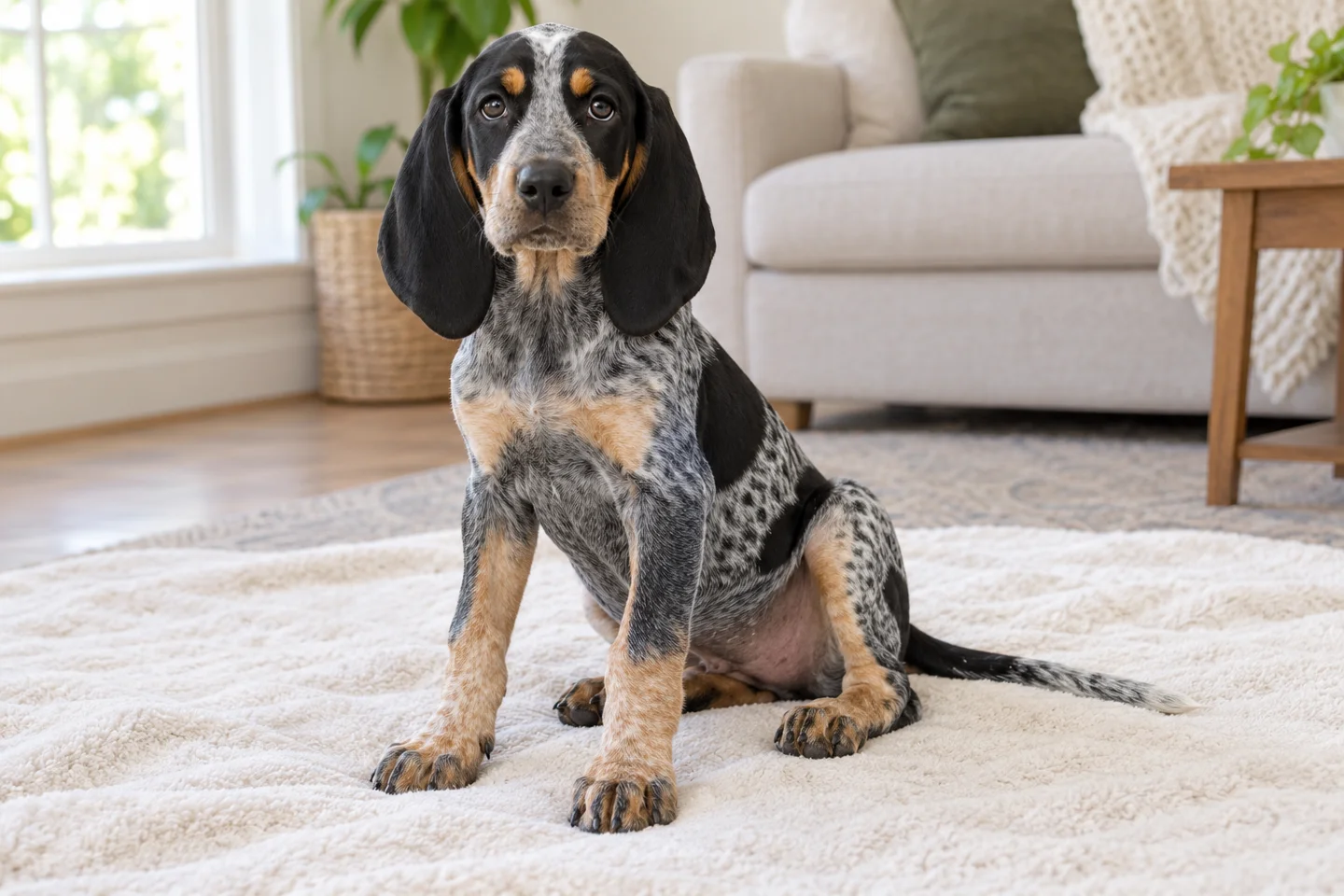
Provide a bed that children do not use as a play space. A Bluetick returning from an outing may need sleep rather than another game, even if the family is pleased to see it. Teach children to invite contact from a calm position and accept a refusal. Dropped ears are sensitive body parts, not handles. Prevent leaning over the dog, pulling its collar, or following it repeatedly when it moves away. Adults need to notice the interaction early enough to change it without a confrontation.
Separate the dog before fast games fill a narrow room or garden path. Friendly enthusiasm can still knock a child down, and dropped food can turn a busy gathering into a competition neither participant understands. Put meals and chews in a protected area. If a child wants to help on a walk, let it take an age-appropriate role while an adult retains control of the lead. Confidence with familiar family members does not establish comfort with every visiting child or with unexpected touching during rest.
Dogs, cats, and pursuit
Canine companionship should be assessed through the pair's actual interactions. Look for comfortable pauses and reciprocal choices rather than treating prolonged chasing as evidence of friendship. An athletic hound can overwhelm a smaller or less confident dog without intending a fight. Use separate meals and resting areas at home, and interrupt persistent following when the other dog cannot settle. A history of working beside hounds does not guarantee that a new individual will enjoy close contact in a confined domestic space.
Take particular care around cats and other small animals. A dog can behave quietly beside a resting resident cat and react differently when an unfamiliar animal runs across a path. Arrange secure barriers and routes that let cats avoid contact, and prevent opportunities to rehearse pursuit. Rabbits, poultry, and similar animals need reliable physical protection. When adopting, ask exactly what contact was observed, including whether the dog was restrained. A vague statement about being friendly cannot answer the safety question for a different animal in a different setting.
Aggression and the context of a warning
A tense response beside a food bowl calls for a different investigation from barking at a strange dog or snapping when a sore foot is touched. Write down the sequence and change access so nobody has to repeat it while help is arranged. A veterinarian can assess pain and illness, especially after a sudden change. Do not provoke another warning to find out how serious it is. The absence of a previous bite does not make the next close encounter a reasonable experiment.
Qualified reward-based advice can help with exchanges, handling, and gradual responses to unfamiliar animals. Avoid taking possessions repeatedly or cornering the hound to establish authority. Those actions create pressure rather than explaining a safe alternative. Respond to growling by creating room and reviewing the situation. When a basket muzzle is appropriate, teach comfortable wear through small rewarded steps before relying on it for a difficult task. Its role is additional protection within a plan, not permission to expose the dog to contact it is unable to tolerate.
Training around meaningful rewards
Use the dog's interests to make learning understandable. A brief look back toward the owner can earn access to an appropriate sniffing area, while food can reward moving onto a mat or coming through a gate. Begin where the task is easy enough to succeed and keep safety equipment in place. A dog absorbed in scent may not be ignoring a command out of defiance; the cue may not have been learned under that level of distraction. Reduce the challenge and build from there.
Include skills a companion hound needs between walks. Teach waiting while a towel is placed down, standing for a paw inspection, and moving away from the kitchen work surface. Keep cues consistent across carers so the dog does not receive conflicting requests. End sessions while both participants can remain patient. If frustration keeps rising, an instructor can observe timing, task difficulty, and handling. A useful lesson should leave the owner with a clearer plan, rather than simply a stronger correction to apply when the same difficulty appears again.
Exercise on useful terrain
A Bluetick needs regular opportunities for movement and investigation, with the amount matched to its condition. Build fitness before expecting a long rough-country outing. Hills, slippery surfaces, and thick vegetation alter the workload even when a map shows a short distance. Puppies should have age-appropriate exploration and ample rest, and strenuous repetitive work deserves discussion with the veterinarian. A history of hard-working ancestors says little about what an unconditioned individual can comfortably do this weekend.
Examine feet after unfamiliar ground and notice whether the dog rises stiffly later. Persistent limping or a change in endurance needs assessment instead of another outing intended to loosen it up. Adjust for heat with suitable timing, shade, and drinking water. Severe weakness, collapse, or breathing difficulty calls for urgent veterinary guidance. Activity should also include calm periods at home. A dog does not need to be pushed to exhaustion every day in order to earn rest, and quiet training or simple searches can provide variety when medically appropriate.
Grooming and ear care
The short coat makes grooming less elaborate than in a long-coated breed, but it does not remove the need for inspection. Brush gently, look beneath equipment, and check areas where vegetation has caught during a walk. Wipe or bathe when appropriate and dry the dog comfortably. Teach the hound to stand for small amounts of care before a muddy day makes a longer session necessary. A sudden dislike of touching a particular area deserves investigation rather than a tighter hold.
Dropped ears need regular observation for changes such as odor, redness, discharge, or repeated head shaking. Ask a veterinarian which cleaning approach suits the individual and avoid inserting objects deeply into the canal. Medication from an earlier episode may be inappropriate for a new problem. Include nails and teeth in the care routine through brief cooperative practice. If the dog cannot tolerate an essential task, discuss support with a professional before repeated struggles make the next appointment harder. Necessary treatment should not be delayed while an owner tries to solve painful handling alone.
Health evidence and actual records
The AKC's published hound-group list currently gives no recommended national breed-club health tests for the Bluetick Coonhound. That is a statement about the published list, not evidence that the breed has no inherited or acquired illness. Ask a breeder what evaluations its own program uses, why they were selected, and whether results can be supplied for identifiable dogs. A well-exercised appearance or working performance cannot answer every medical question about parents or puppies.
Discuss relevant family history and any concerns with your veterinarian, who can help decide which examinations are appropriate to the individual. Keep results in their original form rather than reducing them to a reassuring slogan. After adoption, establish prevention and follow-up suitable to the dog's location and activities, including outdoor parasite exposure. Learn the signs that require emergency attention and keep a transport plan available. Current illness deserves an examination even when relatives reportedly lived long lives; family anecdotes cannot diagnose a new limp, skin problem, or loss of appetite.
Feeding, mixes, and long-term planning
Provide complete food suited to age and health, measuring portions against body condition and the actual workload. Include rewards used during training. A busy weekend does not necessarily justify increasing every meal throughout the week, and appetite alone cannot show whether the amount is appropriate. Ask for veterinary help when weight, thirst, digestion, or appetite changes persist. Avoid adding supplements simply because the dog is active. Feeding decisions should reflect the diet already provided and an identified need rather than a promise of extra performance.
A Bluetick mix may vary in size, calling, coat pattern, and interest in scent. A mottled coat cannot reveal the other parent's contribution or establish exact ancestry. Assess the individual and ask which background details are genuinely documented. Budget for secure facilities, instruction, veterinary care, equipment, and capable backup handling. As the dog ages, maintain suitable exploration while modifying surfaces, distances, and access to beds or vehicles. New sensitivity or reluctance to move should prompt clinical discussion, even when it develops gradually in an otherwise familiar routine.
A considerate dogsDating introduction
Describe your dog's social style on dogsDating in practical terms: whether it enjoys chase games, walks calmly alongside another dog, or needs more room initially. Choose an uncrowded public meeting point with separate handlers and an easy way to create distance. Begin with a walking arrangement that allows both animals to investigate without converging face-to-face. A scent-focused dog may pause often, so agree on pace rather than letting one handler pull ahead while the other is trapped in an unwanted close greeting.
Keep exact home coordinates private and share only an approximate area for finding an outing. Leave valued toys out of the first session and do not force a greeting to justify the trip. If either animal remains tense, blocks the other, or cannot return to ordinary sniffing after a pause, add space or finish. Compare observations honestly afterward. A successful match can be a peaceful walk rather than physical play, and one comfortable meeting does not establish readiness for shared food, close vehicle travel, or unsupervised access in either home.
Sources and editorial notes
Sources checked October 21, 2026. Breed measurements describe reference ranges, not a diagnosis or an individual dog's ideal weight. Images are AI-generated breed illustrations and do not document a particular dog or health condition.
- AVSAB: Humane Dog Training Position Statement
- VCA Animal Hospitals: Food aggression in puppies
- VCA Animal Hospitals: Aggression toward unfamiliar dogs, diagnosis
- VCA Animal Hospitals: Ear infections in dogs
- VCA Animal Hospitals: Common emergencies in dogs
- VCA Animal Hospitals: Heat stroke in dogs
- Orthopedic Foundation for Animals: CHIC program and interpretation of numbers
- VCA Animal Hospitals: Hypoallergenic dog breeds
- American Kennel Club: Bluetick Coonhound breed identity and care
- American Kennel Club: Breed-club health testing recommendations
- VCA Animal Hospitals: Grooming and coat care for your dog
- VCA Animal Hospitals: Feeding guidelines for dogs
- Washington State University: Gastric dilation and volvulus and bloat in dogs
- United Kennel Club: Bluetick Coonhound breed standard and history
Keep getting to know dogs.
Read another guide or return to your dogsDating community.
Explore breed guidesBack to dogsDating