Bosnian Coarse-haired Hound
The Bosnian Barak is a rough-coated scent hound whose home needs controlled scent exploration, suitable company, and honest discussion of limited breed health data.
How these guides are researched and reviewed
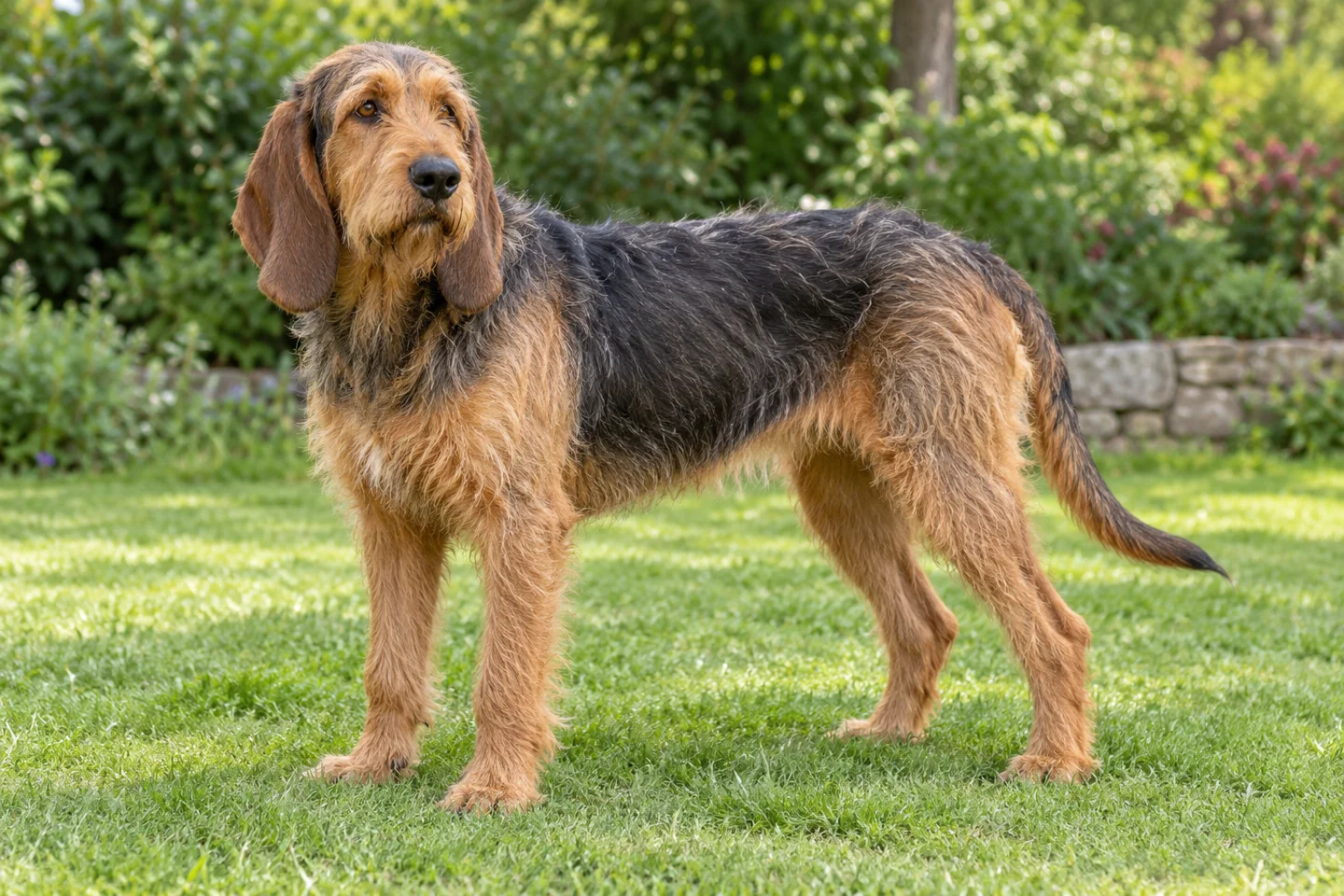
- Origin
- Bosnia and Herzegovina
- Coat
- Long, rough, shaggy coat
- Care priorities
- Scent work, boundaries, and voice
General information for owners. These articles have not been reviewed by a veterinarian. Medical decisions need your dog's history and an examination.
A Barak home starts with secure scent exploration
A Bosnian Coarse-haired Hound needs a home that treats following scent as a daily management question. Before choosing one, think about where a lead remains attached, how a gate is secured, and what happens when the dog finds something fascinating on the far side of a hedge. The shaggy face can look informal and easygoing in a photograph. It does not tell you whether the individual settles indoors, copes with long absences, or returns when an interesting trail continues beyond the property.
Talk to people who know the actual dog and ask for ordinary examples. How does it behave after a walk, during a delivery, or when another animal passes? What has required training or physical separation? A puppy leaves many of these answers uncertain, while a careful adult foster assessment may provide a clearer picture. Arrange suitable help before placement, especially if the breed is uncommon locally. An owner should have access to veterinary care and competent behavior support even when there are few nearby Baraks to compare.
Bosnian identity and the Barak name
The FCI recognizes the breed under a name commonly translated as Bosnian Broken-haired Hound, called Barak. Bosnian Coarse-haired Hound is another English rendering used for the same breed in this catalog. The standard identifies Bosnia and Herzegovina as the origin and explains that the breed was previously registered as the Illyrian Hound before the name changed. These labels need to be distinguished from unrelated rough-coated hounds, rather than treated as evidence that every similarly shaggy dog has the same ancestry.
Its established role is scent-hound work, including persistence and an audible voice while working. Those descriptions explain useful questions about motivation and noise in a modern home. They do not guarantee that a puppy is trained to hunt or suited to every household. Ask which organization issued any pedigree and whether the family can be identified. If a rescue's ancestry is an estimate, retain that qualification. Medical care and safe handling should follow the dog's present needs while identity questions remain unresolved.
A shaggy coat over a sturdy body
The FCI standard describes a robust, medium-sized hound with a long, rough, shaggy coat, prominent eyebrows, and facial hair. Red-yellow and earth-gray tones form part of the described coloration, with permitted white markings. Dropped ears and a natural tail contribute to the outline. An extremely untidy appearance should not be used as proof of authenticity. Check whether the dog is clean at skin level, able to move easily, and free of tight tangles that pull when a leg or ear moves.
Use hands-on body-condition checks because hair can conceal loss of muscle or excess weight. Ask a veterinarian to show you what to feel at the ribs and waist. A photograph taken in thick winter coat may make comparison with a recently groomed dog unreliable. During a placement visit, watch ordinary movement and ask about any hesitation. A dog that enthusiastically investigates the room may still have pain when climbing, standing for care, or recovering from a longer outing.
A scent trail should not become an escape route
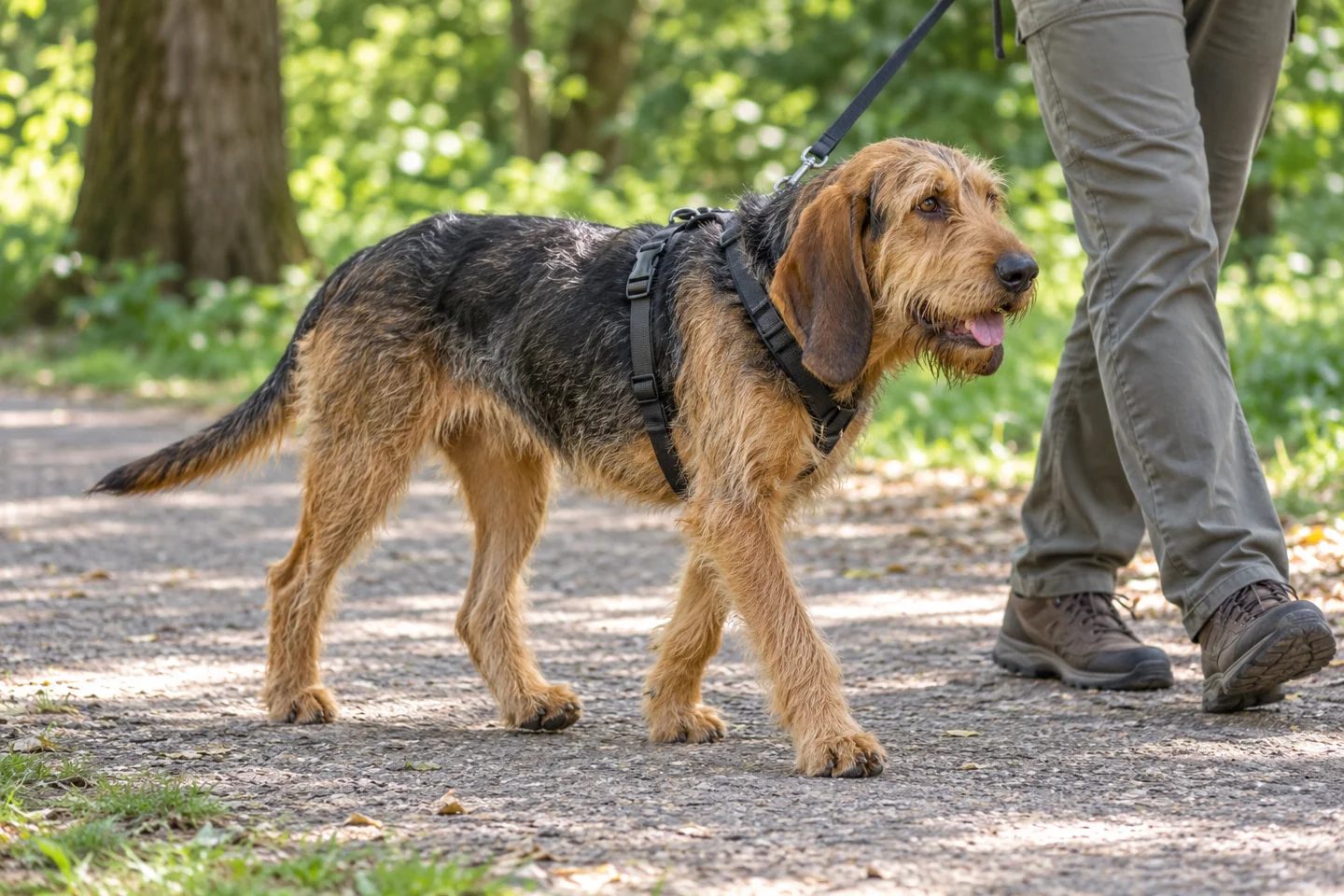
A hound can continue investigating while the handler is still deciding whether a smell matters. Make lead attachment a routine before an exterior door or vehicle opens. Practice in calm conditions so the sequence does not depend on catching the dog at the last moment. Use equipment checked for fit and wear, and teach voluntary cooperation with putting it on. If the dog is likely to pull backward when startled, have an experienced professional assess how securely the equipment contains it.
Treat recall as a trained skill with physical safeguards appropriate to the setting. Start where the dog can succeed, pay generously, and practice returning without always ending the activity. Keep the lead where a road, livestock, or inaccessible terrain would make pursuit dangerous. Extra line length needs careful handling and space; it is not automatically safe beside obstacles or other animals. Protect both the dog's body and the handler from the sudden force of a fast run ending at full extension.
Gates, gardens, and countryside access
Inspect an enclosure before relying on it. Look beneath gates, beside drainage channels, and behind vegetation, where gaps may be hidden from someone standing at the house. Supervise initial garden time and check again after storms or repairs. Keep a safe area for deliveries so a person cannot inadvertently release the dog while carrying a parcel. Identification and current contact details matter, while prevention still depends on a boundary that is maintained and a routine everyone in the household understands.
Choose walking routes with enough space to step aside and manage distractions. Respect local access rules and keep the dog away from livestock and wildlife. A hound's interest does not justify frightening an animal or crossing land without permission. After a difficult encounter, plan an easier route for training rather than repeatedly rehearsing the same loss of control. If escape attempts seem frantic or occur mainly during absences, investigate distress and unmet needs. A higher fence alone cannot explain why the dog is trying so hard to leave.
Voice, neighbors, and quiet hours
The breed standard describes a sonorous working voice. That makes questions about vocal behavior worth asking before choosing a home with thin walls or close neighbors. Find out when the individual calls: during excitement, at the boundary, when separated, or in response to other dogs. These contexts may need different arrangements. A recording of time alone can be more informative than assuming the dog sleeps because the house is undamaged when you return.
Prevent prolonged periods of rehearsing a response at the window or fence. Provide a comfortable resting area away from the busiest view, suitable company, and an activity plan that includes recovery. Teach a calm alternative before expecting silence during an exciting event. Do not assume a second dog will fix calling that occurs when people leave. If the dog is distressed, arrange care and seek qualified help. Discuss practical noise expectations honestly with carers and neighbors rather than promising that a hound will never be heard.
Children and a resting hound
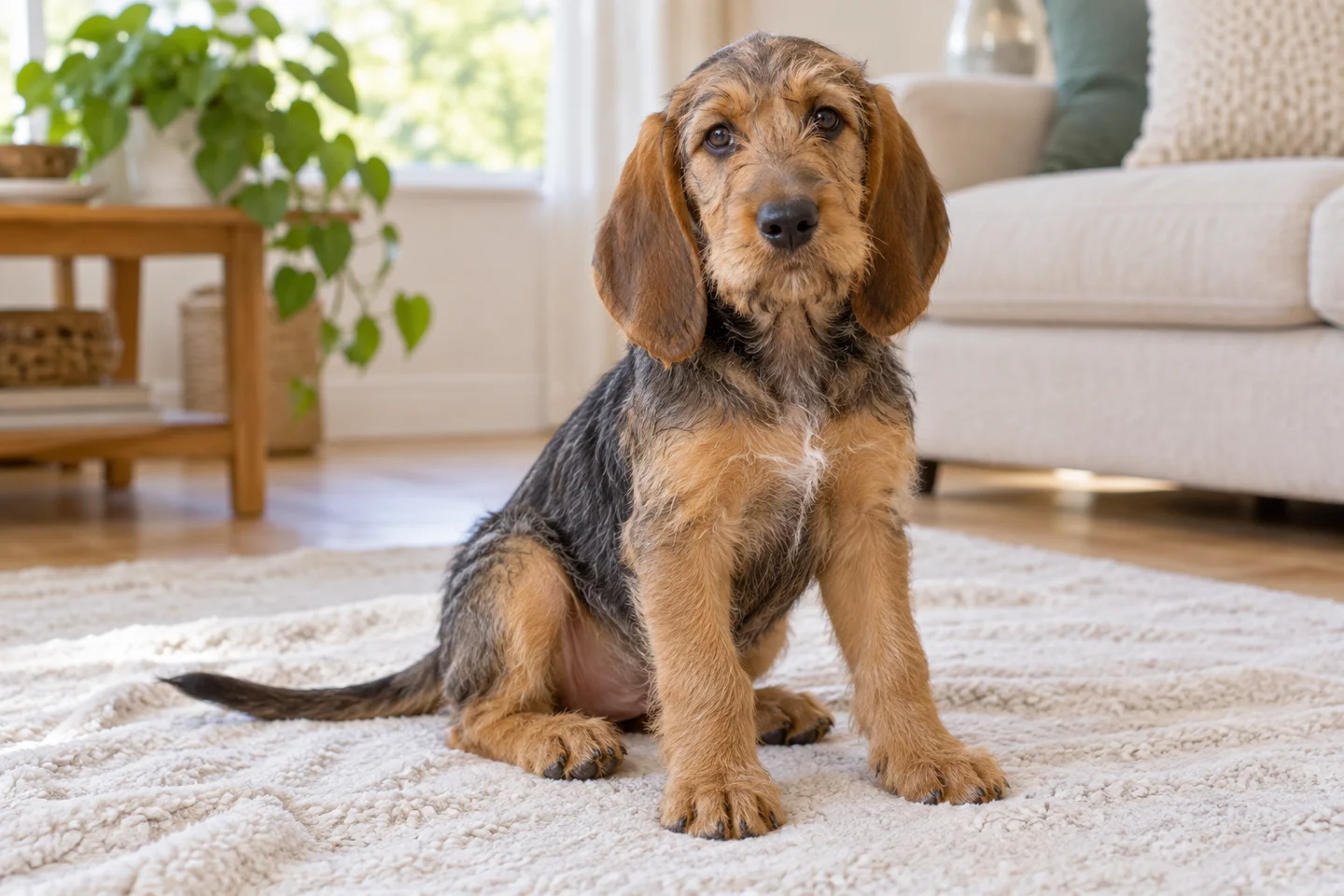
A Barak may look inviting when its beard and eyebrows frame a relaxed face, but children still need to learn what interaction the dog welcomes. Adults should prevent tight hugs, ear pulling, and following the dog when it leaves. Arrange a resting area outside busy routes and keep it private. A child should be able to move around the home without squeezing past a sleeping dog or handling something beside its mouth. Household layout can prevent conflict before anyone needs to correct behavior.
Plan visits from children as carefully as daily contact. Unfamiliar noise, fast games, and several people reaching at once may be very different from the dog's usual environment. Separate the dog before supervision becomes impractical. Children can take part in a gentle search game with adult direction, while adults handle food, chews, leads, and difficult exchanges. Judge the present interaction rather than a general claim that the breed likes families. Pain, tiredness, and a changed setting can affect a previously comfortable dog.
Dogs, cats, and small animals
A hound's experience around other dogs is useful to know, but ask what companionship actually involved. Walking together, sharing a room, and competing around a valued object are different situations. Introduce one suitable dog at a time with room for each to move away. Keep resources separate initially and observe rest as well as play. Persistent pursuit or body-blocking deserves interruption when the recipient is trying to disengage. The dog showing the most enthusiasm should not decide how long the other must participate.
For cats, build secure separation and escape routes before the dog arrives. Prevent chasing and watch responses to movement, not only quiet proximity. Birds, rabbits, and rodents need dependable protection rather than an optimistic introduction based on the dog's affection for people. If the home cannot maintain barriers through ordinary daily activity, reconsider the placement. A statement that a dog has lived on a farm does not answer whether it was safely loose around poultry, kept in a kennel, or managed separately from vulnerable animals.
Aggression and a useful response to discomfort
Consider what happens when someone reaches to remove a thorn from a sore foot. A dog that withdraws or growls needs the pressure reduced and an assessment of the problem, rather than a stronger grip to finish at any cost. Similar attention is needed around food, resting places, or frightening dog encounters. Keep people safe through space and barriers while you obtain help. A professional needs an accurate account of the sequence, including any bite, to plan appropriate handling.
AVSAB recommends reward-based training. Punishing a warning may make that signal less obvious while leaving the fear or pain in place. Seek veterinary attention for a sudden change in tolerance, especially when touch, eating, or movement seems involved. Repeated threats call for a qualified behavior professional and immediate management of risky situations. Do not invite someone to provoke the dog so you can decide whether the warning was serious. The objective is fewer unsafe encounters and better understanding, rather than a contest over who controls the moment.
Training while the nose is busy
Set a lesson at a level where the Barak can still notice you. A quiet patch of ground may be a better starting place than the edge of a recently used animal trail. Reward a check-in, a hand target, or a short turn toward the handler, then allow safe investigation again. This makes cooperation part of exploration. If the dog remains absorbed and cannot respond, increase distance or choose an easier setting instead of repeatedly calling over the same compelling distraction.
Build practical routines around doors, the vehicle, and examination. Reward standing briefly while the harness is adjusted and teach moving to a mat while people enter. A good exchange for an ordinary object can prevent unnecessary grabbing later. Keep sessions short enough for clear progress and allow time to rest. Choose an instructor who can explain humane methods for the actual problem rather than assuming every hound needs harsher treatment. Persistence in scent work is a reason to plan effective rewards and management, not to abandon careful teaching.
Exercise, terrain, and recovery
Give the Barak regular movement and opportunities to investigate suitable ground at a manageable pace. A secure garden supports the routine but does not tell you whether the dog receives meaningful activity or mostly waits by a fence. Build longer walks gradually and consider the individual dog's age, health, and previous conditioning. Scent games can provide an outlet at home, particularly when weather or an owner's temporary limitations prevent a longer outing. Physical and mental activity should still leave room for genuine sleep.
Check the dog after rough countryside, looking at paws, movement, and any area repeatedly licked. Do not dig into a painful wound or assume a limp will disappear because the dog remains interested in smells. Repeated stiffness, reluctance to rise, or unusual fatigue needs veterinary advice. Heat and difficult terrain can change a familiar route's demands substantially. Bring water, choose stopping points, and be willing to turn back. A hound's enthusiasm is not a medical assessment of whether continuing is safe.
Grooming a rough coat without hiding skin problems
Part the hair and work through manageable areas rather than brushing only the visible surface. Check behind ears, under equipment, and around the beard and feet for trapped vegetation and tangles. A coat can look appropriately shaggy while still containing mats that pull on skin. Ask a groomer how to maintain the particular texture and remove debris comfortably. If hair is tightly matted, get professional help instead of cutting blindly with scissors close to the body.
Dry wet areas gently and investigate a persistent smell rather than covering it. Ears that are painful, red, discharging, or repeatedly scratched need veterinary assessment. Avoid probing the canal or applying a leftover medicine based on a guessed diagnosis. Prepare for toothbrushing, nail care, and foot checks through brief rewarded practice. A new objection to touch may reveal discomfort. Let the veterinary or grooming team know about sensitive areas before an appointment so necessary care can be planned without an avoidable struggle.
Health evidence and questions that remain open
Breed-wide medical information for the Barak is limited compared with that available for many more numerous breeds. The FCI standard establishes identity and appearance, not disease prevalence or a complete screening program. It would be misleading to supply a confident list of diseases that every Barak will develop or declare the breed free of inherited illness. Ask the national breed organization and a veterinarian about current priorities for the relevant population and family, and record where reliable information is still missing.
A breeder should be able to discuss significant diagnoses, mobility problems, vision changes, and unexplained early deaths among relatives without replacing records with a claim of natural hardiness. Ask what evidence supports any screening statement and whether owners' later reports are collected. For a rescue with no family information, establish a preventive plan from a current examination and available history. Unknown ancestry and missing records do not prevent good care, but they should not be presented as if a complete health assessment had already been documented.
Food, mixes, and lifetime costs
Use a complete diet appropriate to the dog's stage of life, and adjust portions with attention to weight and body condition. Include rewards used for training and searching. A dog active on a demanding weekend may still spend much of the week resting, so feed according to the real routine. Persistent changes in appetite, thirst, stool, or swallowing deserve veterinary discussion. Store food and refuse securely; a hound following an interesting smell can encounter unsafe packaging or discarded material as readily as a suitable treat.
A Barak mix may vary in coat, voice, size, and interest in scent. A scruffy appearance alone does not confirm its ancestry, and a crossbreed label cannot guarantee reduced health risk or easy training. Plan for the actual dog, including grooming, preventive care, emergency savings or insurance, and competent cover when you travel. Check whether carers can maintain lead and boundary precautions. With age, preserve comfortable exploration while adapting distance, surfaces, and access to the dog's changing physical condition.
Meeting another dog through dogsDating
Describe the Barak's observed walking pace, play preferences, response to unfamiliar dogs, and lead requirements in its dogsDating profile. Keep exact home coordinates private. Select a quiet public meeting place where both handlers can increase distance without being trapped on a narrow path. Avoid first meetings beside livestock, busy water access, or an exciting trail that makes attention difficult. Agree that a brief walk is enough and that either person can finish when a dog needs more space.
Let the pair move in parallel before considering closer contact. Watch for easy posture and voluntary pauses, and keep shared toys or food out until resource behavior is understood. If one dog becomes stiff or keeps pursuing after the other tries to leave, separate calmly. A pleasant short encounter describes compatibility in that setting, while shared housing and close resource access remain separate questions. Future meetings should follow what both dogs show over time, with owners responsible for safe boundaries and honest communication.
Sources and editorial notes
Sources checked October 21, 2026. Breed measurements describe reference ranges, not a diagnosis or an individual dog's ideal weight. Images are AI-generated breed illustrations and do not document a particular dog or health condition.
- VCA: Ear Infections in Dogs
- VCA: Food Aggression in Puppies
- AVSAB: Humane Dog Training Position Statement
- Orthopedic Foundation for Animals: Diseases
- VCA: Feeding Guidelines for Dogs
- FCI: Bosnian Coarse-haired Hound Breed Standard
- Orthopedic Foundation for Animals: Canine Health Assessments
- VCA: Grooming and Coat Care for Your Dog
Keep getting to know dogs.
Read another guide or return to your dogsDating community.
Explore breed guidesBack to dogsDating