Caucasian Shepherd Dog
A powerful guardian that needs secure boundaries, capable everyday handling, and a realistic plan for visitors and veterinary care.
How these guides are researched and reviewed
- Origin
- Caucasus and southern Russian regions; FCI origin USSR, patronage Russia
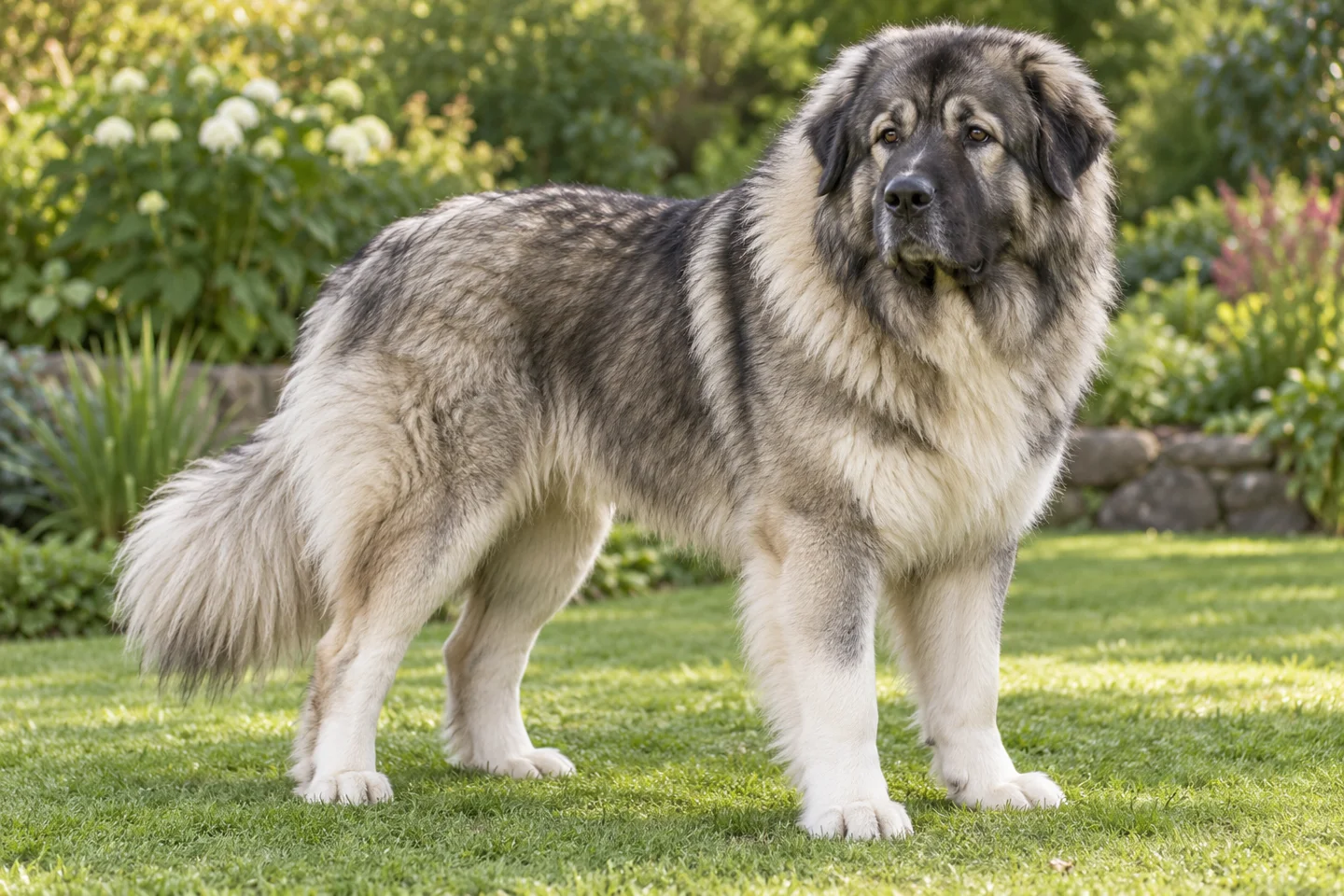
- Appearance illustrated
- Grey, cream and white long coat, natural hanging ears and full tail
- Adult size reference
- FCI desirable height: males 72–75 cm, females 67–70 cm; minimum weights 50 kg and 45 kg respectively
General information for owners. These articles have not been reviewed by a veterinarian. Medical decisions need your dog's history and an examination.
Plan the entrances before choosing the dog
The practical demands of a Caucasian Shepherd Dog begin at the front door. Think through a delivery, a plumber entering with equipment, a relative arriving unexpectedly, and a gate left open by a visitor. A household considering this powerful guardian needs arrangements that work during those ordinary events. Good intentions and a large garden cannot replace secure barriers, capable handling, and a clear routine for admitting people.
Start by mapping the spaces where the dog will eat, sleep, and wait when visitors arrive. Each person responsible for care must be able to use that arrangement confidently. Include someone who can take over if the usual handler becomes ill. An adult of this size cannot safely depend on one person's ability to hold a lead in a difficult moment. Meet established adult dogs through a responsible source, ask to hear about inconvenient days as well as easy ones, and discuss your actual property. The right match requires honest evidence about both the dog and the home.
A guardian from a broad historical region
The FCI standard records the breed's origin as the USSR and its patronage as Russia. It describes historical guarding dogs across the Caucasian range and southern Russian steppe regions, with organized Soviet selection beginning in the 1920s. A single modern national label cannot explain that entire regional background. The breed name also should not be used as a catchall for every large livestock guardian from the area.
For a prospective owner, the relevant working context is guarding flocks and dwellings. That history helps explain why strangers, boundaries, and decisions made away from close human direction deserve attention. It does not prove how an individual will behave. Ask how parents and close relatives respond when a familiar person brings an unfamiliar guest home. Find out whether the puppy has experienced ordinary domestic handling or whether an adult has lived mainly in a working setting. A seller who substitutes dramatic ancestral stories for these observations has left the most useful questions unanswered. Written history, current experience, and future management each serve different purposes.
Adult dimensions and the illustrated appearance
The FCI describes desirable male height as 72 to 75 centimeters, with a minimum of 68, and desirable female height as 67 to 70, with a minimum of 64. Its minimum weights are 50 kilograms for males and 45 for females. These are standard references, not instructions to add food until an individual reaches a particular number.
The illustrations show a substantial grey, cream, and white dog with a longer coat, natural hanging ears, and a full tail. The standard gives natural ears equal value and describes the pronounced mane that longer-coated males can have. Beneath the hair is a powerful, slightly rectangular body. Evaluate a real dog's comfortable movement and body condition rather than selecting for the greatest bulk. Measure the car opening, sleeping space, and equipment against the adult you may eventually handle. A youngster that can be lifted today may soon require a ramp, trained loading, and two people working safely together during an injury. Planning for that change is part of responsible ownership.
Housing that allows visitors and maintenance work
A secure property needs more than a perimeter fence. Create a second barrier where a door or gate regularly opens, and decide how the dog will be separated before anyone enters. Check catches and hinges as part of the routine. Equipment that worked for a smaller previous dog may not withstand pressure from this one. Ask a suitable professional to assess weak points before the dog rehearses pushing through them.
Give visitors clear instructions while the dog is already secured elsewhere. They should never need to squeeze past it or reach through a barrier to demonstrate confidence. Think about meter readers, gardeners, emergency access, and building repairs. A comfortable indoor resting area or appropriately sheltered secure space must meet the dog's welfare needs during separation. Leaving a dog to bark along the fence while people work nearby can make the task harder for everyone. Rehearse the arrival procedure on quiet days, rewarding the dog for moving to its designated place before the doorbell becomes urgent. House rules work best when every resident follows the same sequence.
Training for a dog you cannot move by force
Teach voluntary movement while the dog is small enough for mistakes to remain manageable. Following a target, stepping onto a mat, entering a vehicle, and turning away from a distraction are useful foundations. Reward each action generously and practice in several quiet places. The goal is a dog that understands a request and has a strong history of cooperating with it.
Large size makes confrontational handling especially hazardous. Avoid dragging the dog from furniture, physically wrestling over objects, or testing whether it will submit. Arrange the environment so the desired choice is easy, then teach that choice. A trade using a safe alternative can be practiced with low-value items before a stolen object creates an emergency. Ask a qualified reward based trainer for help early if household handling becomes difficult. Training also includes a handler learning to recognize when a request is too demanding for the setting. Move farther away, simplify the task, or leave. Repeated success under manageable conditions is more useful than asking for obedience beside something the dog cannot yet tolerate.
Socialization includes remaining separate
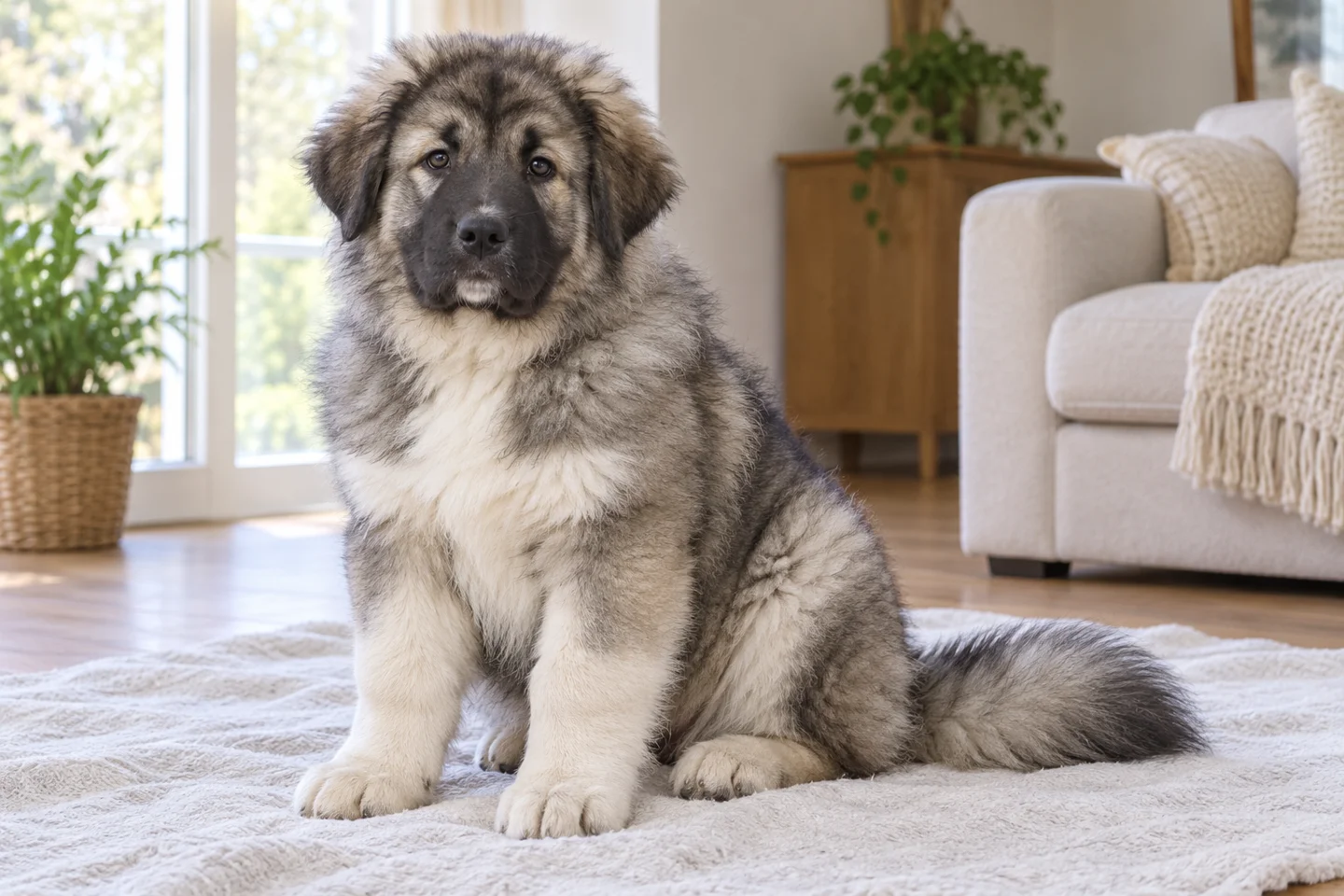
A well-planned early experience can end with the dog calmly observing an unfamiliar person from a distance. There is no requirement for that person to stroke it. Begin where the dog can watch without leaning forward, repeatedly barking, or becoming unable to take part in a familiar task. Let it retreat and keep sessions short. Discuss safe puppy outings and local infection precautions with the veterinarian.
Practice the household situations the dog will actually encounter. A person wearing work boots can walk past a barrier, sit down, and leave while the dog receives quiet reinforcement elsewhere. A carer can learn the feeding procedure without attempting immediate close contact. Increase familiarity gradually across visits. Do not invite a crowd to prove that early socialization is complete. Young dogs change as they mature, and a previously tolerated situation may need a new arrangement. Keep notes about visitor responses, recovery time, and the distance that works. The evidence helps the household decide whether to continue careful practice or seek professional guidance before difficulty grows.
Aggression requires immediate management and honest records
A threatening display at a boundary, a snap during grooming, and a bite when a person enters a room are different events. Record what happened without reducing it to loyalty or stubbornness. Note the people present, available escape routes, relevant objects, and any signs of pain. Prevent further access to the trigger while arranging assessment. No visitor should be asked to repeat an unsafe interaction as an experiment.
A veterinarian can investigate medical contributors, and an appropriately qualified behavior professional can help assess risk and design management. Tell them about every bite or near miss, including incidents that seemed understandable at the time. Punishing warning behavior or using a painful correction can escalate conflict. If a professional recommends a basket muzzle, teach comfortable voluntary wearing and make sure its design allows appropriate panting and rewards. A muzzle adds one precaution; it cannot make an unsuitable meeting safe by itself. Long-term separation from some people or situations may be necessary. The household must be able to maintain the agreed plan consistently, including during illness, travel, and unexpected visitors.
Children and household guests need adult protection
Children cannot be expected to interpret the behavior of a giant guardian reliably. Their friends may arrive noisily, open a garden gate, or run toward a familiar adult. Arrange physical separation before play begins, with an adult responsible for checking both the dog and the barrier. A dog that rests calmly beside a resident child has not thereby demonstrated comfort with every visiting child.
For quiet supervised contact, keep the setting simple and give the dog space to leave. Children should avoid climbing on it, leaning over its head, approaching its food, or waking it on a bed. Adults should retrieve toys and manage handling. Even a relaxed dog can cause injury through an accidental collision, so size matters independently of aggression. If a child becomes frightened, end the interaction calmly and review the arrangement. Families also need to consider what happens when supervision is interrupted by a phone call or an urgent household task. A reliable separate area makes those interruptions manageable. Affection within the family does not remove the need for clear physical safeguards.
Other dogs, cats, and livestock have separate needs
Ask for detailed observations about the particular dog's previous animal relationships. Sharing a space with one familiar dog does not establish compatibility with unfamiliar dogs at a park. When a meeting is appropriate, use an open area with separate handlers and enough distance for both dogs to disengage. Begin by moving in the same direction. Do not create pressure by holding them face to face at a gate.
Prepare separate meals, rest areas, and resources at home, and supervise changes to those arrangements. A second large dog increases the handling demands if a disagreement develops. Cats require protected routes and areas the dog cannot enter. Small livestock or poultry should not be introduced by turning the dog loose and waiting to see what happens. Successful working placement depends on the individual, its prior experience, appropriate supervision, and the animals involved. Ask an experienced livestock guardian adviser to assess that setting. A domestic pet's guarding ancestry cannot substitute for careful preparation on a farm, and a farm placement cannot substitute for a secure plan around visiting people.
Exercise for comfortable movement and recovery
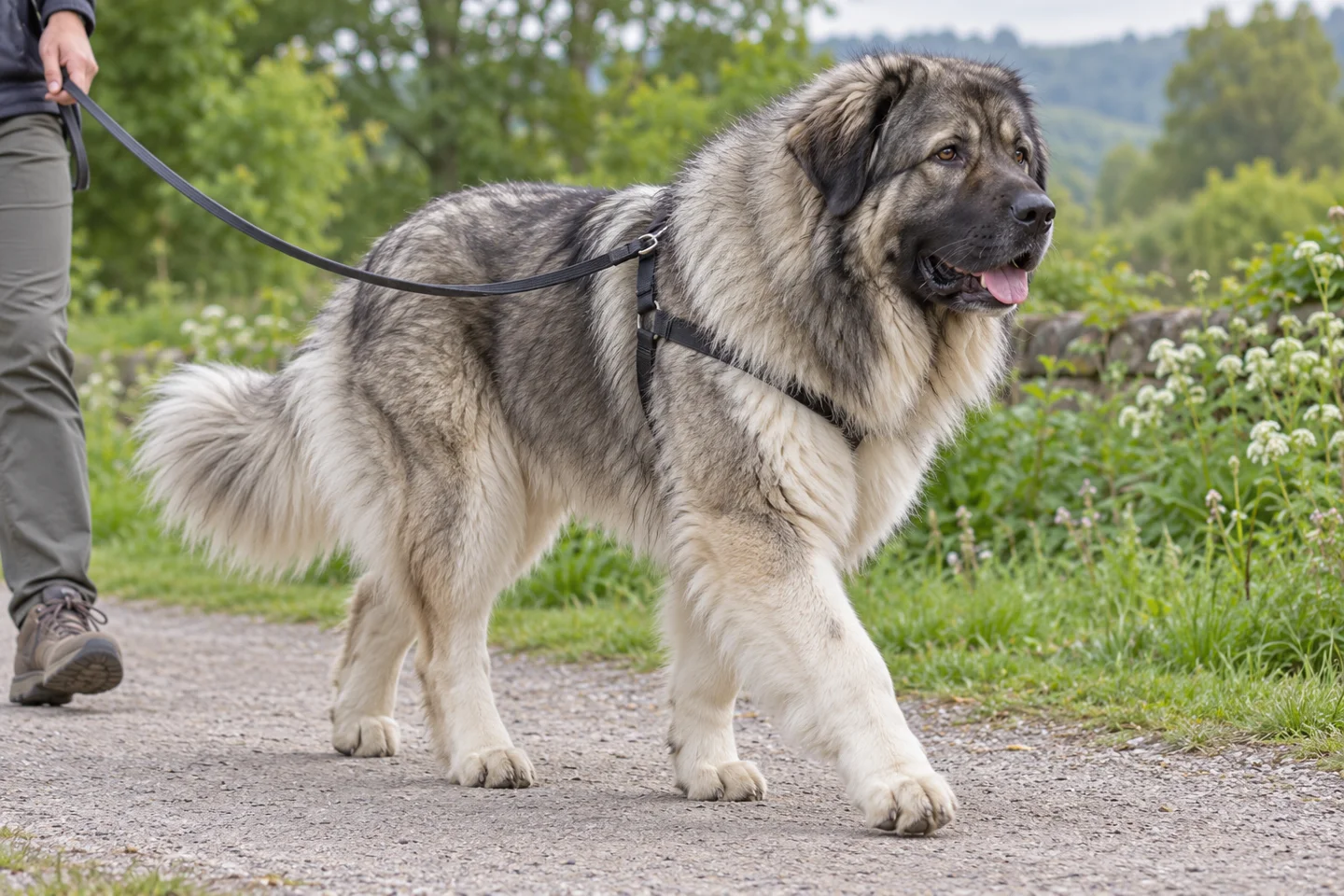
Provide regular opportunities to walk, investigate smells, and move freely within a safe enclosure. Match the amount and terrain to the dog's current condition. A young giant dog needs a sensible progression rather than being made to keep pace on long runs. Ask your veterinarian how growth, weight, joint comfort, and previous injuries affect the activities you are considering. Start new work gradually and watch the following day's movement as well as the dog's enthusiasm during the outing.
A quiet walk can still be demanding when it includes steep ground, traffic, or unfamiliar dogs. Choose routes with room to move away and avoid narrow busy passages. Weather needs active consideration beneath a dense coat. Arrange shade, water, and a cooler time of day, and shorten activity when conditions change. Heat illness can require emergency care; unusual weakness, confusion, collapse, or breathing difficulty needs urgent veterinary advice. After an outing, give the dog an undisturbed resting area. Repeatedly provoking fence-running or encouraging confrontation does not provide appropriate exercise or prepare a dog for ordinary life.
Grooming a large dog without a struggle
Coat maintenance needs enough time and a safe working arrangement. Begin with a nonslip surface where the dog can stand comfortably, then teach brief brushing sessions that stop before it becomes distressed. A professional groomer can demonstrate how to work through sections of dense hair and reach the undercoat without scraping the skin. Schedule help before a coat becomes badly matted, especially if household members cannot complete the work safely.
Check areas hidden under the mane, behind the ears, and around equipment. Look for moisture, debris, irritation, and hair that has tightened into a mat. Do not attempt to cut close to skin you cannot see. Wet weather can leave lower hair and the underside damp even after the surface appears dry. Ask for advice about safe drying and coat care appropriate to the individual. Ears that smell unusual, discharge, or trigger repeated scratching need veterinary attention rather than repeated experimentation with cleaners. Nail care also needs preparation and trained cooperation. Large feet do not make overgrown or injured nails less painful.
Feeding and maintaining a usable adult body
An adult size standard does not determine the right daily portion. Use a complete diet suitable for the life stage, measure the food offered, and review the dog's body condition with the veterinary team. During growth, ask specifically about nutrition appropriate for a large puppy and whether the chosen food meets that need. Avoid adding mineral supplements simply because the breed has heavy bone. Dietary additions can change the balance of an otherwise complete food.
Plan how meals happen when other animals or children are present. Feed in a quiet separate area, then allow the dog to finish and leave before collecting the bowl. This reduces unnecessary competition and avoids asking anyone to reach into a feeding space. Include chews and training rewards when assessing total intake. Record unexpected appetite changes, weight loss, or difficulty swallowing and discuss them promptly with a veterinarian. A dog that seems picky may have a medical problem or discomfort. Changing foods repeatedly without investigating can obscure the history. Keep water accessible and check outdoor bowls frequently during both warm weather and freezing conditions.
Health records and emergency transport
For a puppy, ask which screening recommendations the relevant breed organization currently uses and request the parents' identifiable results. Establish what each examination actually covers. A certificate with an attractive logo or the phrase health checked may refer to a routine visit rather than specific inherited-condition screening. Family history, clinical examinations, and appropriate tests provide different information. None can promise that a puppy will never develop illness.
For an adult, gather records of previous lameness, operations, recurring ear or skin problems, and behavior changes associated with handling. Discuss comfortable weight and mobility at routine appointments. Plan emergency transport before it is needed: decide who can help, how to load a dog unable to stand, and which clinic can receive it. Ask your veterinary team to demonstrate an appropriate approach rather than practicing an improvised lift during a crisis. Sudden collapse, severe injury, repeated unproductive retching, breathing distress, or suspected poisoning require urgent contact. Tell the clinic the dog's size and handling needs before arrival so the team can prepare an appropriate reception.
Mixes, uncertain ancestry, and selection decisions
A Caucasian Shepherd mix can inherit substantial size and demanding management needs, but a breed percentage cannot predict its adult behavior. Ask which parents are known, what evidence supports the stated ancestry, and how the individual behaves in relevant situations. Photographs alone cannot reliably establish a precise cross. Where an adult has lived with a foster carer, request observations about visitors, boundaries, handling, and interactions with familiar animals.
Choose housing and equipment around the dog you have, with room for reasonable uncertainty in a growing youngster. A less dense coat does not establish an easier temperament, and a smaller frame does not eliminate the need for visitor controls. Screening decisions should reflect known parentage and individual veterinary advice rather than an assumption that mixing removes inherited risks. Avoid deliberately choosing a cross for exaggerated bulk or guarding intensity. Those goals can create practical difficulties without providing the stable companion a household needs. A responsible placement includes honest limits on what is known and a clear account of the support available if new problems appear.
Costs and suitability extend beyond the purchase
Obtain local estimates for food, veterinary care, secure fencing, training, and coat maintenance before committing. Medication, transport arrangements, and professional handling can cost more for a very large dog, but prices depend on the service and location. Ask potential boarding providers whether they can meet this individual dog's needs and how introductions would work. Discovering that ordinary boarding is unsuitable a week before travel leaves few safe options.
Think beyond the current owner's strength and schedule. Changes in health, housing, family membership, or employment can make an elaborate management system difficult to sustain. Everyone living in the home needs to understand the arrangements and agree to maintain them. Speak candidly with a responsible breeder or rescue about shared boundaries, nearby footpaths, frequent guests, and experience with powerful independent dogs. Ask for written records and a clear agreement about support and return arrangements. Declining a placement because the property or household cannot meet its needs is a sound decision. The breed deserves a setting where necessary precautions are ordinary habits, rather than exceptional measures applied after an incident.
A dogsDating profile must make boundaries clear
Use dogsDating to describe the actual activities and encounters your dog can manage. A profile might explain that it enjoys quiet walks with one familiar companion and needs substantial distance from unknown dogs. State relevant handling or guarding concerns honestly. Avoid using the platform to test whether an unfamiliar dog or person can win its trust through close contact.
Keep exact home coordinates private and choose an approximate area for discovery. If a meeting is appropriate after careful discussion, select a public location with generous space, secure equipment, and an easy exit for each handler. Agree that no greeting is required. Parallel movement at a distance may be the entire first visit. Do not share food, toys, or a vehicle, and stop if either dog becomes difficult to redirect. Some individuals need professional advice before any new social meeting; some should continue with established companions only. The three images alongside this guide are AI-generated illustrations, not photographs of a member's animal. They cannot demonstrate health, ancestry, temperament, or the suitability of a particular introduction.
Sources and editorial notes
Sources checked October 21, 2026. Breed measurements describe reference ranges, not a diagnosis or an individual dog's ideal weight. Images are AI-generated breed illustrations and do not document a particular dog or health condition.
- AVSAB: Humane Dog Training Position Statement
- VCA Animal Hospitals: Food aggression in puppies
- VCA Animal Hospitals: Aggression toward unfamiliar dogs, diagnosis
- VCA Animal Hospitals: Heat stroke in dogs
- VCA Animal Hospitals: Common emergencies in dogs
- VCA Animal Hospitals: Grooming and coat care for your dog
- VCA Animal Hospitals: Ear infections in dogs
- VCA Animal Hospitals: Feeding guidelines for dogs
- Orthopedic Foundation for Animals: CHIC program and interpretation of numbers
- Fédération Cynologique Internationale: Caucasian Shepherd Dog breed standard
Keep getting to know dogs.
Read another guide or return to your dogsDating community.
Explore breed guidesBack to dogsDating