Olde English Bulldogge
A modern UKC bulldog breed with practical guidance on functional health, safe handling, realistic exercise, and careful introductions.
How these guides are researched and reviewed
- Modern development
- Project begun in 1971; UKC recognition in 2014
- Adult male standard
- 17–20 inches; 60–80 pounds
- Adult female standard
- 16–19 inches; 50–70 pounds
- Measurement age
- UKC figures apply at two years or older
General information for owners. These articles have not been reviewed by a veterinarian. Medical decisions need your dog's history and an examination.
A separate bulldog breed with its own standard
The Olde English Bulldogge is a modern breed recognized by the United Kennel Club, with a muscular body, broad head, and a short coat. Its name should not be used as a decorative spelling for the English Bulldog. A seller's advertisement may blur that distinction, so ask which registry records the dog and request the parents' identities. Appearance alone cannot establish that a puppy belongs to a documented breeding program.
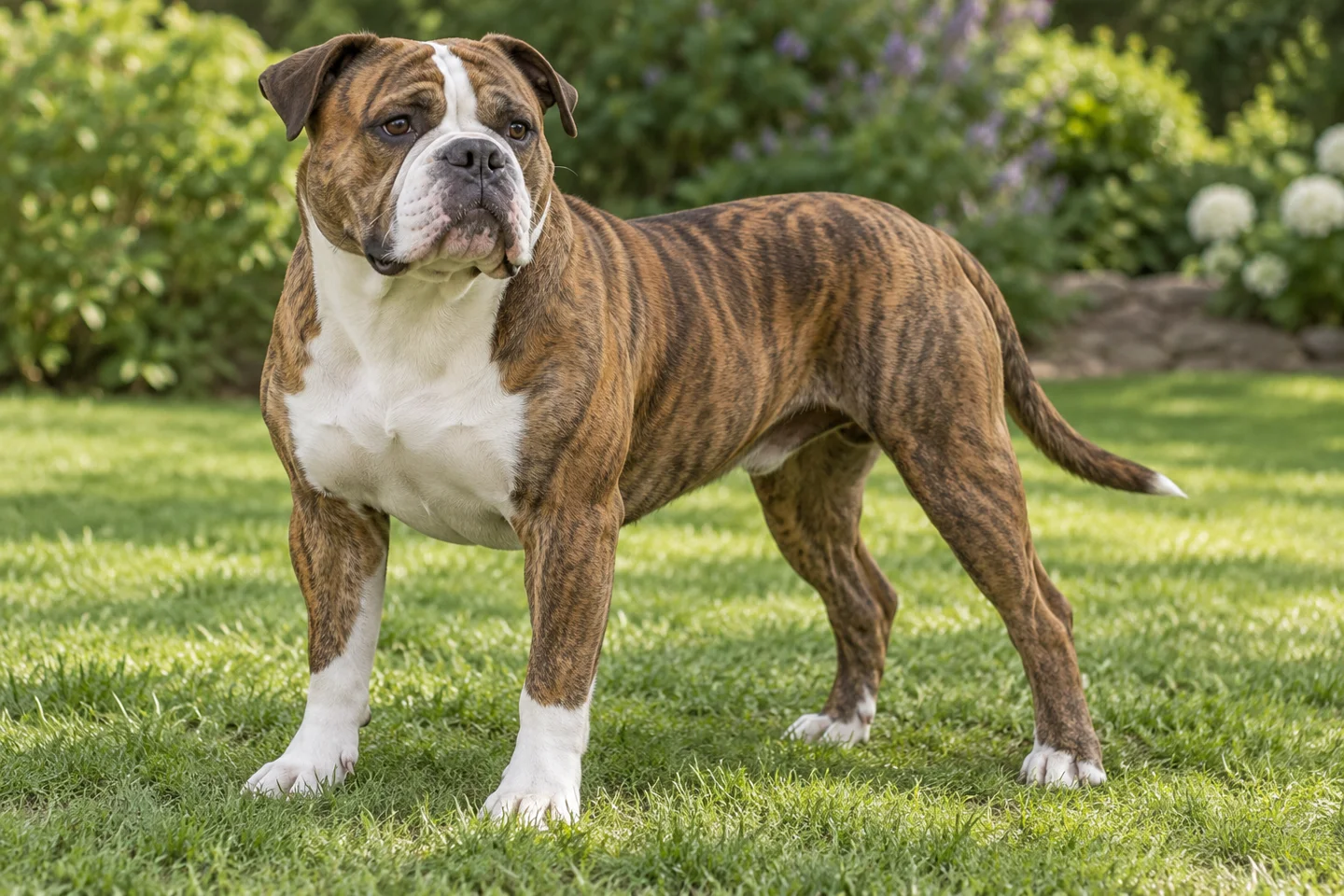
The illustrated dog is an athletic red-brindle example with white on the chest, natural rose ears, and a full tapered tail. The purpose is to show selected breed features without exaggerated folds or extreme proportions. An illustration cannot demonstrate comfortable breathing, joint health, or safe temperament. Those questions need real records and observation. Before choosing a puppy, meet adults moving and resting normally and ask what daily care involves when the weather is warm, visitors arrive, or another dog shares the household.
The modern breeding project and what it can establish
The UKC account dates the modern project to 1971 and records recognition on January 1, 2014. It describes a goal of recreating a more athletic bulldog type distinct from the modern English Bulldog. A goal stated by a registry explains the breeding project's intent. It is not a population study proving that every dog carrying the name has avoided all breathing, orthopedic, or other medical problems.
Ask how an individual breeder measures progress toward functional health. Relevant answers include identifiable veterinary records, parental assessment, honest information about older relatives, and a willingness to discuss puppies that required treatment. Photographs of muscular adults or claims that the breed has been fixed are insufficient. The history should help a buyer ask sharper questions, including which findings would cause the breeder to avoid a mating. A person who can explain limitations and provide documents offers more useful evidence than one who relies on assurances that a modern reconstruction is automatically healthier.
Adult dimensions and proportionate condition
The UKC standard gives males 17–20 inches at the withers and 60–80 pounds. For females it gives 16–19 inches and 50–70 pounds. It specifies that these measurements apply at two years or older and that weight should be proportionate to height. These are adult standard references, not instructions to feed a growing dog toward the largest number or to judge health by heaviness.
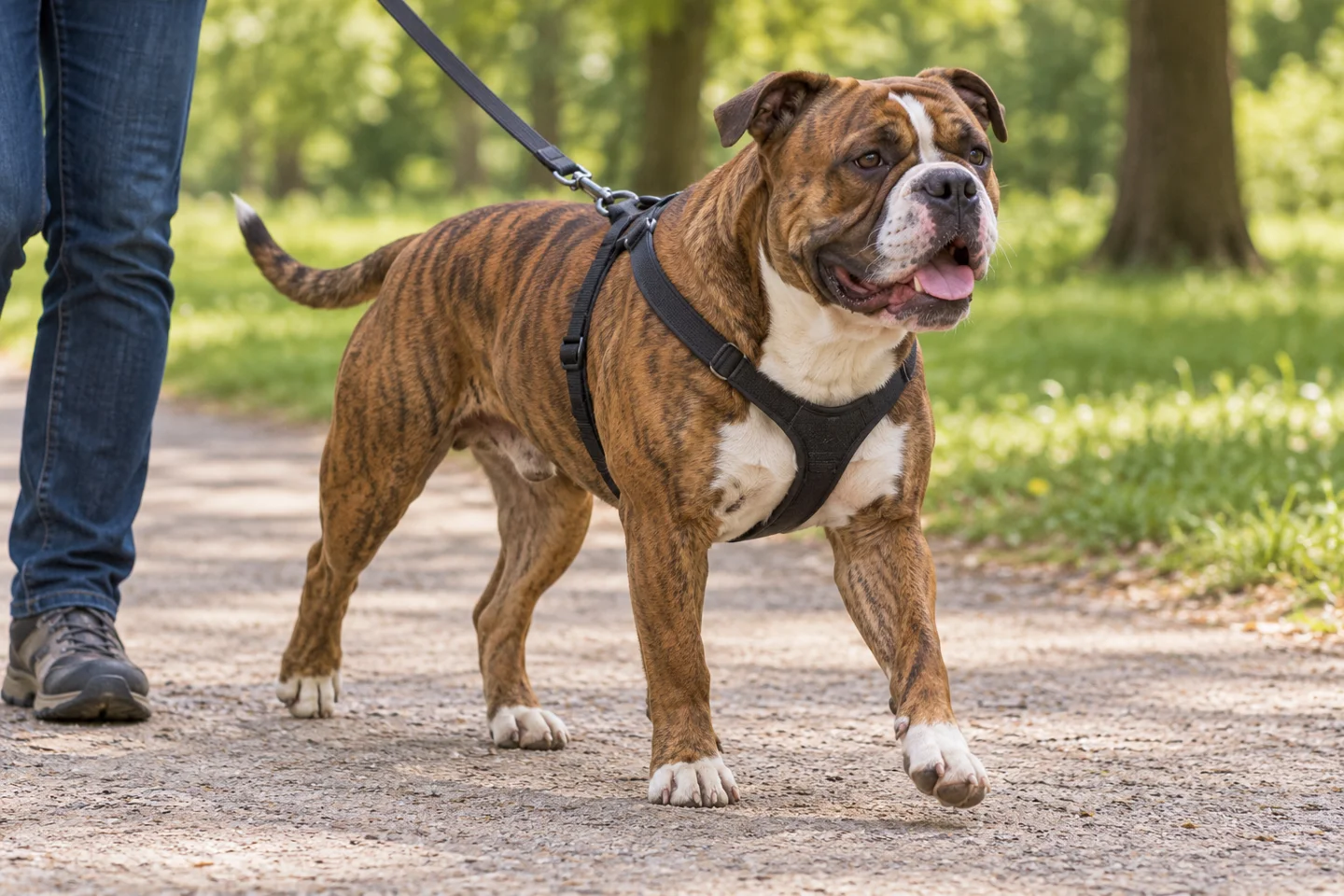
Have a veterinarian assess the waist, ribs, and muscle condition. A wide chest and powerful neck can make excess weight look less obvious in a photograph, while extra load still matters to movement and heat tolerance. Choose a harness and travel system for the actual body, and recheck fit during growth. Plan how an injured adult could be moved safely. The household should be able to transport the dog without asking a child or a single unprepared person to lift a heavy animal in an emergency.
Strength and the household routine
A strong dog benefits from ordinary routines that do not depend on physical restraint. Teach waiting while doors open, moving onto a mat before a visitor enters, and stepping away from food preparation. Practice with familiar people while the dog is calm. A puppy that can be held back easily may become an adult that can pull someone off balance, so the useful skills should develop before strength creates an urgent problem.
Observe how the individual responds to interruptions and frustration. A dog may be relaxed during affection and become much more excited when a toy appears or someone rings the bell. Use gates and separate areas to keep busy periods manageable. Settle the visitor before deciding whether a greeting is suitable, and keep the dog's retreat available afterward. Affection within the household does not guarantee tolerance of every stranger, and a breed description should never replace watching the animal's movement, expression, and ability to disengage.
Training with rewards and safe handling habits
Reward voluntary cooperation rather than wrestling through an exercise. Teach a hand target, a comfortable lead response, and coming away from an interesting object in a quiet room before adding distractions. Use food, access to sniffing, or an appropriate toy according to the dog's preferences. Keep play rules consistent and pause before excitement makes it difficult to take a reward gently or respond to a familiar cue.
Introduce body handling in short pieces. Touch a shoulder, reward, and stop; gradually build toward inspecting feet, lifting lips, and standing for an examination. A predictable lifting or positioning cue can help the dog understand what is coming. Avoid pinning, scruffing, and lead jerks. These can increase defensive responses and do not explain the behavior being requested. If the dog already resists necessary care, ask the veterinarian and a qualified reward-based professional for a plan rather than waiting until pain or urgency requires more difficult restraint.
Exercise should match breathing and recovery
Offer regular movement and sniffing opportunities, adjusting the outing to age, body condition, weather, and recovery. Do not assume that an athletic-looking bulldog can safely match a running program designed for another dog. Begin with manageable walks and increase demands only when the individual remains comfortable. Watch how it breathes, moves, and settles after activity, and make a note of changes rather than judging fitness solely by willingness to keep playing.
Choose cooler periods during warm weather, carry water, and provide shade and pauses. Avoid repeated high-intensity chasing when the dog is already breathing heavily. Noisy or labored breathing, marked exercise intolerance, or distress deserves veterinary attention. A longer muzzle than another bulldog's does not by itself rule out an airway problem. Discuss suitable activity with the veterinary team if you have concerns. Puppies need opportunities for movement and rest, while older animals may need shorter routes and surfaces that allow comfortable footing.
Children and play around a substantial dog
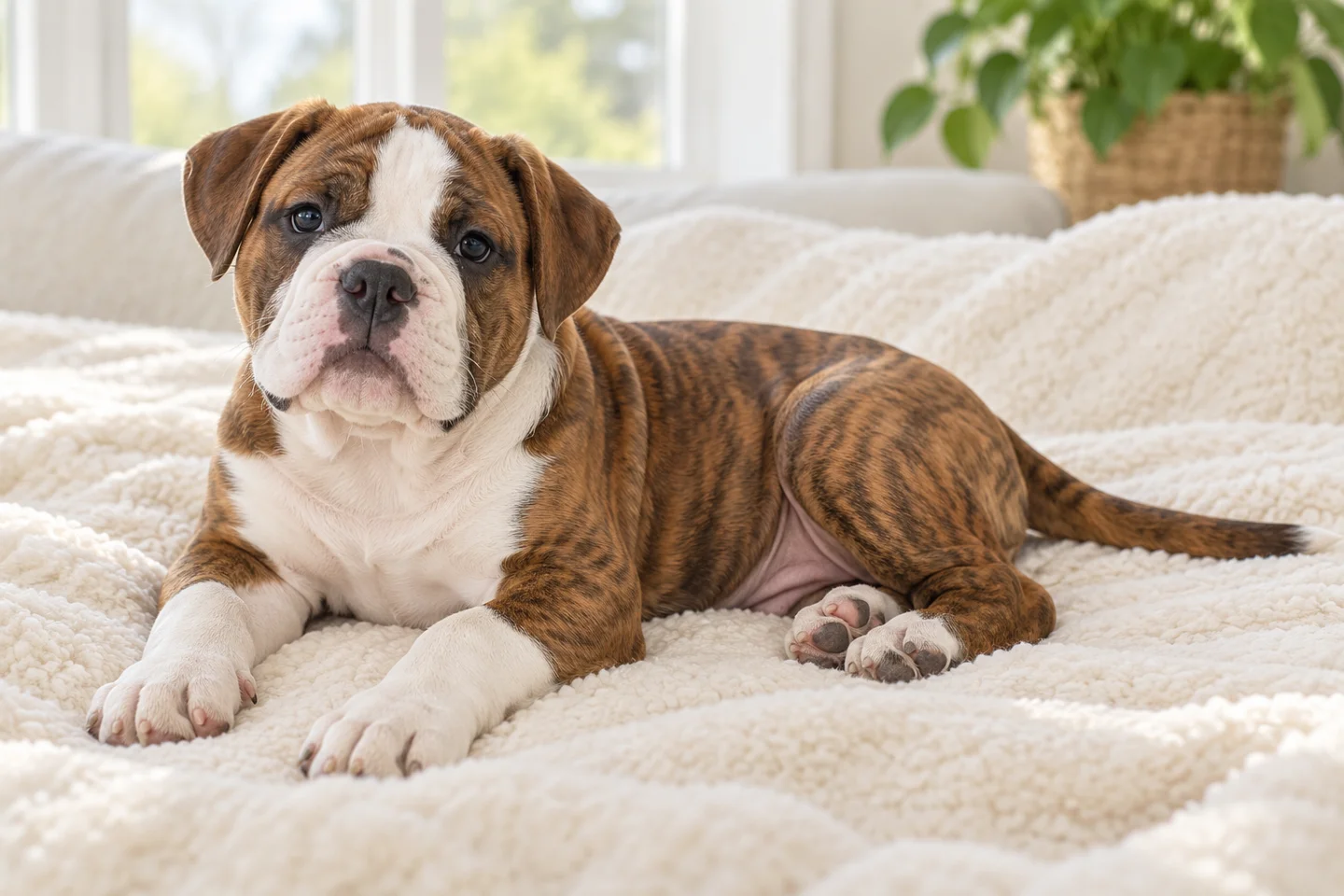
Adults should actively supervise children around an Olde English Bulldogge and separate them when attention needs to move elsewhere. Friendly movement can knock a child over, and a child hugging a broad head may miss signs that the dog wants to leave. Teach children to invite the dog toward them, touch briefly, and pause. Allowing a retreat is part of the interaction rather than evidence that the child has failed to make friends.
Keep meals, chews, and resting areas protected. A child should never reach into the dog's mouth or pull away an object to test obedience. Adults can teach safe exchanges separately and arrange games with clear boundaries. Stop wrestling or running games that raise excitement near the dog. Watch for stillness, turning away, repeated lip licking, and attempts to get behind furniture. A dog that accepts familiar children quietly has not established that it will tolerate every visiting child, costume, or noisy birthday gathering.
Aggression and avoiding a contest of strength
When a dog growls or snaps, create space and describe the event accurately. An Olde English Bulldogge defending a chew, reacting to a rushed greeting, or resisting a painful movement needs a plan matched to that situation. Record who approached, what the dog possessed, and whether it could move away. Avoid turning the incident into a test of whether a person can force compliance from a strong animal.
Sudden changes in behavior require consideration of pain and illness. Arrange a veterinary examination and seek qualified behavior help for recurring threats or bites. Do not punish warning signals or deliberately provoke another reaction to document it. Use barriers, separate resources, and suitable walking routes while training develops. A basket muzzle can add protection if introduced gradually and fitted appropriately, with breathing and temperature needs considered by the professional advising you. It cannot make an overwhelming encounter comfortable or replace the obligation to protect the dog and others from repeated conflict.
Grooming short hair, folds, nails, and ears
A short coat still needs skin inspection and gentle removal of loose hair. Check areas where equipment rubs and any folds that hold moisture or debris, using a care routine recommended for the individual. Avoid assuming that every dog with the breed name has identical skin needs. Persistent redness, odor, soreness, or discharge warrants assessment instead of repeated application of a product that temporarily hides the symptom.
Maintain nails and introduce tooth brushing with rewarded handling. The natural ears should be checked for irritation and head shaking, and cleaned only as advised. Do not push tools deep into the ear. The full tail shown here is consistent with a normal tapered outline; a kinked or tightly curled tail should not be treated as a required breed feature. Ask the veterinarian about any area that is difficult to keep comfortable or clean. Grooming should reveal changes early, and a dog suddenly objecting to touch may be reporting discomfort.
Health evidence beyond a claim of improvement
Request the actual health assessments a breeder uses, with the dog's identity, date, and interpretation. Bring copies to the first veterinary appointment for discussion. Ask specifically about breathing, movement, skin, eyes, and significant diagnoses in relatives. Do not replace this conversation with a copied testing list from the English Bulldog or another bull breed. A relevant clinical assessment and a genetic result address different questions, and a large commercial DNA panel cannot establish freedom from every structural or acquired problem.
If a breeder names a registry or club health program, check its current requirements and ask to see how each parent meets them. Where no verified breed-wide protocol is available, say that plainly and make an individual veterinary plan. A puppy that looks athletic still needs ordinary preventive care and assessment during growth. Keep screening reports and treatment records together so future carers and clinicians can see what was actually examined. Avoid claims about disease prevalence or guaranteed lifespan without suitable evidence for this particular population.
Breathing signs should be assessed as signs
Cornell's veterinary guidance on brachycephalic obstructive airway syndrome explains that shortened skull anatomy can affect airflow. For an Olde English Bulldogge, that is a reason to assess symptoms and anatomy individually, not to diagnose every dog from its name. Tell the veterinarian about noisy breathing, poor recovery, sleep disturbance, gagging, or difficulty in warmth. A video taken safely at home can help describe an intermittent problem, but should not delay care during distress.
Do not normalize breathing difficulty as a funny breed sound or test endurance to prove that the dog is healthy. Keep the animal cool and calm while obtaining advice when signs appear. Collapse, severe respiratory difficulty, or rapidly worsening heat distress requires urgent veterinary contact. Ask the veterinary team to explain any diagnosis, management changes, or procedure being proposed. The usefulness of a treatment depends on the individual findings, and neither a photograph of open nostrils nor a breeder's functional label settles the whole assessment.
Food, growth, and medical changes
Choose a balanced diet appropriate to life stage and review portions with the veterinary team. Rapid growth and a heavy appearance are not goals for a puppy. Measure meals, count rewards, and ask how to assess the body beneath the muscle and skin. If the dog needs a dietary change for a medical condition, clarify which diagnosis it addresses and how the response will be checked.
Avoid adding supplements simply because a product is marketed for muscular dogs. A homemade diet needs suitable formulation rather than an informal mixture of meat and powders. Keep food waste, medicines, and toxic products secured. Appetite changes, persistent digestive upset, unexplained weight change, or altered drinking deserve clinical advice. If more than one dog lives in the home, feed separately and leave meals undisturbed. Teach exchanges away from the bowl during calm practice, rather than repeatedly removing food to see whether the dog will tolerate it.
Mixes, expenses, and suitability before commitment
An Olde English Bulldogge mix may vary in size, muzzle shape, skin care, sociability, and activity needs. A crossbreed label does not guarantee improved breathing or a predictable temperament. For a planned mating, ask about relevant assessment of both parents and the reasons for the pairing. For a rescue dog, the individual's examination and observed behavior should guide the first care plan rather than an uncertain claim about ancestry.
Obtain local estimates for food, veterinary care, suitable insurance, training, transport, and a carer comfortable handling a substantial dog. Check housing and local requirements that apply to the actual animal before adoption, rather than assuming a breed name resolves them. Think through visitors, absences, warm weather, and emergency lifting. A home that can teach patiently and manage boundaries consistently may provide a workable routine. A household expecting strength to replace training or a modern breed name to guarantee health should reconsider those assumptions before choosing a puppy.
dogsDating introductions without pressure to prove friendliness
Write a dogsDating profile that explains the individual's social habits, including preferred walking partners and situations that require more space. Keep exact home coordinates and your address private. Use an approximate area to arrange a quiet public meeting with broad paths and separate exits. Avoid first introductions in the dog's house, at a crowded entrance, or somewhere too hot for comfortable recovery.
Each adult should manage one dog and pay attention to body language. Start with movement at a comfortable separation, keep toys and shared food out of the meeting, and allow pauses away from one another. End the encounter if either dog becomes stiff, fixated, frightened, or unable to settle. A peaceful short walk does not need to become wrestling to count as useful. Discuss what both handlers observed afterward and arrange another outing only if the plan suits both dogs. Compatibility develops through evidence, not a requirement to demonstrate that a powerful dog is friendly.
Sources and editorial notes
Sources checked October 22, 2026. Breed measurements describe reference ranges, not a diagnosis or an individual dog's ideal weight. Images are AI-generated breed illustrations and do not document a particular dog or health condition.
- AVSAB: Humane Dog Training Position Statement
- VCA Animal Hospitals: Food aggression in puppies
- VCA Animal Hospitals: Common emergencies in dogs
- Orthopedic Foundation for Animals: CHIC health screening programs
- VCA Animal Hospitals: Aggression toward unfamiliar dogs, diagnosis
- VCA Animal Hospitals: Grooming and coat care for your dog
- VCA Animal Hospitals: Ear infections in dogs (otitis externa)
- AAHA: Feeding plans for healthy, appropriate weight cats and dogs
- VCA Animal Hospitals: Heat stroke in dogs
- AVSAB: Puppy Socialization Position Statement
- VCA Animal Hospitals: Dog behavior problems, aggression toward children
- Cornell University Riney Canine Health Center: Brachycephalic obstructive airway syndrome
- United Kennel Club: Olde English Bulldogge official standard, modern history and adult dimensions
Keep getting to know dogs.
Read another guide or return to your dogsDating community.
Explore breed guidesBack to dogsDating