Central Asian Shepherd Dog
A large Central Asian guardian whose independent decisions require dependable containment, thoughtful visitor routines, and capable lifelong care.
How these guides are researched and reviewed
- Origin
- Central Asian regions; FCI origin USSR, patronage Russia
- Appearance illustrated
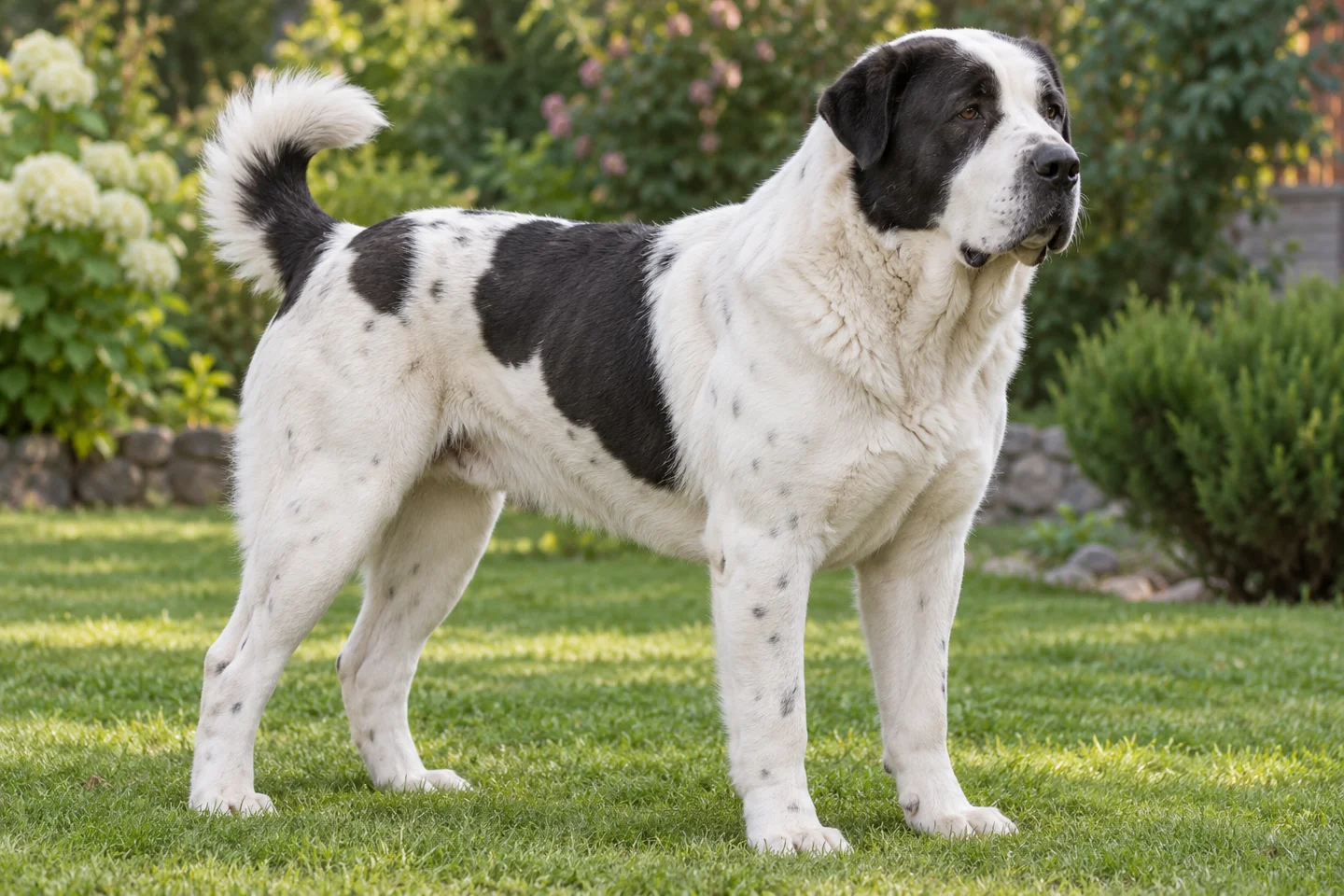
- White with black patches, coarse short to medium coat, natural hanging ears and full tail
- Adult size reference
- FCI minimum height: males 70 cm, females 65 cm; minimum weight: males 50 kg, females 40 kg
General information for owners. These articles have not been reviewed by a veterinarian. Medical decisions need your dog's history and an examination.
Begin with the property and the people using it
A Central Asian Shepherd Dog needs a home that can manage a large independent guardian every day. Before looking for a puppy, walk around the property as if you were a visitor. Where would a courier wait? Which gate could a child open? How would a veterinary team reach a dog that could not walk? Write down the weak points and decide who would fix them. The answers matter more than whether the address is rural.
A reliable arrangement also has to work when the usual owner is absent. Someone else must be able to feed, move, and secure the dog without improvising. Arrange introductions to that person before an emergency creates the need. Consider whether family members agree about visitors and boundaries, and whether they will maintain the same rules. An animal chosen for imposing appearance can place demands on a household long after the novelty has passed. Spend time with mature examples through a responsible source, discuss actual management problems, and choose only when the proposed home can meet the individual's needs.
Identity across the Central Asian region
The FCI records the origin as the USSR's Central Asian regions and patronage as Russia. Its history describes a broad area extending from the Caspian region toward China and from the southern Urals toward Afghanistan, with guarding of animals and dwellings among the historical roles. Organized Soviet work with the breed began in the 1930s. That account should not be reduced to a claim that all modern examples come from one narrowly defined place.
Names encountered in advertisements can reflect local usage, working populations, or commercial descriptions. Ask which registry and standard identify the dog being offered, and request the actual pedigree when one is claimed. A dramatic story about ancient ancestry provides little evidence about the current family. More useful information includes where the parents live, how they are handled, and their responses to unfamiliar people. An adult from a working setting may need a very different transition from a puppy raised inside a household. Determine what the individual has experienced before designing its first weeks in a new home.
Minimum size references do not set a feeding target
The FCI minimum heights are 70 centimeters for males and 65 for females. Minimum weights are 50 kilograms for males and 40 for females. These values describe the adult standard and do not define the correct weight of every individual. A veterinarian should assess body condition, muscle, growth, and comfortable movement when advising about feeding.
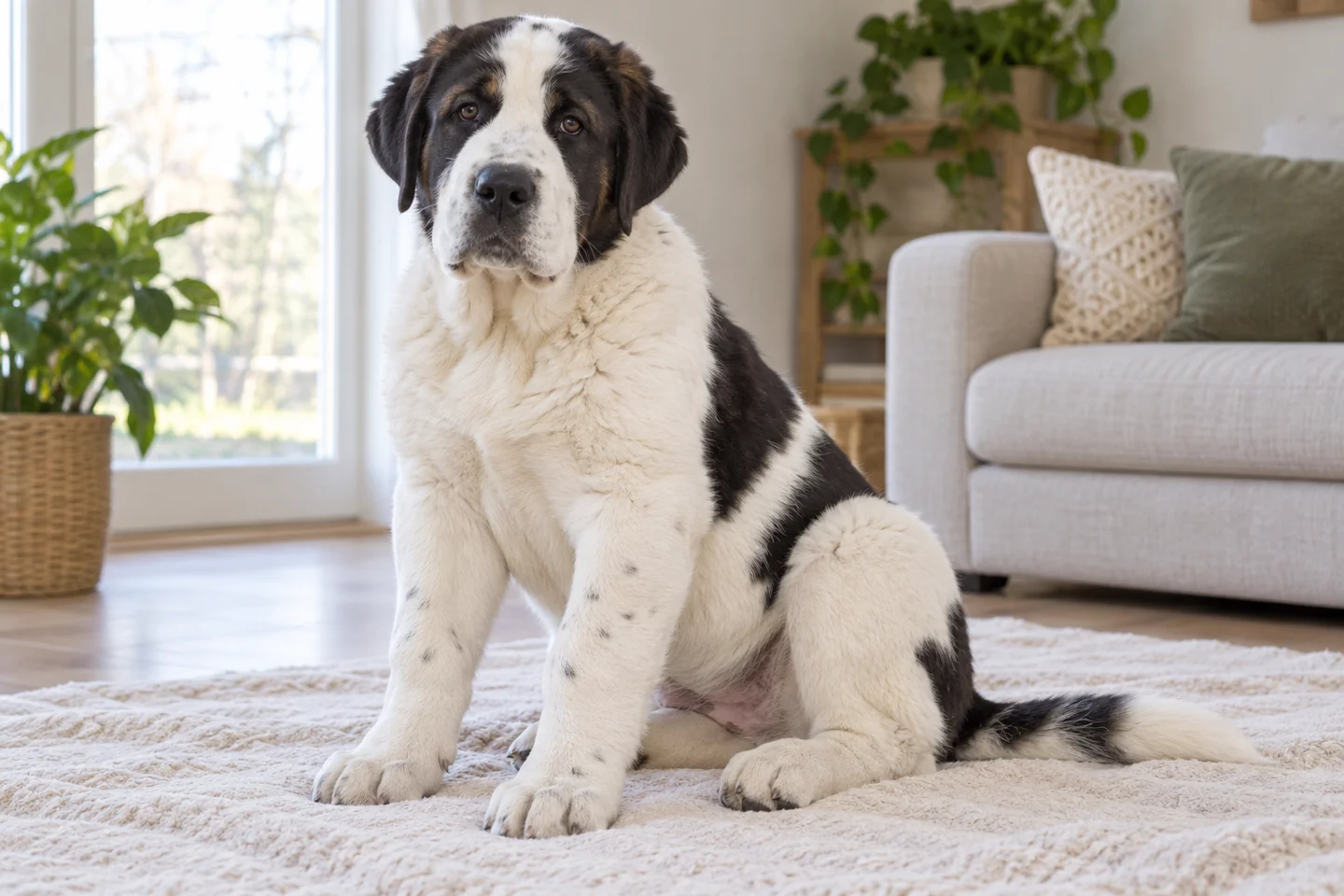
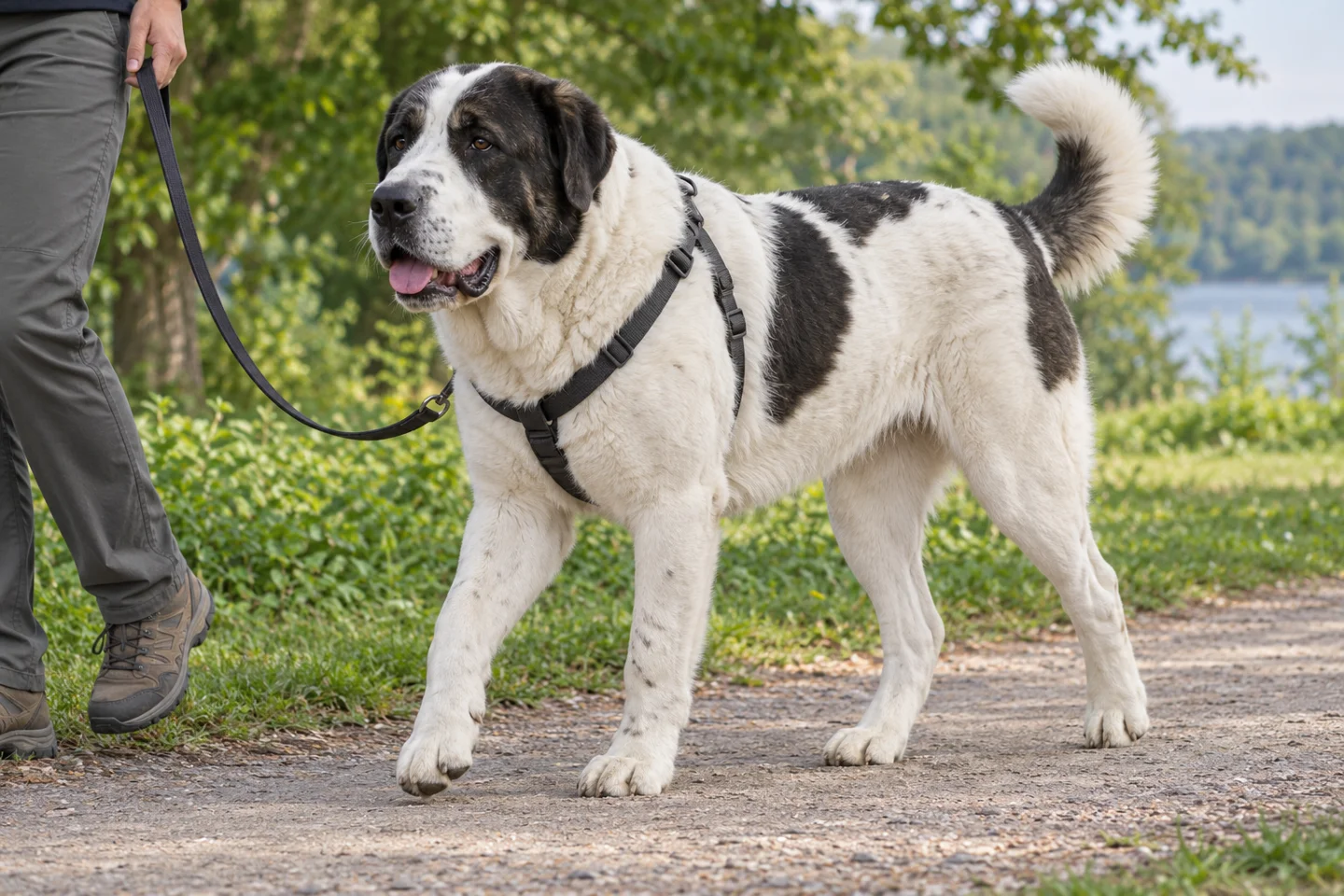
The accompanying illustrations show a white dog with black patches, a coarse short to medium coat, natural triangular hanging ears, and a full tail. The standard describes a robust, muscular body of moderately extended proportions. It does not require cosmetic alteration for a dog to have the practical needs discussed here. Look past color and size when assessing a real animal. Watch it rise, turn, and walk, and ask about persistent stiffness or avoidance of handling. Choose a vehicle restraint, bed, and route through the house that suit the actual dog. A growing youngster also needs repeated equipment checks because a collar that fitted a month ago may now press uncomfortably beneath the coat.
Boundaries need a second layer of thought
A perimeter fence is only one element of containment. Identify the points where a gate opens directly toward a road, footpath, or shared area, then create a dependable way to secure the dog before that access is used. Consider a second gate or another appropriate physical barrier, fitted by someone who understands the site. Check the whole arrangement regularly rather than discovering damage when a visitor arrives.
Teach a routine in which the dog moves to a comfortable separate area while people enter. Practice with familiar household members before adding less predictable arrivals. Everyone should know who confirms that the dog is secure and who opens the access point. Do not require delivery workers to reach through a fence, feed the dog, or negotiate their own entry. Think about maintenance work too. A worker carrying a ladder or operating noisy equipment changes the scene. Separation should begin before the work starts, with appropriate shelter, water, rest, and checks on the dog. Good containment protects the dog's welfare as well as people and animals nearby.
Training useful choices while they are easy to teach
A hand target, a comfortable station, and a well-rehearsed turn can make routine care more manageable. Teach each action in a quiet place, pay attention to the dog's response, and reward successful attempts. Short sessions allow you to stop while cooperation remains easy. Move to a different location only when the dog understands the task well enough to succeed there.
Practice equipment changes as their own lessons. Show the harness, reward calm interest, and gradually teach voluntary positioning rather than struggling to fasten it on a worried adolescent. Loading into a vehicle deserves similar preparation. A dog may need a stable ramp and time to learn its surface. Avoid relying on physically pushing or pulling such a large animal. If the dog becomes difficult to handle, seek help from a qualified professional using reward based methods. The aim is to reduce conflict and explain what works. Close attention to the conditions that make a lesson succeed will help more than repeatedly requesting the same action in a setting that overwhelms the dog.
Socialization should prepare the future adult
Think about the experiences an adult will need to manage: a carer entering the feeding area, a person passing the gate, a veterinarian observing movement, or quiet waiting during travel. Introduce those situations in small steps, with enough distance and time for the dog to remain comfortable. Ask the veterinarian about suitable early outings and infection precautions for a puppy. Watching calmly from a safe position can be a useful session.
Unfamiliar people do not need to crowd the dog or offer their hands over its head. Explain the plan before they approach and let the handler decide when to finish. Record what the dog found manageable so the next session starts at an appropriate level. Revisit the arrangements as the animal matures. A puppy's sociability during one afternoon does not guarantee the adult's response to a stranger entering its home. If behavior changes, reduce the demands and obtain advice early. Treat socialization as preparation for specific ordinary situations, including being comfortably separate, rather than a challenge to accumulate the greatest possible number of close greetings.
Aggression needs a clear account and a workable plan
Growling over a resting place, charging a fence, and snapping when a collar is touched need separate descriptions. Record the setting, what happened immediately beforehand, and how the dog recovered after gaining space. Prevent another exposure while arranging professional assessment. Avoid retesting the situation with a family member or asking a stranger to prove that the dog is harmless.
Contact a veterinarian about new or worsening behavior, especially if movement or touch appears uncomfortable. Pain, illness, learning, and environmental pressure can all need consideration. A suitably qualified behavior professional can help identify practical changes and assess whether the proposed home can maintain them. Punishing warning signals or escalating physical confrontation can increase the risk. If muzzle training is advised, introduce an appropriate basket design gradually and positively, with professional guidance about fit and use. It remains an additional precaution within a broader plan. Be candid with carers about incidents, including near misses. Clear information allows someone to decline a task they cannot manage and helps the household arrange safer care.
Children need predictable separation and attentive adults
A household with children must account for sudden movement, dropped food, visiting friends, and gates that do not always close as expected. Adults need to manage these situations directly. Set up an area where the dog can rest comfortably while children play, and make sure the barrier is dependable. Children should never be asked to stand guard at a doorway or hold the lead to prevent a difficult encounter.
Quiet contact can be arranged only when the dog and child are both comfortable and an adult can focus on them. Keep meals, chews, beds, and stolen objects outside children's access. Teach children to call an adult rather than trying to recover an item. Size alone creates a risk of accidental injury, even during an interaction that appears friendly. Do not use a familiar child's relaxed relationship as evidence about visiting children. Their movements and voices may be different. Review the setup when the household routine changes, including school holidays or overnight guests. The important test is whether the adults can maintain protection consistently throughout an ordinary busy day.
Dogs and other animals need individual assessment
Compatibility with another dog depends on the individuals and the situation. Ask what previous contact actually looked like: shared walks, adjacent enclosures, or unrestricted living together. Those are different experiences. If a new meeting is suitable, begin with separate capable handlers moving in the same direction at a comfortable distance. Choose space that allows either handler to leave without squeezing through the other's path.
At home, maintain separate meals and places to rest, and do not introduce prized resources while the relationship is uncertain. Supervise interactions and separate when attention becomes fixed or one dog repeatedly tries to escape contact. Cats and small animals require their own protected spaces. Guarding ancestry does not establish that a dog will recognize every unfamiliar animal as something to protect. A proposed livestock placement needs experienced evaluation of the individual, stock, fencing, and supervision available. Consult people with relevant working experience before committing. Avoid using live animals as a casual test. The consequences of an unsuccessful experiment can affect both the dog and the animals it encounters.
Exercise without constant boundary excitement
Provide regular controlled walks and opportunities to investigate an appropriate secure area. Vary routes when possible, while choosing places where the handler can create distance from people or dogs. A narrow path beside a playground may be a poor choice even when it is convenient. Check the setting before entering and turn away while there is still room to do so.
For a growing dog, discuss suitable activity with a veterinarian rather than setting an ambitious mileage target. Gradual conditioning matters for an adult returning after inactivity too. Watch how the dog moves after rest, inspect paws following rough ground, and respond to reluctance instead of treating it as laziness. Warm weather can change the plan quickly. Carry water, use shade, avoid hot surfaces, and choose outings from which you can return easily. Breathing distress, collapse, weakness, or confusion needs urgent veterinary advice. A guardian repeatedly running and barking along a fence may be aroused without receiving the balanced activity it needs. Build opportunities for quiet movement and recovery into the schedule.
Grooming that also checks the skin
A coat described as practical still needs regular attention. Use routine brushing to look beneath the outer hair, checking areas where a collar or harness rubs and places that remain damp after wet weather. Ask a groomer to demonstrate appropriate tools for the individual coat. Work in manageable sections and reward the dog for standing or lying comfortably rather than waiting until a large amount of care becomes urgent.
Check nails individually, including any that do not contact the ground during ordinary walking. A professional can demonstrate safe trimming and advise when an injured nail needs veterinary care. Inspect ears for discharge, redness, unusual odor, or repeated scratching. Do not insert tools deeply or select medication without diagnosis. If skin becomes itchy, sore, or patchily bare, take a clear history of recent products, activity, and changes to the environment to your veterinarian. Grooming should not require a physical contest. Difficulty completing basic care is a reason to arrange professional help and a cooperative handling plan before mats, infection, or pain make the task more complicated.
Feeding for steady growth and comfortable condition
Select a complete diet appropriate to the dog's life stage and discuss large-puppy nutrition with the veterinary team. Measure portions and review progress regularly. A breeder's old feeding sheet may need adjustment as the puppy's growth and circumstances change. Do not add calcium or other supplements simply to encourage a bigger frame. Ask whether any proposed addition is necessary and how it changes the balance of the complete ration.
Keep a record of food, training rewards, chews, and table extras for a few days if body condition is difficult to assess. The total can differ substantially from the amount written on the main food bag. Learn to feel rib coverage and check the waist beneath the coat with guidance from the clinic. Weight needs also change after neutering, injury, or a reduction in activity. Feed in a protected quiet area without people reaching for the bowl during the meal. Persistent appetite changes, vomiting, diarrhea, or unexplained weight loss need veterinary attention. A feeding adjustment alone may not address an underlying medical problem.
Health evidence for a particular family and dog
When someone says the parents are health tested, ask to see the results and identify the dogs to which they belong. Discuss current breed-club recommendations and the family's history with a veterinarian. Distinguish examination findings, imaging, and genetic tests, because each answers different questions. Do not assume that a universal panel used for an unrelated large breed is the correct program here. Screening reduces some uncertainty but cannot guarantee lifelong health.
Request the complete treatment history for an adult, including previous lameness, operations, skin trouble, and any medication associated with handling. Take changes in movement, rest, or willingness to climb into a vehicle seriously. Arrange routine preventive care appropriate to the local environment. Plan emergency transport in advance, including who can assist and how the clinic wants you to arrive with a large dog that may be distressed. Breathing difficulty, serious injury, collapse, suspected poisoning, or repeated unsuccessful retching need urgent professional contact. Provide the team with the dog's dimensions and behavioral needs early so it can organize a suitable response.
Mixes and uncertain labels require practical caution
A mixed-breed dog with claimed Central Asian Shepherd ancestry may develop a different size, coat, or response to unfamiliar people from the illustration here. Ask what the ancestry claim rests on and whether either parent is known. Precise percentages cannot be assigned reliably from appearance alone. If an adult has lived in foster care, detailed accounts of ordinary interactions offer useful evidence for planning a home.
Do not assume a mix has reduced guarding needs or automatic protection from inherited disease. A veterinarian can discuss appropriate screening in light of known parents and individual findings. The household should plan containment, visitor procedures, and handling around observed behavior while allowing for change in a youngster. Avoid selecting a cross because an advertisement promises more power or sharper protection. Those descriptions do not establish stable behavior or suitability for domestic life. Ask about return support, ongoing advice, and the source's knowledge of previous related dogs. Where important information is absent, acknowledge it openly and decide whether the proposed home can manage the uncertainty responsibly.
Costs and the ability to maintain care over time
Price the necessary arrangements before acquiring the dog. These include secure property work, appropriate transport, food, veterinary care, professional handling advice, and suitable backup care. Local availability can matter as much as price. Some boarding services may be unable to accept the individual, so discuss its needs and any gradual familiarization well before travel. Do not assume a friend will be comfortable taking over after a single visit.
Assess the household's future capacity too. A move to shared accommodation, a handler's injury, or a new family member can alter what is manageable. An elaborate system that only one person understands may fail during an ordinary interruption. Responsible sources should welcome candid discussion about experience, property access, nearby animals, and practical limits. Request written records and clear terms about support if the placement becomes unsuitable. Declining to proceed is appropriate when the needs exceed what the household can reliably provide. A stable home depends on everyday decisions, enough capable help, and a workable budget, rather than on confidence that problems will somehow be solved later.
dogsDating should describe limits before an encounter
A useful dogsDating profile states the encounters the individual can manage. Describe its preferred walking distance from unfamiliar dogs, whether it has established companions, and which situations should be avoided. Give relevant context about guarding or handling history. A general claim that the dog is loyal or friendly does not provide another owner with enough information to organize a meeting.
Use an approximate area and keep exact home coordinates private. If an introduction is appropriate, agree on a spacious public place and a quiet time. Each dog needs its own capable handler, secure equipment, and a route away from the other. Start with movement at a generous distance and allow the encounter to finish without greeting. Avoid shared food or toys. If either dog becomes difficult to redirect or repeatedly closes distance on the other, leave and reconsider with qualified guidance. A new dog friendship is optional. The three pictures in this guide are labeled AI-generated illustrations. They show a selected breed appearance and cannot certify the identity, temperament, health, or compatibility of a real dog.
Sources and editorial notes
Sources checked October 21, 2026. Breed measurements describe reference ranges, not a diagnosis or an individual dog's ideal weight. Images are AI-generated breed illustrations and do not document a particular dog or health condition.
- AVSAB: Humane Dog Training Position Statement
- VCA Animal Hospitals: Food aggression in puppies
- VCA Animal Hospitals: Aggression toward unfamiliar dogs, diagnosis
- VCA Animal Hospitals: Heat stroke in dogs
- VCA Animal Hospitals: Common emergencies in dogs
- VCA Animal Hospitals: Grooming and coat care for your dog
- VCA Animal Hospitals: Ear infections in dogs
- VCA Animal Hospitals: Feeding guidelines for dogs
- Orthopedic Foundation for Animals: CHIC program and interpretation of numbers
- Fédération Cynologique Internationale: Central Asian Shepherd Dog breed standard
Keep getting to know dogs.
Read another guide or return to your dogsDating community.
Explore breed guidesBack to dogsDating