Chow Chow
A compact Chinese spitz with rough and smooth coats, needing considerate social handling, thorough coat care, weather-aware activity, and documented health screening.
How these guides are researched and reviewed
- Origin
- China; British patronage in the FCI standard
- FCI height
- Males 48–56 cm; females 46–51 cm
- Coats
- Rough and smooth
- Care priorities
- Coat, eye comfort, orthopedic health, and measured introductions
General information for owners. These articles have not been reviewed by a veterinarian. Medical decisions need your dog's history and an examination.
Choosing a Chow for its daily life
A Chow Chow requires an owner who can respect personal space while teaching the practical skills a substantial dog needs. Begin with how the dog will enter a clinic, accept grooming, and remain comfortable when a visitor arrives. A dense coat and distinctive face can draw attention before those questions are answered. Meet adults and ask what contact they seek, what they avoid, and how the owner responds. A quiet dog may be content, cautious, tired, or uncomfortable; the context matters more than a still photograph.
Consider your household's expectations of sociability. If every visitor is expected to hug the dog or every walk must end in a crowded play group, discuss that honestly before placement. An adult rescue assessment may provide useful information about a particular dog's preferences. A puppy offers a different kind of uncertainty and requires patient development. Look for a source that describes behavior and health plainly, including difficult care tasks, rather than suggesting that an independent reputation makes training or veterinary attention unnecessary.
Chinese heritage and an established spitz identity
The FCI standard gives China as the origin and Great Britain as the country of patronage. Historical guarding and hunting roles form part of the breed's background. That history supports questions about alertness, boundaries, and responses to moving animals without supplying an exact behavioral prediction for every modern family. Avoid treating speculative ancient ancestry as more important than current records. The health and handling of the parents usually provide more practical placement information than a confident story about the breed's remote past.
The Chow is separate from the Shar-Pei and from other spitz breeds with a curled tail. A broad head or dark tongue does not establish pedigree in an unrecorded dog. Ask which registry issued the papers and what is known about the parents. If a rescue description is based on appearance, preserve the qualification. A mixed dog can need similar management while remaining a mix. Identification should help owners ask questions, rather than replace assessment of the animal's actual body, health, and social experience.
Rough and smooth coats on the same broad outline
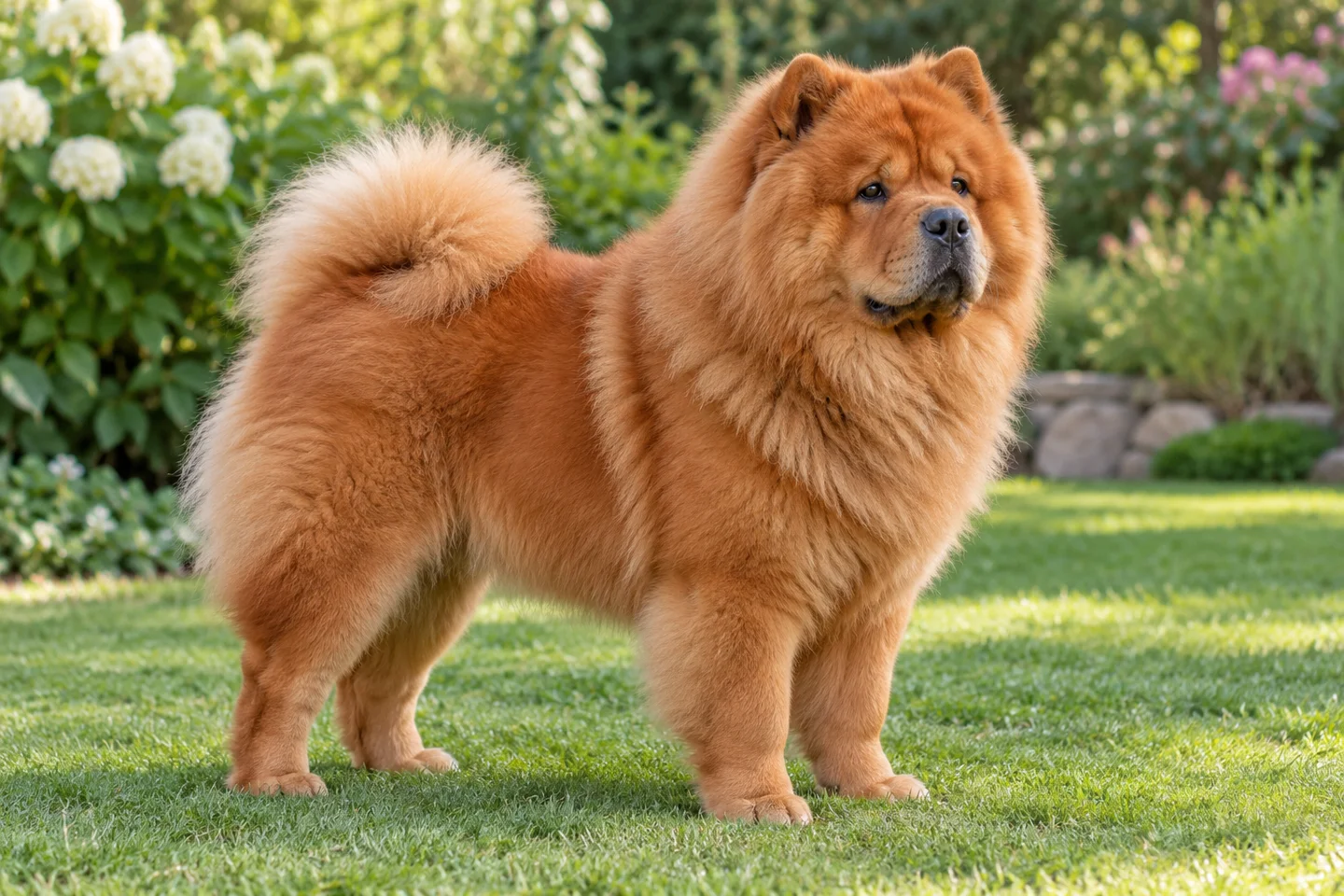
Rough and smooth coats are recognized, and both require care. The illustrations here choose a red rough-coated Chow, showing a mane, small erect ears, and the natural tail carried over the back. Smooth does not mean hairless or automatically easier for a person with allergies. Coat texture and undercoat still matter. Other recognized colors should not be confused with marketing labels for supposedly rare qualities. A color choice gives little information about whether the dog will move comfortably or accept routine care.
Watch the full body rather than only the face. The standard calls for a compact dog, but exaggerated bulk and excessive folds are not practical goals. Eyes should be visible and comfortable, and the dog should be able to breathe and move without obvious difficulty. Assess weight by touch beneath the coat with help from your veterinarian. Photographs taken before and after shedding can make the same dog look markedly different, so use actual condition and weight trends when deciding whether feeding or activity needs adjustment.
Under the FCI standard, males stand 48–56 cm and females 46–51 cm at the withers. A mane can make that compact body appear larger, but the actual dog still needs enough space and capable handling. These standard ranges guide description rather than set a weight goal or determine an individual animal’s medical fitness.
Grooming down to skin level
A rough Chow's outer outline can remain impressive while tangles and packed undercoat develop underneath. Learn to part the coat and work through manageable areas with suitable tools. Ask an experienced groomer to demonstrate the ruff, legs, underside, and places beneath equipment. Surface brushing is insufficient when the deeper coat is pulling on skin. A household needs time or professional support for this work throughout the year, with extra attention when the coat is shedding substantially.
Keep sessions short enough for the individual to remain comfortable and use a stable nonslip surface. Tight mats call for professional help, particularly close to skin. Do not cut blindly with scissors or assume the dog must tolerate pain to preserve a show outline. A practical care plan can be adjusted to age and health. If the dog cannot stand for long, grooming may need several sessions or support agreed with professionals. The goal is a comfortable animal with inspectable skin, not a photograph that hides unfinished maintenance.
Heat, drying, and comfortable exercise
Plan walks around weather and the individual's tolerance. A thick coat does not make an animal immune to cold, and it also requires thought during warm conditions. Choose cooler periods, shade, water, and a route with an easy return. Watch recovery rather than pushing to finish a preset distance. Severe distress, collapse, or abnormal breathing needs urgent veterinary contact. A dog that wants to keep following its owner may still be struggling physically, so enthusiasm cannot be the only measure of a safe outing.
After bathing or getting soaked, dry thoroughly and check areas where moisture remains close to the skin. Seek advice if a persistent smell, redness, or sore patch develops. On days when strenuous activity is unsuitable, offer comfortable walks, gentle searching, and short lessons. Avoid replacing every missed long outing with frantic indoor play. Rest needs to be available and undisturbed. A sustainable routine leaves room for changing weather, owner illness, and later-life limitations while keeping regular opportunities for exploration and companionship.
Equipment and boundaries around a compact strong dog
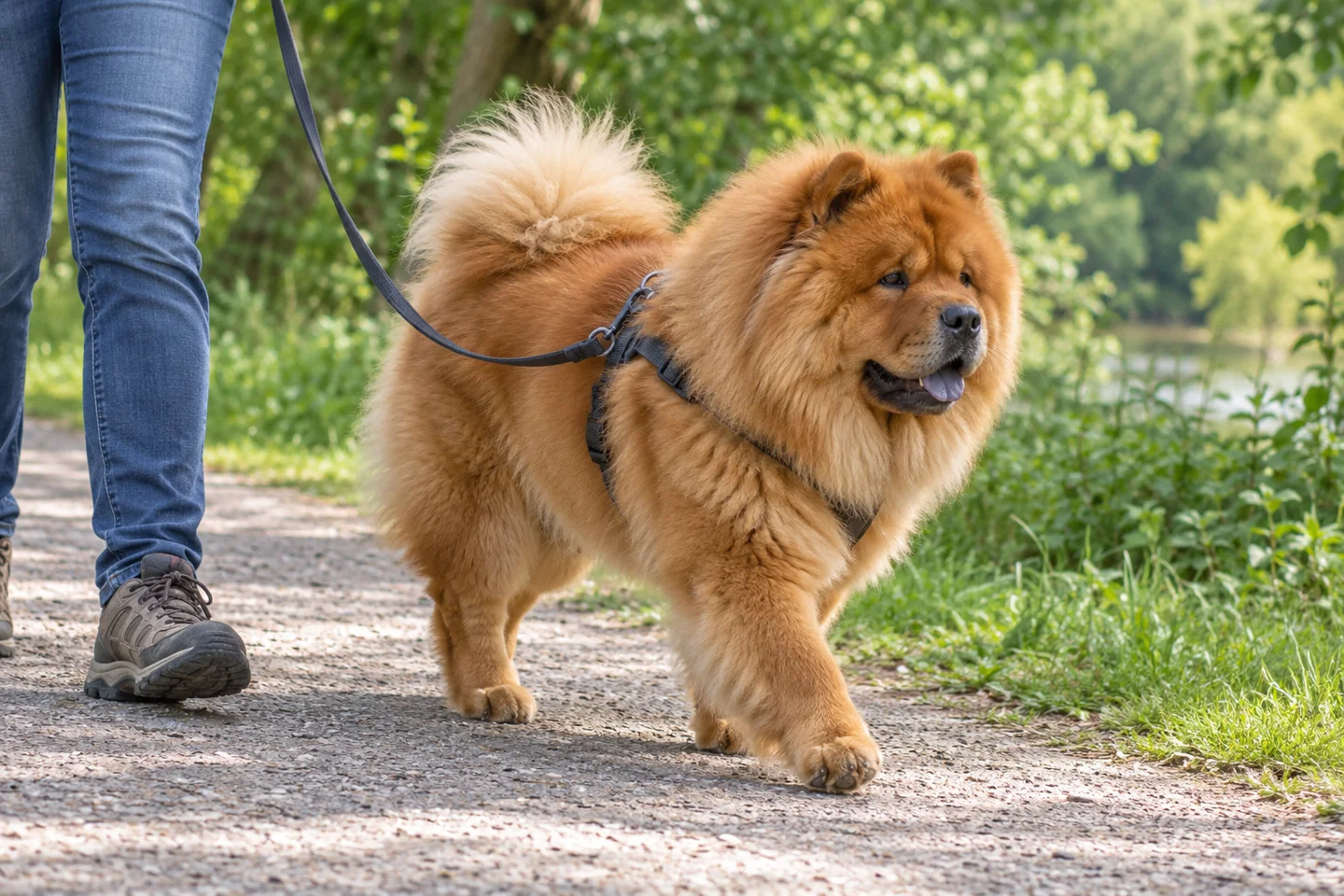
A broad body beneath a heavy coat needs careful harness fitting. Check for rubbing and inspect whether the dog can back out when startled. Teach approaching equipment and standing while it is adjusted rather than grabbing suddenly at the collar. Practice a pause at exterior doors, with a physical safeguard while the skill develops. A familiar routine becomes especially useful when deliveries, visitors, and household movement coincide in a small entrance where there is little room to recover from an escape attempt.
Inspect fences and gates rather than assuming a dog that often rests quietly will never investigate an exit. Manage views that provoke repeated boundary reactions and avoid leaving the Chow on patrol for long periods. A garden can support supervised activity without becoming its sole world. If the dog reacts intensely to passersby, arrange distance and professional help. Shouting from the back door after the reaction begins supplies little useful teaching and may leave the owner repeating the same difficult event every day.
Children need optional contact and a quiet retreat
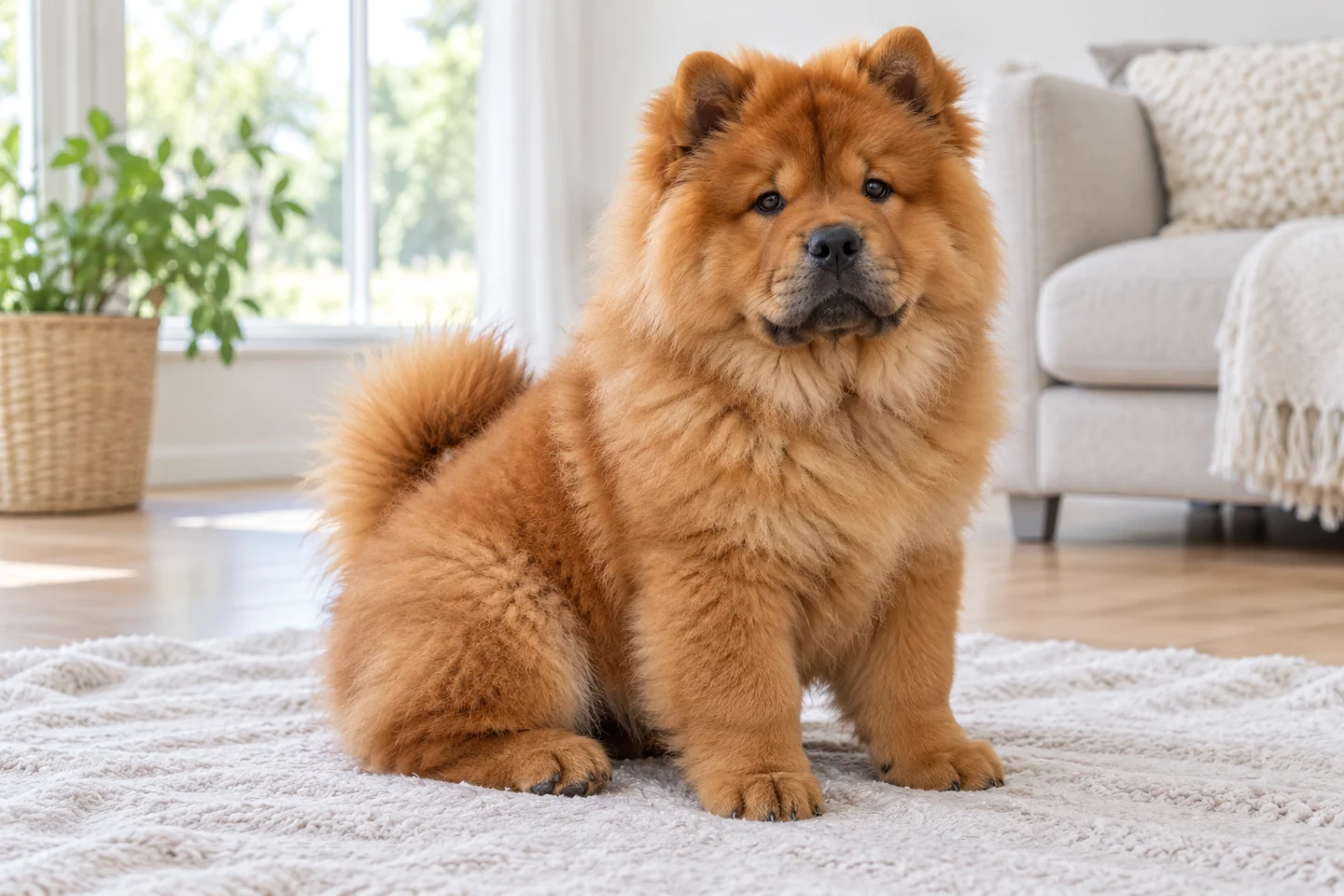
A thick-coated Chow can resemble a soft object to a young child, which makes adult boundaries important. Prevent climbing, neck-hugging, grabbing hair, and face-to-face posing. Set up a rest area away from children's main routes and make sure the dog can leave an interaction without being followed. An adult should watch hands and body posture, not merely remain somewhere nearby. A child cannot be expected to interpret every subtle sign that a dog is worried or sore.
Keep meals and valued chews separate from play. If the dog has a child's object, an adult should manage the situation rather than asking the child to take it back. Choose calm shared activities when the dog is willing, with a clear end before excitement builds. Visiting children may behave quite differently from familiar ones, so prepare separation before the event. Review the plan if the dog develops pain, reduced vision, or a new objection to touch. Past tolerance does not settle what is safe under changed conditions.
Aggression, warnings, and practical prevention
A Chow may growl when crowded, handled painfully, or approached near a valued item. Start by ending the pressure and protecting space. Do not repeat the intrusion to prove that the dog should accept it. A veterinarian should assess a sudden change in tolerance, and a qualified behavior professional can help with recurring threats or guarding. Immediate arrangements may include gates, separate feeding, and controlled visitor access. Those measures are part of a care plan, not a reason to delay investigating the underlying concern.
AVSAB recommends reward-based methods. Physical confrontation can increase fear and makes an encounter with a strong dog more dangerous. A warning contains useful information, even if it is inconvenient for the owner. Record what happened before an incident and disclose any bite or injury honestly to professionals and carers. Avoid vague labels that conceal the circumstances. Calling the dog aloof does not explain that it has snapped during foot handling, while a precise description helps another person avoid recreating the same unsafe situation.
Training a dog whose consent matters in care
Begin with tasks that let the Chow participate: moving onto a mat, standing briefly, touching a hand, and approaching a carrier or vehicle. Reward small steps and stop before the dog needs to struggle. Coat care and examination become easier when the animal understands a predictable sequence and can remain physically comfortable. A dog refusing a particular movement may be confused, worried, or sore. Review those possibilities before assuming that the breed's independent reputation explains everything.
Practice in easy surroundings and introduce distractions gradually. A response learned beside the sofa may not transfer immediately to a busy entrance or veterinary waiting room. Use sufficient distance and worthwhile rewards, and seek coaching when the timing or setup is unclear. Household adults should share cues and access rules. A dog cannot infer why one person encourages jumping for attention while another physically corrects it. Consistent teaching reduces avoidable conflicts and leaves the owner more attention for the dog's actual emotional and physical state.
Dogs, cats, and moving animals
Choose dog companions by actual contact style and tolerance. Start with space and parallel movement, leaving valued objects out. Watch whether both dogs can turn away and pause without being followed. A Chow may prefer familiar walking company to close wrestling, and a quiet friendship is a valid outcome. Separate food and resting areas in a new multi-dog home. Persistent crowding should be interrupted even when the more enthusiastic dog's owner describes it as friendly play.
Cats need protected routes and feeding areas beyond the dog's access. Prevent chasing while you assess behavior and remain cautious about responses to a running animal. A record of living peacefully with one cat does not establish universal safety. Small pets and poultry require dependable protection rather than an informal test of intentions. Historical use or affection toward humans cannot answer those animal-compatibility questions. If safe separation is unrealistic in your home, discuss that limitation before taking responsibility for the dog.
Health screening and findings that need follow-up
The AKC currently lists patella, hip, elbow, ophthalmologist, and thyroid evaluations among national-club recommendations for Chows. Obtain identifiable parent reports and ask what each result shows. Discuss significant family illness and what information the breeder continues to collect after puppies leave. A normal-looking visit does not establish formal screening, and a general DNA-panel claim cannot substitute for orthopedic imaging or a clinical eye examination. The details should be understandable enough to review with your own veterinarian.
Even reassuring records do not make a current symptom harmless. A painful eye, repeated difficulty rising, a changed gait, or loss of exercise tolerance needs examination. Avoid interpreting thyroid results or unexplained weight change without clinical context. For a rescue with missing family data, document the gap and establish care from current findings. Rarity of a particular color, a thick coat, and strong appetite are not evidence against disease. Keep medical records accessible so a new clinic or emergency carer can see what has actually been evaluated.
Eyes, ears, feet, and oral care
Watch for squinting, redness, discharge, or a sudden change in eye appearance. Facial folds and a familiar expression should not normalize signs of pain. Contact a veterinarian promptly rather than applying old eye drops or attempting a diagnosis from a picture. Gentle cooperative handling practice can help future examinations, while urgent treatment should not wait for the dog to accept a complete home inspection. Tell the clinic before arrival if face handling has previously been difficult so the team can plan safely.
The same principle applies to ears and feet. Persistent scratching, odor, or pain deserves assessment, not deep probing with a swab. Hair around paws can conceal debris, and nail length should support comfortable movement. Introduce mouth handling and toothbrushing gradually with suitable products and veterinary guidance. A dog that eats enthusiastically can still have oral disease. If it suddenly objects to brushing or handling, seek a cause rather than forcing the procedure on the assumption that routine maintenance can never hurt.
Feeding, coat myths, and Chow mixes
Use a complete diet suited to life stage and health, with portions based on actual condition and activity. Count training rewards and inspect the body beneath the coat rather than deciding that the dog needs to look as round as possible. Ask about persistent digestive or appetite changes before switching foods repeatedly. Special diets and supplements should have a reason appropriate to the individual. Breed history does not supply a universal dietary formula, and body weight should not be managed through guesses about coat volume.
A Chow mix may have variable size, coat, social preferences, and medical risks. A crossbreed name cannot guarantee reduced shedding, allergy compatibility, or an easier temperament. Ask what is documented about both parents and what the actual dog has experienced. For a person with allergies, appropriate medical advice and individual exposure matter more than marketing about hair. An ancestry estimate can add context to a rescue description, while decisions about animals, children, grooming, and veterinary care still need direct evidence from the dog itself.
Costs, later life, and dogsDating contact
Budget time for coat maintenance and money for veterinary care, training support, reliable holiday arrangements, and unexpected treatment. Check that a carer can follow the handling and visitor routine rather than promising to make the dog sociable through constant group exposure. Aging may require shorter grooming periods, better floor traction, and changes to furniture or vehicle access. Keep enjoyable activity available at a comfortable level. New resistance to rising or touch needs assessment rather than acceptance as a simple change of personality.
Describe the Chow's actual preferences on dogsDating, including whether it enjoys walking company while avoiding physical play. Keep exact home coordinates private. Choose a spacious public route and handlers willing to respect a slow introduction. Begin with a brief parallel walk and end if either dog cannot disengage or becomes increasingly tense. Shared toys, food, and close indoor space can be assessed separately later. A quiet pleasant outing is enough, and future meetings should follow both dogs' continuing comfort rather than the owners' wish for immediate friendship.
Transport before an urgent appointment
Rehearse entering the vehicle or a suitable transport enclosure during calm short sessions. Check that the dog can turn and lie comfortably and that its coat is not caught in fittings. Secure it appropriately during travel. Identify a clinic and emergency service before a crisis, including how another adult would move the dog if the usual owner were absent. Familiar equipment and an agreed plan reduce avoidable handling pressure when the animal is already unwell.
Sources and editorial notes
Sources checked October 21, 2026. Breed measurements describe reference ranges, not a diagnosis or an individual dog's ideal weight. Images are AI-generated breed illustrations and do not document a particular dog or health condition.
- AVSAB: Humane Dog Training Position Statement
- VCA: Food Aggression in Puppies
- VCA: Grooming and Coat Care for Your Dog
- VCA: Ear Infections in Dogs
- VCA: Feeding Guidelines for Dogs
- Orthopedic Foundation for Animals: Canine Health Assessments
- VCA: Common Emergencies in Dogs
- VCA: Heat Stroke in Dogs
- VCA: Hypoallergenic Dog Breeds, Is There Such a Thing?
- American Kennel Club: Non-Sporting Group Health Testing Requirements
- FCI: Chow Chow Breed Standard
Keep getting to know dogs.
Read another guide or return to your dogsDating community.
Explore breed guidesBack to dogsDating