Eurasier
A Eurasier needs close domestic involvement, understandable routines, and an owner who respects the individual dog's preferred pace of contact.
How these guides are researched and reviewed
- Origin
- Germany
- Identity
- Spitz / Companion
- Care priorities
- Domestic company, dense coat care, screening records
- Adult standard size
- FCI: males 52–60 cm, 22–30 kg; females 48–56 cm, 18–26 kg
General information for owners. These articles have not been reviewed by a veterinarian. Medical decisions need your dog's history and an examination.
Choose a Eurasier for life within the household
A Eurasier needs close domestic involvement, understandable routines, and an owner who respects the individual dog's preferred pace of contact. The FCI identifies the breed as a companion dog, with a strong family relationship central to its description. That does not establish that every puppy will enjoy constant touching or adapt comfortably to a long workday alone. Begin by considering who is present, where the dog will rest, and how care continues when the familiar person is unavailable.
Arrange to meet an adult in a normal home setting if possible. Notice how the dog responds when visitors arrive and when nobody invites participation. Ask the owner which situations require extra preparation and how absences were taught. A calm appearance during a short visit is useful information without predicting every later circumstance. Choose a puppy or adult on the basis of the actual family and observations available. A reputation for companionability should support a careful placement conversation rather than replace it.
A German breed with a documented modern foundation
The FCI traces the Eurasier's foundation to Julius Wipfel's breeding work beginning in 1960, using Chow Chow and Wolfspitz ancestry followed by Samoyed. The earlier Wolf-Chow name changed as the breed developed. This is a recognized breed with its own identity, not a general term for any cross involving a Chow or another spitz. A recently produced cross with similar ancestors cannot automatically claim the same documented family or established breeding program.
Ask which registry records the dog and request identifiable pedigree information when ancestry is claimed. A rescue may have a reasonable visual estimate but no proof. Keep that distinction clear. Founding history explains part of the breed's identity; it cannot establish the temperament or medical status of every descendant. Recent relatives and current living experience supply more immediate placement information. Ask how the parents accept handling, cope with visitors, and respond to ordinary changes rather than choosing primarily for a particularly striking coat shade or an impressive origin story.
Spitz proportions without exaggeration
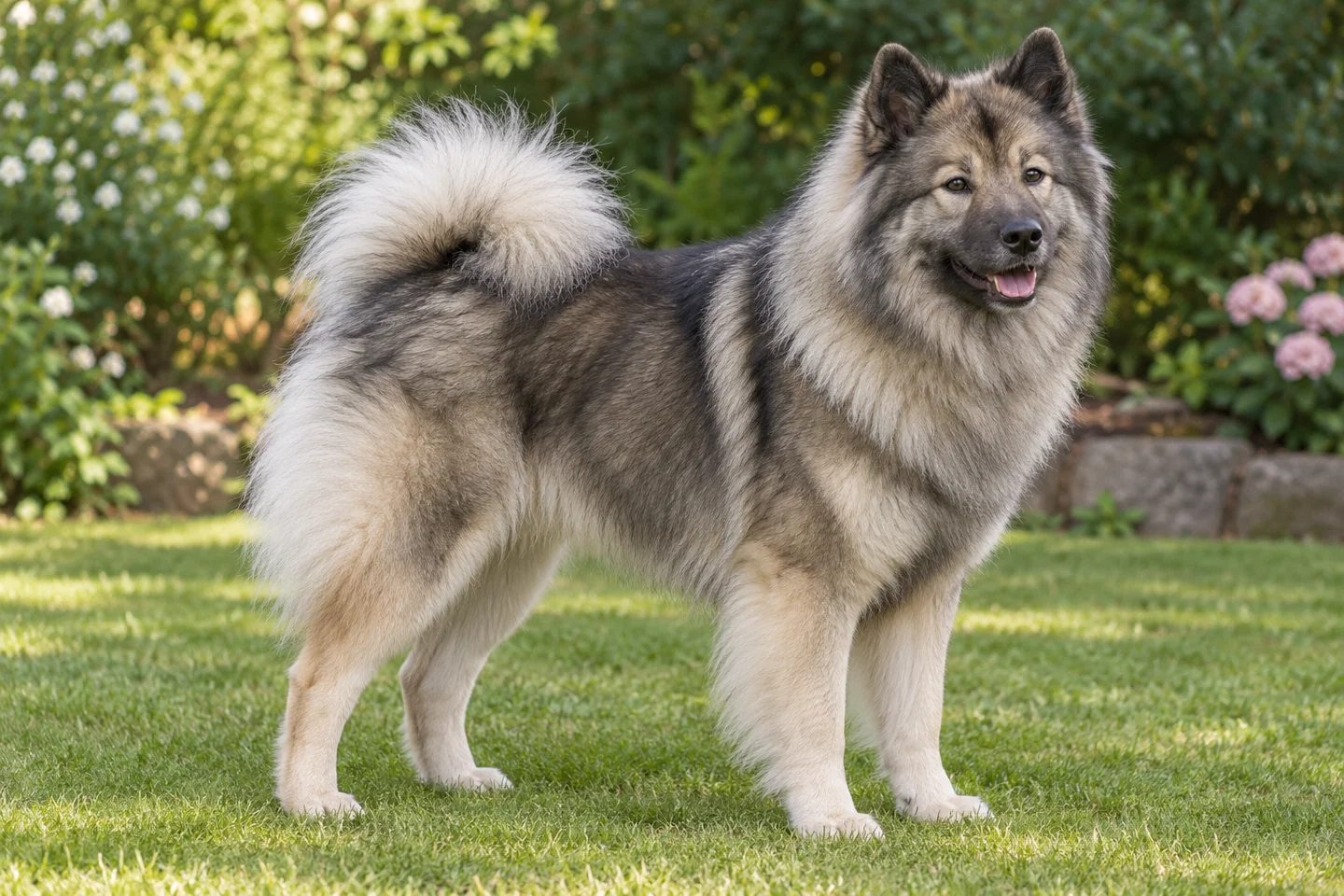
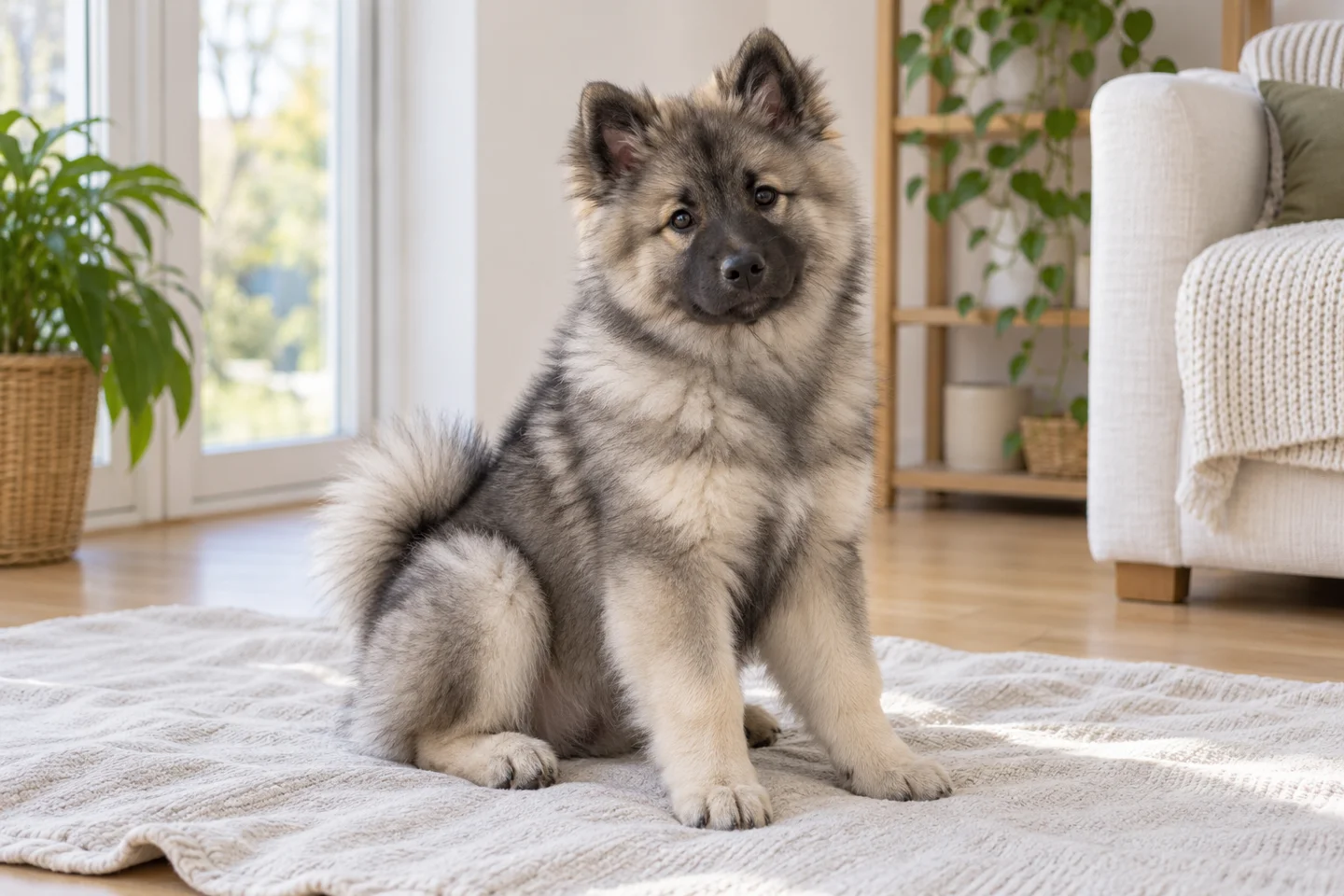
The Eurasier is a medium-sized, slightly rectangular spitz with a substantial double coat, erect triangular ears, and a functional wedge-shaped head. The coat should still allow its proportions to be seen. The generated illustrations select a grey-shaded example with a bushy natural tail over the back. Colors vary, and these images do not document a particular registered dog. They cannot prove ideal condition or predict how a puppy's coat and markings will develop.
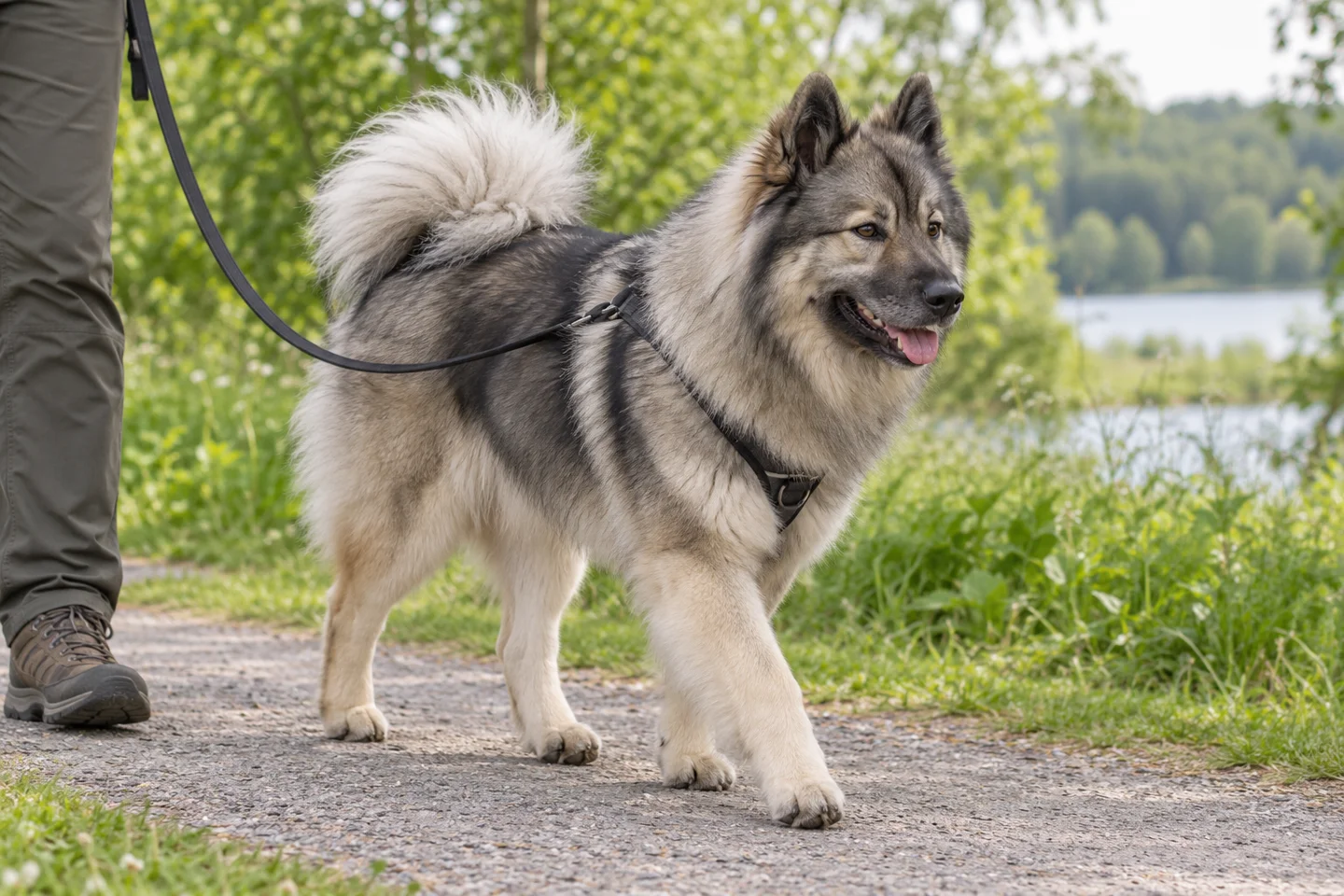
Look and feel beneath the coat when assessing the real animal. Ask a veterinarian to show appropriate body-condition assessment, and watch it move after resting. An attractive ruff may conceal a rubbed area under equipment or make body weight hard to judge. A harness needs a secure practical fit that does not compress or tangle the coat unnecessarily. Check it during a backward step and after use, particularly while a puppy grows. A product marketed for spitz breeds still needs adjustment to this individual's chest, shoulders, and response to handling.
FCI adult references are 52–60 cm and 22–30 kg for males, and 48–56 cm and 18–26 kg for females. The standard emphasizes balanced proportions. A full coat can make comparisons misleading, so use hands-on condition assessment and the individual's build rather than trying to reach a preferred scale number. Think about lifting assistance and vehicle access as well as how the adult looks standing in a room.
Visitors can be welcomed without demanding a greeting
A visitor should know how to enter before the door opens. Give the dog enough room and let the guest initially ignore it rather than reaching over its head. Reward comfortable observation and permit a retreat. A dog resting elsewhere while people talk can be coping well even without offering contact. Do not turn a quiet visit into repeated attempts to obtain a cuddle or photograph. Respecting the animal's choice can prevent unnecessary pressure within an otherwise manageable encounter.
Introduce different kinds of arrivals gradually: a familiar friend, someone carrying equipment, a person wearing a large coat, or a guest staying longer than usual. Keep intensity low enough for learning. The useful question is what the individual can handle at present, not whether its breed description says calm or self-assured. If a dog repeatedly becomes distressed, obtain suitable guidance and review the setup. More visitors at closer range can intensify the problem without explaining how to cope with the situation.
Training that develops participation and independent choices
Teach practical skills such as stepping onto a mat, following a hand target, waiting while equipment is fastened, and entering a vehicle comfortably. Reward the earliest understandable version before adding distractions. A dog that knows where to stand can participate in necessary care without someone repeatedly pushing it into position. Short lessons within the day may fit companion life better than a prolonged series of tasks after concentration has faded.
AVSAB recommends reward-based methods. If the Eurasier does not respond, examine the cue, reward, environment, and physical comfort instead of assuming a need for stronger correction. Include a recognizable finish and time when no action is requested. A close family relationship can coexist with useful independence. Teach that someone moving through the house does not always predict activity, and make quiet resting places available. An instructor should help owners understand these arrangements rather than frame every difficulty as a contest of authority between person and dog.
Socialization that preserves the ability to leave
A puppy needs manageable experiences of surfaces, household sounds, travel, and unfamiliar people. Coordinate safe outings with the veterinary team during vaccination and choose settings where distance can change. Observation can be enough. A dog that can notice an event, recover, and explore afterward has gained useful experience without greeting everyone involved. Avoid holding a puppy in place while an unfamiliar person touches it after it has tried to turn away.
Continue learning through development and after changes in routine. An adult moving to a new home may need time to understand the stairs, doors, appliances, and schedule. Preserve familiar elements where possible and avoid combining every demanding experience during the arrival period. Watch for growing comfort rather than demanding an immediate display of affection. Seek support if fear increases or essential activities become difficult. Socialization should improve coping in the world the dog will inhabit, not create a requirement that it enjoy every crowded place or accept contact from every admirer.
Exercise, weather, and the dog inside the coat
Provide regular opportunities to move, sniff, and learn at a pace suited to age and condition. A companion background does not mean outdoor access can be omitted, and a thick coat does not establish readiness for any climate or distance. Ask about recent activity before planning a long excursion. Build fitness gradually and notice recovery after rest. Growing puppies need exploration and sleep, with particular sporting or repetitive-impact plans discussed individually with the veterinarian.
In warm weather, choose cooler periods and a route with shade, water, and an easy early return. Observe the dog's response rather than relying on appearance or a timetable. Severe distress, weakness, or collapse needs urgent assistance. Cold rain, mud, and wet furnishings also affect comfort and the return-home routine. Check feet and equipment-contact areas after outings. Persistent stiffness, a painful swelling, or reluctance to use a familiar step deserves assessment rather than being dismissed as the ordinary behavior of a heavily coated or independent dog.
Grooming reaches through the undercoat
Ask an experienced Eurasier owner or groomer to demonstrate maintenance on an adult coat. A brush gliding over the top can leave tangles or packed loose hair beneath. Work gently in manageable sections and inspect friction areas around the ears, armpits, and harness. Choose tools for the actual texture and current condition. A realistic routine must fit the owner's ability to reach the whole dog without prolonged uncomfortable restraint or pulling.
Severe matting or irritation requires appropriate professional care. Do not insert scissors beside hidden skin or assume a dog that stops moving is no longer uncomfortable. If you are considering a major coat change, discuss the reason, welfare needs, and likely maintenance with knowledgeable professionals. Appearance should not delay needed treatment. Introduce brushing with pauses and reward participation before a full session becomes necessary. Let the animal change position and stop to investigate any new sensitivity. A coat plan that remains comfortable between appointments is more useful than an ambitious look that the household cannot sustain.
Grooming details around ears, nails, and mouth
A substantial coat can hide a foot or ear change until hands-on care reveals it. Check nails, toes, and skin regularly, including after vegetation. Teach brief foot handling before attempting every nail at once and use a stable comfortable surface. Ask for a demonstration if technique is uncertain. A painful area, embedded material, or repeated resistance in one location deserves assessment. Do not keep provoking the response merely to prove it occurs.
Dental care needs suitable products and gradual learning. Changes in chewing or facial tolerance should be reported to the clinic. Ears with discharge, odor, repeated shaking, or tenderness need advice rather than a guessed cause. Avoid pushing tools down the canal or repeating old medication without direction. Tell groomers and veterinary staff about previous difficulties before an appointment begins. Immediate treatment and longer-term cooperative training may need different arrangements, and the professionals can help plan both without postponing a painful problem until home training is complete.
Children and room for quiet companionship
Give children a simple way to invite the dog without following it into a retreat. An adult can help the child sit calmly and wait for an approach, then end contact while it remains comfortable. Prevent hugging, climbing, ear pulling, and faces pressed together. A soft coat can invite prolonged touching that the dog does not want. Watch the whole body and attempts to leave instead of deciding from a wagging tail alone.
Set resting areas apart from games and leave bowls and chews undisturbed. A barrier protects quiet time when adult attention is elsewhere or visiting children are difficult to supervise. Explain that an adult retrieves an object near the dog. Review routines when a child begins moving differently or the animal develops pain or sensory changes. A familiar family bond may be affectionate without guaranteeing every interaction. The aim is comfortable contact with a genuine option to stop, rather than teaching the dog that only a stronger warning will obtain space.
Aggression and discomfort within close relationships
An owner can miss pressure when it occurs during affectionate contact. If a Eurasier stiffens or growls while being hugged on a sofa, stop and make room rather than insisting it must accept attention from family. Note what the animal could do to leave and whether a painful body area was involved. A new reaction to familiar touch needs veterinary assessment. Calm appearance or a long relationship does not exclude discomfort or make the warning unimportant.
For repeated threats, a bite, or rising fear, obtain qualified behavioral support with clinical involvement. Use barriers and separate valued resources while assessment proceeds. Teach exchanges without manufacturing conflict around meals, following VCA's guarding guidance. Avoid punishment that hides the warning while leaving the underlying concern. Give carers a factual explanation and the actual safety arrangement. An animal should not be passed to a visitor or placed beside another dog to test an unresolved problem. Treatment and safer conditions come before recreating the encounter for reassurance.
Health testing is a program, not a single reassurance
The United States Eurasier Club describes a breeding review that includes orthopedic, dental, eye, thyroid, and Dandy Walker-like malformation information, with specific details and timing in its policies. Ask which current program the source follows and obtain the actual reports. An isolated normal blood test or a long commercial DNA panel does not establish that the program has been completed. Different assessments answer different questions and need to be interpreted together with family information.
The club's requirements are specific to its process; they should not be treated as an identical rule in every country. Clarify the scheme, dates, identities, and any remaining uncertainty with your veterinarian. Discuss significant diagnoses in relatives and follow-up on older offspring. A report concerning a named variant cannot exclude every cause of a similar symptom. Keep original findings available when the dog receives care elsewhere. Screening should guide decisions without becoming a promise that no inherited or acquired illness will appear later in life.
Health observation, nutrition, and changing needs
For an adopted adult with incomplete records, establish a present clinical baseline and mark missing information honestly. Record persistent changes in appetite, drinking, coat, movement, or behavior and seek assessment instead of assigning a diagnosis from breed identity. The dog may still want company while something is wrong. Plan routine prevention around actual exposure and keep urgent contacts available for collapse, respiratory distress, trauma, or rapidly worsening illness. A current problem still needs attention when earlier screening was reassuring.
Use a complete diet appropriate to age and diagnosed needs, measuring a starting allowance and including training rewards. Assess condition beneath the coat with veterinary guidance and review portions when activity changes. Feed away from competing pets and busy traffic. Supplements should address a specific need within the whole diet, and home-prepared feeding deserves qualified nutritional advice. As the dog ages, adapt access, bedding, and outings while retaining comfortable contact and exploration. New reluctance or sensitivity warrants review rather than a conclusion that the animal has simply become more independent.
For a prospective owner, watching a full care session can clarify the commitment better than estimating from a photograph. Ask to see the setup, the tools, how the dog changes position, and what the owner does when it needs a pause. Consider whether your own hands, space, lighting, and available time support that process. Arrange professional assistance before it becomes urgent. A friend who enjoys stroking the dog may still need instruction before being responsible for coat inspection during a holiday or recovery period.
Mixes, backup care, and dogsDating
A Eurasier mix may combine traits differently and should not be described as a predictable recreation of the recognized breed's foundation. Ask which ancestry is verified and assess the individual. Budget for coat care, testing or diagnostics, instruction, transport, and capable help. Teach comfortable absences gradually and observe how the dog copes. Sustained pacing, calling, or escape behavior needs support. A backup carer should rehearse routines before a necessary trip rather than introducing a new handler, location, and schedule all at once.
On dogsDating, describe social preferences and relevant incidents plainly. Keep exact home coordinates private and meet in a public place with room for separate handlers to adjust distance. Begin without shared food or toys and allow quiet parallel movement. End if either dog cannot disengage comfortably. A meeting need not become play to be useful. Assess later home visits or shared travel separately, and keep reproductive or medical decisions distinct from social impressions. Accurate information and the ability to withdraw make a first outing more informative than a forced close pose.
Sources and editorial notes
Sources checked October 21, 2026. Breed measurements describe reference ranges, not a diagnosis or an individual dog's ideal weight. Images are AI-generated breed illustrations and do not document a particular dog or health condition.
- VCA Animal Hospitals: Grooming and coat care for your dog
- VCA Animal Hospitals: Ear infections in dogs
- VCA Animal Hospitals: Common emergencies in dogs
- United States Eurasier Club: Breeding committee health-testing process
- VCA Animal Hospitals: Food aggression in puppies
- VCA Animal Hospitals: Heat stroke in dogs
- VCA Animal Hospitals: Aggression toward unfamiliar dogs, diagnosis
- AAHA: Feeding plans for healthy, appropriate weight cats and dogs
- Orthopedic Foundation for Animals: CHIC health screening programs
- Federation Cynologique Internationale: Eurasier breed standard
- AVSAB: Humane Dog Training Position Statement
Keep getting to know dogs.
Read another guide or return to your dogsDating community.
Explore breed guidesBack to dogsDating