Greyhound
A tall, short-coated sighthound whose companion care needs secure exercise, thoughtful transitions from kennels, small-animal precautions, and informed veterinary interpretation.
How these guides are researched and reviewed
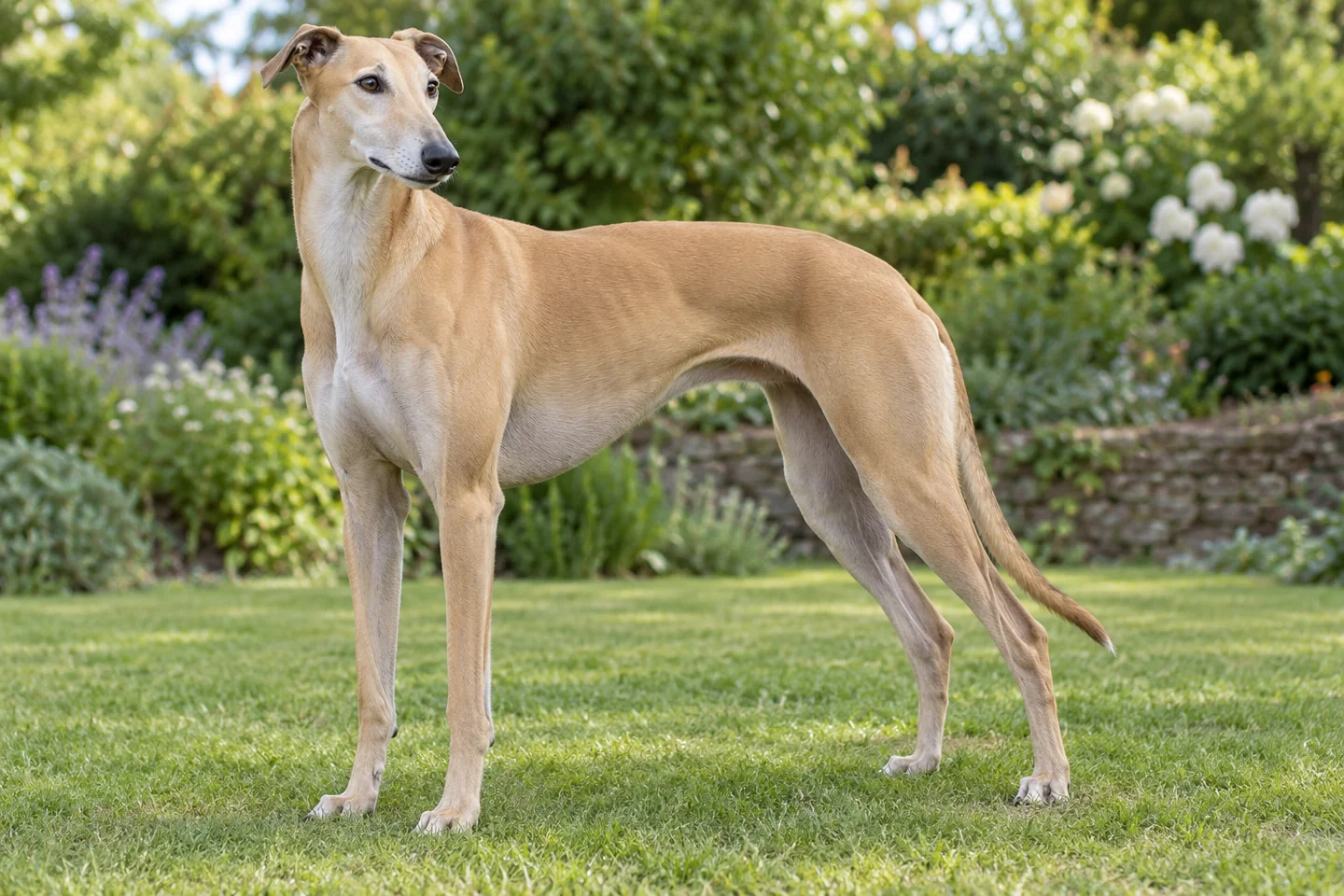
- Origin
- Great Britain in the FCI standard
- FCI ideal height
- Males 71–76 cm; females 68–71 cm
- Illustrated coat
- Smooth fawn; natural rose ears and full tapering tail
General information for owners. These articles have not been reviewed by a veterinarian. Medical decisions need your dog's history and an examination.
Make room for the individual Greyhound
A Greyhound can arrive as a puppy, an adult companion, or a dog leaving a racing environment. Those routes into a home do not provide identical experience. Ask what this animal already understands about daily household life, other species, and being apart from familiar dogs. Avoid assigning the same history to every Greyhound. A source that knows the individual should be able to describe observations and explain where uncertainty remains. That information helps you set a manageable first routine rather than expect an immediate demonstration of perfect pet behavior.
Begin with sleeping space, secure outdoor access, suitable walks, and care during absences. A tall hound needs room to turn and rest, even when its preferred activity indoors appears quiet. Check the journey from the door to the vehicle and the security of gates. Decide how visitors will enter without releasing the dog. An appealing reputation for lounging cannot answer these practical questions. The household needs a plan that works when the animal is excited, frightened, ill, or being handled by someone other than its usual owner.
Sighthound identity and adult proportions
The FCI identifies Great Britain as the origin of the modern standardized breed and classifies the Greyhound as a short-haired sighthound. It gives ideal adult heights of 71 to 76 centimeters for males and 68 to 71 for females. The long head, deep chest, tucked abdomen, muscular loin, and fine rose ears create a recognizable outline. The images here use fawn coloring and a natural long tail. They are AI-generated examples, not records of a particular racing or breeding animal.
A long-legged outline can disguise how much space a dog needs when it stretches or turns. Measure for travel and sleeping equipment, and check fit on the actual body. Ask your veterinarian about condition rather than deciding that every visible contour means the same thing in every breed. A very thin animal and a well-conditioned lean hound require different assessments. Watch comfortable movement and discuss any persistent limp or reluctance. Photographs, breed labels, and a previous working record cannot replace examination when there is a current concern.
From kennels to a house
The Greyhound Trust describes the need to prepare some retired racing dogs for domestic experiences. Ask whether the individual has encountered household appliances, stairs, different floor surfaces, and the normal movement of people inside a home. Introduce unfamiliar features in small stages. A dog hesitating at a polished floor may need a secure surface and patient guidance rather than stronger pulling. Set the first days up so necessary routes are easy and the animal can reach its resting place without repeated difficulty.
Keep instructions from the previous carer and share your observations as the dog adjusts. Establish a clear feeding and outside schedule while you learn how it communicates its needs. Do not assume every unexpected behavior reveals a permanent problem. At the same time, avoid dismissing persistent distress as something that must simply be endured. Seek support early when the animal cannot rest, eat normally, or manage necessary movement. A careful transition should provide usable information and allow the household to change arrangements before an avoidable pattern becomes established.
Training with clear rewards and attainable tasks
Teach the responses you need in the setting where they will be used. Begin with a comfortable turn toward the handler, movement with the lead, and a pause before an exit. Reward promptly and keep the task understandable. AVSAB recommends reward-based methods for routine learning and behavior work. A dog with experience chasing a lure may still be a novice at waiting by a kitchen gate. Avoid treating lack of familiarity as refusal to cooperate or assuming a previously trained working skill covers domestic manners.
An instructor should show how to make the task easier when the animal is distracted. Practice a return in a secure space, with control maintained while learning develops. A response beside the sofa does not establish a reliable response to moving wildlife. Ask about safe equipment and lead handling, and ensure other carers know the plan. Rehearse ending a walk and loading the vehicle while things are calm. The point is to give the handler usable actions before a difficult moment, rather than rely on shouting once the dog is already committed to another activity.
Exercise and the decision to allow running
Build a walking routine appropriate to the individual's health, conditioning, and previous activity. A retired racing history does not tell you its present fitness or whether an old injury needs accommodation. Discuss growth or recovery with the clinic when relevant. Give the dog time to investigate and learn the route, and watch its response afterward. A fixed claim about how little or how much every Greyhound needs can be misleading. The useful plan is one you can adjust according to actual comfort and recovery.
Any opportunity for running needs a secure, appropriate area and consideration of the surface, other animals, and the dog's current readiness. An open field is not automatically enclosed because it looks spacious. Inspect boundaries and avoid turning a recall lesson into an uncontrolled chase. Weather also matters: shorten or change activity in unsuitable heat and obtain veterinary advice about concerning breathing, weakness, or collapse. Keep a comfortable alternative for days when your preferred space is unavailable. A safe outing should not depend on permission to use an unreliable boundary.
Cats and small animals need deliberate protection
The Greyhound Trust warns that a kennel assessment suggesting a dog may live with cats does not guarantee its response when a small animal runs. Tell a rescue about every resident animal before choosing a dog. Keep secure separation, protected escape routes, and appropriate handling while an informed introduction plan is developed. Never release a cat or small dog as a test of whether pursuit will occur. The consequences can arrive faster than a handler is able to intervene.
Distinguish the animal's behavior inside the home from its response to unfamiliar animals outdoors. A dog comfortable with one resident cat may react differently to movement elsewhere. Use the observed limits in walking and care instructions. If the household cannot maintain necessary separation, seek a more suitable placement rather than hoping familiarity will solve the risk. Keep a qualified professional involved when there is concern. The aim is a living arrangement that protects the smaller animal reliably, not a demonstration that every dog of the breed can be taught the same response.
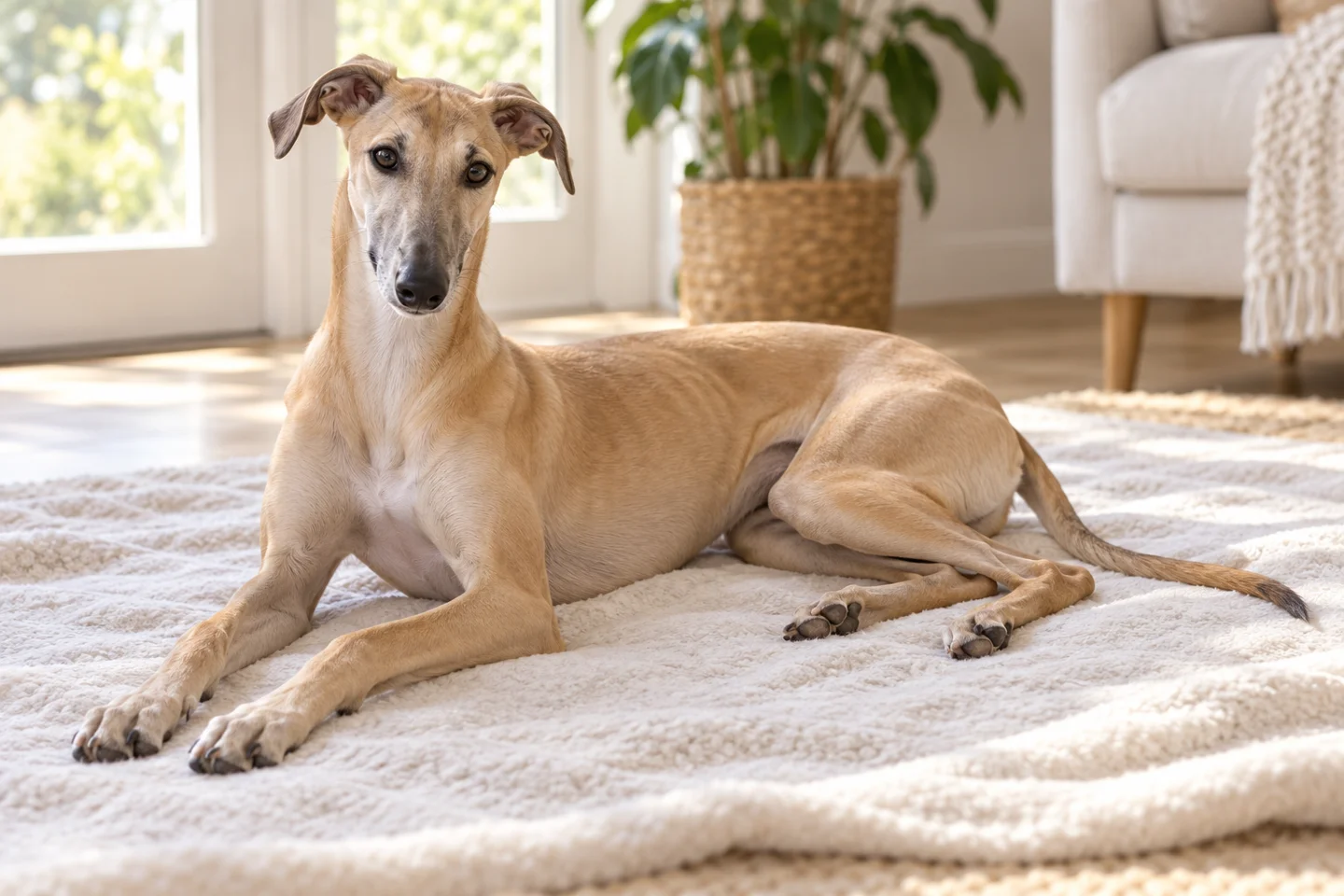
Meeting dogs of different sizes and styles
Ask about the Greyhound's experience with dogs outside its familiar group. Differences in size, movement, and play can matter. Arrange a quiet meeting with both handlers able to leave and no need to squeeze through a busy entrance. Begin with movement at a distance rather than immediate close contact. Watch whether each dog can turn away and recover. A positive first walk is useful evidence about that walk, while sharing a home introduces resting places, attention, food, and narrower spaces that require their own management.
Keep separate resources available and prevent one dog from repeatedly pursuing another that is trying to withdraw. Avoid treating willingness to play as permission for every level of physical contact. A smaller, elderly, or less mobile dog may need a very different arrangement. If threats or repeated conflict occur, stop the interaction and seek qualified advice. Provide carers with specific observations rather than saying the animal gets on with all dogs. That broad promise can conceal precisely the circumstances a new handler needs to understand.
Children and the right to sleep undisturbed
Give the Greyhound a resting area children cannot enter and supervise contact actively. A relaxed sleeping dog still needs protection from being climbed over or startled. Keep feeding and chewing separate from children's play. Teach children to stop when the animal moves away and to ask an adult for help instead of pulling a collar or retrieving an item. Comfortable separation is appropriate whenever the adult cannot concentrate on the interaction. A gentle breed description does not establish safety under every circumstance.
For an adopted adult, ask about the ages and situations actually observed. A dog that has met a calm teenager has not necessarily experienced a toddler approaching its bed. Explain your household clearly to the source, including visits from children who do not live there. Organize greetings in a clear space and keep the adult responsible for handling. If a warning occurs, create space, record what happened, and arrange advice. Do not ask the child to repeat the behavior or dismiss the event because the dog is affectionate at other times.
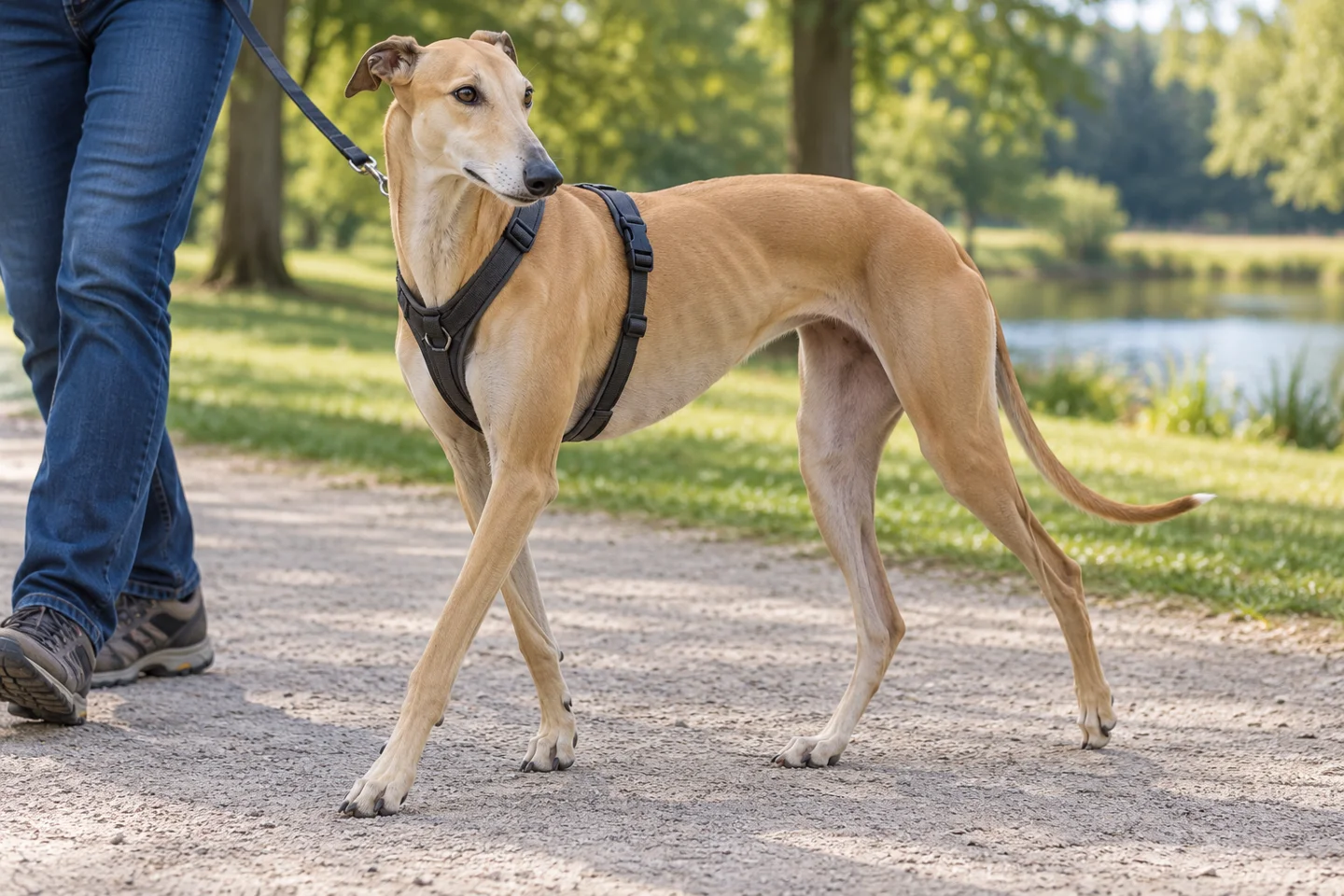
Aggression and the importance of context
A growl during handling, a snap over a resource, and a reaction to another dog should be described separately. Record the approach, distance, available escape, and any signs of discomfort. Prevent further exposure while assessment is arranged. A sudden change in tolerance of touch or movement needs veterinary consideration. Do not punish a warning or repeatedly provoke it to discover how far the dog will go. A quiet animal can still be distressed, and silence after restraint does not prove that the underlying problem has been resolved.
VCA explains that aggression toward unfamiliar dogs can arise from several motivations. Maintain control and distance instead of releasing a barrier to test the response. A qualified professional can help establish a plan alongside medical assessment where appropriate. Muzzle conditioning may be recommended for particular circumstances, with fit and gradual learning explained. It remains an additional precaution within the plan. Tell carers about bites, snaps, and near misses accurately so they can choose appropriate responsibilities. Omitting an event because it was understandable removes information another person may need to prevent repetition.
Grooming, bedding, and routine checks
Short hair makes some inspection easier but does not remove the need for gentle coat and skin care. Check areas contacting equipment or bedding, and notice new sores, irritation, or lumps. Use suitable tools and ask for help with a painful finding. Keep nails and feet in the routine, especially if a dog repeatedly licks a particular pad or changes its gait. Do not dig at a suspected corn or assume every foot problem has the same cause. The clinic can identify what requires treatment.
Choose bedding and a resting surface that keep the dog comfortable and easy to observe. Teach short cooperative checks when there is no pain, using rewards and release. Ask the veterinary team to demonstrate mouth, ear, and nail care appropriate to the individual. A new handling sensitivity should be investigated before increasing restraint. Ear discharge, redness, odor, or repeated shaking needs assessment rather than automatic use of old medication. Make sure a sitter knows the routine and which changes require a call, so that useful observations continue while you are away.
Health screening and breed-aware clinical care
The AKC's current national-club recommendations for Greyhounds list cardiac examination, ophthalmologist evaluation, and a Greyhound polyneuropathy DNA test. Request identifiable reports and read the actual findings. A result for one genetic condition is not a universal clearance for all nerve or other disease. Discuss relevant family information and any past racing injuries, surgery, or treatment with your veterinarian. A completed screening program supplies evidence about defined assessments, while current symptoms still need investigation.
The Greyhound Health Initiative emphasizes Greyhound-specific reference intervals for some laboratory results. Tell the veterinary team the dog's breed and provide previous results where available so interpretation uses appropriate context. Do not use a generic number online to diagnose disease or dismiss a meaningful abnormality. Before any procedure, share the full medical and medication history and discuss the individual anesthetic and recovery plan. Breed awareness supports good care, while the clinician still needs to assess the actual animal rather than assume every test change is normal for a Greyhound.
Persistent pain and emergency planning
The Greyhound Health Initiative's information on osteosarcoma identifies persistent lameness, swelling, and bone tenderness as reasons for prompt assessment. These signs do not establish a diagnosis by themselves. Avoid assuming a limp is merely an old racing injury or repeatedly suppressing pain without investigating its cause. Describe when it began and any change in activity. Your veterinarian can examine the dog and decide which tests are appropriate. Sudden severe pain or inability to bear weight may require urgent care, especially if a fracture is possible.
Plan transport for a tall dog unable to walk and keep the receiving clinic's details accessible. Breathing distress, collapse, serious injury, suspected poisoning, or repeated unproductive retching also warrants immediate veterinary contact. Follow professional instructions rather than waiting for an online opinion. Ask what a carer should do when you cannot be reached and leave relevant records available. An apparently quiet dog may still be ill or painful. Meaningful changes noticed by the person who knows its daily routine are worth reporting even when the animal continues to eat or accept affection.
Nutrition, mixes, and the cost of care
Use complete nutrition suited to life stage and current activity, with portions reviewed through condition and veterinary advice. A former racing workload should not determine a pet's food indefinitely. Measure meals, include rewards, and report sustained weight, appetite, or digestive changes. Ask current local providers about preventive care, training, transport equipment, and help during absences. Understand insurance conditions or another emergency funding arrangement. A source should explain medical history, continuing support, and return provisions before placement so the household can plan with realistic information.
Lurcher is a broad description for certain sighthound crosses rather than a recognized Greyhound variety. A Greyhound mix may have documented parentage or an uncertain visual label. Clarify what is known and assess actual size, behavior, and care needs. When both parents are identified, ask about relevant health evidence for each. Crossing breeds does not guarantee removal of inherited disease or a predictable relationship with small animals. Keep a puppy's mature traits uncertain where evidence is limited, and use an adult rescue's observed routine to guide practical decisions.
dogsDating walks with space to disengage
Describe the Greyhound's needs clearly in dogsDating, including any restrictions around small animals, preferred pace, and whether greetings are appropriate. Use an approximate area and a public meeting point, keeping exact coordinates and your home address private. Choose a wide route with options to turn away and ask each adult to manage their own dog. Avoid making a busy enclosed park the first meeting if leaving it requires close contact with unfamiliar animals.
Begin with parallel walking at a comfortable distance. Leave shared toys and feeding games out of the plan and watch how both animals respond to movement. A dog repeatedly turning away or becoming too excited to disengage needs more space or an end to the outing. Record the details afterward so another walk can begin from what actually worked. A calm familiar companion may be a useful match even when the dogs do not choose physical play. Safe company and a manageable route are enough reasons for owners to meet again.
Sources and editorial notes
Sources checked October 21, 2026. Breed measurements describe reference ranges, not a diagnosis or an individual dog's ideal weight. Images are AI-generated breed illustrations and do not document a particular dog or health condition.
- AVSAB: Humane Dog Training Position Statement
- VCA Animal Hospitals: Food aggression in puppies
- VCA Animal Hospitals: Common emergencies in dogs
- Orthopedic Foundation for Animals: CHIC health screening programs
- VCA Animal Hospitals: Aggression toward unfamiliar dogs, diagnosis
- VCA Animal Hospitals: Grooming and coat care for your dog
- VCA Animal Hospitals: Ear infections in dogs (otitis externa)
- AAHA: Feeding plans for healthy, appropriate weight cats and dogs
- VCA Animal Hospitals: Heat stroke in dogs
- AVSAB: Puppy Socialization Position Statement
- VCA Animal Hospitals: Dog behavior problems, aggression toward children
- Official breed standard: Greyhound
- American Kennel Club: Hound Group Health Testing Requirements
- Greyhound Trust: National Greyhound Centre and transition to home life
- Greyhound Trust: Living with Cats and Small Animals
- Greyhound Health Initiative: Greyhound-specific blood reference intervals
- Greyhound Health Initiative: Understanding Osteosarcoma in Dogs
Keep getting to know dogs.
Read another guide or return to your dogsDating community.
Explore breed guidesBack to dogsDating