Scottish Deerhound
A very tall rough-coated Scottish sighthound whose care needs adult-size access, secure pursuit outlets, thoughtful conditioning, and informed cardiac and bleeding-risk records.
How these guides are researched and reviewed
- Origin
- Great Britain; Scotland
- FCI minimum height
- Males 76 cm; females 71 cm
- Coat
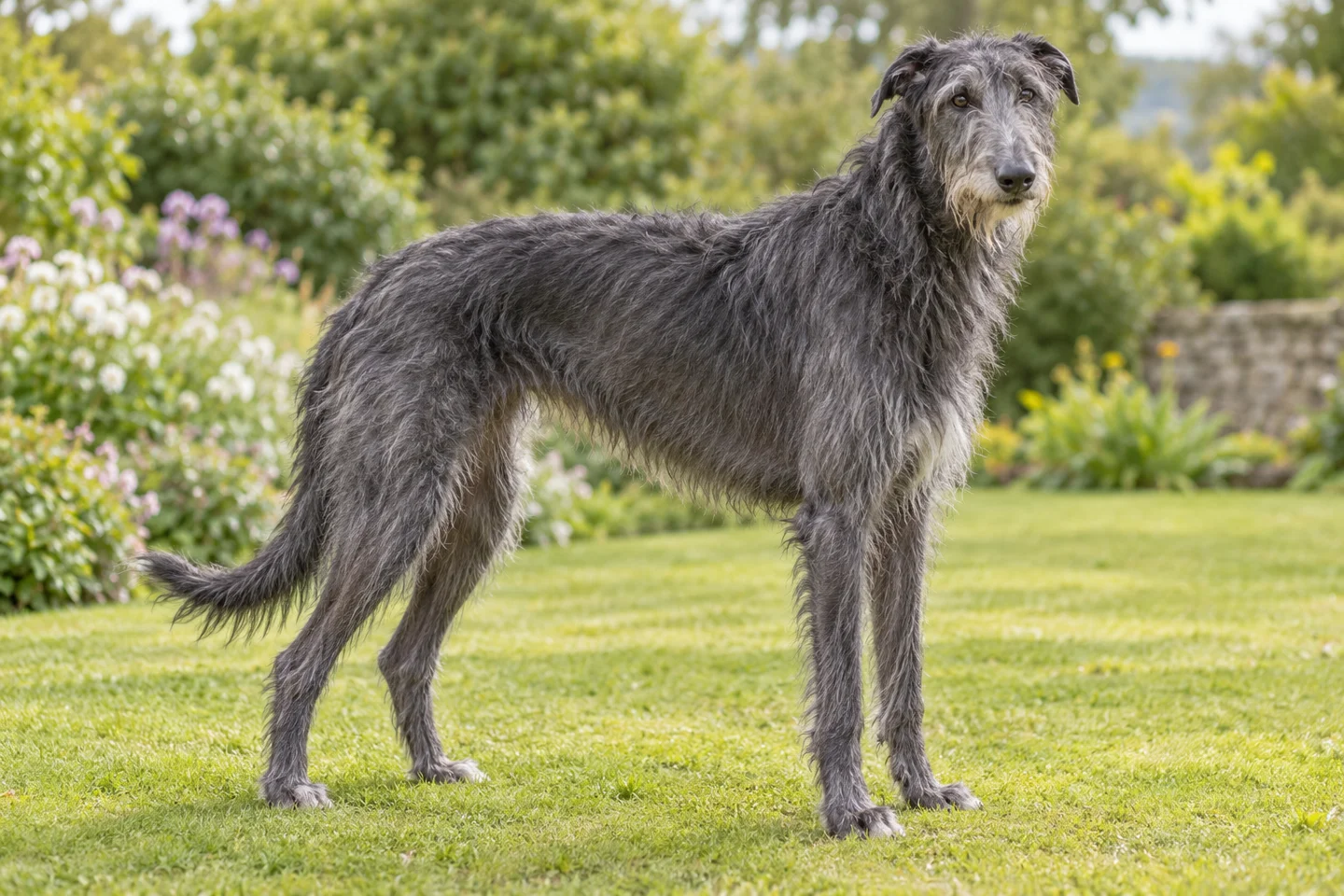
- Harsh, shaggy, and wiry; blue-gray illustrated
- Care priorities
- Transport, pursuit safety, cardiac assessment, and procedure planning
General information for owners. These articles have not been reviewed by a veterinarian. Medical decisions need your dog's history and an examination.
Plan for the height before choosing the puppy
A Scottish Deerhound needs enough practical space for a very tall dog to turn, stretch, travel, and receive care. Measure the vehicle opening, usable floor area, and routes through the home. Think about a painful adult that cannot climb or jump, not only a graceful puppy entering willingly. A household should have a realistic way to reach veterinary care without one person attempting to lift the full animal. Access is a central ownership question, even when the dog spends much of a quiet afternoon resting.
Meet adults and ask owners about ordinary complications: transport, grooming positions, short absences, wildlife encounters, and illness. A calm visit does not tell the whole story of adolescence or medical risk. A responsible source discusses records and limitations without presenting a majestic appearance as evidence of easy care. An assessed adult may offer useful behavioral information, while a puppy leaves more uncertainty. Choose according to the individual and the resources your household can maintain through years, including periods when work, travel, or owner health changes.
Scottish sighthound identity and pursuit history
The FCI standard identifies Great Britain as the origin, with Scottish deer-hunting history central to the breed's identity. That history explains why secure access and pursuit deserve serious discussion. It does not make a modern companion automatically safe around wildlife, livestock, or traffic. Avoid turning broad historical accounts into a precise ancient pedigree for every family. Recent records about health, behavior, and actual home life offer more direct guidance when deciding whether a particular puppy or adult fits your circumstances.
The Deerhound is separate from the Irish Wolfhound, Borzoi, and other large sighthounds. Rough gray hair and tall stature cannot confirm ancestry in a rescue dog. Ask which organization issued a pedigree or how an unrecorded label was reached. If identification remains visual, keep that uncertainty visible. Medical and handling decisions can still follow the animal's actual frame and findings. A breed description should help organize useful questions rather than supply certainty about a dog whose individual history is unknown.
A rough coat over a very large lean frame
The outline includes a deep chest, tucked waist, long limbs, elongated head, small natural rose ears, and a long low tail. A harsh shaggy coat and facial hair distinguish it from silky-coated sighthounds. The illustrations choose a dark blue-gray dog with intact ears and tail. A real animal should be assessed through comfortable movement rather than the drama of height or hair. Exaggerated bulk is not a practical goal for a breed whose functional shape remains lean and athletic.
The FCI minimum withers heights are 76 cm for males and 71 cm for females. Those minima cannot promise an upper size for a puppy, so plan for the actual family and measure the individual as it develops. Learn condition assessment by touch with veterinary guidance. Natural leanness should not explain away an unplanned weight loss, and increasing food to make the dog look massive can obscure appropriate condition. Track meaningful trends and report changes in strength, comfort, or appetite rather than judging from photographs alone.
Secure running requires checking the whole place
Inspect an exercise enclosure before releasing the dog. Examine gates, damaged panels, gaps behind vegetation, and objects near the fence that may provide an exit. Assess the surface and turning space as carefully as the boundary. Holes, wire, slippery ground, and obstacles can be dangerous at speed. Keep the first visit controlled while you learn the setting. A booking described as secure does not remove the need to judge whether it is suitable for a tall fast-moving individual.
Begin with ordinary movement and allow recovery rather than immediately asking for a high-speed chase. Age, conditioning, medical history, and weather should shape the session. Do not assume the dog will voluntarily stop before every physical limit, especially when pursuit is exciting. Watch movement later and after sleep. A persistent limp or new reluctance needs assessment. Identification and tracking may help after escape, while careful access and maintained fencing are responsible for preventing the initial event and the injuries that could occur before a signal is checked.
Recall around animals that move
Teach returning and a comfortable turn toward the handler where the task is achievable, using worthwhile rewards. Keep a lead wherever pursuit could reach traffic, livestock, or wildlife. A familiar response indoors or at an empty field does not certify every future encounter with a running animal. Consider the consequence of failure as well as progress. There is no need to stage a dangerous release to test reliability, and safe investigation can continue through thoughtful route choice and appropriate physical safeguards.
Long lines require particular care with speed and force. Prevent loops around limbs and avoid allowing a fast dog to stop abruptly at full extension. Choose enough room and suitable handling, or use a shorter controlled arrangement where hazards make extra length inappropriate. Reward attention before it disappears and increase distance when the dog becomes fixed on movement. Repeating a cue louder through the same overwhelming event may add frustration without teaching a useful response. An experienced humane instructor can help design safer practice for both dog and person.
Exercise with conditioning and a recovery plan
Build activity steadily through ordinary weeks rather than expecting exceptional effort after inactivity. Comfortable walks, investigation, and appropriate training can provide variety. Puppies need developmental limits and sleep, while an adult with a cardiac or orthopedic concern needs individual veterinary advice. Watch recovery after rest as well as enthusiasm during a game. Weakness, fainting, an altered gait, or a marked decline in tolerance calls for assessment. Working history and a graceful outline do not establish readiness for the owner's preferred distance.
In warm weather, choose cooler periods, shade, water, and an easy return. Severe distress, collapse, or abnormal breathing needs urgent advice. Quiet alternatives can preserve engagement without repeated frantic turns indoors. Teach an understandable end to activity and allow undisturbed rest. Later life may require shorter routes, more pauses, better traction, and changes to vehicle access. Preserve enjoyable exploration at a comfortable level rather than removing all occupation when demanding running is no longer appropriate. New limitations deserve medical review instead of automatic acceptance as a personality change.
Children beside a very tall resting dog
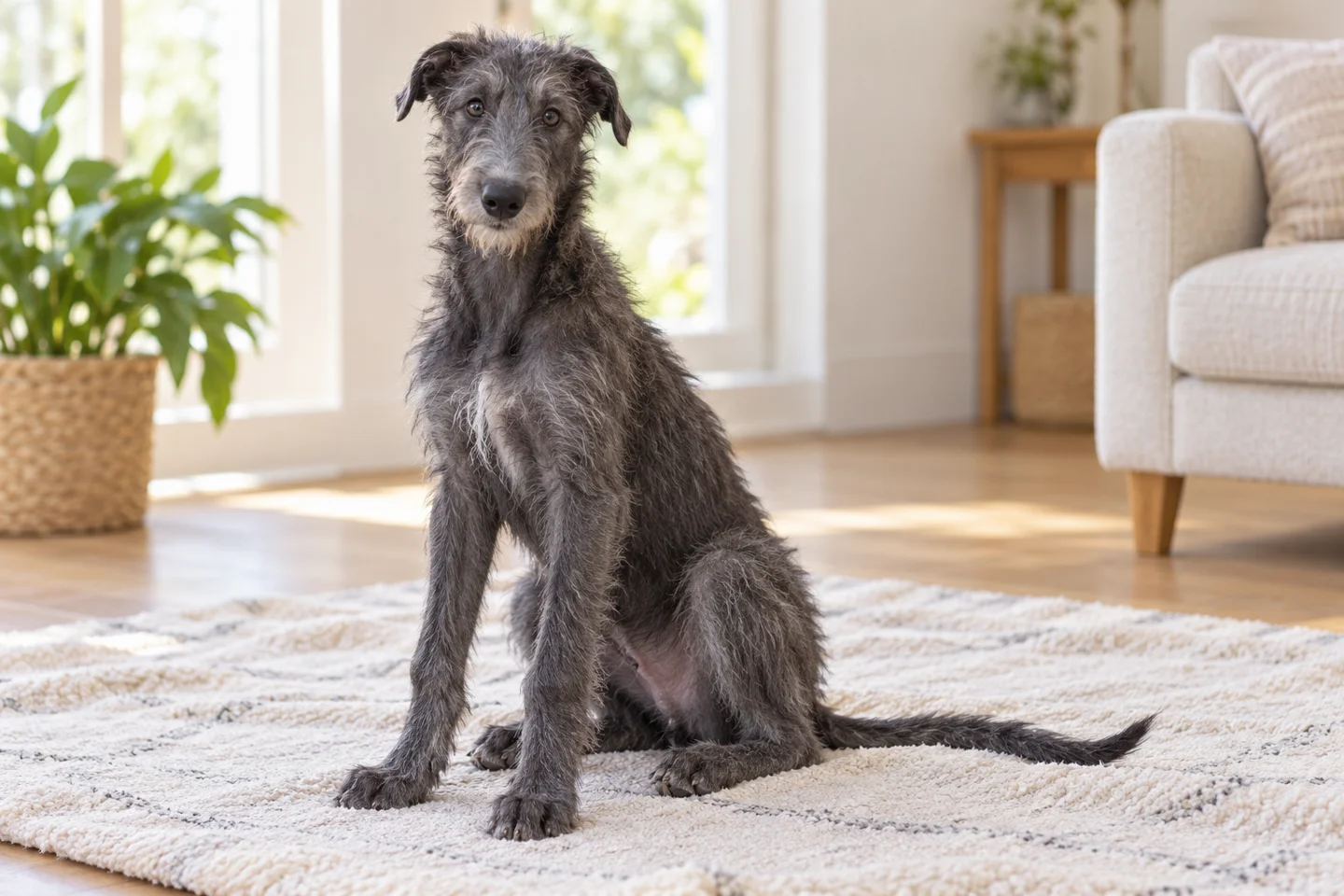
A Deerhound's head and body can be close to children in ways that surprise someone used to smaller companions. Prevent neck-hugging, climbing, ear pulling, and face-to-face posing. Give the dog a private bed away from narrow routes so a child does not have to squeeze past or step over it. Adults should watch closely enough to notice withdrawal and allow the animal to leave. A child's interpretation of subtle discomfort cannot be the principal safeguard around such a large body.
Separate before fast running games if pursuit or collision is uncertain. An excited pass or turn can knock a child down without intentional aggression. Keep meals, chews, and found objects under adult control. Calm shared searches with suitable supervision can offer contact without wrestling for a toy. Prior comfort with one familiar child is useful history but does not establish tolerance of every visitor, crowd, or painful touch. Review arrangements when health or household circumstances change, and investigate new warnings rather than insisting that a gentle reputation should prevent them.
Aggression and a precise account of the encounter
A Deerhound can guard a resource, react defensively when crowded, or object when care hurts. If freezing, growling, or threats appear, stop the approach and arrange distance. Do not repeat the pressure to prove authority. Keep children and visitors outside unresolved conflicts, using separate resources and barriers while assessment proceeds. A sudden change needs veterinary investigation, while recurring concerns call for a qualified behavior professional. Management must function before gradual learning or treatment has had time to alter the underlying response.
AVSAB recommends reward-based methods. Physical confrontation can increase fear and makes handling a very large dog more hazardous. Record the context, approach, response, recovery, and any injury accurately. Labels such as aloof or stubborn cannot tell a temporary carer what happened or which situation to avoid. A useful plan can combine clinical care, environmental changes, and teaching. Its purpose is safer, more comfortable encounters rather than requiring another person or animal to recreate the same risk as a demonstration of the owner's control.
Training participation before physical restraint is needed
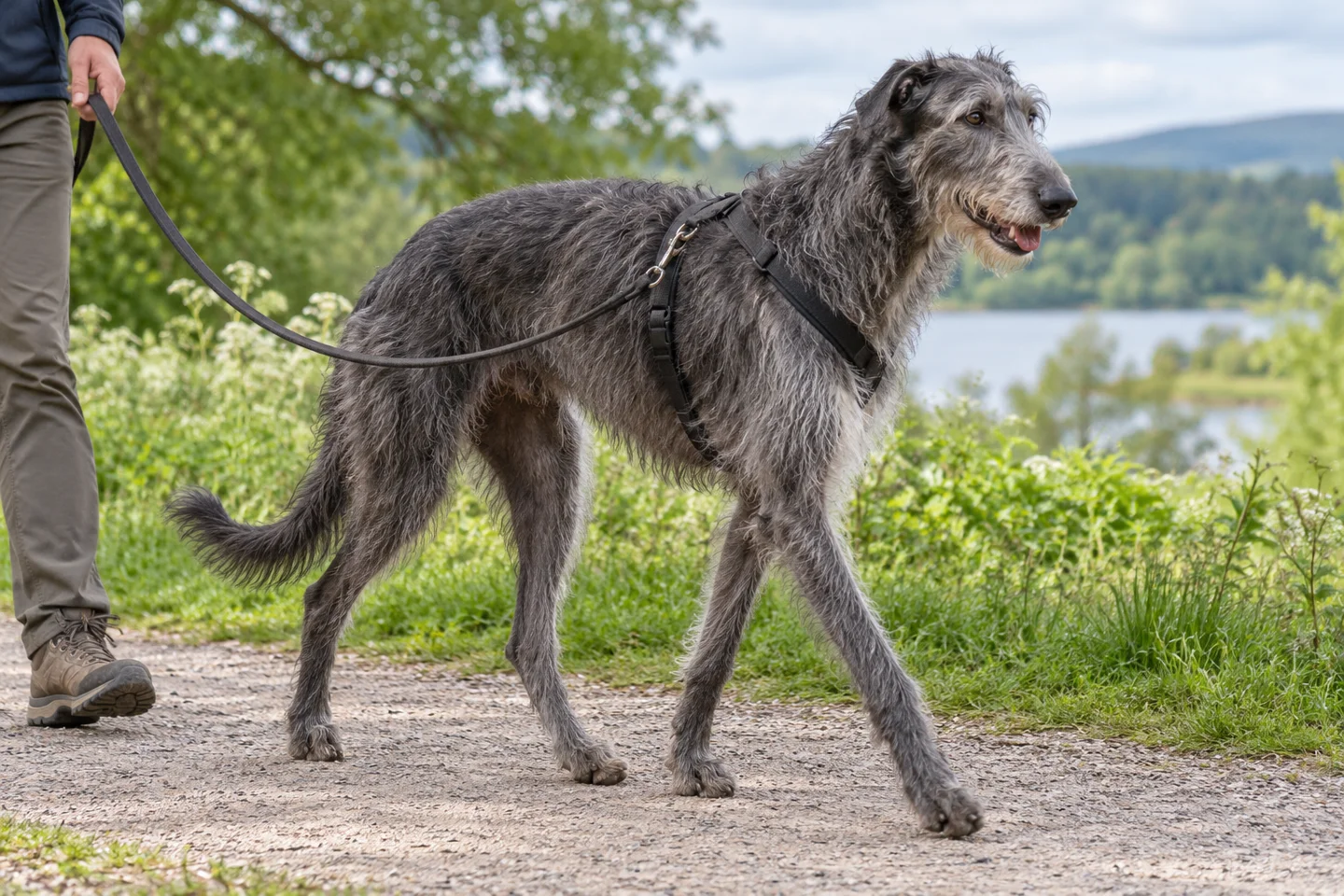
Teach approaching equipment, entering transport, moving onto a mat, and standing briefly on a stable surface. Reward small voluntary steps and add duration gradually. A tall dog that understands the task is easier to care for than one repeatedly placed or held in position. If a response disappears beside an unfamiliar animal, increase distance and simplify. More volume does not resolve confusion, worry, or an environment that exceeds current learning. Choose instruction that explains practical setup and rewards without assuming all sighthounds require harsh tools.
Include gentle mouth, ear, and foot handling in comfortable circumstances, coordinating with clinicians when treatment cannot wait for training to finish. Household adults should share cues and access rules so routines remain predictable. Skills need easy rebuilding across locations, not an assumption that a kitchen response instantly transfers to a clinic or crowded entrance. Short clear lessons can support ordinary life more than a long repertoire that only works in one quiet room. A backup handler should learn the same routine before an emergency makes the change unavoidable.
Other dogs, cats, and prey-sized animals
Choose dog companions by actual speed, contact style, size, and ability to pause. A fast large dog can injure a smaller one through impact even without a threat. Start with space to move, interrupt persistent crowding, and let a calm walking friendship be enough. At home, separate food, chews, and favored rest areas while routines develop. Ask carers for concrete examples rather than a broad assurance that the dog likes company. Sharing a route, a vehicle, and a resource are different experiences.
Cats need protected routes and controlled access, with prevention of pursuit. A quiet history with one cat is limited evidence about another that runs. Small pets and poultry need secure separation rather than informal tests based on affection toward humans. A muzzle alone does not prevent fear or impact to a vulnerable animal. Assess whether the home can maintain boundaries through ordinary distractions and changes of handler. If dependable separation is unrealistic, that limitation should inform placement before an avoidable injury occurs.
Grooming rough hair without overlooking skin
Use suitable tools and check close to skin, including beneath equipment, around legs, and in facial hair. Remove superficial debris after countryside activity before it tightens into tangles. A rustic appearance should not conceal painful matting, sores, or retained moisture. Ask a knowledgeable groomer to demonstrate care that fits the actual texture and the dog's tolerance for standing. Tight mats near skin require help rather than blind cutting with scissors. Adapt sessions if an older dog finds prolonged positioning uncomfortable.
Introduce toothbrushing, nail care, and ear observation through brief rewarded lessons. Discharge, pain, scratching, or persistent ear odor needs veterinary assessment rather than probing or leftover prescriptions. A new objection to a familiar touch may indicate discomfort. Tell professionals about sensitive areas and difficult handling before arrival. Necessary clinical care and future training can proceed together, without expecting an owner to examine every painful area alone. Comfortable maintenance should remain the priority over preserving a particular shaggy outline for photographs.
Health screening and cardiac information
The Scottish Deerhound Club of America's health resources discuss cardiac assessment, Factor VII status, and bile-acid testing for liver shunt among recommended evaluations. Ask for the actual family and puppy reports, including what was done and when. An echocardiogram answers questions that a routine listen alone may not resolve. Discuss the current recommendations with your veterinarian and breeder rather than treating an older document as a complete permanent program. Follow-up information from relatives and owners can add useful context.
Cardiac screening describes findings at a particular time, not a promise that later disease is impossible. New fainting, weakness, breathing change, or reduced exercise tolerance needs individual assessment. The club also discusses serious concerns such as osteosarcoma, for which a routine DNA panel cannot certify freedom. Persistent focal pain or lameness deserves attention. Keep reports accessible across clinics and avoid universal claims about every sighthound's response to medication or anesthesia. The treating clinician needs the dog's own findings, procedure, and treatment history.
Bleeding risk belongs in procedure planning
Deerhound health guidance distinguishes Factor VII deficiency from delayed postoperative hemorrhage. These are different concerns and should not be collapsed into a general statement that the dog bleeds. Ask what testing and history are known for the individual and share the reports before surgery, dental work, or another invasive procedure. Current resources discuss genetic information relevant to delayed bleeding as well as Factor VII. A veterinarian needs to interpret how those findings affect planning and monitoring for this dog.
Do not copy preventive drugs or doses from another owner, and do not assume a previous uneventful procedure removes all future concern. Follow the clinic's instructions about observation and what signs require urgent contact after treatment. Keep the plan clear for whoever will supervise recovery. A procedure may appear finished while later monitoring remains important, which is why accurate history and accessible emergency contacts matter. If abnormal bleeding or deterioration occurs, seek clinical help promptly rather than waiting to compare the episode with an online account.
Feeding, mixes, costs, and dogsDating
Use a complete diet appropriate to age, expected adult size, condition, and medical needs. Do not accelerate puppy growth or add bulk to change the naturally lean frame. Deerhound mixes vary in height, coat, pursuit, and health risks; a combined name cannot guarantee easier care. Budget for large-dog transport, preventive treatment, training, reliable holiday cover, and unexpected costs. Ensure a carer can follow procedure-related instructions and safely manage the adult rather than relying on its quiet reputation.
Describe actual pace, contact preferences, lead requirements, and relevant medical limits on dogsDating, keeping exact home coordinates private. Meet on a quiet public route with two capable handlers and room to separate. Begin with a brief parallel walk, leaving chase toys out and avoiding a first-meeting test of high-speed play. Respect pauses and end if contact becomes one-sided. A calm walking friendship may be enough, while shared resources or close indoor access require separate assessment and both owners' continuing attention to comfort.
A bloat emergency needs a destination
Ask the veterinary team how to recognize a possible gastric emergency and where to go after hours. Repeated unsuccessful retching, an enlarging abdomen, severe distress, or collapse warrants immediate contact. Do not wait for a complete checklist or try a home remedy while the dog deteriorates. Transport planning matters with a Deerhound's size, so identify who can assist and keep the route and clinic details accessible. A previous normal meal or pleasant walk does not make an abrupt serious change safe to watch overnight.
Sources and editorial notes
Sources checked October 21, 2026. Breed measurements describe reference ranges, not a diagnosis or an individual dog's ideal weight. Images are AI-generated breed illustrations and do not document a particular dog or health condition.
- AVSAB: Humane Dog Training Position Statement
- VCA: Food Aggression in Puppies
- VCA: Grooming and Coat Care for Your Dog
- VCA: Ear Infections in Dogs
- VCA: Feeding Guidelines for Dogs
- Orthopedic Foundation for Animals: Canine Health Assessments
- VCA: Common Emergencies in Dogs
- VCA: Heat Stroke in Dogs
- Scottish Deerhound Club of America: Health 101
- Deerhound Health: Bleeding Problems
- Deerhound Health: Recommended Health Tests
- FCI: Scottish Deerhound Breed Standard
Keep getting to know dogs.
Read another guide or return to your dogsDating community.
Explore breed guidesBack to dogsDating