Jindo
A Korean hunting and guarding breed whose companion life needs secure handling, measured introductions, clear identity records, and careful health interpretation.
How these guides are researched and reviewed
- Origin
- Korea; associated with Jindo Island
- Adult height
- FCI males 50–55 cm; females 45–50 cm
- Adult weight
- FCI males 18–23 kg; females 15–19 kg
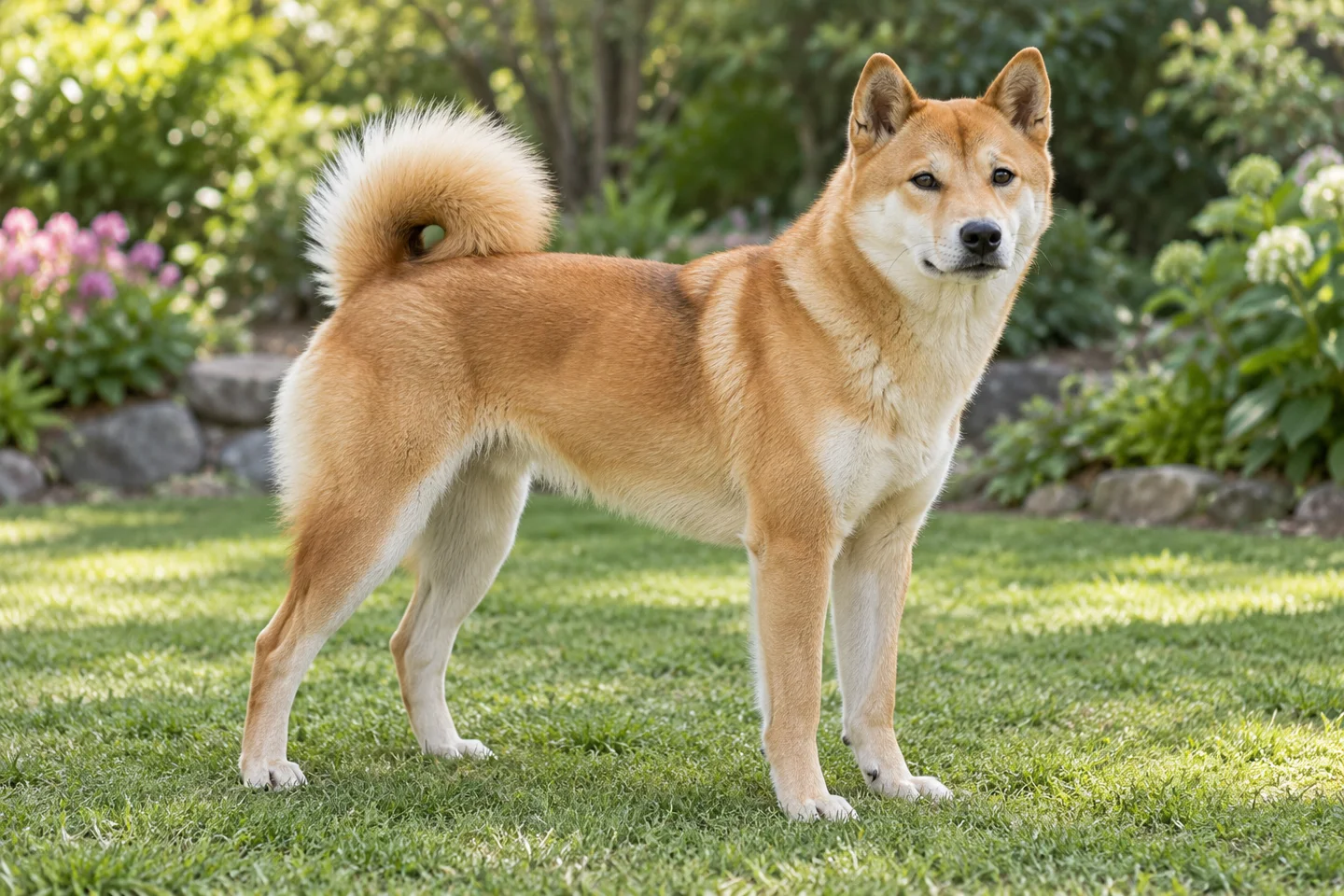
- Illustrated example
- Red fawn with natural ears and a full sickle tail
General information for owners. These articles have not been reviewed by a veterinarian. Medical decisions need your dog's history and an examination.
Choosing a Jindo through evidence
A Jindo should be chosen through a careful discussion of the individual dog's background and the home it needs. Its athletic frame, upright ears, and curled or sickle tail may be the first features you notice. The more important questions concern secure handling, animal introductions, visitors, and support during a move. Ask what the dog has actually experienced. A breed reputation cannot tell you whether it knows how to rest in your household or walk through the surroundings where you live.
Use the name accurately. A Korean rescue described as Jindo-like may have uncertain ancestry, and a similar appearance does not establish a pedigree. A dog with incomplete records can still have well-documented care and behavior needs. Ask the organization to distinguish those observations from its ancestry estimate. This guide discusses the recognized Korea Jindo Dog while preserving that distinction. For an ownership decision, the dog's current responses and the support you can maintain are essential evidence alongside any reliable identity documents.
Island history without invented certainty
The FCI connects the breed with Jindo Island in Korea and acknowledges that its earliest origin lacks a written record. Its account describes a hunting and guarding dog preserved in an island setting. That uncertainty should remain visible instead of being replaced with a precise ancient founding story. Names such as Jindo-kae refer to the same regional identity, while other Korean native breeds have their own histories and should not be folded into this one.
The practical implication is to ask about the particular family and upbringing. A dog raised in a kennel, a rural home, or a foster apartment may have very different experience of traffic, visitors, and separation. Discuss how a transition will be organized and who can provide advice afterward. Avoid interpreting attachment to a former owner as proof that rehoming cannot succeed. Give the new relationship time and predictable routines. Learn what the animal already understands before making broad judgments about loyalty or willingness to cooperate.
Adult dimensions and the selected illustration
The FCI height ranges are 50–55 centimeters for males and 45–50 for females, with weights of 18–23 and 15–19 kilograms respectively. Its accepted colors include red fawn, white, black, black and tan, wolf grey, and brindle. This guide illustrates a red-fawn example with a lighter underside. The dog should be well proportioned, with a dense double coat and natural erect ears. A tail may be rolled or carried in a sickle; that feature does not identify ancestry by itself.
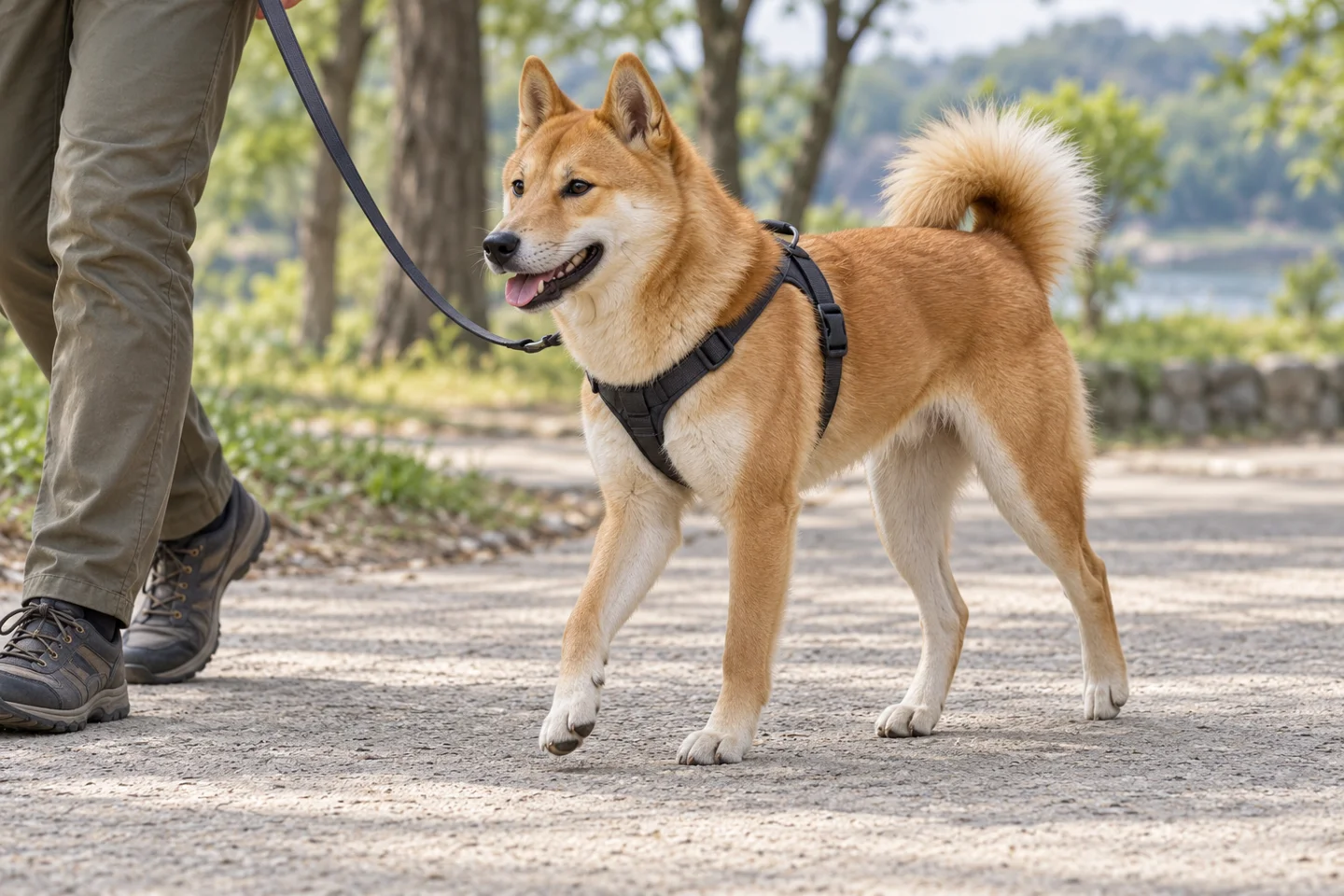
Plan equipment around the actual body. Check a harness during movement and ensure it cannot slip over the shoulders when the dog backs away. Ask for guidance if escape has been a concern. Secure the travel arrangement before collection and check doors, gates, and fence lines at home. A confident dog can still be startled in unfamiliar surroundings. Physical preparation should precede assumptions that attachment or a good return cue will prevent an escape during the first days of a move.
The first weeks should be predictable
Keep early routines simple enough that everyone can follow them. Decide where the dog will sleep, where equipment will be fitted, and how visitors will be managed. Avoid making the first weekend a tour of every friend's house. Give the animal time to learn who belongs in its new home and where it can rest without interruption. Ask the previous carer which foods, handling methods, and daily sequences are familiar, and retain useful parts while introducing necessary changes gradually.
Observe how the dog responds to a quiet invitation rather than repeatedly reaching for it. A dog that hangs back should not be cornered to accelerate bonding. Reward voluntary approaches and provide space. Record what helps it settle and which conditions produce vigilance or avoidance. If it cannot rest, eat, or move comfortably through an ordinary routine, seek advice. Patience is useful when paired with a clear plan and observation; it should not become a reason to leave serious distress unassessed for weeks.
Training with motivation and safe management
Begin teaching in a secure setting where the Jindo can concentrate. Reward a glance toward you, a few steps of following, and moving into an agreed resting place. Use those skills in everyday life so the animal learns what produces a comfortable outcome. Do not make recall training depend on chasing the dog around an open area. Start with an easy distance and practice in controlled surroundings before introducing a stronger distraction or a less familiar route.
AVSAB recommends reward-based methods and rejects the need for aversive training. If someone proposes escalating physical force because the dog is independent, ask how the intended skill will be taught without fear or pain. A qualified instructor can assess reinforcement, distraction, and the pace of learning. Maintain secure equipment while training develops. Being able to perform a cue indoors does not prove reliability near wildlife. The owner needs a way to prevent a dangerous choice while giving the animal repeated opportunities to learn a useful alternative.
Exercise and the question of wildlife
The Jindo's hunting background makes wildlife management a serious practical topic. Ask about the individual's observed responses to birds, cats, and small mammals. Choose routes and equipment that allow safe exploration without an uncontrolled chase. A breed description praising direction finding cannot guarantee a safe return across roads. Use enclosed areas for suitable freedom and inspect their boundaries before release. Discuss any proposed sport with an instructor who understands both the dog's fitness and its learning history.
Exercise should fit the whole animal rather than a stereotype of unlimited endurance. Age, health, temperature, and recovery matter. A varied routine can include sniffing, short lessons, and appropriate play, followed by quiet rest. Contact the veterinary team about recurring stiffness or a persistent change in stamina. Have a less demanding option for difficult weather or illness in the household. An owner who can adapt the plan consistently is better prepared than one relying on a single intense outing to solve every indoor behavior problem.
Aggression requires a description of the event
If a Jindo stiffens, growls, snaps, or bites, record what happened before assigning a broad explanation. Was there pain, a valued object, an approaching dog, or pressure near a doorway? Prevent another exposure while arranging assessment. Tell your veterinarian about a sudden change, especially during movement or handling. A known incident should not be hidden behind a positive breed description. The next carer needs the actual circumstances and the current restrictions to keep everyone safer.
Avoid punishing warnings or releasing a lunging dog to discover whether it is truly aggressive. VCA explains that outwardly similar behavior can have different motivations. Use distance and secure barriers until a qualified professional helps interpret the pattern. Teach exchanges and voluntary movement where appropriate, without provoking resource conflicts. Where a bite history exists, professional risk assessment should guide future contact. A muzzle may form part of an advised plan, but it cannot make unsafe pressure or an unsuitable social meeting acceptable.
Children need supervision and a protected retreat
Discuss the ages, activity levels, and routines of children before placement. A dog comfortable with teenagers may have no experience of toddlers running or reaching suddenly. Ask for concrete observations from similar settings. Arrange adult supervision and a resting area children cannot enter. Do not ask a child to hold a collar, remove food, or wake the dog. If the supervising adult becomes busy, use a physical separation that preserves comfort on both sides.
Explain what children should do when the dog leaves: allow it to go. Avoid making affection into a requirement for the animal to tolerate hugs or face-level contact. Shared activities can be quiet and organized, such as an adult managing the dog while a child helps prepare an easy search. Stop before excitement or competition rises. Any concerning response needs a change in management and qualified advice. The purpose of supervision is to notice and prevent pressure, not merely to be somewhere in the same room.
Cats small pets and escape prevention
A history of hunting work makes a careful small-animal plan important. Ask what the dog has actually done around cats and protect the cat's escape routes from the outset. Do not rely on a calm glance through a barrier as proof of safety when an animal runs. Keep small pets in secure separate housing. Never hold one still for the dog to inspect, and do not allow a chase to become the method of finding out whether coexistence is possible.
Check access points around the home as part of that same plan. Visitors, deliveries, and garden work can leave a gate open unexpectedly. Use a second barrier where needed and explain the arrangement to everyone involved. A tracker or identity tag is useful backup information, but neither prevents a dangerous escape. Maintain identification and contact records and arrange controlled collection or handover. The practical question is whether a tired or distracted person can still follow the system, not whether the owner believes the dog normally stays close.
Grooming a dense coat with skin access
A Jindo's double coat needs inspection beneath the outer hair. Ask a groomer or experienced carer to demonstrate gentle undercoat maintenance, especially during shedding. Check where straps rub and where hair becomes packed behind the legs or around the neck. Work in small areas and avoid pulling against a tight knot. If skin is hidden inside a mat, obtain skilled help rather than cutting blindly with scissors. The animal's comfort should determine the pace.
Look for a change in skin color, crusting, persistent scratching, or coat thinning and arrange veterinary advice. Record when it began and whether products, equipment, or activities changed. Do not interpret every altered nose pigment as the same condition, and avoid applying a human cream without instructions. A grooming session is an opportunity to notice a problem, not a substitute for diagnosis. Keep tools and the care routine familiar enough that another trusted person can help without holding the dog through escalating distress.
Health records and the limits of broad DNA panels
The Korean Jindo Dog Association of America reports discoid lupus erythematosus and hypothyroidism among concerns observed in the breed. Its page distinguishes these from isolated reports and findings in dogs of uncertain background. That distinction matters: a report of a condition does not establish a population frequency. Ask which screening program the source follows and request identifiable records. Discuss significant diagnoses in relatives without accepting a sweeping claim that island origins eliminate inherited illness.
The association also cautions that some broad-panel DNA findings require validation for Jindos. Ask a veterinarian or qualified genetics professional what a result means for this breed before treating it as a diagnosis or a breeding decision by itself. Clinical assessment remains necessary for present symptoms. Keep missing information explicit in a rescue history and build current care from evidence. Favorable screening cannot exclude every later condition, while a concerning symptom should not be dismissed simply because an online breed page calls the animal robust.
Feeding handling and routine medical care
Use a complete diet suited to age and clinical needs, with portions reviewed against body condition and actual intake. Keep training rewards within the daily total. If the animal eats little after a move, tell the source and veterinarian what is happening rather than assuming every change is a normal breed trait. Persistent appetite loss, altered thirst, weight change, or digestive signs deserve assessment. A measured record is more useful than repeatedly replacing foods without a clear reason.
Practice brief mouth, foot, and ear checks when the dog is comfortable. Ask the clinic how to proceed if it is worried or painful, and share handling concerns before appointments. Unusual ear odor, discharge, or repeated head shaking needs examination. Arrange parasite protection and prevention around residence and travel. Know which service receives emergencies and how transport will work. Collapse, breathing distress, serious injury, or suspected poisoning calls for prompt professional contact. A carefully organized routine helps the dog receive care even when its usual person is unavailable.
Mixes sources and the cost of suitable care
Jindo mixes and Jindo-like dogs should be described honestly. A curled tail, triangular ears, or a Korean place of rescue cannot establish the ancestry of every individual. Ask what records exist and separate them from an appearance-based estimate. Crossbreeding does not produce a guaranteed temperament or remove every health risk. For known parents, seek relevant information about both. For an adult without that history, detailed foster observations and current veterinary findings can still guide a sensible placement.
Include suitable care in the budget. Obtain local prices for secure equipment, training help, veterinary prevention, and care during absences. Ask a potential sitter about experience and willingness to follow the actual handling plan. Review return support and disclosure from the source. A home that cannot maintain necessary boundaries should resolve that before bringing the dog in. Costs include time and organization as well as money, especially when introductions or travel need a slower approach than the household first imagined.
dogsDating introductions without a compulsory greeting
Describe observed preferences on dogsDating, including space around unfamiliar dogs, suitable walking pace, and any restrictions recommended by a professional. Keep exact coordinates and your home address private. Use an approximate area to agree on a public meeting point with room to move apart. Confirm that each adult can manage their own dog and that the first plan does not require shared transport, a home visit, or immediate physical play.
Start with parallel walking at a distance both animals can tolerate. Watch whether they can look away, investigate the route, and respond comfortably to their handlers. Avoid shared toys or close food games during the first encounter. If either dog remains fixed on the other, stiffens, or repeatedly tries to leave, increase distance or end the walk. Afterwards, record the conditions that worked rather than awarding a general friendship label. Familiar walking company can be valuable while close greeting remains unnecessary.
Sources and editorial notes
Sources checked October 21, 2026. Breed measurements describe reference ranges, not a diagnosis or an individual dog's ideal weight. Images are AI-generated breed illustrations and do not document a particular dog or health condition.
- AVSAB: Humane Dog Training Position Statement
- VCA Animal Hospitals: Food aggression in puppies
- VCA Animal Hospitals: Common emergencies in dogs
- Orthopedic Foundation for Animals: CHIC health screening programs
- VCA Animal Hospitals: Aggression toward unfamiliar dogs, diagnosis
- VCA Animal Hospitals: Grooming and coat care for your dog
- VCA Animal Hospitals: Ear infections in dogs (otitis externa)
- AAHA: Feeding plans for healthy, appropriate weight cats and dogs
- AVSAB: Puppy Socialization Position Statement
- VCA Animal Hospitals: Dog behavior problems, aggression toward children
- FCI: Korea Jindo Dog official breed standard
- American Kennel Club: Korean Jindo Dog information
- Korean Jindo Dog Association of America: Health
Keep getting to know dogs.
Read another guide or return to your dogsDating community.
Explore breed guidesBack to dogsDating