Lakeland Terrier
A small leggy terrier with a harsh coat, quick reactions, and a need for owners who enjoy teaching practical boundaries.
How these guides are researched and reviewed
- Origin
- Great Britain
- Standard height
- Not exceeding 37 cm
- Standard weight
- Males 7.7 kg; females 6.8 kg
- Coat care
- Harsh double coat; discuss stripping or a practical pet trim
General information for owners. These articles have not been reviewed by a veterinarian. Medical decisions need your dog's history and an examination.
The Lakeland decision starts with daily management
A Lakeland Terrier can suit someone who enjoys an alert companion and the process of teaching one. Its small frame should not be mistaken for a small commitment. Think about doors opening for deliveries, visiting children dropping toys, and walks where wildlife appears suddenly. Those ordinary moments deserve a plan before you bring a terrier home. Meet a few adults with their owners and watch what happens between the exciting parts of the visit. A dog standing still for a photograph gives much less information than one returning from a walk, settling indoors, and responding when an activity finishes.
Owners should be ready to provide safe opportunities for investigation while maintaining boundaries that protect the dog and others. That requires more than having access to a garden. Someone must inspect the fencing, teach a dependable response near a door, and notice when a game is becoming too intense. A household that likes active training may enjoy those tasks. A household expecting a decorative dog to amuse itself whenever people are busy may struggle. Discuss the actual source dog's routine and temperament, including its less convenient habits, so the decision rests on practical information rather than affection for a recognizable terrier outline.
A British terrier with its own identity
The Lakeland takes its name from England's Lake District and belongs to the long-legged British terrier tradition. The AKC describes its origins in farm work involving foxes. Keep the identity distinct from that of a Welsh Terrier or an Airedale, even when coat coloring makes them look related to a casual observer. A smaller version of another breed is not an accurate description of the Lakeland. Its own standard values balance, a reasonably narrow chest, and a compact working outline. Historical work explains interests an owner should investigate; it cannot establish how a particular pet will behave in every encounter.
Ask which activities the breeder or rescue has observed rather than assuming every individual wants the same outlet. A dog might find searching through a safe area rewarding, enjoy learning with a handler, or need help calming after excitement. Select activities that fit its current abilities and the places available to you. Wildlife should remain protected, and pet ownership does not require recreating historical quarry work. If you hope to try a terrier-related sport, find a qualified instructor and ask about welfare, equipment, and health preparation. The dog's response should guide progress, including whether an apparently suitable activity is enjoyable for that individual at all.
Size, movement, and the recognizable head
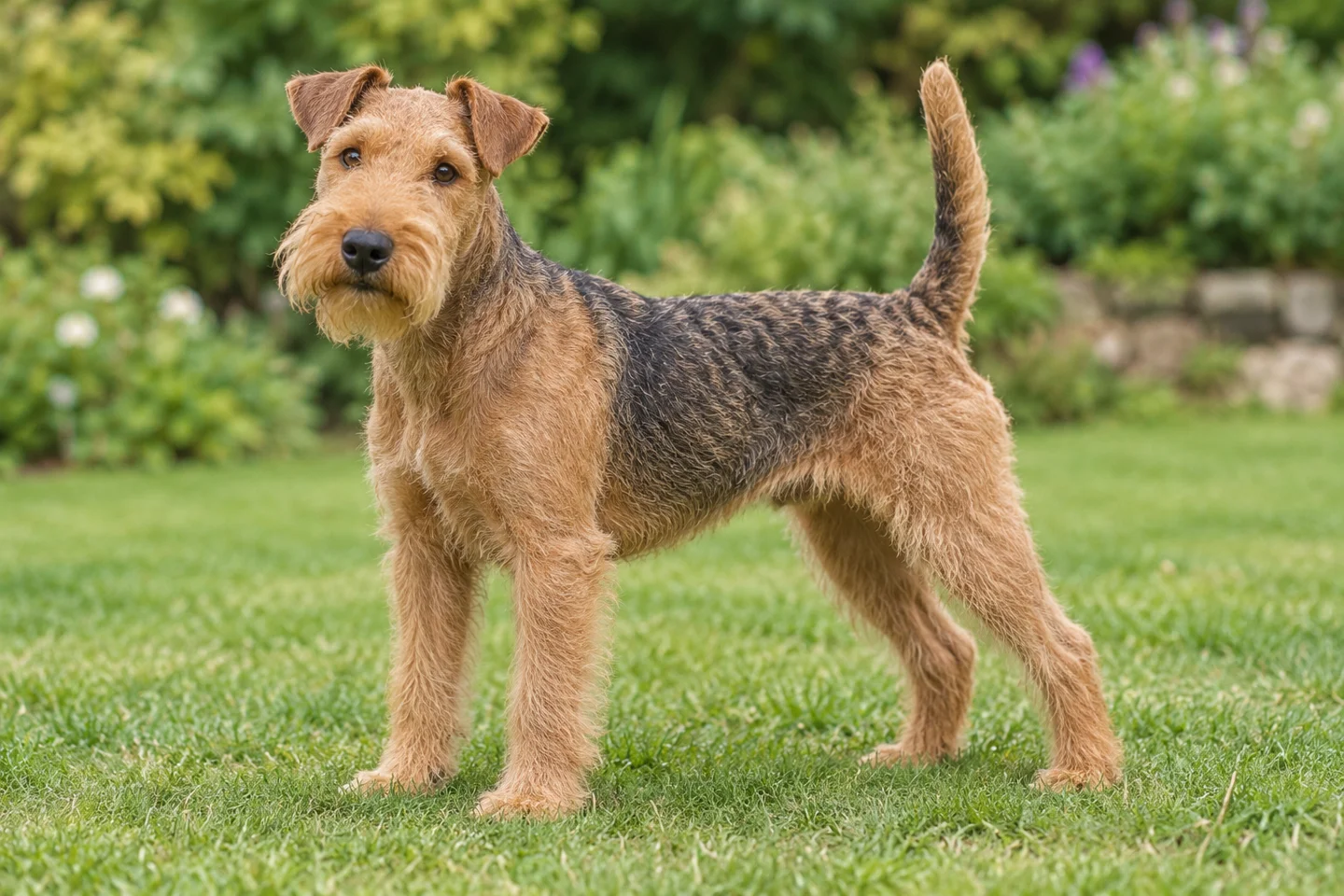
The FCI standard limits height to 37 cm at the shoulder and lists weights of 7.7 kg for males and 6.8 kg for females. It describes a refined flat skull, a broad muzzle, dark or hazel eyes, and small V-shaped ears. Straight forelegs and a compact, balanced body contribute to the characteristic stance. The natural tail is carried up without curling over the back. These are standard descriptions, not reasons to crop ears or shorten a tail. The accompanying illustrations use natural anatomy and a red-grizzle coat with modest facial furnishings.
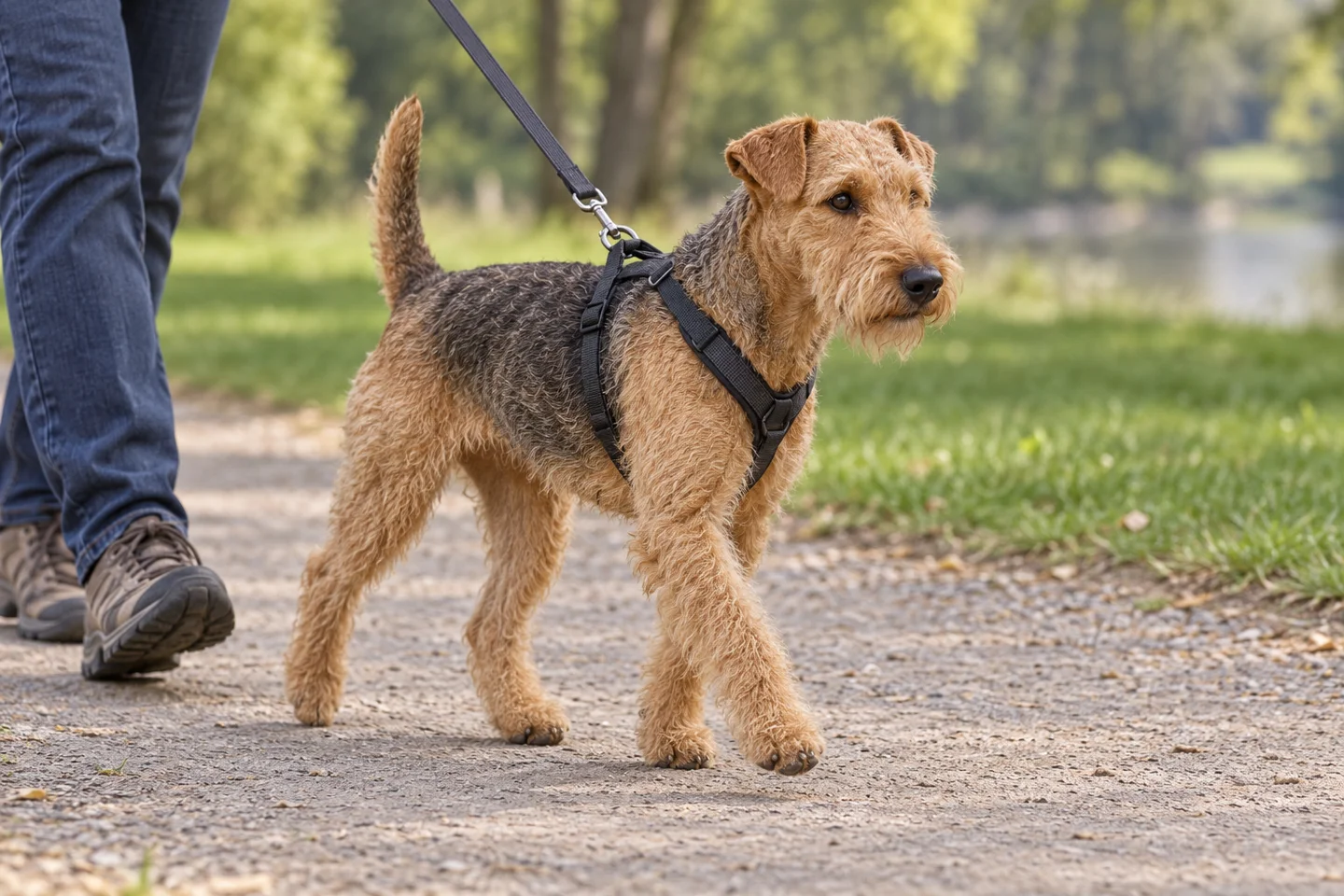
Coat colors include several solid shades and combinations, so color alone will not identify every Lakeland. For a pet, look past the sculpted outline and ask whether the dog moves freely and appears comfortable during ordinary activity. The beard should not conceal a problem eating, and decorative hair should not restrict sight. Have your veterinarian assess the individual's condition rather than feeding to achieve a show weight. Equipment must allow the shoulder and forelegs to move, with no rubbing hidden in the furnishings. A puppy needs repeated fitting checks as it grows, while an adult may need adjustment after a substantial change in coat length or body condition.
Training that gives a quick dog something clear to do
Teach small usable behaviors before asking for impressive ones. A Lakeland that can pause behind a barrier while a parcel arrives has learned something the whole household needs. Begin with the door closed and an easy reward for staying in a chosen place, then add one part of the delivery routine at a time. Do not start the lesson during the busiest visit of the week. If the dog leaves its place, reduce the difficulty and prevent access to the open door while you practise again. Reward-based training gives the owner a clear way to explain what earns a useful outcome.
Practice recall with secure equipment in a setting where you can succeed. Calling repeatedly while the dog is fully occupied in pursuit teaches little about returning. Start with easy distances and reward generously, then release to an appropriate activity so recall does not always end the fun. Teach an exchange for toys and household objects through planned games, keeping unsuitable items out of reach. If the dog has learned to make people chase it, change the environment and reward the alternative you need. Avoid treating every independent choice as a contest. A brief, well-designed practice session can change tomorrow's routine more than a long argument after something goes wrong.
Exercise with an off switch in the schedule
Lakeland exercise should include opportunities to use the brain as well as move the body. Rotate walking routes, offer supervised investigation, and make time for simple learning. The useful question is whether the individual finishes an outing comfortable and can then rest. Continuously adding excitement because a dog still looks alert can create a routine nobody can sustain. Build in quieter periods and teach a predictable ending to games. If you use a fenced space, inspect it before releasing the dog and supervise rather than assuming the boundary can manage an absorbed terrier without help.
Match physical demands to age, health, weather, and preparation. Ask the veterinary team before beginning demanding running or sport, particularly when a dog is still growing or returning after illness. Have an easy route home if heat or fatigue changes the plan. Provide water and monitor how the dog moves afterward, including when it rises from rest. Repeated limping or a persistent change in willingness to exercise needs assessment. Describe the observation precisely instead of deciding the dog is lazy or stubborn. An active breed identity does not oblige a pet to continue through discomfort, and enthusiasm at the start of a game does not prove every repetition remains appropriate.
Socialization for ordinary streets and unfamiliar handling
Make early exposure useful by controlling how much the dog has to manage at once. Discuss safe outings with your veterinarian as vaccinations progress. Watch traffic from a comfortable place before trying a busy pavement, and let a new person remain at a distance before expecting touch. A puppy learning that it can observe and then leave has gained something even without a greeting. Adopted adults also need their experience assessed rather than presumed. Ask previous carers what they know about shops, lifts, vehicles, grooming tables, and visits to clinics.
A practical handling lesson can be as small as standing on a stable mat while someone reaches toward a brush. Reward comfortable participation, stop before the dog becomes overwhelmed, and build from the part it already understands. Separate a difficult task into smaller steps instead of recruiting more people to restrain the dog. Record what helps, including surface, location, handler position, and reward. A groomer can then begin from an informed point. Repeated freezing, avoidance, or threatening behavior means the plan needs professional attention. Endurance under restraint should not be confused with a relaxed dog choosing to cooperate in a familiar routine.

Aggression and the limits of a bold breed description
A bold terrier description is not a promise of aggression and does not rule aggression out. Investigate the event itself. Was the dog approached while resting, asked to give up a valued object, or crowded by another animal? Did discomfort appear during handling? Those details guide prevention and professional assessment. Protect people from another exposure while arranging help. Sudden behavior change, especially around touch or movement, calls for a veterinary conversation. Repeating an unsafe approach to demonstrate that the dog is usually friendly adds risk and supplies little useful information.
Give the dog secure quiet space for meals and prized chews. Teach children to obtain an adult's help instead of removing an item. Where a dog reacts to unfamiliar dogs, increase distance and keep control rather than allowing a close greeting as a test. A qualified behavior professional can help the household decide what management is realistic. Share factual accounts of bites, contact, injuries, and near misses with anyone taking responsibility for the dog. If a muzzle is recommended, learn comfortable gradual conditioning and correct fit while retaining other safeguards. Equipment cannot turn a known conflict into a suitable game, and punishing a warning does not address why the dog needed space.
Children and animals need workable household boundaries
Arrange child interactions around what an adult can supervise closely. A low barrier can protect the dog's bed while still allowing it to remain near family activity. Teach a child to invite contact and accept the dog walking away, rather than following it behind furniture. Keep brushing, feeding, and retrieval of stolen objects in adult hands. A Lakeland is small enough for children to try lifting but still needs support and consent appropriate to the situation. Tell visitors the rules before excitement builds. When supervision becomes divided, choose comfortable separation instead of expecting the dog to tolerate a busier gathering indefinitely.
Ask about experience with resident dogs, cats, and small pets separately. Terrier history makes safe management around small animals an especially relevant conversation, but observed behavior remains essential. Do not release a rabbit or other pet to see whether the terrier will chase. Use physical separation wherever safety has not been established. For dog companions, consider energy, interaction style, resources, and the ability to retreat. A pleasant outdoor meeting does not settle food sharing or sleeping arrangements indoors. Set up separate necessities and introduce access gradually with advice when needed. If the home cannot maintain the required barriers, reconsider the placement before an avoidable incident creates harm for either animal.
Grooming choices for the harsh double coat
The Lakeland's harsh coat needs skilled maintenance. The AKC describes hand stripping as the method used to retain characteristic texture and notes that clipping changes texture and color. Discuss what is practical for your dog and household with an experienced groomer. A pet trim can be a sensible choice, but the owner should understand its consequences instead of receiving an unexpected result. Ask for a demonstration of the between-appointment care you can do comfortably. A coat that looks tidy from across the room may still contain tangles around the legs, beard, or areas where a harness presses.
Make the groomer's work easier by bringing a current account of skin concerns, previous reactions, and handling needs. Do not expect painful mat removal to become acceptable because the dog is described as tough. A veterinarian should advise on inflamed skin, persistent itching, or sore ears. Clean and dry the beard as appropriate after messy meals, and regularly inspect feet and nails through calm cooperative handling. Use suitable dental care recommended by your clinic. Avoid claiming that a low-shedding coat guarantees freedom from human allergy. Anyone with a relevant allergy should assess contact with actual dogs before committing to ownership, because coat marketing cannot establish an individual's medical response.
Health questions when there is no universal club test panel
The AKC currently lists no national breed-club recommended health tests for the Lakeland Terrier. The published United States Lakeland Terrier Club statement says the club does not require testing and describes ongoing surveys and some breeders' voluntary examinations. The statement is dated 2017, so ask the club for current advice rather than converting its older survey language into a present population statistic. Absence of a required panel is not a declaration that every puppy is disease-free. A breeder can still explain its own examinations and family health history with identifiable records.
Use that conversation to establish what is known over time. Ask what happened to older relatives, whether repeat diagnoses have appeared in related dogs, and how owners can report later findings. A claim that a dog has been checked should identify the clinician's assessment, not merely an attractive photograph or a generic DNA certificate. For an adult with missing ancestry, begin with a current examination and an honest account of the records you do have. Investigate new symptoms on their own terms. A working reputation supplies no diagnosis, while an internet disease list borrowed from another terrier can direct attention away from the actual patient. Bring observations and treatment history to the veterinary team so decisions rest on evidence concerning this dog.
Food, costs, and the practical side of choosing a source
A complete diet needs to fit the dog's life stage and condition. Measure what you offer, count training treats, and review intake with your veterinary team when exercise or weight changes. Do not decide the amount solely from a standard weight figure. Separate meals if another pet creates pressure or makes it difficult to see who ate what. If appetite or digestion changes persist, record the timeline and ask for advice before cycling through products. Supplements need a stated reason and professional guidance rather than a sales claim that active terriers require a special addition.
Before placement, price the grooming you plan to use and establish who can provide it locally. Include secure fencing, equipment repairs, veterinary care, and help during holidays or illness in the budget. A sitter should understand the dog's recall limitations and household boundaries before agreeing to care. Ask a breeder or rescue for written support and return arrangements, medical paperwork, and a clear account of why this animal fits your circumstances. Avoid being hurried by scarcity or an appealing litter photograph. A choice that remains workable during a difficult month is more useful than a plan that depends on perfect weather, uninterrupted health, and every family member being available all the time.
Mixes and labels that do not predict a whole dog
A dog described as a Lakeland mix may resemble the breed through coat, face, or movement, but appearance cannot document its parents. Ask what is known and preserve uncertainty where the rescue or previous owner cannot confirm ancestry. If parents are known, examine information about both. A cross can inherit different coat needs and behavioral tendencies, and there is no general promise that mixing removes inherited illness. Avoid deciding grooming requirements from a puppy's soft coat alone. Ask a qualified groomer to assess what develops as the individual matures.
Choose activities and household rules from observed behavior regardless of the label. A mixed dog that wants distance during greetings still needs that distance, even if somebody has described both parent breeds as sociable. A dog comfortable with one cat does not automatically establish safety around all smaller animals. Give carers useful descriptions such as how the dog responds at the gate, what equipment it wears, and where it can rest undisturbed. Those observations travel well between homes and professionals. A confident prediction built from two breed names often gives less useful guidance than a short, accurate record of the animal's actual experience and the management that helps it cope.
dogsDating company that respects a terrier pace
A dogsDating profile should tell another owner what an outing with this Lakeland involves. Mention whether close greetings are suitable, what distance keeps the dog comfortable, and whether a fast or quiet companion is preferable. Share an approximate neighborhood and agree on a public meeting place while keeping exact coordinates and the home address private. Choose a starting point away from a narrow entrance where both dogs would be forced together. Each owner needs equipment they can manage and a clear route for leaving if either dog becomes uncomfortable.
Walk in parallel first. Avoid presenting a shared toy or scattering treats between unfamiliar animals. Allow investigation without turning a pause into an obligation to greet. If a dog repeatedly stiffens, tries to leave, or cannot settle enough to disengage, change the distance or finish. After the outing, compare the conditions that worked rather than grading the dogs as friendly or difficult. Another quiet walk may be a better next step than off-lead play. A useful match provides manageable company and room for individual choice, with owners prepared to end an activity while it remains a safe experience.
Sources and editorial notes
Sources checked October 22, 2026. Breed measurements describe reference ranges, not a diagnosis or an individual dog's ideal weight. Images are AI-generated breed illustrations and do not document a particular dog or health condition.
- AVSAB: Humane Dog Training Position Statement
- VCA Animal Hospitals: Food aggression in puppies
- Orthopedic Foundation for Animals: CHIC health screening programs
- VCA Animal Hospitals: Aggression toward unfamiliar dogs, diagnosis
- VCA Animal Hospitals: Grooming and coat care for your dog
- VCA Animal Hospitals: Ear infections in dogs (otitis externa)
- AAHA: Feeding plans for healthy, appropriate weight cats and dogs
- VCA Animal Hospitals: Heat stroke in dogs
- AVSAB: Puppy Socialization Position Statement
- VCA Animal Hospitals: Dog behavior problems, aggression toward children
- Official breed standard: Lakeland Terrier
- American Kennel Club: Lakeland Terrier care and breed information
- United States Lakeland Terrier Club: Published health statement
Keep getting to know dogs.
Read another guide or return to your dogsDating community.
Explore breed guidesBack to dogsDating