Rafeiro do Alentejo
The Rafeiro do Alentejo is a large Portuguese property and livestock guardian. A suitable home needs secure access arrangements, realistic expectations about vigilance, and veterinary care based on the individual’s history and present condition.
How these guides are researched and reviewed
- Origin
- Portugal
- Adult standard size
- Males 66–74 cm/45–60 kg; females 64–70 cm/35–50 kg
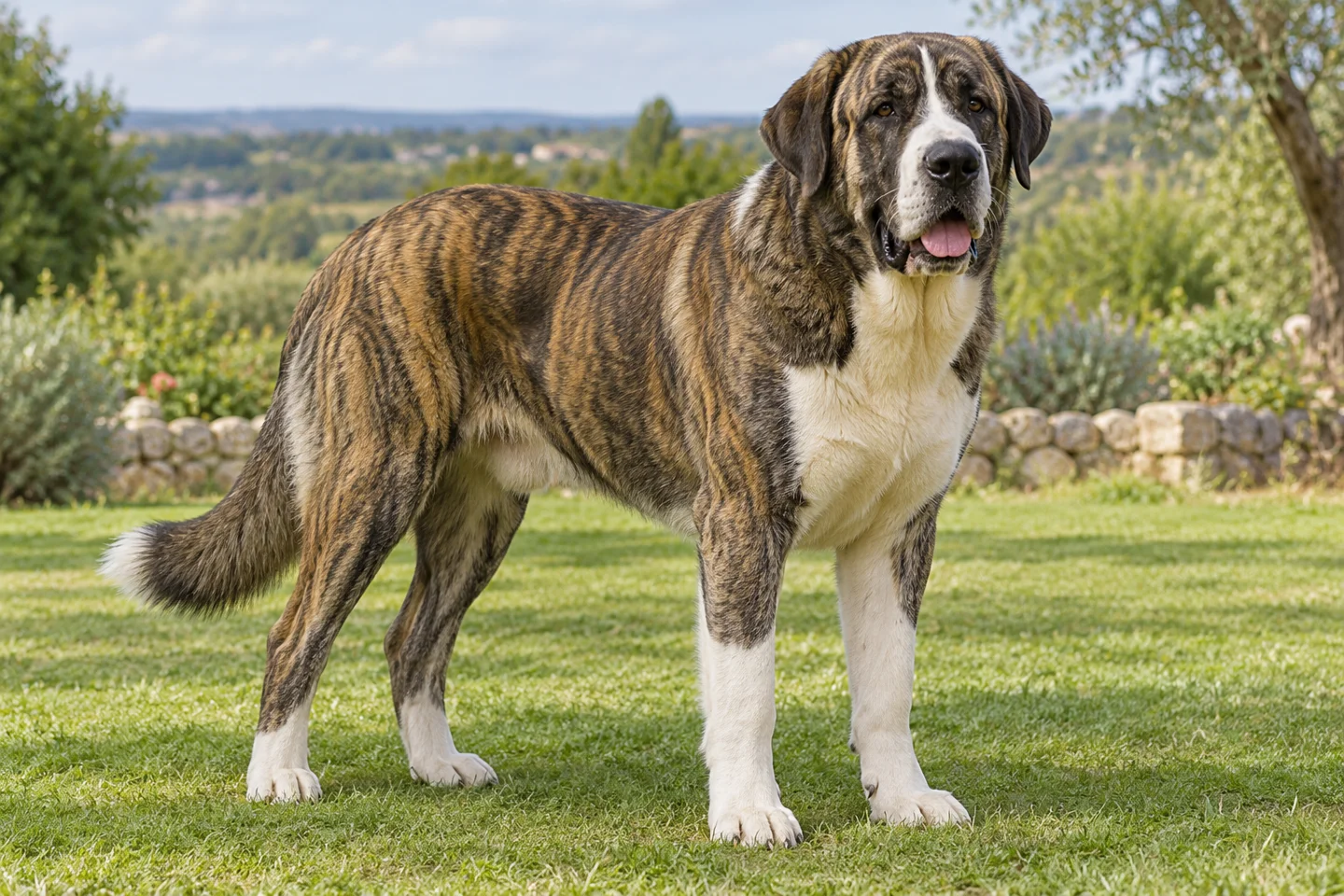
- Illustrated coat
- Brindle with white markings
General information for owners. These articles have not been reviewed by a veterinarian. Medical decisions need your dog's history and an examination.
A Portuguese guardian with a specific name
The Rafeiro do Alentejo is a recognized Portuguese breed, not simply a generic label for a mixed-breed dog. Its name refers to the Alentejo region and its identity is tied to guarding livestock and property. Ask for the actual registered parents and organization when purchasing a pedigree puppy. In an adult rescue description, separate a possible visual identification from the behavior and clinical information that can be verified.
The first ownership questions concern the home rather than color. Can visitors enter through a secure procedure? Where can the dog rest while someone works on the property? Who can handle it during an absence or illness? Meet adults and observe ordinary arrivals and recovery afterward. A calm expression or unhurried movement is limited evidence about how the dog responds when a boundary is crossed unexpectedly. A responsible discussion includes circumstances the source manages carefully, allowing you to assess whether the same needs can be met reliably at your address.
Livestock protection and movement through the landscape
The Portuguese Kennel Club describes a history associated with livestock movements and protection. That role differs from driving animals under close handler direction. An untrained puppy should not be left to invent its own relationship with a flock simply because it belongs to a guardian breed. Appropriate selection, introduction, supervision, and advice protect both the dog and the stock. Ask what the individual has actually learned and which species it has encountered.
A companion home also needs to account for guardian tendencies. A large plot can offer space while still presenting repeated triggers beyond a fence. A smaller address may create a different set of access and noise challenges. Evaluate the actual surroundings instead of assuming rural automatically means suitable. If you plan working livestock protection, discuss fencing, neighboring activity, husbandry routines, and available supervision before placement. A mismatch can harm welfare despite good intentions. Daily needs still include contact, care, and appropriate movement rather than a life of being left outdoors to monitor a boundary without support.
Adult dimensions and proportionate condition
FCI adult ranges are 66–74 cm and 45–60 kg for males, and 64–70 cm and 35–50 kg for females. These are conformation references. They do not establish that a dog inside the weight range has ideal condition or that a growing puppy should be pushed toward maximum size. Ask the veterinarian to evaluate frame, muscle, and body fat. A substantial head and chest should not conceal gradual excess weight.
Consider adult movement through the home and vehicle. Leave room beside the bed for a comfortable rise and turn, provide secure footing where needed, and plan garden access during recovery from treatment. A ramp or other access aid is easier to introduce while the animal is well. Ask who could help move a dog unable to walk and test the transport arrangement before an emergency. A large dog's physical needs continue even when it appears content to lie quietly, and practical assistance matters as much as the equipment an owner buys in preparation.
The illustrated coat and what images cannot show
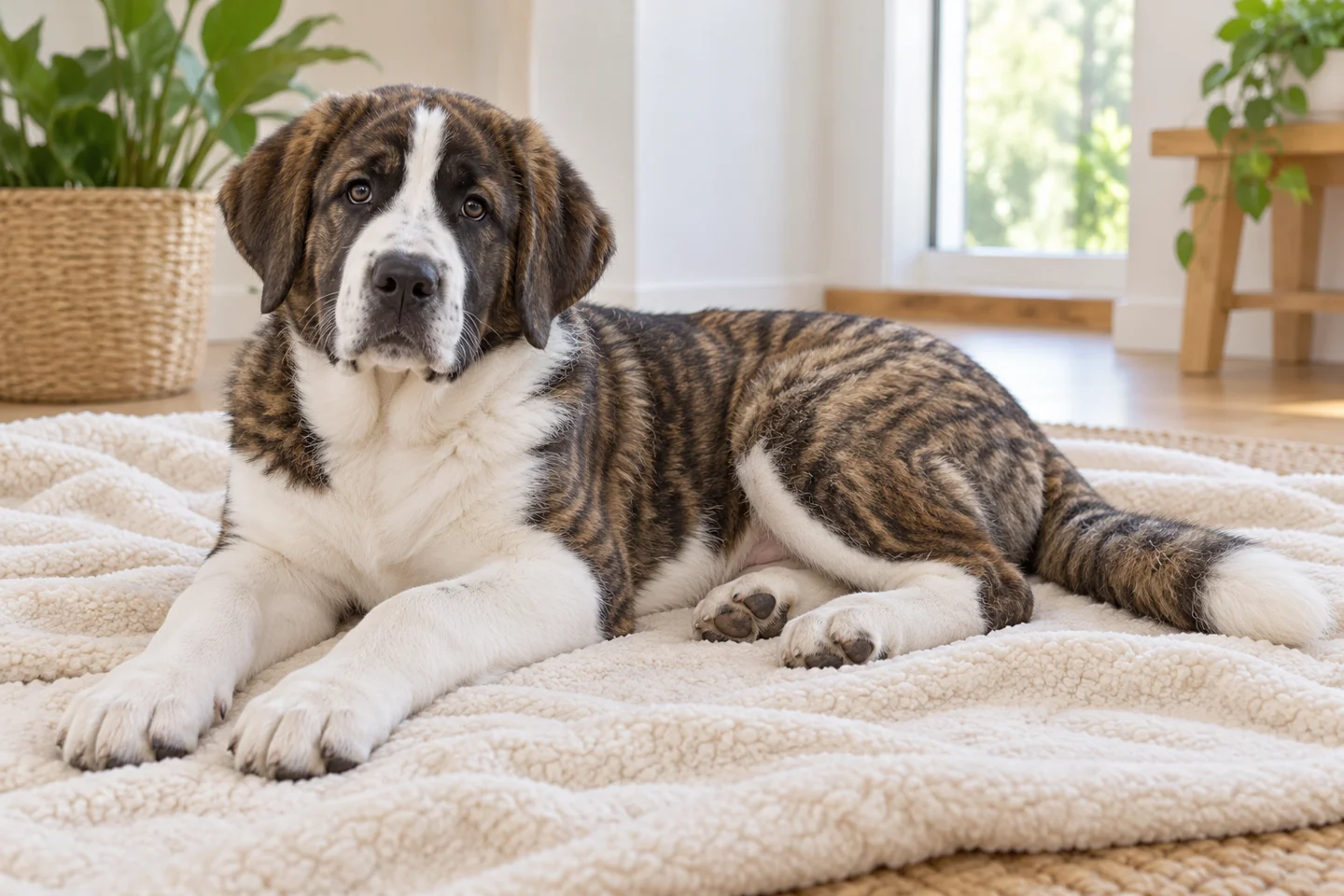
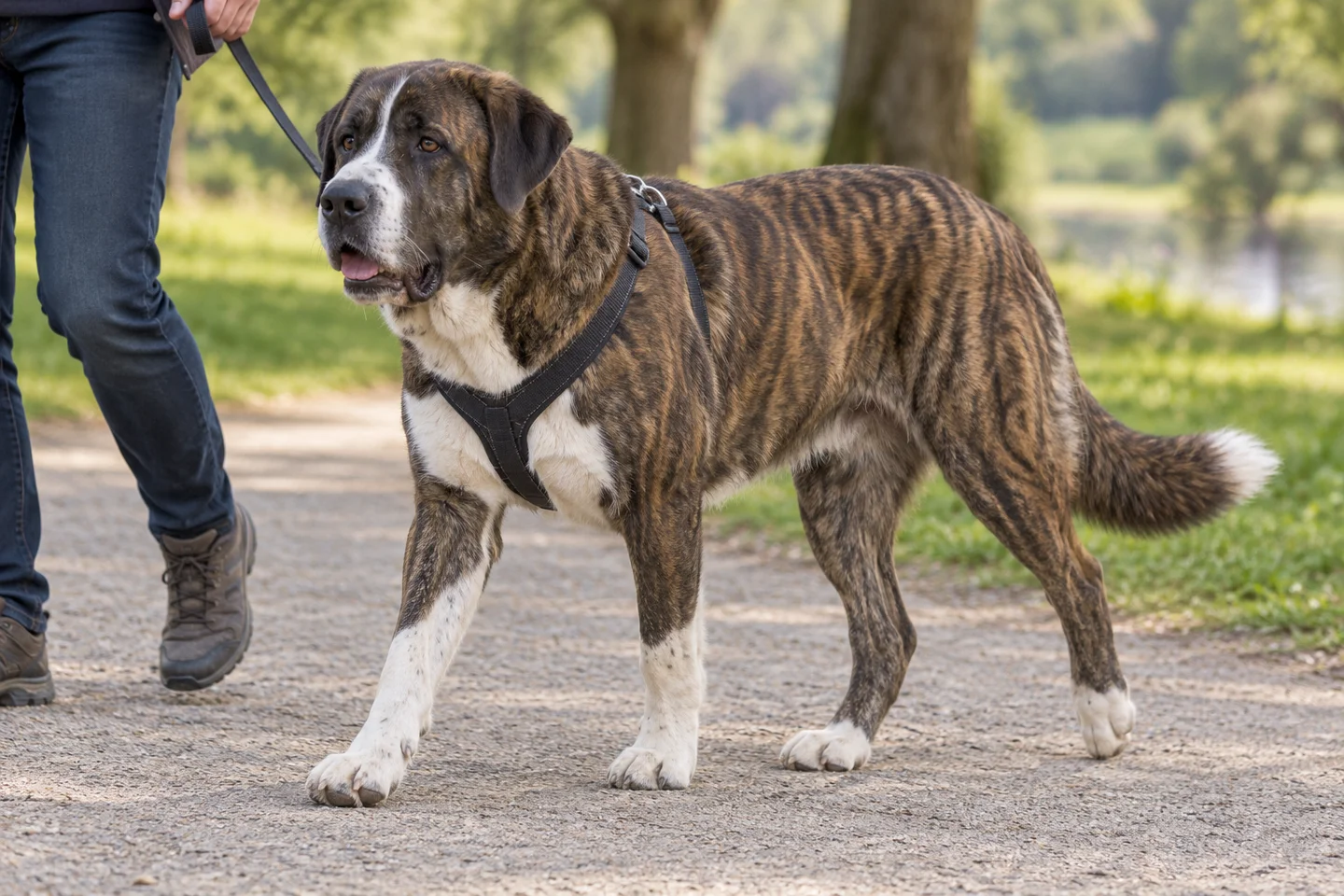
The coat is dense, straight, and short to medium in length. Several colors occur with white markings. This guide's AI-generated illustrations select brindle with white, natural small triangular pendant ears, and a full long tail carried low. They should show functional eyes and a strong, balanced frame. The images cannot verify a real animal's pedigree, health, or suitability for a household.
When meeting a candidate, watch how it rises, walks, turns, and settles. Ask about previous treatment and any current restriction. Look at the actual body and care record rather than interpreting a clean photograph as evidence of soundness. An unusual pattern should not outweigh information about comfort or handling. If you are buying a puppy, discuss normal development and the adults behind it without expecting an exact copy of one image. The dog's future welfare depends on the home fitting its physical and behavioral needs, while coat appearance remains only one visible part of a much larger decision.
Vigilance after dark and a workable address
The breed's official description specifically mentions vigilance at night. Ask a source what that means in its adults' actual setting: what they notice, how often they vocalize, and how they recover after an event. The answer matters around shared boundaries and nearby homes. Historical function is a reason for realistic planning, not an excuse to leave the dog repeatedly reacting or neighbors unable to rest.
Arrange quiet sleeping and resting space, and reduce avoidable triggers where practical. Teach a response to a manageable version of an arrival, such as moving toward the handler or resting behind a barrier. A dog should learn the routine during easy periods rather than only when something alarming happens. If the pattern changes suddenly or the animal remains distressed, seek assessment. Noise in play, repeated fence monitoring, and separation-related distress may require different plans. Keeping notes about time, context, and recovery can help a professional understand the cause more clearly than describing the dog simply as protective or stubborn.
Gates, visitors, and people who provide care
Agree on an arrival procedure that every household member can carry out. Secure the dog comfortably before admitting a visitor, and introduce contact only under conditions it can manage. A barrier must be appropriate for the individual animal and located so the dog is not crowded against the event it finds difficult. Practice calm time there before a contractor or delivery makes separation necessary.
Explain the same routine to occasional carers and rehearse the actual equipment and latches with them. Written instructions do not reveal a sticking gate or the dog's response when another animal passes. Check boundaries after repairs and visits, and keep identification current as backup. Do not rely on remoteness: a path beyond view may lead to livestock, people, or traffic. A successful system should reduce dependence on one person's physical strength or presence. If ordinary access repeatedly becomes difficult, seek qualified help before the dog rehearses the same confrontation daily. The aim is predictable safe management alongside learning, rather than improvising after the entrance is already open.
Aggression and an individual safety plan
Guardian identity does not justify threatening an ordinary visitor or ignoring warnings. Watch the actual dog. Stiffness, blocking, sustained fixation, withdrawal, growling, or snapping can signal that the arrangement needs to change. Create space and end the encounter rather than inviting someone closer to prove the animal will accept them. Large size makes a brief mistake consequential, even when the owner believes the intention is protective.
If an incident has occurred, give the professional a factual sequence: where each person stood, what the dog could move away from, and what contact or injury followed. Include the current precautions when briefing a sitter. Sudden resistance to being touched also needs a veterinary check. Do not recreate the encounter to see whether the dog reacts again. Put the visitor routine and secure separation in place while an individual plan is developed. If a basket muzzle is advised, teach acceptance in small rewarded steps and keep the rest of the safety arrangement. The equipment cannot make a frightening approach comfortable. A backup carer must understand this plan well enough to use it when the usual handler is absent.
Children and physical space around a guardian
Plan a child's route through the house and garden so it does not require stepping across a resting Rafeiro or squeezing past its bowl. The dog's body can block a small person unintentionally, and a sudden turn can cause a fall. An adult can organize an easy search or a familiar cue exercise while keeping enough room for the dog to move away. Pulling hair, riding, and holding the head should have no place in the interaction.
Consider visiting children and fast noisy games separately from calm contact with familiar family members. Use comfortable separation during activities the dog cannot manage or adults cannot supervise closely. Ask which ages and situations the individual has experienced rather than accepting a broad phrase such as good with children. Children should call an adult about stolen objects and avoid intervening in animal conflict. Watch for avoidance before an overt warning is necessary. If fear or repeated warnings develop, stop and seek advice. A comfortable relationship grows through manageable experience, and the dog should never be assigned a childcare role because people value its guarding background or attachment to the household.
Other animals and the evidence behind compatibility
A guardian's association with livestock cannot establish safe behavior around every pet or every species. Ask about actual experience. Cats need protected routes and gradual exposure with separation available; do not hold one still for inspection. Reward disengagement and prevent repeated pursuit. A smaller dog may be overwhelmed or injured during rough play without hostile intent, so watch for attempts to pause and interrupt persistent following.
In a multi-animal home, provide separate food stations and resting places during adjustment. A calm shared walk differs from access to a chew, a narrow passage, or human attention. Change the setup early when tension appears. Serious conflict warrants advice before another unrestricted trial. For planned stock work, consult informed people about selection and supervision rather than treating a puppy's ancestry as completed training. Compatibility is an individual question that develops across contexts. The useful evidence concerns these animals in the daily arrangement they would share, including periods when people are busy and cannot watch every movement directly.
Training cooperation before strength becomes the issue
Begin with walking alongside the handler, waiting at openings, returning in a secure space, and moving to a resting place. Reward easy versions and add distraction gradually. Practice before the puppy reaches adult strength. Household members should agree on cues and release words so the dog does not receive contradictory information. Prevent visitors from rewarding the jumping or crowding you are trying to replace.
Cooperative handling belongs in the same plan. Teach a stable stand, brief paw contact, and comfortable examination near the head in small rewarded steps. Introduce secured travel before a demanding journey. Choose a reward-based professional who can explain how management and teaching work together. Ask how they respond to fear, refusal, and mistakes. Frightening pressure can make people, places, or procedures more worrying and complicate later care. The ability to hold a young dog still is an unsuitable long-term strategy. Reliable routines reduce hurried physical intervention when an adult is excited, distressed, or unable to move comfortably after treatment.
Exercise, heat, and sound footing
Provide regular comfortable movement adjusted to age, health, and fitness. A guardian's unhurried manner is not a reason for inactivity. Build longer routes progressively and ask the veterinarian about intended activities during growth or recovery. A yard may offer convenience while providing little variety if it becomes only a place to watch a fence. Include suitable shared exploration and genuine rest afterward.
Warm conditions alter the plan. Choose appropriate timing, carry water, and make a cool resting place available. Check footing and inspect paws after rough ground. Notice altered stride, unusual recovery, or reluctance during familiar activity, and seek assessment when those changes appear. An animal willing to follow its person can still be fatigued or sore. During medical restriction, obtain clear advice about allowed tasks and tell every carer the limits. Energetic indoor games may recreate the demands the treatment plan is intended to avoid. Prepare a practical way to end an outing if the dog cannot continue, including assistance and suitable transport for its adult body.
Grooming and routine inspection
A dense short-to-medium coat needs gentle brushing and inspection, particularly where equipment rubs and around the hindquarters. Check paws and the underside after outdoor activity. A clean outer layer cannot establish that the skin beneath it is comfortable. Use a stable nonslip surface and keep sessions manageable. If the dog suddenly resists one area, consider discomfort rather than merely increasing restraint.
Include nail care, toothbrushing, and external ear observation. An active dog may still need nail trimming, and coat condition says little about oral pain. Introduce each procedure gradually with rewards. Persistent ear odor, discharge, scratching, or head shaking needs veterinary advice; do not push implements into the canal or choose treatment from another owner's experience. Tell professionals about handling concerns before an appointment. Necessary care may require a clinical plan while cooperative skills develop. Clean, dry bedding and accessible water also belong in the routine. Practical maintenance should be reliable enough for an occasional carer to continue, including after wet weather or during a temporary change in the household.
Health questions without an invented testing mandate
The Portuguese Kennel Club's breed description establishes identity and conformation; it does not provide population-wide disease rates or a universal complete medical panel. Ask a breeder what clinical evaluations the actual parents received and request reports. If a formal program is claimed, identify the organization and current requirements. A pedigree, show assessment, or working reputation answers a different question from a veterinary examination or named screening result.
For an adult, ask about injuries, lameness, previous procedures, medication, and recovery. That individual history helps a veterinarian plan present care more effectively than a general claim that a rustic breed is naturally healthy. Discuss intended workload and body condition, and investigate new symptoms on their merits. Missing family records should remain an acknowledged gap. A broad DNA panel cannot exclude every inherited risk or explain every later change in movement or stamina. The useful conversation distinguishes what is known about relatives, what has actually been examined, and which information would change care now, without filling sparse evidence with another guardian breed's disease list.
Location history, prevention, and an accurate handover
For a dog moving between regions or countries, retain the dates and places it lived, preventive products used, and original test reports. ESCCAP's 2025 imported-pet guidance emphasizes travel history, examination, and targeted investigation. A vaccination document cannot answer every exposure question. Ask the receiving veterinarian what follow-up suits the actual history rather than assuming every imported dog is ill or every apparently healthy dog has no relevant risk.
Routine feeding should use a complete life-stage-appropriate diet, with portions reviewed against condition and activity. Record rewards, chews, supplements, and medical foods. Persistent appetite, thirst, or weight changes deserve attention. Obtain local costs for preventive care, dental treatment, training, transport, boarding, and emergencies. Read insurance terms concerning prior symptoms and ongoing conditions. Arrange practical backup if the dog needs physical assistance or you cannot provide its ordinary routine. An accurate handover and reliable help protect continuity of care when circumstances change, rather than leaving the next clinic or carer to reconstruct the animal's life from a breed name and a verbal reassurance.
Store that information where an alternate carer can retrieve it promptly, including contact details for the usual and emergency clinics.
Mixes and a careful dogsDating introduction
A Rafeiro cross may combine guardian traits with a different body size, coat, or level of activity. Ask whether both parents are documented and what can be said from direct observation. A photograph of a large brindle-and-white parent cannot certify ancestry or predict behavior. For an adult, the care history and response to visitors may be more relevant to the proposed home than the name used in an advertisement. Clarify who can offer help if the placement becomes difficult.
A dogsDating meeting should take the Rafeiro away from its home boundary. Tell the other owner about vigilance, preferred distance, and whether unfamiliar handlers may approach. Arrange a daytime public walk with space to change direction and agree that neither person will touch the other's dog without invitation. Start with separate movement and let the dogs become aware of each other without forcing a close greeting.
Keep exact user coordinates private when choosing the route. Approximate discovery can identify the district, while a public landmark supplies the meeting point without revealing a residence or working property. If the Rafeiro repeatedly places itself between the people, remains fixed on the other dog, or cannot relax after distance increases, leave the situation. Record those responses accurately for future planning. One calm walk at a generous distance can be worthwhile, and closer contact remains optional.
Sources and editorial notes
Sources checked October 22, 2026. Breed measurements describe reference ranges, not a diagnosis or an individual dog's ideal weight. Images are AI-generated breed illustrations and do not document a particular dog or health condition.
- AVSAB: Humane Dog Training Position Statement
- VCA Animal Hospitals: Food aggression in puppies
- Orthopedic Foundation for Animals: CHIC health screening programs
- VCA Animal Hospitals: Aggression toward unfamiliar dogs, diagnosis
- VCA Animal Hospitals: Grooming and coat care for your dog
- VCA Animal Hospitals: Ear infections in dogs (otitis externa)
- AAHA: Feeding plans for healthy, appropriate weight cats and dogs
- VCA Animal Hospitals: Heat stroke in dogs
- AVSAB: Puppy Socialization Position Statement
- VCA Animal Hospitals: Dog behavior problems, aggression toward children
- Portuguese Kennel Club: Rafeiro do Alentejo identity and standard
- ESCCAP Guideline 09, May 2025: parasite control in travelling and imported pets
- Fédération Cynologique Internationale: Rafeiro do Alentejo official breed standard
Keep getting to know dogs.
Read another guide or return to your dogsDating community.
Explore breed guidesBack to dogsDating