Tornjak
A large Balkan livestock guardian with a long patched coat, a history shared by Bosnia and Herzegovina and Croatia, and serious requirements for boundaries and care.
How these guides are researched and reviewed
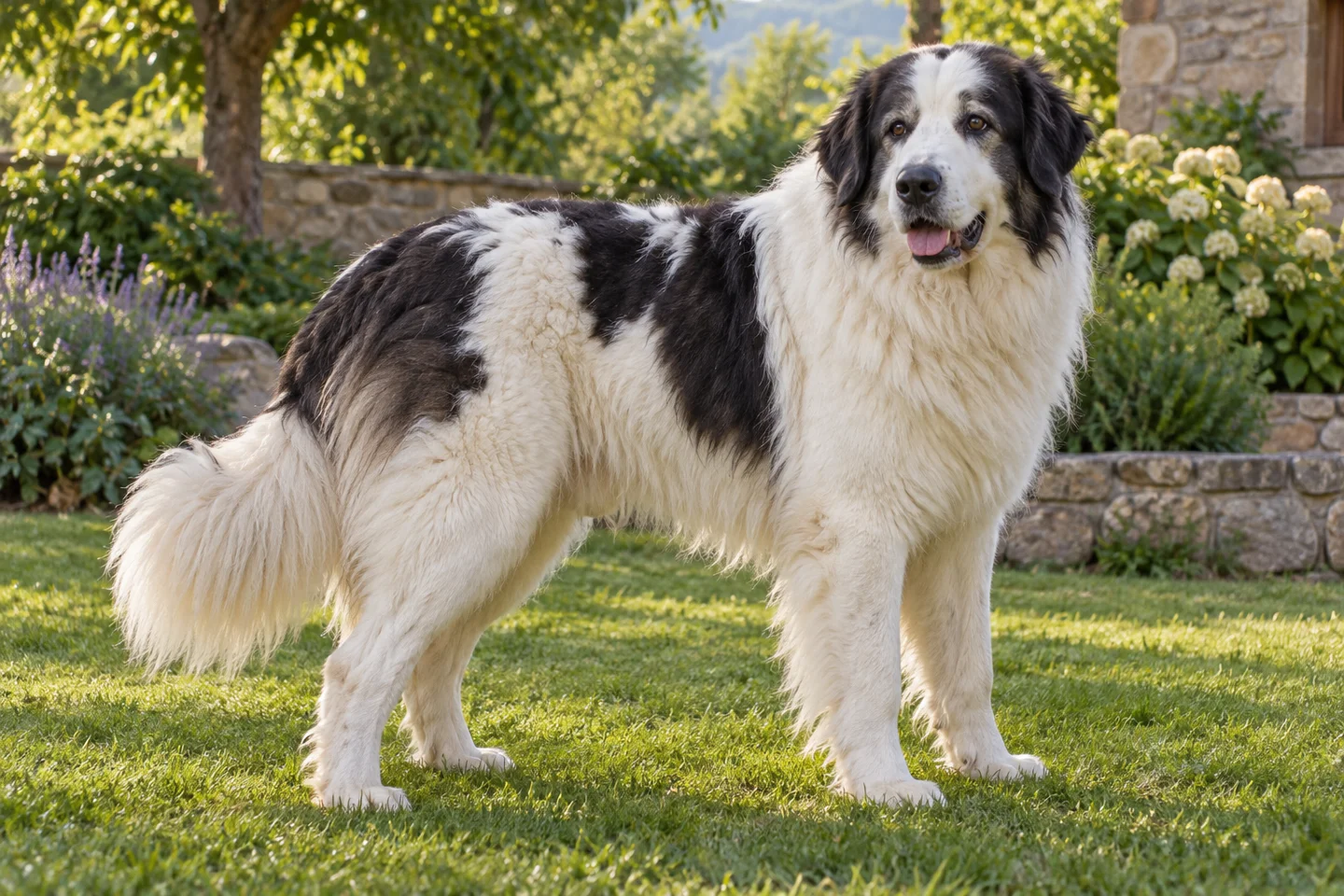
- Origin
- Bosnia and Herzegovina; Croatia
- Adult standard size
- Males 65–70 cm; females 60–65 cm, tolerance±2 cm
- Illustrated coat
- White with black patches, long coat
General information for owners. These articles have not been reviewed by a veterinarian. Medical decisions need your dog's history and an examination.
A guardian with two countries in its origin
The Tornjak is a large livestock guardian whose FCI origin is Bosnia and Herzegovina and Croatia. Its full standard name acknowledges that shared background. A guide should not reduce it to an invented exclusive national claim. The standard describes a modern recovery from regional shepherd-dog populations as well as historical references. For an owner, that background matters most in understanding the dog's livestock-protection role and the deliberate management a guardian may require in domestic surroundings.
A Tornjak should not be expected to behave like a closely directed gathering dog simply because shepherd appears in descriptions. Watching and responding around a flock differ from moving animals through a handler's precise sequence. At home, the dog needs people to decide who may enter, where it waits, and how unfamiliar activity is handled. It cannot interpret delivery schedules or assume every visitor has been invited.
Meet adults and ask about the actual routine before choosing a puppy. Discuss boundaries, barking, handling, travel, and the people who can provide care. A large dog resting peacefully beside its owner may behave differently at a gate or in an unfamiliar clinic. The source should explain those settings rather than promise that loyalty supplies every answer. Practical evidence gives a prospective household something it can plan around.
Adult height and a natural patched coat
The FCI gives male heights of 65 to 70 centimeters and female heights of 60 to 65 centimeters, with a tolerance of 2 centimeters. The intended body is strong and nearly square, with enough substance for work without exaggeration. A puppy does not need to be fed toward the largest adult in a photograph. Ask the veterinary team to assess development and condition directly as it grows.
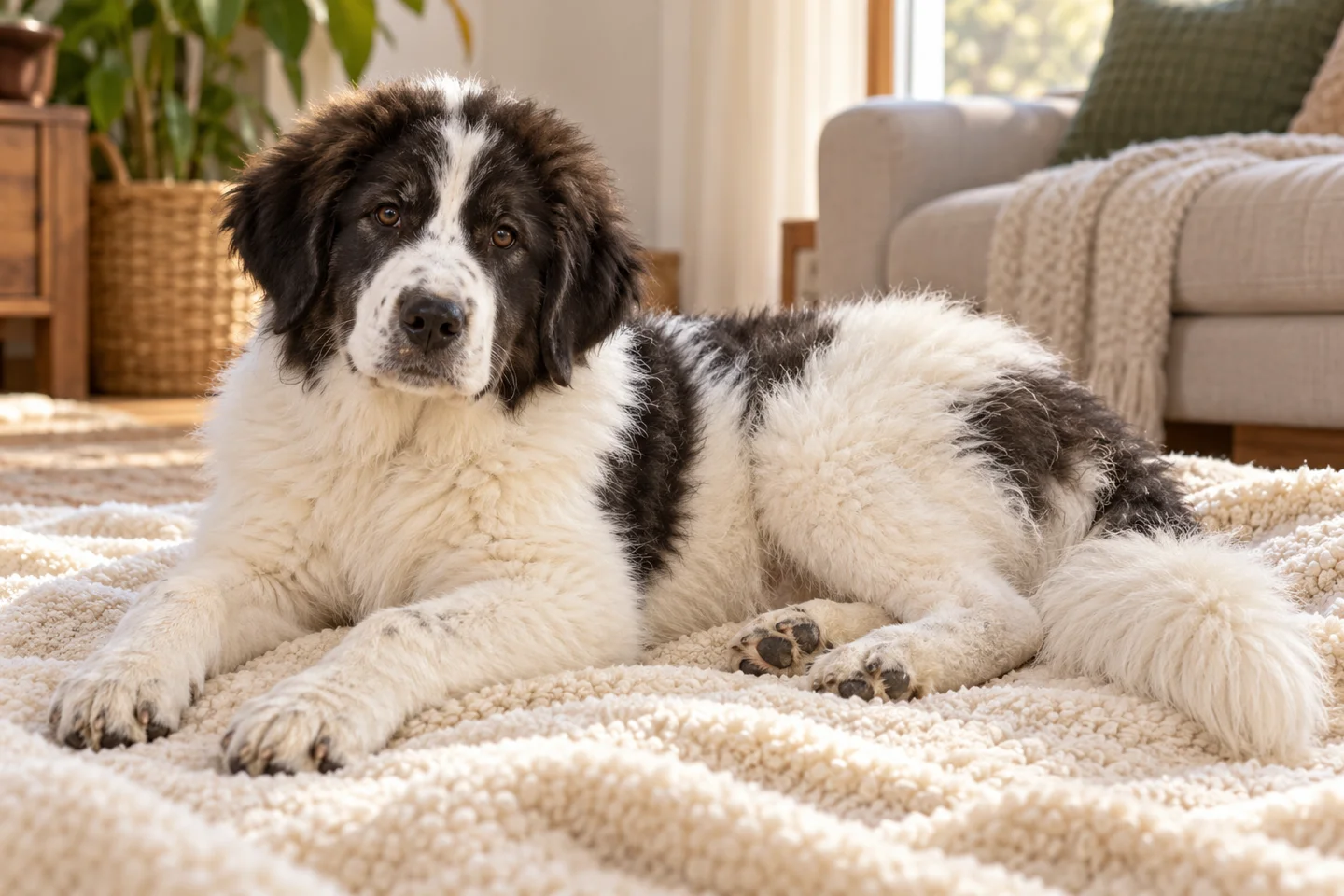
The long outer coat is thick and coarse, with abundant hair around the neck, thighs, and tail. The face and fronts of the legs carry shorter hair. White is commonly the dominant background with distinct colored patches. Our illustrations select white with black patches and avoid a complete dark mask. Natural triangular ears hang close to the cheeks, the eyes are brown, and the full tail carries a generous plume.
Tail carriage changes with activity. The standard describes it hanging at rest and rising above the back during movement, while a tail laid against the back is a fault. It should not be drawn as a tightly curled northern-spitz tail. The images are labeled AI-generated illustrations, and the puppy has a developing coat rather than an exaggerated adult mane. They cannot establish pedigree, clinical findings, or movement soundness in a real dog.
Boundary design before a guardian moves in
Inspect how people actually use the property. A delivery route through the garden, a shared driveway, or a pavement beside the fence can create repeated encounters. Decide where the dog will rest and how access changes when people arrive. A large area is not automatically a well-managed area. The useful question is what the dog sees, practices, and can reach during the hours the owner is occupied.
Use dependable barriers and teach a separate comfortable waiting place. Practice before a visitor is present so the routine has a familiar reward and finish. Holding a mature Tornjak by the collar while opening a gate and speaking to someone is an unsuitable default plan. The arrangement should still work when the regular handler is ill or another competent person takes over.
Check gates at every handover and agree who is responsible for the dog. Secure equipment before opening vehicle access. A guardian that escapes can reach people, animals, or roads before the owner catches up. Identification and accurate microchip details provide another layer of preparation, but repeated escapes require a change in containment. Recovery after an incident cannot replace prevention of the next one.
Visitors and a useful response to unfamiliar people
Arrange an arriving visitor before the Tornjak reaches close contact. The person can remain outside while the owner uses the familiar waiting-area routine. Nobody needs to lean across the fence or offer a hand to test acceptance. From a suitable position, the dog can observe the arrival and then return to a quiet activity. Touching is unnecessary when the immediate goal is a manageable visit.
Notice the individual response rather than relying on a breed description of reserve. Repeated blocking, sustained staring, stiff movement, and attempts to leave indicate that the situation needs changing. Increase room or end the encounter instead of inviting the visitor closer to see what happens. A guardian's attachment to the household cannot certify its judgment about a stranger.
Revisit the plan as the dog matures and as the surroundings change. Adolescence, a new address, and a different gate arrangement can expose challenges that were not apparent earlier. Record distance, movement, time, and recovery when problems appear. Those details help a professional identify what should be taught and managed. The broad term protective is less informative than a factual account of the encounter.
Training that makes strength less relevant
Teach following a hand target, stepping onto a mat, turning with the handler, and waiting at openings. Reward easy successful versions while the dog can still concentrate. Then add one distraction. A quiet-room lesson and a visitor arrival are different tasks. Management should prevent unsafe rehearsal while the dog learns, rather than waiting until mature strength makes hurried physical intervention the only option.
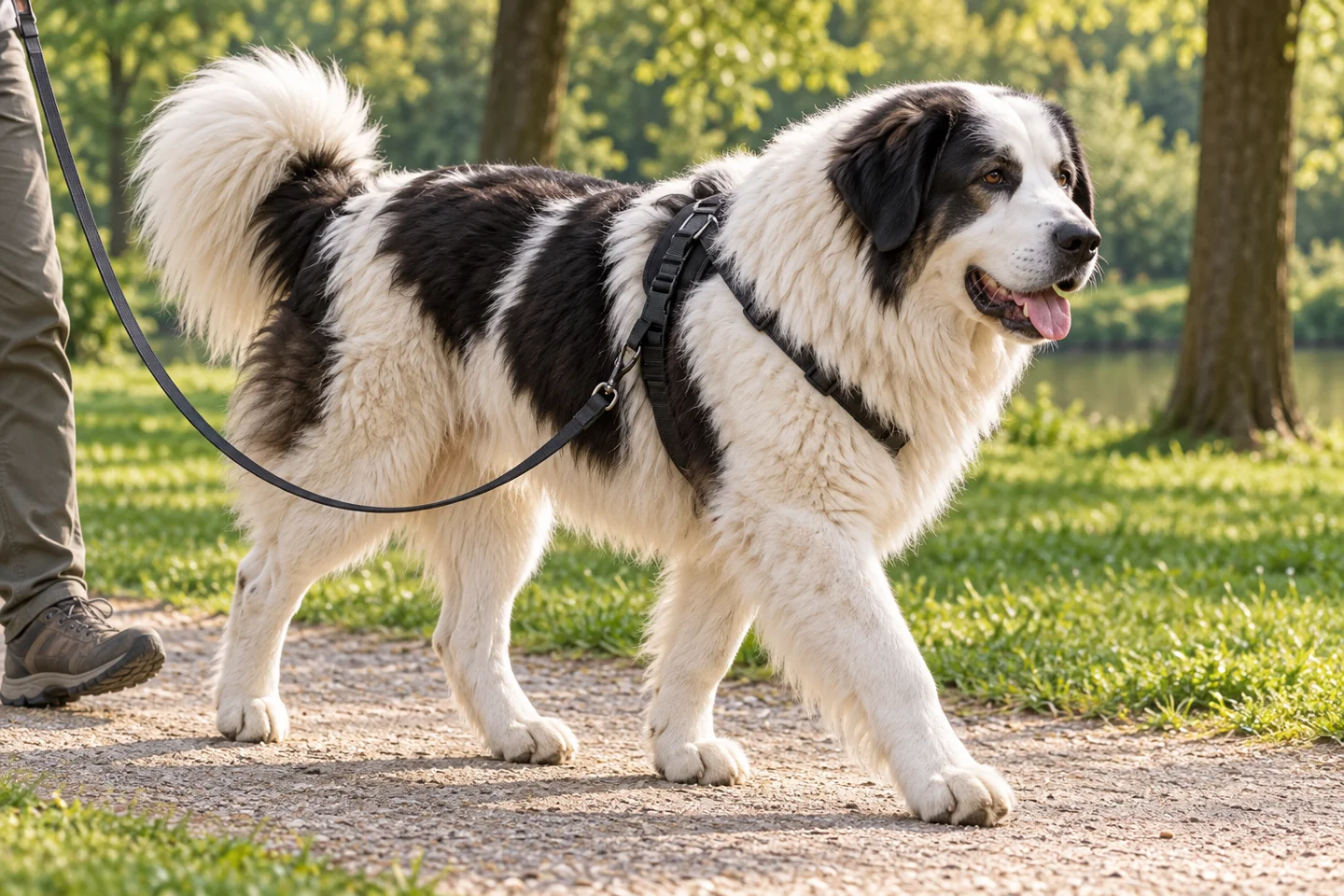
Leash skills deserve early attention. Reinforce a few steps with the handler and practice a calm change of direction in a quiet place. A reward-based professional can assess equipment and the regular handlers' abilities. The plan should explain what to do before the dog reaches a difficult trigger. Dependable walking cannot be based only on the assumption that a person can hold harder when something unexpected appears.
Cooperative care belongs alongside ordinary manners. Reward a brief stand, a foot check, and comfortable examination near the head. Introduce the vehicle and any suitable ramp before a medical problem makes access urgent. If a task becomes difficult, tell the relevant professional in advance. A clinical plan may be needed while training develops, particularly when pain changes what the dog can tolerate.
Exercise, growth, and quiet observation
Offer daily movement and exploration that fit the dog's age, health, and condition. A growing guardian should not be pushed through repetitive hard exercise to make it easier to handle at home. Ask the veterinarian about surfaces, stairs, and the proposed activity. The puppy's enthusiasm cannot establish that every demand is suitable for its developing body.
For adults, build conditioning gradually and observe recovery after rest. A dog that spends time outdoors watching the boundary has not automatically received useful exercise. Equally, adding another long stressful patrol may not help one that is constantly scanning and barking. Choose quieter exploration and manageable searches where appropriate. The owner should distinguish physical workload from repeated rehearsal of vigilance.
Warm conditions need shade, water, and sensible timing. A heavy coat does not prevent overheating. Check breathing, alertness, and willingness to move, and shorten the plan when needed. If gait or stamina changes, seek advice rather than explaining everything as a normal trait of a large calm dog. Comfortable rest and recovery are part of the activity plan, not rewards withheld until the dog completes an arbitrary distance.
Aggression and a safety plan with real barriers
Threatening behavior requires an individual response. If a Tornjak lunges at a visitor, freezes over food, or snaps during handling, prevent another close encounter while veterinary and qualified behavioral advice is arranged. Consider pain when tolerance changes. The household should not recreate the situation to decide whether the dog was serious. Its size makes even a brief error consequential.
Protect resources through arrangement. Meals and valuable chews should be away from passing children and animals. Prevent access to tempting unsafe objects and teach exchanges during calm easy practice. If guarding already creates risk, obtain professional help rather than taking items repeatedly to establish authority. A useful plan changes what approaching people predict and explains how everyone maintains the same precautions.
Give carers factual disclosure of incidents, including contact, injury, and the setting. A calm greeting in public cannot erase a different response inside a boundary. Some individual plans may use a gradually introduced basket muzzle, but it cannot make forced interaction comfortable or replace distance. The owner needs a procedure that the actual household and backup carers can follow, not only confidence in the dog's devotion.
Children and a guardian's private space
A Tornjak may move a child without intending harm, particularly when turning in a narrow room. Leave space around both participants and have an adult actively observing. Children must not climb onto the dog, lean against its back, or grip the coat to keep it nearby. If the dog turns away or gets up, protect its route out of the interaction. Remaining quiet is insufficient evidence that continued handling is welcome.
Rest and meals should remain private. Choose a bed outside the route children must use, and teach the dog that location rather than expecting a child to squeeze past a resting giant. Visiting children add different noise and movement, so use the visitor plan and separate when necessary. Comfort with one familiar child cannot certify every group game or close encounter.
Older children can help prepare searches or maintain supplies without needing to restrain the dog. Lead handling and access decisions require realistic judgment. Adults remain responsible and should not ask a child to retrieve guarded items or intervene between animals. A guardian's historical role does not assign it a childcare function. Safe relationships develop through suitable routines and the ability of both child and dog to leave an interaction.
Livestock and other household animals
Working ancestry does not mean a puppy arrives ready to live safely with unfamiliar livestock. Appropriate working placement requires experienced guidance, management, and gradual learning around the species involved. Do not place a dog with stock and wait for instinct to solve the arrangement. Chasing, rough play, or fear can harm an animal before anyone has learned something useful.
With household dogs, begin through controlled experiences and separate resources. Observe food preparation, narrow entrances, beds, and attention from people as well as outdoor play. One animal may create pressure by repeatedly blocking or following another. Provide alternative rest areas and interrupt that pattern early. A workable relationship does not require the animals to spend every moment together.
Cats need escape routes and individual assessment, while smaller pets require secure protection. Calm behavior with one familiar animal cannot establish the response to a fleeing unfamiliar one. Outdoors, follow local rules and maintain suitable control around wildlife and stock. The owner can provide exploration without permitting uncontrolled pursuit. A decision about compatibility should follow observations and management capacity rather than a reassuring general claim about livestock guardians.
Grooming through a long guardian coat
Work in sections down to the skin, paying attention behind ears, under straps, around the hindquarters, and through the tail plume. A tidy surface may hide tangles beneath. Ask a groomer to demonstrate appropriate tools and how to avoid pulling. Frequent manageable sessions can be easier to teach than a long effort after knots have tightened against skin.
After bathing or wet weather, make sure deeper areas dry and the dog has clean bedding. Plan space, towels, and stable footing for a large wet animal. Persistent odor, itch, or an inflamed region needs veterinary assessment rather than progressively stronger washing. Keep a note of products and timing so the clinician can interpret what has already happened.
Introduce nails, teeth, and ear observation separately with rewards. Do not push implements into the ear canal. Repeated shaking, discharge, or pain needs advice. Check feet for debris after rough ground and seek help for embedded material or a damaged nail. A new handling objection may indicate discomfort. Increasing restraint can obscure the cause while making future care more difficult for everyone.
Health: joint evidence and an emergency transport plan
Hip screening is a concrete question for a Tornjak litter. The Zagreb breed club's published breeding-examination form specifically asks for hip imaging documentation for the Tornjak. Ask what current rules apply to the parents and request the official result. A requirement in a particular scheme should not be stretched into an invented universal international panel, but it gives a prospective owner a useful document to discuss.
The Tornjak Club of North America's health page also identifies hip and elbow dysplasia as concerns. A dog moving willingly at a visit has not supplied a scored assessment. Ask about the family's confirmed diagnoses and how findings are considered in the pairing. Do not invent a disease rate from a small set of reports. Screening information can support decisions without predicting every outcome for an individual puppy.
The club discusses gastric dilatation-volvulus, and owners need a practical urgent-care plan. Unproductive retching, abdominal swelling, or sudden marked distress calls for immediate veterinary contact. Do not wait for all signs or attempt home treatment. Know which emergency service can receive the dog and how it will be transported. Ask the veterinarian about individual risk and preventive options; no bowl or feeding rule should be promised as guaranteed prevention.
For ongoing care, record changes in movement, appetite, weight, and recovery. A calm guardian may continue watching quietly while uncomfortable. A thick coat may also hide body-condition changes. New symptoms deserve examination even when the parents had favorable screening. The actual patient's clinical needs remain distinct from the breeding paperwork and should not be dismissed as inevitable effects of size or age.
Feeding, mixes, and a household that can continue care
Feed a complete food appropriate to life stage and follow growth with the veterinary team. Do not add minerals to make a puppy larger without guidance. Measure portions and include rewards from everyone who trains the dog. Ask for a demonstration of condition checks beneath the coat. Persistent appetite, thirst, or weight changes need attention rather than repeated adjustments based on the dog's fluffy outline.
A Tornjak mix may differ in size, coat, and response to people and animals. Ask what is documented about both parents. A white patched coat cannot identify the other parent or guarantee a predictable adult guardian. For a rescue, observed history and available clinical notes may be more useful than a guessed family tree. Keep uncertainty explicit and plan for the actual animal rather than an idealized crossbreed description.
Budget for secure boundaries, grooming support, transport, feeding, preventive care, training, boarding, and unexpected treatment. Obtain local prices and read insurance exclusions. A backup carer needs gradual introduction and practice with the visitor and handling routines. Ask the source what continuing support is available and what happens if placement becomes difficult. A sustainable home accepts deliberate management alongside the pleasures of living with a large companion.
A dogsDating meeting beyond the property
On dogsDating, describe the Tornjak's comfort with unfamiliar dogs and handlers separately. Explain any need for distance and whether shared walking is preferred to play. Ask about the partner's ability to pause and disengage. Similar size is only one part of compatibility. A successful first meeting can involve no touching and no free running, provided both owners agree on that goal.
Choose a public route away from the home boundary with enough width to turn. Begin with the dogs apart and observe recovery after they notice each other. Avoid a narrow gate or a crowded enclosure. If blocking, fixation, or attempts to escape persist after more space is provided, finish calmly. The owners can learn from an early ending without forcing a closer greeting.
Keep exact user coordinates private. Approximate discovery and a selected public landmark can organize the outing without revealing a residence or livestock location. Afterward, compare which pace and distance helped. Those observations should guide another walk or the choice of a different partner. A digital match supports discussion while the dogs' behavior and the handlers' management determine what is appropriate.
Sources and editorial notes
Sources checked October 22, 2026. Breed measurements describe reference ranges, not a diagnosis or an individual dog's ideal weight. Images are AI-generated breed illustrations and do not document a particular dog or health condition.
- AVSAB: Humane Dog Training Position Statement
- VCA Animal Hospitals: Food aggression in puppies
- VCA Animal Hospitals: Common emergencies in dogs
- Orthopedic Foundation for Animals: CHIC health screening programs
- VCA Animal Hospitals: Aggression toward unfamiliar dogs, diagnosis
- VCA Animal Hospitals: Grooming and coat care for your dog
- VCA Animal Hospitals: Ear infections in dogs (otitis externa)
- AAHA: Feeding plans for healthy, appropriate weight cats and dogs
- VCA Animal Hospitals: Heat stroke in dogs
- AVSAB: Puppy Socialization Position Statement
- VCA Animal Hospitals: Dog behavior problems, aggression toward children
- Tornjak Club of North America: Health concerns
- Tornjak Kennel Club Zagreb: Breeding examination documentation
- Tornjak: official breed standard
Keep getting to know dogs.
Read another guide or return to your dogsDating community.
Explore breed guidesBack to dogsDating