Romanian Mioritic Shepherd Dog
A large, long-coated Romanian livestock guardian whose protective background calls for secure boundaries, cooperative care, and carefully planned visitors.
How these guides are researched and reviewed
- Origin
- Romania
- Adult standard size
- Minimum males 70 cm, ideal 75; females 65 cm, ideal 70
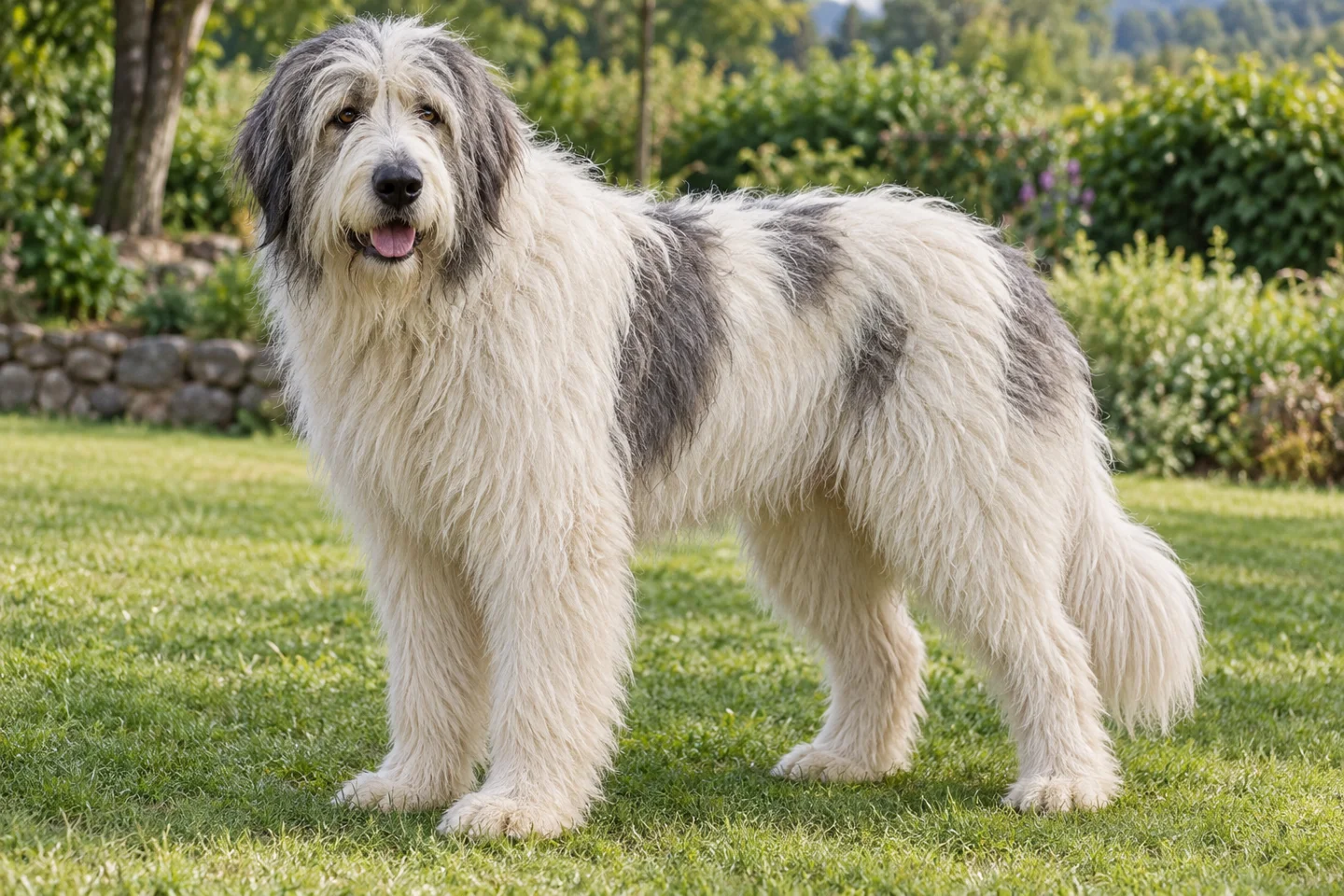
- Illustrated coat
- White with grey patches and long coat
General information for owners. These articles have not been reviewed by a veterinarian. Medical decisions need your dog's history and an examination.
A Romanian guardian with a specific identity
The Romanian Mioritic Shepherd Dog is a large livestock guardian developed in Romania's Carpathian region. The FCI standard describes selection for usefulness, with the coat and physical strength needed for its work. Despite the word shepherd in its English name, it should not automatically be expected to gather sheep through the same close handler-directed pattern as a Border Collie. Its background centers on protecting animals and responding to what happens around them.
That distinction affects ordinary ownership. A Mioritic may notice movement beyond a fence, watch an unfamiliar arrival, or choose a position with a view of the property. A family needs a plan for those responses before treating them as convenient security. A dog cannot interpret a delivery schedule, distinguish every invited visitor without guidance, or understand that a child approaching a gate has permission to enter. People must control access and provide clear routines.
Mioritic is also a breed name, rather than a general description of every large shaggy Romanian rescue dog. A rescue may have partial ancestry, another regional background, or unknown parentage. Its appearance can guide grooming and equipment choices without proving pedigree. Ask for the actual history available and describe uncertainty honestly. Useful adoption information includes where the dog has lived, how it responds to handling, and what happens when unfamiliar people approach its resting area.
Size, coat, and a body beneath the hair
Under the FCI standard, adult males have a minimum height of 70 centimeters, with 75 centimeters described as ideal. Females have a minimum of 65 centimeters and an ideal of 70 centimeters. Weight should fit the size and frame. The standard describes a vigorous dog that should not look heavy. There is no reason to feed a puppy toward an invented maximum weight or to assume that a larger adult is necessarily a better representative.
The long, abundant outer coat has a dense undercoat. On the body, the standard calls for hair at least 10 centimeters long. The head is heavily coated, while the limbs and tail also carry substantial hair. The usual illustrated pattern is white with clear grey patches; black patches and certain solid colors also fall within the standard's descriptions. Dark tips on the ears are a particular detail. The natural ears hang, and the full tail is carried according to the dog's activity and attention.
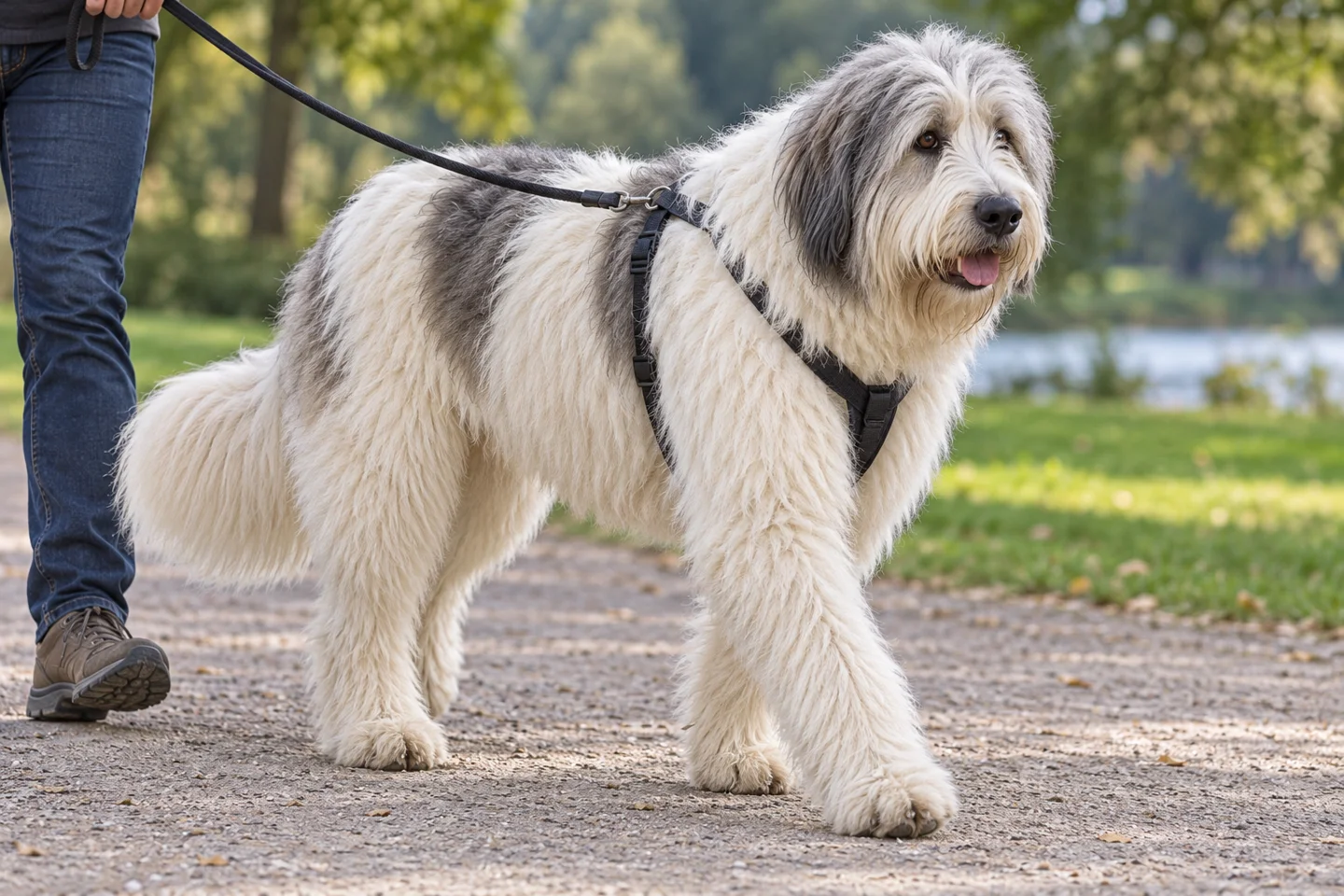
Hair can conceal both excess weight and a lean body. Ask the veterinary team to demonstrate how to feel the ribs and assess the waist without relying on the outline of the coat. Equipment also needs checking by hand. A strap that appears loose over the hair may press into the skin, while another arrangement may slip when the coat compresses. Recheck around the elbows and beneath the neck after walking, bathing, or a change in grooming style.
The home boundary and arriving visitors
Decide where visitors will wait before they reach the door. For some homes, the safest routine is placing the dog in a comfortable separate area before opening the gate. That area needs a real barrier and a way for the dog to rest, rather than a person holding a collar while trying to talk. Rehearse the procedure when no visitor is present so it becomes ordinary household activity.
Watching from a distance can be a satisfactory response. An unfamiliar person does not need to touch the dog, offer a hand to its face, or walk directly toward it. If the dog chooses to approach calmly during an appropriately managed introduction, allow room to withdraw. If it remains worried, increase distance and end the exercise. A guardian's reserve does not justify repeated frightening experiences intended to make it accept people faster.
Pay particular attention to repeated activity outside the boundary. A pavement beside the fence, a shared driveway, or neighboring children can create many daily rehearsals of rushing and barking. Visual screening, relocating the resting area, and supervised garden access may change that pattern. A large property alone does not solve it. The useful question is what the dog sees and practices during the hours it spends there.
Training for necessary cooperation
Teach movements that make everyday care practical: following a hand target, stepping onto a mat, entering a safe room, and waiting while a lead is clipped on. Reward small successes before adding duration or distraction. A large independent dog benefits when the task has a clear beginning and finish. Calling it away from a gate only to apply unpleasant restraint can make the next call harder to answer.
Practice leash skills well before the dog reaches its adult dimensions. Choose a quiet space, reward movement with the handler, and learn how to turn away without pulling the dog into a confrontation. Ask a reward-based trainer to assess equipment and the physical abilities of the regular handlers. A person who can manage a calm puppy may need additional preparation for an adolescent that notices a stranger at close range.
Cooperative care is worth the same attention as walking. Introduce a towel, a non-slip examination surface, and short checks of feet and ears. The owner should be able to stop while the dog is still comfortable. A groomer or veterinary team may need a gradual introduction rather than a single long appointment. If the dog has already learned to resist, describe that history before arriving so the professionals can prepare a safer plan.
Aggression and serious warning signs
A livestock guardian's ancestry cannot tell an owner that a particular threatening response is safe or acceptable. Stiffening, blocking a person, lunging, and snapping need attention to the immediate situation. Prevent another close encounter while arranging veterinary and qualified behavioral advice. Pain can change tolerance, and a new response during brushing or rising from a bed should not automatically be interpreted as a challenge to authority.
Keep food and valuable chews away from passing traffic. If the dog guards an item, stop recreating the conflict and obtain help with a controlled teaching plan. A child should never be asked to retrieve a stolen toy from a large dog's mouth. Clear the space, use the established management, and let an adult handle the problem. Preventing access to laundry, rubbish, and other likely objects reduces the number of emergencies that must be improvised.
Disclosure matters when anyone else cares for the dog. Explain what happened during previous incidents, what contact occurred, and which precautions are now essential. A calm conversation through a fence cannot establish that entering the property is safe. A muzzle, where appropriate and carefully introduced, is an additional tool within a plan. It does not authorize crowding or replace dependable barriers, distance, and a handler who understands the dog's response.
Children and the guardian's space
Children need an explanation of where the dog can be approached and where it should be left alone. Resting places, meals, and enclosed retreats should remain free of interference. A child may find the long coat inviting to hold, but pulling hair or using the dog for support can hurt and frighten it. Arrange gentle contact only when an adult can observe both the child and the dog's response.
Size adds a separate risk. A turning dog can knock over a toddler or trap a child against furniture without intending aggression. Leave clear routes through the rooms and avoid excited greetings in narrow halls. If children have friends visiting, use the visitor arrangement already established for the dog. Familiarity with one household child cannot establish comfort with a loud group running into the garden.
Give older children tasks that do not require physical control. They can prepare a search while the dog waits elsewhere, note supplies that need replacing, or help maintain a care record. Walking a mature guardian requires a realistic assessment of strength and judgment. An adult should remain responsible for decisions around unfamiliar people and animals. When supervision ends, separation should be a routine event rather than a punishment applied after something goes wrong.
Other dogs, livestock, and small pets
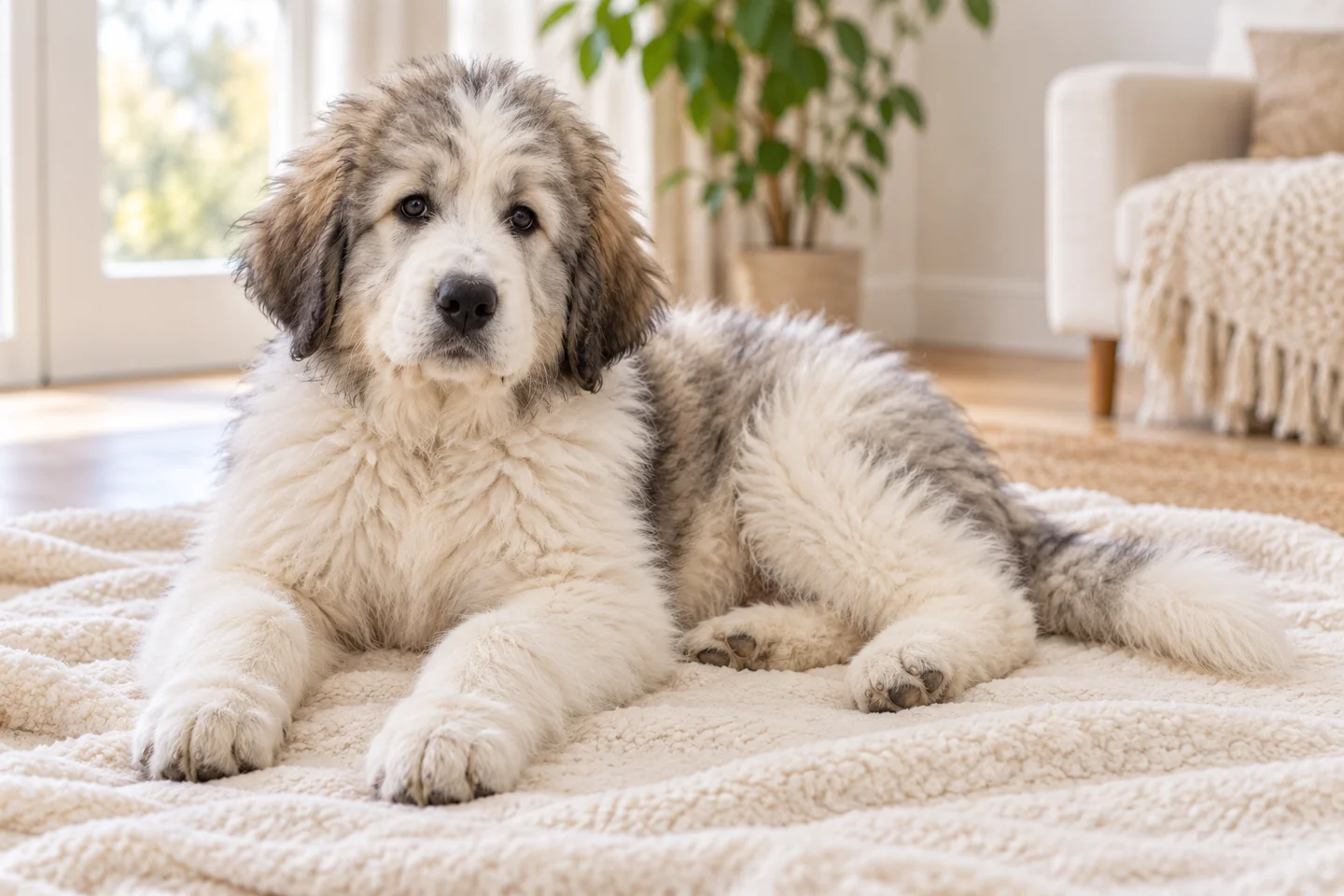
Being bred around livestock does not mean an individual puppy arrives trained to live safely with every animal. Working placements need appropriate mentorship, management, and time with the species involved. A pet owner should not place a dog with unfamiliar stock and wait to see whether instinct takes over. Chasing, rough play, and fear can cause harm before anyone has learned useful information.
Introduce household dogs with room and separate resources. Observe what happens when one approaches a doorway, a resting place, or the person offering attention. A seemingly peaceful garden meeting may not predict behavior in the kitchen at dinner time. Provide multiple comfortable sleeping areas and a way to prevent unwanted following. Allowing the dogs to settle into manageable routines is more useful than demanding constant togetherness.
Cats need escape options the dog cannot follow, and smaller pets require secure physical protection. Known calm behavior with one familiar animal should be described narrowly. It does not prove safety with a running stranger outdoors. If the dog becomes fixed on an animal, cannot disengage, or repeatedly presses against a barrier, seek professional guidance and revise the setup. No animal should be used as a test of the dog's restraint.
Exercise and rest for a growing guardian
Provide walks, exploration, and gentle mental work while allowing adequate rest. A Mioritic does not become physically fit simply by standing outdoors watching the boundary. Equally, a growing giant dog should not be pushed through repetitive strenuous exercise to make it tired enough to manage. Build activity around the individual puppy's development and ask the veterinarian about surfaces, stairs, and the proposed routine.
For an adult, choose routes where turns and passing space are available. Practice quiet observation from a suitable distance and reward returning attention to the handler. Sniffing and simple searches can make a walk useful without constant high-speed play. A dog that is repeatedly scanning, barking, and pulling may need an easier location rather than a longer version of the same stressful outing.
The heavy coat makes warm-weather planning especially relevant. Offer shade and water and choose cooler periods for activity. Check that sheltered areas remain comfortable as the sun moves. Watch recovery afterward, including breathing, gait, and willingness to rise. New exercise intolerance warrants advice. A dog resting quietly in the yard may be comfortable, but it may also be avoiding movement because of heat or pain; the wider pattern matters.
Grooming a coat that hides the skin
Work through the coat in sections so the skin can be inspected rather than brushing only the outer surface. Pay attention behind the ears, around the armpits, under the collar, and where the dog lies. Tangled hair can pull on skin during ordinary movement. A professional groomer can demonstrate suitable tools and a manageable schedule for this dog's coat and living conditions. Agree on the plan before a heavy matting problem develops.
After rain or washing, check that the deeper coat dries. Bedding also needs to dry and remain clean. A large wet dog requires practical space, towels, and a comfortable place to stand, so decide where the process will happen before the first muddy season. Avoid directing hot air at the skin or continuing a stressful grooming session simply to finish everything at once.
Inspect feet for packed debris and keep nails manageable. Introduce mouth care with brief toothbrushing practice using an appropriate canine product. Lift the ears gently and investigate pain, odor, discharge, or repeated scratching with the clinic. If a formerly tolerant dog resists one area, examine the possibility of injury or skin disease. Forceful grooming can worsen the experience while leaving the underlying cause untreated.
Health information for a less common breed
A prospective owner should ask the source to explain the health history of this family of dogs. Which relatives remained comfortable into later life? Were any affected by persistent lameness or a condition requiring long-term treatment? What did the veterinarian actually diagnose? These questions are useful even when the breed lacks a single widely published international testing program. Do not turn the absence of a universal list into a promise of exceptional health.
If hip, elbow, eye, or other screening is advertised, obtain the named report and ask the veterinarian what that result establishes. Tests used in one country or breeding scheme may differ from another. Ask how the dog's identity was linked to the sample or examination. A broad DNA package can answer questions about the variants it contains, but it cannot replace the clinical history or certify that a large dog will remain free of orthopedic disease.
For an imported dog, provide the clinic with its countries of residence, travel dates, available vaccination evidence, and parasite treatments. ESCCAP's guidance on travelling and imported pets supports assessing exposure and planning prevention around the actual journey. This does not mean that a dog from Romania should be presumed ill. It means that accurate geography and treatment records help the clinician decide what, if anything, needs further examination or testing.
Food planning should support steady growth and a healthy adult body condition. Use a complete diet appropriate to life stage and seek advice before adding mineral supplements. Record weight and appetite changes so they can be assessed over time. A thick coat can delay recognition of weight loss, and a large food bowl can make extra portions easy to overlook. Measuring intake and checking the dog by hand are simple ways to improve the information available at a consultation.
Mixes, costs, and a realistic placement
A Mioritic cross can inherit a different coat, body shape, and level of vigilance from the dog pictured here. Ask whether the parentage is documented or inferred. The term Romanian rescue describes a journey or origin, not a guaranteed breed composition. Evaluate the individual's behavior around handling, strangers, and barriers. For a young puppy, acknowledge that adult size and behavior remain partly uncertain even when some ancestry is known.
Price the practical arrangements locally. Large secure barriers, grooming support, transport space, feeding, and suitable boarding can cost more than expected. Ask whether a boarding provider can follow the dog's visitor and handling routines, and arrange a trial before an unavoidable absence. Insurance terms and exclusions also deserve reading while there is still time to make decisions. A low acquisition fee says little about the cost of meeting the dog's needs over its life.
Discuss support after placement and what happens if the home cannot continue. A guardian may be difficult to move between unfamiliar handlers once a crisis has developed. Planning a reliable backup person and introducing that person gradually can prevent rushed decisions. The best household fit includes people who accept deliberate management and daily coat care, rather than expecting the dog's appearance or loyalty to make those responsibilities unnecessary.
A carefully chosen dogsDating companion
On dogsDating, describe the Mioritic's comfort with unfamiliar dogs and people separately. It may enjoy one familiar walking partner while remaining uncomfortable when that partner's owner approaches closely. Explain any handling restrictions before arranging the meeting. Agree that a walk with space is a complete activity; neither owner needs to pursue free play or physical greetings to make the outing count.
Choose a public route away from the dog's home boundary. Begin with enough separation that both handlers can turn and move freely. Watch whether the dogs can investigate the ground and recover after looking at each other. Repeated blocking, sustained tension, or attempts to leave call for a change of plan. A quiet departure is preferable to waiting until either handler loses control of the distance.
Keep exact user coordinates private. Approximate discovery and a public landmark can establish where to meet without revealing a residence or livestock location. Afterward, share specific observations about pace, distance, and recovery. Those details help decide whether another short walk is appropriate and preserve the owner's ability to manage the dog according to its actual behavior.
Sources and editorial notes
Sources checked October 22, 2026. Breed measurements describe reference ranges, not a diagnosis or an individual dog's ideal weight. Images are AI-generated breed illustrations and do not document a particular dog or health condition.
- AVSAB: Humane Dog Training Position Statement
- VCA Animal Hospitals: Food aggression in puppies
- Orthopedic Foundation for Animals: CHIC health screening programs
- VCA Animal Hospitals: Aggression toward unfamiliar dogs, diagnosis
- VCA Animal Hospitals: Grooming and coat care for your dog
- VCA Animal Hospitals: Ear infections in dogs (otitis externa)
- AAHA: Feeding plans for healthy, appropriate weight cats and dogs
- VCA Animal Hospitals: Heat stroke in dogs
- AVSAB: Puppy Socialization Position Statement
- VCA Animal Hospitals: Dog behavior problems, aggression toward children
- ESCCAP: Parasite control in travelling and imported pets, Guideline 09, May 2025
- Fédération Cynologique Internationale: Romanian Mioritic Shepherd Dog official breed standard
Keep getting to know dogs.
Read another guide or return to your dogsDating community.
Explore breed guidesBack to dogsDating