Shiba Inu
A small Japanese hunting companion, with practical guidance on choice in handling, secure exercise, knee assessment and evidence-based investigation of itching.
How these guides are researched and reviewed
- Origin
- Japan
- Adult reference height
- Males 39.5 cm; females 36.5 cm
- FCI height tolerance
- ± 1.5 cm
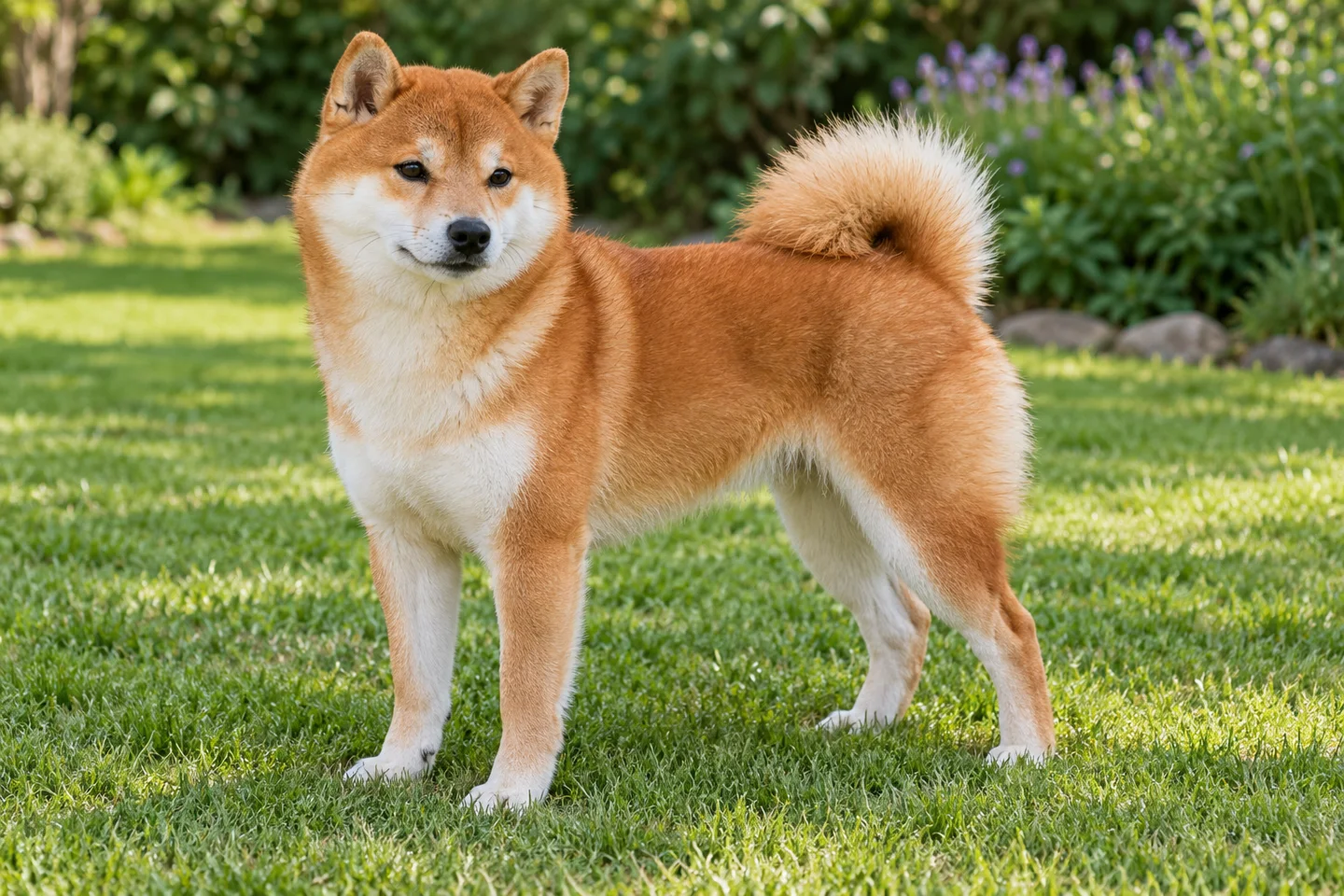
- Illustrated coat
- Red with pale urajiro, natural ears and full curled tail
General information for owners. These articles have not been reviewed by a veterinarian. Medical decisions need your dog's history and an examination.
A Japanese hunting companion beyond the familiar image
The Shiba Inu is a small, muscular Japanese breed with natural upright ears, a dense double coat, and a full curled or sickle-carried tail. It is a separate breed from the larger Akita and from the medium Japanese hunting breeds. Online images often turn its expression into a personality claim, but a photograph cannot establish comfort with handling, strangers, other dogs, or a busy household.
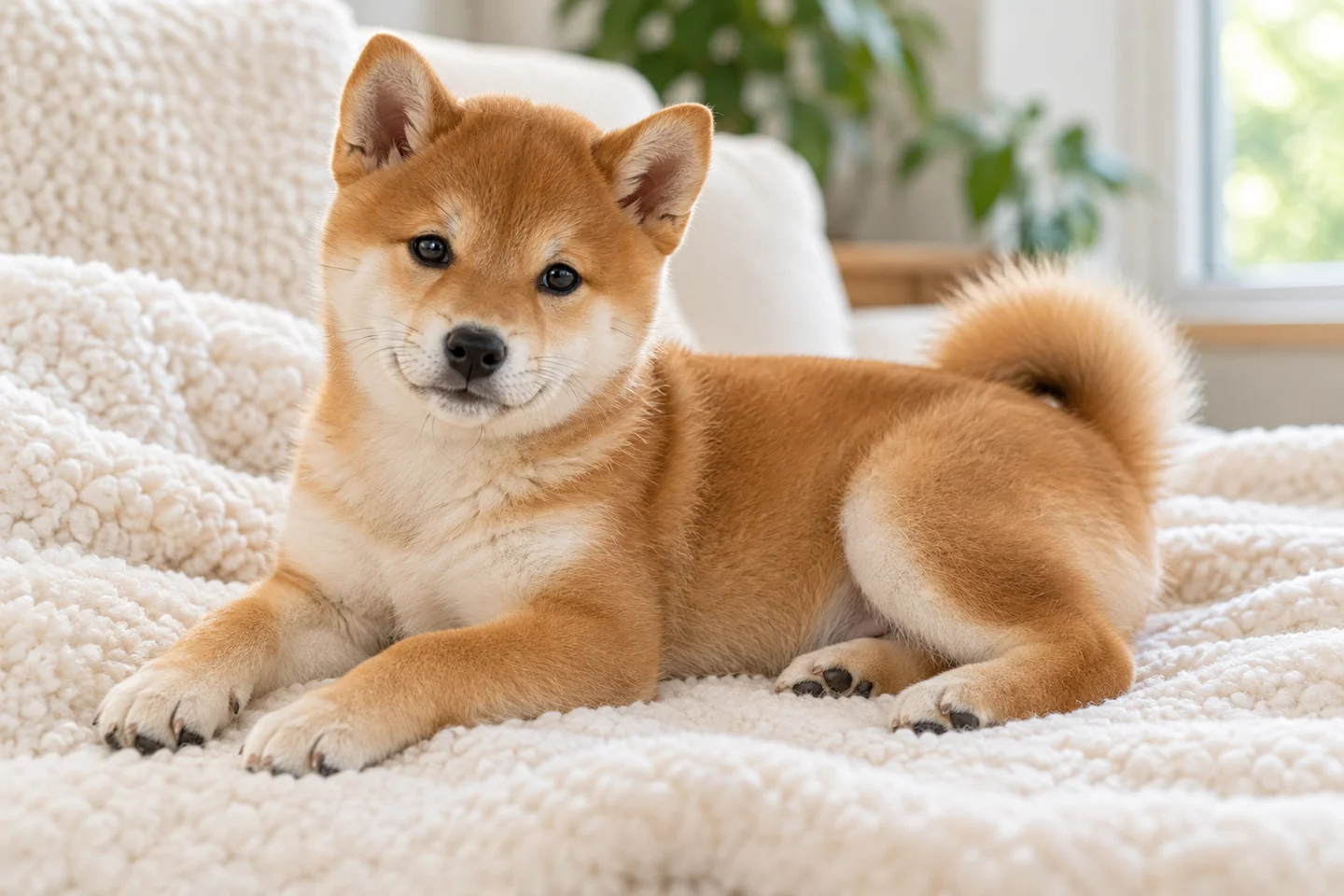
The illustrations select red with pale urajiro markings on the cheeks and underside. A puppy's soft coat and proportions develop with maturity and should not be expected to duplicate a fully grown adult immediately. Owners should plan secure boundaries, useful training, routine coat care, and a dog allowed to move away from unwanted contact. Meet adults when possible and ask about ordinary difficult moments. An affectionate response to familiar people does not mean every visitor can touch the feet or lift the dog without preparation.
History and the difference between a task and a household rule
The FCI account places the Shiba in Japan and describes use for birds and small animals in mountainous areas. This provides context for interest in scent and movement without predicting every individual response. A companion does not need access to wildlife to have a suitable life. Managed searches, varied walks, and controlled play can provide useful activity while protecting other animals and the dog.
Ask a breeder how the parents behave between active periods. What happens when a door opens, someone handles a paw, or an unfamiliar dog approaches? Specific examples matter more than broad descriptions of independence or loyalty. A puppy still needs teaching about travel, quiet rest, and time apart. For a rescue, previous experience may be incomplete or different from the new home. Start with manageable expectations and assess the actual response rather than assuming that maturity, cleanliness, or an appealing expression supplies every domestic skill.
Adult heights and suitable condition beneath the coat
The FCI standard gives adult reference heights at the withers of 39.5 cm for males and 36.5 cm for females, with a tolerance of 1.5 cm above or below. It does not prescribe a compulsory adult weight range. Do not use a supposed miniature category or an invented weight target to justify restricting a puppy's nutrition. Have the veterinary team assess growth, ribs, waist, and muscle on the individual frame.
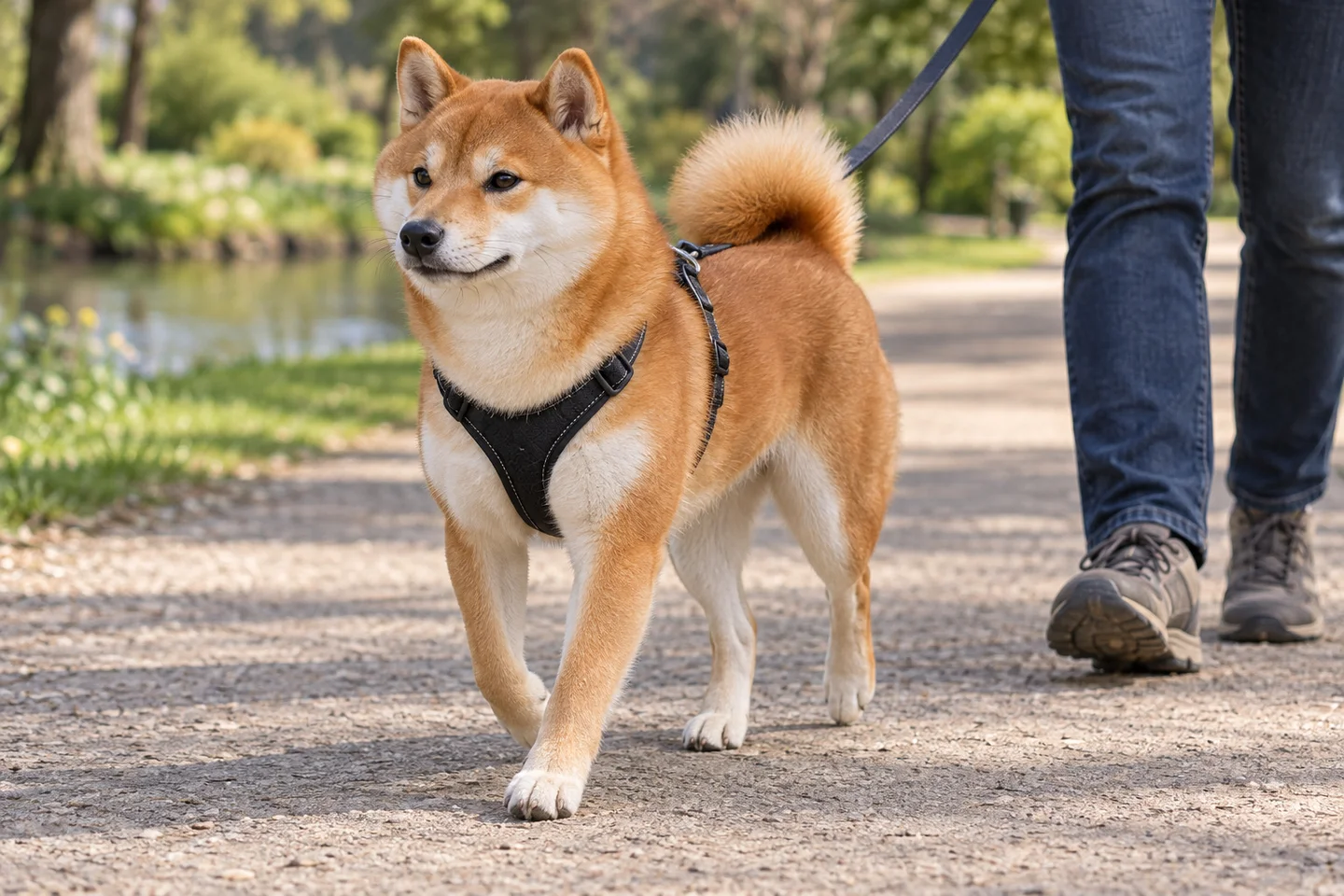
The dense coat can hide gradual change. Record weight and body condition over time rather than relying on a front-facing photograph. Choose a harness that fits the chest comfortably and remains secure when the dog backs away. Recheck during growth and after coat maintenance. Plan comfortable vehicle restraint and teach voluntary entry before a stressful journey. An injured adult may need a different loading arrangement, so a stable ramp or step can be introduced while the dog is well instead of relying indefinitely on an awkward lift.
Red, sesame, black and tan, and the meaning of urajiro
The standard recognizes several colors, including red, black and tan, and sesame forms, with pale urajiro in defined areas. Urajiro describes whitish hair along parts of the muzzle, cheeks, underside, and inner legs. It should not be treated as a fashionable extra that proves quality independently of structure, health, and behavior. Ask how a seller's color claims relate to the actual registry.
The outer coat is harsh and straight over a soft dense undercoat. Natural ears and tail carriage develop with the dog, and a puppy should not be manipulated to resemble an adult illustration. A picture can explain selected features but cannot show a clinical finding under the coat or establish parentage. Look at ordinary walking, turning, and handling, with appropriate records. An unusual coat label should never distract from whether the puppy is comfortable, recovering normally after activity, and linked to identifiable parents whose relevant results can be reviewed.
Training that gives cooperation a clear purpose
Teach attention, returning from short range, waiting at openings, and moving onto a mat while ordinary tasks continue. Begin in quiet conditions and reward promptly. Access to a safe smell can reinforce comfortable walking alongside food or another suitable outcome. Let recall lead back to exploration sometimes, so coming to the handler does not always remove the interesting part of the outing.
An exchange for found objects should be practiced before a dangerous item appears. Offer a reward and let the dog leave the object rather than reaching into the mouth. Avoid lead jerks, scruffing, or physical confrontation. These can increase conflict without making the requested response clearer. If an exercise fails, review difficulty, distraction, fatigue, and discomfort. A qualified reward-based professional can help when pulling, guarding, or handling resistance already interferes with daily life. Independence is context for teaching, not evidence that a dog cannot learn or must be forced through every task.
Handling feet and equipment before care becomes urgent
Introduce touch in small predictable steps. Touch a shoulder, reward, and pause; gradually work toward lifting a paw, checking an ear, and fastening equipment. A dog should not first discover prolonged restraint when it has a painful injury. Teach a voluntary position for inspection on a nonslip surface and let the veterinary team know if handling has already become difficult.
Do not dismiss intense vocalizing or attempts to escape as an amusing breed performance. Observe the context and consider fear or pain. Make the next step easier instead of holding on until the dog becomes still. A muzzle or other safety measure, when advised, should be taught gradually and fitted appropriately rather than introduced as punishment. Carers need the same handling instructions as the owner. Cooperative care takes time, but it creates practical options for nail care, grooming, and examination without relying on a contest between a determined dog and a stronger person.
Exercise with secure boundaries and time to recover
Provide regular walks, sniffing, searches, and suitable play, adjusted to age, health, and fitness. Introduce longer routes and demanding terrain gradually. A puppy needs manageable movement and rest, while an older Shiba can enjoy a shorter search even when its former distance becomes uncomfortable. Observe recovery after activity as well as enthusiasm during it.
Inspect fences, gaps, latches, and climbable objects before relying on an enclosure. Use appropriate equipment while recall develops near wildlife or traffic. A tracking device can assist recovery without preventing escape or injury. Carry water, choose cooler periods in warmth, and avoid assuming that a double coat prevents heat illness. Notice stiffness, a changed stride, or reluctance the next morning and revise the plan when needed. Repeated high-intensity games are not the only useful outlet; calm investigation can provide engagement without keeping the dog in constant anticipation of another chase.
Socialization without a requirement to accept every stranger
Offer a puppy manageable experiences with people, dogs, sounds, surfaces, and equipment. Let it watch from a comfortable distance and pair novelty with rewards. A visitor can wait sideways without leaning over the head or reaching for the feet. Contact is optional, and retreat should remain available. A short comfortable observation may teach more than a long encounter the puppy cannot leave.
Practice passing without greeting as well as meeting suitable partners. If the dog freezes, repeatedly retreats, or stops responding to an easy familiar cue, reduce the challenge. Continue learning through adolescence and after major changes in the home. An adult rescue needs the same respect for its current starting point. A confident-looking outline cannot establish experience with crowds, lifts, or veterinary handling. Assess recovery and sleep afterward rather than treating absence of barking during an event as the only measure of whether it was manageable.
Children and a dog that needs a protected retreat
A Shiba resting under a chair can be easy for a child to overlook. Arrange the furniture so that the dog has a bed away from the route to toys or the kitchen, and prevent children crawling into that space. Being small enough to pick up does not mean the animal welcomes lifting. Adults should manage necessary lifting with suitable support and help children interact at floor level instead.
Before friends visit, decide when the dog will remain in its protected area. Excited running, snacks, and dropped toys can create several competing demands, and the Shiba should not be expected to interpret them all. During quiet contact, an adult can help a child invite an approach and stop after a brief stroke to see whether the dog seeks more. Turning away ends the attempt. Adults retrieve contested objects through a safe exchange plan; children never demonstrate trust by interfering with meals or putting hands near a mouth. If supervision becomes divided, separate first rather than waiting for the dog to object.
Aggression and the facts before a snap
A reaction when someone lifts a Shiba deserves a careful account of how the lift began and whether contact might hurt. The immediate solution is to stop unnecessary lifting and ask the veterinary team about safe assessment. A reaction around a chew requires a different arrangement: protected chewing space and a professionally supported exchange lesson. The breed name does not supply a diagnosis for either event.
Write down what the dog could see, who approached, and how it tried to create distance. Do not repeat the sequence for an audience or a video. Veterinary investigation is especially useful after an abrupt change, and recurring threatening responses need qualified behavioral help. Avoid confrontations intended to establish authority; a quieter warning does not prove that the underlying problem has disappeared. A well-fitted basket muzzle can support an agreed safety plan after comfortable conditioning, but cannot justify forcing an encounter. Following a bite, the person needs appropriate care and the household must change the access arrangement before another person is exposed.
Grooming through shedding and ordinary skin inspection
Work through the double coat gently, checking beneath the surface around the neck, hindquarters, and equipment contact points. Loose undercoat can accumulate during shedding, and surface brushing may leave compacted hair beneath. Ask a groomer to demonstrate tools and technique if the dog repeatedly avoids care or the coat remains difficult to reach through. Grooming should preserve comfort, not force a fixed session length.
Dry appropriately after bathing and inspect skin that stays damp or irritated. Maintain nails, introduce tooth brushing, and check ears for odor, discharge, soreness, or head shaking. Naturally upright ears can still become inflamed. Use veterinary advice rather than deep tools or leftover drops. If touch suddenly becomes difficult in one area, investigate discomfort before increasing restraint. Record localized hair loss, repeated licking, or a persistent sore. A dense coat and a dog still willing to walk do not rule out a problem that needs clinical attention.
Health: knees, hips, and eyes are separate assessments
The current AKC Shiba recommendations name patella, hip, and ophthalmologist evaluations. Ask for identifiable reports and discuss how a result informed the mating rather than accepting the phrase health tested. A routine puppy examination cannot replace the parental assessments, and one favorable result does not answer all three questions. Keep the records available for the dog's veterinarian.
VCA explains that a luxating patella can move out of its normal position. Intermittent skipping or carrying a leg briefly deserves assessment rather than being dismissed as a quirky walk. Several problems can alter movement, so a video is useful supporting information without establishing a diagnosis. Do not repeatedly manipulate a knee at home or force extra jumping to strengthen a problem by guesswork. Ask the clinician what was found, which activity is suitable, and when review is needed. A dog can remain interested in play while experiencing discomfort, making recovery and ordinary movement important observations.
Itching needs an investigation rather than a breed-wide food ban
The AKC care information discusses allergies in Shibas, but an individual itchy dog still needs assessment for possible causes. AAHA's allergy guidance distinguishes food allergy, flea-related disease, environmental allergy, and other conditions that can resemble them. A coat photograph or a breed-group claim that all Shibas react to one ingredient cannot establish the explanation for your dog.
Record where itching began, seasonality, diet and treats, parasite prevention, ear signs, and products already used. A veterinarian may recommend a structured investigation or diet trial, with a plan to assess the response and confirm a suspected food reaction appropriately. Do not change foods repeatedly while adding extras that make a trial difficult to interpret, or discontinue prescribed prevention without advice. Tell the clinic about recurring infections or painful areas as well as scratching. The goal is an individualized plan with review, not a permanent collection of restrictions and supplements copied from another owner's experience.
Food, mixes, and practical ownership costs
A ration review starts with what the Shiba actually receives, including class rewards, chews, and food from relatives. Record those extras before cutting or adding meals. Use a complete diet suited to life stage, and ask the veterinary team to assess condition beneath the coat. Persistent digestive trouble, unusual thirst, or an unexplained appetite change deserves investigation. Homemade feeding needs proper formulation rather than a list assembled from social-media suggestions.
For a Shiba cross, ask what is known about both backgrounds and what remains a guess. Neither a designer name nor a smaller parent promises easy handling, dependable recall, or freedom from disease. In a planned litter, discuss relevant parental assessments; in rescue, examine the individual history and current findings. Obtain local quotes for care, training assistance, transport, and any grooming support needed. A backup carer must know the dog's handling preferences and door routine. Practice together before an absence. Expectations of constant carrying or unrestricted off-lead walking need particular scrutiny when deciding whether this individual suits the home.
dogsDating walks without pressure to greet
A Shiba dogsDating profile can state a simple preference: walking near one calm companion while leaving physical greetings undecided. Describe any handling or spacing needs plainly. Keep exact home coordinates private and withhold the household address. Agree on a public starting landmark within an approximate locality, choosing somewhere both people can organize the dogs without meeting in a narrow entrance.
Decide on an uncomplicated route and a way to request more space before starting. The dogs may spend the whole first walk apart. Observe whether each can resume sniffing and move with its own handler after noticing the other. A pattern of blocking, staring, or trying to retreat calls for a change in distance or an early finish. Avoid shared rewards on the ground where the animals might converge. Later, compare specific moments rather than rating the encounter simply friendly or unfriendly. Either person can decline another outing, and a preference for walking at a distance can remain a useful outcome.
Keeping a prescribed skin plan interpretable
If a diet trial is prescribed, ask the clinic to write down which foods, rewards, chews, and flavored products are permitted. Every person feeding the dog needs the same instructions. A training class or visit to relatives can otherwise introduce unrecorded ingredients, leaving an apparent response difficult to interpret. Ask how to preserve useful rewards without disrupting the plan rather than abandoning training or improvising additions.
Keep a dated record of itching, ear discomfort, skin appearance, and any accidental extra food. Photograph a changing area when this can be done without distress, and ask when the clinic wants an update. A partial improvement can still need investigation for another contributing problem. The point is to make the clinician's assessment more informative, with the animal comfortable while the plan is reviewed, rather than trying to prove a favored diagnosis through increasingly severe restrictions.
Sources and editorial notes
Sources checked October 22, 2026. Breed measurements describe reference ranges, not a diagnosis or an individual dog's ideal weight. Images are AI-generated breed illustrations and do not document a particular dog or health condition.
- AVSAB: Humane Dog Training Position Statement
- VCA Animal Hospitals: Food aggression in puppies
- VCA Animal Hospitals: Common emergencies in dogs
- Orthopedic Foundation for Animals: CHIC health screening programs
- VCA Animal Hospitals: Aggression toward unfamiliar dogs, diagnosis
- VCA Animal Hospitals: Grooming and coat care for your dog
- VCA Animal Hospitals: Ear infections in dogs (otitis externa)
- AAHA: Feeding plans for healthy, appropriate weight cats and dogs
- VCA Animal Hospitals: Heat stroke in dogs
- AVSAB: Puppy Socialization Position Statement
- VCA Animal Hospitals: Dog behavior problems, aggression toward children
- FCI Shiba standard 257: Japanese identity, urajiro, coat and sex-specific height references
- American Kennel Club: Shiba patella, hip and ophthalmologist screening recommendations
- VCA Animal Hospitals: luxating patella signs, diagnosis and individual management
- AAHA: diagnosing allergic skin disease and interpreting diet-trial responses in dogs
- American Kennel Club: Shiba Inu care and health, including allergies
Keep getting to know dogs.
Read another guide or return to your dogsDating community.
Explore breed guidesBack to dogsDating