Affenpinscher
A small, wiry-coated companion whose care includes respectful handling, manageable exercise, regular grooming, and attention to joints and eyes.
How these guides are researched and reviewed
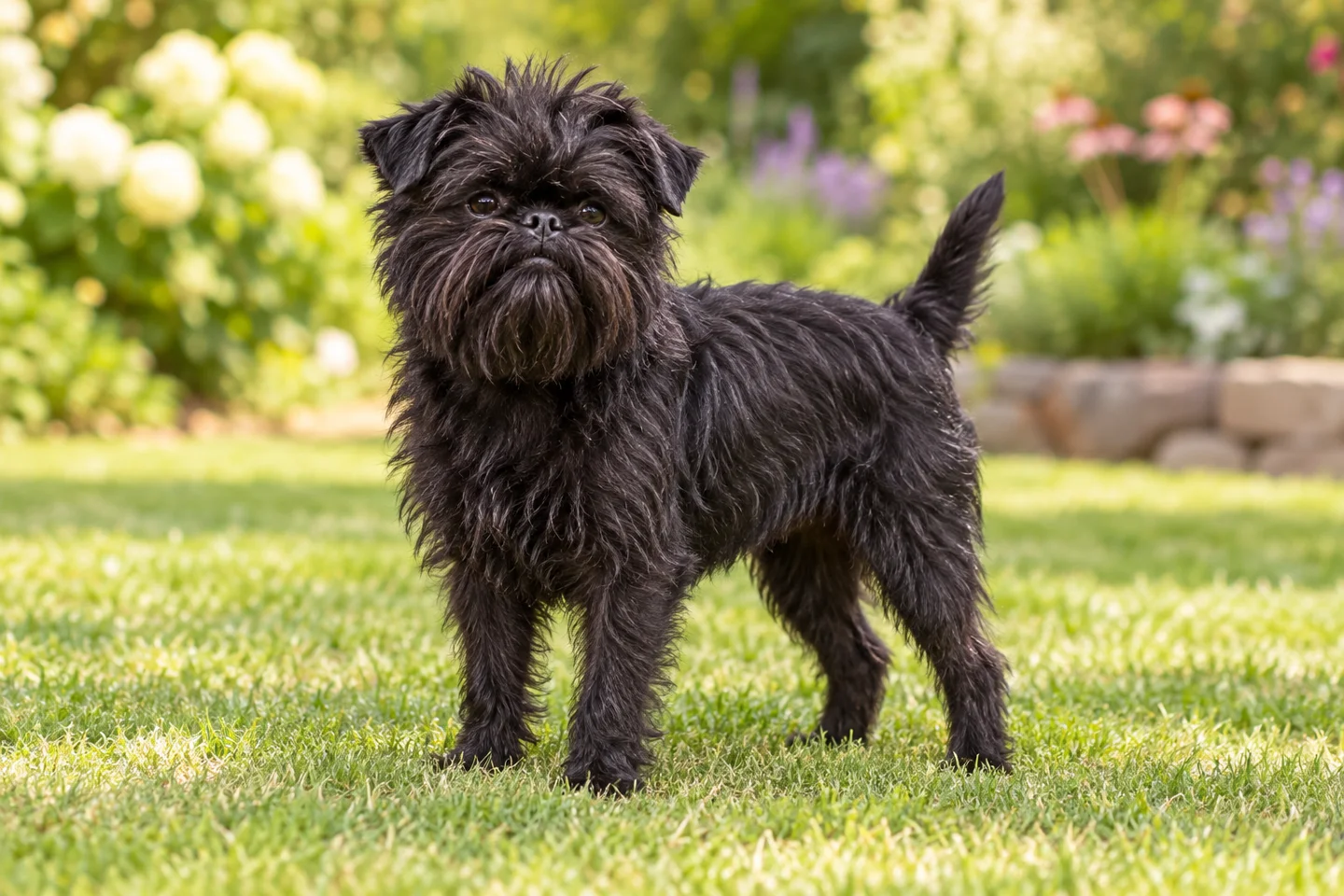
- Standard height
- About 9½–11½ in at the shoulder
- Coat
- Rough with beard and eyebrows
- Care priorities
- Handling, coat, joints, and eyes
General information for owners. These articles have not been reviewed by a veterinarian. Medical decisions need your dog's history and an examination.
Living with an Affenpinscher
An Affenpinscher needs an owner who will take a small dog's choices seriously. A dog this size can be picked up, moved, or crowded before anyone notices its discomfort. Build a home where the dog can walk away, rest undisturbed, and learn the same useful skills you would teach a larger companion. Its wiry face and compact body are only part of the decision to bring one home.
Think through an ordinary week before choosing a puppy or adult. Who provides toilet breaks, grooming, exercise, and company? Where does the dog stay when visitors arrive, and how will you travel to a veterinary appointment? An Affenpinscher may fit a smaller living space, but available floor area does not answer those questions. A suitable routine depends on the household, the individual dog, and the care you can reliably provide.
German ratting history and breed identity
The Affenpinscher developed in Germany as a dog used to catch rodents, later becoming a household companion. The American Kennel Club places it in the Toy Group, despite a terrier-like appearance and working background. The name refers to its monkey-like expression. That expression is a description of appearance, so it should not become an excuse to treat the dog as a novelty or provoke reactions for entertainment.
The ratting background is relevant when planning life around small animals. It does not predict every individual's behavior, but it gives a reason to be cautious about access to pet rodents and other vulnerable animals. Ask the breeder or rescue what the actual dog has encountered. Distinguish a recorded history of calm behavior from a guess based on a brief introduction or the dog's small size.
Size, coat, and the face beneath the hair
The American breed standard gives an adult height of about 9½ to 11½ inches at the shoulder. The body is compact, with a rough coat, beard, and eyebrows. Black is familiar, while the standard permits other colors. The illustrations in this guide show black dogs at different life stages. They are generated illustrations and cannot establish pedigree, sound movement, or freedom from a medical condition.
Look past the coat when assessing the real dog. Ask about comfortable breathing, eye health, movement, and body condition. Hair can hide a sore patch or make a lean or overweight body difficult to judge. Do not select for an increasingly shortened face or unusually tiny size because a photograph looks appealing. Have a veterinarian assess concerns rather than assuming an exaggerated feature is a harmless part of the breed.
Home safety for a dog near the floor
Check the home from the dog's level. Gaps beneath garden gates, open stair rails, falling objects, and a door opened toward a busy street all deserve attention. Put medication and cleaning products away securely. A low side table may still be within reach, and a guest's bag can contain food or tablets. Use barriers that household members can operate without leaving a gap for the dog to follow through.
Provide secure footing and a bed where the dog will not be stepped over repeatedly. Plan access to furniture deliberately rather than allowing frantic jumps whenever someone sits down. If lifting is necessary, signal first and support the body. Avoid scooping up a sleeping dog without warning. Sudden resistance to lifting, hesitation, or a change in movement calls for a veterinary assessment rather than more determined handling.
Temperament, alerting, and daily company
An Affenpinscher may take an active interest in household events and alert to sounds beyond the door. Respond by checking the situation, creating distance from the window if needed, and rewarding a return to a calmer activity. Repeated shouting can add excitement without teaching what to do next. In shared housing, discuss noise and access arrangements before a recurring problem becomes a source of conflict.
Ask about the individual dog's approach to strangers and recovery after something surprising. A dog who wants space can observe a visitor from behind a gate without being required to accept touch. Build quiet companionship into the day, alongside walks and play. If the dog constantly patrols, cannot rest, or becomes increasingly reactive, review the routine and seek help. Persistent distress is a welfare concern, even when observers describe the behavior as spirited.
Children, larger dogs, and small pets
Children need clear rules and an attentive adult around an Affenpinscher. Prevent chasing, squeezing, lifting, and interference with sleep or meals. A child should not be expected to interpret a subtle warning or manage an excited dog alone. Arrange a retreat the dog can use without being followed. If adult attention is divided, separate them before the interaction becomes difficult.
A large friendly dog can injure a small companion through rough movement. Choose calm partners, watch both dogs, and interrupt when one repeatedly hides or tries to escape. Keep pet rodents and other small vulnerable animals securely apart. A cage placed within reach does not necessarily provide a comfortable or safe arrangement for either animal. Ask for professional help if the household depends on an uncertain animal introduction working without reliable separation.

Aggression and warnings people can miss
Small dogs can bite, and the consequences matter. Avoid dismissing growling, freezing, retreat, or snapping because the dog is easy for a person to overpower. Stop the interaction and give space. Ask what happened immediately beforehand: reaching for a chew, lifting from a bed, touching a sore area, or blocking an exit may be relevant. A clear account is more useful than calling the dog bad-tempered.
For food or object guarding, prevent repeated confrontations and obtain a reward-based plan. Do not keep taking meals away to establish control. Offer quiet feeding space and teach exchanges in manageable situations. A new objection to touch or a sudden behavior change needs a veterinary examination. If a bite has occurred, discuss the full incident with a qualified professional and put practical safeguards in place before allowing similar contact again.
Training with room to participate
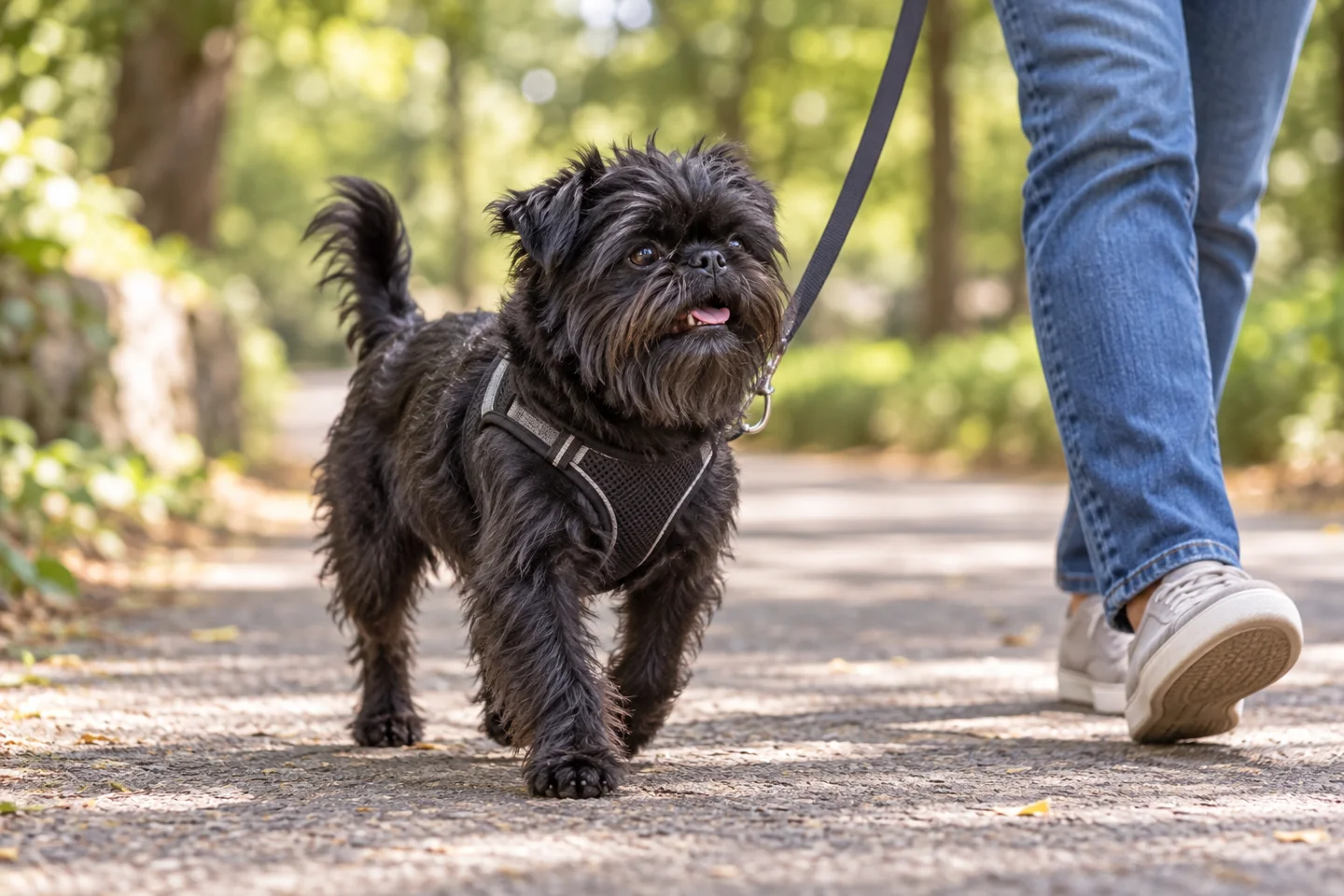
Teach recall, waiting at doors, settling on a mat, and comfortable lead walking in short sessions. Work at the dog's level without looming over it or repeatedly reaching toward its face. Reward the desired response and make the next repetition achievable. The American Veterinary Society of Animal Behavior recommends reward-based training. The dog's small size is no reason to replace teaching with force or continual carrying.
A useful handling skill is stepping onto a stable surface or approaching a harness voluntarily. Break the task into small parts and let the dog move away between repetitions. Practice coming back when called in a secure space, then use appropriate lead management outside it. Avoid testing recall beside roads or chasing wildlife. If an exercise repeatedly fails, change the environment or the teaching step rather than repeating a louder cue.
Exercise, sniffing, and suitable games
An Affenpinscher still needs walks and opportunities to explore. Let the dog investigate a suitable route rather than expecting it to keep pace with a person's longest stride throughout. Match distance and difficulty to age, fitness, health, and weather. Several manageable outings may work better than one demanding excursion, especially for a puppy, an older dog, or an individual recovering from illness.
At home, use simple searches, gentle toy games, or short training exercises to provide variety. Select toys appropriate to the dog and supervise unfamiliar items. Check for damage and remove pieces that might be swallowed. Give rest as much space in the routine as activity. A dog who remains restless after repeated games may need help settling, a different environment, or medical advice rather than a further increase in effort.
Grooming the wiry coat
The coat needs regular brushing and combing, with attention to places where equipment rubs and hair tangles. Work gently around the beard and eyebrows. Keep vision unobstructed, but ask a groomer for help with trimming close to the eyes. Sudden movement and sharp scissors are a poor combination. Small, frequent sessions are easier to manage than allowing tight mats to develop and then attempting a long, uncomfortable groom.
Discuss a practical coat plan with someone familiar with the breed. Show preparation and companion grooming can involve different priorities. The useful aim at home is clean, comfortable skin and a coat you can maintain. Check beneath the hair rather than judging the surface alone. Persistent redness, odor, itch, or reluctance to be brushed deserves examination, especially if the dog previously accepted the same care without difficulty.
Teeth, nails, and cooperative care
Introduce tooth brushing with a dog-appropriate product and brief, rewarded contact. Ask the veterinary team about dental assessment and an individual prevention plan. A small mouth can be difficult to inspect thoroughly at home, and a willingness to eat does not establish that the mouth is comfortable. Report changes in chewing, dropping food, odor, or resistance to face handling.
For nails, start with touching a paw, then gradually introduce the tool and tiny amounts of work. A non-slip surface and good lighting help the handler as well as the dog. Ear checks and routine examinations can follow the same gradual approach. If care becomes a struggle, obtain help before fear escalates. Pain, infection, and anxiety need assessment; they should not be treated as a test of who can hold on longest.
Food, weight, and household portions
Feed a complete diet suitable for the dog's life stage and individual needs. Measure meals, count training rewards, and make sure everyone knows whether the dog has already been fed. For a small dog, a succession of apparently tiny snacks can change the day's intake substantially. Ask the veterinarian to show you how to assess body condition beneath the coat, then monitor changes over time.
Keep rubbish, human medication, and unsafe foods inaccessible. Choose chews thoughtfully and supervise their use, particularly when trying something new. If appetite, thirst, weight, or digestion changes, keep a record and seek advice rather than repeatedly switching foods without a plan. A diagnosed condition may require dietary adjustments. Supplements should address an identified need under professional guidance rather than a general promise that a product will protect every small dog.
Health screening and what it establishes
The AKC lists patella and ophthalmologist evaluations among the national breed club's recommended screening for Affenpinschers. Ask for actual reports tied to the relevant dog's identity, together with dates and findings. A routine puppy examination is useful, but it answers different questions from screening performed on adult breeding dogs. Bring unclear results to your veterinarian before making a commitment.
Screening reports describe particular assessments at particular times. A CHIC number records completion and public availability of specified health testing, rather than guaranteeing that all findings were normal or that future illness cannot occur. Read the results and ask about the health of close relatives. Where recommendations differ between clubs or countries, identify the program being used instead of assuming that every reference to health testing means the same thing.
Kneecaps, hips, eyes, and changes in comfort
The Affenpinscher Club of America discusses slipping kneecaps, hip problems including Legg-Calvé-Perthes disease, and eye concerns. A patellar luxation occurs when the kneecap moves out of its normal position. A dog may intermittently skip or carry a hind leg, but that pattern has other possible causes too. Ask for an examination rather than deciding that a familiar-looking skip is harmless.
Persistent lameness, difficulty rising, squinting, eye redness, or a new dislike of touch needs veterinary attention. Treatment depends on what is found and the individual dog's condition. Do not manipulate a joint or give human pain medication while trying to solve the problem yourself. A photograph or video can help explain an intermittent change if recording does not delay care or require provoking discomfort. Note the date and the circumstances so the history is useful.
Warm weather and urgent problems
Pay attention to breathing and comfort during warm or humid weather. Choose shade, drinking water, and an easy return route, and reduce activity when conditions are unsuitable. Avoid parked vehicles and situations where the dog cannot move away from heat. A short outing can still be too much for an individual with a medical problem. Let the dog's response guide decisions rather than relying on a fixed walking target.
Collapse, severe breathing difficulty, repeated vomiting, suspected poisoning, or sudden inability to stand requires urgent veterinary advice. Keep the emergency clinic's details accessible and arrange safe transport. Explain the dog's approximate size, signs, medication, and any possible exposure. Do not wait for an ordinary appointment when the clinic advises immediate care. Preparation is especially useful when the person who normally drives or handles the dog is unavailable.
Affenpinscher mixes and uncertain labels
An Affenpinscher crossed with a Poodle, Chihuahua, or another breed can vary in coat, build, behavior, and adult size. Informal mix names do not establish a recognized Affenpinscher variety. Ask whether parentage is documented or estimated, and use the answer honestly. A small bearded rescue dog may resemble several breeds, so appearance alone cannot confirm a particular cross.
Consider the health needs of known parents alongside the individual dog's findings. Mixed ancestry does not guarantee normal joints, an easy coat, or comfort around children. Nor does wiry or curly hair guarantee that a person with allergies will tolerate the dog. Discuss allergies with the affected person's clinician and assess the real situation. For adoption, observed behavior in a home can be more useful than an uncertain label attached to a photograph.
Choosing a source and allowing adjustment
Ask a breeder about health records, handling practice, early experiences, and support after placement. Be ready to wait for a suitable dog instead of treating immediate availability as a reason to rush. Read the agreement, clarify return arrangements, and ask what the breeder has noticed about individual puppies. A responsible discussion allows limits and uncertainty to be explained without pressure to ignore them.
For a rescue Affenpinscher, ask about dental care, handling tolerance, time alone, and previous incidents with people or animals. Distinguish foster-home observations from a short shelter assessment. During adjustment, keep the first days predictable and give the dog quiet space. Avoid passing it between visitors who all want to hold it. Introduce necessary care gradually and arrange a veterinary review of the records and any current concerns.
Budget, travel, and later life
Budget for preventive care, grooming, training help, boarding or a sitter, dental treatment, and unexpected illness. Compare insurance terms and exclusions before assuming a policy will pay for a pre-existing finding. Ask local providers for actual prices. A small food bill does not mean a small medical commitment, and a dog who needs specialist care may require travel and time away from work as well as treatment costs.
Use suitable restraint in a vehicle and teach calm travel through manageable journeys. A carrier should offer comfortable space and secure ventilation without becoming a place of forced confinement during distress. As the dog ages, reconsider access, footing, and the length of outings. Arrange a backup carer who understands lifting, medication, and the dog's boundaries. Keep familiar interests available in forms the dog can enjoy comfortably.
A small-dog dogsDating introduction
Use the dogsDating profile to describe how your Affenpinscher actually behaves around other dogs. Mention whether larger partners are overwhelming, whether toys create tension, and whether a quiet walk is preferable to play. Keep exact home coordinates private and meet in a suitable public place with room to create distance. A shared breed or similar size cannot establish compatibility by itself.
Begin with separate handlers and a parallel walk. Let both dogs observe without being pushed into face-to-face contact or held up for a greeting. Avoid shared food and toys. If either dog freezes, hides, snaps, or repeatedly tries to leave, increase distance and end the meeting as needed. A short calm outing is a useful first step. Plan further contact around the dogs' responses and each owner's ability to manage the arrangement.
Sources and editorial notes
Sources checked October 21, 2026. Breed measurements describe reference ranges, not a diagnosis or an individual dog's ideal weight. Images are AI-generated breed illustrations and do not document a particular dog or health condition.
- VCA Animal Hospitals: Hypoallergenic dog breeds
- American Kennel Club: Affenpinscher care and screening
- Orthopedic Foundation for Animals: CHIC program and interpretation of numbers
- VCA Animal Hospitals: Common emergencies in dogs
- VCA Animal Hospitals: General feeding guidelines for dogs
- VCA Animal Hospitals: Food aggression in puppies
- Affenpinscher Club of America: Health and wellness concerns
- VCA Animal Hospitals: Heat stroke in dogs
- American Kennel Club: Affenpinscher history
- VCA Animal Hospitals: Aggression toward unfamiliar dogs, diagnosis
- VCA Animal Hospitals: Luxating patella in dogs
- Affenpinscher Club of America: Breed standard
- AVSAB: Humane Dog Training Position Statement
Keep getting to know dogs.
Read another guide or return to your dogsDating community.
Explore breed guidesBack to dogsDating