Cavalier King Charles Spaniel
A small spaniel whose daily care includes gentle activity, regular coat maintenance, cardiac follow-up, and attention to possible pain.
How these guides are researched and reviewed
- Standard weight
- 13–18 lb, proportionate to height
- Coat
- Silky with feathering
- Health focus
- Heart assessment and pain recognition
General information for owners. These articles have not been reviewed by a veterinarian. Medical decisions need your dog's history and an examination.
Living with a Cavalier King Charles Spaniel
A Cavalier King Charles Spaniel can suit someone who wants a small companion involved in daily household life. The practical commitment includes regular walks, coat care, time together, and serious attention to inherited health concerns. A small body does not make those needs minor. Before choosing a puppy or adult, consider who will provide care during work, how veterinary costs will be handled, and whether the household can protect quiet rest.
Look at the individual rather than assuming every Cavalier will enjoy every person or dog. Ask about time alone, handling, travel, visitors, and previous medical findings. An adult's established routine may be useful when you need a clearer picture of daily needs. A puppy requires frequent outings, patient teaching, and support through an uncertain period of growth. Both deserve a home that can adapt when health or behavior changes.
Breed identity and the spaniel name
The Cavalier King Charles Spaniel is a British toy spaniel breed. Its full name matters because the King Charles Spaniel, known as the English Toy Spaniel in the United States, is a different breed. Shared historical references and similar names can confuse a search. Ask which breed appears on records and use the full name when researching health guidance or speaking with a breeder.
The modern Cavalier combines a small companion size with an interest in going out and investigating the world. Historical descriptions should not replace observation of a dog in front of you. A preference for company does not establish comfort with strangers, and a spaniel name does not guarantee reliable recall around birds. Discuss the actual dog's habits and plan for ordinary care instead of expecting a familiar breed story to supply every answer.
Size, colors, and realistic expectations
The American Cavalier King Charles Spaniel Club's standard describes an ideal height of 12 to 13 inches at the shoulder and weight of 13 to 18 pounds. These are reference figures, not instructions to reduce or increase a particular dog's weight without medical advice. A veterinarian can assess the individual frame, muscle, and body condition. Avoid choosing a dog advertised as unusually tiny without discussing its health and care needs.
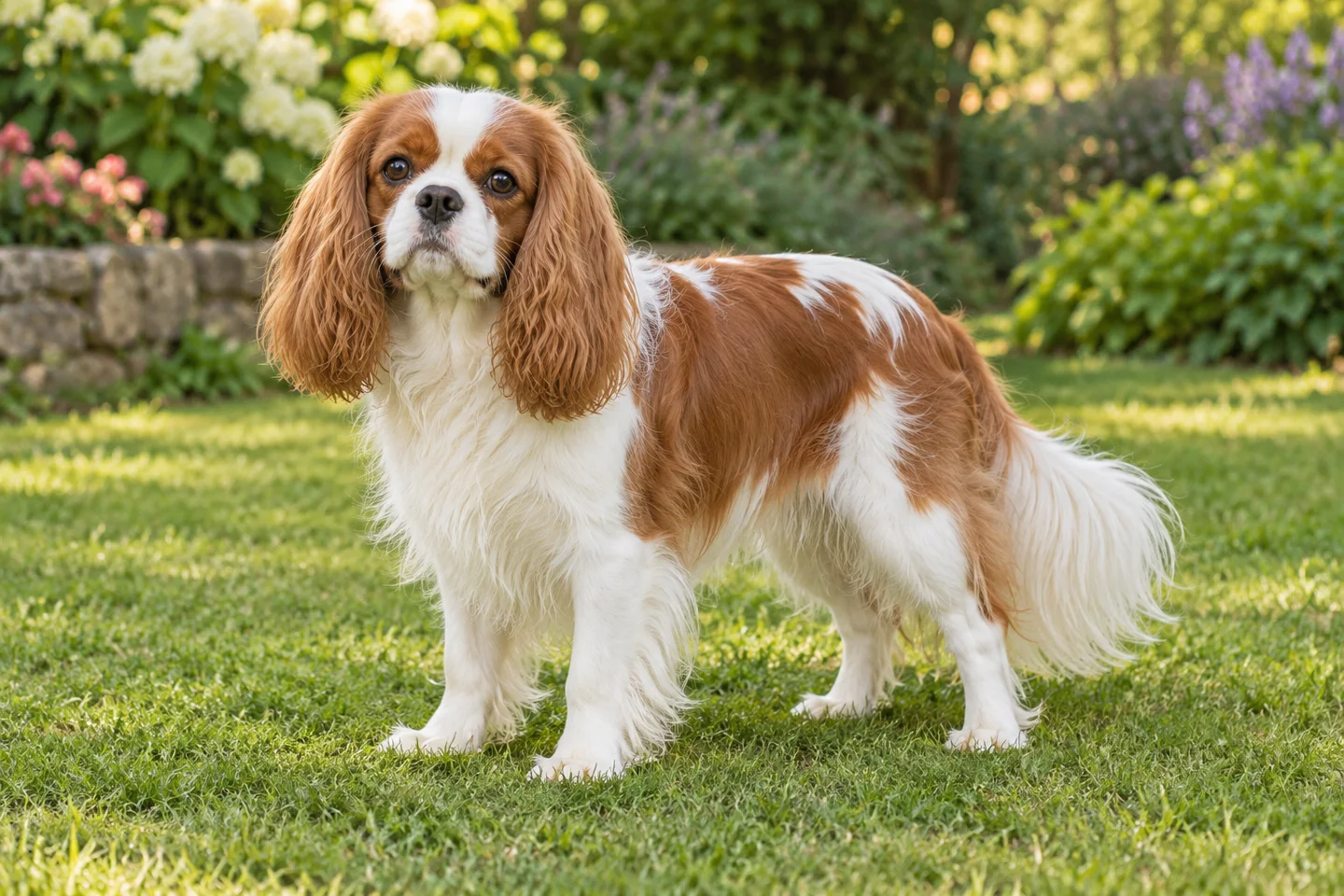
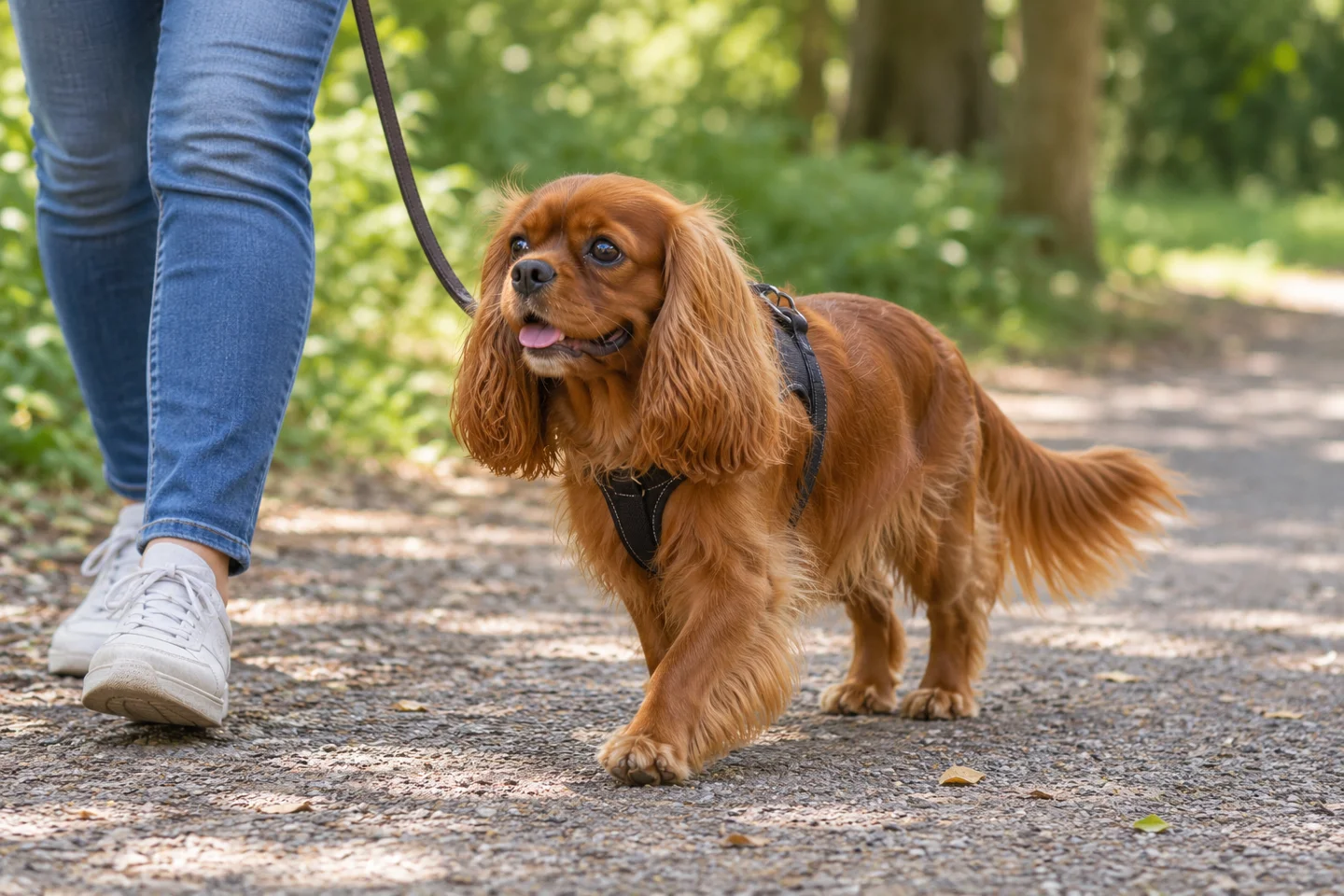
The breed has a silky coat with feathering and four familiar color patterns: Blenheim, tricolor, ruby, and black and tan. This guide's illustrations show a Blenheim adult, a tricolor puppy, and a ruby adult. They are generated images, so they cannot prove pedigree, normal anatomy, comfortable breathing, or freedom from disease. Select a real dog through records, observation, and a suitable source rather than resemblance to an idealized picture.
Home arrangements and comfortable access
Give a Cavalier a bed away from constant foot traffic and an easy route to water. Small dogs can be overlooked when doors close or someone carries a large object. Teach household members to check where the dog is before moving furniture or stepping backward. Use a secure barrier at entrances and make sure garden gaps cannot become escape routes. Small size does not remove the need for secure boundaries.
Think about access to furniture and vehicles before repeated jumping becomes an established routine. The right arrangement depends on the dog and any medical advice. A stable, suitable aid may help some dogs, while others need a different resting place or assistance. If the dog suddenly hesitates, cries, or avoids a familiar movement, seek an assessment. Do not assume reluctance is a training problem simply because the dog previously managed the task.
Company, rest, and time alone
Build comfortable time apart through brief, manageable practice. Start when the dog has had a suitable outing and can rest in a familiar area. Leave an appropriate activity if the dog enjoys one safely, then observe whether it actually settles. A camera can reveal pacing, distress vocalization, or repeated attempts to reach the door. Returning to an apparently quiet home does not tell you what happened during the absence.
If separation causes persistent distress, arrange support and discuss the problem with a veterinarian or qualified behavior professional. Avoid suddenly extending absences to force adaptation. Plan a sitter or other suitable care while training progresses. At home, allow the dog to sleep without repeated handling, even when people find the resting dog appealing. A companion's comfort includes the ability to choose quiet space as well as join the household.
Children, larger dogs, and smaller animals
Children need guidance and active adult supervision with a Cavalier. Prevent carrying without permission, tight hugs, chasing, and interruption of sleep or meals. Teach gentle interaction at ground level and give the dog somewhere children cannot follow. If a child wants continuous play while the dog moves away, end the interaction. A small dog still has limits and can bite when frightened, hurt, or trapped.
Manage meetings with larger dogs according to behavior and physical mismatch. Friendly intent does not prevent injury during rough play. Use calm partners and watch for attempts to hide or escape. Introduce cats and other household animals gradually with safe separation and escape routes. A Cavalier may show interest in chasing, so do not infer safety around small pets from an affectionate response to people. Some animals need permanent separation regardless of breed descriptions.

Aggression, guarding, and overlooked discomfort
A Cavalier can guard food, fear handling, or react aggressively in certain situations. A reputation for gentleness does not establish an individual's safety. Notice stiffening, avoidance, freezing, growling, and snapping, and stop the interaction that prompted them. Do not continue touching a dog to see whether it will tolerate more. Give space and seek help when behavior repeats or creates a risk.
Pain deserves particular attention when tolerance changes. A dog who objects to a harness, avoids being picked up, or reacts near the neck needs veterinary assessment rather than an automatic label of disobedience. Manage food and valued objects to prevent conflict, and teach exchanges through reward-based practice at an appropriate level. Punishment can add fear and make warnings less useful. Explain any incident accurately to a professional, including what happened immediately beforehand.
Training everyday skills
Teach the small skills that make care easier: coming when called, walking with a loose lead, waiting behind a door, and resting while equipment is prepared. Use rewards the dog values and sessions short enough to keep learning comfortable. Practice where success is likely before adding busy environments. The American Veterinary Society of Animal Behavior recommends reward-based methods, which also support a useful working relationship during routine handling.
Small dogs sometimes get carried through situations they have never learned to navigate. Where safe, let the Cavalier walk, sniff, and respond to cues rather than being lifted automatically. Teach a signal before lifting is necessary and support the body carefully. If lifting seems painful, stop and ask the veterinarian for guidance. Training should make daily care more predictable for the dog, including a clear way to pause when something becomes difficult.
Exercise, exploration, and recovery
A Cavalier needs activity suited to age, fitness, weather, and health. Walks can include time to investigate scents and move at a comfortable pace. Add gentle games or easy searches at home when the dog enjoys them. Avoid treating a small companion as a decorative passenger who never needs exploration. Equally, avoid using the pace of a much larger or fitter dog as the standard for the outing.
Increase activity gradually after illness or a long break, and follow individual medical advice for heart disease or other conditions. Notice unusual fatigue, coughing, reluctance, weakness, or difficulty recovering. Record when changes occur and seek veterinary advice. Collapse or severe breathing difficulty requires urgent help. A planned walk can be shortened or canceled; finishing a route has no value when the dog is struggling.
Grooming the silky coat
Brush and comb regularly, paying attention to feathering behind the ears, beneath the body, and on the legs. Work gently through small tangles before they become tight mats. Avoid pulling on skin or trying to cut a close mat with scissors. A groomer or veterinary team can help when coat care has become painful or the dog cannot tolerate handling. Establish a schedule you can maintain rather than waiting until the coat looks difficult.
Keep grooming sessions short enough that the dog remains comfortable, and reward cooperative behavior. Check for grass seeds, debris, and skin changes after outings. Ask about a practical hygiene trim when necessary rather than treating show presentation as a requirement for every companion. Bathing, drying, and product choice should suit the dog's skin and circumstances. Persistent irritation or odor needs an examination instead of repeated cosmetic treatment.
Ears, eyes, teeth, and handling comfort
Long ears need regular observation. Redness, discharge, odor, head shaking, or discomfort can indicate a problem and should prompt veterinary advice. Use only the cleaning approach recommended for the individual; avoid inserting objects deep into the ear. Teach the dog to accept a brief look and then a reward. If ear checks suddenly become difficult, consider pain before assuming the dog has forgotten its training.
Watch for squinting, redness, discharge, or changes in the eyes and seek prompt advice for painful signs. Introduce tooth brushing gradually and arrange dental assessment as recommended. Nail care also benefits from short sessions and clear pauses. Keep a note of changes in tolerance across grooming and examinations. A pattern involving the neck, head, or particular movements may help the veterinarian decide what to investigate.
Feeding and maintaining body condition
Choose a complete diet for the dog's life stage and review individual needs with your veterinarian. Measure meals and include training rewards in the day's total. Small portions make uncounted treats consequential, particularly when several people offer snacks. A feeding chart gives a starting point rather than a permanent amount. Adjust according to growth, body condition, activity, and medical requirements with professional guidance when needed.
Keep food separate from other animals when tension occurs, and teach family members to avoid disturbing meals. Do not add supplements or switch to a restrictive homemade diet because of a broad promise about heart protection. A diagnosed condition may call for a specific plan that considers the whole dog and any medication. Record appetite and weight changes so a gradual decline does not become hidden beneath the coat or dismissed as fussiness.
Health screening and choosing records
The American Cavalier King Charles Spaniel Club identifies cardiac, eye, patella, and hip assessment among breed health considerations. Ask for the actual reports for the relevant dogs, their identities, the examination dates, and the professional's findings. Screening reduces uncertainty about particular conditions at particular times. It cannot guarantee a puppy's lifelong health or replace follow-up as the dog grows older.
Discuss family history and any neurological concerns as well as the standard paperwork. A DNA panel answers different questions from a cardiologist's examination or diagnostic imaging. Request explanations when a seller uses a single clear result as a general claim of health. Your own veterinarian can help interpret records before you commit. A source willing to discuss limitations and ongoing care gives you more useful information than an unconditional promise.
Mitral valve disease and follow-up
Cavaliers have a predisposition to myxomatous mitral valve disease, which can develop earlier in this breed than in some others. The ACVIM consensus describes assessment and treatment by disease stage. A murmur does not automatically mean heart failure, and treatment decisions depend on clinical findings. Ask what the veterinarian heard, what further testing is advised, and when the next assessment should occur. Do not borrow another dog's medication or assume every murmur needs the same plan.
If disease is diagnosed, request clear instructions about activity, monitoring, and when to contact the clinic. Your veterinarian may ask you to observe breathing at rest and explain which changes matter for this dog. Keep follow-up appointments even when the dog appears comfortable. Severe breathing difficulty or collapse needs urgent help. Regular assessment and an agreed plan make a change easier to act on than trying to interpret an isolated cough without context.
Neurological pain and syringomyelia
Chiari-like malformation and syringomyelia are important neurological concerns in Cavaliers. Syringomyelia involves fluid-filled cavities within the spinal cord. Research by Sparks and colleagues examined owner-reported pain and scratching in Cavaliers assessed with MRI. Signs can include unusual scratching movements, sensitivity, and changes in activity, but a symptom alone does not establish the diagnosis. Itching, ear disease, orthopedic pain, and other problems also need consideration.
Tell the veterinarian about crying out, reluctance to move or jump, apparent neck discomfort, or scratching that seems unusual. A short video may help describe an intermittent episode if recording does not delay care or provoke the symptom. Avoid repeating a movement to demonstrate pain. The veterinarian can decide whether a neurological examination, imaging, or referral is appropriate. Do not diagnose from coat color, a photograph, or another owner's account of a similar dog.
Cavalier mixes and promises about health
A Cavalier crossed with a Poodle is commonly called a Cavapoo; a cross with a Bichon Frise has a different parental combination. A mix name describes ancestry rather than a variety of the Cavalier King Charles Spaniel. Coat, shedding, size, and behavior can vary. Ask about documented parents, their health assessments, and the actual puppy or adult rather than choosing from a name and a prediction.
Mixed ancestry does not guarantee freedom from heart disease, neurological problems, allergies, or other inherited conditions. The known parental breeds and the individual findings both matter. A curly coat can require substantial grooming and does not establish that a person with allergies will tolerate the dog. Spend appropriate time with the real dog when allergies are a concern, and seek medical advice for the affected person. Avoid relying on a seller's guarantee about human reactions.
Finding a suitable breeder or rescue
A breeder should explain health records, how puppies experience ordinary household life, and what support is available after placement. Ask about handling, brief separation practice, veterinary examinations, and the return policy. Take time to read the agreement. Be cautious when a seller uses unusual size, immediate availability, or attractive photographs to rush the decision while medical questions remain unanswered.
For rescue dogs, clarify current medication, previous investigations, dental needs, behavior around handling, and tolerance of time alone. Ask what has been observed directly and which parts of the history are unknown. An older Cavalier may bring a settled routine alongside ongoing healthcare needs. Make the decision with those needs visible, including whether your schedule and budget can support them. Affection for the dog should sit alongside a workable plan for its care.
Costs, travel, and later life
Plan for grooming tools or appointments, food, preventive care, dental treatment, training support, and unexpected illness. Review insurance conditions, including exclusions and pre-existing findings, before assuming a policy will cover future cardiac or neurological care. Ask local clinics about likely consultation and referral costs. A small dog may need specialist investigations and continuing medication, so size is not a useful ceiling on the medical budget.
Use appropriate restraint in vehicles and practice comfortable journeys before a long trip. Keep water, familiar bedding, and veterinary details available. As the dog ages, revisit floors, sleeping areas, stairs, and transport access. Arrange a carer who understands medication and knows when to call for help. Preserve enjoyable outings and choices while adjusting their length and difficulty to the dog's condition. Report changes in comfort rather than accepting them as inevitable.
A comfortable dogsDating outing
Describe your Cavalier's preferred pace and play style in the dogsDating profile. Mention medical restrictions, handling sensitivities, and whether larger dogs are overwhelming. Choose a partner whose owner is willing to keep the outing gentle and give space. Keep exact home coordinates private and meet in an agreed public area with shade, suitable footing, and a convenient way to leave.
Begin with a parallel walk under separate handlers. Allow room for sniffing without forcing nose-to-nose contact. Watch both dogs and pause if one hides, stiffens, avoids the other, or becomes repeatedly chased. Skip shared food and toys during the introduction. A brief, calm outing can be enough for the first meeting, especially when stamina or pain needs attention. Plan another visit only when the experience appears comfortable for both dogs.
Sources and editorial notes
Sources checked October 21, 2026. Breed measurements describe reference ranges, not a diagnosis or an individual dog's ideal weight. Images are AI-generated breed illustrations and do not document a particular dog or health condition.
- VCA Animal Hospitals: Hypoallergenic dog breeds
- VCA Animal Hospitals: Common emergencies in dogs
- VCA Animal Hospitals: General feeding guidelines for dogs
- American Kennel Club: Grooming a Cavalier King Charles Spaniel
- VCA Animal Hospitals: Food aggression in puppies
- American Cavalier King Charles Spaniel Club: Health testing statement
- Keene and colleagues, 2019: ACVIM consensus guidelines for myxomatous mitral valve disease in dogs
- American Kennel Club: Cavalier King Charles Spaniel
- VCA Animal Hospitals: Aggression toward unfamiliar dogs, diagnosis
- PetMD: Cavapoo health and care
- American Kennel Club: English Toy Spaniel names and identity
- Sparks and colleagues: Owner-reported scratching and pain in Cavaliers screened for Chiari-like malformation and syringomyelia
- American Cavalier King Charles Spaniel Club: Breed standard
- AVSAB: Humane Dog Training Position Statement
Keep getting to know dogs.
Read another guide or return to your dogsDating community.
Explore breed guidesBack to dogsDating