Chihuahua
A small Mexican companion whose safety, exercise, cooperative handling, and dental care need the same deliberate attention as daily life with a larger dog.
How these guides are researched and reviewed
- Origin
- Mexico
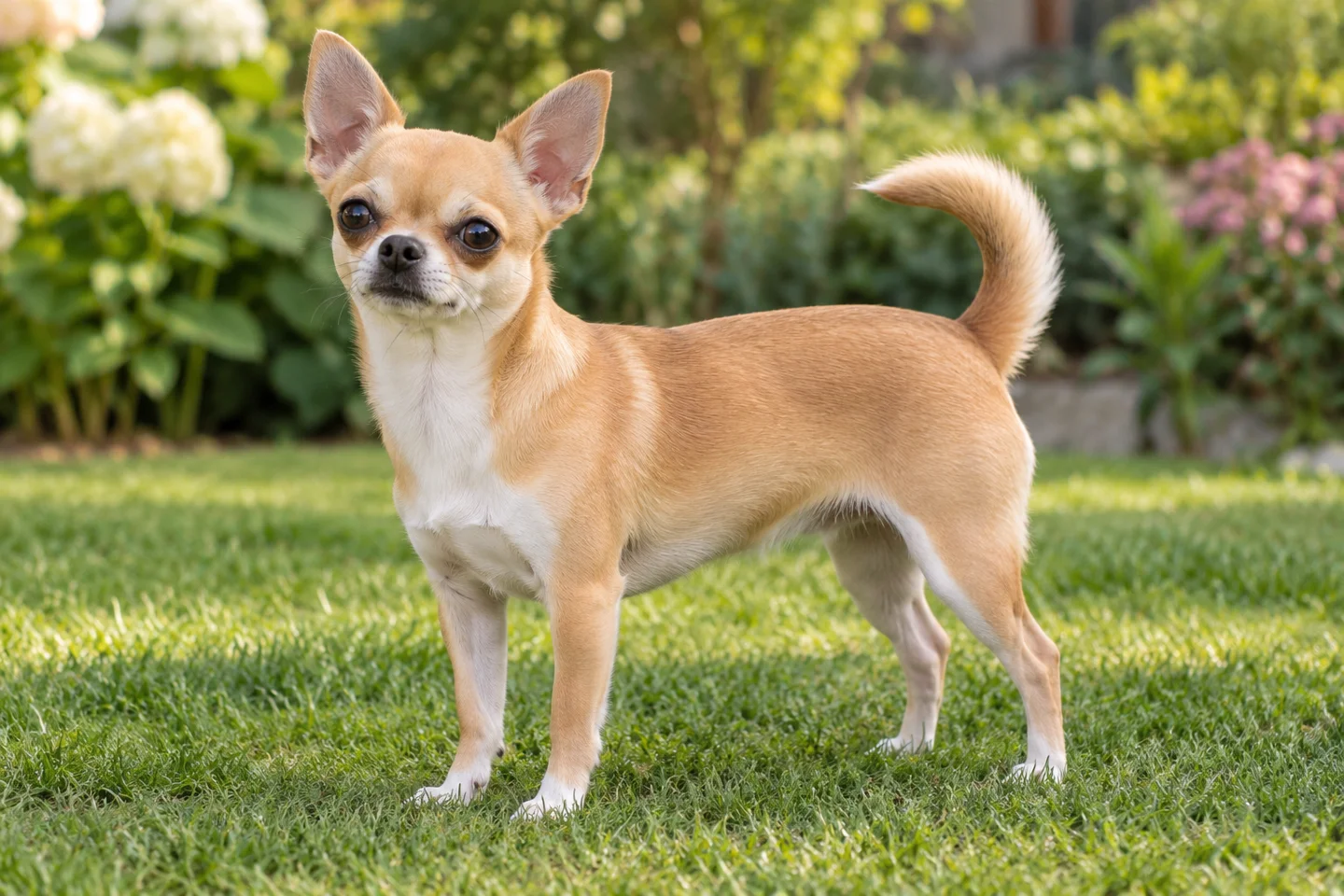
- Appearance illustrated
- Smooth fawn coat with small white chest marking, upright ears and full curved tail
- Adult size reference
- FCI weight 1–3 kg, ideal 1.5–2.5 kg; the standard specifies no height range
General information for owners. These articles have not been reviewed by a veterinarian. Medical decisions need your dog's history and an examination.
Give a tiny dog room to make ordinary choices
A Chihuahua needs opportunities to walk, explore, learn, and rest as a dog. Small size makes some arrangements easier, including transport and finding a suitable bed, but it can also make people overlook the animal's preferences. Being lifted whenever it hesitates prevents owners from discovering whether the difficulty involves fear, pain, or an unfamiliar situation. Plan daily life so the dog can participate safely without being carried through every experience.
Look at the home from close to floor level. Gaps beneath gates, spaces behind appliances, high furniture, and busy doorways can matter more for a very small dog. Decide where it will sleep, how people will enter without stepping on it, and how other animals will be separated when necessary. Meet adults with known histories before selecting a puppy. Ask about walking, visitors, handling, and time alone. The best evidence comes from the individual and its relatives in ordinary circumstances. A cute photograph cannot tell you whether the household can provide comfortable lifelong care.
Mexican identity without a fictional family tree
The FCI records Mexico as the breed's origin and identifies the Chihuahua as a companion dog. Its historical discussion includes similarities with older small dogs, but such accounts do not establish a documented pedigree from an ancient civilization to an individual modern puppy. The useful distinction is between the recognized breed, a verified family history, and an attractive story used in an advertisement.
Ask how a source identifies its dogs and what records accompany a placement. If a rescue uses a Chihuahua label for an animal of uncertain ancestry, observed behavior and clinical history remain valuable even when the exact pedigree is unavailable. Avoid assuming that a particular head shape or color proves ancestry. Discuss the dog's current routines, any handling difficulties, and experience with other animals. Owners often have more practical questions than a historical narrative can answer: Does the dog walk comfortably on a lead? Can a carer put on equipment? How does it settle when a familiar person leaves? Those answers help organize the first weeks at home.
Adult weight matters more than an invented height rule
The FCI standard uses weight rather than a height range. It gives 1 to 3 kilograms, with an ideal of 1.5 to 2.5 kilograms. These are standard adult references, not a reason to keep an individual underweight. A veterinarian should assess the actual dog's condition and growth. Marketing terms such as teacup do not create a separate FCI size variety.
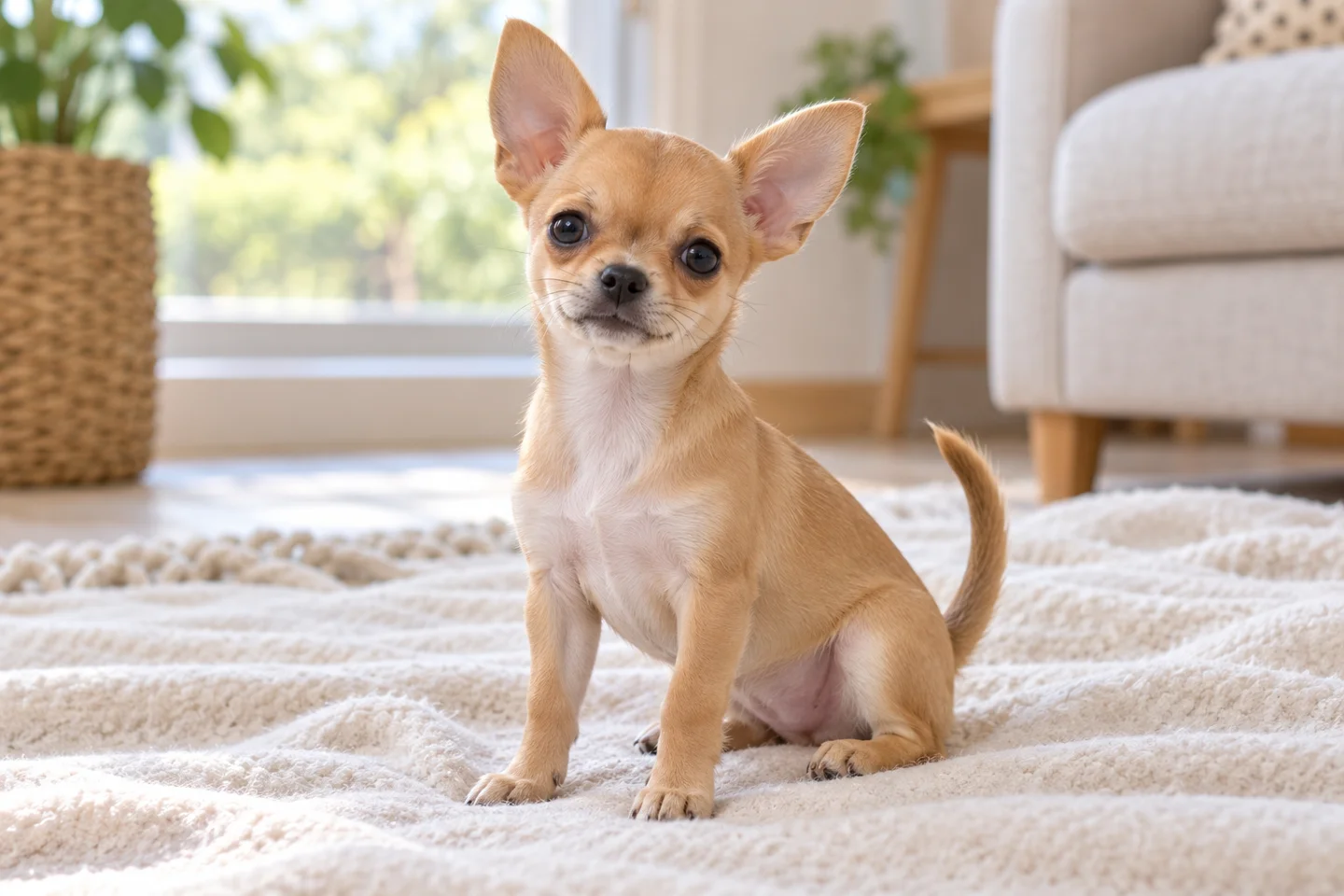
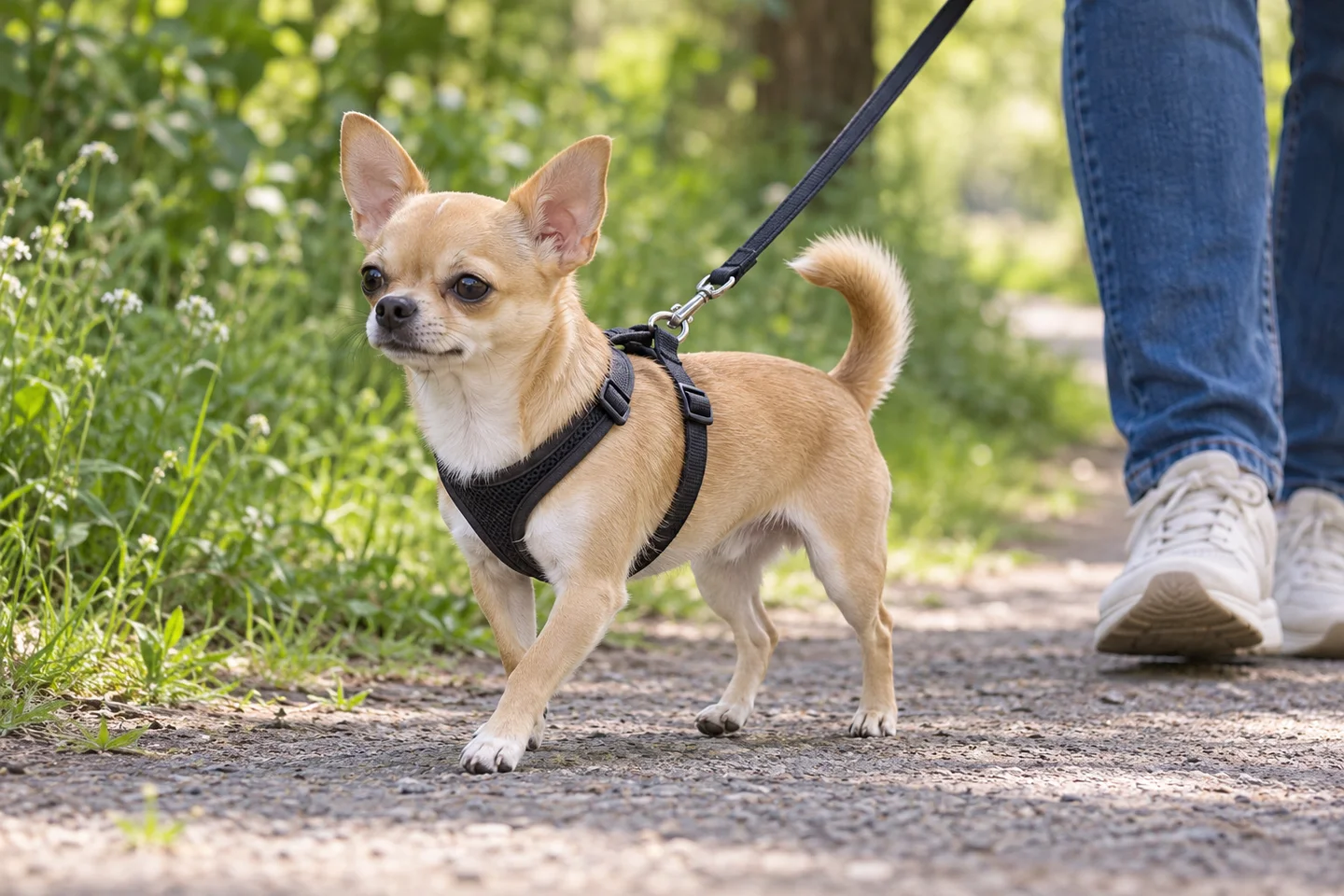
The illustrations show a smooth fawn coat with a small white chest marking, upright ears, a compact frame, and a full curved tail. The standard recognizes both smooth and long coats. A long coat has characteristic feathering and a plumed tail, while the smooth variety has shorter close-lying hair. Choose equipment by measurement rather than a generic tiny-dog label. A harness must remain secure without rubbing or allowing escape, and restraint in a vehicle needs an appropriate fit too. Look for easy movement and comfortable breathing in a real dog instead of selecting exaggerated features. The smallest puppy is not automatically the most suitable companion or the healthiest choice.
Training can happen without looming over the dog
Begin lessons where the dog feels secure and can move freely on a nonslip surface. A person bending directly above it can make a simple request harder. Stand at an angle, present a target clearly, and reward a small successful movement. Useful early skills include approaching when called, stepping onto a mat, waiting at a doorway, and willingly entering a carrier.
Use tiny rewards and keep sessions brief. If the dog stops participating, assess the environment, the length of the session, and whether the action has been explained clearly. Calling it stubborn does not identify the problem. Reward based training can also support cooperative handling, including putting on a harness and checking a foot. Practice one element at a time and release before the dog feels trapped. Avoid jerking the lead, intimidating the dog, or relying on restraint to obtain routine cooperation. Small animals can be physically controlled easily, which makes it especially important for owners to notice when their approach is causing distress instead of teaching a useful skill.
Toilet routines and comfortable time apart
Provide frequent appropriate toilet opportunities when a dog first arrives, especially after waking, eating, and active play. Accompany it and reward the successful choice. A small dog can disappear behind furniture quickly, so arrange supervision and access rather than waiting for an accident. Decide whether the household will use an outdoor area or another appropriate consistent setup, and make the transition understandable.
Clean accidents thoroughly and avoid punishment after the event. If established habits change, consult a veterinarian rather than assuming the dog is being difficult. Prepare a resting area with water and suitable safe activities, then introduce brief separations at a level the dog can manage. Increase duration according to its behavior. A short recording can show whether it relaxes or remains distressed when people leave. Ask for professional help if progress stalls. Sharing a home closely does not require constant physical contact. Gradual independence gives the dog more options and makes routine absences easier to arrange, while leaving a frightened animal to struggle for long periods can make the situation harder.
Socialization should feel safe at ground level
A bicycle, shopping trolley, or fast pair of feet can be imposing when viewed from a Chihuahua's height. Start far enough away for the dog to notice calmly and remain able to respond to its handler. Ask your veterinarian about suitable early experiences and local infection precautions for a puppy. Introduce ordinary surfaces and sounds gradually rather than taking it directly into a crowded event.
Strangers should ask before touching or lifting the dog. Calm observation is a useful outcome, and a dog backing away needs space rather than a more determined greeting. Carriers can provide appropriate transport, but the dog also needs safe opportunities to investigate suitable places on its own feet. Teach comfortable carrier entry separately and ensure it has adequate ventilation and secure support. An adult with limited experience may need the same measured approach to lifts, traffic, and veterinary waiting rooms. Choose quiet times, make use of distance, and keep a record of what works. Repeated manageable experiences teach more than an afternoon in which the animal is carried from one overwhelming scene to another.
Exercise belongs in a small dog's schedule
Offer regular walks suited to age, condition, weather, and experience. Let the dog sniff and choose among safe paths instead of expecting it to hurry continuously beside a longer human stride. Build new activity gradually and discuss any history of lameness, fatigue, or other limitations with the veterinarian. A dog that has spent much of its life being carried may need careful conditioning.
Inspect surfaces and obstacles. A high curb, deep gravel, or a gap in a bridge can change the effort or risk involved. Use an easier route when necessary and provide a secure alternative to repeated jumps from furniture. Cold, rain, and heat all deserve attention according to the individual and conditions. If clothing is useful, check that it fits, allows free movement, and does not remain wet against the dog. Avoid hot surfaces and provide water and shade. Weakness, confusion, collapse, or breathing distress needs urgent veterinary advice. Indoor games can supplement an outing, but a collection of short races across slippery flooring should not become the entire exercise plan.
Lifting, travel, and household accident prevention
Ask your veterinary team to demonstrate secure supported lifting for the individual's size and condition. Teach a cue before lifting so the dog can anticipate what is happening. Avoid grabbing a resting animal suddenly or allowing inexperienced people to carry it while standing. A fall can be serious, and a frightened dog may struggle even when someone intends to help.
Use an appropriate restraint or secured carrier for vehicle travel. Practice entry while the car is stationary and quiet before combining it with a difficult journey. Keep the dog away from the driver's controls and never leave it in a parked vehicle where temperatures can become unsafe. At home, check reclining furniture before operating it and look beneath bedding before sitting down. These small habits reduce preventable accidents. If the dog is injured, painful, or struggling to breathe, contact the clinic promptly and follow handling instructions. Tell the team the approximate size and what happened. Necessary emergency care should not be delayed while an owner tries to reproduce symptoms or find a home treatment online.
Children need to respect a small animal's limits
Arrange contact at floor level with a calm child and an attentive adult. Let the dog approach rather than placing it in the child's arms. Children should not carry it around, pull its clothing, enter its bed, or take food and toys from its mouth. Adults need to manage lifting, equipment, and any item the dog has acquired.
A child moving quickly can frighten or accidentally injure a small dog. Give the animal a protected resting area before noisy play starts and make sure children cannot follow it there. Choose gentle shared activities, such as practicing a familiar cue with adult guidance, and stop while both remain comfortable. A growl or attempt to leave is information requiring action, not something to laugh at because the dog is tiny. Visiting children need clear rules too. A comfortable relationship with one resident child cannot establish safety with every friend. The household should be able to separate dog and children reliably when an adult's attention must turn to another task.
Other dogs and pets need carefully matched contact
A large friendly dog may still be an unsuitable play partner if its movements overwhelm or injure a Chihuahua. Ask the other owner about actual behavior around small dogs and begin with controlled parallel movement at a comfortable distance. An open place with a clear exit is preferable to a congested entrance. Neither dog needs to greet closely during the first outing.
Watch for repeated crowding, stiff attention, or attempts to escape, and stop before excitement escalates. At home, use separate feeding areas and comfortable rest spaces while assessing compatibility. Cats need their own routes and supervision during introductions; their size relative to the dog does not establish which animal will feel safe. Birds and small mammals require secure separation. Do not rely on a small dog's limited size as proof that it cannot frighten or harm another animal. Match interactions to the individuals and seek advice when management becomes difficult. Carrying the Chihuahua into the middle of a dog group does not provide evidence about how those dogs would behave in an appropriate introduction.
Aggression should be assessed rather than treated as entertainment
Snapping during lifting, guarding a lap, and barking at a passing dog call for specific descriptions. Note what happened immediately beforehand, whether the dog could leave, and how people responded. Prevent the same setup while arranging advice. A small bite matters, and repeated teasing can make future handling harder for everyone involved.
Consult a veterinarian when behavior changes or touch appears uncomfortable. Pain and medical problems need consideration alongside experience and the environment. A qualified behavior professional can help teach voluntary movement, safe exchanges, and calmer responses at a workable distance. Avoid punishing warning signals or repeatedly approaching a guarded person or object to prove the dog must accept it. Those actions can increase conflict. Tell carers about incidents candidly and explain the arrangement that prevents them. A dog needs an accurate assessment rather than a reputation based on breed jokes. Early help can improve the owner's understanding and reduce the number of distressing encounters the animal rehearses.
Grooming smooth and long coats with comfortable handling
A smooth-coated Chihuahua still needs regular inspection, brushing suited to its coat, and appropriate bathing. The long-coated variety requires attention to feathered areas where hair can tangle, including behind the ears and around the limbs. Ask a groomer to demonstrate suitable tools and work in brief sessions on a stable surface. Never assume that a short or small coat makes skin checks unnecessary.
Look for redness, debris, irritation beneath equipment, or a patch that has become unusually bare. Seek professional advice about painful mats or skin changes rather than cutting close to hidden skin. Check each nail and ask for a demonstration before trimming. Ears with discharge, unusual odor, repeated scratching, or pain require veterinary assessment. Do not insert cotton swabs deeply into the canal or choose medication from a previous episode. Comfortable handling can be taught when the dog is relaxed: brief touch, reward, and release. If it suddenly objects to care it previously accepted, investigate discomfort rather than increasing restraint until the task is complete.
Dental care and health screening need actual records
The AKC's published national breed-club recommendations include patella evaluation, a cardiac examination, and an ophthalmologist evaluation. Ask for the parents' identifiable results, dates, and explanations. These examinations address particular questions and cannot promise that a puppy will never become ill. Continue routine clinical care and discuss relevant family history with your veterinarian.
Mouth care deserves its own plan. Veterinary guidance identifies small dogs as more prone to periodontal disease and persistent baby teeth. If an adult tooth emerges beside a retained baby tooth, arrange prompt assessment rather than trying to pull it at home. Ask the clinic to demonstrate brushing with suitable dog products and recommend appropriate chews or other aids. Bad breath, altered chewing, dropping food, or reluctance to allow face handling can be useful observations to report. Cosmetic removal of visible deposits does not establish that the mouth is healthy. A veterinarian can assess what examination and treatment are needed. Keep these records with screening results so future care is based on a complete history.
Feeding and illness in a very small patient
Choose a complete diet appropriate to life stage and ask the veterinarian about meal timing and portion size for the individual. Measure food carefully and count training rewards and extras. A small daily addition can become a meaningful proportion of the total. Learn how to assess body condition and review changes with the clinic instead of feeding toward an advertised tiny size.
Appetite loss, repeated vomiting or diarrhea, weakness, tremors, collapse, or an unusual change in responsiveness requires prompt professional advice. Do not diagnose low blood sugar from breed or size alone, and do not improvise medication or forced feeding. Tell the veterinary team the dog's weight, age, last meal, symptoms, and possible exposures, then follow its instructions. Keeping a short record helps when several people share care. Arrange a secure transport plan and know where emergency services are available outside ordinary hours. Preventive care, parasite control, and dental attention remain important for an animal that spends much of its time indoors. Indoor living does not eliminate medical needs or the possibility of accidental ingestion.
Mixes, costs, and a suitable source
A Chihuahua mix may develop a different adult size, coat, and response to unfamiliar situations from either named parent. Ask how ancestry was established and which relatives are known. Appearance alone cannot give a reliable precise breed percentage. For an adult of uncertain background, foster observations and medical records often provide the most useful information. A mixed pedigree does not automatically remove inherited concerns.
Budget for routine and unexpected veterinary care, dental care, appropriate restraint, food, training, and backup care. Small size does not guarantee inexpensive treatment, and local service prices vary. A responsible source should discuss records, handling, family health, and early experiences, and provide clear written terms about support. Be candid about children, other animals, stairs, and hours alone. Avoid choosing a dog primarily because someone promises an exceptionally tiny adult. Consider whether the household can protect the individual while still providing a normal active life. Resolve important gaps in care before committing, including who will help during travel or illness and how they will learn the dog's routines.
dogsDating profiles should specify comfortable companionship
Describe your Chihuahua's actual preferences in its dogsDating profile. Mention walking pace, confidence around larger dogs, and the kind of contact it enjoys. Explain relevant handling limits or previous incidents honestly. Another owner needs practical information rather than an assumption that every small dog wants to play with other small dogs.
Use an approximate area and keep exact home coordinates private. Choose a public meeting route with enough room for each handler to move away. Start with controlled parallel walking at a comfortable distance and agree that a greeting is optional. Avoid introducing shared food or prized toys. If either dog stiffens, repeatedly crowds the other, or tries to escape, increase distance and finish. Consider professional guidance when difficult encounters recur rather than repeatedly arranging new tests. A short calm outing can be a successful meeting. The three accompanying images are AI-generated illustrations of a smooth-coated Chihuahua. They do not document an individual member's dog, prove pedigree or adult size, certify health, or establish safety with another animal or person.
Sources and editorial notes
Sources checked October 21, 2026. Breed measurements describe reference ranges, not a diagnosis or an individual dog's ideal weight. Images are AI-generated breed illustrations and do not document a particular dog or health condition.
- AVSAB: Humane Dog Training Position Statement
- VCA Animal Hospitals: Food aggression in puppies
- VCA Animal Hospitals: Aggression toward unfamiliar dogs, diagnosis
- VCA Animal Hospitals: Heat stroke in dogs
- VCA Animal Hospitals: Common emergencies in dogs
- VCA Animal Hospitals: Grooming and coat care for your dog
- VCA Animal Hospitals: Ear infections in dogs
- VCA Animal Hospitals: Feeding guidelines for dogs
- Orthopedic Foundation for Animals: CHIC program and interpretation of numbers
- Fédération Cynologique Internationale: Chihuahua breed standard
- American Kennel Club: National breed-club toy group health testing recommendations
- VCA Animal Hospitals: Dental disease in dogs
- VCA Animal Hospitals: Persistent deciduous teeth in dogs
Keep getting to know dogs.
Read another guide or return to your dogsDating community.
Explore breed guidesBack to dogsDating