American Bully
A muscular companion whose care centers on comfortable function, suitable training, individual health assessment, and clear breed and class descriptions.
How these guides are researched and reviewed
- ABKC varieties
- Standard, Pocket, Classic, XL
- Coat
- Short; skin care varies by individual
- Care priorities
- Movement, breathing, handling, and local requirements
General information for owners. These articles have not been reviewed by a veterinarian. Medical decisions need your dog's history and an examination.
Living with an American Bully
An American Bully needs a home that can manage the individual dog's strength, care, and social needs without choosing primarily for an imposing appearance. Begin with practical questions about handling, health, housing, and daily routine. Who walks the dog when the main handler is unavailable? Can you separate it comfortably from visitors or animals when needed? Is appropriate veterinary care affordable? Answer those questions before a puppy photograph or class label drives the decision.
Look at the actual dog in ordinary situations and request specific observations. A companion can be affectionate with familiar people and still find particular handling, dogs, or environments difficult. Neither a favorable breed reputation nor a negative stereotype supplies an individual assessment. Ask how the dog behaves, what triggers difficulty, and how quickly it recovers. A supported placement needs room for honest limitations as well as appealing traits.
Breed identity and the names people use
The American Bully is a modern companion breed with its own standards, including those published by the American Bully Kennel Club and United Kennel Club. It is distinct from the American Bulldog, American Pit Bull Terrier, and American Staffordshire Terrier, despite historical relationships and frequent confusion in informal descriptions. Ask which breed, registry, and pedigree a seller means. A broad head or muscular body cannot settle ancestry by itself.
The general word bully is used loosely in conversation and advertising. It may refer to the breed, a group of dogs, or a seller's preferred description. Keep those meanings separate when examining records. For a rescue dog with uncertain ancestry, an honest estimate is more useful than invented certainty. Medical findings and observations from a household can still help you choose responsibly when the pedigree is unavailable.
Standard, Pocket, Classic, and XL descriptions
ABKC describes Standard, Pocket, XL, and Classic varieties. Pocket and XL involve height distinctions, while Classic describes a lighter frame and less body mass than Standard at the same height range. These are descriptions within that registry's system. Identify the current standard being used rather than assuming every organization classifies the dogs identically or that a class name alone supplies an adult weight prediction.
Ask what marketing terms such as micro or exotic mean in a particular advertisement. Do not infer official recognition, health, or manageable adult size from the word. A puppy's growth also carries uncertainty. Choose through the parents' records, the actual puppy, and a realistic care plan. Keeping a dog underfed to preserve a label, or overfeeding it to make it look more substantial, does not support healthy development.
Structure, movement, and everyday comfort
A muscular body should still allow comfortable walking, turning, rising, breathing, and resting. Watch the dog move on a suitable surface and ask about previous lameness or surgery. A photograph taken from a flattering angle can conceal difficulty. UKC explicitly faults exaggerations that compromise function, including an excessively short muzzle that interferes with breathing. A show description cannot replace a clinical examination of an individual animal.
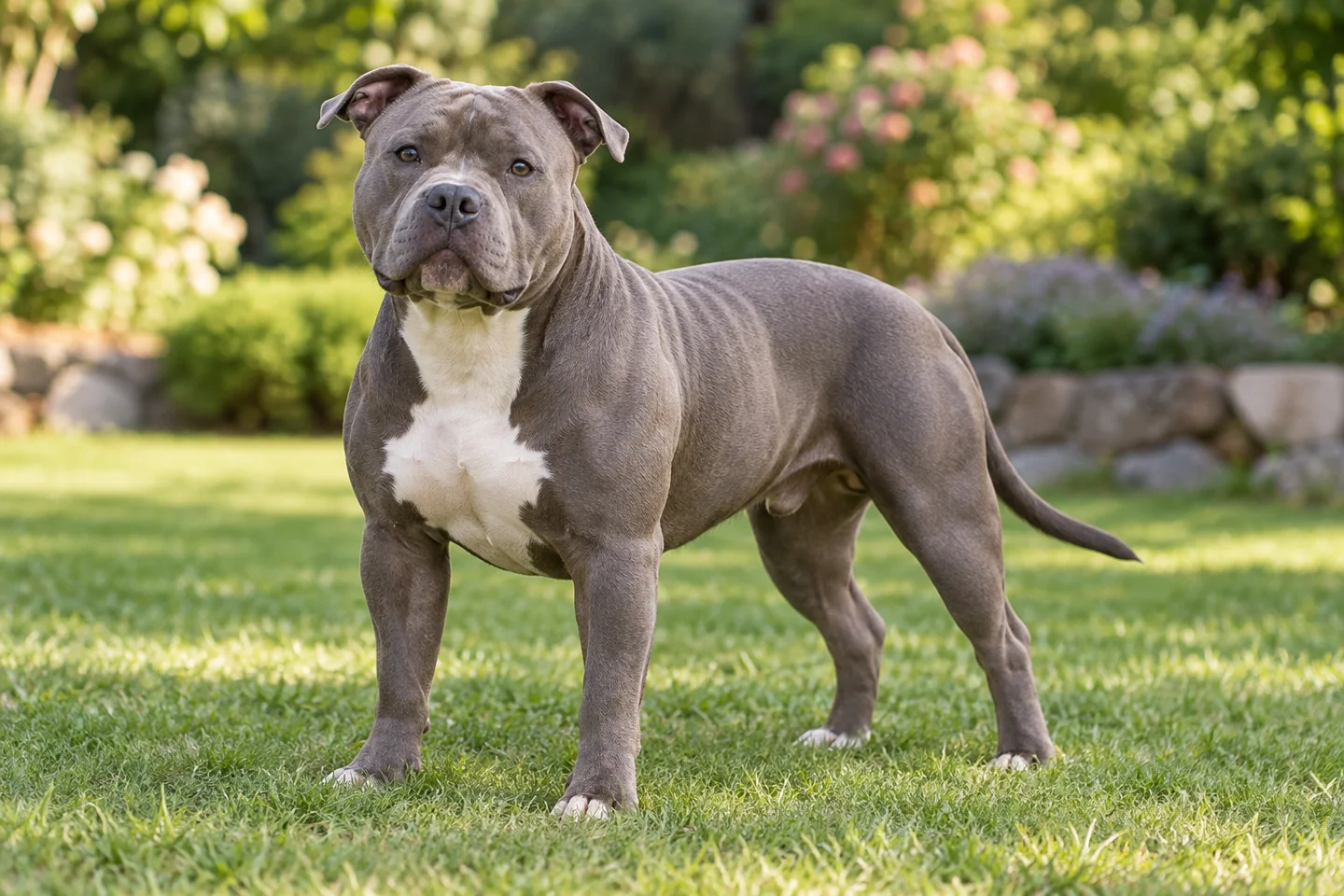
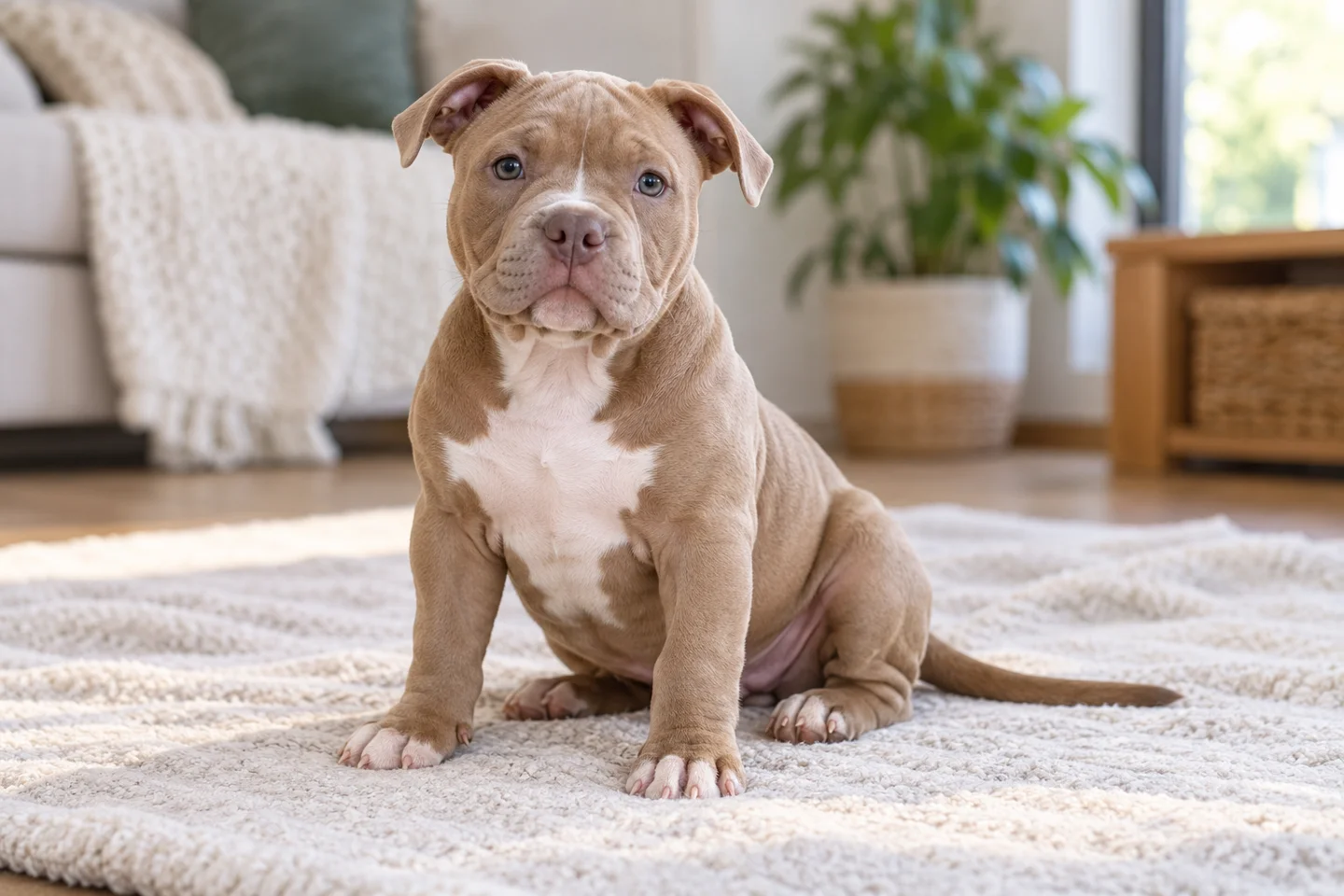
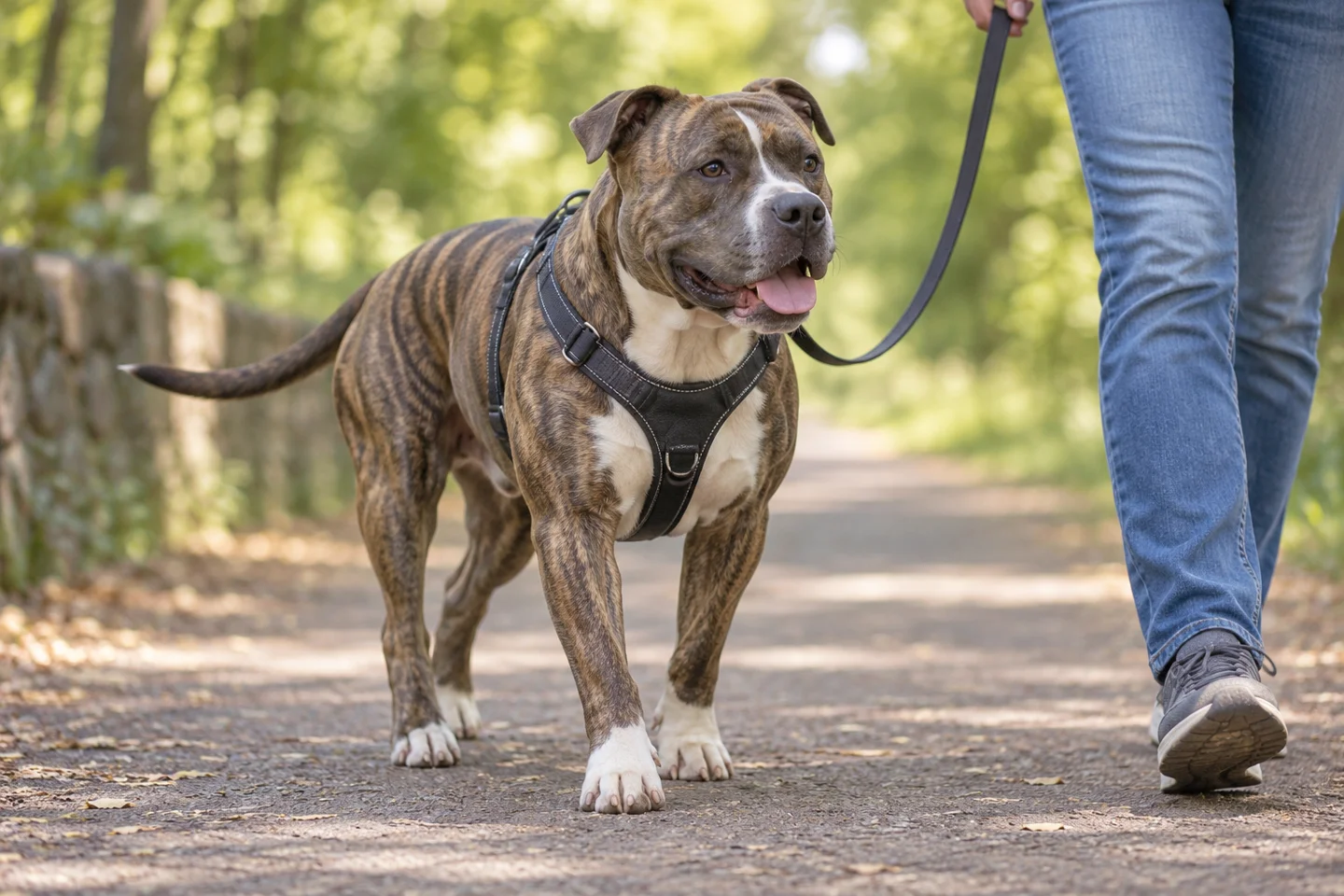
Look beyond head width and chest size. Ask about stamina during ordinary outings, comfortable sleep, skin condition, and recovery after mild effort. Difficulty should not be dismissed as the price of a particular appearance. The three images here are generated breed illustrations with natural ears and tails and moderate anatomy. They cannot document sound joints, healthy airways, a pedigree, or the temperament of a real dog being offered for placement.
Preparing doors, equipment, and quiet space
Set up an entrance routine that works before the dog becomes excited. A gate or separate room can let visitors enter without an immediate greeting. Practice going to a resting place with rewards and familiar comforts. Keep equipment accessible to adults and check that a harness fits without rubbing or allowing escape. Avoid depending on a last-second collar grab while an exterior door remains open.
Give the dog a sleeping area outside the busiest traffic through the home. Protect rest from repeated disturbance and keep food, medication, rubbish, and cleaning products secure. Check garden gates, weak panels, and gaps. Explain the routine to visiting relatives and contractors. Environmental management reduces the number of difficult decisions a dog and handler face, especially when someone is carrying bags or supervising another task.
Children, resident animals, and physical mismatch
Children need clear boundaries and an attentive adult. Prevent climbing, hugging, tail grabbing, and disturbance during meals or sleep. A friendly dog's weight and enthusiasm can still cause injury through a collision. Provide a retreat children cannot follow into, and use separation when adult attention moves elsewhere. Do not expect a child to interpret subtle warnings or control an excited dog on a lead.
Ask about actual relationships with other dogs, cats, and smaller animals. Introduce residents gradually with reliable barriers and individual spaces. A calm first meeting cannot guarantee comfortable shared living. Watch whether every animal can rest and disengage, and feed separately where appropriate. Some combinations require ongoing management or a different placement. A household should not depend on a vulnerable animal tolerating repeated pressure while everyone hopes the dogs will work it out.
Aggression, fear, and bite prevention
Evaluate aggression through incidents, context, current behavior, and health. No class name, color, or pedigree guarantees safety. Freezing, avoidance, rigid posture, growling, snapping, or attempts to escape mean the situation needs less pressure and more space. Stop contact and prevent access to the trigger. Avoid approaching to test whether a warning is serious or encouraging a dog to demonstrate threatening behavior.
For guarding, protect meals and valued objects from repeated confrontation and teach exchanges at an appropriate level. Do not remove food repeatedly as a control test. A sudden reduction in tolerance needs a veterinary examination. If a dog has bitten or seriously attempted to bite, obtain a detailed professional assessment and management plan. Be honest with carers and other owners about restrictions. A practical safeguard should remain usable during ordinary household life, not only when the strongest handler is present.
Reward-based training and safe handling
Start with useful responses in easy settings: moving with a loose lead, returning when called, waiting behind a door, and settling on a mat. Reward success and increase distraction gradually. The American Veterinary Society of Animal Behavior recommends reward-based methods. Strength does not reduce a dog's need for clear teaching, and force can add conflict when the animal is frightened or confused.
Practice a change of direction before encountering a difficult situation on a walk. Keep physical management where recall is uncertain and choose routes that allow distance. If a professional recommends a basket muzzle, teach wearing it gradually with rewards and obtain an appropriate fit. The dog needs room to pant and drink as the design allows. A muzzle supports a broader plan; it does not make forced greetings or overwhelming environments acceptable.
Exercise without training for maximum bulk
Match activity to age, fitness, health, and conditions. Walks can include sniffing, exploring, and short learning sessions. An adult may enjoy suitable games while a puppy needs developmentally appropriate movement and rest. Discuss running, jumping, pulling, or other demanding activities with the veterinarian. Avoid improvised strength programs or loading a young dog because an online video presents heavier effort as desirable.
Watch movement and recovery after activity. New stiffness, unusual fatigue, limping, reluctance to rise, or weakness deserves assessment rather than pressure to continue. Increase effort gradually after time off. Easy searches and quiet companionship can also provide interest. A satisfying routine supports comfortable function and sleep. It should not require exhausting the dog so thoroughly that it can no longer express ordinary needs indoors.
Breathing and warm-weather decisions
Cornell's guidance on brachycephalic obstructive airway syndrome explains how airway abnormalities can affect short-faced dogs. Not every American Bully has the same anatomy or breathing capacity. Persistent noisy breathing, disturbed sleep, or poor recovery from mild activity warrants examination. Do not assume a snore or a short muzzle proves a diagnosis, and do not ignore difficulty because a similar dog in a photograph looks content.
During warm or humid conditions, choose shade, drinking water, cooler hours, and an easy return route. Reduce activity according to the individual and the weather. Avoid parked vehicles. Marked distress, severe breathing difficulty, weakness, or collapse requires urgent veterinary advice. Stop the activity and contact the clinic for immediate instructions. A previous outing completed without trouble does not guarantee that a hotter day or a changed medical condition will be equally manageable.
Grooming, skin irritation, and routine care
Brush the short coat gently and check skin beneath equipment, between toes, and around any folds. Keep the coat and contact areas clean and dry with methods suited to the dog. Persistent itch, redness, odor, discharge, or soreness needs assessment. Avoid assuming every skin problem is a food allergy, and avoid cycling through harsh products while delaying an examination.
Introduce tooth brushing, nail care, ear observation, and body checks in small rewarded steps. A sudden objection to a familiar touch can indicate pain. Seek help when handling becomes difficult instead of making every appointment a struggle. Report a new lump or changing patch of skin with a date and a clear description. A photograph can support that history, but it cannot replace an examination or confirm that the finding is harmless.
Feeding, weight, and growth
Use a complete diet appropriate for the dog's life stage and review portions with your veterinarian. Measure meals and count treats, chews, and training food. Body condition should follow the individual frame rather than an advertisement's ideal bulk. Ask to be shown how to assess fat coverage and muscle, and monitor changes as the dog grows. A broad chest cannot tell you whether the whole body is carrying excess weight.
Do not add supplements or restrictive diets merely to intensify a muscular appearance. A diagnosed nutritional or medical need requires a suitable plan. Keep unsafe foods and medication inaccessible, including items in visitors' bags. Record changes in appetite, thirst, weight, and digestion. If several people share care, keep a simple feeding and medication record so duplicate doses or extra meals do not obscure what is happening.
Health records and screening decisions
Ask which health assessments were performed and request reports tied to the relevant dogs' identities. Discuss joint, cardiac, eye, skin, and airway findings with your veterinarian and ask what screening is appropriate for the documented background. A registry certificate or a broad DNA panel is not a complete clinical assessment. Different tests address different conditions, and the wording on the report matters.
Avoid inventing a universal checklist from an unrelated breed or treating a single clear result as a guarantee. Ask about illness in relatives, previous procedures, and limitations of available information. An apparently healthy puppy still needs routine care and follow-up. For an adult with missing history, build the plan around present findings and state the uncertainty. A responsible source should be willing to discuss questions without substituting price, color, or a fashionable pedigree name for evidence.
Inherited findings and the limits of general claims
A published case report identified a NIPAL4 deletion in an American Bully with congenital ichthyosis. That finding supports asking a veterinarian about appropriate investigation and testing when the condition is relevant. A single case report does not establish how common the disease is throughout the breed. Scaling or other skin changes also have several possible causes, so diagnosis needs the dog's examination and findings.
Keep genetic reports available when planning breeding decisions or medical care, and ask the laboratory or veterinarian to explain the tested variant. A result about one condition does not describe the entire dog. Report changes in movement, breathing, vision, energy, and comfort even when a panel previously looked reassuring. Do not assume a test from another bull breed applies automatically because the names sound related. The exact ancestry, condition, and validation of the test matter.
Medical changes and emergency planning
A dog may keep eating or seek company while uncomfortable. Notice how it rises, uses steps, turns, sleeps, and recovers after a walk. Persistent lameness, altered thirst, appetite change, skin problems, or reduced stamina warrants assessment. Give a concise history with dates and medication details. Avoid blaming every change on the breed or assuming a dog with a substantial body is naturally unable to move comfortably.
Know the nearest emergency service and plan transport for an adult who cannot walk. Severe breathing difficulty, collapse, poisoning, or abdominal swelling with unsuccessful retching needs urgent veterinary advice. Keep records and current medication accessible. Do not give human painkillers or old prescriptions while deciding whether to travel. Arrange backup help before an emergency, especially if safe movement would require more than one adult or equipment the household does not normally use.
Legal type, registry class, and location
Check current official rules where the dog will live and travel before making a commitment. A registry's XL class and a legal definition of an XL Bully are different systems. For example, England and Wales publish an official conformation standard and ownership guidance for the legally defined type. Do not assume that a pedigree, the seller's label, or an online photograph settles whether particular rules apply.
Use the relevant authority's current guidance and obtain qualified local advice when identification or compliance is uncertain. Housing providers, insurers, transport operators, and care services can also have conditions that need checking. Keep copies of applicable documents and ask questions before moving or booking travel. This guide cannot identify an individual dog's legal status. Its purpose here is to make that practical distinction clear, with official links for the specific example rather than a claim that every jurisdiction uses the same rule.
Mixes and uncertain ancestry
An American Bully cross can vary in size, head shape, coat, behavior, and medical needs. Informal cross names are not recognized varieties of the breed. Ask whether the parents are documented and describe appearance-based estimates honestly. Neither mixed ancestry nor a particular percentage can guarantee comfortable breathing, sound joints, or compatibility with animals and children. The dog still needs an individual assessment and an appropriate care plan.
For adoption, useful observations may include handling, time alone, response to visitors, play style, guarding, and previous conflict. That evidence remains valuable when ancestry is unclear. Assess the actual environment and available separation space. Avoid predicting that one parent's reputation cancels another parent's needs. A successful placement depends on what the household can reliably provide and what is known about the individual, with room to manage what remains uncertain.
Choosing a source and planning lifelong care
Ask a breeder how adults are selected, how puppies experience gentle handling and ordinary household sounds, and what support is offered later. Request health records and time to read the agreement. Be cautious when the conversation centers on maximum bulk, unusual color, or immediate availability while health and temperament questions remain unanswered. A responsible discussion includes unsuitable homes and what happens if a placement fails.
For a rescue adult, clarify medication, bite or fight history, veterinary follow-up, and the basis for each observation. Budget for appropriate equipment, food, training, ordinary care, and unexpected illness. Review insurance conditions before relying on coverage. Arrange a carer familiar with the dog, and plan for later-life changes to flooring, access, walks, and transport. Comfort and function should guide those changes even when the dog still looks physically imposing.
A considered dogsDating meeting
Describe your American Bully's current behavior, preferred activities, comfortable distance, and any guarding or handling restrictions in its dogsDating profile. Keep exact home coordinates private and meet in an agreed public place with room to move apart. Follow applicable local requirements for equipment and access. Discuss the other dog's size and play style before deciding whether the meeting is suitable for both individuals.
Begin with separate handlers and a parallel walk. Avoid shared food, toys, and a crowded nose-to-nose greeting. Allow brief contact only if both dogs remain loose and able to disengage. End the outing when either freezes, hides, persistently pursues, or repeatedly tries to leave. A calm walk can be a useful result without physical play. Let future plans follow the dogs' responses and both owners' ability to manage them comfortably.
Sources and editorial notes
Sources checked October 21, 2026. Breed measurements describe reference ranges, not a diagnosis or an individual dog's ideal weight. Images are AI-generated breed illustrations and do not document a particular dog or health condition.
- Cornell University College of Veterinary Medicine: Brachycephalic obstructive airway syndrome
- American Bully Kennel Club: Standard, Pocket, XL, and Classic descriptions
- VCA Animal Hospitals: Common emergencies in dogs
- VCA Animal Hospitals: General feeding guidelines for dogs
- VCA Animal Hospitals: Food aggression in puppies
- Orthopedic Foundation for Animals: Disease screening and research guidance
- VCA Animal Hospitals: Heat stroke in dogs
- United Kennel Club: American Bully standard and function
- VCA Animal Hospitals: Aggression toward unfamiliar dogs, diagnosis
- DEFRA: XL Bully guidance for England and Wales
- DEFRA: Official XL Bully conformation standard for England and Wales
- Case report: NIPAL4 deletion in an American Bully with congenital ichthyosis
- AVSAB: Humane Dog Training Position Statement
Keep getting to know dogs.
Read another guide or return to your dogsDating community.
Explore breed guidesBack to dogsDating