Kromfohrländer
A German companion in rough and smooth coats, with practical guidance on reserved behavior, inherited footpad disease, and everyday care.
How these guides are researched and reviewed
- Origin
- Germany
- Adult height
- 38–46 cm
- Adult weight
- Males 11–16 kg; females 9–14 kg
- Coat varieties
- Rough and smooth
General information for owners. These articles have not been reviewed by a veterinarian. Medical decisions need your dog's history and an examination.
A German companion with two coat varieties
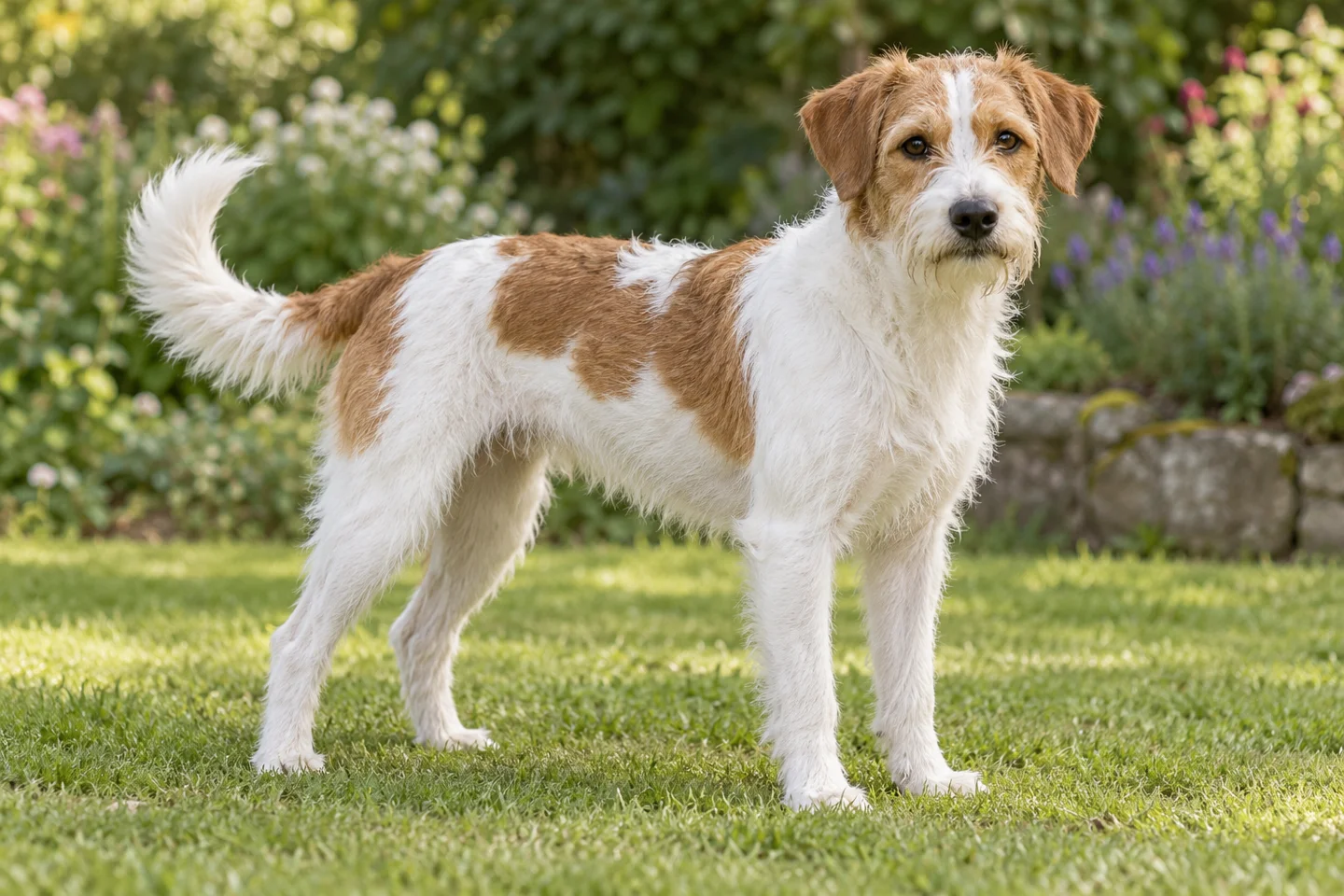
The Kromfohrländer is a medium-sized German companion dog with a white coat and brown markings. Its rough-coated variety usually has a beard; the smooth-coated variety has a different outline around the face and more flowing furnishings. Those are varieties of one breed. A scruffy face alone does not identify a Kromfohrländer, and a smooth example should not be dismissed as a crossbreed because it lacks the familiar beard.
The FCI standard describes a lively, adaptable house dog that can be reserved with strangers. That combination matters when choosing a puppy. A dog may enjoy learning with familiar people while needing considerable distance from an unfamiliar visitor. Ask breeders about ordinary household behavior, including recovery after a surprise and comfort during necessary handling. A description such as affectionate says little about how that dog copes with a crowded doorway, a noisy child, or being left alone.
History and the limits of an ancestry story
The FCI account credits Ilse Schleifenbaum, who bred near Siegen in southern Nordrhein-Westphalia, with establishing the breed. It explains the name through the nearby district called krom Fohr, translated as crooked furrow, and records international recognition in 1955. The standard names the wire-haired Fox Terrier and Grand Griffon Vendéen as ancestors. These details place the breed in a documented modern breeding history rather than an imagined ancient lineage.
An ancestry account is useful context, but it cannot predict an individual puppy's interests. The standard describes relatively little hunting instinct, yet owners still need to protect wildlife and test recall carefully. A dog that usually ignores birds may chase a squirrel that suddenly runs across a path. Before buying, ask how the breeder preserves temperament and genetic diversity as well as coat and markings. A rare breed benefits from records that include disappointing outcomes, not simply photographs of attractive adults.
Adult size and an athletic everyday outline
The FCI standard gives a height of 38–46 cm at the withers. Its weight ranges are 11–16 kg for males and 9–14 kg for females. These are adult breed references rather than feeding targets. A smaller-framed dog can become overweight within a published range, and a young dog should not be pushed toward an adult number through extra food. Have a veterinarian assess growth and body condition alongside the scale.
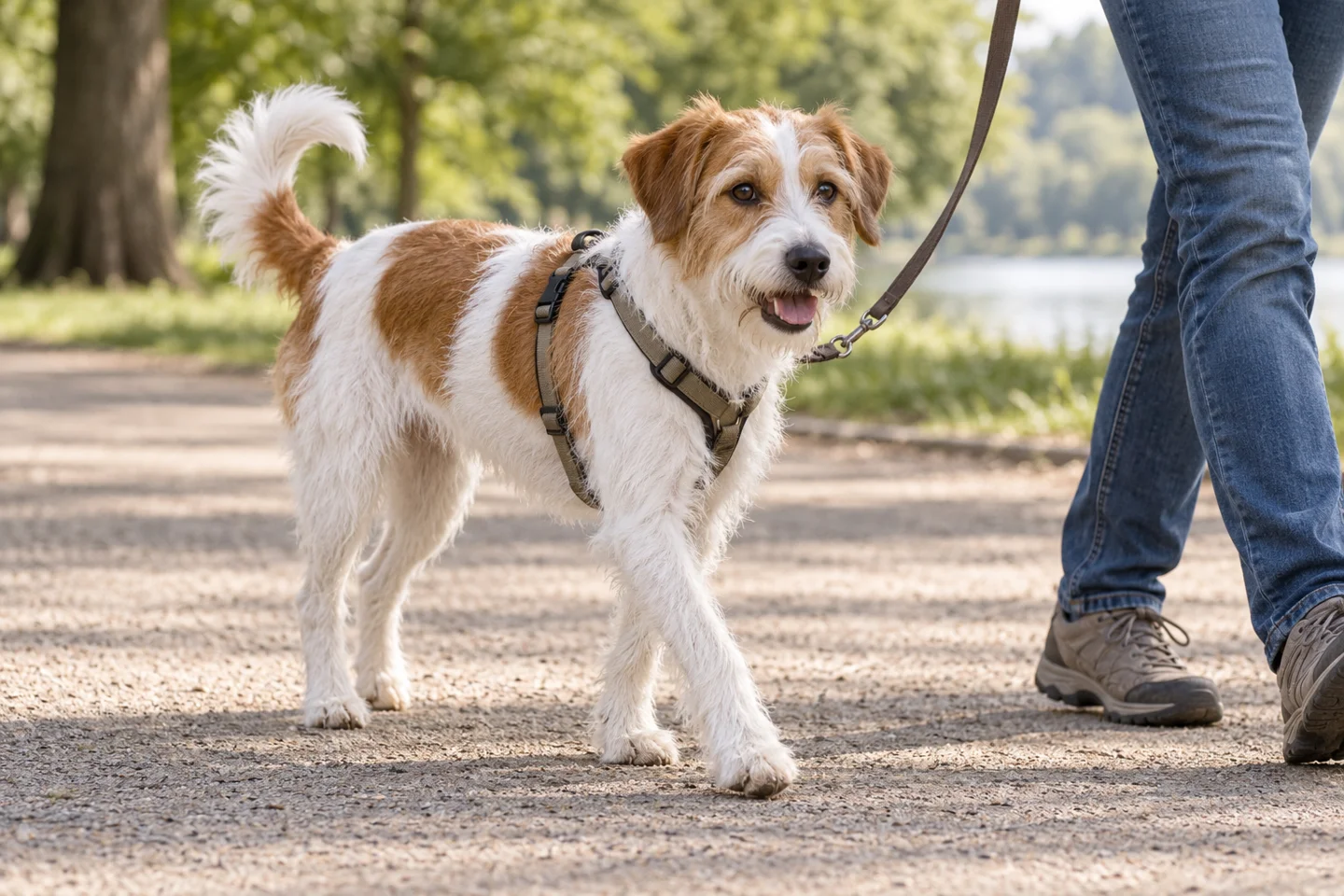
The body is slightly longer than its height, with a moderate muzzle and naturally folded ears. White forms the background of the coat, with brown markings ranging from lighter brown through darker shades. Markings vary, so compare structure and documented parentage rather than demanding an exact copy of an online picture. Choose a harness that allows the shoulders to move and does not rub behind the elbows. Recheck the fit after growth, weight change, or a substantial grooming session.
Living with a watchful household companion
A Kromfohrländer may notice small changes in its environment, including a different coat on a familiar person or a visitor standing where nobody usually stands. Give the dog time to investigate from a comfortable distance. Being observant need not become a job of monitoring every window. Furniture placement, curtains, and a resting area away from the entrance can reduce repeated rehearsal of barking at people outside.
Plan for companionship without assuming constant physical contact is healthy or necessary. Introduce short periods behind a gate while you remain nearby, provide a comfortable bed, and build departures gradually. A dog that cannot eat or settle when separated needs a different plan from one that briefly watches you leave. Keep a record of what happens during absences rather than interpreting damaged furniture as spite. Discuss persistent distress with a veterinarian and a qualified behavior professional.
Training that makes choice and handling easier
Reward a Kromfohrländer for checking in, coming away from a doorway, and settling on a mat while household activity continues. Teach these skills in quiet conditions before expecting them during a visit. A useful recall begins with short distances and a reward the dog wants. Repeating a cue while the dog remains distracted teaches little; reduce the difficulty and make the next attempt achievable.
Handling practice deserves equal attention. Briefly touch a shoulder, reward, and stop before the dog feels trapped. Build toward lifting a paw, examining an ear, and standing for a harness. A beard can hide a tightening mouth, so watch the whole body for discomfort. Avoid forced rolls, collar corrections, and punishment for growling. Those methods can make a reserved dog more worried about approaching hands. Arrange professional help early if everyday grooming or veterinary care has already become a struggle.
Socialization without an obligation to greet
Good socialization includes watching ordinary life safely. A puppy can observe bicycles from a quiet bench, hear traffic from a sheltered side street, and meet a calm adult who lets it approach voluntarily. Pair new experiences with something pleasant and leave while the puppy can still think and respond. The number of people touched is a poor measure of progress if the dog spends each encounter trying to escape.
For a breed that may be reserved, tell visitors exactly what to do: stand sideways, avoid leaning over the dog, and let the owner manage distance. Treats can be tossed away from the visitor so the dog has room to retreat. Do not lure a worried dog close enough to be touched and then prevent its escape. Adult rescue dogs need the same respect, with plans based on their history and observed responses rather than expectations attached to their breed name.

Exercise through walks, searches, and recovery
Offer regular walks with opportunities to sniff, explore, and practice simple skills. A Kromfohrländer does not need every outing converted into endurance training. Food searches in grass, short retrieve games, and learning a new route can provide variety without constant high-speed activity. Adjust the day to the individual dog's age, physical condition, weather, and ability to settle afterward rather than following a fixed mileage rule.
Use a long line in suitable open places until recall is reliable under the distractions actually present. Keep it clear of other walkers and avoid sudden impacts at the end of the line. Puppies need manageable outings and rest rather than forced running alongside a bicycle. In warm weather, choose shade and cooler times, carry water, and stop if the dog struggles. A smooth or rough coat does not protect a dog from heat illness, and enthusiasm can continue after a safe limit has been reached.
Children and a small dog's right to space
A medium-sized companion can still be frightened or hurt by a child who hugs tightly, picks it up awkwardly, or follows it into bed. Adults should manage the interaction rather than expecting the dog to tolerate whatever happens. Give the dog a retreat that children cannot enter, and separate them during meals, chews, excited running, and periods when an adult cannot supervise actively.
Teach children to invite contact and pause so the dog can choose whether to remain. Turning away, stiffening, licking the lips, or repeatedly leaving should end the encounter. A child can help scatter part of a meal for a search or practice a familiar cue with adult guidance, but should not take objects from the dog's mouth. When introducing a visiting child, use more space than seems necessary and keep the first experience brief. Familiarity with one gentle child does not establish safety with all children.
Aggression, warning signals, and bite prevention
Aggression is behavior that requires context, not a character diagnosis made from a breed label. A Kromfohrländer may snap when frightened, guard a valued object, or become defensive when a painful foot is handled. Record the sequence before an incident: who approached, where the dog was, what it possessed, and whether it had an escape route. This gives a professional useful information and helps prevent the same situation from recurring.
If the dog freezes over a chew, move people away and arrange a calm exchange rather than reaching into its mouth. Do not test whether it will bite again. Sudden changes in tolerance warrant veterinary assessment, especially if touch or movement appears painful. A reward-based professional can build a plan for distance, exchanges, visitor routines, and cooperative care. Basket-muzzle training can add protection when appropriate, but the muzzle should not be used to force the dog through an encounter it cannot manage.
Grooming a rough coat or a smooth coat
Determine which coat variety the dog has before choosing tools or booking a grooming appointment. The rough coat has a harsher texture and beard; the smooth coat lacks that beard and can carry feathering. Both need attention to the skin underneath. Work gently through areas prone to tangling, including behind the ears, under the harness, and where legs meet the body. A comb should reach through without pulling skin into a tight knot.
Wipe food or moisture from facial furnishings as needed and check the feet after muddy walks. Discuss coat maintenance with an experienced groomer instead of assuming every bearded dog needs the same stripping routine. Keep nails manageable, introduce tooth brushing, and inspect ears for odor, soreness, or discharge. Repeated head shaking or resistance to ear contact needs veterinary attention. Avoid putting products deep into the ear without advice, and do not treat a skin infection by repeatedly bathing away the visible symptoms.
Health records before promises about rarity
The AKC's current Foundation Stock Service and Miscellaneous Class health-testing list names von Willebrand's disease DNA testing and canine footpad hyperkeratosis for the Kromfohrländer. Ask for the actual parental results, laboratory details, and an explanation of how the mating was selected. A statement that a breeder uses a large DNA panel does not tell you whether these relevant results were included or interpreted correctly.
Screening describes particular risks; it does not certify that a puppy will never become ill. Ask about bleeding events, recurring skin problems, mobility, treatment histories, and the health of older relatives. A small population can make broad frequency estimates uncertain, so avoid treating an absence of published numbers as proof of absence. Bring records to your veterinarian and agree on routine examinations, vaccination, parasite prevention, and the symptoms that require prompt contact. Maintain your own records so future concerns can be assessed against a clear history.
Footpad hyperkeratosis and comfortable movement
Laboklin describes hereditary digital hyperkeratosis in the Kromfohrländer as abnormal thickening and hardening of the footpads. Cracks can become painful, and secondary infection can follow. Its description also notes abnormal nail changes in affected Kromfohrländers and Irish Terriers. A dog that shortens a walk, licks its feet, or resists having a paw lifted deserves an examination rather than a judgment that it has become stubborn.
The laboratory describes recessive inheritance for this condition. Discuss what each parent's result means with the breeder and veterinarian, including the distinction between a carrier and an affected dog. Cracked pads can have other causes, so photographs and ancestry cannot establish a diagnosis. Avoid cutting thickened tissue or applying strong human treatments without veterinary direction. Keep a practical note of affected feet, walking surfaces, changes over time, and prescribed care. That record helps distinguish a temporary injury from a recurring problem that needs further investigation.
Feeding and a workable care budget
Choose food appropriate to the dog's life stage and measure portions rather than topping up a bowl whenever it looks empty. Count training rewards and chews as part of the day's intake. Assess the waist and ribs regularly, and ask your veterinarian to demonstrate the amount of pressure used when checking body condition. Coat texture and markings can make visual judgment less reliable than hands-on assessment.
Budget for ordinary veterinary care, grooming tools or appointments, secure walking equipment, boarding arrangements, and an emergency reserve. A rare breed may involve travel to meet breeders or arrange support, but rarity does not justify accepting incomplete health records. Prices differ by country and individual circumstances, so obtain local written estimates. If a puppy needs a special diet or treatment, ask which diagnosis supports it and how the response will be reviewed. Avoid adding supplements simply because a social-media post claims all dogs of this breed need them.
Mixes and deciding whether this breed fits
A Kromfohrländer mix can inherit different coat textures, adult sizes, sociability, and prey interest from its parents. A crossbreed name does not establish a predictable midpoint or remove inherited disease risks. For a planned litter, ask about relevant screening in both parental breeds and the breeder's reasons for the mating. For a rescue dog with uncertain ancestry, use observed behavior and veterinary findings to make daily decisions.
This breed may suit someone who enjoys teaching practical skills and can give a reserved dog patient introductions. It may be harder to manage in a household that expects instant affection toward frequent strangers or leaves a young dog alone without preparation. Meet adult examples when possible and ask owners about inconvenient details, including barking, handling, and recovery after busy days. Choose the actual dog's needs over the appeal of a beard or a rare name, and confirm that every adult in the home will follow the same care arrangements.
dogsDating introductions with privacy and room to leave
On dogsDating, describe your Kromfohrländer's current social preferences in concrete terms. Mention whether it prefers one calm dog, needs space from rushing greetings, or is still practicing around unfamiliar people. Share approximate location for arranging a suitable area while keeping exact home coordinates and your address private. Arrange an initial meeting in a quiet public place with room to move, rather than inviting an unfamiliar person directly into the dog's household.
Keep the first introduction simple. Walk in the same direction at a comfortable separation, reward check-ins, and allow pauses without requiring nose-to-nose contact. Leave toys and shared food out of the interaction, especially if either dog guards resources. Both handlers should agree that a short walk can end without play. Afterward, describe what actually happened instead of labeling the dogs a perfect match from one meeting. If either dog looked uncomfortable, change the plan or decline another encounter before someone feels pressured to continue.
Veterinary visits and information worth keeping
'Prepare for an appointment before the dog enters a busy waiting room. Ask whether you can wait outside until a consultation room is ready, bring a familiar mat, and tell the clinic if paw handling has become uncomfortable. Brief visits for weighing and rewarded handling can be useful when the clinic can accommodate them. Keep the dog secured during arrivals and departures, especially around unfamiliar dogs.
Store laboratory reports with the dog's registered identity, examination dates, and treatment notes. If a breeder reports that a parent is clear, ask which condition and which test that statement describes. Give future carers written instructions about grooming, medication, and visitor routines. Clear records reduce the chance that an unfamiliar person mistakes avoidance for disobedience or repeats handling that has already caused pain.
Sources and editorial notes
Sources checked October 21, 2026. Breed measurements describe reference ranges, not a diagnosis or an individual dog's ideal weight. Images are AI-generated breed illustrations and do not document a particular dog or health condition.
- AVSAB: Humane Dog Training Position Statement
- VCA Animal Hospitals: Food aggression in puppies
- Orthopedic Foundation for Animals: CHIC health screening programs
- VCA Animal Hospitals: Aggression toward unfamiliar dogs, diagnosis
- VCA Animal Hospitals: Grooming and coat care for your dog
- VCA Animal Hospitals: Ear infections in dogs (otitis externa)
- AAHA: Feeding plans for healthy, appropriate weight cats and dogs
- VCA Animal Hospitals: Heat stroke in dogs
- AVSAB: Puppy Socialization Position Statement
- VCA Animal Hospitals: Dog behavior problems, aggression toward children
- FCI breed standard 192: Kromfohrländer, history, appearance, temperament and adult size
- American Kennel Club: Foundation Stock Service and Miscellaneous Class breed health testing requirements
- Laboklin veterinary laboratory: hereditary digital hyperkeratosis in dogs
Keep getting to know dogs.
Read another guide or return to your dogsDating community.
Explore breed guidesBack to dogsDating