Australian Cattle Dog
A sturdy Australian stock dog whose care combines movement training, secure exploration, and clear hearing, eye, and joint screening records.
How these guides are researched and reviewed
- Also called
- Blue Heeler or Red Heeler
- Coat
- Short double coat; blue or red speckling
- Care priorities
- Movement, hearing, eyes, and rest
General information for owners. These articles have not been reviewed by a veterinarian. Medical decisions need your dog's history and an examination.
Choosing an Australian Cattle Dog
An Australian Cattle Dog needs a household ready to teach an active, observant dog how to live around movement. Walks and games matter, but so do rest, comfortable handling, and a reliable response when a bicycle or running child appears. A dog can have plenty of exercise and still struggle with those situations. Consider the time available for training and supervision before choosing a puppy for its blue or red coat, alert expression, or reputation for working stamina.
Ask about the individual dog's daily behavior. Does it settle indoors, tolerate necessary care, and recover after an exciting event? How does it respond to visitors or another dog approaching its space? An adult assessment can provide useful answers, while a puppy requires more uncertainty and teaching. A willing, well-supported owner can build useful routines, but a plan based entirely on tiring the dog out tends to leave important household skills untaught.
Australian stock work and breed identity
The Australian Cattle Dog developed for cattle work in Australia. Its history includes selection for moving stock over demanding conditions, and the common nickname Heeler refers to its cattle-working role. Historical accounts differ in details of early crosses, so avoid treating every popular ancestry story as a documented pedigree. The breed's practical background helps explain why owners need to think about movement, persistence, and close attention to activity. It does not predict the precise behavior of every modern companion.
Blue Heeler and Red Heeler usually describe color within the Australian Cattle Dog rather than separate breeds. The Australian Stumpy Tail Cattle Dog is a distinct breed, with its own history and standard. An Australian Cattle Dog does not become a Stumpy merely because its tail is short. Ask which breed is recorded on paperwork, and keep an uncertain rescue identification separate from established ancestry. These distinctions prevent misleading comparisons about structure, health, and expected adult behavior.
Coat color, structure, and the real individual
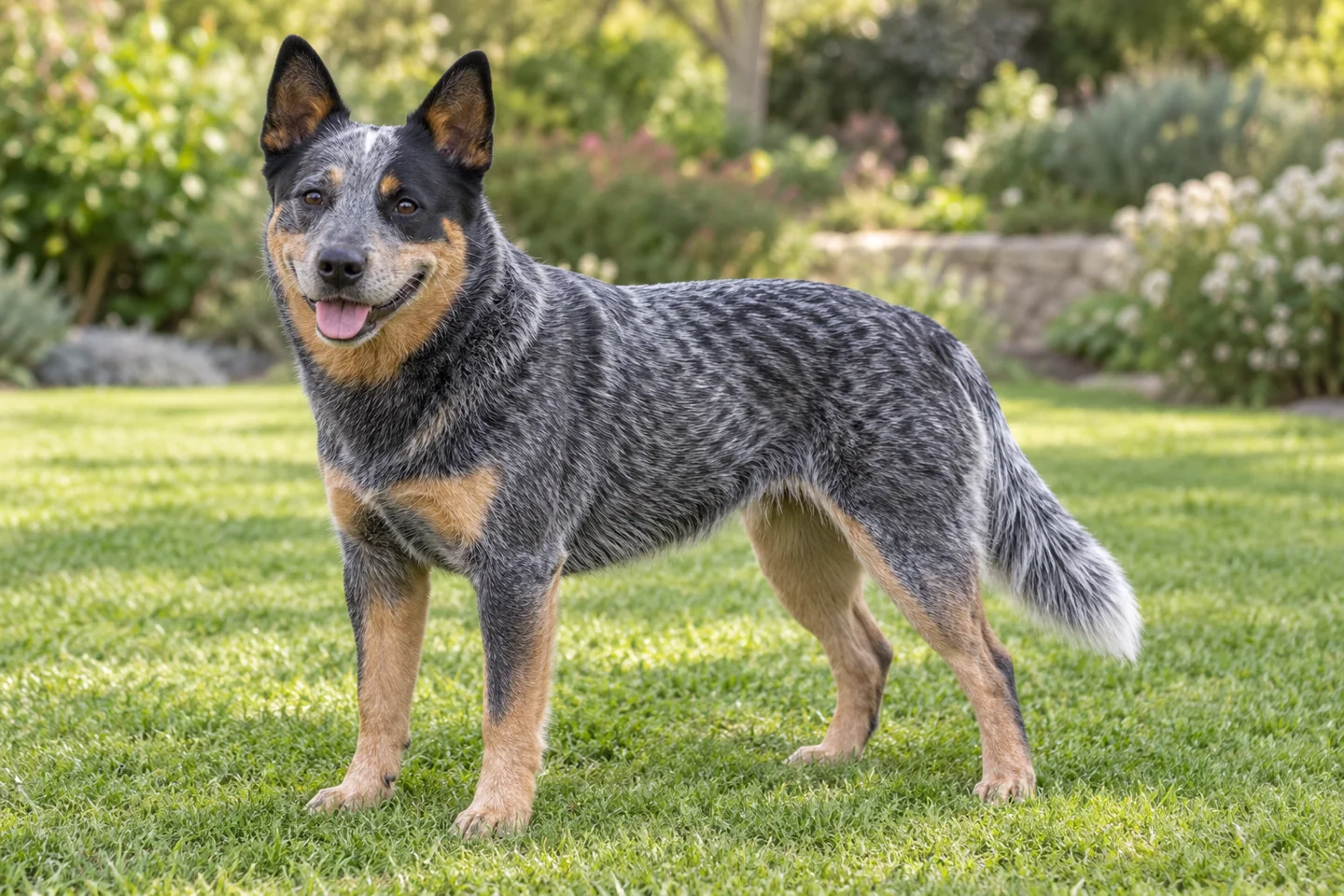
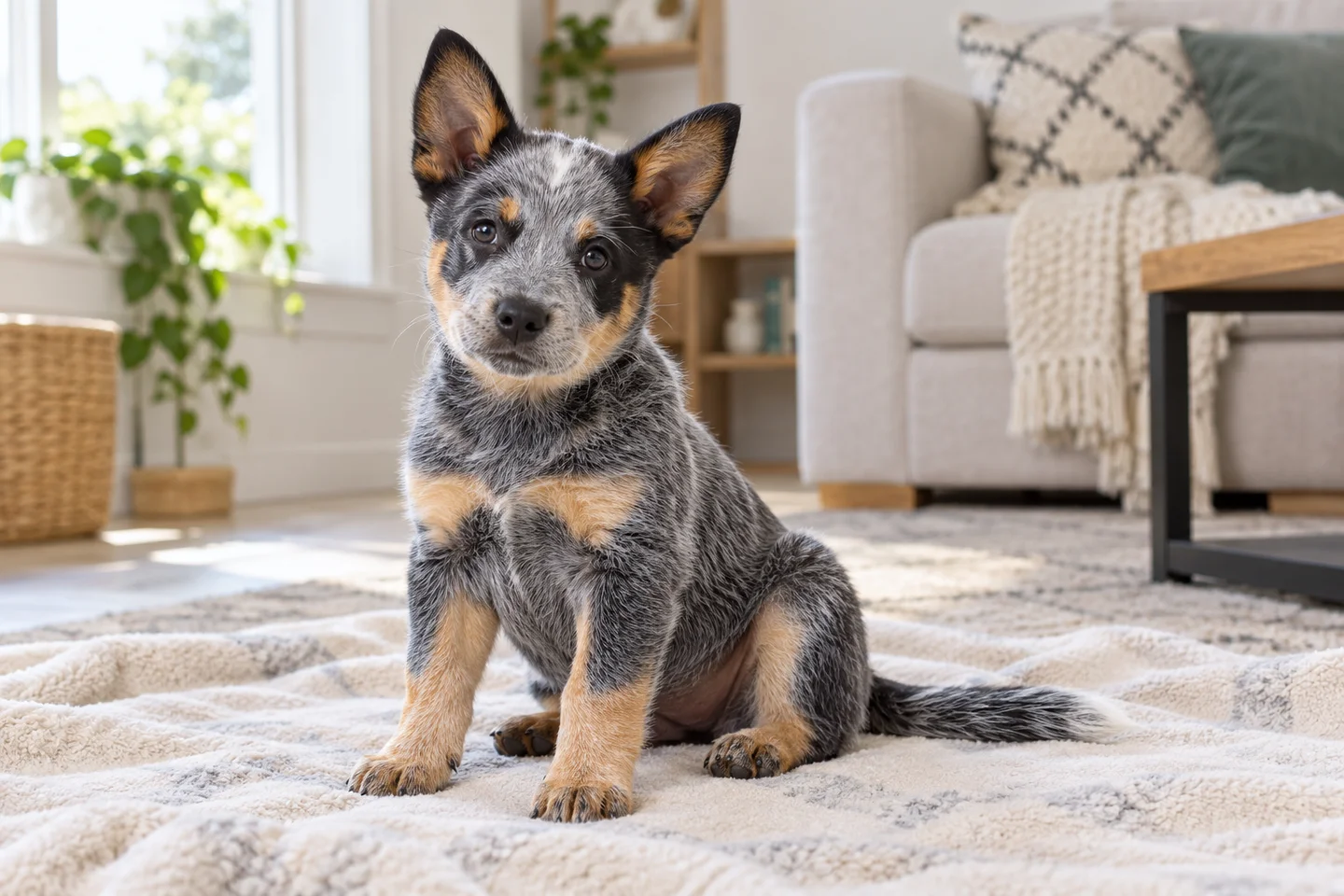
The breed has a compact, sturdy outline, erect ears, and a short double coat. Blue or red speckling can make puppies and adults look quite different, and a particular marking is not a measure of quality or suitability. Watch comfortable movement and ask about body condition rather than selecting primarily by pattern. A dog should be able to turn, rise, and walk without repeatedly favoring a limb. Enthusiasm for a toy does not rule out discomfort during other activities.
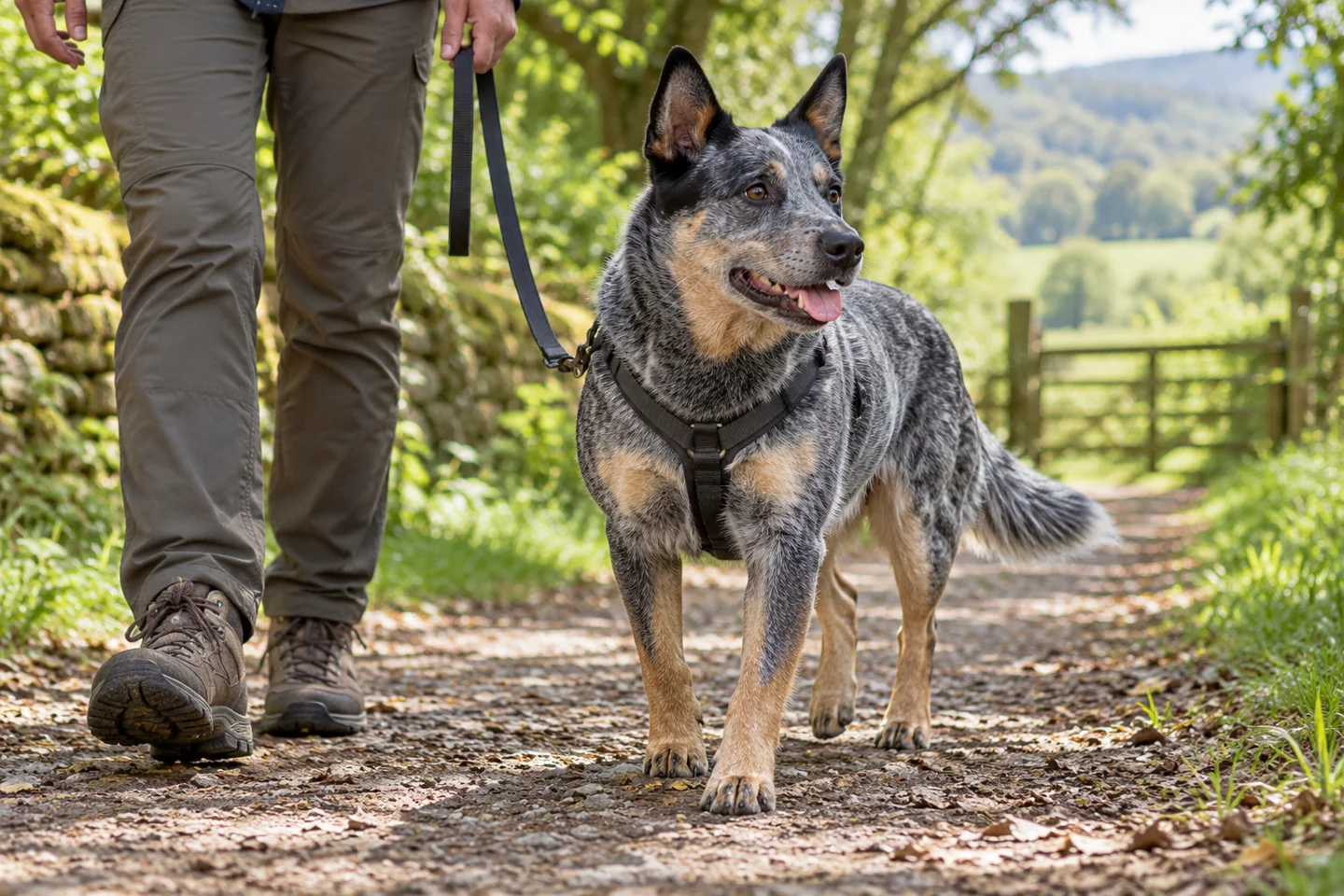
The illustrations show natural ears and a long natural tail. They represent examples rather than every possible marking or a particular documented dog. Check harness fit around the actual shoulders and chest, and make sure a frightened dog cannot simply reverse out of it. Puppies need repeated adjustments during growth. A secure lead and identification support safe outings, but equipment works best when the owner has also practiced calm fitting and movement through doors.
Heel nipping and running children
An interest in moving feet can become a serious household problem when a dog chases children or grabs clothing. Do not dismiss it as harmless because the breed worked cattle. Prevent rehearsal with barriers and supervised access, then teach a different response before running begins. A station on a mat, attention to the handler, or a quiet activity in another room may fit the situation. Children should not have to stop a pursuing dog themselves or learn to tolerate unwanted contact.
An adult needs to supervise ordinary interactions as well as energetic play. Keep sleeping places and meals separate from children, and prevent hugging, climbing, or taking objects from the dog's mouth. Visiting children may behave differently from familiar family members. Arrange separation when supervision is divided. If grabbing, threats, or bites have occurred, obtain professional help and a veterinary assessment rather than waiting for the child or dog to grow out of the pattern.
Bikes, runners, and a workable walking route
Choose routes that allow enough space to move away from fast traffic. Practice noticing a distant bicycle, turning toward the handler, and receiving a reward before the dog becomes fixed on pursuit. Start at a distance where it can respond comfortably. If every pass causes lunging, the current setup is too difficult. A quieter route or different time of day can create room for learning while keeping other people safe from an encounter they did not agree to join.
Use a suitable lead and harness, and rehearse an emergency turn in easy conditions. Avoid testing off-lead control beside roads, livestock, or wildlife. A secure training field can help practice recall while retaining a boundary. Long lines require attention to speed, footing, and the possibility of entanglement. Equipment should support a training plan, not become the only way the handler interrupts a fully rehearsed chase. Ask for practical coaching when the owner feels physically or emotionally overwhelmed.
Dogs, cats, and household resources
Australian Cattle Dogs differ in their comfort with other dogs. Ask about actual history rather than assuming an active breed will enjoy a busy dog park. Some individuals prefer parallel walks or carefully selected companions. Introduce unfamiliar dogs on suitable neutral ground and manage food, toys, resting areas, and narrow passages separately at home. Watch whether both dogs can disengage. Repeated pursuit or controlling another dog's access to people deserves attention even when no fight occurs.
Cats need escape routes and dog-free resting and feeding areas. A dog may accept a familiar cat yet pursue an unfamiliar animal outdoors. Small pets should have secure protection rather than being used to test the dog's reaction. If staring, stalking, chasing, or repeated blocking appears, stop access and seek qualified advice. Keep the distinction between curiosity and safety clear: an owner describing behavior as playful does not determine whether the other animal is comfortable or protected from injury.
Aggression, guarding, and bite prevention
A Cattle Dog's alertness does not make threatening behavior inevitable or acceptable. Stiffening, hard staring, freezing, growling, or attempting to escape can indicate that pressure should stop. Create space and review what the dog was experiencing. Avoid deliberately reaching for a guarded object or cornering the dog to establish control. Those actions can increase risk while providing little useful information. Household members need a consistent plan for barriers and access, especially around food, rest, and visitors.
Sudden irritability or a new response to touch needs veterinary assessment. Pain, sensory changes, and other illness can affect behavior. Record incidents with their context and get help from a veterinary behaviorist or qualified reward-based professional when threats recur. Punishment that suppresses a growl can leave the underlying problem unresolved. A positively introduced basket muzzle may provide additional protection in an appropriate plan, alongside management and treatment. It does not make unwanted close contact comfortable or replace careful supervision.
Training attention and an off switch
Reward useful choices throughout the day. A glance toward the handler, waiting briefly at a door, and settling while a meal is prepared are practical skills. Begin in quiet surroundings and add distractions gradually. Use rewards the individual values, including food, an appropriate game, or access to an interesting sniff. A dog that learns quickly can also learn unwanted sequences quickly, so pay attention to what happens before and after barking, grabbing, or pulling.
Teach the end of activity as carefully as the beginning. Put toys away predictably, offer water, and guide the dog toward a comfortable resting area. Repeatedly restarting a game whenever it demands more can make quiet periods difficult. Short sessions with clear success are easier to maintain than long confrontations. Ask a trainer to help break a difficult task into manageable steps. Intelligence is not a reason to expect immediate understanding, and physical corrections do not supply the missing instruction.
Exercise, conditioning, and suitable work
A healthy adult needs regular activity suited to its body and experience. Walking, scent searches, controlled retrieving, and appropriate training can provide varied outlets. Build endurance before long hikes or demanding sports. The dog's willingness to continue does not establish that muscles, joints, or paws are ready for repeated impact. Puppies need age-appropriate activity discussed with their veterinarian, including time to sleep and recover rather than a schedule designed to create exhaustion.
Observe movement after exercise and again after rest. Persistent stiffness, limping, reluctance to jump, or slower recovery needs assessment. Heat also changes the plan: choose cooler conditions, provide water and shade, and shorten activity when necessary. A working reputation does not make the breed immune to heat illness. Collapse or severe breathing difficulty requires urgent veterinary advice. On days when a long outing is impossible, use shorter suitable walks and quiet learning tasks without trying to compensate through frantic indoor games.
Grooming and cooperative care
Brush through the double coat regularly, with extra attention when loose undercoat accumulates. Check the skin under the collar and harness, inspect paws after rough ground, and look for parasites appropriate to your region. A short coat can conceal irritation or wounds. Avoid shaving as a routine solution to warmth or shedding without discussing a specific need. Environmental changes and activity management remain important even when the coat is maintained carefully.
Teach tooth brushing, nail care, ear inspection, and standing for examination in brief rewarded sessions. Stop to investigate when a previously comfortable touch becomes difficult. Ears that smell, discharge, or appear painful need veterinary advice rather than leftover medication. A cooperative dog is easier to assess when something goes wrong, but training should not become a reason to delay care. Tell clinic staff about handling concerns before the appointment so they can plan an appropriate visit.
Health screening and the reports to request
The AKC lists hip, elbow, ophthalmologist, and BAER evaluations among the national club's recommended health tests, alongside DNA tests for primary lens luxation and prcd-PRA. Ask for identifiable reports and the actual results for both parents. Imaging, a hearing test, an eye examination, and a DNA result answer different questions. A breeder saying that a dog hears the dinner bowl or sees a moving toy has not provided the equivalent of formal screening.
Check dates, identity, testing method, and the organization issuing the report. A CHIC number records completion and disclosure of specified testing; it does not mean every finding was normal. Genetic tests cover particular variants, and a clear result cannot exclude every eye disease or cause of lameness. Bring available documents to the veterinarian and discuss family history. Screening can reduce specific uncertainties without guaranteeing lifelong health, and new symptoms still need investigation regardless of previous results.
Hearing, vision, and adapting safely
BAER testing can assess hearing in each ear, which matters because a dog hearing through one ear may respond to household sound without making the limitation obvious. Ask whether the puppy has an individual report. A deaf or partially hearing dog can learn visual cues and safe routines, but needs thoughtful management around traffic, surprise approaches, and recall. Tell carers and veterinary staff what the dog can perceive, and avoid startling it awake with abrupt touch.
Primary lens luxation and progressive retinal atrophy are different eye concerns. Discuss the precise test and meaning of results with the veterinarian. Sudden eye pain, redness, cloudiness, or an abrupt change in visual behavior requires prompt advice, even when inherited screening was reassuring. A dog with vision loss may benefit from predictable furniture placement, secure boundaries, and carefully taught cues. Do not assume that bumping into objects or hesitating in dim light reflects distraction, ageing alone, or poor training.
Food, growth, and everyday health
Feed a complete diet suited to life stage and medical needs. Measure portions and count training food within the daily allowance. A highly food-motivated dog can gain weight despite regular exercise, so use weight trends and body condition rather than enthusiasm at the bowl. Ask the veterinarian to show you how to assess ribs and waist. Adjust intake as work, weather, injury, or age changes the amount of energy the dog uses.
Feed away from children and other animals, and teach exchanges without repeatedly taking meals away. Keep access to rubbish, medications, and unsafe foods controlled. Persistent vomiting, altered thirst, unexplained weight loss, or appetite changes deserve assessment. If preparing food at home, obtain qualified veterinary nutrition advice. Keep preventive care current for local risks, especially when traveling or spending time around livestock. An active outward appearance cannot establish that parasites, dental disease, or an internal illness are absent.
Mixes and names that need clarification
A Cattle Dog mix may inherit varied size, coat, and responses to movement. Texas Heeler commonly describes a Cattle Dog and Australian Shepherd cross, but the name does not define one standardized outcome. Ask which parentage is documented and what is inferred. A rescue label based on speckling provides less certainty than known breeding records. DNA ancestry results can add information without predicting every behavior or excluding inherited disease from either side of the family.
Meet the actual dog and discuss indoor settling, visitors, cats, handling, and absences. An adult foster description may be more useful than a confident promise about what a puppy will become. Mixed ancestry does not guarantee an easier activity level or eliminate the need for screening and preventive care. Names such as blue, red, working, or family line should lead to specific questions about records and experience rather than substitute for an individual assessment.
Costs, emergencies, and the older dog
Budget for food, suitable equipment, preventive care, training help, and unexpected treatment. A dog with movement-related reactions may need quieter boarding or an experienced carer, so arrange a trial before a necessary absence. Provide written instructions about walks, resources, medication, and veterinary contacts. Make sure the carer can fit equipment and follow the door routine. Familiarity with dogs in general does not establish that someone can manage this individual's triggers safely.
As the dog ages, adjust footing, transport access, and activity without removing opportunities to investigate and learn. New irritability or reluctance to rise can indicate pain. Know where to obtain emergency care for collapse, major injury, severe breathing trouble, or rapidly worsening illness. Keep identification current and plan transport if the dog cannot walk. An older Cattle Dog may remain eager to accompany the owner, so decisions about distance and recovery need more evidence than its willingness to leave the house.
A controlled dogsDating introduction
Describe this dog's actual social experience and preferred distance in the dogsDating profile, keeping exact home coordinates private. Choose a quiet public route with room for parallel walking and enough visibility to avoid sudden bicycle encounters. Use separate capable adult handlers. Start far enough apart that both dogs can sniff, respond, and move freely on their own leads. There is no obligation to greet closely or play simply because both owners hoped to make a match.
Leave toys and shared food out of the first outing. If one dog repeatedly chases, blocks, stiffens, or cannot disengage, create distance or end the walk. Calm movement with space between dogs can be a useful result. Share observations about the specific setting rather than declaring the dogs compatible everywhere. A successful public walk does not establish that they can share a vehicle, guard-free meal area, crowded doorway, or exciting off-lead game without a separate assessment.
Sources and editorial notes
Sources checked October 21, 2026. Breed measurements describe reference ranges, not a diagnosis or an individual dog's ideal weight. Images are AI-generated breed illustrations and do not document a particular dog or health condition.
- Orthopedic Foundation for Animals: CHIC program and interpretation of numbers
- VCA Animal Hospitals: Ear infections in dogs
- VCA Animal Hospitals: Common emergencies in dogs
- VCA Animal Hospitals: Food aggression in puppies
- American Kennel Club: Herding group health screening recommendations
- Louisiana State University: Inherited deafness and BAER testing
- VCA Animal Hospitals: Heat stroke in dogs
- Australian Cattle Dog Club of America: Breed names and new-owner guidance
- VCA Animal Hospitals: Aggression toward unfamiliar dogs, diagnosis
- American Kennel Club: Official Australian Cattle Dog standard
- AVSAB: Humane Dog Training Position Statement
- VCA Animal Hospitals: General feeding guidelines for dogs
Keep getting to know dogs.
Read another guide or return to your dogsDating community.
Explore breed guidesBack to dogsDating