German Shepherd Dog
An attentive working dog who needs clear routines, suitable activity, thoughtful introductions, and careful health screening.
How these guides are researched and reviewed
- Adult weight
- About 50–90 lb
- Coat
- Double coat, regular shedding
- Daily life
- Training, activity, and rest
General information for owners. These articles have not been reviewed by a veterinarian. Medical decisions need your dog's history and an examination.
Living with a German Shepherd Dog
A German Shepherd Dog needs a home that can offer clear routines, suitable activity, and careful attention to behavior. Many enjoy learning and working alongside a person. Their size, strength, and interest in the surroundings also mean an owner must be able to manage greetings, visitors, other animals, and everyday walks without relying on physical confrontation.
Choose a particular dog for the life you can provide. A settled adult with documented household experience may fit differently from a young dog bred for demanding work. Ask about behavior when nothing exciting is happening, how the dog responds to unfamiliar people, and how readily it recovers after a surprise. A striking photograph cannot answer those questions.
Plan for ordinary care as well as training. Someone must manage shedding, veterinary appointments, quiet rest, transport, and absences from home. If your schedule changes frequently, decide who can provide consistent care. An active breed still needs predictable opportunities to sleep and feel secure. Constant stimulation is not a substitute for a workable household routine.
History and the meaning of a working breed
The German Shepherd developed in Germany from herding dogs and became established as a breed in the late nineteenth century. The American Kennel Club describes its subsequent use in service, military, and other working roles. Those jobs involve selection and training. They do not mean every German Shepherd arrives with the skills or temperament required for demanding work.
For a household companion, useful work can be ordinary and controlled. Searching for an object, following a scent trail arranged for recreation, or practicing a calm recall can give the dog something understandable to do. Choose activities for the dog's health, interests, and your ability to teach them safely.
Working and show lines describe breeding emphases, with substantial variation within each. Ask what the breeder's dogs do, what their households require, and why the proposed puppy suits your circumstances. Avoid assuming that a line label guarantees health, a specific energy level, or easy behavior. Discuss the adult relatives and actual records rather than relying on a slogan about drive or loyalty.
Size, appearance, and comfortable movement
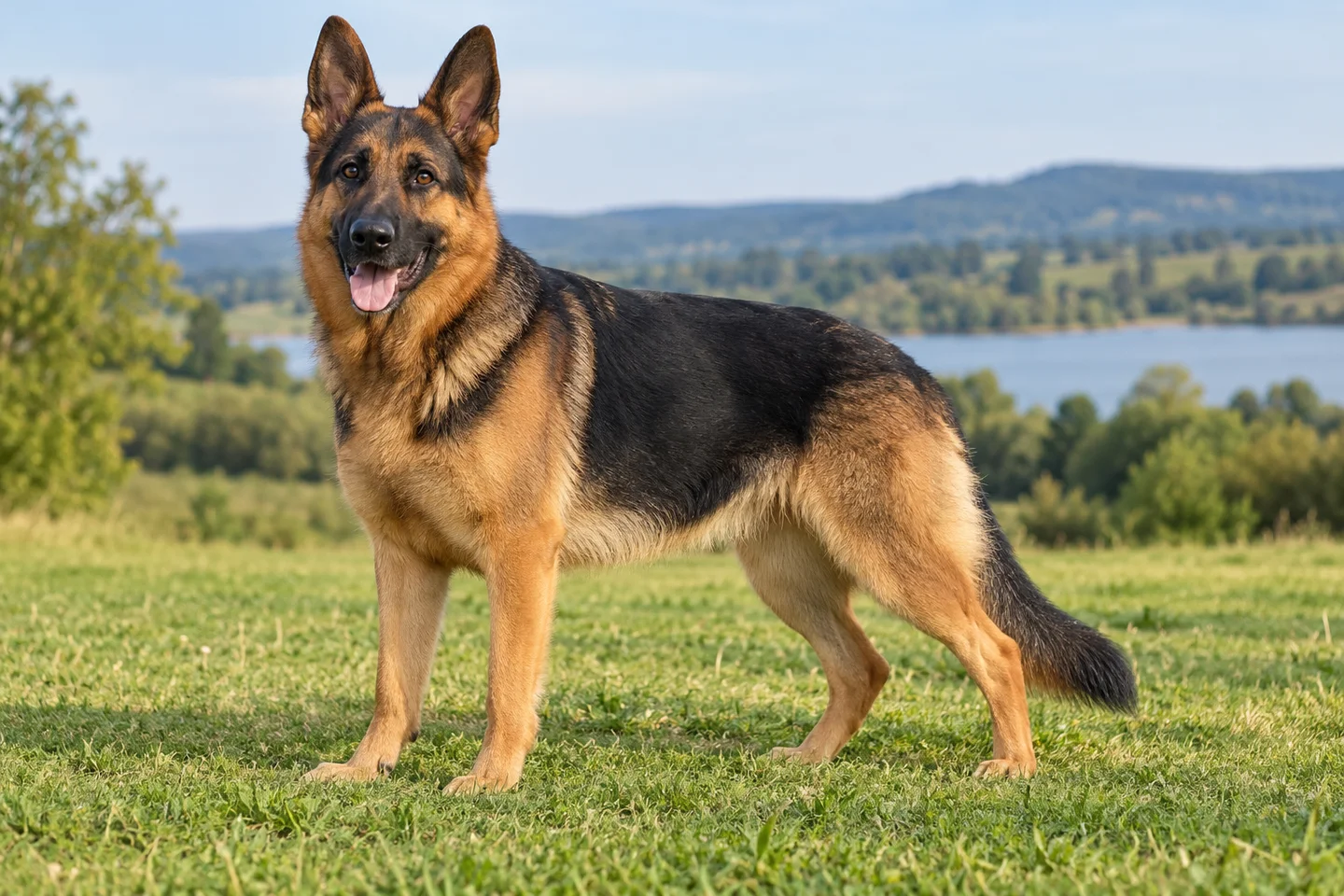
The AKC's breed weight chart gives an overall adult range of about 50 to 90 pounds. The breed standard describes males at 24 to 26 inches and females at 22 to 24 inches at the shoulder. These reference ranges cannot determine an individual dog's ideal weight. Body condition, frame, and medical needs also matter.
German Shepherds have a double coat, and coat length and color vary. Many people recognize black and tan or sable dogs, but appearance is only one part of choosing a companion. A color label does not establish soundness, confidence, or suitability for a child. Ask about the individual dog's movement, health, and responses to everyday situations.
Watch the dog walk on a comfortable surface and discuss any stiffness, asymmetry, or reluctance with a veterinarian. Avoid diagnosing joint disease from a still photograph or treating a dramatic stance as proof of health. Plan equipment and transport for the adult's size. A secure harness, a suitable vehicle restraint, and flooring with adequate traction can make routine handling more manageable.
Temperament, visitors, and household expectations
Some German Shepherds are reserved with unfamiliar people while strongly attached to familiar caregivers. Reserve does not require forced greetings. Give the dog a comfortable place to observe, and ask visitors to follow a simple plan. A dog who chooses distance should be allowed to keep it rather than being cornered for a pat.
Practice household skills before you need them. Teach moving behind a gate, resting on a mat, and following a familiar person away from the door. Arrange deliveries so the dog does not repeatedly rehearse charging an entrance. If barking or guarding is escalating, seek help early rather than waiting for a confrontation.
Describe behavior precisely. Explain whether the dog barks at the door, freezes when approached, lunges at a particular distance, or settles after visitors sit down. These observations give a professional something to assess. Labels such as protective can conceal different causes and levels of risk. A change in tolerance or irritability also calls for consideration of pain or illness, especially when touching or movement triggers the response.
Aggression and bite prevention
A German Shepherd's size can make a bite serious. Prevention depends on the individual dog's history, health, learning, and circumstances. Breed alone cannot predict whether an encounter is safe. Take reports of snapping, biting, guarding, or threatening behavior seriously and arrange management before another person or animal is placed at risk.
Do not ask a worried dog to tolerate hugging, cornering, or removal of valued items. Keep children away from meals, resting places, and chews. Use physical separation when an adult cannot supervise. If the dog freezes, growls, or tries to leave, create space. Punishing a warning can make the situation harder to read without resolving the discomfort.
Start with a veterinary assessment for new aggression or possible pain. A qualified behavior professional can help develop a plan suited to the household. Do not test the dog's response with an unsuspecting visitor. If a basket muzzle is recommended, teach comfortable use gradually with rewards. It supports management while the underlying problem is addressed; it does not make an overwhelming encounter suitable.
Children and family life
Children and German Shepherds need active adult supervision. A child may run, shout, reach for a toy, or approach a sleeping dog without recognizing the dog's response. Set up the home so an adult can intervene early. Give the dog a retreat that children cannot enter, and separate them when attention is elsewhere.
Teach children to let the dog approach, avoid putting faces close to its face, and stop contact when it moves away. Adults should handle conflicts over objects. A child should never be responsible for taking a stolen item from a dog or controlling a large dog during a difficult greeting.
Consider the actual child's age and behavior alongside the dog's history. A dog described as having lived with children may have lived peacefully with one older teenager and have no experience with toddlers. Ask for specifics. Arrange introductions conservatively and review the plan as the dog matures or the household changes. A new baby, visiting relatives, or illness can alter the routines on which earlier success depended.

Cats, dogs, and chasing
Some German Shepherds live comfortably with cats; others chase or cannot share space safely. Ask about observed behavior rather than accepting a general promise about the breed. Introduce animals using suitable barriers, provide cats with escape routes, and prevent chasing from becoming routine. A cat remaining still during a first meeting does not establish long-term compatibility.
For dog introductions, begin at a distance where both dogs can move and respond comfortably. A parallel walk may provide more information than an immediate nose-to-nose greeting. Avoid tight doorways, crowded entrances, and food or toys that create competition. Do not remove a leash or barrier simply to see whether a barking dog will behave differently.
Dogs can prefer particular companions and play styles. Watch whether both choose to continue, can pause, and can move away. Repeated pursuit of a dog who is trying to escape is a reason to stop. If there is a history of attacks, serious chasing, or difficulty interrupting behavior, obtain professional guidance before arranging direct contact with another animal.
Reward-based training and clear skills
The American Veterinary Society of Animal Behavior recommends reward-based training. For a German Shepherd, start with skills that help you manage real situations: returning when called, turning away from a distraction, walking with a loose leash, waiting at an exit, and settling behind a barrier. Practice where the dog can succeed.
Reward the behavior you want promptly. Food, a suitable toy, sniffing, or access to an activity may work, depending on the dog and setting. Keep sessions manageable and change the task if frustration rises. Repeating a cue in an environment that overwhelms the dog does not provide a clear lesson.
Do not use physical intimidation to establish control. A strong dog who fears handling presents a harder safety problem. Seek a trainer who explains methods, watches the dog's response, and welcomes questions. If you are interested in specialized sports, find appropriate instruction and discuss medical suitability first. Household safety does not require teaching a pet to threaten people, and casual bite-work experiments create avoidable risks.
Exercise, scent work, and rest
Plan regular movement and opportunities to use the dog's attention and nose. The appropriate amount depends on health, maturity, conditioning, weather, and the demands of the activity. A sniffing walk, a controlled search, and repeated high-speed jumping place different demands on the body. Choose a combination the dog can recover from comfortably.
Puppies need a growth-appropriate plan from their veterinarian. Avoid forced distance, repetitive jumping, or keeping pace with an adult athlete simply because the puppy tries hard. For an adult, build new activities gradually and monitor movement afterward. Enthusiasm during a game does not rule out soreness later in the day.
Teach a predictable end to activity. Put equipment away, provide water as appropriate, and offer a quiet resting place. If the dog becomes increasingly frantic or cannot sleep after busy days, review intensity and routine. More exertion may increase fitness without teaching rest. A dog who can search thoughtfully and then settle has skills that serve the household throughout the week.
Grooming and cooperative handling
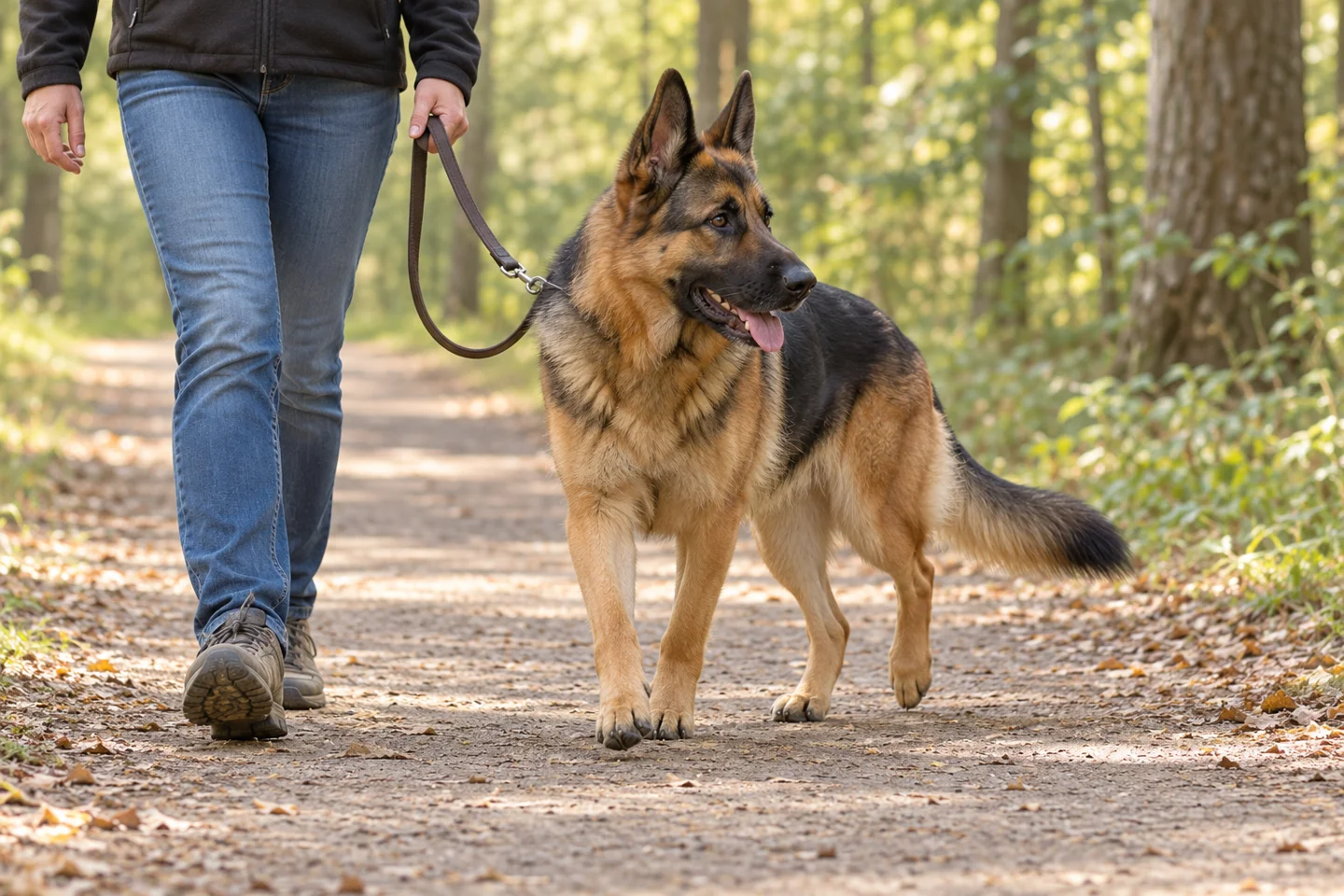
Expect shedding and regular brushing. Check areas where the coat tangles or equipment rubs, and look at the skin rather than only smoothing the outer hair. After walks, inspect paws and remove debris when it is safe to do so. Persistent scratching, sores, odor, or pain needs veterinary advice.
Teach handling in small steps. Reward calm interest in a brush, a brief touch to a paw, or a short look at the teeth. Build duration slowly. This matters for a large dog because a frightened struggle can injure people and make later care more difficult. Ask a professional for a plan if handling already causes fear or aggression.
Include nail care and dental care in the routine. Ask the clinic to demonstrate safe techniques and discuss products suited to the dog. Grooming needs may change with age, mobility, and skin conditions. Tell a groomer about medical problems and previous handling reactions before the appointment so the session can be arranged appropriately.
Feeding, growth, and body condition
Choose a complete diet appropriate for life stage and medical needs. For a growing German Shepherd, ask your veterinarian how to manage portions and development. Do not add calcium or other supplements simply because a large puppy looks awkward during growth. A specific nutritional concern needs a specific assessment.
Measure food consistently and count training rewards and chews. Review weight trends, body condition, stool, appetite, and activity with the veterinarian. A heavy coat can make changes harder to notice, so ask how to assess the ribs and waist. Keep a record when several people feed the dog.
Repeated diarrhea, weight loss despite appetite, vomiting, or a marked change in thirst should prompt investigation. Avoid explaining every digestive problem as a sensitive shepherd stomach. Frequent food changes can complicate the history without identifying a cause. Bring a useful account of diet, treats, medication, possible scavenging, and how long the signs have lasted. Your veterinarian can decide which tests and changes are appropriate.
Health screening and inherited risk
The German Shepherd Dog Club of America lists hip and elbow evaluations and its temperament test in the breed's CHIC requirements. Its Health Award of Merit includes further requirements, such as cardiac and thyroid testing and publication of degenerative myelopathy results. These programs have different criteria, so ask exactly which evaluations a breeder has completed.
Verify results against the parents' identities. Read the findings rather than assuming a certificate means every result was normal. A general puppy examination, a DNA panel, and an orthopedic evaluation provide different information. Discuss family history and the limits of each test with your veterinarian. No screening program guarantees a lifetime without disease.
Hip and elbow problems are relevant topics when choosing a puppy and monitoring an adult. Report persistent lameness, reluctance to move, or changes in gait. Keep exercise comfortable while arranging advice rather than forcing the dog through pain to improve fitness. For adopted dogs with incomplete records, begin with the available history and current examination. Missing paperwork should remain an acknowledged uncertainty.
Degenerative myelopathy and digestive disease
UC Davis describes degenerative myelopathy as a progressive condition affecting walking, particularly the hind limbs, and notes its occurrence in German Shepherds. A genetic result alone does not diagnose a dog with walking difficulties. Clinical assessment includes considering other causes. Discuss weakness, scuffing, or an unsteady gait promptly so potentially treatable problems are not dismissed as an inevitable breed condition.
Exocrine pancreatic insufficiency is another relevant condition. The Merck Veterinary Manual explains that insufficient pancreatic digestive enzymes can cause weight loss and abnormal stools, sometimes despite increased eating. German Shepherds are among the breeds discussed. Diagnosis requires veterinary testing, and treatment must be tailored to the dog. Do not start enzyme products or a restrictive diet based only on a breed article.
Keep medical decisions tied to findings. A symptom shared by several conditions cannot identify which one is present. If ongoing treatment is prescribed, ask how to give it, what changes to monitor, and when to return. Bring records when changing clinics so progress can be evaluated against the original findings.
Emergencies, travel, and daily safety
A painful swollen abdomen, repeated unsuccessful retching, collapse, severe breathing difficulty, or suspected poisoning warrants urgent veterinary contact. German Shepherd owners should discuss gastric dilatation and volvulus, commonly called bloat, with their veterinarian. Do not wait to see whether an emergency improves or attempt a home procedure described online.
Prepare for safe transport before illness occurs. Know which clinic accepts emergencies and how you would move a large dog who cannot walk. Store contact details where sitters and family members can find them. Use suitable vehicle restraints and avoid leaving the dog in a hot car, even during an apparently brief errand.
Check fences, gates, and equipment routinely. A dog who can open a latch or follow someone through an entrance needs an improved arrangement. Check identification details after moving house. On outings, adjust to weather and surface conditions, provide breaks, and stop when the dog is struggling. A planned route should be easy to shorten when circumstances change.
German Shepherd mixes
Names such as Shepsky for a German Shepherd and Siberian Husky cross or Golden Shepherd for a German Shepherd and Golden Retriever cross are informal. Usage varies. Ask what is actually documented about the parents and what is an estimate. Appearance alone cannot establish ancestry or a precise mix.
A cross may inherit different combinations of coat, size, activity needs, and behavior. Combining two breeds does not guarantee a moderate version of each. Consider health risks and relevant screening from both parents when their identities are known. Be cautious of promises that a particular mix will automatically be healthier, safer, or easier to train.
For a mixed adult, prioritize observed behavior and current medical information. Ask about responses to strangers, cats, handling, meals, and separation. Find out which observations came from a home and which came from a short encounter. Those details help you prepare a suitable environment even when the dog's ancestry remains uncertain.
Choosing a dog and budgeting for care
A breeder or rescue should discuss limitations and answer practical questions. Ask about health records, daily behavior, placement support, and what happens if the home cannot continue caring for the dog. For puppies, discuss the parents and early experiences. For adults, ask for specific examples from the dog's living history.
Budget for food, preventive care, training, equipment, boarding or sitting, and unexpected illness. Request estimates from local providers. Consider access to suitable behavior support if problems arise. Check your lease, insurer, and applicable local requirements before committing to a dog. Rules differ, and a confident statement from a seller cannot replace checking your own situation.
Prepare a quiet sleeping area and separation space for other animals. Keep the first weeks manageable, arrange a veterinary appointment, and avoid overwhelming introductions. As the dog ages, review traction, car access, bedding, and comfortable movement. Care needs change over a lifetime, and a realistic plan includes support when the dog can no longer follow its younger routine.
Choosing a dogsDating companion
Describe your German Shepherd's behavior plainly in its profile. Explain whether it prefers walking, gentle play, or a familiar companion. Mention chasing, guarding, handling concerns, and any history that affects safe meetings. A shared breed name does not establish compatibility, and another owner needs accurate information to make a decision.
Arrange a meeting with space, calm handling, and an easy way to leave. Begin with distance and consider a parallel walk. Avoid crowded greetings and valued toys that create conflict. Watch whether both dogs can pause and move away. Stop if one repeatedly freezes, hides, or attempts to escape.
Some dogs gain more from a quiet walk than a physical play session. Respect that preference and reassess as the dogs become familiar. Keep exact home details private when arranging a first meeting. A comfortable outing with clear communication gives you a better basis for future plans than trying to force immediate friendship.
Sources and editorial notes
Sources checked October 21, 2026. Breed measurements describe reference ranges, not a diagnosis or an individual dog's ideal weight. Images are AI-generated breed illustrations and do not document a particular dog or health condition.
- AVSAB: Humane Dog Training Position Statement
- VCA Animal Hospitals: Food aggression in puppies
- VCA Animal Hospitals: Aggression toward unfamiliar dogs, diagnosis
- VCA Animal Hospitals: Common emergencies in dogs
- American Kennel Club: Breed weight chart
- American Kennel Club: German Shepherd Dog history
- German Shepherd Dog Club of America: Breed standard
- German Shepherd Dog Club of America: Health and genetics
- UC Davis School of Veterinary Medicine: Degenerative myelopathy
- Merck Veterinary Manual: Pancreatic disorders in dogs
- Merck Veterinary Manual: Feeding practices in small animals
Keep getting to know dogs.
Read another guide or return to your dogsDating community.
Explore breed guidesBack to dogsDating