Australian Stumpy Tail Cattle Dog
A distinct naturally bobtailed Australian cattle breed whose care includes movement training, secure access, and individual hearing and health assessment.
How these guides are researched and reviewed
- Identity
- Distinct from the Australian Cattle Dog
- Tail
- Natural bobtail; long-tailed puppies can occur
- Care priorities
- Movement, hearing, health records, and boundaries
General information for owners. These articles have not been reviewed by a veterinarian. Medical decisions need your dog's history and an examination.
Choosing a Stumpy for your household
An Australian Stumpy Tail Cattle Dog needs an owner prepared for an active stock-working breed with clear boundaries around movement. Daily walks matter, but the dog also needs to learn rest, comfortable handling, and alternatives to pursuing people or animals. A naturally short tail does not make the care requirements smaller. Before adopting, describe your ordinary week and decide who will provide activity, teaching, supervision, and backup care when the usual routine changes.
Meet adults and ask how they behave away from stock or a training field. A dog that works effectively may still find visitors, close dog encounters, or long periods alone difficult. An adult already living in a home can offer useful observations about those situations. A puppy brings more uncertainty, even with known parentage. Choose an individual whose needs fit the household, and make sure everyone understands that training will involve daily practical habits as well as occasional formal lessons.
A separate breed with a naturally short tail
The Australian Stumpy Tail Cattle Dog is distinct from the Australian Cattle Dog. The short tail is a natural breed feature, and a docked Cattle Dog does not become a Stumpy. The AKC notes that Stumpies can also be born with long tails. That means tail length alone cannot prove or disprove ancestry. Ask which breed appears on registration documents and keep a rescue's visual estimate separate from a documented pedigree.
Both breeds belong to Australia's cattle-working history, but accounts of the Stumpy's early development include competing explanations. The standard acknowledges those historical versions, so a guide should not collapse them into a single certain family tree. For an owner, recent family information is usually more useful: what work the parents do, how they live around people, and how their offspring settle in homes. A claim of traditional working ancestry needs that practical context before it can inform a placement decision.
Square outline, coat, and markings
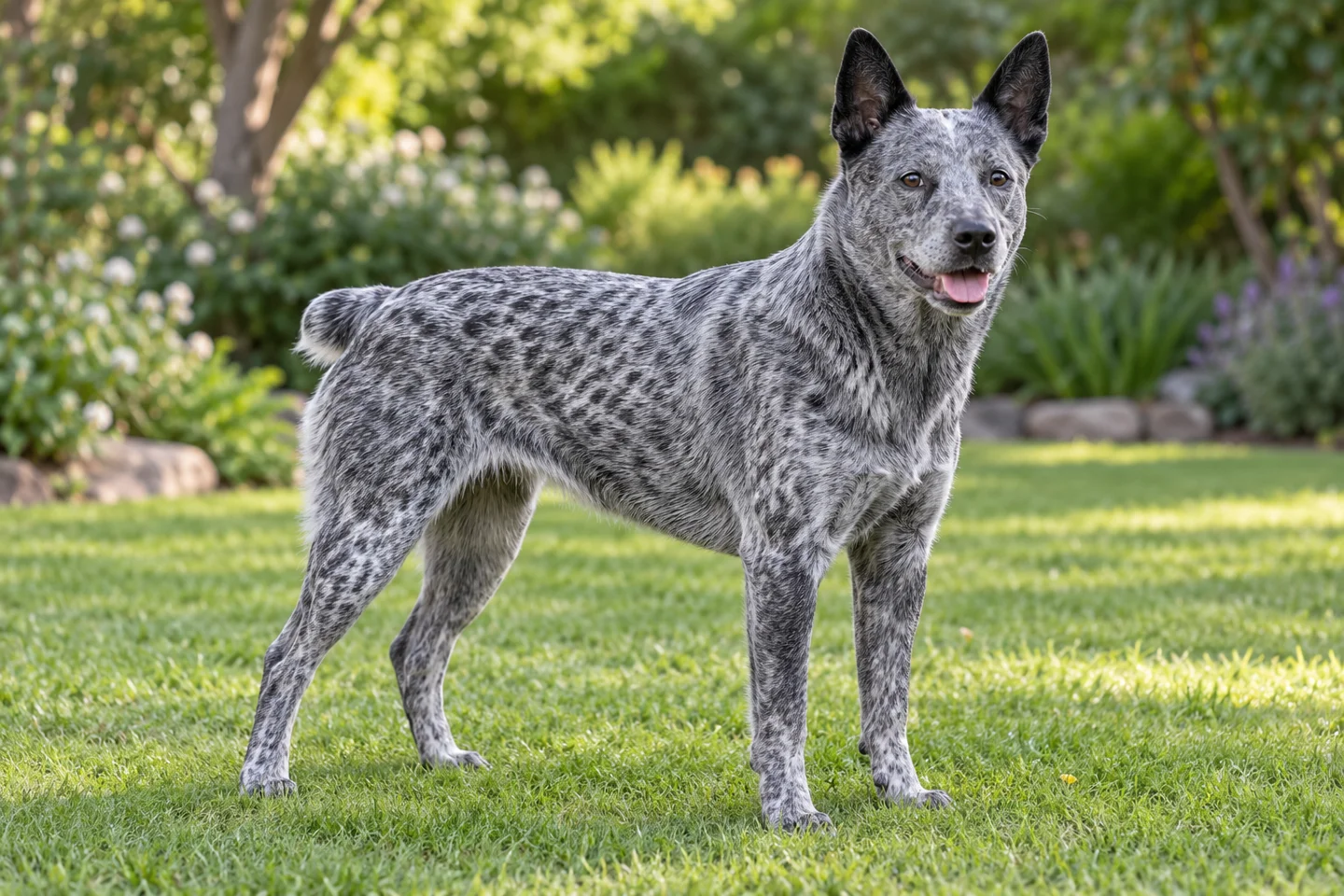
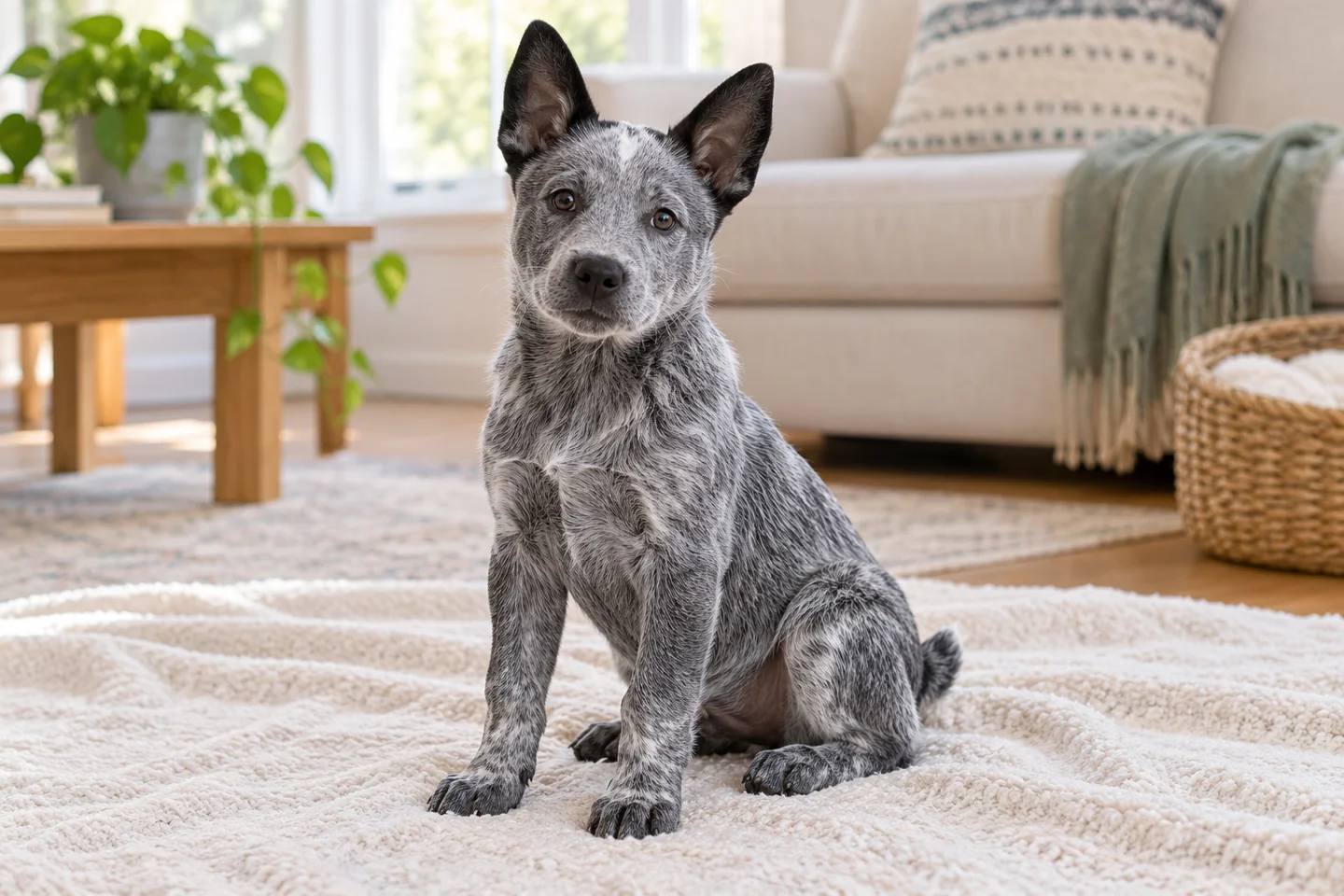
The Stumpy has a relatively square, leggy outline, erect ears, and a short coat. Blue and red speckled descriptions occur in the breed, with markings assessed under the relevant standard. Its proportions differ from simply imagining a familiar Cattle Dog with the tail removed. The illustrations show blue-speckled dogs with natural bobtails and no tan points. They are generated examples rather than proof of ancestry, ideal conformation, or health in a real animal.
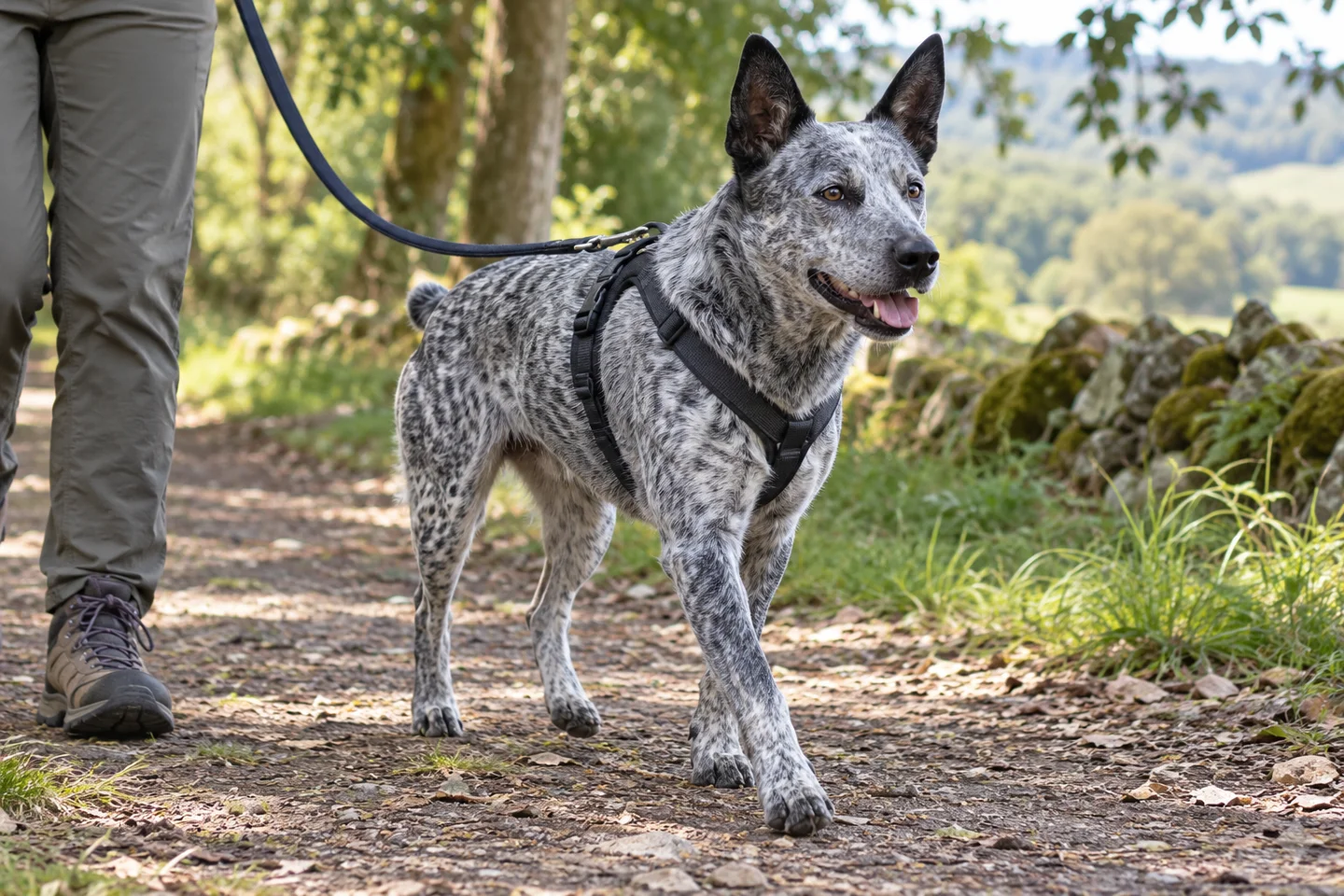
Watch an actual dog walk, turn, and rise comfortably. Ask about persistent stiffness or an uneven gait even if it remains eager to move. Fit equipment to the individual chest and shoulders, and check whether it remains secure when the dog backs away. Puppies need regular adjustment as they grow. Use readable identification and reliable lead fittings. A sensible equipment routine also includes teaching the dog to wait while a door opens instead of relying on a handler catching it at the last moment.
Movement, nipping, and young children
A cattle-working tendency can create problems when the dog pursues running children or grabs clothing. Prevent those interactions rather than treating them as an amusing expression of heritage. Use barriers before energetic play starts and teach an alternative response at a manageable difficulty. A child should not be responsible for correcting or restraining an excited dog. Adults need to make the environment safe and seek help if repeated chasing or unwanted contact has already become part of the routine.
Supervise calm contact as well. Keep children away from meals, chews, and sleeping places, and avoid hugging, climbing, or leaning over the dog's face. Let it leave when it wants space. Visiting children may be less predictable than familiar family members, so explain rules and separate when attention is divided. A previous record of comfortable contact does not guarantee tolerance of every situation. Review arrangements when children grow, friendships change, or the dog becomes older and less comfortable with touch.
Cats, small pets, and stock training
Cats need escape routes and areas the dog cannot access. Use gradual introductions with barriers and control of the dog, allowing the cat to choose distance. A dog accustomed to one cat may pursue an unfamiliar animal running outside. Small pets require secure protection rather than an informal test of intentions. If fixation, stalking, or chasing appears, stop access and obtain professional advice before repeating the encounter.
Livestock work requires an experienced instructor, suitable animals, and a way to interrupt and separate safely. Instinct does not supply every part of an education, and an inexperienced puppy can apply too much pressure or get hurt. Ask how a working prospect has met stock and what its limits are. A companion household should not encourage circling pets or chasing children as substitute work. Choose appropriate games and learning tasks that do not require another vulnerable animal to tolerate unwanted attention.
Aggression and interpreting warnings
A stiff body, fixed attention, growling, snapping, or repeated attempts to retreat can signal that an interaction should stop. Create distance and identify what preceded the response. Do not recreate a dispute over food or space to prove that the dog must accept it. Breed descriptions about courage or loyalty cannot determine the safety of an individual encounter. Physical management can protect people and animals while the owner obtains a clearer assessment of the cause.
Sudden irritability or handling sensitivity warrants a veterinary examination. Pain, illness, and sensory changes can affect tolerance. Record the circumstances of recurring problems and consult a veterinary behaviorist or qualified reward-based professional. Avoid punishment that suppresses warnings while leaving discomfort or fear unresolved. A basket muzzle introduced gradually with rewards may provide additional protection within a broader plan. Barriers, separate resources, and suitable walking distances remain necessary rather than assuming one piece of equipment resolves the underlying concern.
Training attention around fast distractions
Teach a name response, hand target, recall over short distances, and a turn away in quiet surroundings. Reward promptly and add difficulty gradually. These skills become useful when a runner or bicycle appears, but they need rehearsal before a close surprise encounter. Start far enough away that the dog can respond and recover. If every pass produces lunging or pursuit, choose an easier route or increase distance rather than repeating the same overwhelming exposure.
Use rewards meaningful to the individual, including food, an appropriate game, or access to a safe sniff. Short clear sessions help the handler notice progress and stop before frustration builds. The dog may learn unintended sequences if barking or grabbing reliably produces attention or play. Review those consequences and teach a different way to request access. Reward-based coaching can improve handling and timing without relying on repeated lead jerks or stronger commands that do not explain the desired response.
Exercise and physical development
Provide daily movement appropriate to age, health, and conditioning. Walking, scent searches, controlled games, and suitable training can create variety without repeated maximum-speed effort. Build endurance gradually before long hikes or demanding sports. A puppy needs time to sleep and an age-appropriate activity plan, with high-impact exercise discussed with its veterinarian. An eager Stumpy may continue offering activity despite fatigue, making recovery and gait important information for the owner.
Persistent limping, reluctance to jump, or an altered stride deserves assessment. Check paws after rough terrain and adjust routes when surfaces become uncomfortable. In hot conditions, shorten activity and provide shade and water. A working heritage does not prevent heat illness. Collapse or severe breathing difficulty requires urgent veterinary advice. Quieter days can still include manageable sniffing walks and short learning tasks, without attempting to exhaust the dog through fast indoor chasing that makes later rest more difficult.
Hearing and the value of a BAER report
The American breed society identifies deafness among health concerns associated with the Stumpy. Ask whether each puppy has an individual BAER hearing report and have a veterinarian explain the findings. A response to a household sound does not show that both ears hear normally. Formal assessment can reveal a one-sided limitation that is less obvious during ordinary interactions. Read identity and results rather than accepting a general statement that the litter seemed responsive.
A dog with hearing impairment can learn visual cues and safe routines, but needs thoughtful management around traffic, surprise approaches, and recall. Tell carers and clinic staff what the dog can perceive. Avoid startling a sleeping dog with abrupt touch, and teach a predictable way to gain attention. Hearing information supports an individual plan; it should not become an automatic assumption about aggression, intelligence, or quality of life. Discuss practical needs and any other medical concerns with the veterinary team.
Health screening, eyes, and congenital concerns
The Australian Stumpy Tail Cattle Dog Society of America discusses hip dysplasia, prcd-PRA, and several congenital concerns, including cleft palate and spina bifida. A list of reported conditions does not establish how common each is in the whole population. Ask about actual family history and relevant examinations rather than accepting either a guarantee of perfect health or an unsupported prevalence figure. Request readable reports linked to the correct animals and discuss the breeder's testing approach.
A specialist eye examination, joint assessment, hearing test, and DNA result answer different questions. A panel covering selected variants cannot exclude every inherited or acquired disease. New vision changes, pain, weakness, or unusual movement need clinical investigation regardless of previous results. A natural bobtail should not be treated as a diagnosis of spinal disease or as proof that all congenital concerns are absent. The veterinarian needs to assess the individual rather than draw conclusions from tail length alone.
Grooming, teeth, and cooperative handling
Brush the short coat regularly and inspect skin beneath equipment. Shedding and outdoor activity can make care necessary even when the coat appears simple. Check paws, nails, and ears after rough ground or wet outings. Remove loose superficial debris carefully, but obtain veterinary help for painful swelling, embedded plant material, or wounds. Persistent ear odor, discharge, or head shaking needs assessment instead of reused medication or unplanned deep cleaning.
Teach tooth brushing, nail care, and standing for examination through brief rewarded steps. Stop to investigate new sensitivity rather than assuming resistance needs stronger restraint. Tell the clinic or groomer about handling concerns before arrival so the appointment can be planned. Cooperation is useful during illness, when an injured area may be uncomfortable to touch. A calm routine established before a problem occurs can make necessary care more manageable for the dog, owner, and professionals involved.
Feeding and maintaining suitable condition
Choose a complete diet suited to life stage and health, then measure portions and adjust using body condition and weight trends. Training food counts toward the daily allowance. A companion with moderate walks may need less than a dog doing sustained stock work, even when both appear keen and active. Ask the veterinarian to demonstrate assessment of ribs, waist, and muscle. Avoid feeding toward a heavier appearance simply because a cattle-working breed is expected to look strong.
Feed separately from children and other animals and teach exchanges without repeatedly taking meals away. Keep rubbish, medications, and unsafe foods inaccessible. Persistent appetite changes, altered thirst, unexplained weight loss, or digestive problems deserve advice. Do not add supplements to a complete growth diet without a veterinary reason. If preparing meals at home, obtain qualified nutrition guidance for a recipe that fits the dog. Review intake during injury or reduced work instead of continuing an old allowance automatically.
Mixes and uncertain breed labels
A Stumpy cross can vary widely in coat, size, activity, and response to movement. A short tail and speckled coat cannot confirm ancestry. Ask an adoption organization what is known and what was inferred from appearance. A DNA ancestry report may add information while leaving behavior and many health questions unresolved. Mixed ancestry does not guarantee fewer medical concerns or remove the need to assess household compatibility and safe walking arrangements.
Clarify whether a seller means Australian Stumpy Tail Cattle Dog or an Australian Cattle Dog with a short tail. Those are different claims, and paperwork should support a confident identification. For an adult, observations about cats, visitors, absences, grooming, and dog encounters may matter more to placement than an uncertain breed estimate. For a puppy, ask about the parents and early experiences. A useful source explains limits honestly rather than promising that one visible feature predicts the adult dog.
Costs, travel, and the arrival period
Budget for food, preventive care, secure equipment, training support, and unexpected treatment. Hearing assessment or behavior help may be more useful spending than specialized sporting gear. Check housing rules and consider whether the local environment offers routes with enough space around fast movement. Arrange a backup carer who understands the dog's cues and boundaries. Practice a short visit before relying on that person during a long absence or emergency.
When the dog arrives, simplify the routine. Provide a quiet sleeping area, predictable meals, supervised toilet opportunities, and manageable introductions. Delay crowded outings and demanding exercise while learning how it responds to its new surroundings. Teach vehicle entry and secure travel in small steps. If travel causes sickness or marked distress, obtain veterinary advice. A dog that appears quiet during the first few days may still be recovering from change, so avoid treating initial inhibition as a complete picture of its settled behavior.
Emergency care and later years
Keep veterinary contacts and transport arrangements accessible. Collapse, major injury, severe breathing difficulty, or rapidly worsening illness needs urgent advice. A short video can help describe an intermittent movement problem when recording is safe and does not delay care. Report persistent stiffness or new handling sensitivity promptly. An active dog can remain interested in work or games while uncomfortable, so the owner needs to notice recovery and movement rather than wait for complete refusal.
As the dog ages, review footing, sleeping surfaces, vehicle access, and walk duration. Pain should be assessed rather than labeled stubbornness or ordinary ageing without examination. Suitable scent searches and learning can remain part of life when physical demands are reduced. Tell a carer about changed hearing, vision, or mobility so routines stay predictable. Planning for these adjustments from the beginning helps the household make decisions based on the dog's current comfort instead of its former speed or stamina.
A thoughtful dogsDating introduction
Describe this dog's experience and preferred walking distance in its dogsDating profile, keeping exact home coordinates private. Choose a quiet public route with room for parallel movement and separate capable adult handlers. Start far enough apart that both dogs can investigate and respond to their people. Avoid busy entrances and sudden fast play. Neither dog needs to greet closely for the meeting to provide useful information about comfort and recovery.
Leave shared toys and food out of the first outing. Increase distance or end if one dog repeatedly pursues, blocks, stiffens, or cannot disengage. A calm walk with space between dogs can be a good result. Discuss what worked in that setting, including distance and distractions, rather than declaring universal compatibility. A comfortable public meeting does not establish that the dogs can share a house, a vehicle, or a high-arousal off-lead game without further assessment.
Sources and editorial notes
Sources checked October 21, 2026. Breed measurements describe reference ranges, not a diagnosis or an individual dog's ideal weight. Images are AI-generated breed illustrations and do not document a particular dog or health condition.
- VCA Animal Hospitals: Ear infections in dogs
- VCA Animal Hospitals: Common emergencies in dogs
- VCA Animal Hospitals: General feeding guidelines for dogs
- VCA Animal Hospitals: Food aggression in puppies
- Australian Stumpy Tail Cattle Dog Society of America: Health concerns
- Louisiana State University: Inherited deafness and BAER testing
- VCA Animal Hospitals: Heat stroke in dogs
- American Kennel Club: Australian Stumpy Tail Cattle Dog identity and natural tail variation
- VCA Animal Hospitals: Aggression toward unfamiliar dogs, diagnosis
- FCI: Australian Stumpy Tail Cattle Dog standard number 351
- AVSAB: Humane Dog Training Position Statement
Keep getting to know dogs.
Read another guide or return to your dogsDating community.
Explore breed guidesBack to dogsDating