Bearded Collie
A shaggy Scottish stock dog whose care includes coat access to the skin, training around movement, learned rest, and identifiable joint, eye, and thyroid screening.
How these guides are researched and reviewed
- Origin
- Scotland
- Coat
- Long and shaggy with beard
- Care priorities
- Coat, movement, rest, and family health
General information for owners. These articles have not been reviewed by a veterinarian. Medical decisions need your dog's history and an examination.
Choosing a Bearded Collie
A Bearded Collie needs suitable activity, regular coat care, and teaching that helps an energetic dog live comfortably around household movement. Its shaggy appearance and lively greeting can make the breed appealing before an owner has considered brushing, muddy outings, noise, and rest. Start with an ordinary weekday. Decide who will walk the dog, maintain the coat, supervise interactions, and help it settle when activity ends. An active family still needs a routine that works during bad weather or temporary illness.
Meet adults and ask about daily behavior beyond a training field. Find out how the dog responds to visitors, grooming, vehicles, and short absences. A puppy's easy coat and enthusiastic approach provide limited information about adult maintenance or emotional comfort. An adult foster assessment may answer some practical questions more clearly. Choose according to the individual and the care your household can maintain rather than expecting a cheerful reputation to guarantee friendliness, confidence, or compatibility with every person and animal.
An athletic dog beneath the hair
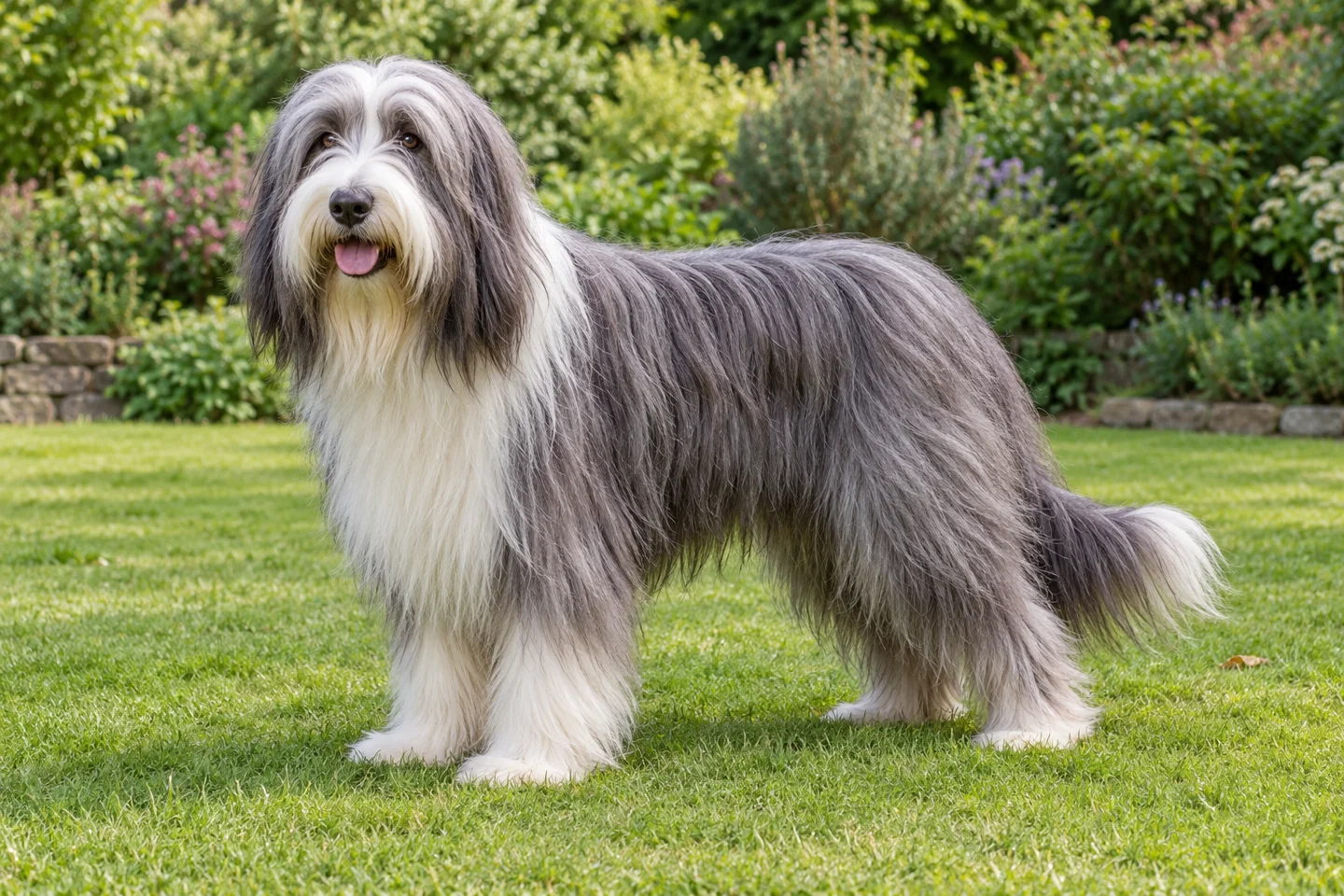
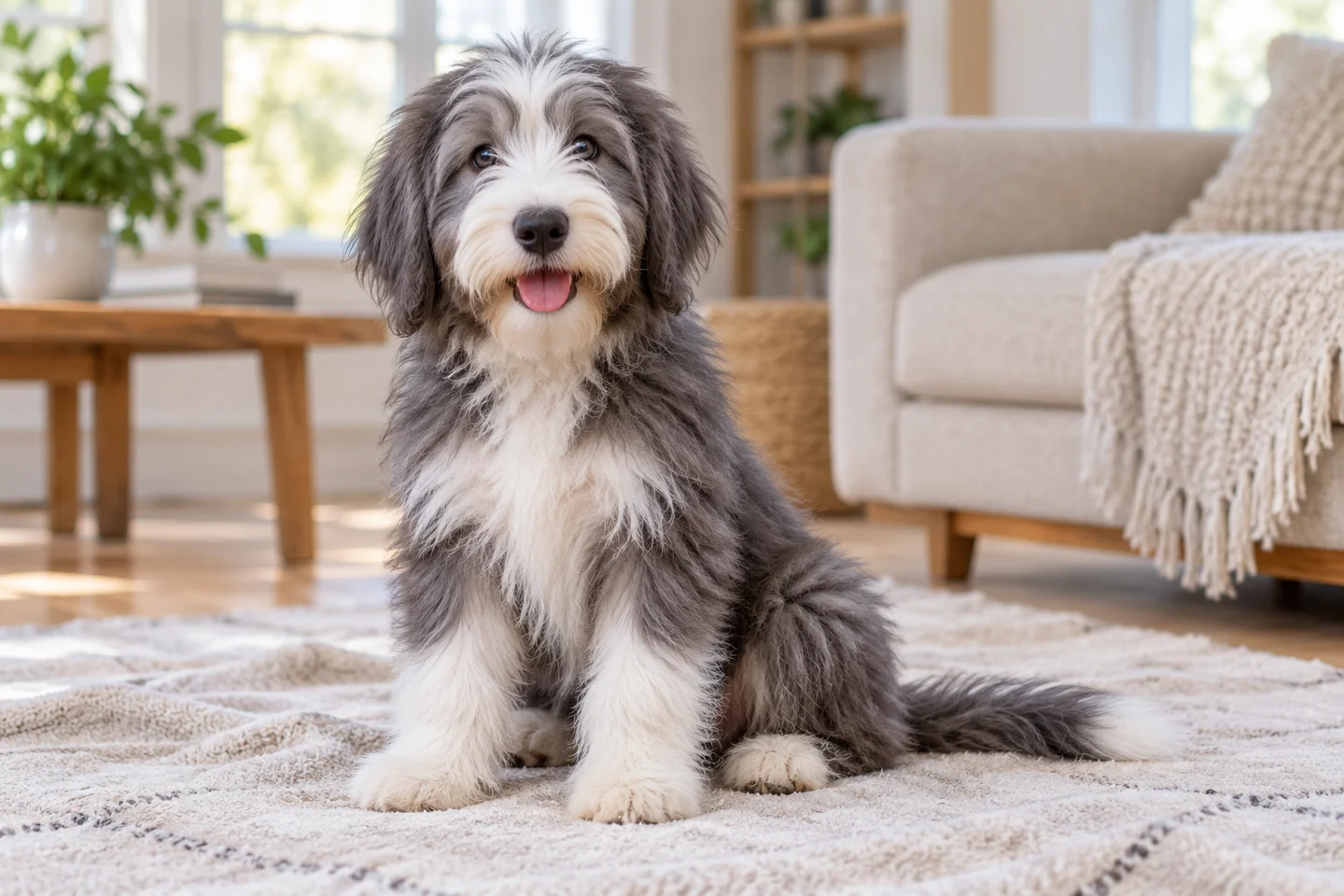
The breed has an agile outline beneath a long coat, with a beard, dropped ears, and a long natural tail. Several coat colors occur, and appearance can change during development. The illustrations show gray-and-white generated examples rather than documented dogs or medical reference images. Assess a real animal with hands as well as sight. A full coat can hide excess weight, poor muscle, skin irritation, or a change in body condition that is less obvious from a distance.
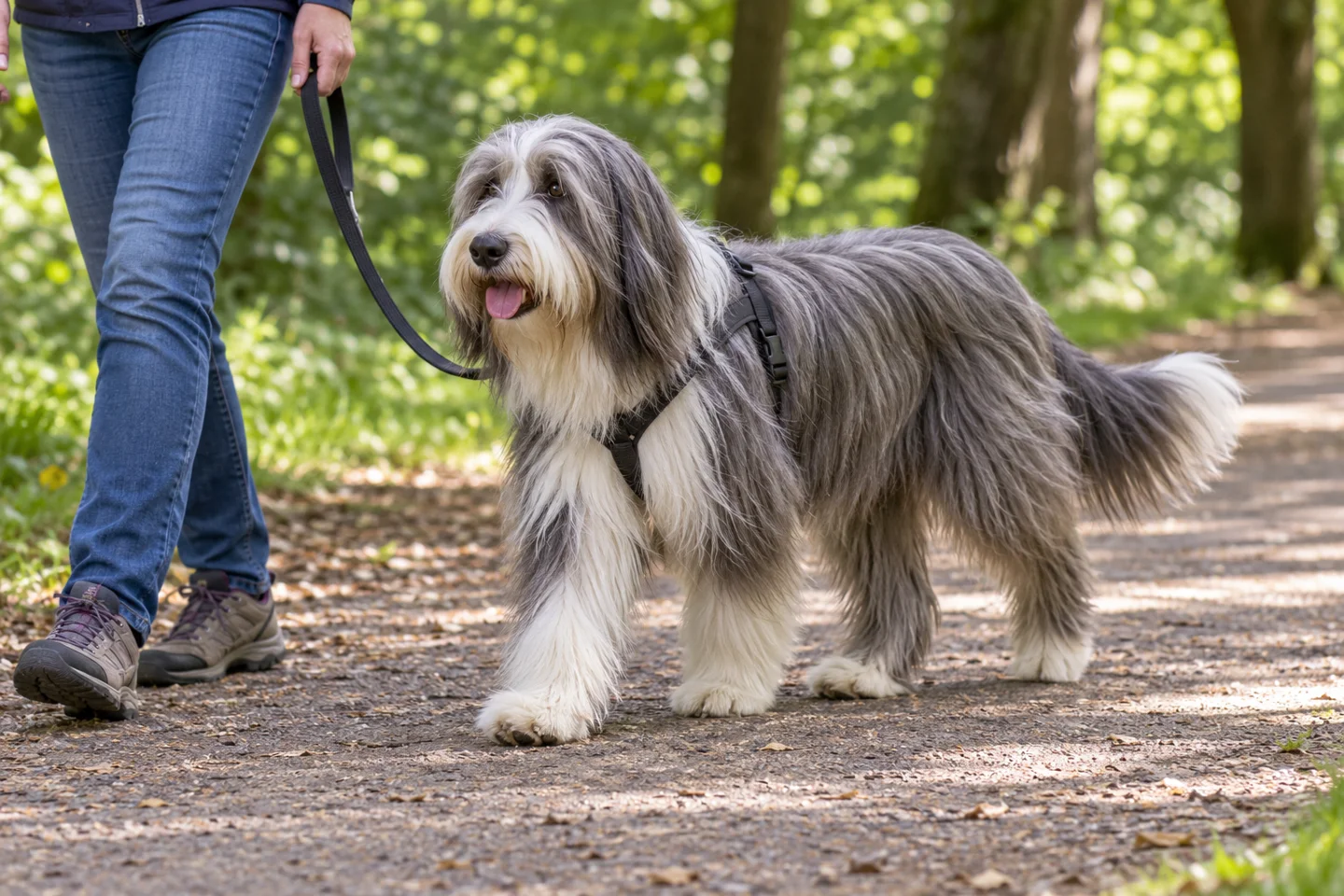
Watch comfortable walking, turning, rising, and recovery after ordinary activity. Ask about persistent stiffness or a repeated uneven stride rather than overlooking it because the dog remains eager to play. Fit equipment to actual chest and shoulder measurements and check beneath the coat for rubbing. Puppies need repeated adjustment, and a different trim can alter apparent fit. Teach standing for equipment and waiting at doors. Reliable clips and identification support a predictable routine that prevents an excited move toward activity becoming an escape.
Grooming that reaches the skin
A quick pass over the outer coat can leave tangles underneath. Learn a suitable brushing and combing technique from a groomer familiar with the breed, working through manageable sections and checking behind ears, beneath equipment, and around the legs. The schedule needs to fit the individual coat and outdoor routine. Ask about changes as puppy coat develops. A young dog whose coat seems simple may later need more attention, and preparation is easier before painful tangles accumulate.
Stop rather than pulling through a tight mat or turning care into a prolonged struggle. A professional can advise on a practical companion routine and safe removal when necessary. Show presentation and daily comfort may involve different choices. Check the skin during grooming instead of treating a tidy silhouette as evidence of health. Persistent redness, odor, wounds, or sensitivity needs veterinary advice. The objective is comfortable maintenance the household can sustain over years, not preserving length regardless of the dog's experience.
Wet outings, eyes, and cooperative care
Inspect the coat after mud, long vegetation, or swimming and remove loose surface debris carefully. Use appropriate products when bathing and dry the dog comfortably. Damp hair and equipment can conceal irritation, so check contact areas. Keep vision unobstructed through suitable grooming advice without assuming every facial-hair problem has a simple cosmetic cause. Squinting, redness, discharge, or sudden visual changes needs veterinary assessment rather than a trim offered as the only response.
Teach nail care, tooth brushing, ear checks, and standing for examination in brief rewarded steps. Introduce dryers and grooming equipment gradually where relevant. A sudden objection to familiar touch can indicate discomfort. Tell clinic staff and groomers about handling concerns before arrival so appointments can be planned. Cooperative care can help when illness makes an area sensitive, while necessary treatment should not wait for perfect training. Avoid using restraint to finish every task in one session when shorter, more comfortable work is possible.
Movement, children, and family routines
A dog interested in moving stock may also become excited by running children. Prevent pursuit or clothing grabs and teach a different response before energetic games begin. Use barriers when needed and keep the adult responsible for the environment. Calling unwanted contact herding does not make it safe or pleasant for a child. Children should never be expected to outrun, correct, or restrain an excited dog, even when it appears playful and has behaved comfortably at other times.
Quiet interactions need supervision as well. Prevent hugging, climbing, pulling coat, and leaning over the face. Keep children away from meals, chews, and sleeping places and let the dog leave contact. Visiting friends may not know the rules, so explain them and separate when attention is divided. A familiar family routine cannot establish tolerance of every crowded gathering. Review arrangements when children become mobile or the dog develops pain, and provide a retreat that children cannot enter or follow it into.
Other dogs, cats, and livestock
Assess compatibility with other dogs individually. Start introductions with parallel walking in neutral surroundings and room to disengage. At home, separate resources and resting areas while observing comfort. Watch whether both dogs choose to return to play and can pause naturally. Repeated circling, blocking, or pursuit needs interruption when the recipient is trying to leave. An owner's impression that the more active dog is enjoying itself does not establish that the interaction works for the other animal.
Cats need gradual introductions and dog-free escape routes. Familiarity with one cat does not predict safety with a running stranger outdoors. Small pets require secure protection rather than a test of intentions. Stock work also needs an experienced instructor, suitable animals, and controlled facilities. A pedigree does not teach a puppy the right amount of pressure or make it safe around vulnerable livestock. Stop access when fixation or chasing appears and seek help before repeated rehearsal or injury changes the household's options.
Aggression, fear, and warnings
Stiffness, freezing, growling, snapping, and attempts to retreat mean pressure should stop. Increase space and consider the circumstances, including handling, resources, noise, and escape routes. A reputation for cheerfulness cannot determine safety in an individual encounter. Avoid cornering the dog or repeatedly reaching for a valued object to prove control. Practical barriers and separate resources protect people and animals while the owner obtains an assessment rather than asking someone else to test the same unresolved situation.
New irritability or grooming sensitivity warrants veterinary examination. Pain and illness can affect tolerance before obvious loss of activity. Record recurring incidents and consult a veterinary behaviorist or qualified reward-based professional. Punishing warnings can obscure risk while leaving discomfort or fear unresolved. A basket muzzle introduced gradually with rewards may add protection within an appropriate plan, alongside treatment and management. It cannot make painful care comfortable or replace active supervision, suitable distance, and the dog's opportunity to leave contact.
Training useful cooperation and rest
Reward attention to a name, a hand target, waiting at a door, and exchanging objects. Begin in quiet surroundings and add difficulty gradually. Food, suitable games, and access to an interesting sniff can all be meaningful rewards. A dog that learns rapidly can also learn unintended sequences, such as barking to restart a game. Review what a behavior achieves and teach an alternative rather than assuming repeated verbal correction has explained the desired choice.
Teach the end of activity as carefully as the beginning. Put toys away predictably, provide water, and allow a comfortable resting period. A dog lying down while tracking every hand movement may still be anticipating more work. Short sessions and quiet household skills can support a sustainable routine. Reward-based coaching can improve timing and handling without repeated pulling or forced positions. More exercise may build fitness without resolving anxiety or constant anticipation, so persistent inability to rest deserves assessment rather than endless increases in distance.
Exercise and physical development
Provide daily movement suited to age, health, and conditioning. Walks with time to investigate, scent searches, controlled games, and suitable training can create variety. Build endurance before long hikes or demanding sports, and discuss repeated high-impact exercise for a youngster with the veterinarian. Puppies need sleep and age-appropriate exploration. An eager dog may keep offering activity despite fatigue, making gait and recovery more informative than its willingness to continue one more game.
Persistent limping, reluctance to rise, or slow recovery deserves assessment. Check paws and skin after rough ground and vegetation. In heat, shorten outings and provide drinking water and shade; collapse or severe breathing difficulty requires urgent advice. A long coat does not remove the need for weather-aware decisions. Quiet days can include manageable walks and calm learning without frantic indoor chasing intended to compensate for a missed outing. The plan needs to work when the owner's work or health limits activity as well as on an ideal weekend.
Health screening and family evidence
The AKC lists hip, elbow, ophthalmologist, and thyroid evaluations among national club recommendations for Bearded Collies. Request actual identifiable reports and read dates, methods, and findings. A routine puppy examination answers different questions from formal adult screening. A CHIC number records completion and disclosure of specified testing rather than guaranteeing that every result was normal. Ask what the breeder follows currently and how relevant family illness informs the proposed mating, rather than accepting a broad claim that the dogs were fully checked.
Breed health surveys and registries discuss autoimmune conditions, including Addison's disease, alongside other concerns. Those reports have sampling limits and should not become an unsupported population-wide probability for a particular puppy. Ask about close relatives and discuss appropriate assessment with the veterinarian. A DNA panel covers selected variants and cannot exclude every inherited or acquired disease. An adopted adult with missing records deserves an honest account of gaps and a preventive plan based on current examination, ordinary risks, and continued observation.
Medical changes and emergency preparation
Report persistent changes in appetite, thirst, weight, digestion, movement, or behavior. Weakness, repeated vomiting, collapse, or rapidly worsening illness needs prompt veterinary advice. A breed-associated concern cannot diagnose an individual episode. Keep records and current medication details available, and avoid using another dog's treatment plan. A short safe video can help describe an intermittent problem when recording does not provoke symptoms or delay care. The veterinarian needs history and examination rather than a conclusion based only on breed identity.
Know which clinic provides urgent treatment and how the dog would travel if it could not walk normally. Tell staff about handling concerns whenever possible before arrival. Preventive care should address vaccination, parasites, teeth, and location-specific travel risks. As the dog ages, review footing, bedding, vehicle access, and recovery after activity. New reluctance to jump or sensitivity during grooming can indicate pain. Retain suitable exploration and learning while adjusting physical demands to current comfort rather than expecting previous speed or stamina.
Feeding, mixes, and allergy expectations
Use a complete diet appropriate to age and health, measure portions, and count training rewards within the allowance. A full coat can conceal weight change, so use hands-on body assessment and veterinary guidance. Feed separately from children and other animals and teach exchanges without confrontation. Avoid supplements without a veterinary reason and obtain qualified nutritional advice for home-prepared meals. Persistent appetite, thirst, or digestive changes needs assessment rather than repeated unplanned food switches or an assumption that an active dog cannot gain excess weight.
A Bearded Collie mix can vary in coat, size, movement interest, and social preferences. A shaggy beard cannot confirm ancestry, and a crossbreed name does not define one standardized outcome. DNA information can add context without predicting every trait or excluding disease. Mixed ancestry does not guarantee easier grooming. No coat or cross guarantees tolerance for someone with allergies, because allergens are not confined to loose hair. Discuss personal concerns with the affected person's clinician and assess the actual dog appropriately rather than relying on marketing language.
Costs, backup care, and dogsDating
Budget for grooming tools or appointments, food, preventive care, training help, emergency treatment, and backup care. Arrange a trial stay with someone who can maintain coat checks and follow the dog's routine. Leave written instructions and veterinary contacts. A dog comfortable with its owner may need gradual learning with another handler. Check equipment fit and access at unfamiliar accommodation rather than assuming a dog-friendly label guarantees suitable fencing, flooring, or a quiet resting arrangement.
For dogsDating, describe individual experience and preferred distance while keeping exact home coordinates private. Choose a quiet public route for parallel walking with separate capable adult handlers. Leave shared toys and food out of the first meeting. Increase space or end if either dog stiffens, becomes overwhelmed, or repeatedly controls the other's movement. A calm walk can be useful without greeting or play. It does not establish that the dogs can share a home, vehicle, or valued resource without further assessment.
A grooming lesson before the long appointment
Book an introductory session with a groomer who can demonstrate coat access while the dog is still comfortable. Ask to practice separating a small section, identifying whether a comb reaches the skin, and rewarding a quiet stand. The lesson should include when to stop and ask for help. An owner who understands the technique can recognize a developing problem earlier than someone relying on the outer coat looking fluffy.
Prepare the resting and drying arrangement at home as well. After a muddy walk, the household needs a place where the dog can recover without being chased around for repeated cleaning. Keep suitable towels and care equipment accessible, introduce each item calmly, and avoid turning every return indoors into an exhausting grooming event. A workable system protects both coat comfort and the dog’s willingness to participate in care.
Sources and editorial notes
Sources checked October 21, 2026. Breed measurements describe reference ranges, not a diagnosis or an individual dog's ideal weight. Images are AI-generated breed illustrations and do not document a particular dog or health condition.
- VCA Animal Hospitals: Hypoallergenic dog breeds
- Orthopedic Foundation for Animals: CHIC program and interpretation of numbers
- VCA Animal Hospitals: Ear infections in dogs
- VCA Animal Hospitals: Common emergencies in dogs
- VCA Animal Hospitals: Food aggression in puppies
- American Kennel Club: Relevant national breed-club health testing recommendations
- VCA Animal Hospitals: Heat stroke in dogs
- American Kennel Club: Bearded Collie breed identity and care
- VCA Animal Hospitals: Aggression toward unfamiliar dogs, diagnosis
- Bearded Collie Club: 2022 health survey and its reported conditions
- AVSAB: Humane Dog Training Position Statement
Keep getting to know dogs.
Read another guide or return to your dogsDating community.
Explore breed guidesBack to dogsDating