Beauceron
A large French stock dog whose care requires secure handling, deliberate visitor routines, movement training, rear-dewclaw care, and clear health records.
How these guides are researched and reviewed
- Also called
- Berger de Beauce; Bas Rouge
- Features
- Short coat; double rear dewclaws
- Care priorities
- Handling, visitors, activity, and screening
General information for owners. These articles have not been reviewed by a veterinarian. Medical decisions need your dog's history and an examination.
A Beauceron needs a deliberate household plan
A Beauceron needs suitable activity, clear teaching, reliable handling, and a home prepared for a large athletic herding dog. Strength and alertness make everyday routines important from the beginning. Decide who will manage doors, visitors, walks, and necessary care. A household that enjoys exercise still needs a plan for rest and for days when work or illness reduces activity. Choosing primarily for an imposing appearance can leave practical questions unanswered until the dog is physically difficult to manage.
Meet adults and ask about behavior outside a sport or working field. Find out how the dog settles, responds to unfamiliar people, travels, and accepts body handling. A puppy brings uncertainty even with known parentage, while an adult foster assessment can offer useful observations. Choose the individual whose needs fit your resources rather than an imagined protective companion that automatically makes sound decisions. An owner remains responsible for access and safety, and should not depend on a breed reputation to predict every encounter.
Build, natural ears, and rear dewclaws
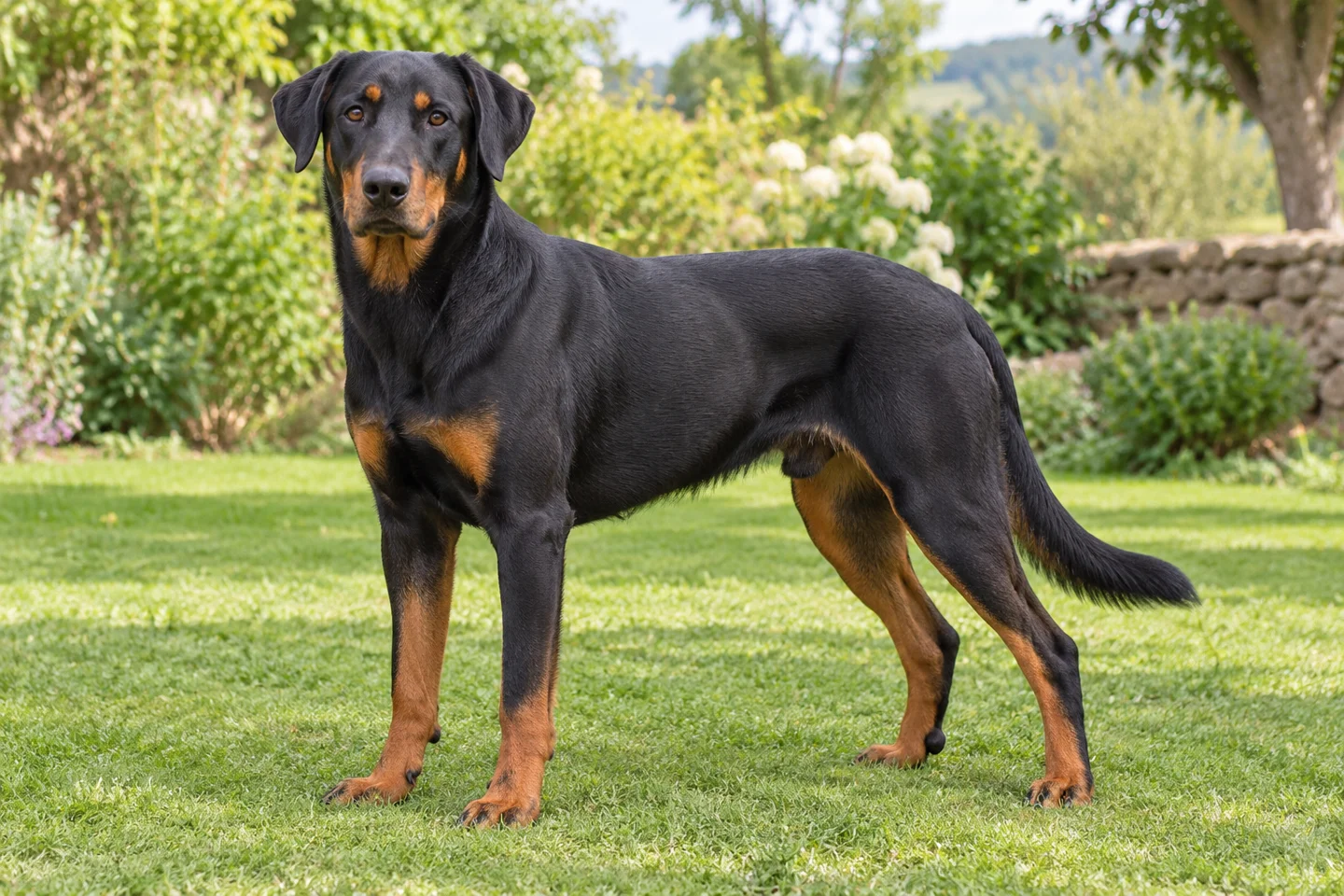
The Beauceron has a substantial athletic outline, a short coat, and a long natural tail. Black and tan is familiar, and a harlequin pattern is also described in the standard. The illustrations show black-and-tan generated examples with natural ears. They are not records of particular dogs or medical reference images. Watch a real dog move, turn, and rise comfortably rather than selecting primarily for muscle, height, or a sharply posed photograph.
Double dewclaws on each rear leg are a characteristic standard feature. They need inspection and nail care like other nails, without an owner assuming that every visible extra nail is a problem or that a torn one can be ignored. Ask the veterinarian to assess injury or discomfort. Fit equipment to actual measurements and check through growth. Teach standing for care while the dog is easy to handle. Adult strength makes comfortable cooperation more useful than relying on physical restraint during every routine task.
Gates, vehicles, and strong-dog handling
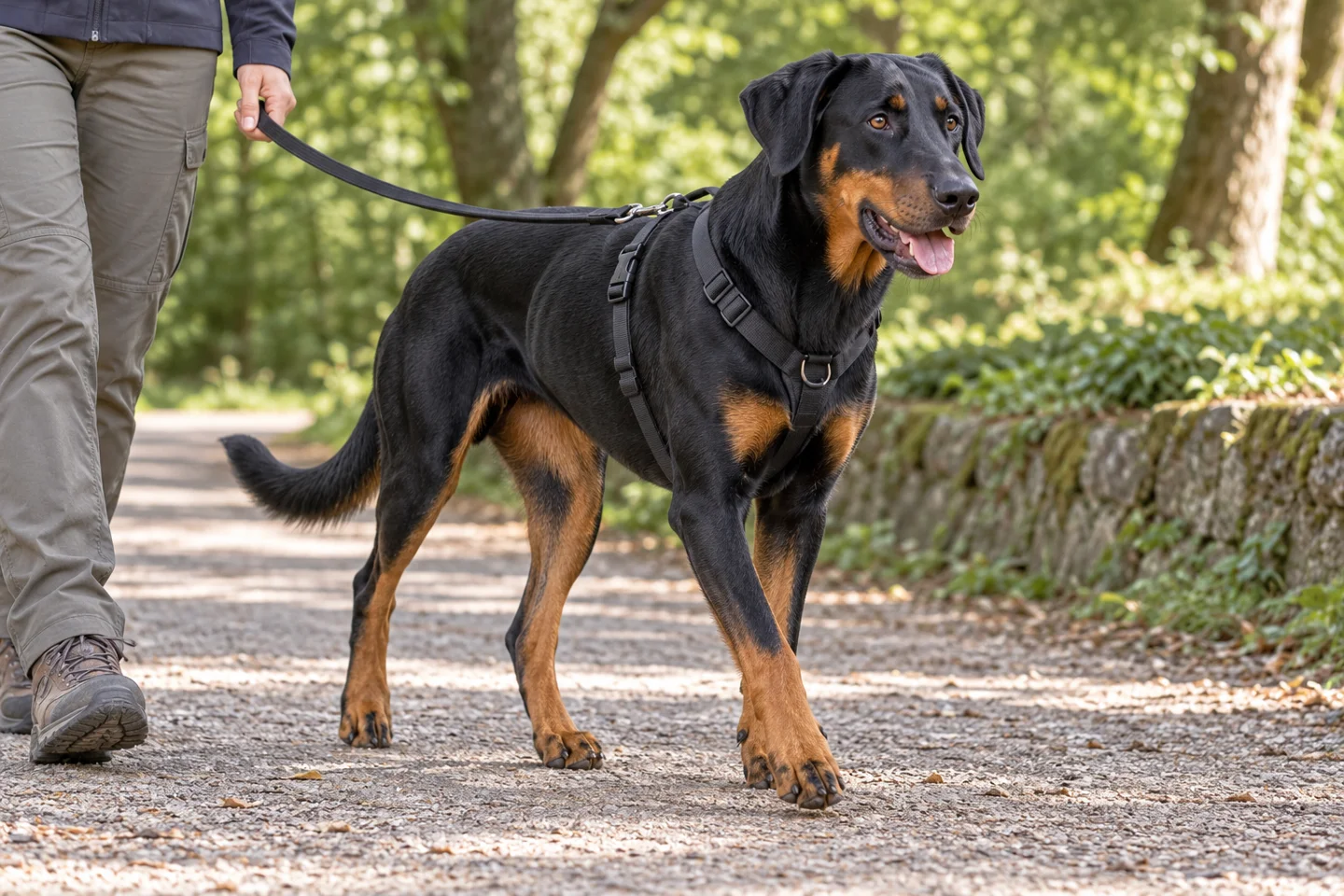
Inspect boundaries and agree an access routine that every household member follows. A second barrier can help when vehicles enter or visitors wait at a door. Attach the lead before opening an exterior entrance and practice calm waiting in easy conditions. Reliable equipment matters, including secure clips and a harness that fits without restricting shoulders. Identification and a microchip are useful backups while a predictable routine prevents the escape itself. Do not assume a large dog will remain close because it knows the owner well.
Teach vehicle entry and secure travel before a long trip or urgent appointment. Consider how an injured adult would be moved without requiring one person to lift its full weight. A suitable ramp can be learned gradually. Backup carers need practical experience with the dog's equipment and door rules, not only general confidence with dogs. Ask them to complete a trial walk while you remain available. Correct difficulties before an emergency absence requires someone to manage the animal alone in unfamiliar circumstances.
Alertness and managing visitors
A watchful dog may react differently at its home boundary than on a quiet public route. Reduce repeated fence or window rehearsal where possible and teach movement to a familiar station. Secure the dog before admitting contractors or unfamiliar guests. Visitors should not approach, stare at, or reach over an animal showing uncertainty. The owner decides access and provides space. A protective description cannot establish that the dog recognizes who belongs or that every warning will remain only vocal.
Reward relaxed observation without requiring a physical greeting. A comfortable separate room may be the most workable arrangement during a busy visit. If the dog cannot recover or threats recur, obtain professional help and review the environment. Avoid deliberately provoking a display to evaluate courage or loyalty. A household needs reliable barriers and a clear routine rather than a belief that guests will be accepted once they demonstrate friendly intentions through continued approach to an already concerned dog.
Children and movement in the home
Children need active adult supervision with a Beauceron. Size and sudden movement make accidental collisions consequential, and an interest in controlling movement can create unwanted chasing or clothing grabs. Prevent rehearsal with barriers before energetic games begin and teach an alternative response at a manageable difficulty. Calling the behavior herding does not make it pleasant or safe. Children should not be responsible for stopping, correcting, or restraining an excited dog while adults watch from a distance.
Quiet contact needs boundaries as well. Prevent hugging, climbing, pulling, and leaning over the face. Keep meals, chews, and sleeping places free from interference and let the dog leave. Visiting children need the rules explained, with separation when attention is divided. A familiar family routine does not establish tolerance of every party or unfamiliar friend. Review arrangements when children become mobile or the dog develops pain, and provide a retreat children cannot enter even when they want to continue interacting.

Other dogs, cats, and livestock
Assess dog compatibility individually. Begin introductions with parallel walking on neutral ground and room to disengage. At home, separate bowls, chews, and rest areas while observing comfort. Watch for blocking, hovering, or repeated pursuit, especially where one dog is trying to leave. Both animals need pauses and control over distance. A strong dog enjoying a game can still cause injury through collisions or pressure, so the recipient's behavior matters as much as the owner's impression of enthusiasm.
Cats need gradual introductions and secure escape routes, while smaller pets require protection rather than an informal test of intentions. Familiarity with one cat does not predict safety with a running stranger outside. Stock work requires experienced instruction, suitable animals, and controlled facilities. A pedigree does not teach a puppy the right amount of pressure or make it safe with vulnerable livestock. Stop access if fixation or chasing appears and seek help before repeated rehearsal or injury reduces the household's options.
Aggression and useful warnings
Stiffness, freezing, hard staring, growling, snapping, or efforts to retreat mean pressure should stop. Increase space and consider what preceded the response, including handling, food, rest, and escape routes. Avoid cornering the dog or repeatedly taking a valued object to establish authority. Breed identity cannot determine safety in a specific encounter. Practical barriers and separate resources protect people and animals while the owner obtains an assessment rather than asking someone to test the same unresolved situation again.
New irritability or sensitivity during handling warrants veterinary examination. Pain and illness can affect tolerance before obvious loss of activity. Keep a factual incident record and consult a veterinary behaviorist or qualified reward-based professional for recurring threats. Punishing warnings can obscure risk while leaving discomfort or fear unresolved. A basket muzzle introduced gradually with rewards may add protection within an appropriate plan, alongside treatment and management. It cannot make unwanted contact comfortable or replace supervision and suitable distance.
Training cooperation before adding difficulty
Reward attention to a name, a hand target, waiting at doors, and exchanging objects. Begin in quiet conditions and add duration and distraction gradually. Use rewards meaningful to the individual, including food, suitable games, and access to an appropriate sniff. A dog that learns quickly can also learn unintended sequences. Review what barking, pulling, or jumping achieves before assuming repeated commands have explained the alternative. Clear daily consequences provide more information than a contest over physical strength.
Teach standing for equipment, foot inspection, and settling while people move nearby. Short understandable sessions help both dog and owner remain patient. Reward-based coaching can improve timing and handling without repeated jerks or forced positions. Skills learned at home need practice elsewhere, and safeguards remain necessary near hazards. A useful plan includes a predictable finish to play, so activity does not restart whenever the dog demands it. Comfortable everyday cooperation matters more than an impressive performance that occurs only in one familiar training space.
Exercise, sport, and physical preparation
Provide daily movement matched to age, health, and conditioning. Walks with investigation, controlled games, scent work, and suitable training can create variety. Build endurance before long hikes or demanding sports. Puppies need sleep and age-appropriate exploration, with repeated high-impact exercise discussed with their veterinarian. A working reputation does not make every individual ready for strenuous activity, and an eager dog may continue despite fatigue. Watch gait and recovery rather than relying only on willingness to keep going.
Persistent limping, reluctance to rise, or slow recovery needs assessment. Check paws and nails after rough terrain, including rear dewclaws. In heat, shorten activity and provide shade and drinking water; collapse or severe breathing difficulty requires urgent advice. A sustainable routine includes quiet days and a comfortable end to games. More exercise may build fitness without resolving anxiety or constant anticipation. Avoid compensating for every missed outing through frantic indoor chasing that makes rest harder for the dog and household afterward.
Grooming and comfortable body checks
Brush the short coat regularly and inspect skin beneath equipment. A tidy appearance can hide irritation, parasites, or small wounds. Bathe when needed with suitable products and dry comfortably. Introduce nail care, tooth brushing, ear inspection, and gentle body checks through brief rewarded steps. Stop to investigate a new objection to familiar touch. Persistent ear odor, discharge, or pain needs veterinary advice rather than deep cleaning or medication left from another episode with similar-looking signs.
Tell clinic staff about handling concerns before arrival so the appointment can be planned. A strong adult is easier to assess when cooperation has been taught, but necessary treatment should not wait for perfect training. Ask for help when a task becomes painful or frightening rather than completing a prolonged restraint session merely to finish. Keep notes of new lumps, skin changes, or intermittent discomfort. Accurate observations help the veterinarian assess a problem without an owner repeatedly provoking it to demonstrate the response.
Health screening and reading results
The AKC lists hip, cardiac, and ophthalmologist evaluations among national club recommendations for Beaucerons. Request actual reports linked to identifiable parents and read dates, methods, and findings. A routine puppy examination answers different questions from formal adult screening. Ask how the breeder's current program accounts for relevant family illness. A statement that a dog works well or looks athletic is insufficient detail about what was assessed, and a report needs interpretation rather than acceptance based only on the word tested.
A CHIC number records completion and disclosure of specified testing, not a guarantee that every result was normal. DNA panels cover selected variants and cannot exclude all inherited or acquired disease. New eye pain, persistent movement changes, weakness, or behavioral changes needs investigation regardless of previous screening. For an adopted adult with missing records, state the gaps and make a preventive plan from current findings. Ordinary vaccination, parasite, dental, and travel considerations remain important alongside questions about inherited concerns and family history.
Feeding, mixes, and source selection
Use a complete diet suited to age and health, including appropriate large-breed growth nutrition when relevant. Measure portions and count training rewards within the allowance. Ask the veterinarian to assess ribs, waist, muscle, and growth rather than feeding toward an unusually imposing size. Feed separately from children and other animals and teach exchanges without confrontation. Avoid supplements without a veterinary reason and obtain qualified guidance for home-prepared meals. Persistent changes in appetite, thirst, weight, or digestion needs assessment rather than repeated unplanned food changes.
A Beauceron mix can vary in outline, coat, alertness, and response to movement. Black-and-tan markings or rear dewclaws cannot confirm a particular ancestry. Ask what is documented and assess actual needs. Mixed ancestry does not guarantee fewer inherited concerns or easier behavior. A useful source discusses visitors, absences, cats, transport, handling, family records, and early experiences honestly. Read contracts and reports carefully and avoid choosing primarily for strength, rarity, or a promise that the dog will provide protection without extensive management and care.
Costs, later life, and dogsDating
Budget for food, strong suitable equipment, fencing, preventive care, training support, emergency treatment, and backup care capable of handling adult size. Practice a short stay with a trusted carer and leave written routines and veterinary contacts. In later years, review footing, bedding, transport access, and recovery. New reluctance to rise or handling sensitivity can indicate pain. Know how an injured adult would reach urgent care without requiring one person to lift its full weight, and retain suitable learning with physical demands adjusted to comfort.
For dogsDating, describe individual experience and preferred distance while keeping exact home coordinates private. Choose a quiet public route outside the dog's boundary for parallel walking with separate capable adult handlers. Leave shared toys and food out of the first meeting. Increase space or end if either dog stiffens, becomes overwhelmed, or repeatedly controls the other's movement. A calm walk is useful without greeting or play. It does not establish readiness to share a home, vehicle, or valued resource without further assessment.
Practicing the appointment before it is necessary
Arrange a calm rehearsal of entering the clinic, standing on a scale, and resting while someone speaks to the owner. Ask staff which parts can be practiced without a full examination. A large dog that already understands those tasks may find a later necessary visit easier. Reward the behavior you want and finish before the dog becomes overwhelmed, rather than using the rehearsal to test how much handling it will tolerate.
Include another trusted adult in the plan. Let that person fit the harness and complete a familiar short walk while you remain available. Provide written instructions about doors, resources, medication, and the situations where distance is required. Strength alone does not prepare someone to handle the individual. A successful trial gives useful evidence that backup care will work if illness or travel changes the normal household routine.
Sources and editorial notes
Sources checked October 21, 2026. Breed measurements describe reference ranges, not a diagnosis or an individual dog's ideal weight. Images are AI-generated breed illustrations and do not document a particular dog or health condition.
- VCA Animal Hospitals: Hypoallergenic dog breeds
- Orthopedic Foundation for Animals: CHIC program and interpretation of numbers
- VCA Animal Hospitals: Ear infections in dogs
- VCA Animal Hospitals: Food aggression in puppies
- American Kennel Club: Relevant national breed-club health testing recommendations
- VCA Animal Hospitals: Heat stroke in dogs
- American Kennel Club: Beauceron breed identity and care
- VCA Animal Hospitals: Aggression toward unfamiliar dogs, diagnosis
- American Beauceron Club: Illustrated breed standard and double rear dewclaws
- AVSAB: Humane Dog Training Position Statement
Keep getting to know dogs.
Read another guide or return to your dogsDating community.
Explore breed guidesBack to dogsDating