Belgian Malinois
An athletic Belgian shepherd whose care requires sustained teaching, learned rest, controlled play, secure management, and individual assessment beyond working videos.
How these guides are researched and reviewed
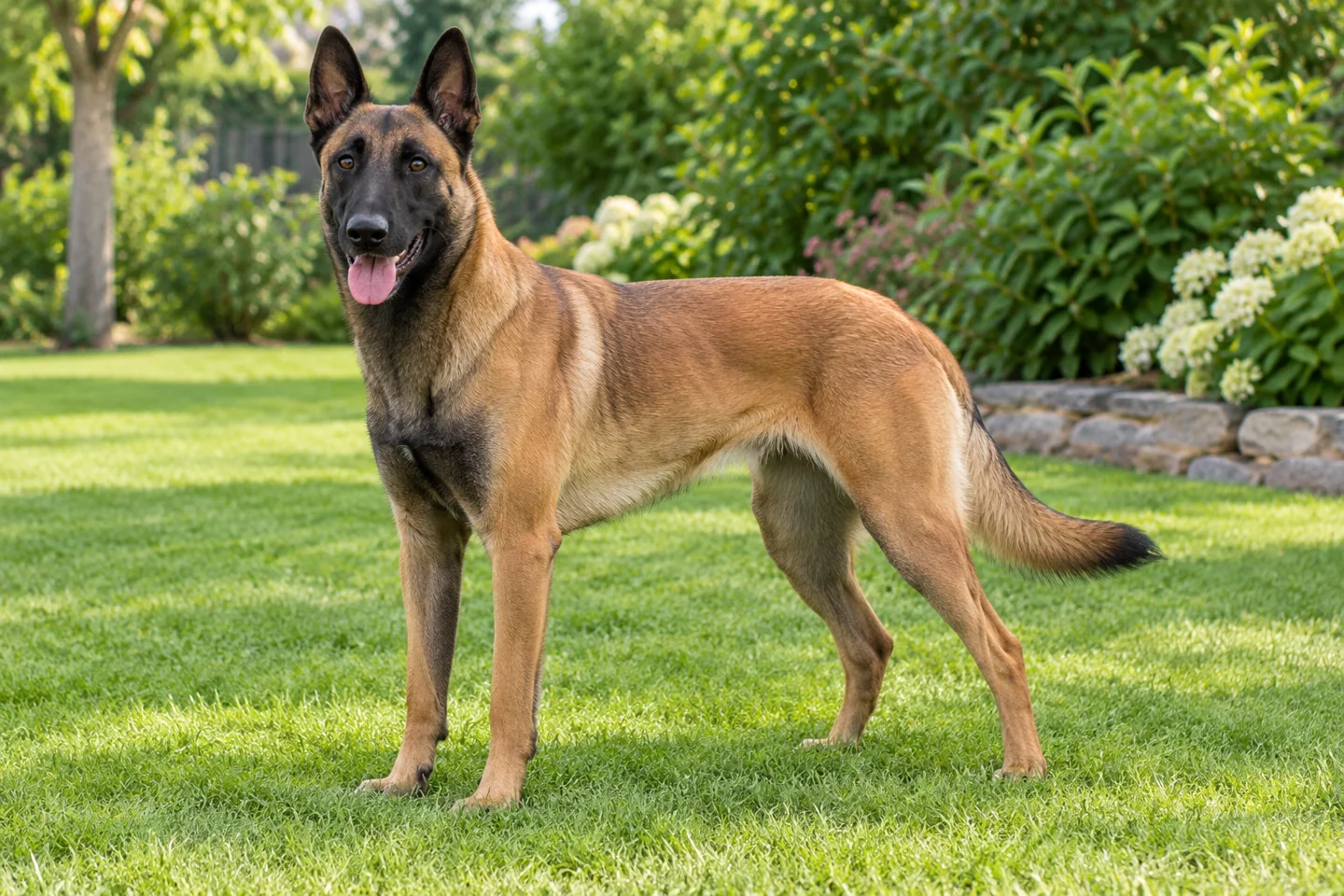
- Coat
- Short fawn coat with dark mask
- Registry context
- Belgian Shepherd variety in FCI system
- Care priorities
- Rest, cooperation, safe play, and health records
General information for owners. These articles have not been reviewed by a veterinarian. Medical decisions need your dog's history and an examination.
Choosing a Belgian Malinois
A Belgian Malinois needs an owner prepared for sustained teaching, suitable activity, secure management, and deliberate practice of rest. A video of a skilled working dog shows a particular animal, handler, and training history. It does not show what daily care will be like in your household. Before adopting, decide who will manage walks, visitors, necessary care, and quiet periods. A plan based on constant exercise or an imagined protective role leaves important needs unresolved when ordinary life interrupts training.
Meet adults and ask about behavior outside a working field. Find out what happens when play stops, people leave, a visitor arrives, or another dog approaches. Family selection and upbringing matter alongside individual differences. An adult with a well-described foster history may offer clearer information than a puppy chosen for appearance or a famous ancestor. A source should discuss limitations and support after placement honestly. Choose according to care you can maintain for years, including injury, ageing, and changes in the owner's health.
Belgian identity and working selection
The Malinois developed within Belgium's native shepherd-dog population. Modern organizations use different naming systems: the FCI treats Malinois as a Belgian Shepherd variety, while the AKC recognizes Belgian Malinois as a separate breed. Ask which registry issued a record and what exact name appears. Those systems do not by themselves establish that an individual is more capable, easier to live with, or suitable for a particular job. Recent family information and actual assessment remain necessary.
The Malinois is distinct from the German Shepherd Dog, despite a broadly familiar fawn-and-dark appearance. A short coat and black mask cannot confirm rescue ancestry. Working, sport, and companion descriptions also need clarification through the parents' actual activities and behavior, rather than being treated as standardized promises. A title records an achievement in a defined context. It does not guarantee household settling, tolerance of children, compatibility with cats, or the owner's ability to manage the dog safely without continued instruction.
Athletic outline and functional assessment
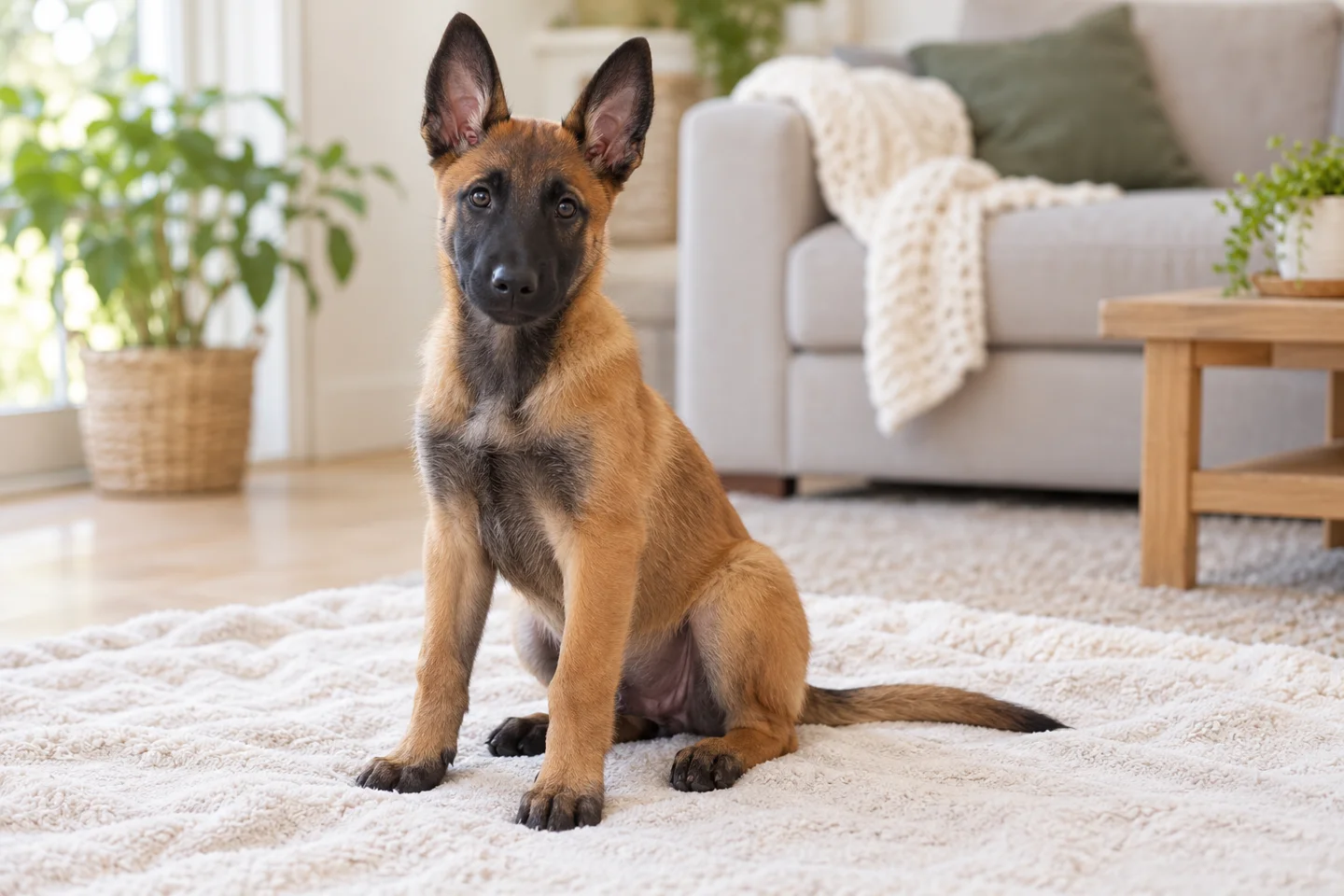
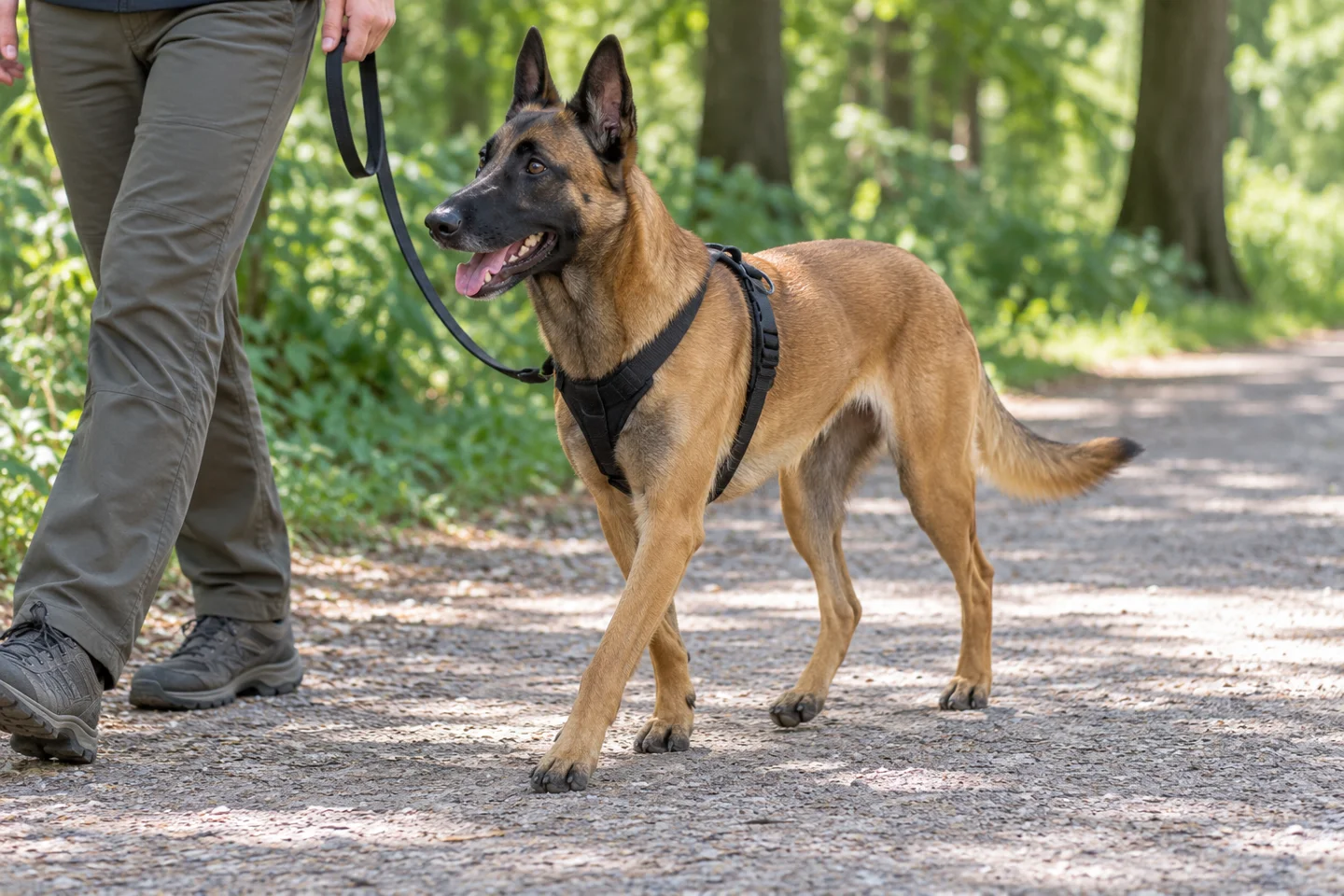
The breed has a relatively square athletic outline, a short coat, erect ears, a dark mask, and a long natural tail. The illustrations show moderate generated examples rather than documented dogs, medical reference images, or proof of ideal condition. A lean appearance should be assessed through weight trends, muscle, movement, and clinical findings. Ask a veterinarian to demonstrate body-condition checks rather than assuming visible structure is always healthy or feeding toward a heavier breed's silhouette.
Watch a real dog walk, turn, rise, and recover after activity. Persistent stiffness, uneven movement, or reluctance to be touched deserves assessment even when the dog remains keen to work. Fit equipment to actual chest and shoulder measurements and inspect for rubbing. Puppies need repeated adjustment during growth. Teach calm fitting and waiting at doors. Reliable clips, readable identification, and a rehearsed access routine reduce the number of moments that depend on a handler physically stopping a dog after it has already committed to movement.
A daily plan that includes an off switch
Suitable activity should fit alongside genuine rest. Provide a comfortable sleeping place away from repeated window triggers and teach settled periods while someone remains nearby. A dog lying down while watching every hand movement may still be anticipating another task. Use a predictable end to play and allow sleep. If activity restarts whenever the dog demands more, review the sequence and teach a different way to obtain attention rather than increasing exercise indefinitely.
Persistent pacing, inability to settle, or constant distress deserves veterinary and behavioral assessment. More exercise can build fitness without resolving anxiety or repeated anticipation. A sustainable routine needs to work during bad weather, a busy workday, and temporary owner illness. Short walks, manageable searches, and calm cooperative tasks can remain useful without frantic indoor chasing. Ask a qualified instructor to help design an individual plan that measures recovery and comfort as well as enthusiasm, speed, or the amount of work completed.
Mouthy play and safe alternatives
Young dogs may explore or play with their mouths, but repeated grabbing of people or clothing needs management and teaching. Arrange appropriate toys, short sessions, and a clear finish, interrupting before arousal becomes difficult to manage. Do not encourage biting sleeves or chasing household members as entertainment. Children and visitors should not be expected to tolerate unwanted contact or correct the dog. A behavior being common in a selected working context does not make it acceptable in an ordinary social interaction.
Teach delivery, release, and exchanges cooperatively, using rewards the dog values. Avoid chasing it to recover a toy or forcing the mouth open during a dispute. If contact escalates, causes injury, or cannot be interrupted safely, seek qualified help and veterinary assessment where appropriate. Professional working disciplines involve structured instruction and specific responsibilities. A household should not improvise protection training or provoke aggression to evaluate loyalty. Everyday safe handling and predictable boundaries are necessary regardless of any future sport or working ambition.
Children and movement-related pressure
Children need active adult supervision with a Malinois. Running, shouting, and sudden changes of direction can increase excitement or pursuit. Prevent chasing and clothing grabs with physical separation before energetic games begin, and teach alternatives at a manageable difficulty. Calling unwanted contact herding or high drive does not make it pleasant or safe. A child should never be responsible for stopping, correcting, or restraining an excited dog. Adults manage the environment and seek help when repeated incidents have already occurred.
Quiet contact requires boundaries too. Avoid hugging, climbing, pulling, and leaning over the face. Keep children away from meals, chews, and sleeping places, and let the dog leave. Visiting friends need the rules explained, with a retreat children cannot enter. Comfortable behavior with familiar family members cannot establish tolerance of every crowded gathering. Review arrangements when a baby becomes mobile, the dog develops pain, or new games change the home environment. Watch freezing, turning away, and efforts to escape before warnings escalate.
Visitors, boundaries, and public access
Reduce repeated fence or window reactions where possible and teach a familiar station away from the entrance. Secure the dog before unfamiliar guests or contractors arrive. Visitors should not stare at, lean over, or follow an animal trying to withdraw. The owner controls access and provides space rather than asking someone to prove friendly intentions through continued approach. A protective description cannot establish that the dog recognizes suitable targets or will always make the decision the owner expects.
Reward relaxed observation without requiring greeting. A comfortable separate room may be the workable choice during busy gatherings. If threats recur or recovery remains difficult, obtain professional help and review the setup. Choose public routes and appointments with enough room to move away from triggers. A crowded venue is not a necessary test of training. A good life can include quiet outings and predictable arrangements without requiring the dog to tolerate every unfamiliar person at close range or attend every human social event.
Other dogs, cats, and livestock
Assess dog compatibility individually. Begin introductions with parallel walking in neutral surroundings and room to disengage. At home, separate resources and resting areas while observing comfort. Both dogs need pauses and control over distance. Repeated blocking, intense pursuit, or preventing another dog from resting deserves interruption. A highly active dog's apparent enjoyment does not establish that the recipient welcomes the interaction, and collisions or pressure can cause injury even without an obvious fight.
Cats need gradual introductions and secure escape routes. Familiarity with one cat does not predict safety with a running stranger outdoors. Small pets need protection rather than an informal test of intentions. Stock work requires experienced instruction, appropriate animals, and controlled facilities; ancestry does not teach a puppy the right amount of pressure. Stop access when stalking, fixation, or chasing appears and seek help. The household needs reliable separation while assessing whether this individual and its resident animals can be accommodated safely together.
Aggression and preserving warnings
Stiffness, freezing, hard staring, growling, snapping, or attempts to retreat mean pressure should stop. Increase space and review the context, including handling, food, sleep, and escape routes. Avoid cornering the dog or repeatedly removing a valued item to establish authority. Breed identity cannot determine safety in a specific encounter. Barriers and separate resources protect people and animals while the owner obtains an assessment rather than asking someone to repeat the same unresolved situation or relying on physical strength to win a confrontation.
New irritability or sensitivity during touch warrants veterinary examination. Pain and illness can affect tolerance before obvious loss of activity. Keep a factual incident record and consult a veterinary behaviorist or qualified reward-based professional for recurring threats. Punishing warnings can obscure risk while leaving fear or discomfort unresolved. A basket muzzle introduced gradually with rewards may add protection within an appropriate plan, alongside management and treatment. It cannot make unwanted contact comfortable or replace supervision, suitable distance, and an opportunity to leave.
Exercise and physical conditioning
Provide daily movement matched to age, health, and fitness. Walks with investigation, controlled games, scent work, and suitable training can create variety without repeated maximum-speed effort. Build endurance before long hikes or demanding sports. Puppies need sleep and age-appropriate exploration, with repeated high-impact exercise discussed with their veterinarian. A working reputation does not establish that every individual is physically ready for strenuous activity, and eagerness may persist despite fatigue or discomfort the handler needs to notice.
Watch gait after activity and after rest. Persistent limping, reluctance to rise, or slow recovery needs assessment. Inspect feet and skin after rough vegetation. In heat, shorten outings and provide shade and drinking water; collapse or severe breathing difficulty requires urgent advice. Secure exercise areas need inspection before release, including surfaces and gates. Recall practice does not justify off-lead access beside traffic, stock, or wildlife. Identification and a tracker are backups while a lead, sound boundary, and suitable decisions prevent the initial danger.
Grooming, teeth, and cooperative care
Brush the short coat regularly and inspect skin beneath equipment. A tidy appearance can hide parasites, irritation, or small wounds. Bathe when needed with suitable products and dry comfortably. Introduce nail care, tooth brushing, ear inspection, and gentle body checks in brief rewarded stages. Stop to investigate a new objection to familiar touch. Persistent ear odor, discharge, or pain needs veterinary advice rather than deep cleaning or medication left from an earlier episode with similar-looking signs.
Tell clinic staff about handling concerns before arrival so the visit can be planned. A strong athletic adult is easier to assess when cooperation has been taught, but necessary treatment should not wait for perfect training. Ask for help when a task becomes painful or frightening rather than completing a prolonged restraint session simply to finish. Keep notes of new lumps, skin changes, or intermittent discomfort. Accurate observations help assessment without an owner repeatedly provoking a response to demonstrate it.
Health screening and family information
The AKC lists hip, elbow, and ophthalmologist evaluations among national club recommendations for Malinois. Request actual identifiable reports and read dates, methods, and findings. A routine puppy visit answers different questions from formal adult screening. Ask how the breeder's current program accounts for relevant family illness. A statement that a dog performs athletically or has never looked unwell is insufficient detail about what was assessed, and a report needs interpretation rather than acceptance based only on the word tested.
A CHIC number records completion and disclosure of specified testing, not a guarantee that every result was normal. Broad DNA panels cover selected variants and cannot exclude all inherited or acquired conditions. New seizures, weakness, eye pain, persistent movement changes, or altered behavior needs clinical investigation rather than diagnosis from a breed description. For an adopted adult with missing records, acknowledge gaps and plan from current findings. Ordinary vaccination, parasite, dental, and travel considerations remain important alongside inherited concerns and relevant family history.
Food, mixes, and lifelong commitment
Use a complete diet appropriate to age and health, measure portions, and count training rewards within the allowance. Adjust using weight trends, muscle, and body condition rather than appetite or a desired extreme outline. Feed separately from children and other animals and teach exchanges without confrontation. Avoid supplements without a veterinary reason and seek qualified guidance for home-prepared meals. Persistent changes in appetite, thirst, weight, or digestion need assessment rather than repeated unplanned food switches or an assumption that a working dog cannot be ill.
A Malinois mix can vary in coat, size, activity, alertness, and pursuit behavior. A fawn coat and black mask cannot confirm ancestry, and mixed parentage does not guarantee easier care or fewer inherited concerns. Ask what is documented and assess actual needs. Budget for suitable equipment, secure boundaries, preventive care, instruction, emergency treatment, and backup care capable of handling the individual. Practice a trial stay and leave written routines. In later years, review footing, transport, rest surfaces, and recovery so pain receives attention rather than being labeled unwillingness to work.
A controlled dogsDating meeting
Describe this dog's actual experience and preferred distance in its dogsDating profile, keeping exact home coordinates private. Choose a quiet public route outside its boundary, with room for parallel walking and separate capable adult handlers. Begin far enough apart that both dogs can investigate and respond. Avoid crowded entrances and immediate fast play. A meeting should fit current abilities rather than become a test of whether an owner can insist on a close greeting or prove the dog's sociability through pressure.
Leave shared toys and food out of the first outing. Increase space or end if either dog stiffens, becomes overwhelmed, pursues persistently, or cannot recover after a pause. Both should be able to disengage. A calm walk can provide useful information without physical greeting or play. Discuss the setting and distance that worked rather than declaring compatibility everywhere. A successful public outing does not establish readiness to share a home, vehicle, or valued resource without further assessment and appropriate management.
Choosing instruction for a companion goal
Ask a prospective instructor how the first sessions will address ordinary life: calm equipment fitting, recovery after play, safe movement around distractions, and comfortable care. The answer should fit your dog’s current behavior rather than assume a particular sport or working ambition. Observe whether the class allows enough distance and breaks. An owner should leave understanding what to practice at home and how to recognize that the exercise is too difficult.
Keep a simple record of successful conditions, including location, distraction level, duration, and recovery. That makes progress easier to evaluate than judging only the intensity or speed of a performance. If the dog remains highly aroused long after a session, review the plan with the instructor and veterinarian as appropriate. The aim is a routine that improves daily welfare and handling, including the days when formal training is brief.
Sources and editorial notes
Sources checked October 21, 2026. Breed measurements describe reference ranges, not a diagnosis or an individual dog's ideal weight. Images are AI-generated breed illustrations and do not document a particular dog or health condition.
- VCA Animal Hospitals: Hypoallergenic dog breeds
- Orthopedic Foundation for Animals: CHIC program and interpretation of numbers
- American Belgian Malinois Club: Ownership and health questions
- VCA Animal Hospitals: Ear infections in dogs
- VCA Animal Hospitals: Food aggression in puppies
- American Kennel Club: Relevant national breed-club health testing recommendations
- VCA Animal Hospitals: Heat stroke in dogs
- American Kennel Club: Belgian Malinois breed identity and care
- VCA Animal Hospitals: Aggression toward unfamiliar dogs, diagnosis
- FCI: Belgian Shepherd Dog standard and four varieties
- AVSAB: Humane Dog Training Position Statement
Keep getting to know dogs.
Read another guide or return to your dogsDating community.
Explore breed guidesBack to dogsDating