Catalan Sheepdog
A Catalonian flock-driving sheepdog whose shaggy coat and active attention need thoughtful handling, everyday instruction, and room to rest.
How these guides are researched and reviewed
- Origin
- Catalonia, Spain
- Appearance illustrated
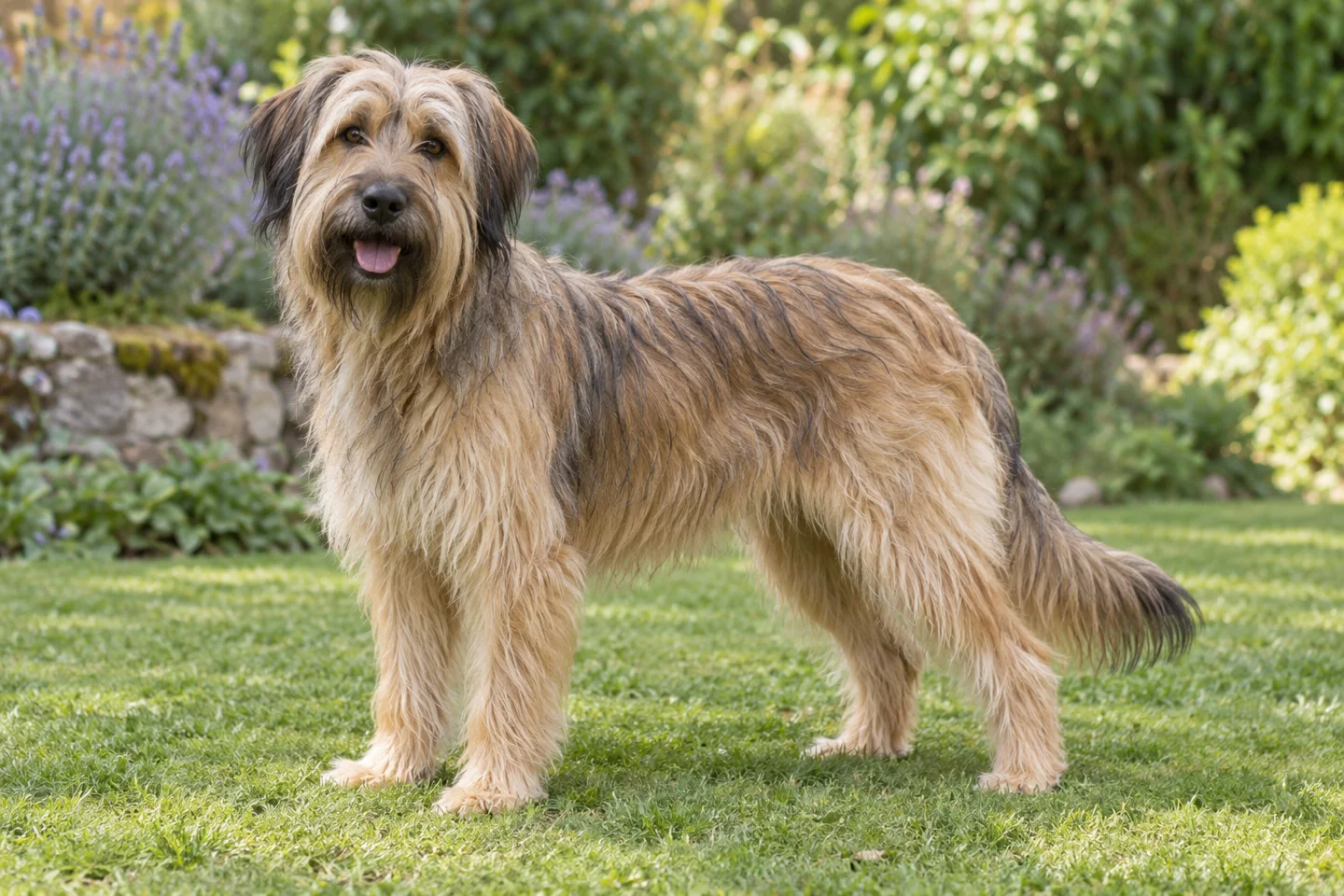
- Fawn-sable mixed hairs, long rough coat, natural hanging ears and full tail
- Adult size reference
- FCI height: males 47–55 cm; females 45–53 cm
General information for owners. These articles have not been reviewed by a veterinarian. Medical decisions need your dog's history and an examination.
A sheepdog needs a place in the daily routine
A Catalan Sheepdog fits a household that enjoys giving a dog useful instruction throughout an ordinary day. Walking together, waiting while a gate opens, finding a hidden toy, and settling while someone cooks can provide a practical framework. The important question is whether the household will teach those activities consistently. A dog that repeatedly discovers its own ways to control movement may become difficult to live with, even when its owners provide plenty of outdoor time.
Picture the busiest hour in your home before deciding to bring one home. People may be arriving, children changing clothes, and another dog asking to go outside. Decide where a new dog can rest during that movement and who will supervise its first weeks. A separate sleeping area, predictable toilet trips, and access to quiet walks give the household a starting point. The attractive shaggy coat is only one part of the commitment. Daily attention to behavior, handling, and the dog's comfort matters just as much.
Catalonian roots and the work behind the name
The Fédération Cynologique Internationale identifies this breed as originating in Catalonia, Spain, particularly its Pyrenean pastoral regions. Its standard describes a sheepdog that drives flocks and can make decisions during that work. The Catalan name Gos d'Atura Català and the English name Catalonian Sheepdog refer to this same breed. They do not refer to every shaggy sheepdog found in Spain.
That working description gives owners useful questions to ask, without predicting an individual puppy's personality. Ask whether its relatives have lived in a town, how they respond to unfamiliar visitors, and what their owners do when livestock or traffic is nearby. A breeder should describe particular dogs and experiences. Describing every relative as wonderful tells you little about how they behave. An adult rescue can offer different evidence, including observations from a foster home. Find out which situations staff have actually seen and which remain untested. The answer helps you plan introductions, fencing, transport, and early training around the dog you are considering.
Adult size and the shape beneath the hair
The FCI height ranges are 47 to 55 centimeters for males and 45 to 53 centimeters for females, measured at the withers. These describe standard adult height, not a growth schedule for puppies. The body is slightly longer than tall. Coat can make an individual look broader or heavier than it feels when examined gently with your hands.
These illustrations show a fawn and sable mixture of hairs, hanging triangular ears, and a full natural tail. The standard describes a rough, long coat with beard, moustache, and eyebrows. It also describes double hind dewclaws. A picture cannot establish pedigree or show whether a dog has healthy joints, comfortable skin, or an appropriate body condition. When meeting a dog, watch it move on a level surface and ask about any persistent stiffness. Make sure the car restraint, bed, and walking equipment fit its actual dimensions. Recheck the fit while a youngster grows, especially when thickening hair hides straps that have become tight.
Training begins with small, repeatable decisions
Start by choosing a few behaviors that make daily life easier. Teach the dog to approach its mat, follow a hand target, turn with you, and wait while you clip on a lead. Work in a quiet room before attempting these skills beside a busy path. Reward the action you want while it is still easy enough for the dog to repeat. Long sessions filled with increasingly difficult requests can leave both handler and dog frustrated.
Practice around movement in manageable steps. One person can take a few slow steps while another rewards the dog for remaining beside them. Increase distance or speed gradually, changing one thing at a time. If the dog starts circling, barking, or grabbing clothing, reduce the difficulty and reorganize the space. Chasing a dog that has stolen a sleeve can turn the incident into another exciting game. Use barriers and supervised leads thoughtfully, never leaving a trailing lead where it could catch unattended. Reward based teaching lets the household explain its expectations without frightening the dog into silence.
Aggression and controlling movement need careful assessment
When a dog blocks a doorway, follows visitors closely, or snaps at a running person, describe the sequence precisely. Who moved first, how close were they, and what was the dog doing beforehand? The word herding does not make an unsafe interaction acceptable. Owners need to prevent another incident while they investigate what prompted it. Put a secure barrier between the dog and the situation instead of asking someone to repeat the movement for a video.
Arrange veterinary assessment for new or escalating behavior, particularly if touching or moving the dog has become difficult. Pain and other medical problems need consideration alongside learning history and the environment. A qualified behavior professional can help design a plan that uses distance, predictable handling, and gradual practice. Avoid punishing a growl or deliberately approaching a guarded item. Those choices can increase conflict and remove information about the dog's discomfort. Tell future carers what happened in concrete terms. A household can make better decisions from an honest account than from reassurance that a sheepdog simply takes its duties seriously.

Children need room to move without being followed
Children may want to run from the kitchen to the garden, dance beside a television, or play tag with friends. Those activities need a plan when a young sheepdog is learning household rules. Place the dog in a comfortable separate area before the excitement starts, with an adult checking its needs. Children should not be responsible for preventing chasing or for correcting a dog that catches their clothes.
Teach calm shared activities when everyone has time to supervise. A child can place a food puzzle down while an adult keeps the dog at a comfortable distance, then step away before the dog approaches it. An older child may enjoy practicing a familiar cue with adult guidance. Stop while the interaction remains easy. Provide a resting place that children never enter, and keep meals, chews, and stolen items under adult management. A dog that has been relaxed with a child at home may react differently during a crowded birthday party. Supervision requires attention to the actual encounter and a willingness to separate early.
Other animals and introductions outside the household
Living with another dog requires more information than whether both dogs belong to herding breeds. Ask how each behaves around food, narrow passages, toys, and resting spaces. First meetings work best when both handlers have room to move and can leave without squeezing through a gate together. Begin with parallel walking at a comfortable distance. Allow observation without insisting on immediate nose contact.
At home, prepare separate feeding and sleeping arrangements before the new dog arrives. Give the established dog time with its usual people and routines. Cats need routes and resting places that the dog cannot reach, and any early contact should be closely managed. A cat that stands still during one introduction may run the next time. Poultry, rabbits, and other small animals require secure physical separation. Do not experiment with loose access to discover whether a working instinct appears. In rural settings, ask permission before approaching livestock, keep the dog controlled, and respect the distance requested by the person managing the animals.
Exercise should leave space for recovery
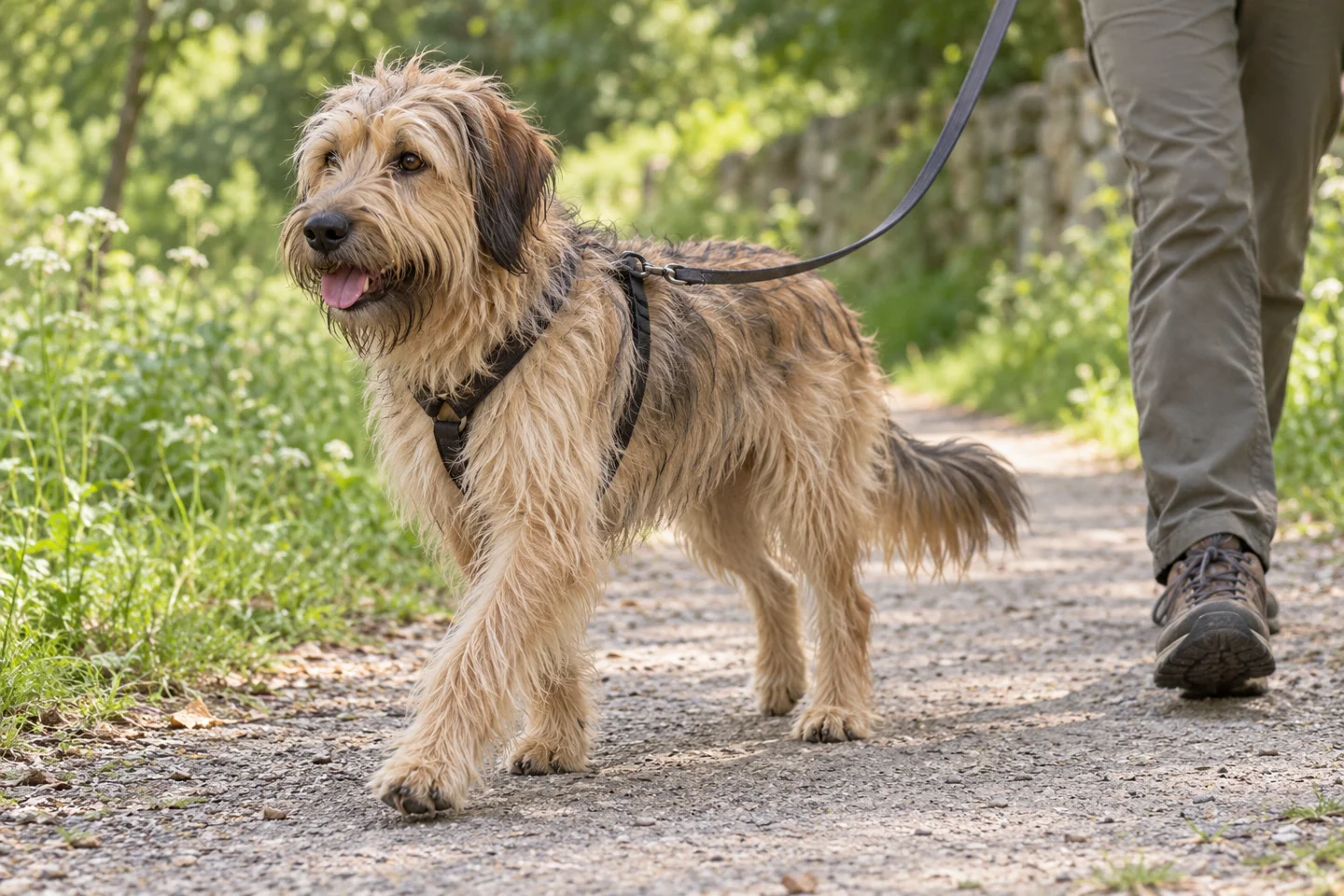
Build activity around the dog's age, condition, and current experience. An adult accustomed to regular walking may enjoy varied paths, searching games, and carefully introduced training sports. A puppy needs shorter outings with chances to sniff, rest, and stop. Ask your veterinarian about an appropriate progression for repetitive jumping, sustained running, or work over difficult ground. Hairy legs and apparent enthusiasm do not tell you how prepared the joints and muscles are.
Vary the demands within a week. After a long unfamiliar outing, choose an easier route and observe how the dog gets up after resting. Check paws after rough trails and avoid repeatedly throwing a ball down a slippery corridor. In warm weather, adjust the route and time to conditions, carry water, and choose places where you can leave quickly. Historical descriptions of working endurance do not establish heat safety for a pet. Heavy panting, weakness, confusion, or collapse warrant urgent veterinary contact. A good exercise routine supports comfortable movement and the ability to settle afterwards, rather than requiring constant excitement to keep the dog occupied.
Grooming a coat that changes in stages
The Catalan Sheepdog standard describes a moult that can begin over the front of the body and finish over the rear, temporarily producing an uneven appearance. This is useful context when the coat changes. It does not explain every bare patch, irritated area, or sudden increase in shedding. Ask a veterinarian about skin that looks sore, smells unusual, or appears uncomfortable when touched.
Learn to separate the hair and inspect down to the skin, particularly behind the ears, under harness straps, and where the legs meet the body. Work in small sections while the dog stands on a nonslip surface. A groomer familiar with this coat can demonstrate suitable tools and a realistic maintenance schedule. Reward short sessions before tangles become painful. Avoid pulling hard at a mat or placing scissors beside skin hidden under dense hair. After wet walks, check that the coat dries adequately, including beneath the outer hair. Keep records of products used if itching follows a bath so the veterinarian has a clear history.
Feet, dewclaws, ears, and cooperative handling
The double hind dewclaws described in the standard deserve deliberate attention during nail checks. Look at every nail rather than assuming walking has worn them all evenly. Ask a veterinarian or experienced groomer to identify each claw and demonstrate safe trimming. Do not attempt removal or improvise treatment when a claw catches and bleeds. Arrange professional care if it is torn, painful, or growing into nearby tissue.
Teach handling when nothing urgent is happening. Touch a shoulder briefly, reward, and release. Over several sessions, progress toward lifting a foot and looking between the toes. Stop if the dog becomes tense and make the next session easier. The beard can collect food or water, so include gentle face care without tugging at sensitive hair. Check ears for an unexpected smell, discharge, redness, or repeated head shaking, and ask your veterinarian which cleaning method is appropriate. Do not put cotton swabs deeply into the canal. Comfortable routine handling helps a dog tolerate necessary care and makes changes easier to notice early.
Feeding an active dog through different life stages
Choose a complete diet suitable for the dog's life stage, then measure the amount offered. Keep training rewards in the daily food calculation. Owners often increase treats during puppy classes, visitor practice, and recall training without noticing how much extra energy those sessions provide. Bring the food label and an honest estimate of extras to veterinary appointments so the feeding discussion starts with useful information.
Check body condition with your hands as well as your eyes. A generous coat can conceal gradual weight gain, and a photograph may hide a loss of muscle. Ask your veterinary team to show you what comfortable rib coverage and an appropriate waist feel like on your dog. Requirements can change when a working adult becomes less active, after illness, or during recovery from surgery. Adjust with professional guidance rather than using the breed's history to justify a particularly sparse diet. Persistent vomiting, diarrhea, appetite change, or difficulty maintaining weight deserves assessment. Supplements should answer an identified need, with the veterinarian checking the ingredients and the rest of the diet.
Health questions that produce usable evidence
Ask a breeder for the actual health records behind any claim that parents are tested. You need the dog's identity, the test or examination performed, its date, the result, and an explanation of what that result means. A list of tests copied from another herding breed cannot establish the right screening program for a Catalan Sheepdog. Consult the relevant breed club and your veterinarian about the available recommendations and the family you are considering.
For an adult dog, request records of previous treatment, recurrent skin or ear trouble, mobility concerns, and any medication. Tell your veterinarian about behavior changes, unusual fatigue, or reluctance to use stairs. Those observations can matter even when the dog continues eating. Make a practical emergency plan with the clinic's contact details, transport arrangements, and a car restraint that fits. Trouble breathing, collapse, major injury, seizures, or suspected poisoning require prompt professional advice. Keep this guide separate from individual diagnosis. Breed information helps owners ask better questions, while examination and appropriate testing determine what a particular dog needs.
Mixes require the same attention to the individual
A Catalan Sheepdog mix may have a different coat texture, adult size, or response to movement from either parent. Appearance cannot tell you which habits will emerge as a puppy matures. Ask how the ancestry was established and whether both parents are known. When they are available, meet them in an ordinary setting and discuss their daily routines. A confident statement about the mix's expected temperament needs evidence beyond a breed label.
Health screening also needs a clear explanation. A mixed pedigree does not cancel inherited risks or make every test from both parent breeds useful. Discuss the known family and proposed screening with a veterinarian. For a rescue of uncertain ancestry, observed behavior and medical records are more useful than assigning a precise percentage from a photograph. Plan grooming costs around the coat the dog actually develops. Do not assume a shaggy cross will shed little or remain easy to brush. Choosing a mix responsibly means accepting uncertainty and preparing for the adult dog's practical needs as they become clear.
Costs, housing, and choosing a responsible source
Budget for routine veterinary care, complete food, comfortable restraint equipment, fencing repairs, and help with coat maintenance. Include training and backup care before there is a problem. A dog that becomes distressed with unfamiliar carers may need carefully arranged introductions long before a holiday. Ask local professionals what they charge and whether they have experience handling an active shaggy sheepdog. Prices and availability vary enough that a universal monthly figure would mislead readers.
Check the daily limitations of the home honestly. Shared corridors, open front gardens, or a staircase used by visiting children need management that everyone can maintain. A rural address does not automatically provide a secure environment, particularly beside livestock or a road. A responsible source should explain the dog's history, give written records, discuss support if difficulties arise, and ask detailed questions about the intended home. Arrange time to read any agreement. If the answers leave important needs unresolved, waiting is a practical decision. The objective is a placement whose exercise, handling, and supervision requirements the household can meet consistently.
A dogsDating introduction should feel manageable
Build a dogsDating profile around current behavior. Explain whether your dog enjoys steady parallel walks, prefers one familiar companion, or needs extra space when bicycles pass. Mention handling or food issues that affect a meeting, and describe what you do to keep encounters comfortable. Useful information lets another owner judge compatibility without relying on a coat photograph or a claim that both dogs are friendly.
Use approximate location and a public meeting point. Keep exact home coordinates, routine access codes, and private garden entrances out of the profile. Agree on a quiet route with room to turn away before meeting. Arrive with each dog controlled by its own handler, walk with space between them, and avoid shared toys or food during the first contact. End while both dogs can still respond to their people. If either becomes fixed on the other, repeatedly crowds it, or cannot recover after a pause, increase distance and leave. The three accompanying images are AI-generated illustrations of the breed. They do not document a member's dog, certify ancestry, or establish compatibility for an introduction.
Sources and editorial notes
Sources checked October 21, 2026. Breed measurements describe reference ranges, not a diagnosis or an individual dog's ideal weight. Images are AI-generated breed illustrations and do not document a particular dog or health condition.
- AVSAB: Humane Dog Training Position Statement
- VCA Animal Hospitals: Food aggression in puppies
- VCA Animal Hospitals: Aggression toward unfamiliar dogs, diagnosis
- VCA Animal Hospitals: Heat stroke in dogs
- VCA Animal Hospitals: Common emergencies in dogs
- VCA Animal Hospitals: Grooming and coat care for your dog
- VCA Animal Hospitals: Ear infections in dogs
- VCA Animal Hospitals: Feeding guidelines for dogs
- Orthopedic Foundation for Animals: CHIC program and interpretation of numbers
- Fédération Cynologique Internationale: Catalan Sheepdog breed standard
Keep getting to know dogs.
Read another guide or return to your dogsDating community.
Explore breed guidesBack to dogsDating