Chinese Crested
A fine-boned companion with hairless and powderpuff varieties, requiring individual skin or coat care, dental attention, and considerate handling.
How these guides are researched and reviewed
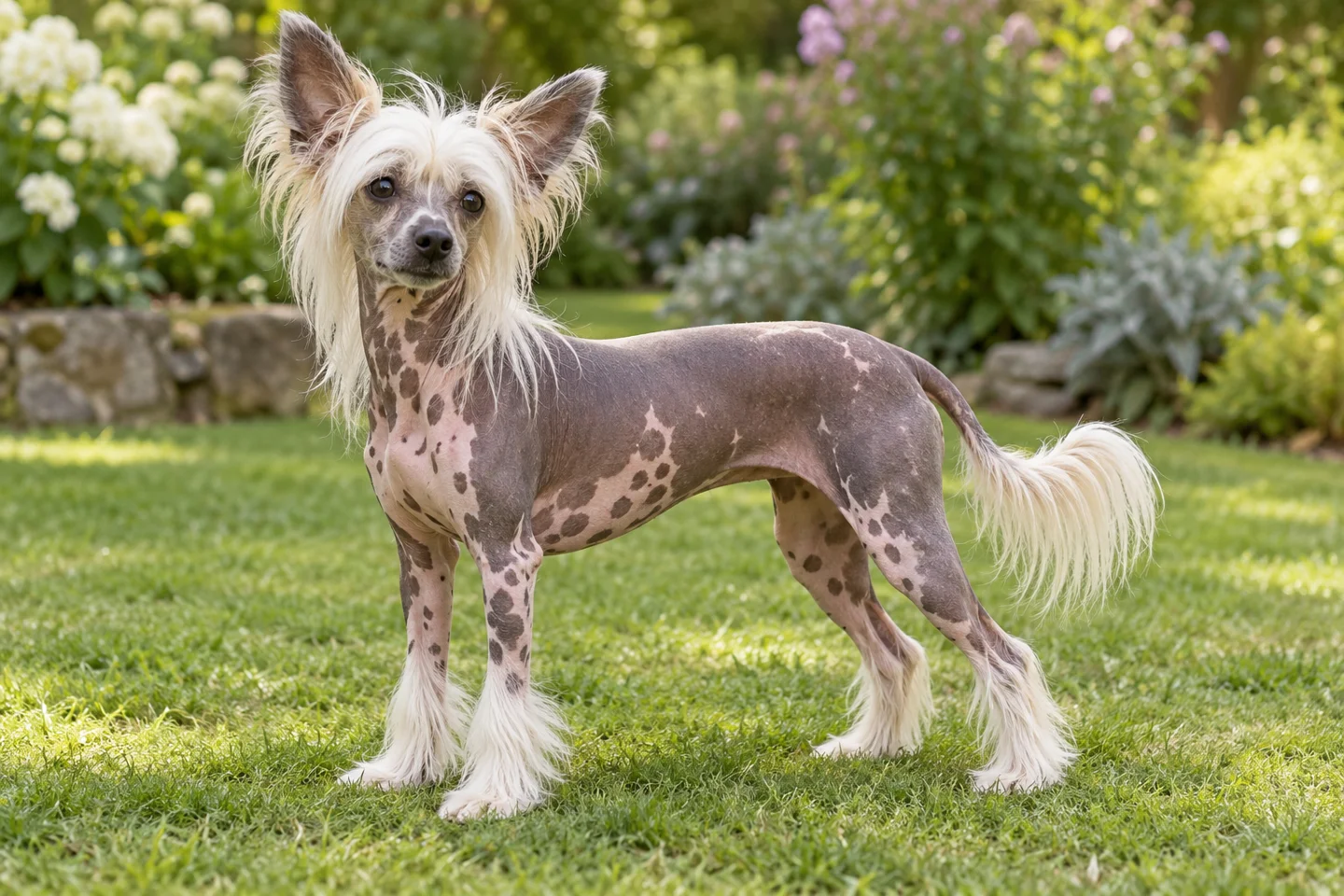
- Varieties
- Hairless and powderpuff
- FCI ideal height
- Males 28–33 cm; females 23–30 cm
- Origin in the FCI standard
- China; British patronage
- Care focus
- Skin or coat, teeth, eyes, and gentle handling
General information for owners. These articles have not been reviewed by a veterinarian. Medical decisions need your dog's history and an examination.
Choosing between a hairless dog and a powderpuff
A Chinese Crested requires a deliberate choice about daily care before a choice about appearance. The hairless variety has exposed skin over much of its body, with furnishings on the head, feet, and tail. A powderpuff has an all-over soft coat. Both belong to the breed, and neither supplies a maintenance-free alternative to an ordinary coated dog. Ask yourself whether you can manage skin protection and clothing when needed, or regular coat work that reaches beneath the powderpuff's surface.
Meet several adults in home conditions if possible. A photograph showing a crest blowing in the wind gives no account of how the dog accepts toothbrushing, settles during a workday, or copes when handled by a stranger. Find a source who describes the less convenient parts of ownership and provides health records. An adult with a detailed foster history may suit someone who needs clearer information about care tolerance. Select according to practical fit rather than unusual appearance or a promise that one variety will never cause allergies.
Identity, names, and cautious history
The FCI standard lists China as the origin and Great Britain as the country of patronage. It describes both hairless and powderpuff varieties while acknowledging difficulty pinpointing the breed's early origins. That distinction matters when a breeder turns a distant historical story into an exact claim about the ancestry of a puppy. Keep documented breed identity separate from uncertain accounts of ancient use. The name does not make a present-day dog adapted to every climate or household routine.
A Chinese Crested is distinct from the Xoloitzcuintli, Peruvian Hairless Dog, and American Hairless Terrier. Hairlessness alone does not identify the breed or give all those dogs the same dental, structural, or care needs. Ask which registry issued a pedigree and what documentation supports a rescue label. If parentage is unknown, a visual identification remains an estimate. Practical decisions should still address the dog's actual size, skin, teeth, behavior, and medical history rather than waiting for an ancestry question to be settled.
A light frame with a full natural tail
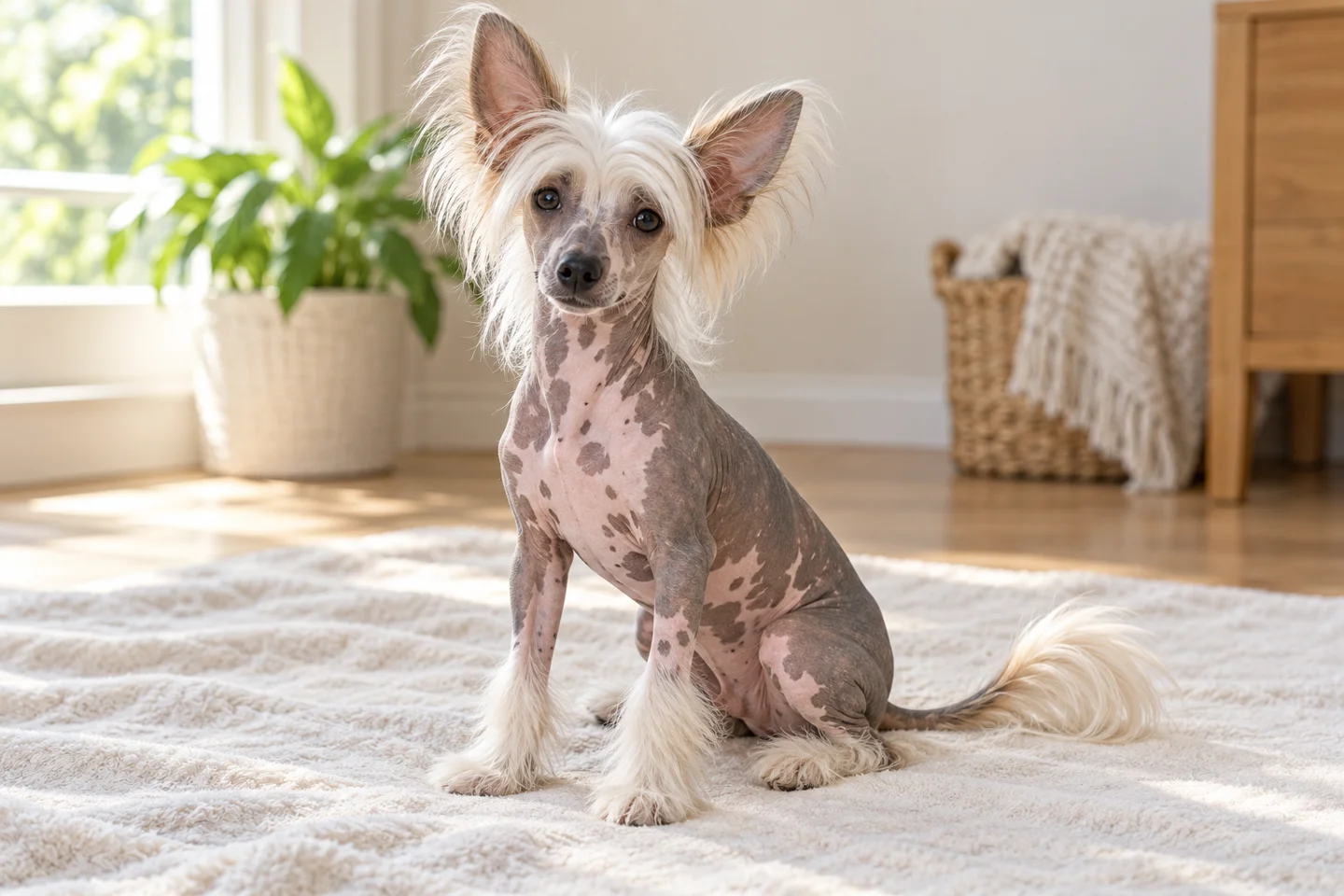
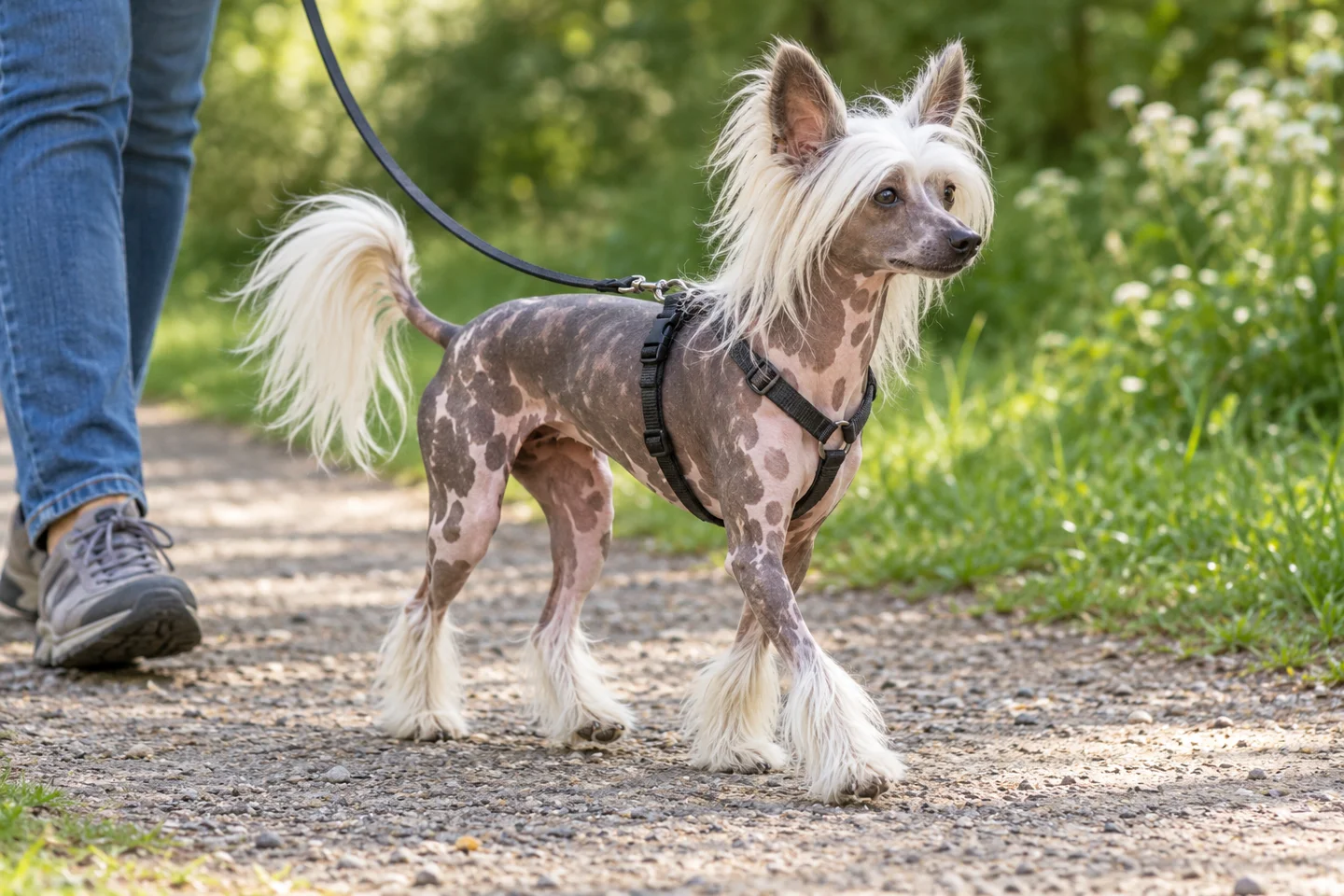
This is a small, fine-boned companion with a slightly rectangular outline, an expressive face, and large ears. Furnishings vary among hairless dogs, so a particular amount of hair in an illustration is not a diagnostic rule. The images here show the hairless variety, with a crest, hair on the feet, and a plume on the natural tail. They are labeled illustrations. Powderpuffs deserve equal recognition even though their full coat is not the selected visual example.
Fine construction calls for sensible handling. Measure a harness on the individual and inspect contact areas for friction. A tiny-looking neck is not a reason to rely on a loose collar that can slip over the head. Teach the dog to move toward equipment rather than catching it by surprise. Keep jumping access and slippery surfaces under review, especially for a puppy or an older dog. A sudden reluctance to be picked up may signal discomfort and warrants investigation instead of an assumption that the dog is being difficult.
The FCI ideal withers height is 28–33 cm for males and 23–30 cm for females. These are conformation targets, not a prediction that a particular puppy will finish at a specific measurement. Use the adult family as context and measure the actual dog for secure equipment. Its light frame still needs supported lifting and protection from falls.
Exposed skin and everyday protection
Look at the hairless dog's skin regularly, including beneath straps and clothing. Ask a veterinarian about a suitable bathing routine and any product used on exposed skin. Human cosmetics, acne treatments, essential oils, and fragranced lotions should not be adopted because another owner recommends them online. A persistent eruption, sore patch, or change in pigment with other symptoms needs professional assessment. Skin is living tissue, and the absence of a full coat does not make it a surface for experimenting with household products.
Clothes can protect or provide warmth when appropriate, but fit matters. Seams and elastic should not rub behind legs or hold moisture against the body. Remove garments for inspection and let the skin dry after bathing or a wet outing. A fashionable outfit should not restrict movement, cover warning signs, or remain on because it looks appealing in photographs. Keep some outings simple enough that you can observe the dog without fabric obscuring how it walks and whether it is scratching or licking repeatedly.
Sun, cold, and comfortable exercise
Exposed skin deserves a weather plan. Choose shade and avoid prolonged intense sun, asking your veterinarian about appropriate protection for this particular dog. Do not assume that dark patches provide complete protection or that a pale dog should never go outside. The objective is comfortable access with sensible limits. On a cool day, watch for shivering, reluctance to move, or other signs that conditions are unsuitable. Adjust the route and use appropriate clothing where it helps without restricting normal movement.
Exercise should include walking, exploration, and short activities that fit the individual rather than a fixed distance based on breed size. A Chinese Crested can enjoy learning and investigation even when it is easy to carry. Carrying everywhere removes opportunities to practice ordinary movement and coping skills. Build outings gradually and respect medical limits. If breathing becomes difficult, the dog collapses, or recovery is abnormal, obtain urgent veterinary advice. Clothing and shade are useful safeguards, while an owner still needs to notice the dog's actual condition.
Teeth need their own routine
Discuss the dog's teeth at the first veterinary visit. Hairless Chinese Cresteds can have dental differences, and missing teeth should not be guessed at from a quick look or treated as a reason to ignore oral care. Ask what is present, what needs monitoring, and whether any treatment is indicated. Records are useful when a dog changes homes. Pain, drooling, difficulty chewing, a new preference for one side of the mouth, or a persistent odor deserves assessment rather than repeated changes of food texture alone.
Introduce a suitable toothbrush and dog toothpaste gradually, beginning with a brief cooperative look at the mouth. The veterinary team can demonstrate a workable method and discuss professional cleaning when needed. Chews are not interchangeable with examination and brushing, and very hard items can create problems of their own. Choose products suited to the individual and supervise. A small mouth can still develop painful disease. Avoid waiting for visible swelling or refusal of all food before asking whether oral discomfort explains a change in behavior.
Powderpuff grooming without hiding tangles
A powderpuff needs regular work through the full coat rather than a quick brush over the top. Ask a knowledgeable groomer to show how to reach areas behind the ears, around the legs, and under a harness without dragging at skin. Coat condition and the household's available time should guide a practical trim. A long flowing coat is a presentation choice that carries work. It should never take priority over comfort when the dog is matted or unable to tolerate an extended grooming session.
Teach short periods on a stable nonslip grooming surface and reward remaining comfortable. Check nails and feet in both varieties; furnishings can hide material caught around toes. If a tight mat sits close to skin, seek help instead of using scissors blindly. Introduce sound and tools slowly, and tell a professional about previous frightening experiences before the appointment. A cooperative plan may initially involve simpler coat management while the dog learns. Forcing a frightened youngster through a long session can make every later appointment harder.
Children and the risks of picking up
A child may see a small Chinese Crested as something to carry from room to room. Adults need to control that expectation. Teach inviting contact at floor level and leave lifting to a capable adult using appropriate support. Falls, squeezing, and accidental stepping can injure a small dog. Provide a retreat where a child does not follow, and arrange furniture so the dog has a safe route away. Attention should remain optional even when the dog normally seeks a familiar person's lap.
Keep meals, chews, and sleep separate from children's play. If the dog takes a toy, a child should call an adult rather than reach toward its mouth. Calm participation can include helping prepare a simple search game while the dog waits elsewhere. Stop when either participant becomes overexcited. An adult must watch closely enough to notice freezing, withdrawal, or repeated attempts to escape. A favorable breed description cannot establish how this dog will respond to a noisy visiting child or uncomfortable handling.
Aggression, fear, and handling pressure
Small dogs can be threatened when people lean over them, grab suddenly, or prevent retreat. If a Chinese Crested growls during dressing or grooming, pause and ask what makes the task difficult. Check for rubbing, tangles, pain, and a history of frightening restraint. Do not repeat the same approach to prove that the warning should stop. Use barriers and distance to protect people while the cause is assessed, and seek veterinary attention when tolerance has changed without an obvious explanation.
AVSAB recommends reward-based training. A professional can help divide dressing, nail care, or examination into manageable steps and address guarding or recurrent threats. Punishment can leave the dog worried while making its warning less available. Explain any bite honestly to carers and clinicians, including the circumstances and injury. Tiny teeth still matter, particularly around a child's face. Safety comes from understanding the particular situation and changing it, rather than deciding that a decorative-looking breed cannot pose a meaningful risk.
Training that keeps the dog involved
Teach a few useful actions before an elaborate trick routine. Coming toward a hand target, stepping onto a mat, entering a carrier, and standing briefly for a harness can make daily life calmer. Reward voluntary movement rather than placing the dog physically into each position. A small dog has fewer options when a person restrains its whole body, which makes clear choices valuable. Keep the session short enough to end with comfortable participation and return later to add another small step.
Use rewards that fit the dog's diet and preferences. A few tiny portions can support practice without turning every lesson into a large meal. Add unfamiliar locations gradually so the same skill becomes usable beyond the kitchen. If the dog stops responding at a busy pavement, move somewhere quieter before judging its understanding. The handler's timing, the surface, nearby noise, and the dog's physical comfort may all affect performance. Repeating a cue louder does not resolve those practical barriers to learning.
Other animals and proportionate play
Choose dog companions who can moderate their speed and contact. An enthusiastic larger dog can injure a Chinese Crested through a collision even when both initially approach willingly. Begin with space to move, and pause if one animal repeatedly tries to hide or disengage. A walk alongside a calm dog may be more suitable than wrestling. Do not require the smaller dog to keep accepting pressure because the other owner says their dog is only playing.
Introduce cats with protected routes and separate feeding areas, preventing a habit of chasing or cornering. A dog accustomed to one cat has not demonstrated how it will respond to every unfamiliar animal. Keep small pets secure rather than staging a test with an open cage. Ask a foster carer for actual examples of contact and management. Compatibility depends on individual behavior, size, resources, and context. The affectionate way a dog approaches a human does not answer those separate questions about animal safety.
Health records and specific screening
The AKC's current toy-group health page lists patella and ophthalmologist evaluations, a cardiac examination, and DNA tests for primary lens luxation and progressive retinal atrophy associated with rod-cone dysplasia 3 for Chinese Cresteds. Request the named reports for the parents and check identification and dates. Ask the veterinarian to explain unfamiliar findings. A broad statement about having a DNA panel does not establish that every listed evaluation occurred, because orthopedic and clinical eye assessments require information beyond a panel of inherited variants.
Discuss family history and the dog's own findings without treating screening as a guarantee of lifelong health. A painful or suddenly cloudy eye needs prompt attention even if a parent had a reassuring report. So does a recurring skip in the gait or discomfort during ordinary movement. For an adopted adult lacking family records, document the gap and plan from the current examination. Avoid replacing missing evidence with a claim that a bright expression, unusual coat, or energetic greeting proves the animal is medically clear.
Food, companionship, and mixes
Select a complete diet suited to age and health, measure portions, and account for training food. Appetite should be considered alongside weight, condition, oral comfort, and digestive history. Keep unsafe scraps, medicines, and wrappers out of reach, including on furniture the dog can access. A consistent feeding routine helps an owner notice meaningful changes. Persistent difficulty eating should prompt examination rather than an assumption that a small companion is simply fussy or that all hairless dogs need the same soft food.
Chinese Crested mixes can vary widely in coat and dental traits. A seller's combined name does not standardize the result or promise easy maintenance. Neither hairlessness nor powderpuff hair guarantees compatibility for a person with allergies. Discuss human symptoms with the appropriate clinician and consider actual contact with the dog. Plan company and alone-time training according to observed behavior. Persistent distress when people leave requires support and dependable care, not an assumption that buying another small dog will resolve the problem automatically.
Costs, aging, and a dogsDating introduction
Budget for dental assessment, skin or coat needs, preventive care, suitable equipment, and unexpected treatment. Arrange a carer who can follow the grooming and weather routine and who understands safe handling. As the dog gets older, adjust access, flooring, and outings to its comfort while keeping enjoyable activity available. A new resistance to being lifted or dressed needs a medical review. Keep written care instructions and veterinary contacts accessible so an unexpected owner absence does not leave important details known to only one person.
On dogsDating, describe actual walking pace, preferred dog size, handling needs, and comfort with close play. Keep exact home coordinates private. Choose a quiet public meeting place and begin with a short walk at a distance where both dogs can relax. Avoid a crowd of unfamiliar dogs or a greeting on a person's lap. Pause persistent crowding and end if either dog cannot disengage. A calm walk can be a successful first meeting, with future contact depending on both dogs' continuing comfort.
Travel equipment before the first long trip
Practice entering a secured carrier or suitable restraint while the vehicle is stationary. Choose a system that fits the dog without rubbing exposed skin, and check it after a short test journey. At unfamiliar stops, connect the lead before opening the exit. Bring familiar bedding, climate-appropriate clothing if needed, and current veterinary contact details. A small dog should not travel loose on a lap or beside the driver, even when its usual behavior seems quiet.
Sources and editorial notes
Sources checked October 21, 2026. Breed measurements describe reference ranges, not a diagnosis or an individual dog's ideal weight. Images are AI-generated breed illustrations and do not document a particular dog or health condition.
- AVSAB: Humane Dog Training Position Statement
- VCA: Food Aggression in Puppies
- VCA: Grooming and Coat Care for Your Dog
- VCA: Feeding Guidelines for Dogs
- Orthopedic Foundation for Animals: Canine Health Assessments
- VCA: Heat Stroke in Dogs
- VCA: Hypoallergenic Dog Breeds, Is There Such a Thing?
- American Kennel Club: Toy Group Health Testing Requirements
- American Kennel Club: How to Groom a Hairless Dog
- FCI: Chinese Crested Breed Standard
Keep getting to know dogs.
Read another guide or return to your dogsDating community.
Explore breed guidesBack to dogsDating