Japanese Chin
A small companion whose silky coat, shortened muzzle, handling needs, and health records deserve careful everyday attention.
How these guides are researched and reviewed

- Origin
- Companion breed developed in Japan
- Adult height reference
- FCI males approximately 25 cm; females slightly smaller
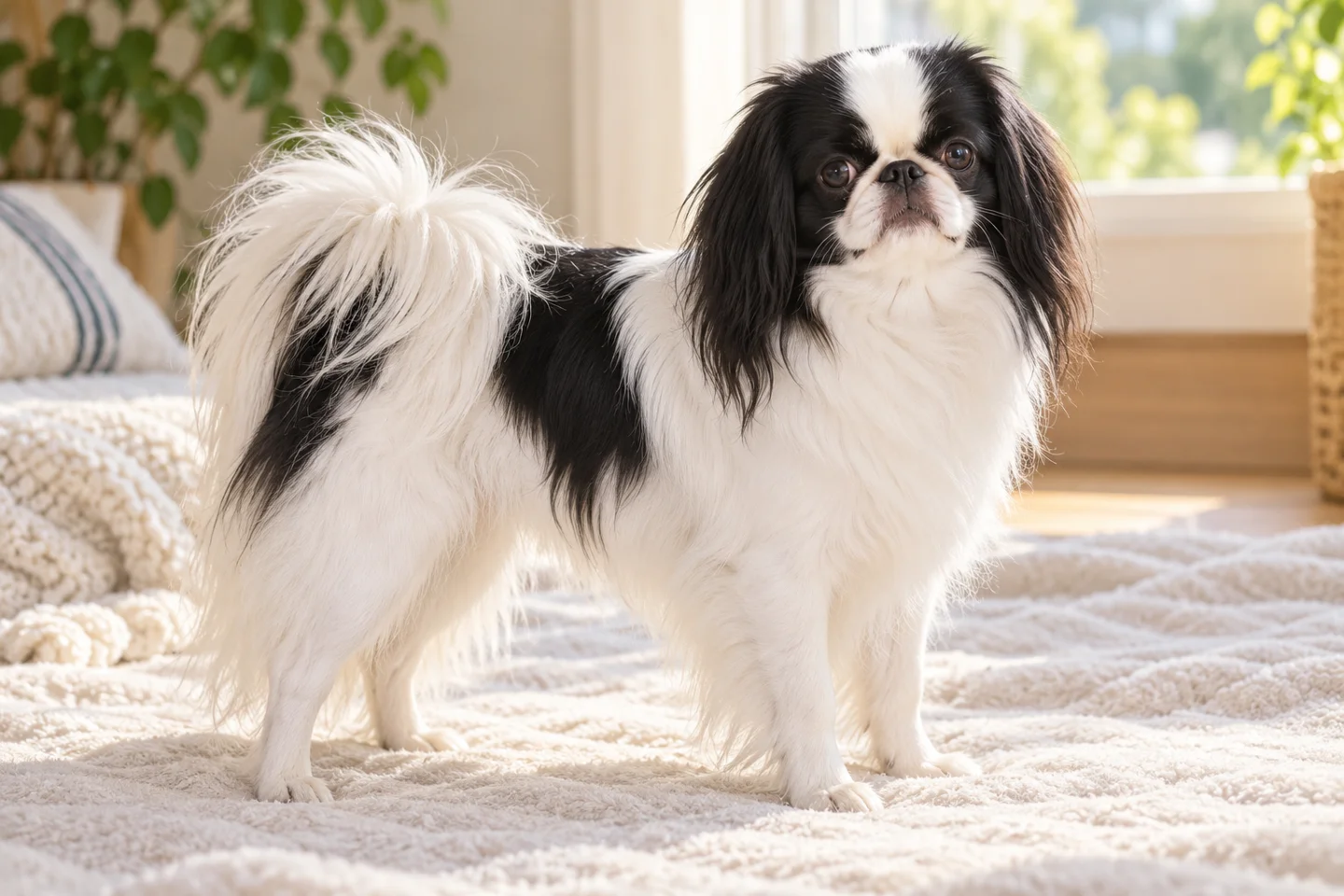
- Illustrated coat
- White with black patches and silky feathering
General information for owners. These articles have not been reviewed by a veterinarian. Medical decisions need your dog's history and an examination.
A companion whose comfort comes first
The Japanese Chin is a small companion with a broad face, long silky furnishings, and a tail carried over its back. Its daily life should be planned around comfortable breathing and respectful handling as well as company. Before choosing one, watch actual adults walking and resting. Ask how they cope with warm weather, transport, grooming, and time away from familiar people. A short social visit cannot answer every question, so request examples from ordinary days rather than relying on a description of a cheerful personality.
Small size can make practical arrangements easier, but it also makes it tempting to carry the dog through situations it would prefer to leave. Set aside a resting area on the floor and provide opportunities to approach voluntarily. Decide how other people will behave around it, including visitors who immediately want to pick it up. A workable home offers suitable activity and calm care without expecting the dog to accept constant touching. Its appearance should never become a reason to overlook breathing effort or discomfort.
Court history and the limits of old accounts
The FCI history describes links between the ancestors of the Chin and the Japanese court, including an account of dogs arriving from Korea. Some early details are presented as assumptions drawn from old documents, so they should retain that uncertainty. The established role is companionship. This is useful context when comparing a Chin with a Japanese hunting spitz or a working terrier: sharing a country in a breed name does not make their origins, physical form, or household needs interchangeable.
For a present-day placement, ask about the source's own dogs. Which activities do they enjoy, how are puppies introduced to household routines, and what support follows collection? A historical story cannot establish how a particular dog was raised. Preserve registration details, previous medical information, and the name of the person responsible for its care. An adult coming through rescue may have an uncertain pedigree but useful observations from a foster home. Those observations can guide your first weeks more directly than an elaborate claim about ancient ancestry.
Size and the shape beneath the coat
The FCI gives males an approximate height of 25 centimeters and describes females as slightly smaller. It does not supply a fixed weight range in that standard. The coat is straight, long, and silky, with white and black or red markings. The illustrations here use white with black patches. Eyes should not be exaggerated, and open nostrils matter. These details describe the intended type, while a veterinarian assesses the function and condition of a real animal.
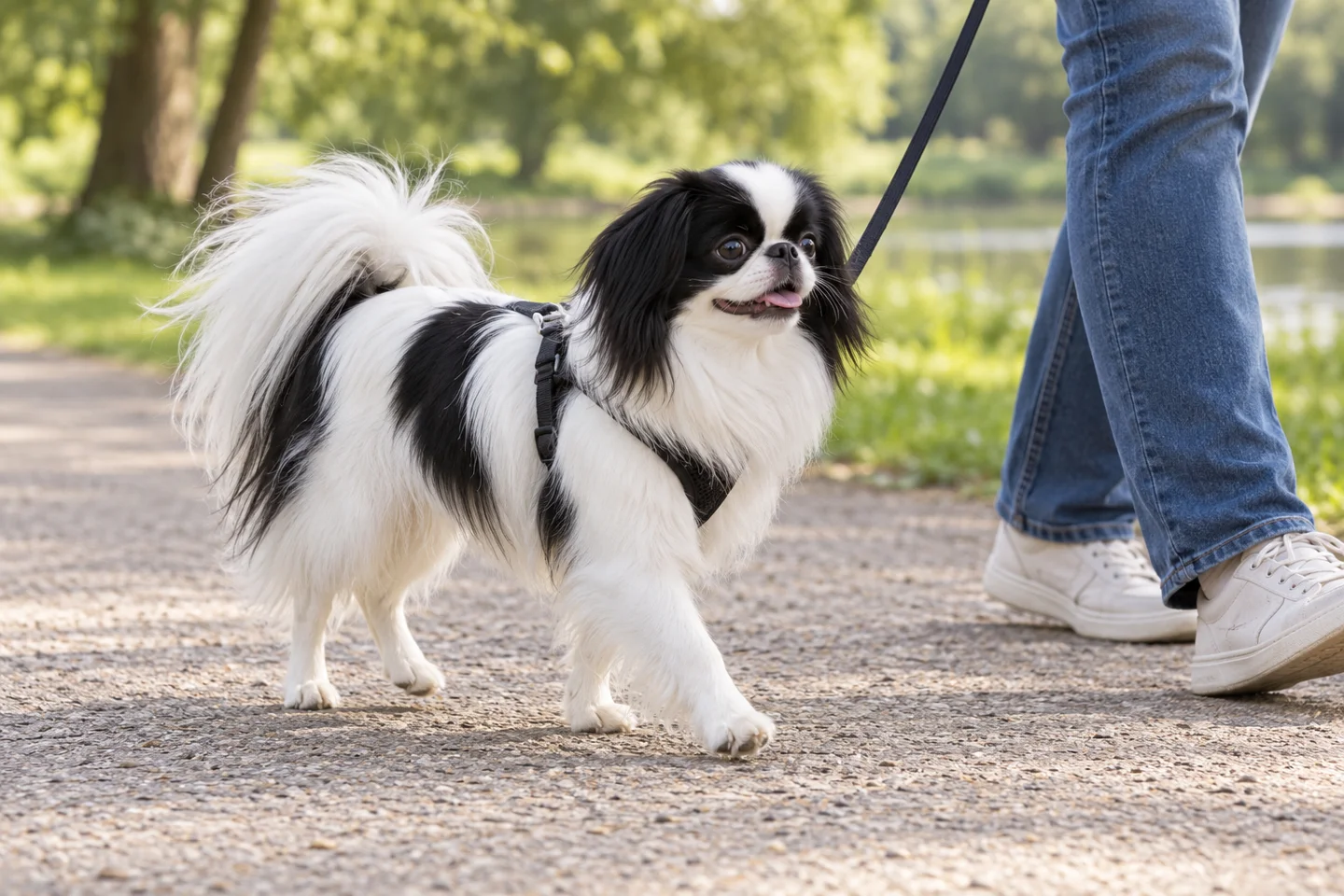
Measure equipment on the individual. A harness that fits around the chest must also permit comfortable shoulder movement and avoid rubbing behind the front legs. Check how the dog will enter its carrier and turn around inside. Arrange a stable place for it during travel rather than letting it balance on someone's lap. The image of a tiny dog cannot tell you how easily it moves, sees, or breathes. Meet the dog, observe its response to activity, and ask specific questions about any signs that concern you.
Breathing health and heat need attention
A shortened muzzle can accompany narrowed airways and other features involved in brachycephalic obstructive airway syndrome. Cornell describes noisy breathing, exercise difficulty, and heat problems among signs requiring attention. Have persistent snorting or labored breathing assessed rather than treating it as an amusing breed sound. Ask the veterinarian what you should observe during sleep and activity, and discuss any concern before anesthesia or sedation. A short face cannot diagnose the severity of an individual airway problem from a photograph.
Make warm-day plans conservative. Choose cooler conditions and stop an outing when the dog has difficulty. Keep transport well ventilated and avoid leaving it in a parked vehicle. If breathing becomes distressed or the dog collapses, contact a veterinary service urgently and follow its directions. Write down the clinic's details for sitters. A cooling accessory should not become permission to remain in uncomfortable conditions. The person handling the Chin must be willing to change the walk even if the social plan or timetable is inconvenient.
Training at a comfortable height
Teach simple tasks where you can reward without leaning over the dog repeatedly. A low, stable target or mat can help organize a short lesson. Let the Chin investigate, mark a useful choice, and provide a reward it can take comfortably. Practice coming a few steps toward you and moving into a travel carrier before relying on either skill outdoors. The small dog still benefits from clear cues. Reaching down and physically placing it everywhere leaves those skills unpracticed.
AVSAB recommends reward-based teaching and advises against aversive methods. If progress stops, review the task rather than escalating force. The reward may be difficult to eat, the surface may feel insecure, or the room may contain too much activity. Ask an instructor to observe those details. Keep lessons separate from necessary veterinary procedures when the animal is ill or painful. A cooperative-care lesson should give it a manageable way to participate, while urgent medical needs require a plan with the veterinary team.
Exercise without treating the dog as luggage
Offer the Chin chances to walk and explore at a pace it can manage. A quiet route with places to pause can be more useful than carrying it through a long busy outing. Watch the animal's response rather than applying a fixed exercise target from another dog. Age, breathing, mobility, and weather affect the plan. Ask the veterinary team for advice if the dog coughs, tires unusually, or seems reluctant to continue. A change in stamina deserves an explanation.
At home, use small search games or gentle toy play on secure flooring. Keep routes clear of objects that could catch feet or coat. If access to furniture requires assistance, agree on a safe arrangement and prevent hurried jumping from high places. Explain it to everyone in the home. The goal is a predictable environment, not a test of how much a little dog can manage. Review the plan as it grows or ages, and give it a quiet rest after a stimulating visit.
Children and people who want to pick it up
Children should meet a Chin with an adult close enough to guide the interaction. Have the child sit quietly and allow the dog to approach, rather than passing it between people. A child should not carry it while walking or use it as a soft toy. Keep the dog's bed out of play routes and make its retreat unavailable to children. When supervision is interrupted, separate them comfortably instead of hoping the dog's small size makes the situation harmless.
Teach visitors the same approach. Ask them to wait before touching and to stop when the animal moves away. Watch for tension or attempts to hide rather than judging comfort from silence. If lifting is necessary, ask a veterinarian or experienced carer to demonstrate supported handling and have adults practice calmly. A dog that tolerates familiar adults may respond differently to an excited group. Record the situations that work and plan future visits around those observations, with the dog's ability to leave kept intact.
Aggression and warnings in a small body
A small bite can still cause injury, and repeated warnings should change the arrangement immediately. If the Chin stiffens when someone approaches its bed or snaps during face care, stop the approach and prevent another confrontation. Record what happened, including recent handling and whether the dog could move away. Seek veterinary assessment when the behavior is new, particularly if grooming or touch has become painful. Do not dismiss it as an unavoidable small-dog personality.
VCA explains that aggression toward dogs can arise from different causes. Barking at a larger dog does not establish that a greeting will be friendly if you release the lead. Increase space and ask a qualified professional to help assess the pattern. Keep food and valued objects out of initial social meetings if they could create competition. Tell carers about incidents plainly. An accurate account allows them to plan handling and avoid pressure, while a joke about being feisty may conceal the information they need.
Living with dogs and other animals
Compatibility depends on the actual animals and their behavior together. A friendly large dog may move too roughly for a Chin even when neither animal intends harm. Begin with calm, managed contact and observe whether each can disengage. Have separate rest spaces and feed them apart when needed. Stop if the Chin is repeatedly knocked over, pursued, or unable to leave. Physical size is one practical consideration alongside arousal, experience, and preferred interaction.
Cats also need protected routes and somewhere to rest undisturbed. Ask about the particular dog's previous exposure rather than assuming a companion breed will accept every household animal. Keep small pets secure. Introductions should not involve holding an animal still while the dog investigates. Discuss uncertainty with the rescue or breeder before placement, and be prepared to maintain separation where necessary. A quiet first afternoon supplies limited evidence. Review the arrangement after meals, visitors, and other situations that alter household activity.
Grooming silky furnishings gently
Long hair needs regular inspection where it catches or rubs, including behind the ears, under the front legs, and around the tail. Work through a small section with appropriate tools and stop before pulling becomes painful. Ask a groomer to demonstrate maintenance on your dog. VCA warns against cutting mats with scissors close to the skin. A tight knot needs careful professional help, especially where the skin is difficult to see beneath the furnishings.
Keep cleaning routines suited to the individual. Record changes in skin, odor, or sensitivity rather than covering them with repeated products. Dry wet areas comfortably and check the fit of any clothing or harness. A decorative coat does not require leaving hair where it causes irritation or obstructs necessary care. Explain your practical goals to the groomer and ask what you must do between appointments. Preparation can include standing on a nonslip surface, accepting brief touch, and taking a break before another small area is handled.
Eyes ears and a usable care routine
Notice squinting, persistent rubbing, discharge, or a sudden change in the appearance of an eye and contact a veterinarian promptly. Do not use an old prescription or a human eye product without instructions. Keep face care gentle and avoid directing grooming products toward the eyes. Ask your clinic what cleaning is appropriate for this dog and how to recognize a problem that should be assessed the same day. An attractive broad face should not obscure clinical signs.
Inspect the ears without pushing tools down the canal. Odor, redness, head shaking, or pain needs an examination, and treatment should follow the cause identified. Practice lifting an ear briefly when the dog is comfortable and reward participation. Keep a written care plan for anyone looking after it, including what medication is currently prescribed and whom to call with concerns. Never let a routine checklist override an animal that is suddenly sore. Necessary care may need a different approach organized by the veterinary team.
Health screening is specific evidence
The AKC's current national-club recommendations for the Japanese Chin list patella evaluation, cardiac examination, ophthalmologist evaluation, and a DNA test for GM2 gangliosidosis in the breed. Ask for the actual reports, identifiers, and dates. The type of DNA test matters, because a general panel description cannot establish which variant was examined. Discuss findings and relevant family information with a veterinarian rather than treating the word tested as a complete explanation.
CHIC records required screening and public disclosure, so read individual findings. Completion alone should not be mistaken for a promise that every result was normal or that future illness is impossible. Request information about significant conditions in relatives and how later diagnoses are shared. For an adult with missing parental history, preserve that uncertainty and arrange current care. The dog's examination can identify present needs even when no pedigree records are available. Keep copies of meaningful results so later decisions do not depend on a distant verbal assurance.
Feeding and changes in appetite
Choose complete food appropriate to the Chin's life stage and discuss portion size with your veterinary team. Count the rewards used during short training sessions within the day's intake. Small portions make unmeasured extras easy to overlook. AAHA recommends that a complete balanced diet provide most calories, with treats limited to a small part of the total. Check body condition under the long coat and keep dated weights so gradual change is visible.
Make the feeding setup comfortable and unhurried. If the dog repeatedly struggles to eat, coughs with meals, or changes its appetite, seek advice rather than assuming it is merely selective. Ask about mouth care and report altered chewing or dropped food. A dog that has stopped eating or appears unwell needs individual assessment. Give sitters the exact food and measured portion instructions, and explain any prescribed restrictions. Comparing brands online cannot replace investigation when the underlying issue is pain or another medical problem.
Mixes costs and making the household decision
A Chin mix may have a longer muzzle, a different coat, or a larger adult frame, but parentage cannot be reliably reconstructed from a picture. Ask what is documented and what has simply been guessed. A crossbreed label does not guarantee better breathing or freedom from inherited disease. Look at the individual and review known parental health information where it exists. Avoid paying for promises that a puppy will combine only the convenient features of each parent.
Budget for continuing care before purchase or adoption. Obtain current local prices for veterinary prevention, grooming help, training, and care during absences. Ask how an emergency would be funded and read any insurance terms closely. Discuss support and return arrangements with the source. If the household wants a dog that can accompany long hot outings or accept frequent handling by unfamiliar children, reassess the fit. A suitable decision includes the limitations you can accommodate as well as the companionship you hope to enjoy.
dogsDating meetings for quiet companionship
Describe the Chin's actual preferences on dogsDating, including the size and energy of partners it has handled comfortably. Choose a public place with enough width for parallel walking and an easy exit. Share an approximate area while keeping your exact coordinates and home address private. Confirm that each dog has its own attentive adult handler. Avoid turning a first meeting into an indoor visit or a crowded play session simply because both owners are enthusiastic.
Begin at a distance and let the dogs walk without a compulsory greeting. Watch breathing and fatigue as well as social behavior. If either dog becomes tense or the Chin struggles to keep up, shorten or end the plan. A successful outing may consist of quietly sharing a route. Afterward, note what helped: the shaded section, a slower partner, or greater space at the start. Use those details to plan another meeting and leave active play optional. Familiar company should improve the walk rather than make it harder to stay comfortable.
Sources and editorial notes
Sources checked October 21, 2026. Breed measurements describe reference ranges, not a diagnosis or an individual dog's ideal weight. Images are AI-generated breed illustrations and do not document a particular dog or health condition.
- AVSAB: Humane Dog Training Position Statement
- VCA Animal Hospitals: Food aggression in puppies
- VCA Animal Hospitals: Common emergencies in dogs
- Orthopedic Foundation for Animals: CHIC health screening programs
- VCA Animal Hospitals: Aggression toward unfamiliar dogs, diagnosis
- VCA Animal Hospitals: Grooming and coat care for your dog
- VCA Animal Hospitals: Ear infections in dogs (otitis externa)
- AAHA: Feeding plans for healthy, appropriate weight cats and dogs
- VCA Animal Hospitals: Heat stroke in dogs
- AVSAB: Puppy Socialization Position Statement
- VCA Animal Hospitals: Dog behavior problems, aggression toward children
- Cornell University Riney Canine Health Center: Brachycephalic obstructive airway syndrome
- FCI: Japanese Chin official breed standard
- AKC: Toy Group Health Testing Requirements
Keep getting to know dogs.
Read another guide or return to your dogsDating community.
Explore breed guidesBack to dogsDating