Russian Tsvetnaya Bolonka
A small colored companion with a wavy-curly coat, a close household role, and grooming and health responsibilities that extend beyond its size.
How these guides are researched and reviewed
- Origin
- Russia
- Adult standard size
- AKC up to 10.25 inches; ideal both sexes 7–9 pounds
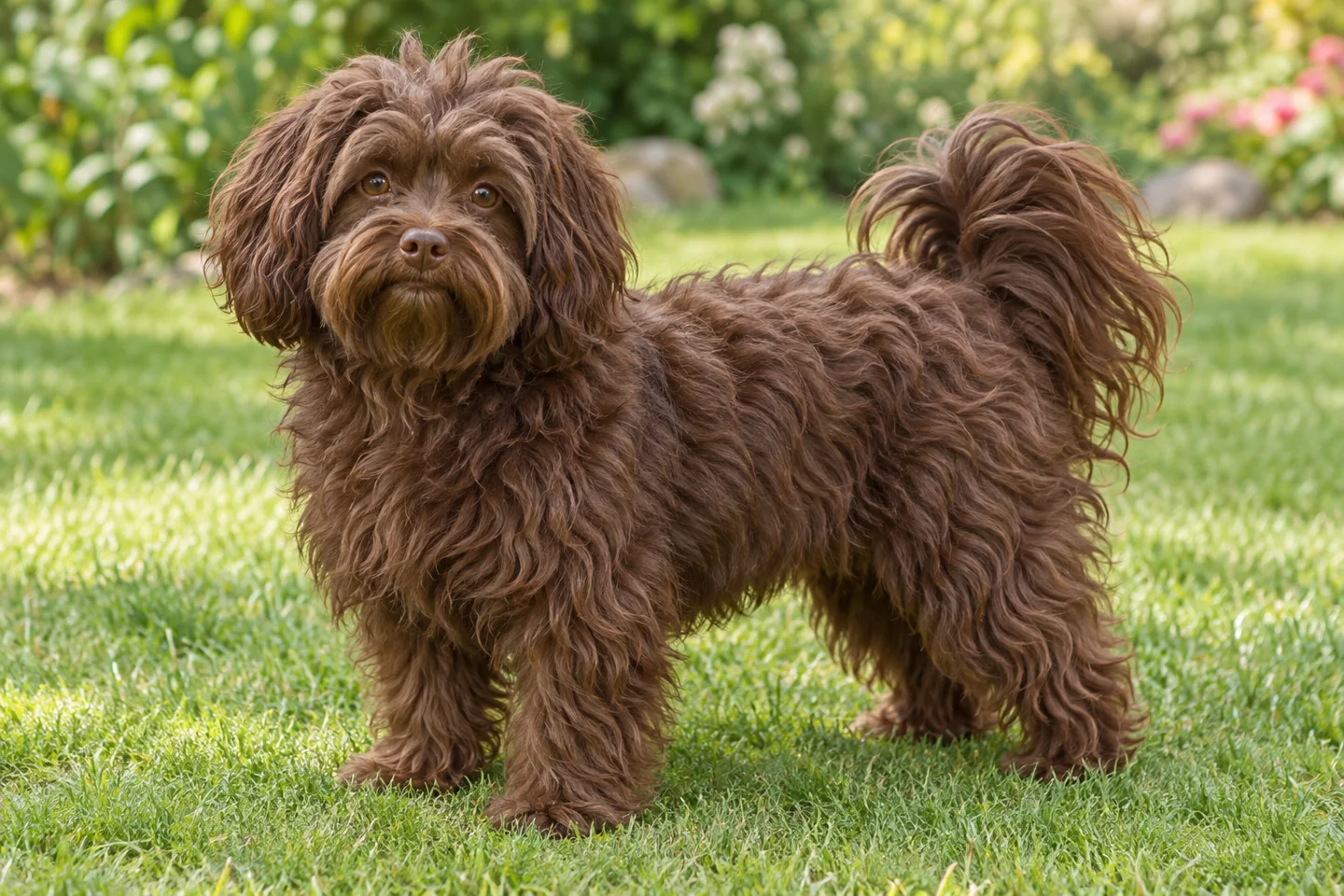
- Illustrated coat
- Chocolate-brown wavy-curly coat
General information for owners. These articles have not been reviewed by a veterinarian. Medical decisions need your dog's history and an examination.
The colored companion behind the name
The Russian Tsvetnaya Bolonka is a small companion breed developed in Russia. Its name is often shortened to Bolonka, but prospective owners should check the full breed identity in registration and health documents. The AKC standard describes a sturdy, balanced dog, slightly longer than tall, with a wavy or curly coat. It is a household companion with a body that still needs exercise, careful handling, and ordinary veterinary care.
The breed's development brought together small companion-dog influences. That history should not be used to present a modern pedigree Bolonka as an interchangeable name for any small curly crossbreed. Known ancestry, registry documents, and the observed individual are different sources of information. A rescue can provide useful care and behavior details even when parentage remains uncertain. Honest uncertainty gives an owner a sounder starting point than a confident visual guess.
Its compact size can suit a smaller home if the household can provide consistent attention and activity. Floor area alone does not decide welfare. A dog living in a large house may still lack walks, while one in an apartment can have a varied routine. Consider noise, shared access, grooming space, time alone, and the people who will provide care. Those practical questions matter more than describing the breed as the perfect pet.
Adult proportions and the illustrated coat
The AKC standard places adult height at up to 10.25 inches, with an ideal weight of 7 to 9 pounds for both sexes. The dog should remain balanced and sturdy rather than delicate. These figures describe the standard's intended adult size. They do not justify keeping a puppy underfed or paying a premium for an unusually undersized label. Ask the veterinary team to assess growth and body condition directly.
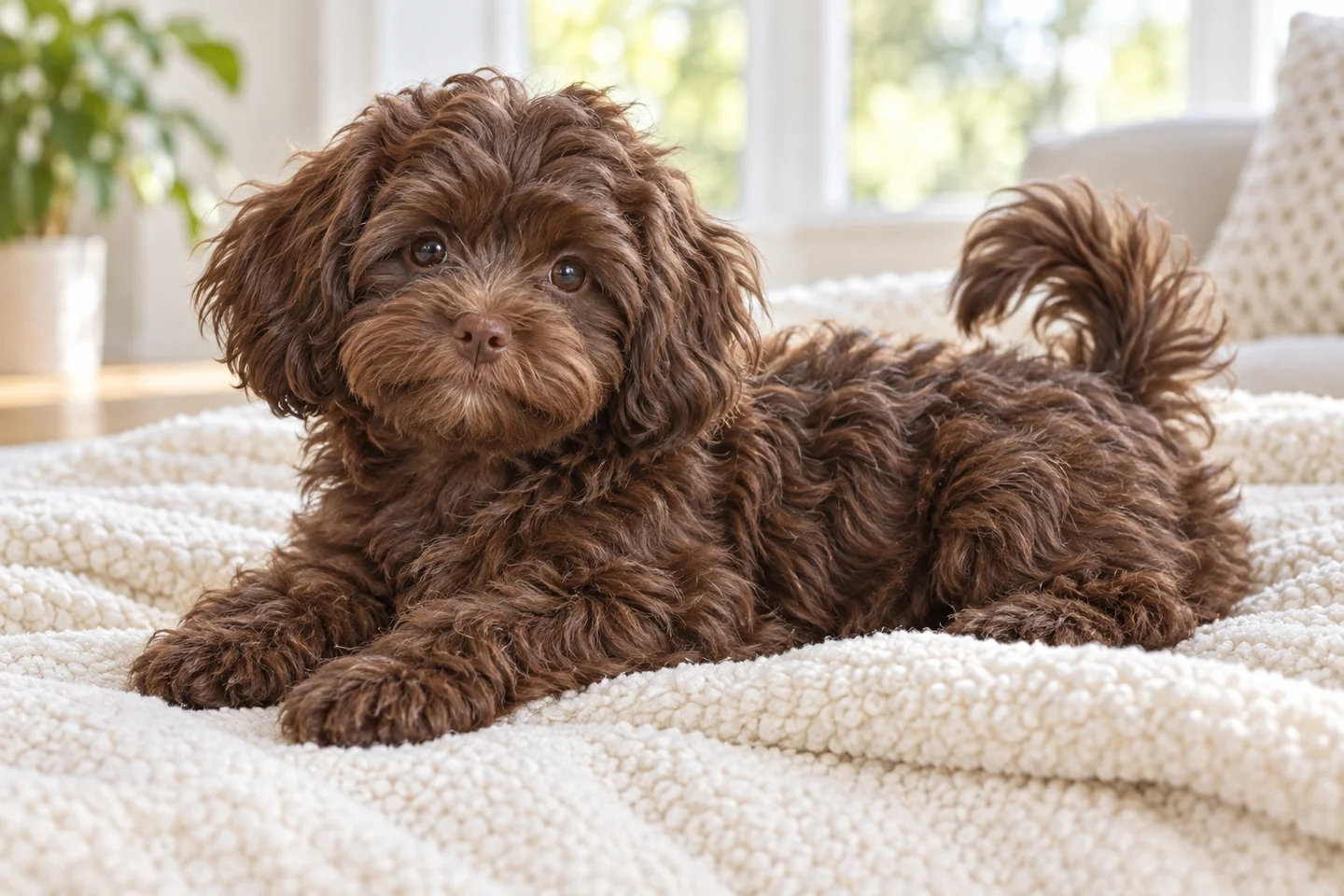
The head carries a beard and moustache, and the natural ears hang close to the head. The tail curves over the back and has substantial hair. The coat forms loose curls or waves rather than a tight sculpted poodle outline. Our illustrations show a chocolate-brown Bolonka with brown pigmentation, natural ears, and a complete tail. They are AI-generated illustrations, so they explain an intended appearance rather than documenting a registered individual.
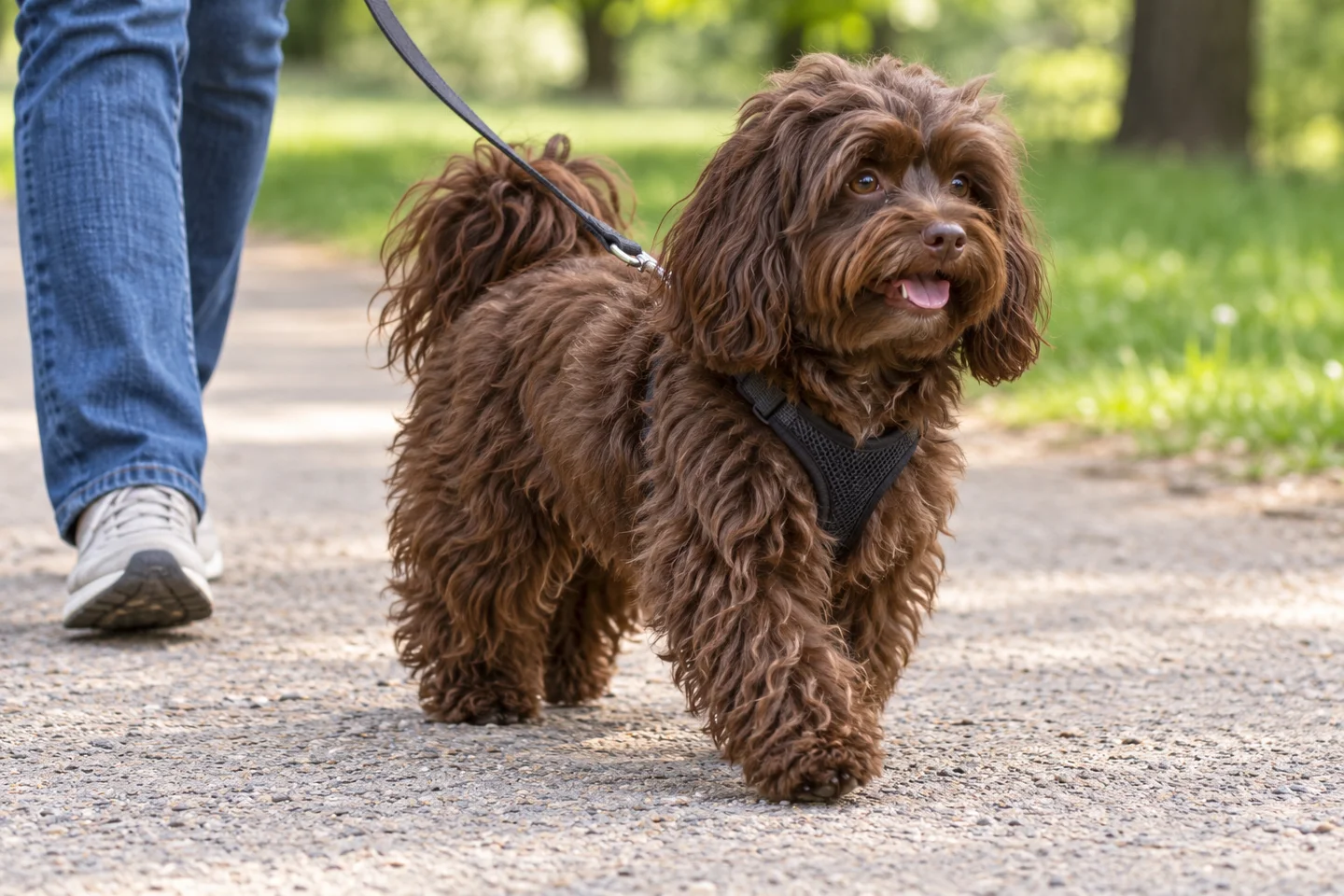
Coat makes the body appear larger and can hide weight changes. Learn to feel the ribs and inspect the waist beneath the hair. Fit equipment to the actual chest and neck, checking that straps neither dig into the skin nor become loose when the coat compresses. Reassess after grooming or a growth spurt. A harness that worked before a haircut may need adjustment before the next outing.
Companionship with room for independence
A companion dog benefits from being included in family life, but constant physical contact need not be the only way it can feel secure. Provide a comfortable bed near ordinary activity and reward resting there. Let the dog move away when it wants a quieter place. Repeatedly lifting it back onto a lap can prevent the independent settling the owner later hopes to see.
Introduce brief separations while the dog remains comfortable and observe what happens. Quietly resting is different from repeated pacing, vocalization, or attempts to escape. If distress develops, review the schedule and seek appropriate help. Another pet cannot be promised to solve it. The household needs arrangements for work, travel, and illness that do not depend on the Bolonka simply tolerating an abrupt full day alone.
Daily routines can also prevent unnecessary conflict. Decide where the dog waits during cooking, how visitors enter, and who takes responsibility for toileting. A small companion can easily follow people into a doorway or beneath a chair. Teaching a safe station and checking before moving furniture are simple habits that reduce accidental injury. Being small enough to pick up should remain an option for specific situations, not the only management system.
Training through everyday opportunities
Start with skills that make the day easier: coming to the owner, stepping onto a mat, walking with a loose lead, and waiting while a harness is fastened. Use brief sessions and small rewards. A single piece of food can be divided into several appropriately sized portions. Keep a record of rewards if several family members train, since a small dog's daily intake can be changed substantially by casual extras.
Toileting needs a schedule with enough opportunities and immediate reinforcement for the desired location. After sleep, play, and meals, be ready to help the puppy succeed. Clean errors without punishment and adjust supervision if the same situation keeps producing mistakes. An adult that changes previously established habits should have medical causes considered. Assuming that small dogs are naturally unreliable can delay both teaching and treatment.
The Bolonka also needs to learn how grooming works. Practice standing on a non-slip surface, accepting a brief touch, and following an easy cue off the surface when finished. Introduce a brush as a separate object before beginning a long session. A reward-based trainer and a patient groomer can coordinate the plan. Ask them how they reduce difficulty when the dog becomes worried rather than how they force completion.
Exercise in a manageable daily rhythm
Short walks give a Bolonka opportunities that indoor play cannot fully supply: new smells, changes in surface, and practice moving with a handler. Let the dog investigate safe areas and adjust distance to its condition. A puppy, a healthy adult, and a dog with mobility problems need different plans. Avoid a universal minute count that ignores pace, weather, and what the dog is doing during the outing.
At home, use searches and gentle games that do not require repeated leaps from furniture. A few pieces of the measured ration hidden at an easy level can create a useful task. Check that toys are suitable for the dog's mouth and remove damaged items. Teach a clear end to play and offer a resting place afterward. Constantly restarting activity can make it harder for the dog to settle during quiet household periods.
Warm weather still requires planning for a small coated dog. Choose comfortable conditions, carry water when needed, and inspect paving before a walk. Winter conditions may also call for shorter outings or suitable clothing, introduced gradually and checked for rubbing. Let the dog's response and veterinary advice guide adjustments. A coat or carrier is a tool for a particular situation, not evidence that the animal's comfort has already been secured.
Aggression and handling boundaries
A Bolonka that growls during brushing, snaps when lifted, or guards a resting place needs its circumstances examined. Small teeth and an appealing face do not make the problem harmless. Stop the repeated confrontation and check for pain or skin discomfort. When necessary, use barriers and a qualified behavior plan so people are protected while the underlying issue is addressed.
Avoid taking a chew simply to show that a person can. Teach exchanges during calm practice and let the dog eat without interruption. Store tempting objects out of reach. If guarding already occurs, obtain help before attempting increasingly difficult trades. The goal is a dog that can cooperate safely, not an owner who wins a physical contest while increasing the dog's concern about approaching hands.
Explain handling preferences to anyone who will provide care. If a bite happened, describe what contact occurred and the preceding events accurately. A groomer or sitter needs that information in advance. Do not conceal it behind a claim that the dog is usually sweet. A careful plan can include shorter appointments, cooperative-care training, and veterinary support where appropriate. The plan should change the experience rather than repeat the same struggle with firmer restraint.
Children, cats, and larger playmates
Children should learn that a resting Bolonka is allowed to remain undisturbed. No hugging around the neck, pulling facial hair, or carrying the dog while running should be part of play. An adult can arrange a seated interaction or help the child prepare a simple search. The dog needs a retreat children cannot enter. Use separation whenever the responsible adult cannot continue watching closely.
A small body can be injured by an accidental fall or a moving chair. Explain those risks in concrete terms so a child understands what to check. Do not ask a young child to manage a lead near traffic or lift a struggling dog. The adult remains responsible even if the child is enthusiastic about helping. Appropriate participation can grow with the child's skill and the dog's comfort.
Assess larger dogs by movement and play style, not friendliness alone. A cheerful body slam can be overwhelming. Start with controlled distance and interrupt pursuit when the Bolonka tries to leave. Cats also need safe routes and resting places. A household arrangement should prevent repeated chasing or cornering by either animal. Familiarity should be built through calm experience rather than a forced meeting designed to settle everything in one afternoon.
Health: four distinct screening questions
The Russian Tsvetnaya Bolonka Club of America's published health statement identifies patella evaluation, an examination by a veterinary ophthalmologist, cardiac evaluation, and a DNA-based prcd-PRA test for its CHIC program. It lists hip evaluation as optional but recommended. Obtain the actual parental reports and confirm whether the protocol has changed since the statement's publication. A breeder should be able to distinguish the required assessments from an optional addition.
These tests ask different questions. A DNA result for prcd-PRA does not replace a clinical eye examination, and a heart assessment does not establish knee health. Ask which cardiac examination was completed and what the report says. A CHIC number records completion and disclosure under the program; it should not be translated into a promise that every result is normal. Review findings rather than relying on the badge alone.
For a puppy, arrange an individual veterinary visit and bring the available history. Parental screening reduces uncertainty in specific areas but cannot predict every future illness. Record any intermittent changes in gait, tolerance for activity, or vision and discuss them with the clinician. An online resemblance to a named condition cannot establish diagnosis. Clear observations and actual reports are more useful than adding a list of suspected disorders to the record.
Keep research and medical claims separate. Participation in a survey can help a breed club learn about its population, while a commercial ancestry result answers another question. Neither should be presented as a universal health clearance. If a source advertises an extensive package, ask for the names of the included tests and their relevance to this breed and family. More entries on a laboratory page do not automatically mean a better breeding decision.
Feeding, mixes, and the household budget
Feed a complete food appropriate to life stage and measure portions. Small amounts of cheese, leftovers, and training rewards can become a large addition for a dog of this size. Agree on who feeds and how rewards are counted. Ask the veterinarian to demonstrate body-condition assessment beneath the coat, then check regularly. Changes in weight or appetite deserve attention even if the dog still looks fluffy and cheerful.
A Bolonka mix can have a different texture, shedding pattern, size, or temperament. Claims that a cross is guaranteed hypoallergenic or free of inherited illness need scrutiny. Ask what is known about both parents and their screening. If ancestry is uncertain, describe the individual coat and care needs without inventing a pedigree. A foster home's account of the adult dog's everyday behavior can be more useful than a fashionable name for a supposed cross.
Budget for professional grooming if home maintenance is not sufficient, as well as dentistry, routine veterinary care, transport, training, and cover during absences. Obtain local estimates and read insurance conditions. A small dog's food bill may be modest while other costs remain substantial. Make a backup plan with someone who can maintain the coat and follow handling routines, rather than assuming any willing relative can take over without preparation.
A dogsDating introduction with a clear scale
Describe the Bolonka's preferred pace and style on dogsDating. Some dogs enjoy a quiet shared walk; others are comfortable with carefully matched play. Ask the prospective partner's owner about size, speed, and whether their dog stops following when another dog moves away. A compatible social outing depends on those responses more than on whether both dogs look friendly in photographs.
Meet in a public place with safe footing and a way to keep distance. Begin with walking apart in the same direction, allowing time to investigate the ground. Avoid lowering a small dog directly into another dog's face or using a crowded enclosure for the first encounter. If either dog repeatedly seeks escape or becomes tense, leave calmly and reconsider the match. The meeting has still provided useful information.
Keep exact user coordinates private. Approximate location discovery and an agreed public point can arrange the walk without sharing a residence. Record what worked afterward: the distance, pace, and whether the Bolonka could rest briefly and disengage. A second meeting should build on those observations rather than begin with an assumption that the dogs now owe each other closer contact.
Sources and editorial notes
Sources checked October 22, 2026. Breed measurements describe reference ranges, not a diagnosis or an individual dog's ideal weight. Images are AI-generated breed illustrations and do not document a particular dog or health condition.
- AVSAB: Humane Dog Training Position Statement
- VCA Animal Hospitals: Food aggression in puppies
- Orthopedic Foundation for Animals: CHIC health screening programs
- VCA Animal Hospitals: Aggression toward unfamiliar dogs, diagnosis
- VCA Animal Hospitals: Grooming and coat care for your dog
- VCA Animal Hospitals: Ear infections in dogs (otitis externa)
- AAHA: Feeding plans for healthy, appropriate weight cats and dogs
- VCA Animal Hospitals: Heat stroke in dogs
- AVSAB: Puppy Socialization Position Statement
- VCA Animal Hospitals: Dog behavior problems, aggression toward children
- Russian Tsvetnaya Bolonka Club of America: Health statement, February 2022
- American Kennel Club: Russian Tsvetnaya Bolonka official breed standard
Keep getting to know dogs.
Read another guide or return to your dogsDating community.
Explore breed guidesBack to dogsDating