Russian Toy
A tiny, long-legged companion with smooth and long-haired varieties, whose confidence and physical safety both need careful attention.
How these guides are researched and reviewed
- Origin
- Russia
- Adult standard size
- Both sexes 22–27 cm; up to 3 kg
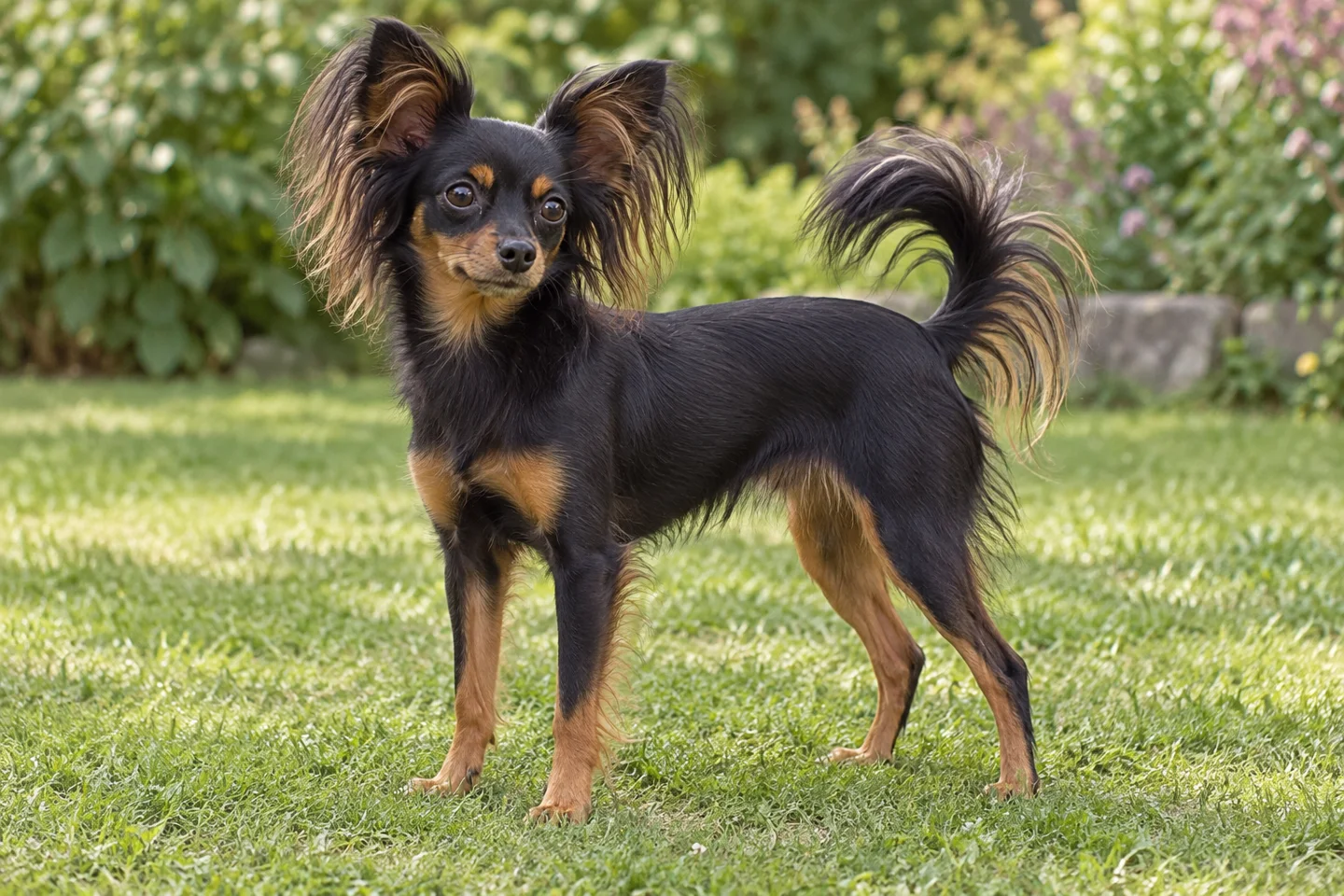
- Illustrated coat
- Long-haired black and tan
General information for owners. These articles have not been reviewed by a veterinarian. Medical decisions need your dog's history and an examination.
Small scale, a complete dog
The Russian Toy is a small companion breed developed in Russia. Its fine build, long legs, large eyes, and erect ears create a light outline quite different from a stocky little terrier. The FCI recognizes smooth-haired and long-haired varieties. Both belong to the same breed. Long ear fringes can make the long-haired dog look more substantial than it is, so an owner needs to remember the small body beneath that decorative hair.
The standard traces the breed's background to English-style toy terriers kept in Russia, followed by development of a distinct population. The long-haired variety arose during that development. A practical owner does not need a romantic account of palace life to understand the dog. Its present needs include companionship, opportunities to walk and explore, sensible training, and protection from physical situations that are disproportionate to its size.
Carrying is useful when a route becomes unsafe, but it should not replace every opportunity to experience the world from the ground. A dog that is always lifted before it can investigate may have little chance to learn ordinary walking skills. Choose safe places and allow manageable exploration. The task is to support a tiny animal's safety while giving it meaningful choices, rather than expecting it to function as a decorative object.
Verified size and the two coats
The FCI standard gives a height of 22 to 27 centimeters for both sexes, measured at the withers, and a weight up to 3 kilograms. These are adult standard figures. Deliberately seeking an unusually undersized puppy is not a health strategy. Ask about growth, feeding, and clinical history rather than paying extra for an informal label suggesting the smallest possible dog. The veterinarian should assess the actual puppy, including whether it is eating and developing appropriately.
The smooth-haired variety has a short, close coat. The long-haired variety has longer hair on parts of the body and limbs, with distinctive ear fringes developing as the dog matures. The coat should not become the dense, stand-off body covering of a Pomeranian. Our illustrations use a long-haired black-and-tan dog with natural erect ears and a complete tail. A young puppy will have much less mature fringe than the adult illustration.
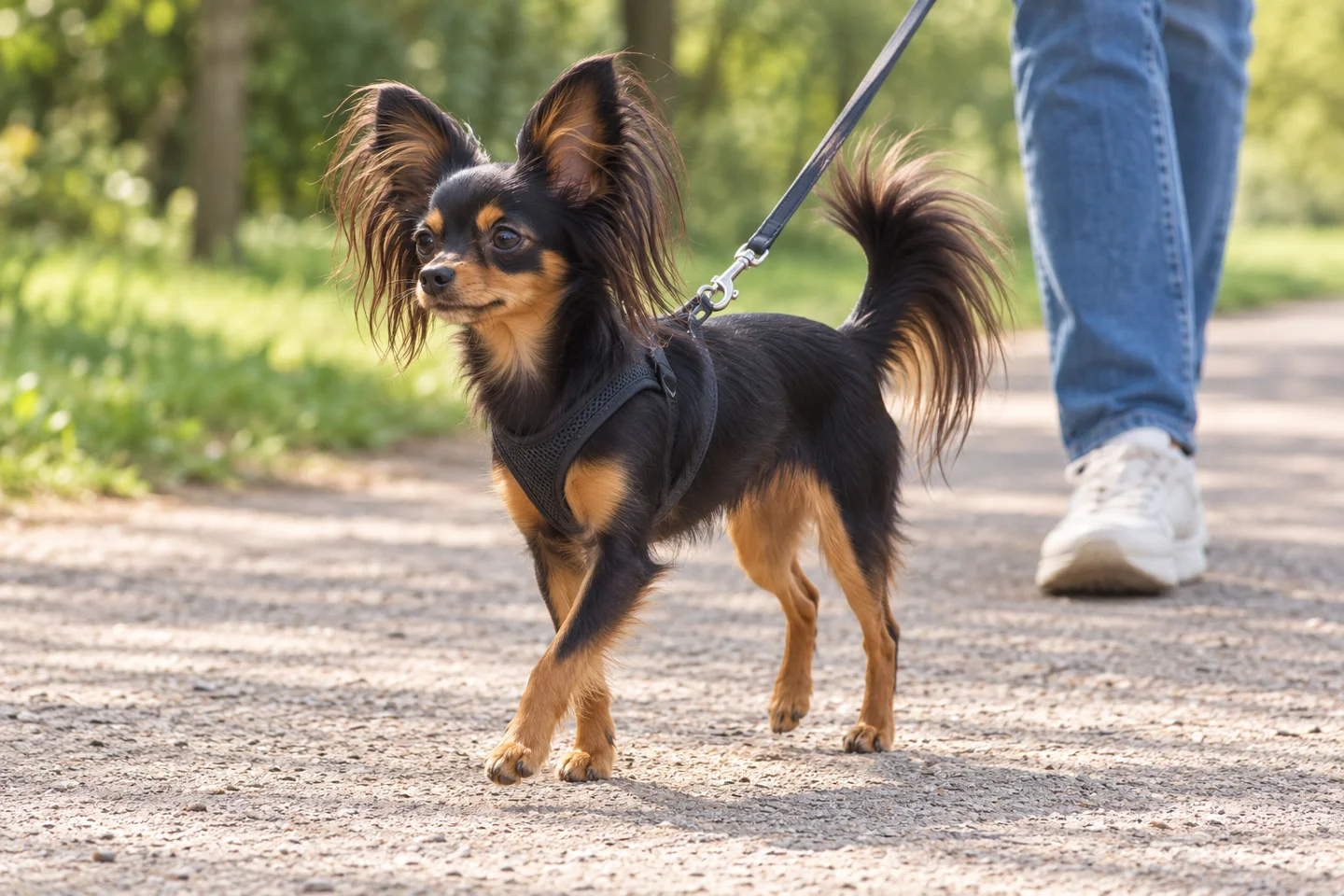
The tail in the FCI description can be carried in a sickle shape when the dog is alert. Natural features matter when explaining appearance; owners do not need to alter ears or tails to enjoy a companion. Fit a light harness to the individual chest and check that the dog cannot back out of it. A gap that looks minor to a person can be enough for a very small dog to escape during a surprise.
Preparing the room at dog height
Look around the home from the dog's level before arrival. Gaps behind appliances, open stair edges, folding furniture, and a heavy door closing quickly can create risks that are easy to overlook. Make safe routes between the bed, water, and toileting area. A small dog benefits from predictable access, especially when people are carrying shopping or moving furniture and cannot see what is beside their feet.
Decide where the dog rests while cooking and eating. A comfortable mat outside the main traffic line can reduce repeated lifting and accidental stepping. Teach that location with rewards before using it during a busy meal. If furniture access is allowed, consider a stable, appropriate route rather than assuming repeated leaps are harmless. Ask the veterinarian about arrangements that suit the dog's development and mobility.
Visitors should know the basic rules on arrival. They should check before moving a chair, let the owner manage the door, and avoid passing the dog between people. A tiny dog can be injured during an affectionate but awkward lift. Support the body and explain the technique to anyone who genuinely needs to handle it. When handling is unnecessary, allowing the dog to approach on the floor often provides a calmer experience.
Training that respects the small body
Teach the Russian Toy the same useful skills expected of a larger companion: coming when called, waiting at a doorway, following the handler, and resting during household activity. Keep sessions short enough that the dog remains engaged. Use very small rewards and a clear marker for the desired response. The physical size of a treat matters when many repetitions are needed, and all food rewards contribute to the day's intake.
Toileting practice needs frequent opportunities, a consistent location, and observation. A tiny bladder and a new routine require patience. Reward the successful behavior and clean mistakes without frightening the puppy. If a previously reliable adult changes its pattern, ask the clinic about possible medical causes. An owner should not decide that a small dog is untrainable because accidents have continued under an inconsistent schedule.
Introduce handling as separate steps. The appearance of the harness, touching the chest, fastening a strap, and taking the first walk can each be practiced comfortably. A trainer should be able to adapt demonstrations to the dog's scale rather than using corrections designed for a much heavier animal. Reward-based methods also make it easier to distinguish lack of understanding from fear or discomfort during a task.
Exercise and comfortable daily exploration
The Russian Toy needs real activity despite its size. Short walks, simple searches, and gentle play can provide movement and opportunities to investigate. Let the dog sniff appropriate areas rather than transporting it through the entire outing in a bag. Adjust the plan to age, condition, weather, and the dog's response. Several manageable sessions may suit a puppy better than one long excursion arranged around the owner's schedule.
Watch the surface. Hot paving, deep mud, sharp grit, and gaps in structures can have a substantial effect on a tiny dog. Select equipment and clothing only when they solve an actual comfort or safety problem and do not restrict movement. A coat should fit without rubbing, and wearing it needs its own gradual introduction. Check the dog directly instead of assuming that fashionable winter clothing proves it is warm enough.
Include quiet rest after activity. If the dog struggles to settle, review stimulation and routine before adding more strenuous play. Repeated jumping and frantic indoor chasing are not the only ways to provide exercise. An easy search with a few hidden pieces of the measured ration can offer an alternative. Sudden reluctance to walk, an unusual gait, or marked fatigue deserves veterinary attention rather than encouragement to push through it.

Aggression and the right to avoid contact
A Russian Toy's teeth can injure, and small size should not make threatening behavior a source of amusement. Growling during lifting, snapping near a bed, or guarding a chew needs investigation. Stop recreating the situation and consider pain, fear, and previous handling experience. A dog that objects to being picked up may need a medical assessment as well as a new teaching plan.
Give the dog a way to opt out before the response escalates. Do not chase it under furniture to continue petting or hold it toward a visitor after it has turned away. Teach an approach cue and reward voluntary participation. If an essential care task cannot be completed safely, ask the veterinarian and an appropriate behavior professional how to proceed. Continuing a physical struggle can make the next attempt more difficult.
Resource management should be practical at this scale. Put meals where nobody will accidentally reach into the bowl, and remove tempting unsafe objects before the dog finds them. Teach exchanges with safe items in easy circumstances. If a bite has occurred, tell other carers the facts rather than minimizing it because the dog is tiny. Reliable management depends on knowing what happened and what must change.
Children and larger household animals
Young children should interact with the Russian Toy at a low, stable level under adult supervision. Sitting on the floor can reduce the distance of a possible fall, but it does not make grabbing or restraint acceptable. An adult should manage the dog and the activity. Children can offer a treat onto a mat or help prepare a simple search without needing to lift the dog.
Keep rough play, running groups, and the dog's resting space separate. A child may move furniture or drop a toy without noticing the dog beneath it. Explain these risks concretely rather than telling the child only to be gentle. When the adult's attention moves elsewhere, use a suitable safe area for the dog. A gate must have openings small enough to contain it securely.
Introductions to larger dogs require control of speed and space. A playful paw or body bump can be significant. Avoid using a large dog's friendly reputation as the only safeguard. Cats also need individual assessment, since a tiny puppy may be vulnerable during an encounter. Provide routes and resting places that prevent either animal from repeatedly cornering the other, and supervise until the household's actual pattern is understood.
Grooming long ear fringes without pulling
For the long-haired variety, check the ear fringes and fine hair on the limbs for tangles. Support the hair near the skin while working gently rather than pulling through a knot. Short, comfortable sessions are easier to teach than waiting until a large tangle requires prolonged restraint. Ask a groomer familiar with the coat to demonstrate appropriate tools and technique. A puppy's developing fringe should be handled with particular care.
The smooth-haired variety has less coat work but still needs skin inspection and ordinary hygiene. Both varieties need nails, teeth, and ears checked regularly. Lift and look without pushing implements into the ear canal. Persistent redness, odor, discharge, or head shaking belongs with the veterinary clinic. Decorative hair should never prevent recognition of pain or a skin problem.
Toothbrushing should use a canine product and a gradual introduction. A small mouth still needs professional assessment, and persistent bad breath or difficulty chewing should not be dismissed as normal for a toy dog. Keep a record of dental advice and treatment. Before an appointment, explain any handling concerns so the team can plan appropriately. Home grooming and dental habits support care, but they cannot replace diagnosis or treatment when a problem is present.
Health screening with clearly separated purposes
The Russian Toy Club of America's health page lists patella evaluation, an ophthalmology examination, and a basic cardiology examination within its OFA screening discussion. It also identifies optional assessments including Legg-Calve-Perthes, hip and elbow evaluations, and paired serum bile acids. Ask for the reports relevant to the parents and confirm the current protocol before a breeding decision. A routine puppy check is useful but answers a different question from adult breeding-stock screening.
The club also encourages research sample collection and owner surveys. Participation in a repository or survey should not be described as a diagnostic clearance. Likewise, a commercial DNA report needs its test names and interpretation. It cannot replace an examination of the eyes, heart, or knees. If a seller uses a broad claim such as fully health tested, ask them to explain exactly which assessments support it.
For the individual dog, maintain clinical follow-up even when parental reports are satisfactory. A skipping gait, reluctance to bear weight, or reduced willingness to move deserves veterinary assessment. Do not diagnose the cause from a social-media description of a common toy-dog condition. Bring a video if it safely captures an intermittent change. The clinician can decide which examination or tests are appropriate.
Medication and feeding instructions must fit the actual dog. Keep an accurate current weight and use the product and dose supplied by the veterinary team. Small measuring errors can represent a substantial portion of a toy dog's prescribed amount. If appetite drops or the dog becomes weak, contact the clinic promptly rather than experimenting with internet remedies. A growing puppy's care plan should include clear instructions about when to seek help.
Food, mixes, and the cost of small-dog care
Use a complete food appropriate to life stage and measure portions carefully. Small dogs may receive a large fraction of their daily energy through treats without the owner noticing. Agree on one household system so several people do not each add an extra meal. Monitor body condition and ask for guidance if the dog is persistently thin, gains excess weight, or has difficulty eating.
A Russian Toy mix may have a different adult build and coat from either recognized variety. The presence of ear fringes does not prove the other parent's identity. Ask which ancestry is documented and what is known about the actual parents' health and behavior. Crossbreeding cannot guarantee a particular temperament or eliminate the need for screening and clinical care. An adult's observed needs remain more useful than an appealing name for the cross.
Budget beyond food, which is only one small part of care. Veterinary dentistry, secure transport, suitable boarding, training help, and unexpected treatment can still be substantial. Obtain local prices and check insurance terms. Make sure a backup carer understands safe lifting, secure doors, and the dog's handling preferences. A tiny dog may be easy to transport, but that convenience does not remove the need for dependable daily arrangements.
A dogsDating meeting scaled to the dog
Use dogsDating to find a companion with a compatible pace and play style, rather than selecting only by a similar photograph. Explain the Russian Toy's size and whether it prefers a walk to physical play. Ask how the other dog behaves around much smaller animals. An owner who can keep their dog at a distance and respond promptly provides useful reassurance; a claim that the dog loves everyone is less specific.
Choose a quiet public location with safe ground and room for each dog to move independently. Begin with separate walking and let both handlers observe. Avoid placing the Russian Toy on the ground inside a group of unfamiliar dogs. If it repeatedly seeks escape or the larger dog keeps pursuing it, end the interaction. Carrying out a calm departure is a valid outcome of the first meeting.
Keep exact user coordinates private. An approximate discovery area and agreed public landmark can arrange the outing without revealing a residence. Afterward, note whether the dog could explore, take a break, and leave comfortably. Those observations help decide whether to repeat the walk or choose another partner, while respecting the small dog's ability to have its own social preferences.
Sources and editorial notes
Sources checked October 22, 2026. Breed measurements describe reference ranges, not a diagnosis or an individual dog's ideal weight. Images are AI-generated breed illustrations and do not document a particular dog or health condition.
- AVSAB: Humane Dog Training Position Statement
- VCA Animal Hospitals: Food aggression in puppies
- Orthopedic Foundation for Animals: CHIC health screening programs
- VCA Animal Hospitals: Aggression toward unfamiliar dogs, diagnosis
- VCA Animal Hospitals: Grooming and coat care for your dog
- VCA Animal Hospitals: Ear infections in dogs (otitis externa)
- AAHA: Feeding plans for healthy, appropriate weight cats and dogs
- VCA Animal Hospitals: Heat stroke in dogs
- AVSAB: Puppy Socialization Position Statement
- VCA Animal Hospitals: Dog behavior problems, aggression toward children
- Russian Toy Club of America: Health and genetics
- Fédération Cynologique Internationale: Russian Toy official breed standard
Keep getting to know dogs.
Read another guide or return to your dogsDating community.
Explore breed guidesBack to dogsDating