English Springer Spaniel
An English Springer Spaniel needs more than a household that enjoys its cheerful appearance.
How these guides are researched and reviewed
- Origin
- Great Britain
- Identity
- Sporting / Flushing Spaniel
- Care priorities
- Field or show-family needs, feathering, eye screening
- Adult standard size
- FCI approximate shoulder height: 51 cm
General information for owners. These articles have not been reviewed by a veterinarian. Medical decisions need your dog's history and an examination.
Decide which Springer life you are preparing for
An English Springer Spaniel needs more than a household that enjoys its cheerful appearance. Ask how the particular dog spends its day, what kind of work or sport its family has done, and how it settles when the activity finishes. Owners often distinguish field and show backgrounds, but a label does not replace observation. Differences within families and individuals can affect the amount of coat, style of movement, and practical routine you will manage. Begin with the available dog and your actual week.
Picture a wet weekday morning rather than a holiday walk. Where will the dog dry, who checks the feet and ears, and what happens when you leave for work? A compact sporting body can fit into ordinary homes while still needing a substantial commitment to outdoor learning and company. Talk with people living with adults and ask about difficult phases as well as enjoyable outings. An adult whose household behavior is known may suit some owners better than a puppy with much of its development still ahead.
British flushing history and the name Springer
The FCI identifies the English Springer as a British flushing and retrieving dog. The springing role describes finding and moving game, which helps explain why hedges, cover, and bird scent can become absorbing. That background is distinct from a guarantee of present training. A dog with a pedigree may never have received field instruction, and a puppy showing an interest in birds has not learned to stop safely or return under difficult distractions.
English and Welsh Springer Spaniels are separate breeds. English Cocker Spaniels are also separate despite shared sporting language and overlapping appearance in some photographs. Check the recorded name when comparing parentage and medical reports. A rescue's suggested identity may remain uncertain. Do not infer a complete ancestry from ear length or a white blaze. Practical care can still be accurate when it is based on current size, coat, behavior, and clinical findings instead of a more confident pedigree claim than the evidence supports.
A coat and body you can assess in person
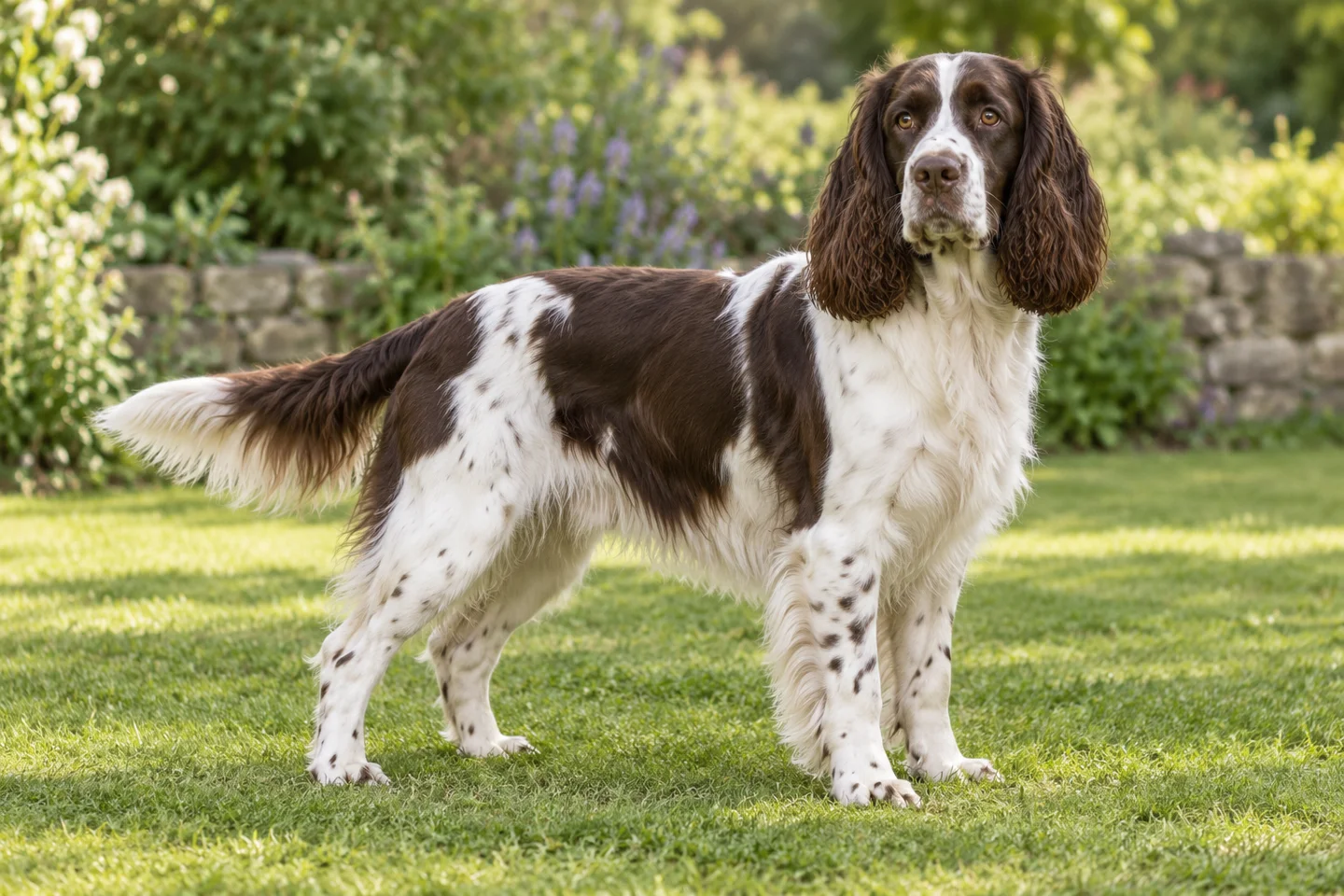
The English Springer has a strong athletic spaniel outline, feathered drop ears, and a straight weather-resistant coat. The generated illustrations show liver and white with a long natural tail. Other standard colors exist; this chosen example does not represent every pattern. Illustrations cannot establish correct movement, parentage, health, or the identity of an animal advertised elsewhere. Use them as orientation before assessing the actual dog and its needs with an experienced source and veterinary team.
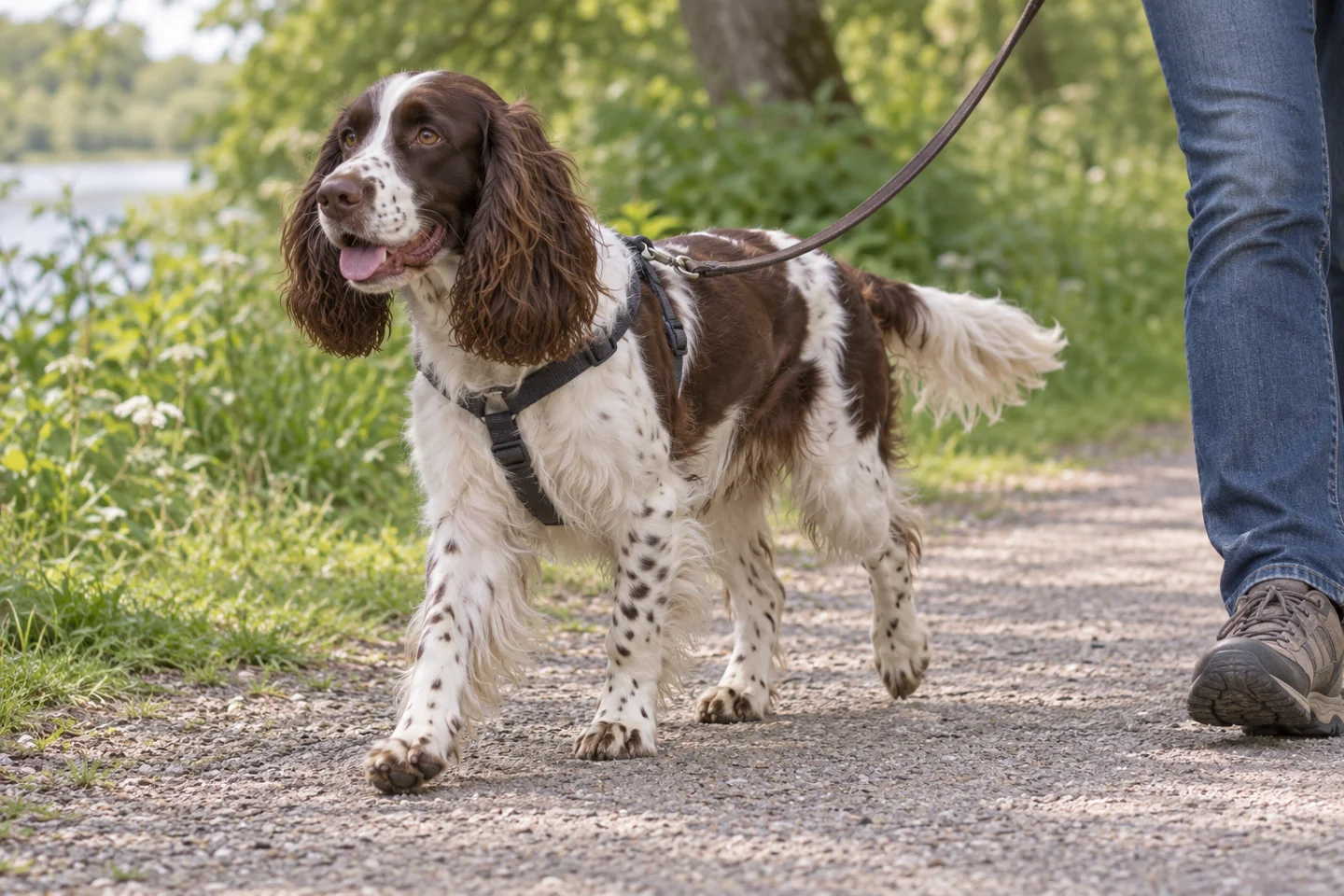
Look at comfortable movement after rest and during a turn, not only an excited straight run. Ask about recurring limping, reluctance to load into the car, or a new objection to touch. Fit the harness around the dog rather than through an assumed spaniel size. The ear feathering and armpit coat should not become trapped beneath straps. Try the arrangement in a quiet place and check security when the dog steps backward. Revisit the fit during growth and after changes in weight or coat condition.
The FCI gives an approximate shoulder height of 51 cm without a separate male and female range in this standard. That reference helps with the broad outline, but individual dogs and family backgrounds vary. Check the actual measurements before choosing a crate or harness, and leave practical room for comfortable movement. A height figure is not a body-condition target or a prediction of the dog's activity needs.
Training the transition from cover to handler
A spaniel absorbed in cover may miss a cue it performs easily in the kitchen. Teach the steps separately: noticing the handler, moving back toward them, pausing while equipment is adjusted, and being released to investigate an appropriate place. Reward those choices before you ask for them beside the most exciting hedge on the route. An instructor can help you choose useful distance and timing. Repeating a failed command through a difficult encounter rarely explains what the dog should do instead.
Use humane instruction if you plan field work, including guidance on the owner's responsibilities and the dog's preparation. Do not casually test reactions to gunfire, wildlife, or strenuous terrain. Companion activities can include searching and appropriate retrieving without live prey. AVSAB recommends reward-based learning. If a lesson becomes tense, reduce difficulty and examine the reward and environment rather than adding force. Teach a finish routine so the animal learns that putting equipment away predicts rest, not an indefinite negotiation for one more retrieve.
Retrieving without a contest over objects
Springer owners should teach carrying and exchanging objects before the dog finds something hazardous. Start with a suitable item that cannot be swallowed and a reward it will willingly exchange for. Keep the session relaxed and let the dog learn that approaching a person does not automatically create a struggle. Repeatedly chasing a puppy around the room can make possession and evasion into the most rewarding part of the game. Arrange access to household objects while teaching a better response.
If the dog stiffens or threatens over an item, step back and assess the risk rather than reaching in to prove control. VCA's resource-guarding guidance supports avoiding confrontational removal. Prevent children and other animals from entering the area, and obtain qualified help if the behavior recurs. An urgent retrieval is different from a training opportunity. If something dangerous has been swallowed, contact the veterinarian promptly and follow advice about the object and timing. Do not assume that appearing comfortable immediately afterward makes the event harmless.
Exercise around real conditioning and recovery
Plan an active routine that can be maintained through an ordinary week. Variety can come from suitable walks, exploration, learning, and controlled games without requiring repeated maximum-speed running. Ask about recent activity before setting off on a long trip. Endurance develops through preparation, and an eager Springer may keep participating after fatigue begins. Observe recovery after rest and the following day. Review persistent stiffness or altered movement clinically instead of describing it as proof of a particularly hard-working temperament.
Puppies need age-appropriate movement and enough sleep, with advice about repetitive impact or sport tailored to their development. Weather also changes the plan. Select cooler hours in heat, offer water, and shorten outings when the dog struggles. Severe distress or collapse requires urgent assistance. On rough ground, allow time afterward to inspect feet and skin. Embedded material, a painful swelling, or a wound needs appropriate care. A field ancestry does not make an individual resistant to heat, injury, or the consequences of abruptly exceeding its conditioning.

Water, vegetation, and the return to the car
An enjoyable outing includes a safe return. Keep towels and dry bedding ready and check whether the dog has collected vegetation around ears, feet, and underside. Remove loose surface material gently; avoid digging into a painful area. A dog that dislikes being dried can learn the procedure during brief quiet sessions before a wet walk makes it unavoidable. Stable footing at the vehicle helps when the animal is tired and people are handling equipment in a confined space.
Do not assume a sporting label guarantees safe decisions near water. Assess access, currents, banks, water quality warnings, and the ability to leave before allowing entry. Use professional guidance for water activities and appropriate safety equipment where needed. Prevent uncontrolled leaps from unfamiliar banks. After an outing, notice unusual fatigue or respiratory difficulty and seek advice when concerned. The owner remains responsible for choosing conditions the dog can manage; enthusiastic entry into water does not establish swimming endurance or a safe route back out.
Children and an excited spaniel’s entrances
Arrange the doorway before the dog and child arrive there together. An adult can take the Springer to a clear space while bags, school food, or muddy equipment are dealt with. This reduces pressure on everyone and avoids asking a child to manage excited movement. Keep a quiet resting place away from active games and use a barrier when supervision cannot be continuous. A friendly dog still needs the option to sleep without repeated visits or touches.
Explain how to invite contact and let the dog remain away. Children should leave meals, chews, and found objects alone and ask an adult for help. Long ears and soft-looking feathering do not make pulling or restraint acceptable. Watch changes in the whole body, including efforts to leave or a sudden still posture. End the contact early if comfort is uncertain. Visiting friends bring different sounds and movement, so give them clear instructions rather than expecting familiar family habits to transfer automatically to a busy gathering.
Aggression needs assessment, not a shorthand label
A Springer that growls during grooming, snaps over food, or reacts to another dog needs an explanation based on the incident. Do not use a breed nickname or a claim about temperament to bypass clinical and behavioral assessment. Record what preceded the response, where the dog stood, and whether retreat was available. New sensitivity during handling warrants veterinary examination. The fact that the dog still plays or walks does not exclude discomfort affecting a particular body area.
Prevent a repeat while obtaining advice. Use separate resources and barriers, and give carers honest information about threats or bites. Punishing a warning can leave the cause unresolved while making it less visible. Repeated aggression or escalating fear requires qualified behavior support alongside veterinary care and a workable safety plan. An owner should not ask strangers or children to test whether the dog has improved. Any muzzle recommended within treatment needs gradual positive introduction and cannot replace suitable distance, supervision, or changes to an uncomfortable situation.
Health tests for joints and eyes
The AKC's published English Springer recommendations include hip and elbow evaluation, ophthalmologist evaluation, and a DNA test for the named PRA-crd4/cord1 variant. Request identifiable reports rather than a verbal claim that everything was tested. Clinical eye examination and a selected genetic result provide different information. A panel covering one cause of retinal disease cannot exclude every possible vision problem, and an apparently bright expression at a visit cannot replace the appropriate specialist assessment.
Ask about significant diagnoses in relatives and how the source follows up after placement. Results should have dates, identities, methods, and findings that your veterinarian can interpret. They support decisions without guaranteeing a life free of illness. When adopting without parental records, preserve the distinction between an absent result and a normal one. Arrange current examination and preventive care and investigate symptoms as they arise. Present lameness, eye discomfort, or altered behavior still needs assessment even if earlier screening or family information was reassuring.
Food, absence, and a budget beyond purchase
Feed a complete diet chosen for age and medical requirements, adjusting portions using actual condition and workload. Count the small rewards used through a day of learning. Separate meals to prevent competition and observe intake. Persistent digestive signs, appetite changes, or unusual thirst deserve advice rather than a series of unplanned food changes. Discuss supplements and home-prepared feeding with someone qualified to assess the whole diet. A dog willing to eat enthusiastically has not demonstrated that its nutrient balance is correct.
Budget for routine treatment, grooming help, secure equipment, classes, emergency care, and reliable help when you are away. Teach short comfortable absences and observe the dog's response. Sustained pacing, calling, or exit-directed behavior needs support before a long workday is expected. Rehearse an outing and care routine with a backup person. Later-life access also deserves planning: a vehicle entrance, slippery floor, or long route may need adjustment. Retain opportunities to sniff and participate while medical advice and current comfort guide changes to physical demands.
Mixes and dogsDating without promises
An English Springer mix can vary in coat, size, outdoor interests, and social behavior. Ask how ancestry was established and assess the individual. Mixed parentage does not remove inherited concerns or guarantee easy care. For a planned cross, relevant questions include both parents; for an adult rescue, observations from its current setting may provide the clearest immediate information. A responsible source explains uncertainties, support, and return arrangements instead of treating an attractive crossbreed name as a substitute for evidence.
On dogsDating, describe this dog's known preferences and relevant incidents honestly. Keep exact home coordinates private and arrange a first meeting on a public route with room for separate handlers to adjust distance. Walk before considering close contact, and leave shared toys or chews out. Stop if either dog becomes overwhelmed or cannot disengage. A calm outing may be enough. Home visits, joint travel, and breeding suitability involve separate questions and should not be inferred from one pleasant social walk or a photograph of the dogs together.
Prepare the care handover before travel
A sitter needs more than a bag of food and the information that the dog likes walks. Provide the actual equipment, demonstrate how it fits beneath the ear and chest furnishings, and explain where the dog stays attached. Include the route that works when conditions are difficult, not only the favorite open area. Let the sitter practice while you are present, then discuss what happened. If the dog pulled toward cover or objected to the drying routine, solve the issue before a week-long booking makes improvisation necessary.
Keep veterinary contacts, medication directions, and permission arrangements clear and accessible. Ask the clinic what information a temporary carer would need in an emergency. Show the carer which observations are normal for this individual and which changes merit a call. If the dog has had a resource incident or requires a handling plan, provide that information directly instead of using vague phrases that obscure what to do. A written plan also helps family members maintain consistent routines when the usual owner is ill. Practical preparation protects the dog and the people helping with it while leaving room to adjust outings to weather, energy, and recovery on each day.
After the arrangement ends, ask the carer which parts were straightforward and which needed work. Use that experience to improve the next handover rather than assuming silence means every detail went smoothly.
Sources and editorial notes
Sources checked October 21, 2026. Breed measurements describe reference ranges, not a diagnosis or an individual dog's ideal weight. Images are AI-generated breed illustrations and do not document a particular dog or health condition.
- VCA Animal Hospitals: Grooming and coat care for your dog
- VCA Animal Hospitals: Ear infections in dogs
- VCA Animal Hospitals: Common emergencies in dogs
- VCA Animal Hospitals: Food aggression in puppies
- VCA Animal Hospitals: Heat stroke in dogs
- VCA Animal Hospitals: Aggression toward unfamiliar dogs, diagnosis
- AAHA: Feeding plans for healthy, appropriate weight cats and dogs
- Orthopedic Foundation for Animals: CHIC health screening programs
- American Kennel Club: sporting group recommended health tests
- Federation Cynologique Internationale: English Springer Spaniel breed standard
- AVSAB: Humane Dog Training Position Statement
- VCA Animal Hospitals: Water sports for dogs
Keep getting to know dogs.
Read another guide or return to your dogsDating community.
Explore breed guidesBack to dogsDating