Finnish Hound
A Finnish Hound needs a home that understands independent scent work and can provide safe opportunities for investigation.
How these guides are researched and reviewed
- Origin
- Finland
- Identity
- Hound / Scenthound
- Care priorities
- Independent scent work, voice, conditioning
- Adult standard size
- FCI height: males 55–61 cm; females 52–58 cm
General information for owners. These articles have not been reviewed by a veterinarian. Medical decisions need your dog's history and an examination.
A Finnish Hound’s nose belongs in the ownership decision
A Finnish Hound needs a home that understands independent scent work and can provide safe opportunities for investigation. The FCI describes a Finnish breed used to follow hare and fox scent, with voice forming part of the work. A tricolor coat and a sociable greeting do not show how the dog will respond to a trail outside the gate. Decide where it can walk, how boundaries will be maintained, and who will manage the routine when the usual owner is unavailable.
Meet an adult during an ordinary outing and remain long enough to observe what happens afterward. Ask about recovery, rest, vocalization, and response to another handler. A working animal entering companion life may need teaching about indoor surfaces or time alone. A puppy brings a different set of uncertainties as it develops. Choose a source that distinguishes observed experience from expectations. Practical compatibility comes from the actual dog and the care your household can sustain, rather than a general claim that an active family and a hunting breed must suit each other.
Finnish development and a recognized hound identity
The FCI traces organized development through the Finnish Kennel Club, established in 1889, and records the breed's first standard in 1932. It describes contributions from earlier country dogs and other hound backgrounds. This supplies context for a recognized Finnish identity without establishing the complete ancestry of every modern individual. Recent family records and current experience are more useful to a placement conversation than unsupported claims about a remote ancestor.
Finnish Hound is separate from the Estonian Hound and from other tricolor scenthounds. Ask for the exact registry identity when pedigree or test records are discussed. A rescue label may remain a visual estimate, and that should stay explicit. A dog can receive appropriate care without verified ancestry, but a familiar saddle pattern cannot supply missing medical information. Evaluate actual size, behavior, and condition. Where a source makes broad claims about instinctive ability, ask what training and observation support the statement and which situations have never been tested.
Athletic proportions and a functional short coat
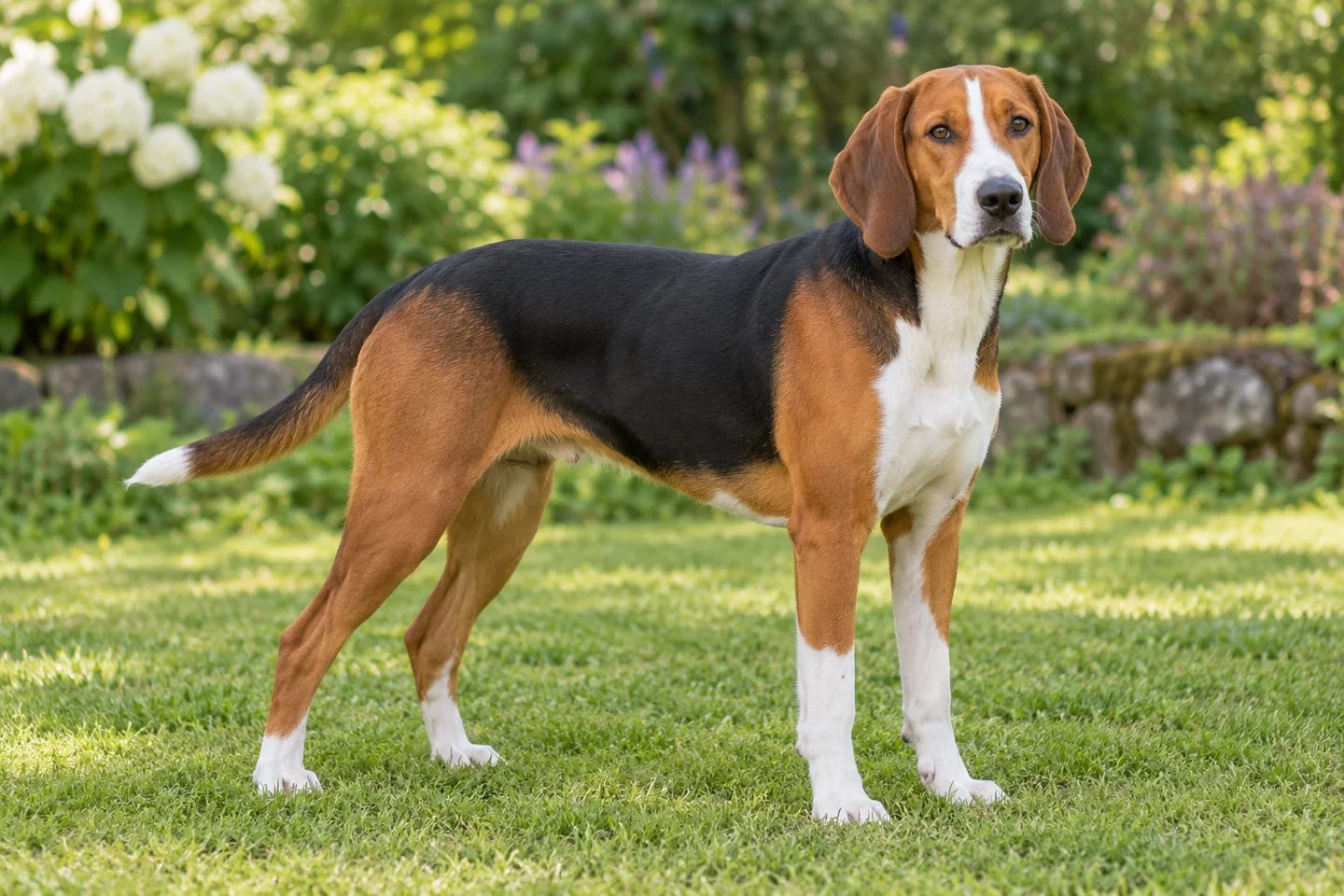
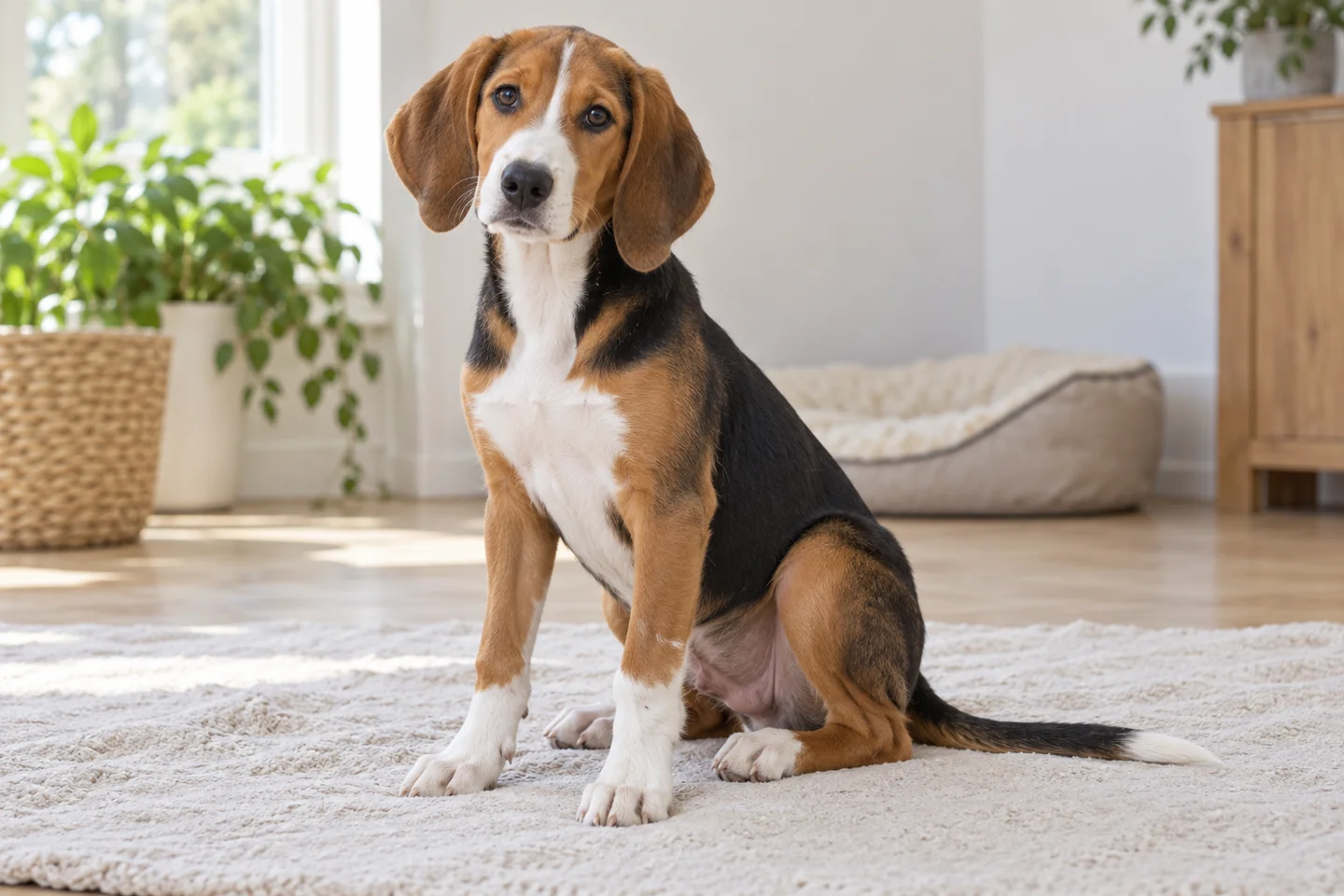
The Finnish Hound is strongly built without an intended heavy outline, and its body is clearly longer than tall. The tricolor pattern combines black, tan, and white, with pendant ears and a natural tail. The illustrations present generated breed examples rather than photographs documenting a pedigree or a clinical finding. They can help a reader recognize the broad type, but not judge whether an advertised puppy will develop identical markings or meet every standard detail.
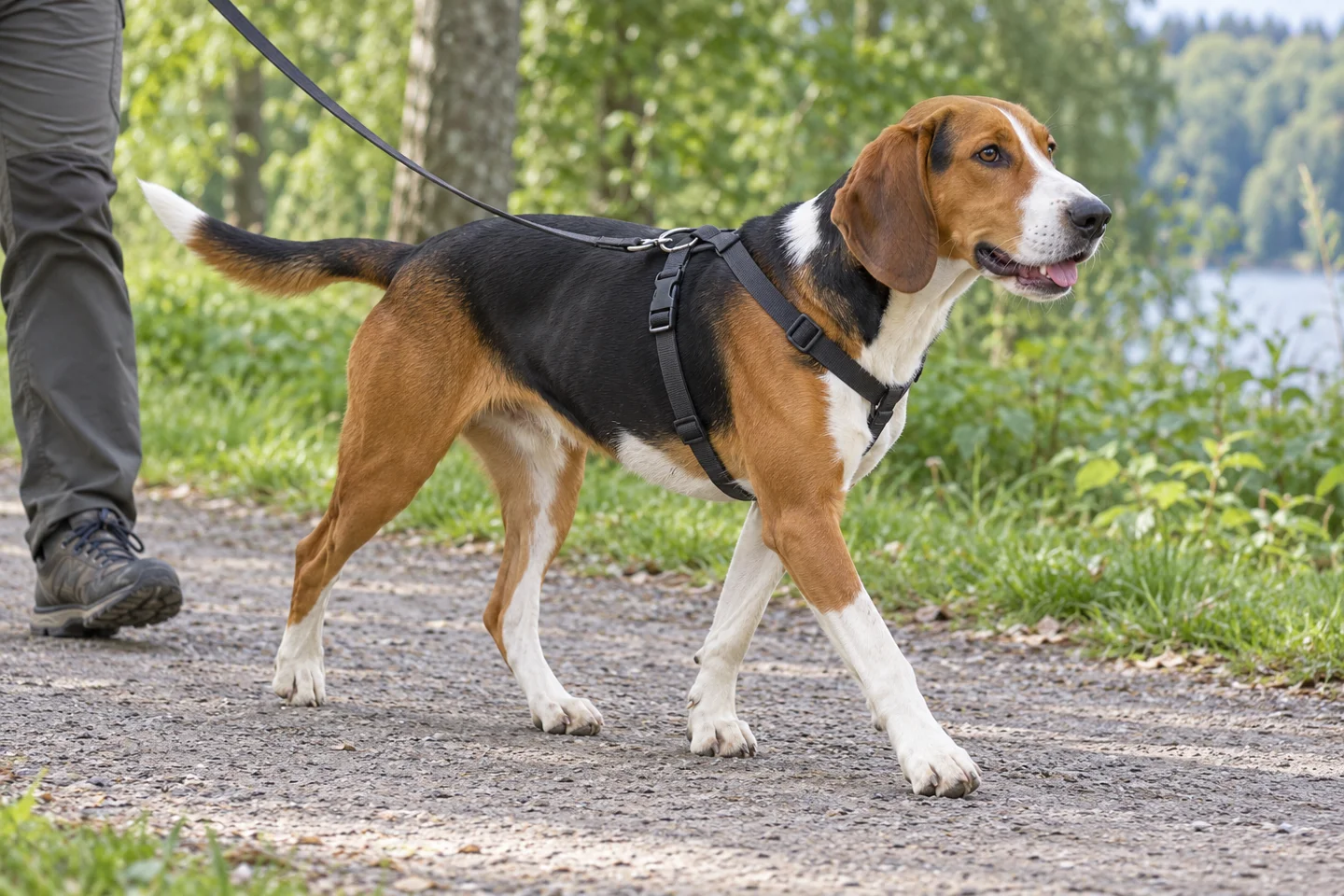
Observe the real dog walking, changing direction, and rising after a period of rest. Ask about repeated stiffness or a recurring limp even if excitement makes the movement look easier during your visit. The veterinary team can help assess condition rather than choosing a scale goal from appearance alone. A harness needs a secure fit during a backward step and enough freedom for the shoulders. Check beneath straps after use. Quiet practice before a journey gives both dog and handler time to understand equipment without competing demands from an unfamiliar route.
The FCI adult shoulder-height ranges are 55–61 cm for males and 52–58 cm for females, with narrower ideal ranges within them. These figures give a sense of the hound’s working outline without prescribing a weight or predicting every puppy’s dimensions. Measure the actual animal for travel and equipment. A medium-height hound can still apply substantial force when a trail becomes absorbing, so handling preparation must consider more than shoulder height.
Morning preparation before the scent takes over
Have equipment, rewards, and a route ready before opening the door. Ask the dog to participate in a familiar sequence: moving into position, accepting the lead, and waiting briefly while the exit is managed. Reward cooperation before an interesting smell at the threshold makes concentration harder. Every regular carer should know that sequence. Inconsistent door habits can undermine a secure garden if one visitor assumes the dog will simply wait because someone else usually asks it to.
Once outside, choose suitable places for investigation rather than pulling continuously past everything. Reward offered attention and then allow an appropriate sniff again. This makes engagement with a person useful within the outing. If the hound becomes absorbed, move to an easier situation before repeating the exercise. A handler may need to change the route or distance, not just the volume of a cue. An instructor familiar with humane scent-dog handling can help identify the point where learning becomes workable and where management must take priority.
Training around independent work
An independent hunting role does not mean a Finnish Hound cannot learn, and it does not make punishment necessary. AVSAB recommends reward-based methods. Identify which outcomes matter to this dog and make the task clear. Returning toward a person, pausing while a clip is adjusted, and following a change of direction can be taught in manageable stages. A dog that performs a skill in one quiet place still needs practice before the same cue is useful near quarry scent.
Field work requires instruction for the owner as well as the animal. Do not assume a pedigree or a working relative teaches every part of a safe day. Learn about terrain, welfare, conditioning, and local access responsibilities. Companion searches can use suitable objects in controlled surroundings without live game. Keep the task achievable, protect other animals, and stop before fatigue or frustration dominates. Include an obvious finish to activity so the dog can learn the household's quiet periods rather than expect another event every time it approaches the owner.
Exercise and the recovery you cannot see mid-trail
Build fitness according to recent activity. A dog may continue eagerly with a compelling scent after muscles or feet have begun to tire. Notice gait after rest and the following morning rather than judging only by willingness during the outing. Puppies need developmentally sensible exploration and sleep; seek individual advice before repetitive running, impact, or sport. An adult returning from illness or a quieter period also needs a revised starting point instead of being asked to resume its former workload immediately.
Choose conditions that fit the animal. Warm weather calls for cooler hours, water, shade, and an early way back. Severe distress, weakness, or collapse needs urgent help. Wet or cold outings also need a comfortable recovery arrangement. Inspect feet and skin after rough ground, obtaining care for embedded material, painful swelling, or a wound. Keep a modest alternative route for days when the planned trip is unsuitable. A working description should encourage preparation, not turn discomfort into something the dog is expected to ignore.
Voice, a quiet afternoon, and the neighborhood
A hound's working voice can be welcome in one setting and difficult in another. Ask specifically when this dog calls and how long it continues. A response to a scent, repeated window activity, and distress after departure may require different changes. Record circumstances rather than treating every sound as inevitable breed behavior. A source should be willing to discuss what neighbors might hear and what management has already been useful.
Teach a predictable end to an outing, allow water and rest, and provide a sleeping place away from continuous surveillance of the front path. If someone restarts play each time the dog becomes restless, review what that sequence teaches. Observe short absences with a recording when needed. Sustained pacing, calling, or attempts to escape deserves support before longer isolation is expected. Another dog may offer company but cannot be assumed to treat distress. Consider the limits of your housing honestly before placement, including shared walls and entrances that leave little room for adaptation.
Children and safe contact after activity
An adult should manage the hound's return while children continue their own activities elsewhere. Drying, drinking, and equipment removal need room, particularly when the dog is excited or tired. A bed outside the main play route can provide genuine rest. Teach children that an invitation can be declined and that a resting animal should not be repeatedly approached. Use a barrier when close supervision is impossible rather than expecting a child or dog to resolve an uncomfortable interaction alone.
Avoid hugging, pulling pendant ears, leaning over the face, or taking objects from the mouth. Meals and chews should remain undisturbed, with an adult retrieving misplaced belongings nearby. Watch withdrawal or unusual stillness and stop contact before stronger warnings are needed. Visiting friends bring unfamiliar movement and may require a different arrangement from a quiet family evening. Review routines after a change in the dog's condition or a child's mobility. Familiar affection contributes history without guaranteeing that every later touch will be comfortable.
Other dogs and the smaller animals on a route
Ask whether previous canine contact involved a home or only outdoor work. Sharing a walk does not establish comfort with another dog's access to a bed, person, or food. Provide separate resources during adjustment and watch repeated following or blocking. A quieter animal trying to withdraw should receive a break. Manage size and energy differences so one dog's enthusiasm cannot become repeated collisions or unwanted pursuit for the other.
Cats need protected routes and introductions that prevent chasing. Quarry interests make small-pet security a serious question, though breed alone cannot tell you the individual response. Birds, rabbits, and rodents require reliable separation even during cleaning or feeding. A familiar cat resting indoors may be perceived differently from an animal running outside. If fixation or pursuit appears, stop access and obtain guidance. Before adoption, decide whether the home's layout and available help can sustain the necessary boundaries during holidays, illness, and ordinary distractions.
Aggression and the practical account of a warning
Describe what happened immediately before growling, snapping, or a bite. Was the hound being touched, approached while resting, or crowded near an item? Could it leave? Stop the pressure and prevent someone else from repeating the encounter as a test. A new handling reaction needs veterinary assessment even if the animal is still eager to walk. Pain or illness can affect tolerance before a major decline in activity becomes obvious.
Keep valued resources apart from competition and practice exchanges in easy situations. VCA's guarding guidance explains why repeated confrontational removal can worsen the problem. Recurrent threats or a bite needs qualified behavioral help alongside clinical care and an explicit interim safety plan. Inform temporary carers clearly. Punishing a warning can make concern less apparent without changing its cause. Equipment recommended within a professional plan requires gradual introduction and does not make forced contact acceptable. Management should protect people and animals while treatment and learning develop, not wait for another incident to prove the first was serious.
Grooming and the inspection after cover
Use the short coat's relative accessibility to inspect skin and equipment-contact points rather than assume it needs no care. Brush loose hair appropriately and check toes after vegetation. Introduce drying and a brief foot presentation while the dog is comfortable. A stable surface and short session may be easier than attempting every task when the animal is tired. Seek help with embedded material or pain rather than repeatedly probing an area to complete an inspection.
Pendant ears need attention to odor, discharge, head shaking, or tenderness. Ask the veterinarian whether cleaning is needed and which technique suits the individual. Do not insert tools into the canal or reuse medication solely because an earlier episode looked similar. Maintain nails and teeth with suitable tools and gradual teaching. Tell professionals about handling concerns in advance. A painful problem needs timely treatment even when cooperative home care is still being learned, so ask how immediate clinical needs and a longer-term training plan can fit together.
Health records, prevention, and nutrition
Beyond a named DNA result, ask which assessments the source uses and why. Imaging, specialist examination, and a physical check provide different information. Request significant family diagnoses and follow-up on older offspring without turning anecdotes into disease frequencies. An adopted adult may lack those records. Keep the gaps explicit and begin with current examination. Persistent mobility, appetite, drinking, or behavioral changes still need investigation, and urgent problems such as collapse, respiratory distress, or major trauma require prompt care regardless of earlier reassurance.
Use a complete diet appropriate to age and medical needs. Measure an initial portion and include rewards used on walks or in searches. Review body condition with the veterinary team and adjust for real activity, including recovery periods. Separate meals so intake is visible and other animals cannot compete. Discuss supplements and seek qualified advice for home-prepared feeding. Routine prevention should match actual location and exposure, including parasites, vaccination, dental care, and travel. Keep emergency contacts and a transport plan accessible to the person responsible when you are absent.
Mixes, lifetime costs, and dogsDating
A Finnish Hound mix can have uncertain ancestry and a different combination of size, coat, voice, and interests. Tricolor markings are not a pedigree. Ask what is documented and assess the individual, considering both parents' relevant records for a planned cross. Budget for care, unexpected diagnostics, instruction, safe exercise access, transport, and competent help. Let a backup person practice the actual routine before travel or illness requires it. As the dog ages, adapt access and routes while retaining comfortable opportunities for investigation.
Use dogsDating to describe known social preferences and relevant incidents accurately. Keep exact home coordinates private and meet on a public route with room for separate handlers to change distance. Begin without shared food or toys and allow exploration rather than demanding play. End if one dog persists in following while the other tries to leave. A relaxed walk can be enough for the first meeting. Shared housing, vehicle travel, and breeding suitability involve different questions and should not be inferred from one agreeable outing or a close photograph.
The handover from a previous routine
Ask the previous carer to show the cue and equipment sequence rather than sending only a written description of the dog as trained. Record the sounds used for everyday actions and the rewards that have worked. A new owner may want different words, but the animal first needs a clear learning process connecting them to a familiar response. Keep early expectations modest while you discover which skills transfer to another person and place. A useful source remains available to clarify those details after the initial excitement of collection has passed.
Keep original medical paperwork, identifiers, and any reliable explanation of unfamiliar terms together. Ask the receiving clinic to clarify what an examination covered instead of translating an uncertain result into an apparently definitive label. Bring familiar food and bedding where practical and maintain a few predictable parts of the old schedule. Adjustment can change as confidence develops, so continue observing beyond the first quiet days. A planned review with the source or instructor helps identify emerging needs before the household assumes that every difficulty must reflect the hound's fixed personality.
Sources and editorial notes
Sources checked October 21, 2026. Breed measurements describe reference ranges, not a diagnosis or an individual dog's ideal weight. Images are AI-generated breed illustrations and do not document a particular dog or health condition.
- VCA Animal Hospitals: Grooming and coat care for your dog
- VCA Animal Hospitals: Ear infections in dogs
- VCA Animal Hospitals: Common emergencies in dogs
- Swedish Kennel Club: Ataxia SEL1L genetic testing
- Laboklin: Finnish Hound ataxia
- VCA Animal Hospitals: Food aggression in puppies
- VCA Animal Hospitals: Heat stroke in dogs
- VCA Animal Hospitals: Aggression toward unfamiliar dogs, diagnosis
- AAHA: Feeding plans for healthy, appropriate weight cats and dogs
- Orthopedic Foundation for Animals: CHIC health screening programs
- Federation Cynologique Internationale: Finnish Hound breed standard
- AVSAB: Humane Dog Training Position Statement
Keep getting to know dogs.
Read another guide or return to your dogsDating community.
Explore breed guidesBack to dogsDating