Istrian Coarse-haired Hound
The Croatian Istrian wire-haired scenthound needs secure scent outlets, realistic household preparation, rough-coat care, and carefully described health evidence.
How these guides are researched and reviewed
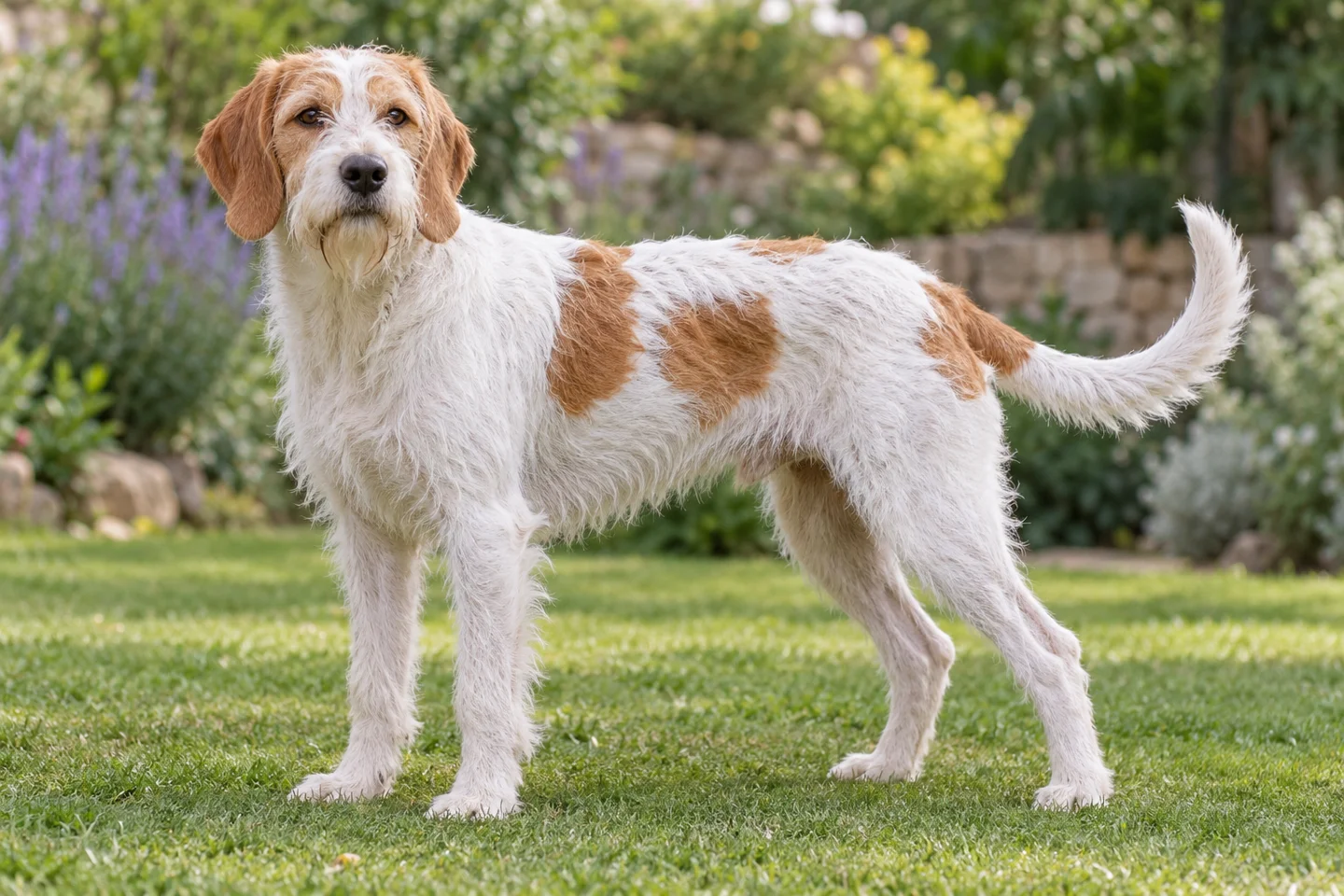
- Origin
- Croatia
- Adult standard size
- Males 50–54 cm; females 48–52 cm; stated ±3 cm tolerance
- Illustrated coat
- Snow-white wire coat with orange patches
General information for owners. These articles have not been reviewed by a veterinarian. Medical decisions need your dog's history and an examination.
Identify the Istrian wire-haired breed accurately
The Istrian Coarse-haired Hound is the breed described by the FCI as the Istrian Wire-Haired Hound, or Istarski Oštrodlaki Gonič. Those names refer to the same dog. It is distinct from the Istrian Short-haired Hound and should not be identified simply as a rough-coated version of any white-and-orange hound seen in a photograph. Ask for records and a source familiar with the breed. For a companion home, the most useful additional information concerns the individual's daily activity, voice, handling, and experience indoors.
The FCI gives Croatia as its origin and describes a scenthound suited to difficult terrain. Its historical account connects it with East Adriatic hounds and records the publication of an early FCI standard in 1955. These details supply context rather than a guarantee that a modern dog can manage every environment. A source should explain how the animals live outside field activity and what puppies learn before placement. If your home differs greatly from that setting, discuss the transition honestly instead of assuming the dog will adapt without deliberate preparation.
Adult dimensions and the white-and-orange coat
FCI adult heights are 50–54 cm for males and 48–52 cm for females, with a stated three-centimeter tolerance for animals meeting the standard's conditions. The breed has a strong rectangular body, hanging ears, a beard and moustache, and bushy eyebrows. Its coat is snow-white with orange markings and a rough texture. The illustrations use that pattern and a full natural tail. The standard does not justify inventing a fixed kilogram range for the breed or feeding an individual toward an unsupported online number.
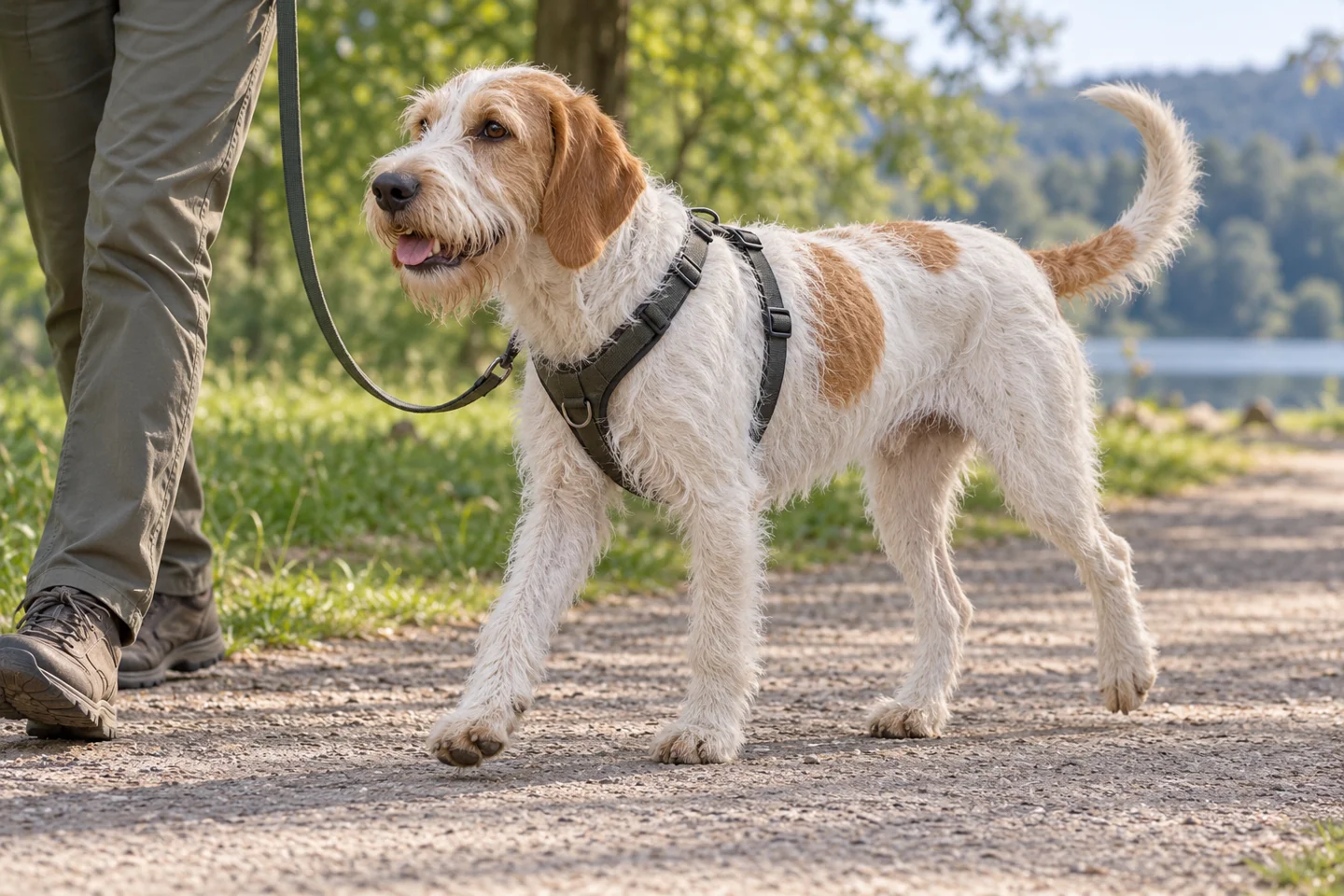
Fit the equipment to the body beneath the hair and check for rubbing. A harness that catches furnishings or shifts during a quick turn needs attention. Measure travel space and provide a comfortable bed away from the busiest route through the house. Watch the dog walk and turn, then ask about past injuries or reluctance to move. An AI illustration cannot evaluate its gait, pedigree, or health. Your veterinary team can help assess condition and growth on the individual rather than treating a rough coat and strong frame as proof of physical soundness.
Ask what the dog knows about indoor life
A hound raised around field routines may need specific teaching about household entrances, appliances, smooth floors, and periods without direct company. Ask a breeder or previous carer which situations have actually been practiced. A general claim that the dog is obedient does not tell you whether it will settle while people cook or remain comfortable when a visitor enters. Observe an adult during a quiet part of the day if possible. Recovery after excitement can be as informative as a demonstration of active work.
Set up the first days with predictable access to rest, toileting, food, and short outings. Avoid a crowded welcome gathering or repeatedly inviting people to touch the beard and ears. Let the dog approach and leave interactions. A useful resting place is somewhere it can remain without people stepping over it. If the animal repeatedly cannot relax, obtain help and review the arrangement. A working history should guide the questions you ask, while the individual response guides the plan. It should not be used to excuse ongoing distress as something a household must simply tolerate.
Training around a nose that has found something
Practice orientation to the handler before expecting the hound to leave an exciting scent. Reward looking toward you, moving a short distance together, and returning in an easy setting. Add outdoor difficulty gradually. When attention becomes fixed, change distance or location rather than repeating a cue until both partners are frustrated. A qualified reward-based instructor can help identify the point where the dog can still learn. AVSAB recommends reward-based methods and advises against aversive approaches to ordinary training and behavior problems.
Teach practical routines for gates, equipment, and pauses during walks. A suitable long lead can provide controlled investigation where the space is appropriate, but extra length needs competent handling to avoid tangles and sudden stops. Ask for a demonstration. Record where a cue works so a sitter does not expect a kitchen lesson to transfer immediately to woodland. Keep the lead and boundary plan reliable while training progresses. The purpose is a dog that can make useful choices with its handler, rather than a performance test in which one failure places an animal or person at risk.
Exercise and suitable terrain
The breed's working description includes stamina and rough-ground activity, but a pet's routine must match its current condition. A puppy, an older animal, or a dog after injury needs different demands from a trained adult. Discuss sustained running or a formal activity program with the veterinary team before increasing work. Controlled exploratory walks, searches, and short lessons can provide variety without making every outing a long strenuous event. Inspect enclosed areas before allowing freer movement, including gates, footing, obstacles, and other users.
Afterward, watch for stiffness, a changed gait, repeated licking of one area, or unusual fatigue. Persistent changes need assessment even when the hound remains interested in scent. On warm days, adjust effort, surface, timing, and water access before distress develops. Stop and seek veterinary guidance for concerning signs after heat or exertion. A strong rustic appearance is not protection against illness or injury. Keep a manageable alternative for days when the planned route is unsuitable and know how you would return to transport if the animal could no longer walk comfortably.
Voice and the choice of home
Ask about vocal behavior in the actual contexts your home will provide. Does the hound call when following scent, react at a window, or become distressed during absence? Those are different questions and can need different arrangements. The FCI description discusses the breed's voice, but it cannot establish how much any particular companion will vocalize. Talk to people who live with the adults and ask for examples from ordinary days. A quiet visit after a busy morning may leave important parts of the pattern unseen.
Before placement, consider shared walls, a busy boundary, and the hours company is available. Arrange a calmer resting space and reduce repeated access to difficult triggers where possible. Teach quiet alternatives during manageable practice rather than relying on punishment once arousal is high. If absence produces distress, review the schedule with appropriate professional help. A noise complaint can identify a time and place, but it does not establish the cause. Keep notes about preceding events and recovery so advice can address the individual's experience instead of applying one generic instruction to every bark.

Aggression and handling-related warnings
An Istrian hound can threaten or bite in particular circumstances even when a standard describes a gentle intended temperament. If it stiffens, growls, snaps, or lunges, stop the interaction and prevent repetition while arranging advice. Record who approached, any resources involved, and the space available to leave. Do not recreate an event to obtain a video or ask another person to prove the dog is usually friendly. A warning is useful information about the need for a different setup.
A sudden change during touch or movement warrants veterinary attention. A qualified behavior professional can help assess medical, learned, and environmental factors and build a practical plan. Leave meals undisturbed and teach voluntary exchanges using safe objects. Avoid punishment of warnings or physical contests over possessions. If a professional recommends a basket muzzle, check the fit and introduce it gradually with rewards. It adds a precaution while the dog still needs appropriate space and comfortable handling. Tell carers, groomers, and clinical staff about actual incidents so the next encounter can be planned rather than improvised.
Children and the furnished face
A beard and hanging ears can invite a child's attention, so explain the rules before close contact begins. Children should not pull hair, hug, climb, wake the dog, or interfere with meals and chews. Give the hound a resting place they cannot enter and allow leaving to end an interaction. An adult needs to supervise actively. If attention must move elsewhere, use secure comfortable separation rather than trusting a young child to interpret every signal while excited about the animal.
Ask which child experience is documented before accepting a family-suitability description. Ages, setting, familiarity, and any warnings matter. A dog known to an older child may not have met toddlers or a running group. Choose calm shared activities where an adult controls the setup, such as an easy walk or a small search prepared at a distance. Stop before excitement creates chase or food competition. The child's enjoyment and the hound's ability to rest both belong in the household plan. Affection is better supported by predictable space than by repeated unwanted contact.
Other dogs and smaller animals
Meet another dog with separate adult handlers and room to walk apart. Begin with movement in the same direction and notice whether both animals can turn away. A field background does not guarantee acceptance of every unfamiliar dog in a small room or near food. At home, provide separate eating and resting areas while you learn what the relationship requires. Protect a resident animal's ordinary access to its people. Repeated tension needs advice and a revised arrangement instead of another forced encounter.
Cats, birds, rabbits, and moving wildlife need a separate assessment. Ask what the hound has actually done in relevant situations, including outdoors. A quiet look through a barrier does not predict unrestricted safety around a running animal. Keep reliable separation where needed and provide protected routes for a household cat. Never let a chase become the test of compatibility. Some combinations require permanent management or another placement. The home should be able to maintain its precautions when people are busy and during absences, not only while everyone watches a carefully staged first introduction.
Grooming a coat that stands away from the body
The FCI describes a rough coat with a dense undercoat and distinctive facial hair. Ask a groomer familiar with the breed or similar coat needs to demonstrate appropriate tools and technique for this individual. Part the hair and inspect the skin instead of brushing only the outer surface. Check beneath equipment, along the underside, and around moving limbs. Keep sessions brief and rewarded on secure footing. A naturally rustic appearance does not excuse leaving painful tangles or trapped debris because they are difficult to see.
Mats near skin need skilled attention; scissors can injure skin pulled into a knot. Inspect after field-like outings for soreness and foreign material without digging into tissue. Seek clinical advice for persistent odor, redness, hair loss, tenderness, or repeated licking. Keep bathing products and any reactions recorded. Teach toweling, foot contact, and brush acceptance separately before longer care is needed. A practical routine helps another carer maintain comfort between appointments and makes it easier to recognize a new change rather than assuming every rough-coated hound normally has the same patch or smell.
Ear and foot care after exploration
Look at the feet after rough or wet outings and notice any repeated lifting of one limb. A visible surface burr may be removable gently, while swelling, persistent lameness, a painful wound, or an embedded object needs veterinary advice. Do not keep walking because the dog continues to follow scent. Introduce foot handling during comfortable moments, using short rewarded steps. Ask a veterinary nurse to demonstrate nail care and how to check areas you are unsure about without causing pain.
Hanging ears need observation for discharge, smell, redness, scratching, or head shaking. Follow individualized cleaning instructions and avoid putting cotton buds deeply into the canal. Leftover medication may not suit the current findings. Record recurrence and recent activity without deciding the cause yourself. Tell the clinic about handling concerns before arrival so care can be organized. Home cooperative practice supports examination, but a painful problem may require a different clinical approach. A dog that has become suddenly difficult to touch needs assessment rather than simply firmer restraint to finish the usual routine.
Health planning for an imported or travelling hound
If your Istrian Coarse-haired Hound comes from another country or regularly travels for field activity, take a geographical history to the veterinary appointment. Record where it has lived, regions visited, dates, outdoor exposures, and preventive products already used. ESCCAP's travel guidance explains that parasite protection depends on the destination and the animal's history and health. A Croatian breed name cannot establish where this particular dog has been or which prevention it needs. Ask the clinician to turn the actual itinerary into a plan before the next journey.
For a newly placed adult, obtain treatment records in a form the receiving clinic can interpret. Ask for the original product name and administration date rather than a translated phrase such as wormed recently. Include any previous skin or ear investigations, since the rough coat can make a recurring problem easy for a new carer to miss. A record of what was examined and prescribed is more useful than repeating an old product when a similar-looking sign returns. Keep the breeder or rescue involved in obtaining missing documents.
Inherited-health questions remain separate from travel preparation. Ask which assessments the breeding program actually used and what significant conditions occurred in relatives. No verified breed-wide disease frequency or universal screening panel is established by the conformation standard. The useful handover combines family information, clinical documents, and an exposure history, each answering a different part of the veterinarian's assessment.
Food, costs, and mixes
Use a complete diet appropriate to life stage and review portions against condition and actual activity. Include rewards in the daily food record and keep instructions consistent between carers. A hound's interest in food is not a reliable measure of calorie needs. Investigate unexpected weight change or persistent digestive trouble. Obtain local quotations for food, prevention, grooming, training, equipment, and suitable care during absences. Read insurance conditions and decide how an urgent bill would be managed. Discuss a source's support and return arrangements before placement.
An Istrian hound mix is different from either recognized Istrian breed. Rough hair or a white-and-orange pattern cannot establish parents. Ask what is documented and what was estimated from appearance. Known parents warrant relevant health questions for both; crossing cannot guarantee that inherited concerns disappear or that temperament becomes a convenient average. For an adult, observed behavior, actual size, handling, and coat care can guide placement even when ancestry is uncertain. A puppy requires room in the plan for mature traits that cannot yet be predicted confidently.
dogsDating walks with an Istrian hound
Describe this dog's actual preferences in its dogsDating profile, including whether it needs a quieter route, additional distance, or space from smaller animals. Choose a public meeting point using an approximate area and keep your home address and exact coordinates private. Confirm that each adult manages their own dog and pick a route with room to turn away. Start without shared food, toys, or compulsory direct contact. A crowded gate removes choices before either handler knows how comfortable the dogs will be.
Walk in parallel and observe both animals' ability to disengage. Increase space or finish if one becomes rigid, persistently retreats, or cannot respond to its handler. Record what worked afterward rather than declaring permanent compatibility from a single outing. Another meeting may simply repeat the successful quiet route. A useful match can be a dog that enjoys investigating its own side of the path while a familiar companion walks nearby. Physical greeting and play remain optional, and the hound's persistence should never override the other animal's wish for more space.
Sources and editorial notes
Sources checked October 21, 2026. Breed measurements describe reference ranges, not a diagnosis or an individual dog's ideal weight. Images are AI-generated breed illustrations and do not document a particular dog or health condition.
- AVSAB: Humane Dog Training Position Statement
- VCA Animal Hospitals: Food aggression in puppies
- VCA Animal Hospitals: Common emergencies in dogs
- Orthopedic Foundation for Animals: CHIC health screening programs
- VCA Animal Hospitals: Aggression toward unfamiliar dogs, diagnosis
- VCA Animal Hospitals: Grooming and coat care for your dog
- VCA Animal Hospitals: Ear infections in dogs (otitis externa)
- AAHA: Feeding plans for healthy, appropriate weight cats and dogs
- VCA Animal Hospitals: Heat stroke in dogs
- AVSAB: Puppy Socialization Position Statement
- VCA Animal Hospitals: Dog behavior problems, aggression toward children
- Fédération Cynologique Internationale: Istrian Coarse-haired Hound official breed standard
- ESCCAP: Travelling pets, destination-specific parasite advice
Keep getting to know dogs.
Read another guide or return to your dogsDating community.
Explore breed guidesBack to dogsDating