Galgo Español
A Galgo Español needs a home prepared for a tall sighthound whose response to moving animals can transform an ordinary outing quickly.
How these guides are researched and reviewed
- Origin
- Spain
- Identity
- Sighthound
- Care priorities
- Secure running, chase management, comfortable body condition
- Adult standard size
- FCI height: males 62–70 cm; females 60–68 cm
General information for owners. These articles have not been reviewed by a veterinarian. Medical decisions need your dog's history and an examination.
A Galgo needs security before freedom
A Galgo Español needs a home prepared for a tall sighthound whose response to moving animals can transform an ordinary outing quickly. The FCI describes the Spanish breed's hunting role as fast pursuit guided by sight. Before discussing a comfortable sofa or an attractive brindle coat, arrange secure exits, suitable equipment, and places where exercise can occur safely. A quiet first meeting does not establish how the individual will react when something runs across an open space.
Ask the current carer what has actually been observed. How does the dog respond to unfamiliar surfaces, close approaches, traffic, cats, and an opening vehicle door? A rescue may have incomplete history, while a puppy brings its own future development. Neither should be assigned a fixed personality from a general reputation for gentleness or a presumed past. Choose according to the animal you meet, the evidence available, and the care you can sustain. The first weeks need a realistic routine with room to learn rather than a rapid tour of every place you hope to visit together.
Spanish identity and the sighthound distinction
Galgo Español is the recognized Spanish breed, often described in English as the Spanish Greyhound. It is separate from the English Greyhound, despite similar functional language and some visual resemblance. The FCI standard records a long history of hare pursuit in open country. That helps frame management questions without requiring an owner to claim a precise ancient ancestry for a modern individual. Recent experience and current condition are more useful than an unsupported remote origin story.
Ask which registry documents ancestry when a pedigree is claimed. A rescue can have a reliable description of observed behavior while remaining uncertain about parentage. A lean, long-legged dog does not automatically have the same identity or medical record as every other sighthound. Keep the distinction clear when discussing care. If information is missing, say so and work from clinical assessment and practical observation. A responsible source explains what it knows, what was estimated, and which circumstances have not yet been encountered, rather than using the breed name to fill every gap.
Smooth and rough coats over long lines
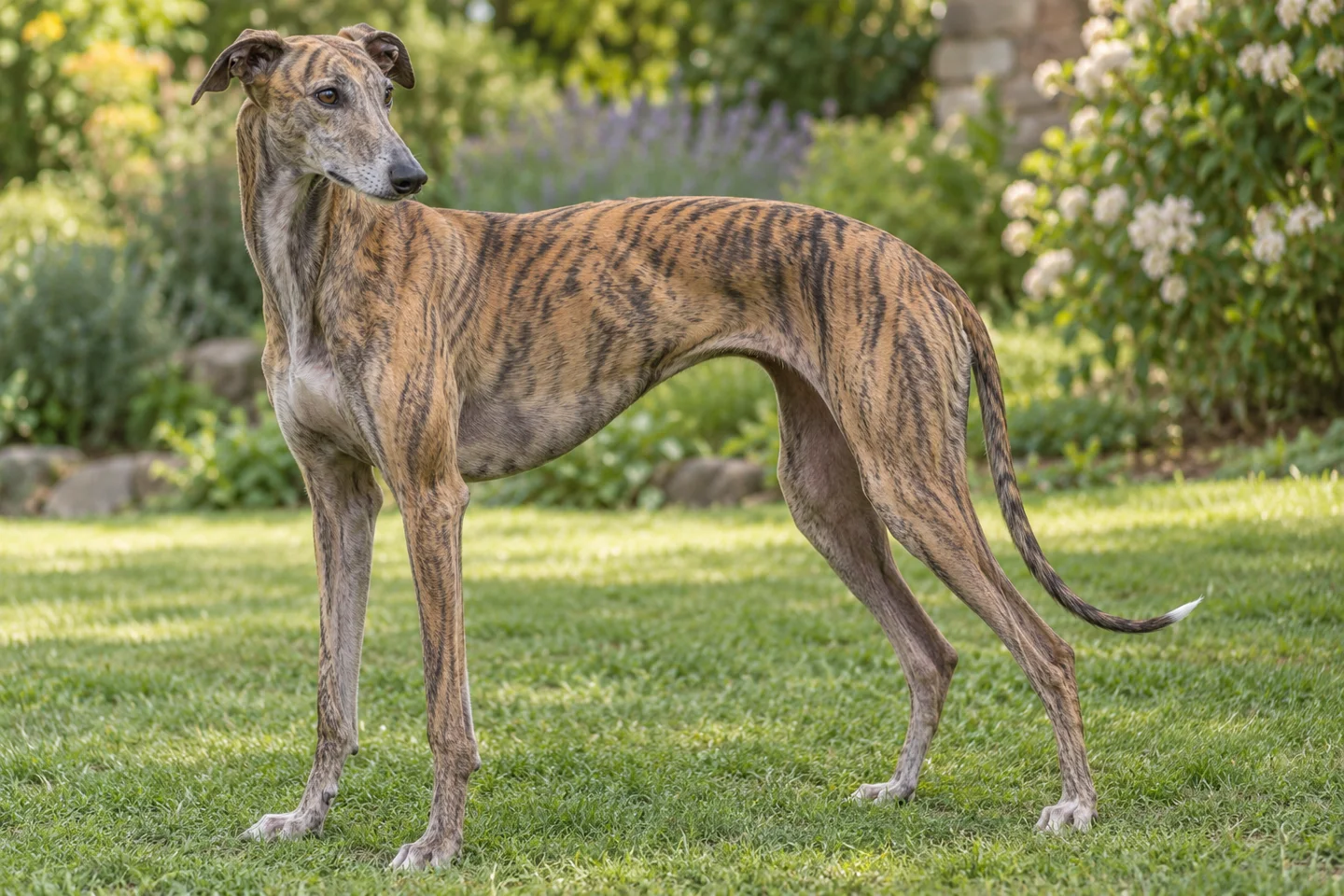
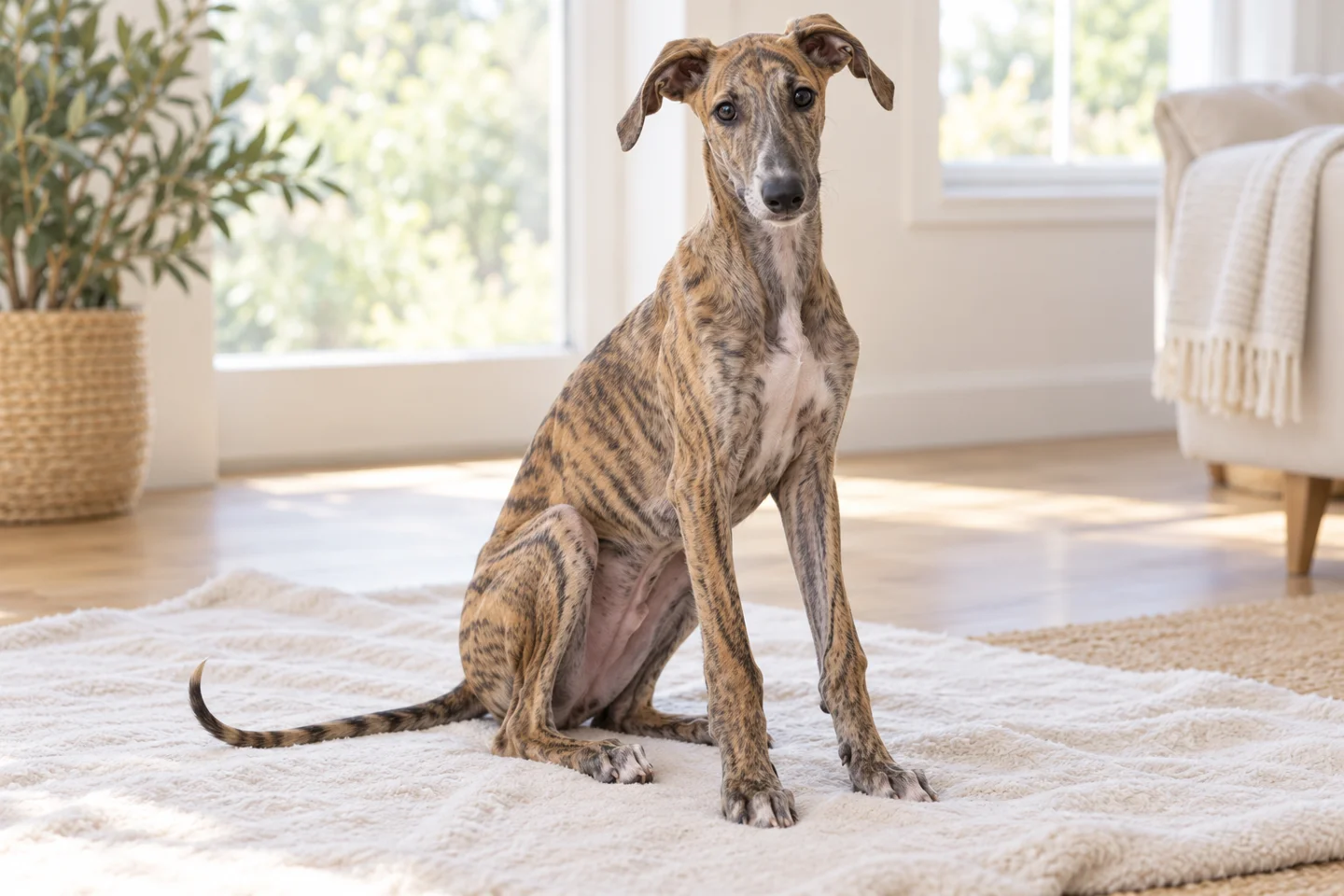
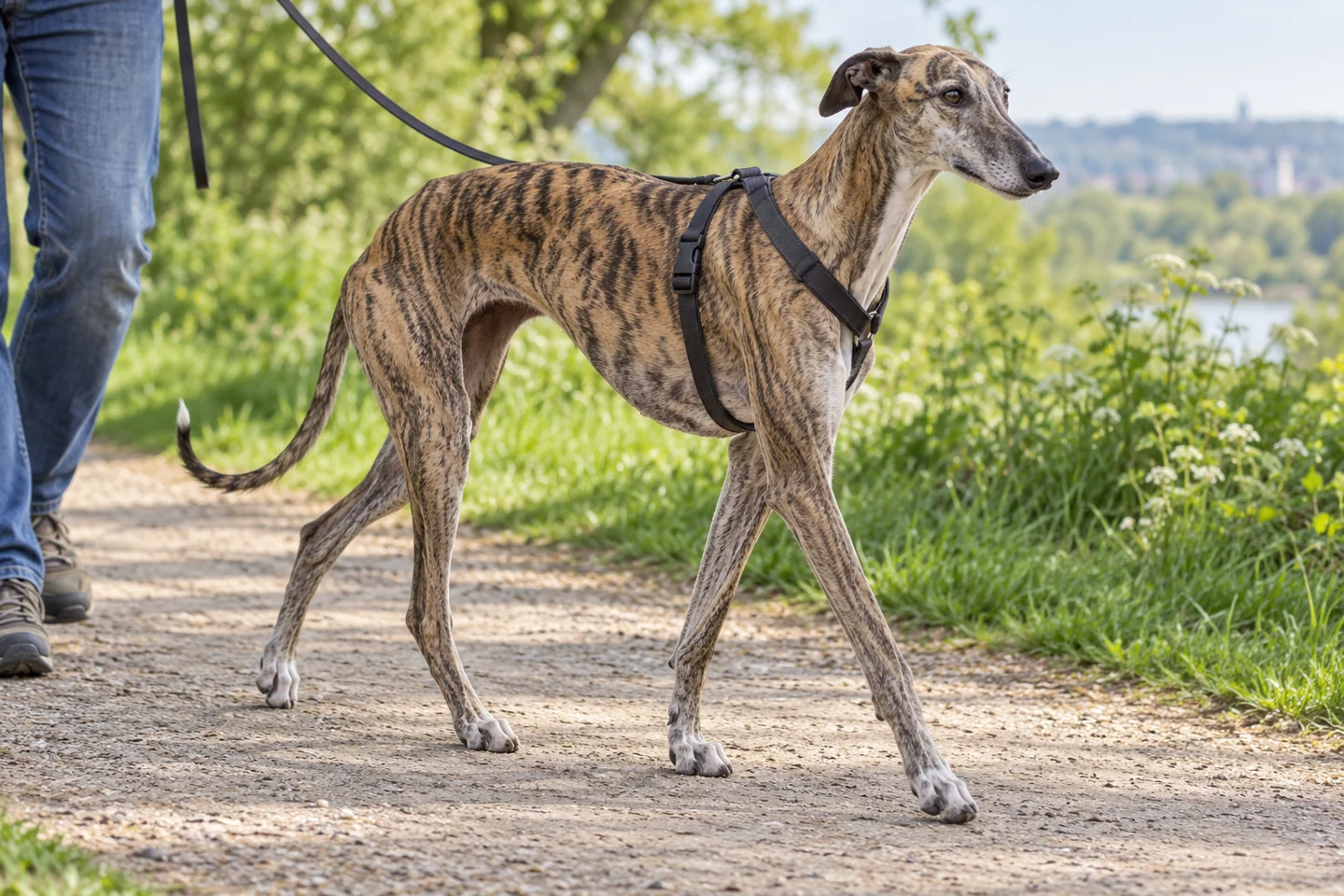
The standard permits a short fine coat and a harder longer coat. This guide's generated illustrations select a smooth-coated brindle Galgo with natural rose ears and a very long tail. They do not document an actual registered animal or predict every puppy's final outline. A deep chest, tucked abdomen, narrow head, and long legs belong to the general type, but function and comfortable condition matter more than exaggerating any one contour for appearance.
Ask a veterinarian to demonstrate condition assessment for this individual. Do not decide that every visible rib means neglect or that any lean outline must be healthy simply because the dog is a sighthound. Watch ordinary walking, turning, and rising after rest. Ask about repeated reluctance or lameness. Equipment needs a secure fit on the actual body, including when the animal reverses, without rubbing or interfering with movement. Quiet practice before an outing can reveal problems while you still have a controlled environment and time to adjust.
The FCI adult shoulder ranges are 62–70 cm for males and 60–68 cm for females, with an additional margin for dogs of the specified proportions. This is a tall, long-lined sighthound rather than a miniature companion. Plan bedding, vehicle room, and secure equipment around the actual body. A lean outline needs clinical condition assessment, not an assumption that every prominent contour is either illness or ideal fitness.
The first doors and the first week
Plan an arrival that limits avoidable surprises. Give the dog a clear route to a comfortable resting place, water, and a manageable outdoor routine. Check that doors and gates remain secure when different people enter. An animal uncertain about a new setting may react differently after confidence grows, so continue observing beyond the first quiet days. Ask the previous carer about familiar cues, food, and equipment and retain useful elements while the new routine becomes understandable.
Teach a simple wait during clipping and unclip only within a suitable secure setting. Rehearse vehicle exits while there is no rush, with the lead arranged before a door opens. A willing family member needs the same instructions rather than an assumption that affectionate contact indoors establishes outdoor handling skill. Keep identification current, but remember that recovery aids cannot prevent an immediate traffic or wildlife encounter after escape. A reliable system of exits matters from the first day, before training has had time to develop.
Training a return in circumstances that support success
Begin recall and attention exercises where the dog can respond. Reward moving toward the handler and avoid making every return the end of all freedom or exploration. A hand target and a practiced change of direction can offer useful alternatives near a gate or busy path. Add difficulty gradually while retaining appropriate control. An exercise performed in a quiet enclosure is evidence about that exercise, not permission to release beside a road or a rapidly moving animal.
AVSAB recommends reward-based methods. If the Galgo freezes or avoids an action, review physical comfort, surface, environment, and clarity instead of labeling the response stubborn. A new indoor floor or unfamiliar staircase may require small rewarded steps and an easier setup. Do not drag the animal through fear to complete a route. Qualified coaching can help the owner identify workable tasks and timing. Teaching should improve the dog's understanding and participation while management protects it in situations where a reliable response has not been established.
Exercise and secure running are different decisions
A Galgo needs appropriate daily movement and investigation, but access to free running requires a separate safety assessment. Inspect an enclosed area fully, including shared gates, obstacles, footing, and fence security. Do not let the presence of a tracker replace those checks. If several dogs are present, consider whether speed and pursuit could overwhelm an animal trying to withdraw. The owner should control the arrangement rather than assume every apparent invitation to chase remains welcome throughout the session.
Build conditioning from recent activity and observe recovery later. A puppy needs suitable exploration and sleep, with individual guidance before repetitive impact or demanding sport. In heat, choose cooler hours, water, shade, and an early way back. Severe distress or collapse requires urgent help. In other conditions, look at the actual dog's comfort rather than assuming one coat or breed label supplies all protection. Persistent stiffness, painful swelling, or a new reluctance to move needs assessment. An enjoyable outing should leave the animal recovering comfortably, not merely completing a planned distance.
Cats, wildlife, and what one successful encounter means
Sighthound ancestry makes moving-animal management a central question. Ask about this Galgo's observed responses at realistic distances. A dog resting near a familiar cat indoors has not established safety with an unfamiliar animal running outdoors. Protect wildlife and livestock through appropriate control and respect access restrictions. Do not release near a hazard to test whether your recall has improved. The consequence of discovering a limit can affect the dog and other animals immediately.
For resident cats, provide inaccessible routes and introductions arranged to prevent pursuit. Birds, rabbits, rodents, and similar pets need dependable physical separation, including during chores. Never bring a vulnerable animal to the dog's face as a test. If fixation or chasing appears, stop access and obtain qualified guidance. Decide whether the home's layout and available adults can maintain the necessary boundaries when you travel, become ill, or need help. Hoping the animals will teach each other does not supply the protection the more vulnerable one may need.
Children and contact with a resting sighthound
A low resting dog and a child running through the room can meet unexpectedly. Give the Galgo a bed outside the play route and explain that resting there means it is left alone. An adult should supervise close interaction and use barriers when attention is divided. Avoid asking children to manage a large dog at an entrance or carry out corrections themselves. Calm arrangements protect both participants before excitement or discomfort makes the situation harder.
Teach a child to invite contact and respect the dog staying away. Prevent hugging, climbing, tail pulling, and faces close to the muzzle. Food, chews, and objects beside the animal should be managed by an adult. Notice withdrawal or a suddenly rigid posture and end pressure early. Visiting friends need explicit instructions rather than an assumption that the familiar routine will transfer. Review plans when a child's mobility changes or when the dog becomes painful or less able to move away. Affectionate history does not eliminate the need for supervision today.
Aggression, fear, and the danger of an assumed backstory
An owner may be tempted to explain every reaction in a rescue through an imagined past. Record what is known instead. If the dog growls when approached on a bed, freezes during equipment fitting, or snaps near food, stop the pressure and document that context. Ask what it could do to leave and whether touch involved a specific area. A new reaction needs veterinary assessment. Pain, fear, and learning deserve investigation without a story that cannot be verified.
Recurrent threats or a bite requires qualified behavior support and a clear interim safety plan. Protect resources and teach exchanges rather than provoking competition through repeated confiscation, consistent with VCA's guarding guidance. Punishment can hide warnings without resolving their cause. Tell carers and professionals about incidents honestly. Equipment such as a positively introduced basket muzzle may be part of advice, but it does not make forced contact acceptable. Keep distance and barriers where needed while assessment and learning proceed, rather than arranging a stranger's approach as a test of improvement.
Grooming a smooth or harder coat
Match maintenance to the actual coat rather than the illustration. Brush loose hair gently, inspect equipment-contact areas, and check feet after rough ground. A harder coat may need a different tool or technique, so ask an experienced groomer to demonstrate. Remove loose debris without digging into a painful area and seek help for embedded material. Severe tangles or irritated skin require professional attention rather than scissors placed near skin concealed in hair.
Include nails and teeth in a gradual routine using appropriate equipment. Brief foot presentation and a comfortable chin rest can be taught before a full care session is needed. Ear odor, discharge, repeated shaking, or soreness deserves veterinary advice, not deep probing or medication chosen from a previous episode. A newly difficult touch may signal discomfort. Tell professionals about concerns before the appointment. Immediate treatment and longer-term cooperation can require different plans; a painful condition should not remain untreated while the owner waits for ideal home training.
Health records for the dog that is actually arriving
Request original clinical records, known family information, and an explanation of which screening assessments were performed. For a dog moving from another setting, tell the receiving veterinarian where it has lived and traveled so prevention and any further testing can reflect actual exposure. Do not borrow a disease checklist from another sighthound and assume it is complete for this individual. A conformation standard is not a survey of disease frequency or a universal medical program.
Ask what each report covers and retain identities, dates, and findings. A selected DNA result cannot rule out every inherited or acquired condition, while a routine examination differs from specialist assessment or imaging. Missing information remains unknown. Establish a current baseline and investigate persistent changes in appetite, drinking, mobility, skin, or behavior. A lean athletic appearance cannot establish health. Know urgent contacts and transport for collapse, respiratory difficulty, trauma, or rapidly worsening illness. Current symptoms still deserve assessment even when earlier paperwork or a familiar breed reputation sounds reassuring.
For a Galgo that has lived in Spain or another area where sand flies transmit leishmaniosis, give the receiving veterinarian the full residence and travel history. The Royal Veterinary College explains that this parasitic disease can produce signs months or years after infection. Ask how the existing test reports should inform follow-up for this individual instead of treating an arrival examination as a permanent clearance. Weight loss, increased thirst, skin changes, or reduced energy need investigation rather than a diagnosis based on ancestry. Exposure depends on where the dog has been, not on being a Galgo. Agree on prevention and any further assessment with the veterinarian, and keep the plan available to future carers.
Feeding and the practical meaning of comfortable condition
Use a complete diet appropriate to life stage and medical needs, then review the measured amount against actual condition and activity. Ask the veterinary team to demonstrate what to feel rather than judging every contour from a photograph. Account for rewards used during learning and coordinate people who offer them. A dog recovering from illness or increasing activity may need a reviewed plan. Avoid using one standard image or scale number as the goal for every Galgo.
Feed apart from children and other animals so intake is visible and meals do not invite competition. Persistent vomiting, diarrhea, altered appetite, or unusual thirst needs advice rather than repeated unplanned changes of food. Supplements should address a specific need within the complete diet. Home-prepared feeding deserves qualified nutritional input. If records suggest past underfeeding or a current clinical problem, follow an individual plan instead of assuming that rapid generous feeding is automatically the right response. A comfortable long-term condition matters more than a dramatic before-and-after appearance.
Mixes, household changes, and the cost of care
A Galgo mix can combine size, coat, chase interests, and social preferences differently. Ask what ancestry is verified and assess the animal itself. Mixed parentage does not guarantee reduced medical risk or effortless compatibility with pets. A responsible source explains uncertainty, support, and return arrangements. Budget for prevention, diagnostics, instruction, secure exercise access, equipment, transport, and competent backup people rather than considering only adoption or purchase cost.
Rehearse care with another adult before travel or illness requires help. That person should demonstrate door security and a suitable walk, not merely meet the dog on a sofa. As the animal ages, adapt bedding, footing, vehicle access, and routes while preserving opportunities to investigate comfortably. New reluctance or irritability warrants clinical review. A tall dog may need assistance even when it is lighter than another breed of similar height. Plan who and what can help rather than relying indefinitely on one person's ability to lift it.
Sources and editorial notes
Sources checked October 21, 2026. Breed measurements describe reference ranges, not a diagnosis or an individual dog's ideal weight. Images are AI-generated breed illustrations and do not document a particular dog or health condition.
- VCA Animal Hospitals: Grooming and coat care for your dog
- VCA Animal Hospitals: Ear infections in dogs
- VCA Animal Hospitals: Common emergencies in dogs
- VCA Animal Hospitals: Food aggression in puppies
- VCA Animal Hospitals: Heat stroke in dogs
- VCA Animal Hospitals: Aggression toward unfamiliar dogs, diagnosis
- AAHA: Feeding plans for healthy, appropriate weight cats and dogs
- Orthopedic Foundation for Animals: CHIC health screening programs
- Federation Cynologique Internationale: Galgo Español breed standard
- AVSAB: Humane Dog Training Position Statement
- Royal Veterinary College: Canine leishmaniosis, transmission and delayed clinical signs
Keep getting to know dogs.
Read another guide or return to your dogsDating community.
Explore breed guidesBack to dogsDating