Miniature American Shepherd
A small athletic American herding breed whose size should not obscure its learning needs or the importance of current neurological, eye, hip, and drug-sensitivity information.
How these guides are researched and reviewed
- Origin
- United States
- Adult height
- Males 35.5–46 cm; females 33–43.5 cm
- Coat
- Moderate double coat, straight to wavy
- Illustrated example
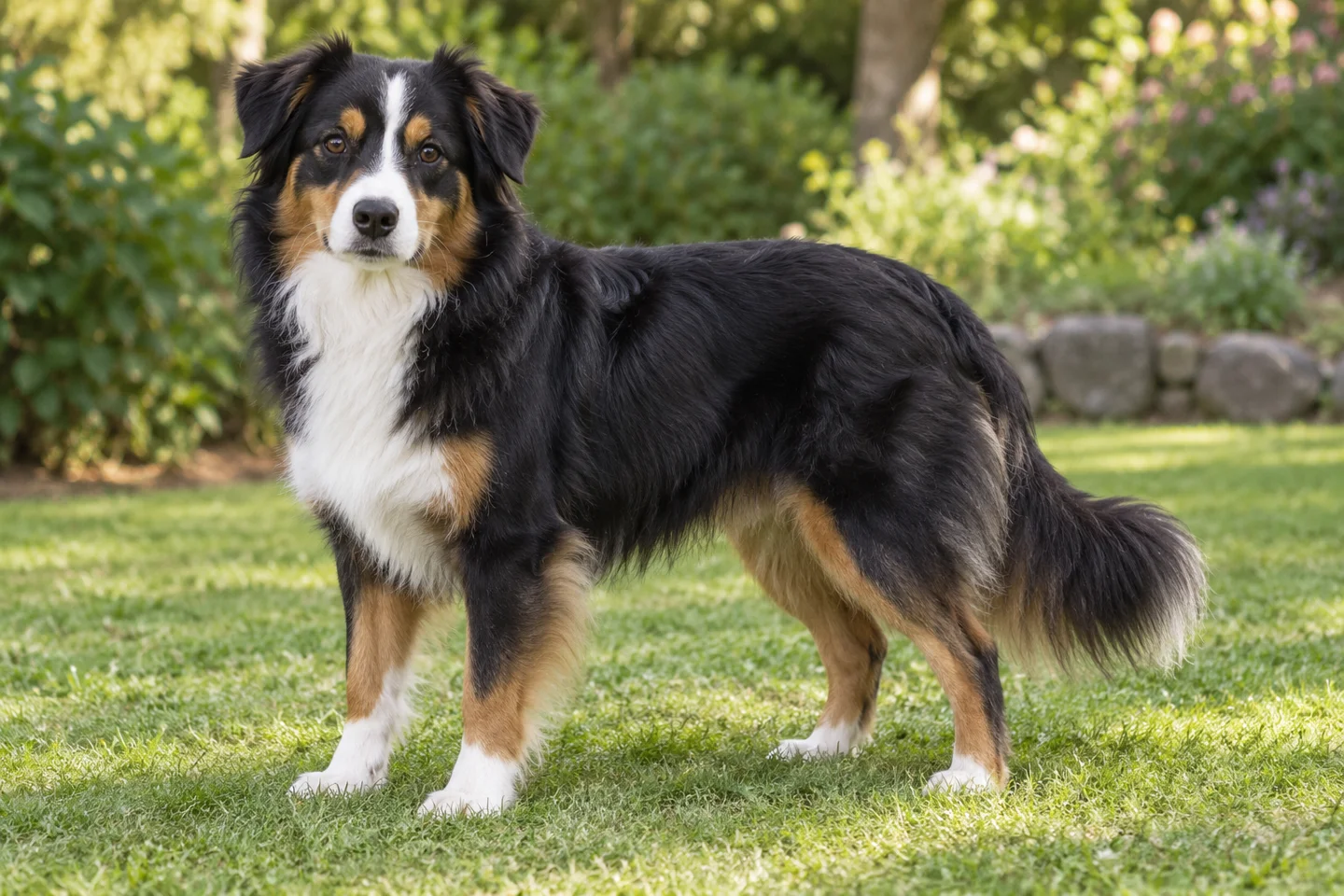
- Black tricolor with a full natural tail
General information for owners. These articles have not been reviewed by a veterinarian. Medical decisions need your dog's history and an examination.
A small herder still needs a considered placement
The Miniature American Shepherd is an athletic herding dog, not a promise of a reduced daily commitment because it occupies less space. Before choosing one, think about how you will teach responses to movement, provide suitable activity, and make rest part of the routine. Meet adults and ask owners what happens when an exciting game finishes. A dog performing neatly for a few minutes has not shown you every part of life with it. Ask how it copes with visitors, handling, travel, and time when people cannot offer attention.
A good placement uses the individual's known needs rather than an attractive size category. Explain the work schedule, children, other animals, and support available in your household. Ask why the source suggests this puppy or adult and what situations remain difficult. A puppy's mature behavior is still developing, while an adult may need support adapting to a new setting. Choose a source willing to discuss variation and practical limits. The aim is a sustainable relationship in which the dog can learn and participate, rather than a schedule that depends on constant intense activity being the only way anyone can manage it.
California development and the modern name
The FCI history places development in California in the late 1960s through breeding smaller Australian Shepherds. It records the earlier Miniature Australian Shepherd name and the later identity as Miniature American Shepherd. This history should not become a claim that every dog advertised as a mini Aussie has identical registration or ancestry. Ask the source to identify the registry and the animal clearly. A familiar informal name can be useful in conversation while still requiring documentation when breed identity, pedigree, or health programmes are being discussed.
The breed's herding background makes attention to moving animals and people a relevant question. It does not establish the response of every individual or mean a pet must work livestock. If you want to try herding or another sport, obtain suitable instruction that protects the dog and other animals. A suburban household can offer meaningful learning and appropriate exercise without recreating ranch work. What matters is whether the proposed activities meet this dog's needs and whether the owner also teaches everyday skills. Historical versatility should not conceal the quiet preparation required for a comfortable examination, an ordinary absence, or waiting while another household member is busy.
Height, coat, ears, and the full-tail example
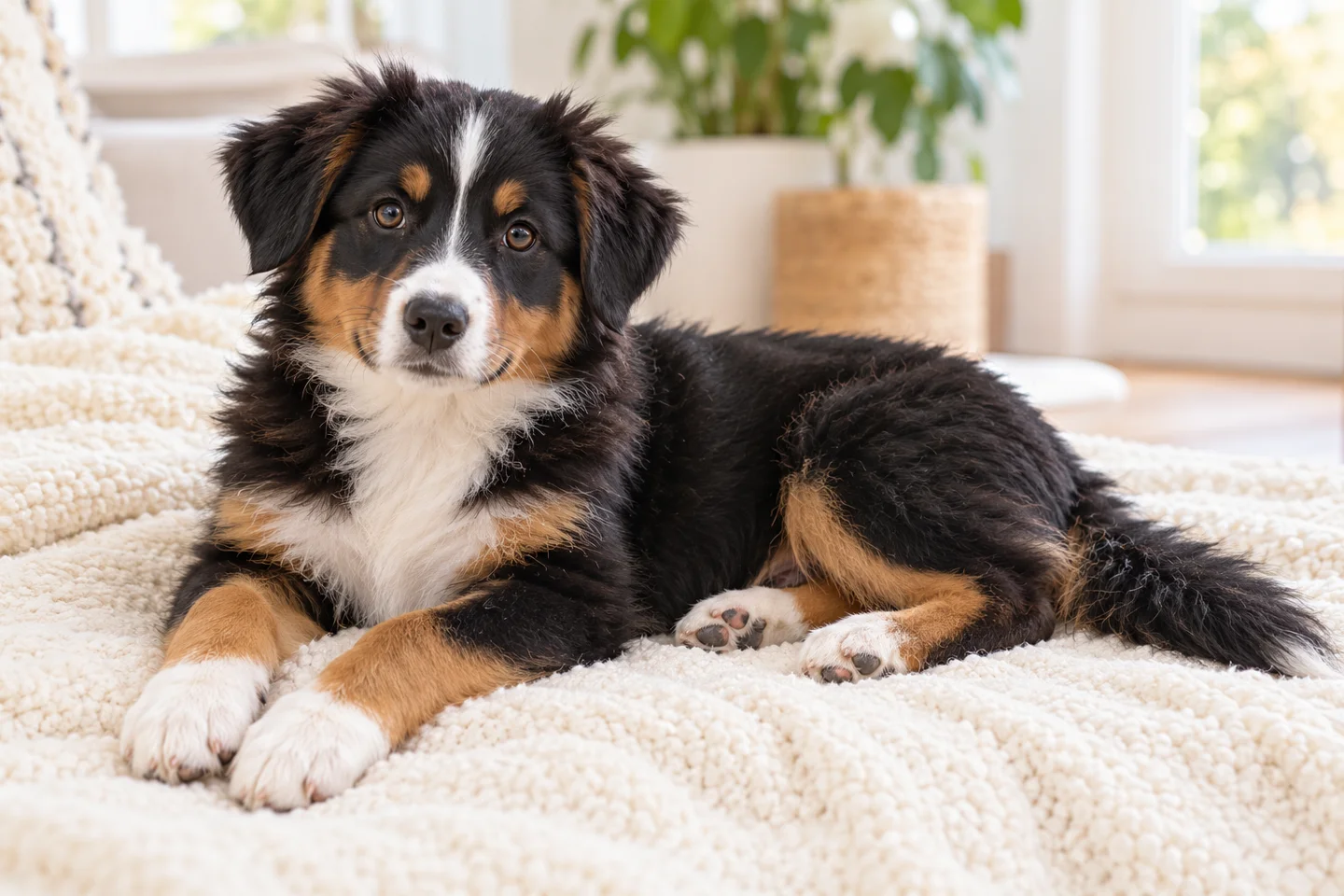
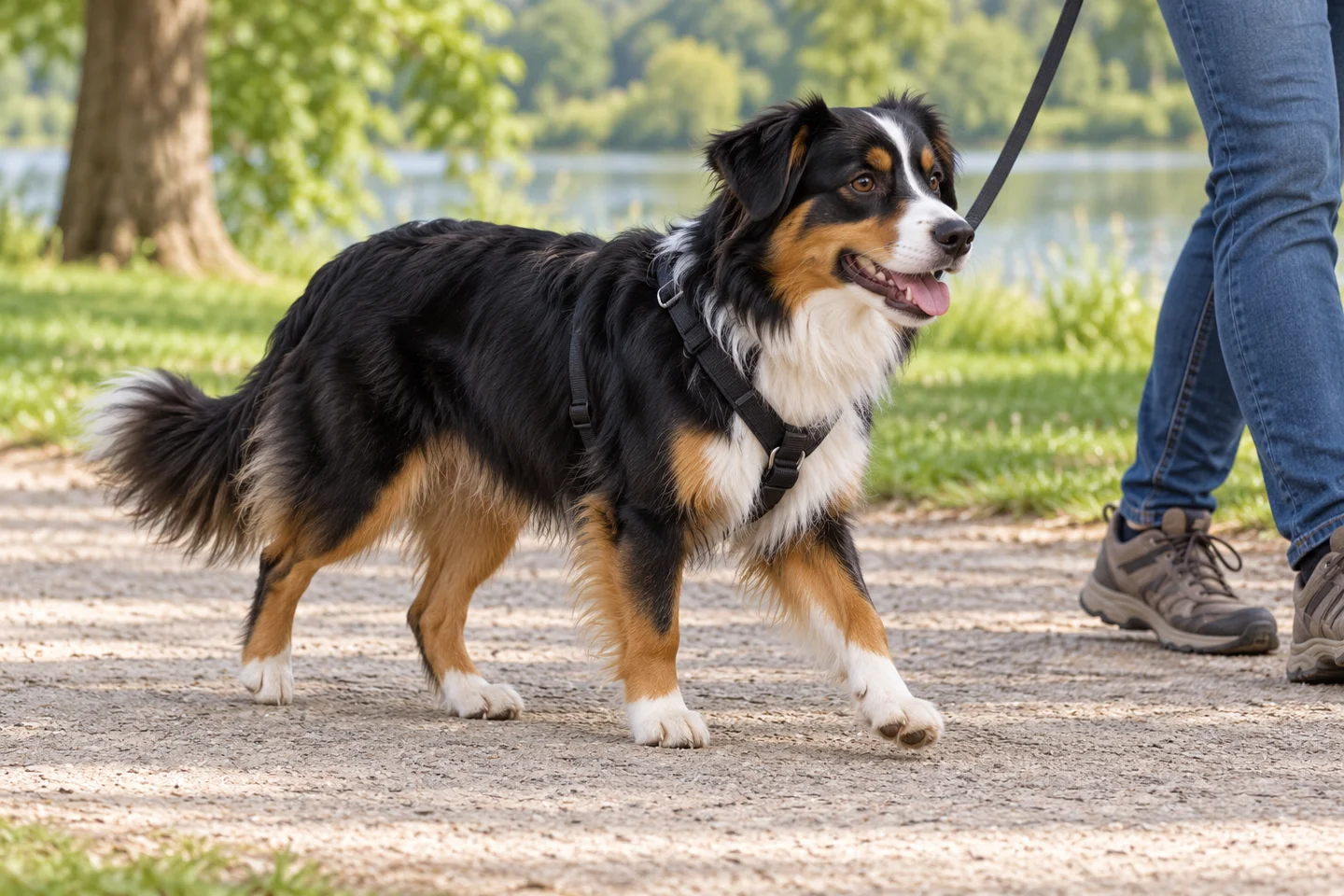
The FCI height range is 35.5–46 cm for males and 33–43.5 cm for females. Weight varies with individual size and substance rather than being fixed to one number. The body is slightly longer than tall, with a moderate straight-to-wavy double coat and natural triangular ears that fold. Recognized colors include black, red, blue merle, and red merle, with permitted markings. The illustrations use black tricolor, brown eyes, and a full natural tail. A short tail should not be assumed to be the only authentic appearance of the breed.
The pet should be assessed for comfortable ordinary function rather than a preferred color or exceptionally small outline. Ask the veterinarian to assess growth and condition beneath the coat. Equipment must fit the actual body securely and allow free movement. A puppy needs repeat fitting checks as it grows, and an adult may need adjustment as condition or coat changes. Make transport and resting space suitable for the mature frame. The dog should be able to lie naturally and move without hair or equipment creating an obstacle. Appearance can help identify breed type, but it cannot establish comfort, temperament, or health by itself.
Training alternatives to controlling household movement
Teach the dog to turn toward the handler, go to a mat, and follow an easy recall before a running game becomes too exciting. Begin with one slow movement at a distance and reward a response the dog can offer comfortably. Increase difficulty gradually while preventing rehearsals of chasing children or visitors. If a bicycle already produces intense focus, start far enough away for the dog to participate rather than standing close and repeating cues. A reward-based instructor can help identify that workable point and turn it into a practical plan.
Keep lessons clear and brief. A dog learning quickly can still become confused when household rules change or the task escalates too fast. Use secure equipment while recall is unfinished, and teach a safe exchange for suitable objects. Reward returning and sometimes release the dog to an appropriate activity so cooperation does not always end the fun. Everyone responsible should understand the cues and management. The goal is an animal that knows what to do during ordinary transitions, with an owner able to prevent unsuitable access while teaching remains in progress. More commands delivered after a chase begins do not replace that preparation.
Exercise should include learning how to finish
Plan suitable walks, investigation, and short learning activities around age, health, and current condition. Avoid treating every restless moment as a demand for faster exercise. A dog can need a quieter environment or help settling rather than another high-arousal game. Teach a predictable ending: equipment goes away, an appropriate quiet option appears, and rest is allowed. A sustainable weekday routine should still function when the owner cannot attend a sport session or weather makes the usual outing unsuitable. Flexibility is a useful part of activity planning.
Build physical demands gradually and ask the veterinary team about preparation for strenuous sport or return after injury. A puppy should not be pushed to match a mature trained animal. Warm conditions, surfaces, water access, and the journey itself affect the day's demands. Keep an option to turn back and notice recovery later at home. Persistent lameness, unusual fatigue, or a change in willingness to move needs assessment instead of tougher motivation. Enthusiasm when a toy appears is only one observation. The useful measure is whether the individual remains comfortable during the activity and able to eat, sleep, and participate normally afterward.
Socialization and the ability to watch without greeting
Ask the veterinary team how to arrange useful early exposure while vaccinations progress. Introduce people, traffic, surfaces, and transport in small amounts where the puppy can investigate and leave. A quiet observation at a manageable distance is a valid experience even without contact. Do not make a busy crowd the test of whether the dog has been socialized properly. An adopted adult also needs unfamiliar settings introduced from what it currently knows. Ask previous carers which situations have actually been observed and which remain unknown.
Teach handling separately in short cooperative steps. A brief paw touch or pause beside a brush can be rewarded before becoming a complete procedure. Introduce the sight and sound of equipment and record what helps. Tell the clinic or groomer about persistent difficulty before an appointment. Repeated freezing, avoidance, or threats call for reassessment and possibly qualified help. An animal staying still during restraint may be overwhelmed rather than comfortable. Useful preparation should leave it more able to cope with ordinary care, while the owner learns to recognize when the next step is too much for the current situation.
Attachment and manageable time apart
A breed described as loyal still needs an individual plan for absences. Ask how this dog behaves when the owner leaves and whether previous experience matches your schedule. Start with brief comfortable separations after its needs have been met, using a familiar resting place. Check genuine relaxation rather than judging success only by silence. A recording can help describe a problem to a professional. If the dog becomes distressed, arrange suitable support while obtaining advice instead of repeatedly extending the absence as a test of endurance.
Keep changes understandable. A new carer, unfamiliar room, and much longer period alone arriving together can make it difficult to identify what is causing trouble. Use small adjustments and simple observations to guide the next step. Another animal should not be assumed to cure distress, and a tired dog is not automatically a comfortable dog. Budget for care when work and the individual's present coping ability do not yet align. The purpose is practical independence within a supportive routine, with the household able to prevent repeated overwhelming experiences while learning proceeds.
Aggression and guarding need the actual event history
No herding description can establish that an individual will never bite. Record who approached, how close, what object or handling was involved, the space available, and any contact or injury. Prevent repetition while seeking professional advice. Sudden changes around touch, rest, or movement merit veterinary attention. Avoid repeating a confrontation to show someone what the dog does. Punishing a warning alone does not resolve the reason the dog wanted distance and may make later interactions harder for people to interpret.
Protect meals, chews, and rest from interference. Teach safe exchanges through planned practice, and have children ask an adult if an object needs retrieving. Keep unfamiliar dog encounters at a distance the handler can manage rather than forcing close contact as an experiment. A qualified behavior professional can help identify restrictions the household can maintain. Carers need that plan and a candid account of bites or close calls before taking responsibility. If muzzle conditioning is recommended, learn fit and gradual comfortable teaching while retaining other safeguards. Equipment cannot make repeated crowding or rough handling an appropriate way to test tolerance.
Children and resident animals need protected routines
Children should learn to invite contact and accept the dog leaving. Protect food and sleep, and keep lead management, object recovery, and necessary handling with a capable adult. Do not encourage chasing as an entertaining display of herding instinct. Arrange calmer shared activities and comfortable separation when supervision cannot remain attentive. Ask the source what ages of children and settings have actually been observed. A successful meeting with one older child cannot answer how a puppy or adult will manage every noisy gathering that later occurs in the home.
Other dogs, cats, livestock, and small pets need separate assessments. A working background or friendly interaction with one companion does not establish safety with every animal. Begin canine introductions with room for both handlers to withdraw and manage food and rest separately indoors. Keep vulnerable pets physically protected where behavior is uncertain, and never release one to test pursuit. Ask whether the layout can sustain necessary barriers when people are distracted or away. A suitable placement requires practical management for the actual relationships, rather than optimism that a breed described as trainable will resolve an immediate risk before harm occurs.
Grooming and observing the skin beneath a moderate coat
The double coat sheds and needs care suited to its condition. Ask an experienced groomer which tools and routine fit the individual, particularly during heavier shedding. Inspect near the skin and where equipment or movement creates friction. Surface brushing alone can miss a tangle underneath. Break tasks into manageable sessions and reward comfortable participation. A moderate coat should not become a reason to ignore inspection until the dog is uncomfortable. If maintenance has fallen behind, obtain help and choose a humane plan rather than painful pulling to preserve a particular look.
Include feet, nails, mouth, and ears in ordinary care. The veterinary team can demonstrate appropriate dental and ear routines. Redness, odor, discharge, persistent scratching, or sudden sensitivity deserves advice instead of random product changes. Do not push tools into the ear canal or use leftover medication for a new problem. Keep details of reactions and treatments so another professional can interpret a pattern. Tell alternate carers about handling limits and what requires contact with the clinic. A practical care record helps maintain consistency when the usual owner is absent, rather than leaving someone to reconstruct several tasks from memory.
Health testing now includes a specific neurological DNA test
MASCUSA's parent-club statement, approved in May 2024, lists hips, annual specialist eyes, and DNA tests for PRA-prcd, MDR1, HSF4 hereditary cataracts, and Miniature American Shepherd neuroaxonal dystrophy, or NAD. The current AKC breed page also includes NAD. Ask the source for identified parental reports and the actual interpretation of the proposed combination. An older checklist missing a newer priority should prompt a current check, rather than being treated as permanent proof that every relevant assessment has been completed.
The statement separates its required guidance from additional optional recommendations. A long commercial panel should not blur that distinction or substitute for clinical hip and eye assessment. Ask which test concerns which condition and whether any important result remains unknown. A DNA finding relates to specified variants; it does not exclude every possible cause of abnormal movement or vision change. If a puppy or adult develops concerning signs, seek clinical assessment with its own history and records. Share significant later diagnoses through the source's appropriate confidential process so family information improves rather than stopping at the date puppies leave the breeder.
MDR1 information belongs in the medical handover
The MDR1 test concerns a variant affecting the handling of certain medications. UC Davis Veterinary Genetics Laboratory advises sharing results with the dog's veterinarian before pharmacological treatment. Keep the identified result available to the regular clinic and anyone arranging care, including an emergency provider. Do not turn a breed association into a home dosing rule or assume that a medication discussed for another dog is appropriate. The treating veterinarian needs the individual result, condition, and proposed drug to make a clinical decision.
A reassuring MDR1 result does not rule out every other adverse drug reaction. Tell the clinic about previous responses and all current medication or supplements. A sitter should know where the records are and which professional to contact, rather than trying to interpret a list copied from an online discussion. If the dog's status is unknown, say so and ask the veterinarian how to proceed. Good information supports safer choices without encouraging owners to stop prescribed treatment or create substitutions themselves. This is a practical reason for keeping genetic reports with medical records rather than using them only as a badge on a breeding advertisement.
Nutrition, mixes, and the cost of support
Use complete nutrition appropriate to life stage and condition, count rewards, and review portions as activity changes. A small athletic frame does not establish one universal food amount. Persistent appetite, digestive, drinking, or weight changes need veterinary advice. Mixed ancestry needs the same individual approach. A dog called a Miniature American Shepherd mix or mini Aussie cross should have its known parentage explained, with uncertainty preserved where documentation is absent. Mixing does not guarantee easier exercise, a predictable coat, or freedom from inherited conditions. Relevant information about both known parents should be considered.
Budget for local veterinary care, secure equipment, transport, training, grooming support, and cover during absences. Ask whether a carer can follow the actual dog's movement boundaries and medical instructions before assuming an available service fits. Written source support and return provisions should be understandable before collection. Arrange emergency funding or suitable insurance and know the terms. A sustainable plan includes quieter periods, work changes, and later care needs. It should not depend on the owner being able to provide intense sport every day or on one person always being available to manage every difficult event.
dogsDating outings that avoid turning movement into pressure
Describe this dog's pace, comfort with quick movement, and limits on greetings on dogsDating. Share an approximate area while keeping exact coordinates and the home address private. Choose a public open starting point and agree on enough distance before arrival. Each adult should manage their own dog and know an easy exit. Avoid beginning beside a busy running game if movement is already a challenge. A practical profile prepares the conditions for a suitable walk rather than promising compatibility because both animals are small or belong to herding breeds.
Start with parallel movement and quiet investigation, without shared toys or food between unfamiliar dogs. Watch both animals when the pace changes. Repeated withdrawal, stiffness, or excitement that prevents comfortable disengagement calls for greater distance or an early finish. Compare the route, pace, duration, and separation afterward rather than grading the meeting only by play or nose contact. A calm walking partner may be the useful result. Continued meetings should follow evidence about these individuals, with owners ready to change the plan instead of letting a social invitation override the dogs' current needs.
Sources and editorial notes
Sources checked October 22, 2026. Breed measurements describe reference ranges, not a diagnosis or an individual dog's ideal weight. Images are AI-generated breed illustrations and do not document a particular dog or health condition.
- AVSAB: Humane Dog Training Position Statement
- VCA Animal Hospitals: Food aggression in puppies
- Orthopedic Foundation for Animals: CHIC health screening programs
- VCA Animal Hospitals: Aggression toward unfamiliar dogs, diagnosis
- VCA Animal Hospitals: Grooming and coat care for your dog
- VCA Animal Hospitals: Ear infections in dogs (otitis externa)
- AAHA: Feeding plans for healthy, appropriate weight cats and dogs
- VCA Animal Hospitals: Heat stroke in dogs
- AVSAB: Puppy Socialization Position Statement
- VCA Animal Hospitals: Dog behavior problems, aggression toward children
- Official breed standard: Miniature American Shepherd
- MASCUSA: Board-approved 2024 parent-club health statement
- American Kennel Club: Miniature American Shepherd care and recommended testing
- University of California Davis Veterinary Genetics Laboratory: Multidrug sensitivity MDR1
Keep getting to know dogs.
Read another guide or return to your dogsDating community.
Explore breed guidesBack to dogsDating