Portuguese Sheepdog
The Cão da Serra de Aires is a medium Portuguese herding dog with long goat-textured hair, an attentive working background, and a need for cooperative activity and careful coat maintenance.
How these guides are researched and reviewed
- Origin
- Portugal, Alentejo
- FCI male height
- 45–55 cm
- FCI female height
- 42–52 cm
- FCI weight
- 17–27 kg
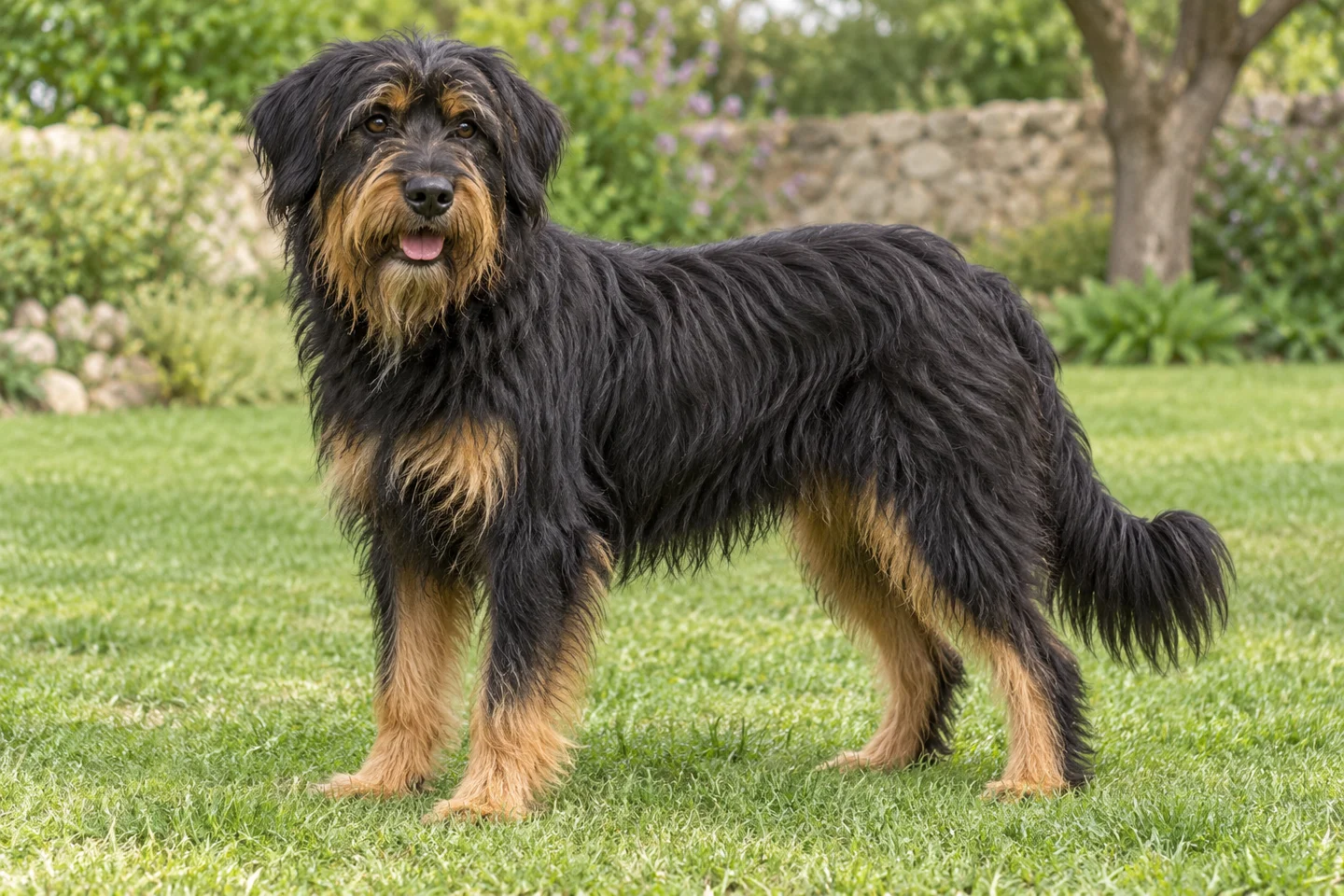
- Illustrated coat
- Black with defined tan points, natural ears and full tail
General information for owners. These articles have not been reviewed by a veterinarian. Medical decisions need your dog's history and an examination.
The Cão da Serra de Aires is a particular Portuguese sheepdog
The Portuguese Sheepdog is the Cão da Serra de Aires, a medium herding dog associated with the Alentejo. It should not be confused with the much larger Estrela Mountain Dog or treated as a general name for every Portuguese farm dog. Its traditional work involved moving and watching stock, and its long goat-textured coat creates a distinctive shaggy outline. That appearance can look casual, but an owner needs a deliberate plan for activity, teaching, grooming, and rest. Choosing an uncommon breed still means choosing a particular dog with individual needs and a practical daily schedule.
Before committing, discuss the source's adults in ordinary life. How do they behave when visitors arrive, children run, a bicycle passes, or the main handler leaves? How do they recover after exciting work? Ask what support is available when an expected behavior proves harder to manage. A working description gives context but cannot guarantee a puppy's future response. Prepare a secure home, comfortable quiet space, transport, and clinical care before arrival. The first week should help the animal learn its surroundings, rather than require it to demonstrate a polished personality through constant introductions and demands.
Alentejo stock work and the limits of a nickname
Portugal's canine organization identifies this as an Alentejo stock dog used around sheep, goats, pigs, cattle, and horses. Its familiar monkey-dog nickname refers to appearance and manner; it is not a separate breed or evidence of human-like understanding. Owners should resist assuming an expressive face means the dog knows what people want without teaching. A herding background suggests attentive responses to movement and changes in a group. In a family, those responses need safe outlets and clear alternatives, especially when the moving group consists of children, visitors, or other pets.
Ask how the source preserves useful working traits while matching dogs to modern homes. An animal selected for active stock work may need a different routine from an adult already comfortable in a quiet domestic setting. Neither label establishes superiority. Evaluate the actual fit, including management around livestock if the home has animals. Do not allow an untrained dog to practice on someone else's flock or assume instinct guarantees safe work. Formal supervised learning and the livestock owner's consent are essential. For an unknown rescue, describe observed skills and uncertainty instead of constructing a working pedigree from a shaggy coat and energetic behavior.
Size, long hair, and visible eyes
FCI heights are 45–55 cm for males and 42–52 cm for females, with a listed weight of 17–27 kg. The coat is long and goat-like, straight or slightly wavy, without undercoat. Beard, moustache, and eyebrows are characteristic, but hair should not obscure the eyes. Adult black, brown, and gray dogs have defined tan markings under the standard. The illustrations show a black adult with tan points, natural hanging ears, and a full tail. They are labeled AI illustrations and should not be treated as documentary evidence about a specific pedigree or available animal.
A profuse outline can hide body condition and skin problems, so examine beneath it gently. Watch walking, turning, and rising, and ask about any change in comfort. A growing puppy needs suitable nutrition and age-appropriate activity, rather than supplements or hard exercise intended to create an adult shape early. Measure equipment against the actual dog and recheck beneath long hair for rubbing or tight straps. A standard range helps describe the breed, while an individual assessment determines a healthy condition. When a dog is outside that range, clinical needs should be considered directly instead of assuming a number alone proves either illness or unusual merit.
Alertness, visitors, and learning to switch tasks
An attentive herding dog can notice every movement in a busy household. Give that attention a manageable job: returning to a mat, accompanying the handler, or waiting behind a barrier during arrivals. Reinforce successful disengagement instead of allowing repeated fence running or door rushing. A wary response to strangers should lead to thoughtful distance and positive learning, not deliberate attempts to make the dog more suspicious. Visitors should avoid looming, grabbing the beard, or insisting on close contact. The animal's ability to recover and choose engagement matters more than a photograph of someone hugging it.
Quiet behavior needs opportunity as well as exercise. Provide a sleeping area away from traffic and make it normal for activity to end. A dog continually asked to monitor games, visitors, and windows may remain aroused even after a long walk. Plan short comfortable absences and reliable company where needed, with observation guiding increases. An adult arriving from another home may need a simpler initial schedule than its eventual routine. Ask about previous habits, preserve familiar cues where useful, and introduce changes gradually. The household should have a workable plan for ordinary employment and illness, not only ideal days when the favorite person is always present.
Training alternatives to chasing and controlling movement
Teach recall, waiting at exits, moving with the handler, and settling before demanding difficult restraint around running animals. Begin with low distraction and reinforce clear achievable steps. If the dog circles or pursues moving people, prevent rehearsal and provide an alternative at a distance it can manage. Do not encourage heel nipping as amusing herding practice. The behavior can frighten or injure someone and become more persistent through repetition. A secure barrier during children's games can be a useful part of training because it removes a problem the learner is not yet ready to solve.
Use short cooperative tasks, scent games, and appropriately introduced activities that reward thinking. Teach an exchange for objects and a comfortable release rather than wrestling things away. Handling lessons should include beard, ears, feet, coat, and a brief mouth check. Reward participation in small steps, with time to pause. If the dog guards resources or reacts strongly to movement, seek qualified help rather than escalating physical confrontation. A capable learner still needs a person who sets fair difficulty and supplies clear feedback. Training should improve daily safety and comfort, rather than demonstrate how many commands can be repeated while the dog is already overwhelmed.
Exercise and a sustainable working-dog routine
Combine movement, investigation, learning, and rest according to age and health. The stock-working background makes varied activity a sensible planning priority, but it does not supply a fixed daily distance suitable for every individual. Introduce new routes and physical demands gradually, especially after travel, illness, or reduced exercise. Watch recovery later in the day and the next morning. Repeated stiffness or reduced tolerance deserves veterinary assessment. A dog that remains excited when a game begins can still be uncomfortable or tired, so enthusiasm alone should not decide when a session continues.
Choose secure places and manage access to roads, bicycles, livestock, and wildlife. A herding label does not make off-lead pursuit acceptable. Use suitable lead equipment while response skills develop and inspect boundaries for gaps or escape routes. Adjust activity in hot weather with cooler timing, water, shade, and shorter demands. The absence of undercoat does not make the animal immune to overheating or weather exposure. Dry thoroughly after wet outings and check feet and coat for attached material. On quieter days, appropriately chosen enrichment can provide interest without trying to reproduce the physical workload of a long active outing indoors.

Aggression, discomfort, and preventing an escalation
Aggression must be assessed through the dog's behavior and situation, rather than assumed absent in a family breed or inevitable in a watchful one. Cornering, unwanted grooming, pain, possession, or fear can all matter. Watch for withdrawal, freezing, stiffness, and growling. Stop the pressure and create room. A warning should not be punished as an attempt to take control of the household. When tolerance changes suddenly, involve the veterinarian, particularly if touching a mat, limb, ear, or mouth now causes a reaction. Describe what happened before the response and how the dog recovered.
Set up safety before another confrontation occurs. Protect food and rest, use barriers during predictable difficult events, and explain visitor rules to every adult. Seek appropriately qualified behavior help for persistent concerns or bite risk. A positively introduced basket muzzle may be useful within a professional plan, but it does not permit forced grooming or greetings. Keep a record of triggers, distances, and successful arrangements so progress is measured through comfort and manageable choices. The aim is not a dog that silently endures a difficult encounter while remaining frightened. It is a routine in which the pressure is understood and reduced.
Children, other dogs, and livestock boundaries
Children should not become the material on which a herding dog rehearses control. Adults must prevent chasing, circling, nipping, ear or beard pulling, and interruption of sleep. Provide separation before running games become intense and offer the dog a calm place children cannot enter. Teach brief invitations to contact and respect for withdrawal. A child who knows a rule may still forget it during excitement, so supervision and physical arrangements matter. A friendly history does not justify leaving young children responsible for deciding when a dog needs space or for handling it beside a road.
Introduce dog companions with room to walk separately and compare play styles before allowing closer contact. Some animals enjoy quick movement; others find it intimidating. Cats and small pets need secure management and individual assessment. Stock should be protected from uncontrolled access even when the breed historically worked around several species. A working instinct is not a permission slip for practice in a neighbor's field. Some household combinations require permanent barriers or separate time outdoors. Honest reports from a source or previous carer help, but a new home should still introduce changes gradually rather than assume previous tolerance covers every setting.
Grooming long goat hair without painful sessions
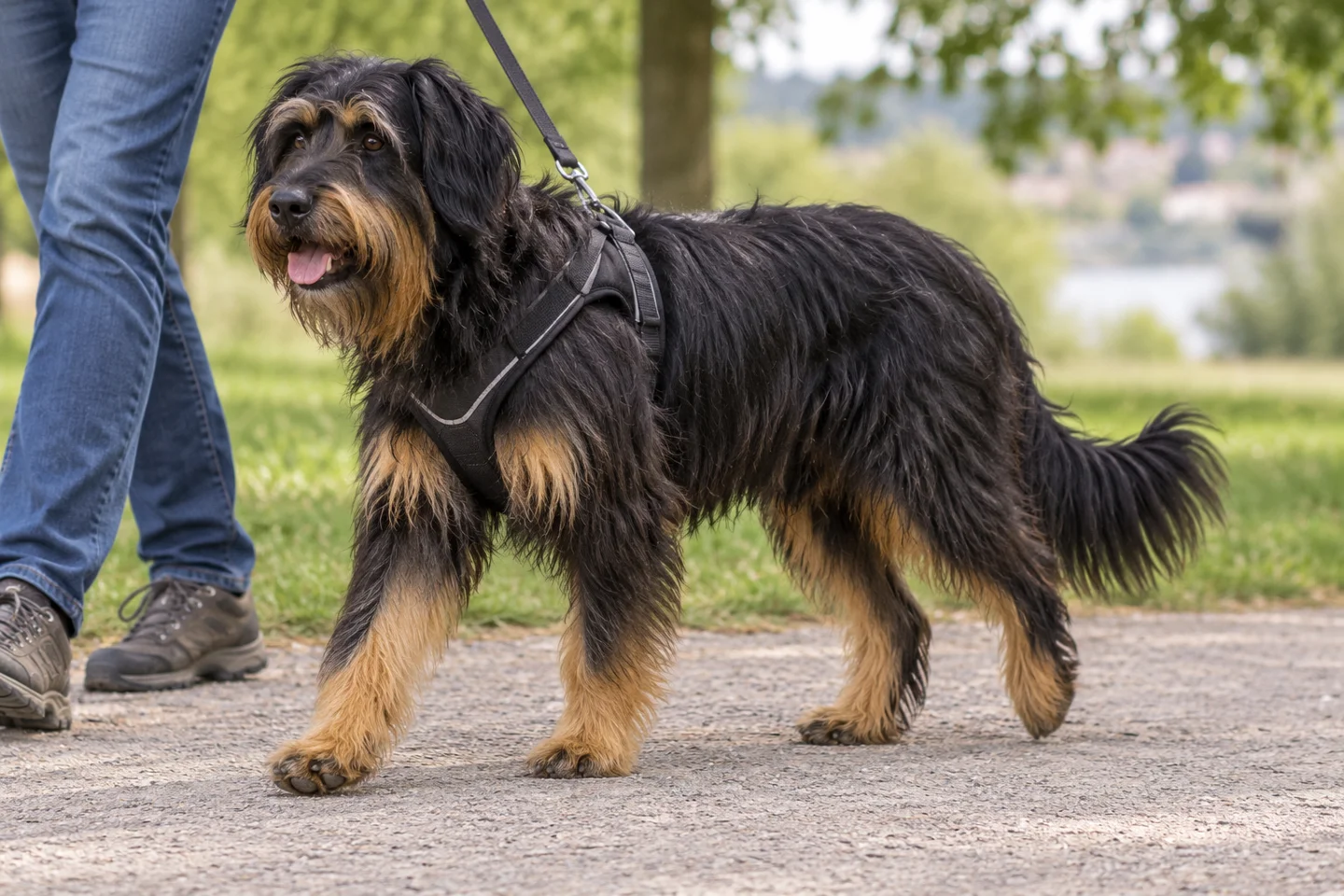
Part the hair and work through small areas so the skin and lower coat can be checked. Pay attention behind ears, beneath equipment, around the beard, and in the armpits. Remove debris after brushy routes before it becomes incorporated into a mat. Ask a breed-experienced groomer to show a practical method and schedule for this individual. The absence of undercoat does not mean long hair cannot tangle. A painful knot needs appropriate assistance, not prolonged pulling while a second person holds the dog still. Comfort should guide the choice of maintenance and any necessary trimming.
Keep hair from obstructing sight and remove food trapped in the beard gently. Dry well after washing or wet outings. Check skin for irritation, feet for plant material, and the visible outer ears for redness, discharge, odor, or pain. Ask the veterinarian about abnormalities rather than applying repeated home treatments. Teach the dog to stand or lie comfortably for brief care and reward cooperation. Tools should be clean and appropriate for the coat. A manageable routine maintained throughout the week is kinder and more informative than ignoring tangles until a single lengthy appointment becomes the dog's main experience of grooming.
Health: separate this breed from larger Portuguese guardians
Be careful when searching health information under a Portuguese place-name. The Cão da Serra de Aires is not the Cão da Serra da Estrela, and medical findings or screening lists for the large guardian cannot simply be transferred to this herding breed. The AKC's available health overview is broad and does not establish a detailed disease frequency or universal panel. Ask the source about diagnoses in this particular family, examinations performed, and the current guidance of its registry and breed club. A short list of documented problems is not proof that an uncommon breed cannot develop inherited or acquired illness.
Portugal's canine organization describes an official hip-screening programme open to eligible registered dogs. That provides a route for obtaining a meaningful formal result; it should not be represented as evidence of a current universal Serra de Aires breeding mandate or a specific prevalence. If hips were evaluated, obtain the original report and explanation for the pairing. Ask separately about eye, skin, movement, seizure, and other medical history in relatives without asserting those are established breed predispositions. A veterinarian can distinguish relevant evidence from a generic commercial panel and help decide what assessment is appropriate to the individual and its actual background.
Coat inspection and everyday clinical follow-up
Long hair can conceal changes, so establish a hands-on baseline when the dog is comfortable. Notice body condition, new lumps, areas sensitive to touch, and changes in skin or hair. Photograph a change with a date when that helps the clinic, while arranging assessment rather than trying a sequence of unprescribed products. A reluctance to be brushed may reflect a painful knot, skin disease, or another source of discomfort. It deserves investigation instead of a conclusion that the dog has become disobedient. Tell the professional which handling step now causes difficulty and whether appetite, activity, or sleep has also changed.
Keep routine examinations, appropriate parasite prevention, dental care, and vaccination decisions aligned with the individual's lifestyle and the veterinarian's advice. A working or sporting dog may encounter different exposures from one with a quieter routine, and those exposures can change after a move. Provide previous locations and treatment records when transferring clinics. Urgent symptoms require direct veterinary contact rather than waiting for a breed-club reply. Organized records also help another carer follow an established plan accurately. The useful distinction is between a screening result relevant to breeding risk and the assessment needed for a symptom occurring in this animal today.
Nutrition, mixes, and the cost of a long-haired partner
Feed complete nutrition suitable for life stage and medical needs, with portions adjusted to condition and workload. Count training food and inspect condition beneath the coat rather than judging from shaggy outline. A mix may inherit different hair texture, size, and behavior from either parental background. A beard and long hair cannot prove Serra de Aires ancestry, and crossing does not guarantee easier grooming or freedom from inherited risk. Keep uncertain labels honest and assess the individual. Do not buy a puppy on a promise that it will combine only the most convenient traits of both parents.
Budget time as well as money for grooming, routine care, training, transport, secure equipment, and care during absences. Arrange suitable insurance or an emergency reserve before urgent treatment becomes necessary. Clarify support and return terms with the source, and identify a carer who can maintain the coat and manage the dog's movement interests. An active owner still needs a plan for periods of reduced activity or illness. The practical fit includes quiet days, later-life changes, and ordinary work commitments. Choosing an uncommon shaggy dog should be the result of that assessment rather than a substitute for it.
dogsDating introductions without unwanted herding
Describe this dog's preferred pace, greeting distance, and response to running dogs on dogsDating. Share an approximate area while keeping exact coordinates and the home address private. Agree on a public route with room for separate movement and have one capable handler per dog. Start with parallel walking, not an immediate release into a small pen. Leave shared toys and food bowls out of the first interaction. If the animal tends to circle or control another dog's movement, tell the other owner before meeting and plan enough separation to prevent rehearsal.
Look for relaxed investigation and the ability to turn away. Repeated blocking, pursuit, freezing, or attempts to escape mean the setup needs more space or an early finish. Calm companionship can develop through repeated walks without intense play. Compare route, pace, and duration afterward and change the next outing using those observations. Protect identifying details in public photographs, including another person's address and private contact information. A useful introduction allows both dogs to leave comfortably and both owners to change their minds, even when shared breed interests made an immediate friendship seem likely.
Sources and editorial notes
Sources checked October 22, 2026. Breed measurements describe reference ranges, not a diagnosis or an individual dog's ideal weight. Images are AI-generated breed illustrations and do not document a particular dog or health condition.
- AVSAB: Humane Dog Training Position Statement
- VCA Animal Hospitals: Food aggression in puppies
- VCA Animal Hospitals: Common emergencies in dogs
- Orthopedic Foundation for Animals: CHIC health screening programs
- VCA Animal Hospitals: Aggression toward unfamiliar dogs, diagnosis
- VCA Animal Hospitals: Grooming and coat care for your dog
- VCA Animal Hospitals: Ear infections in dogs (otitis externa)
- AAHA: Feeding plans for healthy, appropriate weight cats and dogs
- VCA Animal Hospitals: Heat stroke in dogs
- AVSAB: Puppy Socialization Position Statement
- VCA Animal Hospitals: Dog behavior problems, aggression toward children
- Official breed standard: Portuguese Sheepdog
- Portuguese canine organization: Cão da Serra de Aires identity, work, and standard
- American Kennel Club: Portuguese Sheepdog care and available health overview
- Clube Português de Canicultura: Participation in the official hip dysplasia programme
Keep getting to know dogs.
Read another guide or return to your dogsDating community.
Explore breed guidesBack to dogsDating