Shikoku
A Japanese Kochi hunting breed, with sesame-coat distinctions, practical pursuit management, domestic learning and careful interpretation of health screening.
How these guides are researched and reviewed
- Origin
- Japan
- Adult height reference
- Males 52 cm; females 49 cm
- Coat
- Harsh straight outer coat with dense soft undercoat
- Listed colors
- Sesame, red, black and tan
General information for owners. These articles have not been reviewed by a veterinarian. Medical decisions need your dog's history and an examination.
The Shikoku and the importance of the right Japanese breed name
The Shikoku is a medium-sized Japanese hunting dog, also called Kochi-ken in historical discussion. It is separate from the Shiba, Kai, Kishu, Hokkaido, and Akita. Similar upright ears and curled tails can make photographs misleading when names are used casually. Check the actual registry identity instead of assuming a label such as Japanese mountain dog describes one particular breed.
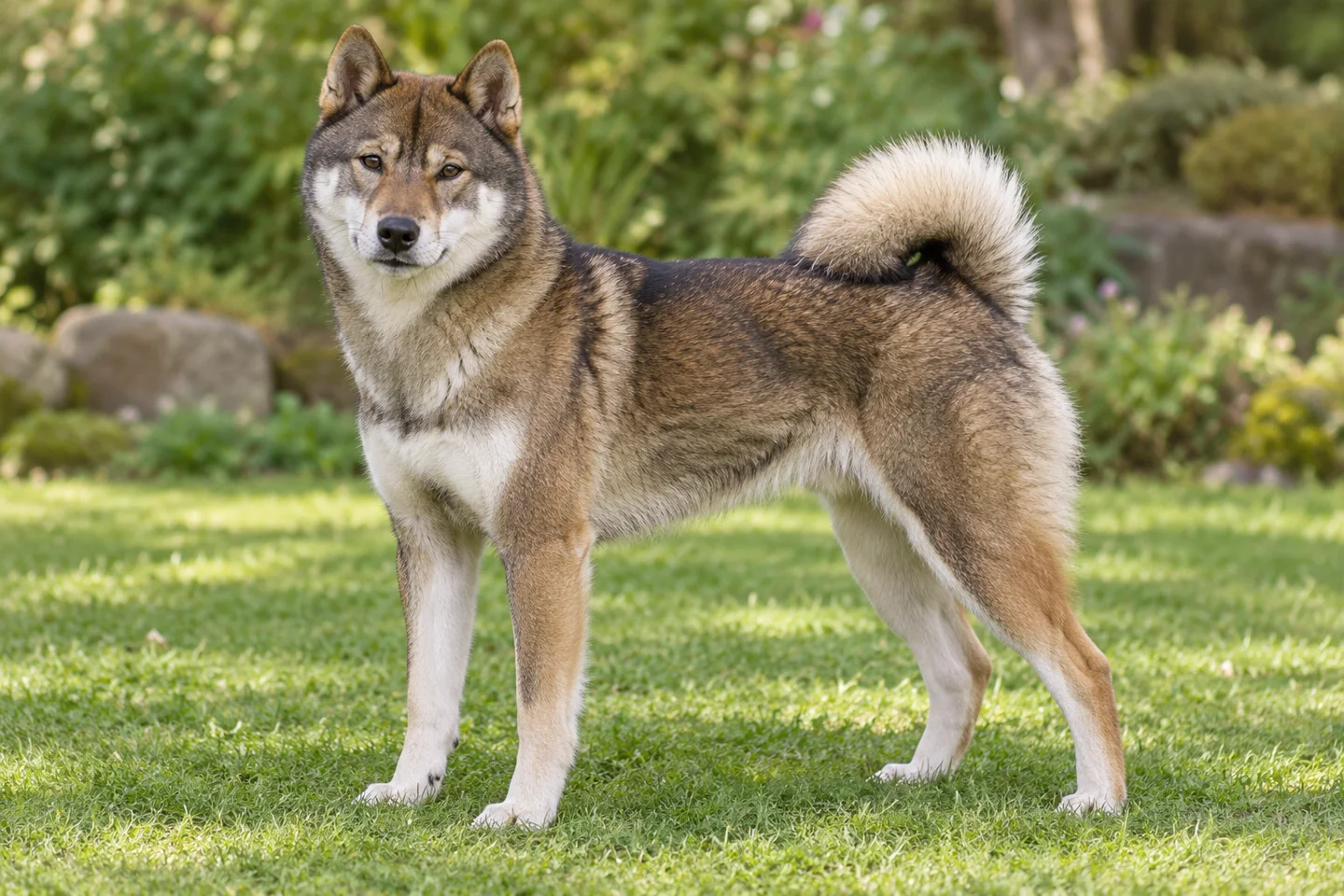
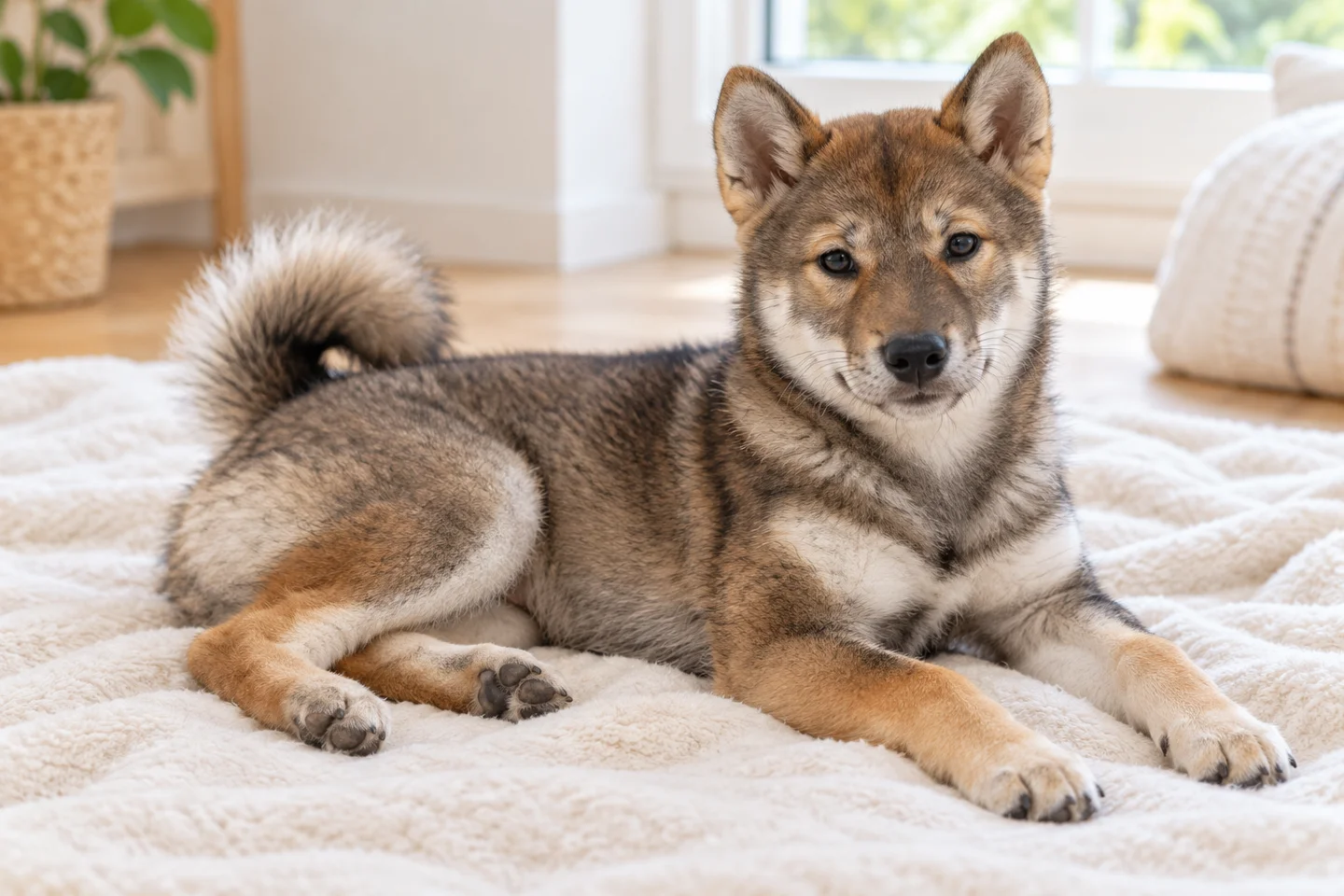
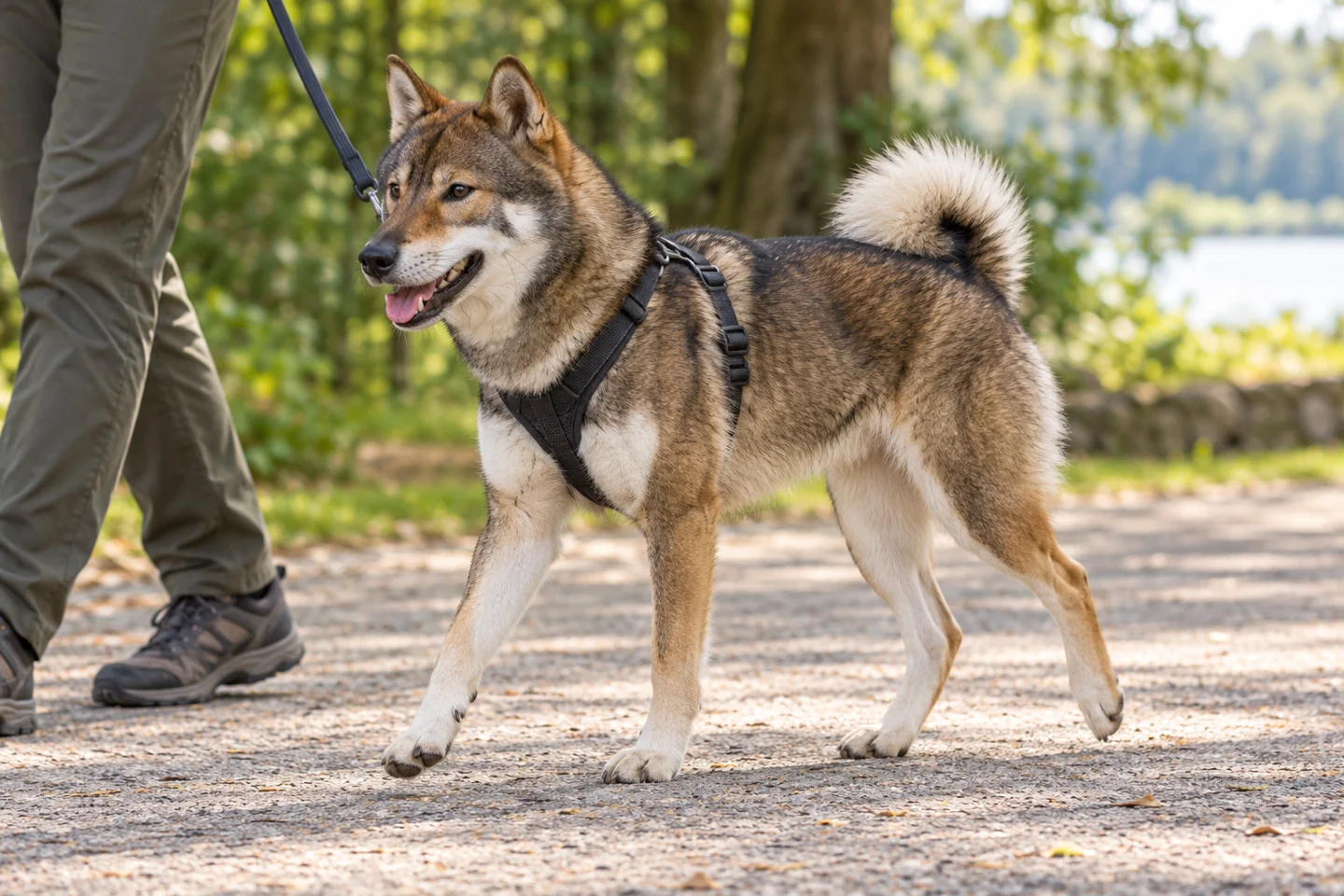
The selected illustrations show a sesame-coated Shikoku with natural erect ears and a complete curled tail. They cannot establish ancestry or document a real dog's medical condition. If an adopted dog's background is uncertain, describe the evidence honestly and arrange care around its observed needs. A breed guess should not replace questions about comfort with people, reaction to other animals, handling, and safe transport. Those practical details determine whether the animal can join a particular household more directly than a visual resemblance to a standard illustration.
Kochi hunting history and present-day expectations
The FCI describes development for hunting, particularly boar, in the mountainous districts of Kochi Prefecture. Its account names the historical Awa, Hongawa, and Hata populations and records natural-monument designation in 1937. These details explain the breed's geographic and working context. They do not certify modern puppies as equally suited to every task or prove a seller's claim of exceptional ancestral purity.
For a companion, translate hunting history into questions about secure access, pursuit, and everyday cooperation. Ask a breeder what the adults do outside working or sporting situations. Can they rest while people visit, travel comfortably, and recover after an exciting walk? A household can provide suitable investigation and training without exposing wildlife to pursuit. Owners should understand local access rules and avoid treating a historical task as permission to ignore them. The aim is a life that suits the individual dog and can be managed safely through an ordinary week, including days when the preferred outdoor plan is unavailable.
Adult height and a balanced athletic outline
The FCI standard gives height references of 52 cm for males and 49 cm for females. It does not give a kilogram range in that document. Body condition should be assessed through the individual dog's frame, muscle, and veterinary guidance. A dense coat can make a distant visual impression unreliable, and a puppy should not be overfed in an attempt to reach an imagined adult size quickly.
The intended outline is compact, strong, and moderately longer than tall. Owners should look for comfortable everyday function rather than trying to reproduce exact proportions through exercise. Watch the animal rise after rest and move on ordinary ground. Teach calm standing for examination and safe entry into the car. If loading, turning, or climbing familiar steps becomes difficult, note when it changed and consult the veterinary team. An enthusiastic hunting background does not establish that the dog is free from pain or that more exercise will correct every change in movement.
Sesame is a hair mixture, not Kai-style brindle
Sesame in the Shikoku standard describes a mixture of black, red, and white hairs. The document also lists red and black-and-tan coats. This differs from using brindle striping to identify the Kai. Puppy coloring can change in appearance during development, so ask the breeder to explain the particular litter rather than making an adult forecast from one early image. Color alone should not decide a purchase.
The outer coat is straight and comparatively harsh, with a dense softer undercoat and fuller tail hair. Natural upright ears and a curled or sickle-shaped tail are part of the breed description. Avoid claims that a rare-looking color supplies better temperament or medical protection. Evaluate the animal's care, family information, and behavior independently. For a rescue, a sesame coat may be one clue among several, but undocumented ancestry remains uncertain. A practical description of size, coat care, and behavior gives adopters more useful information than an unwarranted promise of breed identity.
A predictable home for an alert dog
An alert dog benefits from clear routines around arrivals and departures. Teach moving to a resting area before a visitor enters, using practice sessions when the doorway is quiet. Position the bed where the dog is not constantly interrupted by passing feet. If a window creates repeated excitement, change access to the view while teaching an alternative response. Letting the animal rehearse a difficult reaction all afternoon can make the next training session harder.
Pay attention to what happens after stimulating activity. A dog that cannot settle may need a quieter transition, investigation of discomfort, or help with emotional recovery. Do not automatically add more intense exercise. Record sleep, pacing, appetite, and the situations preceding difficulty. Introduce time apart gradually and check the response instead of assuming damage proves deliberate disobedience. If distress persists, discuss it with the veterinarian and an appropriately qualified behavior professional. Another dog is not a guaranteed cure and would need its own compatibility assessment.
Training recall with realistic physical safeguards
Begin a recall lesson where the Shikoku can succeed, with safe equipment preventing access to hazards. Reward turning back promptly, and sometimes return the dog to an appropriate activity afterward. The response should lead to worthwhile outcomes rather than consistently predict the end of exploration. Increase the difficulty gradually; a response learned indoors does not establish reliability beside moving wildlife.
Check line handling with an instructor if you use a long line. Keep it from tangling around people, dogs, vegetation, or bicycles, and select a suitable setting. Equipment does not make an unsafe location appropriate for practice. Teach a separate exchange for objects and a pause before exterior doors open. Avoid chasing, collar jerks, and forced removal as routine teaching methods. If the dog repeatedly becomes unreachable around a particular distraction, work farther away and reconsider the setup. The question is which skill is available in that environment, supported by management, rather than whether breed loyalty should override every competing interest.
Exercise that values investigation and recovery
Offer regular movement and tasks the individual can manage comfortably. Scent searches, walks, and appropriate controlled activity allow engagement without requiring dangerous pursuit. Adapt the plan for growth, illness, older age, and fitness. A puppy should learn about different surfaces and recovery through manageable experiences, not be required to match an adult's outing. Rest is part of the schedule rather than a reward earned by exhaustion.
Before a route, consider loose dogs, traffic, livestock, heat, and the available exits. Bring water and shorten or change the plan when conditions are unsuitable. A dog keen to move may still need help avoiding heat strain or injury. Examine feet after rough ground and record repeated stiffness later. Secure exercise fields need their boundaries checked for this particular animal. A gate with a loose latch or a gap near a hedge matters regardless of the facility's advertising. Safe freedom depends on the physical arrangement as well as the training history.
Socialization and the choice to observe
A young Shikoku needs opportunities to learn about people, animals, sounds, surfaces, and equipment at a manageable intensity. Watching unfamiliar activity from a comfortable distance can be useful. Strangers do not need to touch the puppy for the session to count. Let the animal approach voluntarily and prevent people from cornering it for a greeting or reaching over its head without warning.
Build practical handling into the same learning plan: fastening equipment, touching feet briefly, standing on a nonslip surface, and resting during travel. Work on each task before a real emergency requires it. If the dog repeatedly avoids, freezes, or cannot recover, reduce the demands and seek guidance. An adult entering a new home also needs this assessment, even if it has extensive experience elsewhere. A rural background may not include lifts or crowded pavements. Conversely, city experience does not guarantee comfort around livestock. Teach the actual situations the dog will face rather than assuming age supplies universal familiarity.
Children and safe participation in care
Give children jobs that fit their age while an adult manages the animal. A child might help prepare a safe search while the dog waits elsewhere, then watch the adult conduct it. The child should not be responsible for holding the lead near a road or recovering something from the dog's mouth. A sudden distraction can change the physical demands more quickly than a young handler can respond.
During contact, protect the dog's ability to leave. Prevent hugging around the neck, climbing over the body, and following into a bed. Quiet stillness can be a warning of discomfort rather than permission to continue. Meals, chews, and sleep need protected space. Visiting children may behave differently from household members, so plan their access deliberately. Use separation whenever close adult supervision is unavailable. If the home cannot provide a dependable dog-only area during busy family moments, discuss that limitation before placement rather than relying on a general description of the breed as devoted.
Aggression and the information around a warning
If a Shikoku growls, snaps, or bites, first prevent another exposure to the immediate situation. A warning during foot handling may involve pain or learned fear, while a response at a doorway may involve a different concern. Write down the sequence and the space available to the dog. Do not ask another person or animal to repeat the trigger to see whether it happens again.
A veterinarian should assess new sensitivity or abrupt changes. For recurring threatening behavior, qualified reward-based help can develop a plan combining physical safety and achievable training. Avoid punishing growling: the concern may remain even if the warning becomes less visible. A carefully conditioned basket muzzle can support some handling plans, but wearing it does not make forced social contact appropriate. After a bite, arrange medical attention for the injured person and review the practical access failure. Breed descriptions of alertness or devotion cannot establish what the individual dog will do at the next encounter, so prevention must address the actual circumstances.
Other dogs, cats, and the management of pursuit
Assess canine compatibility in a setting that allows movement away. Begin with separate handlers and enough distance for both dogs to behave normally. Do not assume similar appearance or shared nationality makes two dogs suitable playmates. Watch whether each can pause and disengage. If one keeps pursuing while the other seeks escape, interrupt before intensity increases.
At home, arrange resources so that a dog cannot control every bed, bowl, or doorway. Cats need protected access to their own essentials, and initial contact should be managed through reliable separation. Prevent chasing rather than waiting for the cat to correct the dog. Smaller pets require secure accommodation and a careful routine whenever that accommodation is opened. Ask about previous behavior around animals, while recognizing that a new animal or rapid movement may change the response. If safe separation would fail during ordinary chores or absences, the household may not suit the placement. Training can support cooperation without guaranteeing the disappearance of pursuit.
Grooming through undercoat changes
Brush in a way that reaches through loose undercoat without scraping the skin. Work in short comfortable sessions and inspect areas beneath equipment and around the tail. A thick coat can conceal moisture, irritation, or debris. Ask a groomer or veterinarian to demonstrate suitable tools if you are unsure; repeatedly pulling at a knot can turn care into an avoidable struggle.
Maintain nails and check pads, especially after unfamiliar terrain. Dental care should begin with manageable rewarded contact before progressing to brushing. Upright ears still need observation for discharge, odor, and discomfort. They are not protected from disease merely because they differ from hanging ears. Avoid deep tools and leftover medication when a problem appears. If the dog objects to one area after previously accepting care, pause and investigate. Comfortable handling makes examination easier, but the aim is not to make the animal tolerate pain silently. Changes in cooperation can be useful medical information when described accurately to the veterinary team.
Health screening: ask which rules apply
Breed information available through the verified sources does not establish a single worldwide Shikoku medical-testing panel. National breeding programs may differ, and an owner should ask which current requirements govern the specific litter. Do not assume a list for another Japanese breed applies unchanged. The absence of a universally stated panel also does not establish freedom from inherited disease.
Request the actual parental records and ask a veterinarian to explain what each assessment can detect. If a commercial DNA panel is offered, identify the variants rather than accepting the number of tests as evidence of broad protection. Family medical history, including problems appearing later in life, remains relevant. Ask how the breeder handles new information from owners and what will be shared with you. A rescue with little background needs an individual examination and a record of current symptoms and treatment. Screening before breeding and investigation of a present illness are separate tasks; a favorable family result cannot answer every clinical question about this dog.
Health observations that improve the veterinary history
Keep useful notes when something changes: onset, duration, appetite, movement, stool, and the circumstances surrounding an episode. A short safe video of an unusual gait can help, but recording should never delay urgent care or require provoking the problem. Avoid a breed-group diagnosis based on superficial similarity. The same outward sign can arise from different causes, and treatment depends on assessment of the individual.
Discuss emergency access with the practice before it is needed. Know where to go outside normal hours and how to transport the dog securely. Collapse, major breathing difficulty, serious injury, and possible poisoning need prompt professional direction. Human medication and another dog's prescription should not be used as improvised treatment. Give the clinic information about current drugs and any possible exposure. For an established condition, obtain a clear care plan and keep it available to temporary carers. Practical preparation matters particularly when the usual handler is unavailable and someone else must manage an unfamiliar journey or appointment.
Feeding, mixes, and the household budget
Measure meals and account for rewards so that training does not conceal a substantial change in intake. Choose a complete diet appropriate to life stage and discuss medical dietary changes with the veterinary team. Evaluate condition over time rather than comparing the Shikoku with a smaller Japanese breed. Persistent weight, thirst, appetite, or digestive changes need clinical attention instead of repeated guesses about which food ingredient is responsible.
A Shikoku mix may differ in size, coat, social behavior, and pursuit from either presumed parent. Ask which ancestry is documented, and avoid treating a crossbreed name as a guarantee of easier ownership or reduced inherited risk. Budget with local figures for veterinary care, secure equipment, training assistance, transport, and appropriate cover during absences. A replacement carer needs to understand door safety and handling around distractions. Practice that handover before travel or illness creates urgency. Suitability includes whether the household can maintain the routine during a difficult week, not only whether its members enjoy an occasional long walk.
dogsDating and a first walk without pressure
Describe the Shikoku's actual meeting experience on dogsDating. Explain whether it prefers parallel walking, needs substantial room, or becomes absorbed in wildlife scent. Keep exact home coordinates and your street address private. An approximate locality can identify a suitable public meeting area without disclosing the household. Choose a start where the handlers can organize equipment separately and avoid an immediate nose-to-nose encounter.
Agree beforehand that greeting and play are optional. Begin with a gap that allows each dog to notice the other and continue walking. Use a route with turning opportunities, and end or increase distance if either repeatedly freezes, avoids, fixes on, or pursues the other. Do not scatter food between them to make the gap smaller. Afterwards, compare what helped each dog stay comfortable and whether another outing would be useful. Either person can decline. The value of the meeting is information about a workable relationship between these animals, rather than proof that two members of a breed should automatically enjoy close contact.
Sources and editorial notes
Sources checked October 22, 2026. Breed measurements describe reference ranges, not a diagnosis or an individual dog's ideal weight. Images are AI-generated breed illustrations and do not document a particular dog or health condition.
- AVSAB: Humane Dog Training Position Statement
- VCA Animal Hospitals: Food aggression in puppies
- VCA Animal Hospitals: Common emergencies in dogs
- Orthopedic Foundation for Animals: CHIC health screening programs
- VCA Animal Hospitals: Aggression toward unfamiliar dogs, diagnosis
- VCA Animal Hospitals: Grooming and coat care for your dog
- VCA Animal Hospitals: Ear infections in dogs (otitis externa)
- AAHA: Feeding plans for healthy, appropriate weight cats and dogs
- VCA Animal Hospitals: Heat stroke in dogs
- AVSAB: Puppy Socialization Position Statement
- VCA Animal Hospitals: Dog behavior problems, aggression toward children
- FCI Shikoku standard 319: Kochi history, height references and permitted coat colors
Keep getting to know dogs.
Read another guide or return to your dogsDating community.
Explore breed guidesBack to dogsDating