West Siberian Laika
A distinct hunting Laika, with wolf-gray illustrations, realistic access management and precise April 2026 Norwegian screening-context distinctions.
How these guides are researched and reviewed
- Origin
- Russia; Urals and western Siberia
- Male height
- 55–62 cm
- Female height
- 51–58 cm
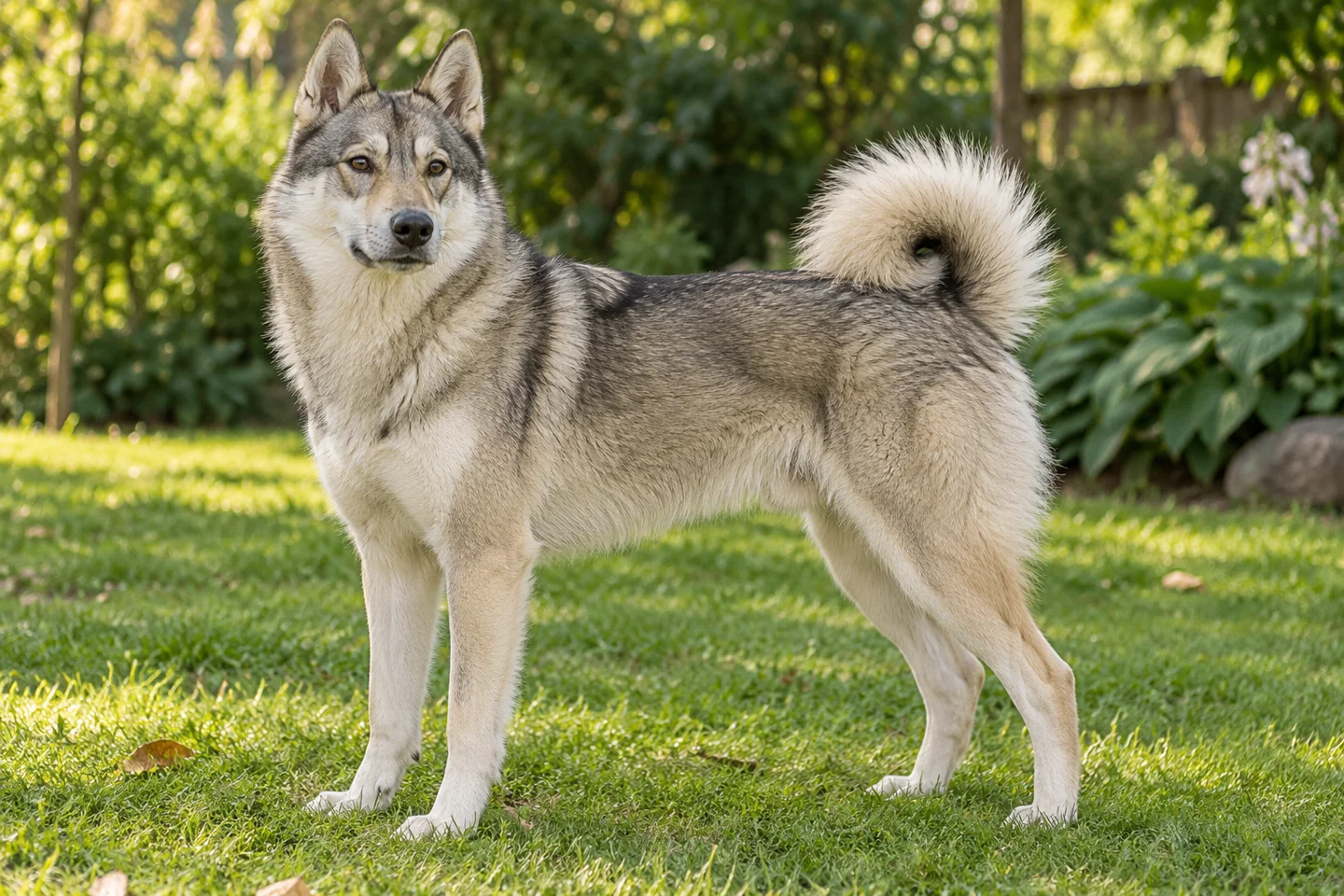
- Illustrated type
- Wolf-gray and cream, brown eyes, full curled tail
General information for owners. These articles have not been reviewed by a veterinarian. Medical decisions need your dog's history and an examination.
A hunting Laika distinct from other northern breeds
The West Siberian Laika is a Russian hunting spitz associated with the Urals and western Siberia. It is separate from the East Siberian, Russian-European, and Yakutian Laikas. Their names describe different registered populations, not interchangeable color options. A general label such as Siberian dog cannot establish which standard or health information applies to an animal.
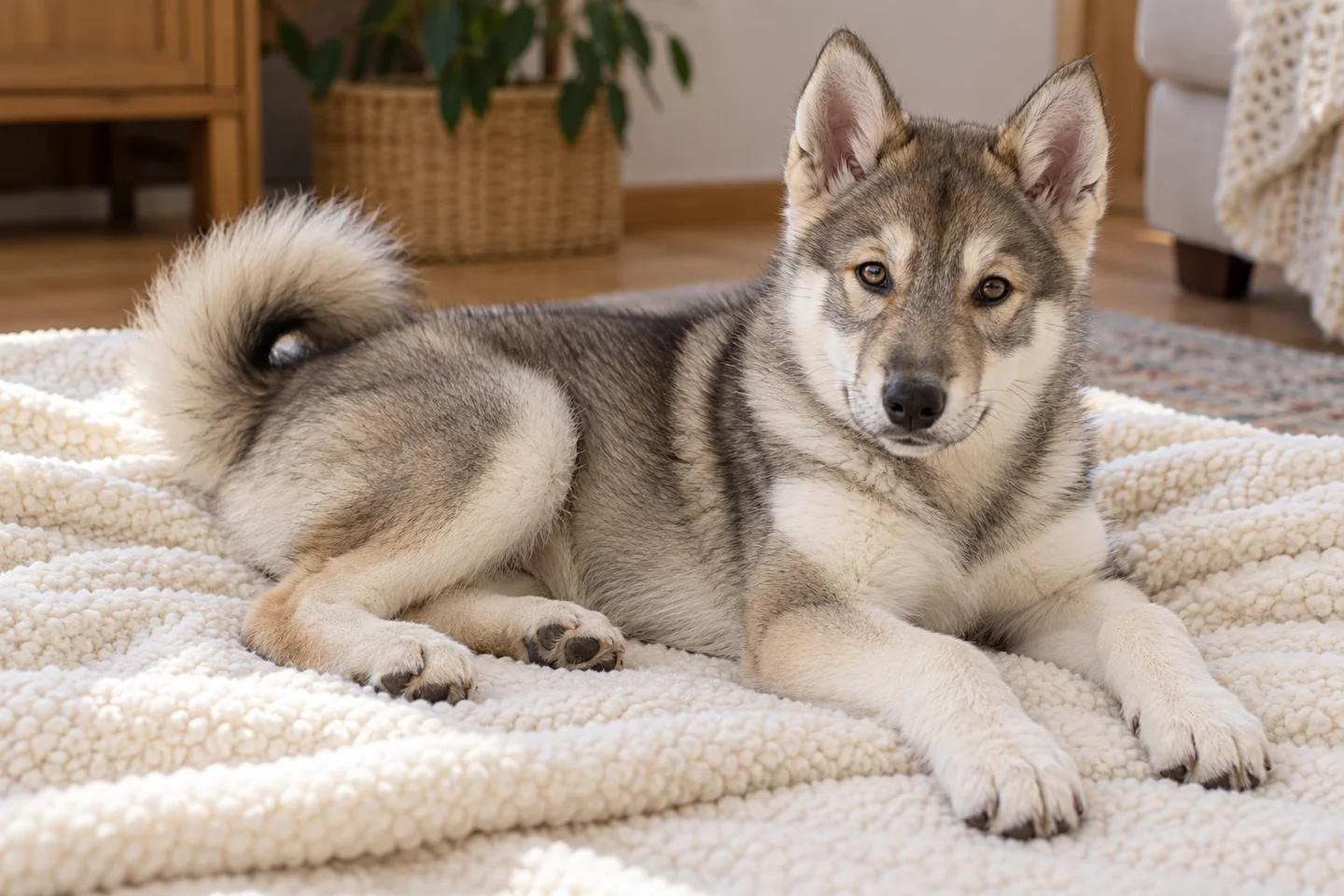
The illustrations select wolf-gray and cream coloring, natural upright ears, brown eyes, and a full curled tail. They avoid a black-and-white Russian-European pattern or blue-eyed Yakutian appearance. These images explain one chosen type rather than document a real dog's pedigree. A prospective owner needs information about the individual animal's experience, pursuit, responses to people, and ordinary care. A northern outline alone cannot establish suitability for a companion household. Discuss the actual routine and available help with an experienced source before choosing on appearance.
Khanty and Mansi context and the modern placement question
The FCI and Swedish Kennel Club accounts describe development involving the hunting dogs of the Khanty and Mansi peoples and related regional populations. This context matters when discussing working interests and independence. It does not provide a simple promise that every modern puppy will behave identically, nor permission to ignore wildlife and access rules in the place where the dog now lives.
A household should be explicit about whether it offers working activity or another suitable routine. Ask experienced breed people how dogs from the relevant family live between outings and what they find difficult. An animal with extensive field experience may still need teaching about a lift, busy pavement, or quiet separation from its usual handler. Conversely, comfortable domestic behavior does not establish readiness for demanding work. Consider recent experience and medical condition rather than assuming a historical task supplies universal ability. A responsible placement discussion can conclude that the proposed environment is unsuitable; that is more useful than a vague assurance that any active home will do.
Adult height and a lean rather than massive build
The FCI gives males a height range of 55–62 cm and females 51–58 cm at the withers. It does not establish a fixed adult kilogram interval in that standard. The intended build is athletic and strong without unnecessary mass. Ask the veterinary team to assess condition and muscle on the individual frame rather than feed toward a number borrowed from another Laika.
Plan restraint, resting space, and vehicle access for adulthood. Recheck equipment during growth and make sure the animal cannot slip free when backing away. Teach loading on a stable surface with the outside secured. If mobility later changes, a familiar ramp arrangement may help. Arrange traction near doors where quick turns occur. A dog still keen to follow a task can nevertheless have discomfort, so changes in rising, turning, or recovery deserve attention. Body appearance should be assessed through the coat and over time, not decided from one photograph taken during seasonal shedding.
The coat and why wolf-like does not mean wild ancestry
The selected gray-and-cream coat is one appearance permitted by the standard. The harsh straight outer hair sits over a dense undercoat, with a fuller collar and cheek hair. Natural upright ears and the complete curled tail are normal breed features. A wolf-like outline does not prove recent wolf ancestry, and sellers should not use that resemblance to make unsupported behavioral or medical claims.
Puppies have developing proportions and coat, so early photographs cannot guarantee the adult finish. Ask about normal development in the family. The visual selection here avoids black-and-white or blue-eyed features that could confuse the reader with another Laika. For an adopted dog, appearance may suggest a background without resolving it. Keep the description honest and arrange care around the actual findings. A distinctive coat cannot show how the dog accepts foot inspection or whether skin beneath equipment is sore. Meet the animal in ordinary circumstances and request relevant records separately from appearance claims.
Training a response in the presence of scent and movement
Teach orientation toward the handler where the animal can succeed. Use rewards and, where safe, access to investigation after cooperation. Increase distraction through small changes rather than beginning beside the most compelling wildlife scent available. A response learned at home has to be developed in new environments; repeating the cue louder cannot supply missing experience.
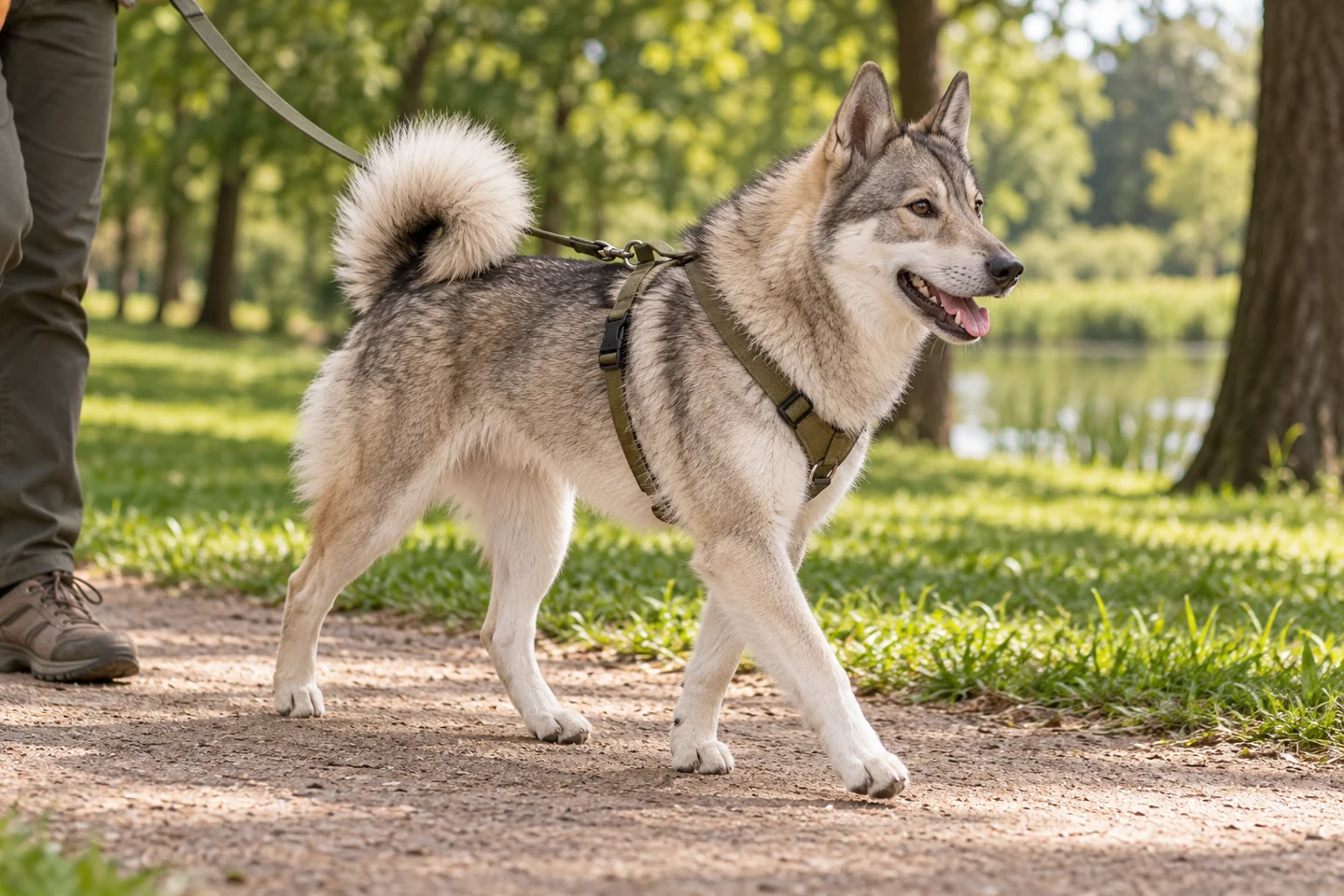
Practice returning with appropriate physical safeguards and instruction on line handling where needed. A tangled line can create its own injury risk. Teach a pause before exterior access and an exchange for harmless found objects. Do not rely on grabbing the collar after the animal has already committed to moving. Every regular carer needs the same entrance and walking arrangements. Qualified reward-based help can support pulling, fixation, or guarding that already affects daily life. Independence does not mean an animal cannot learn. It means the handler should make the requested action clear and worthwhile while maintaining safeguards around situations that exceed current skill.
Exercise for a hunting dog without unsafe freedom
Plan regular activity with appropriate investigation, gradually developed fitness, and recovery. A household must assess whether it can sustain that routine rather than rely on one long weekend route. Puppies should not follow an adult work schedule. Older animals may continue enjoying tasks while needing easier terrain or shorter periods. Ask for veterinary advice when fitness or medical suitability is uncertain.
Wildlife interest requires dependable access management. Check local rules, equipment, gates, and the particular enclosure before release. A tracker can aid recovery but cannot prevent traffic injury or pursuit. Carry water and consider temperature, footing, and an early exit from a demanding route. Northern ancestry does not make heat illness impossible. After rough activity, inspect feet and equipment contact areas, then observe movement later. Repeated stiffness, a limp, or altered recovery needs assessment. The dog wanting to continue cannot establish that continuing is safe, and more exercise is not a treatment for an unexplained physical change.
Voice, vigilance, and recovery at home
Notice what prompts vocalizing and whether the dog can disengage afterward. A view of neighboring animals or continual movement at a fence can keep it active beyond the outing itself. Change access to the trigger while teaching an alternative resting response. Avoid encouraging boundary confrontations as evidence of working character. A household needs ordinary entrances and departures to remain manageable.
Provide a quiet sleeping place and a predictable transition after activity. If the dog keeps pacing, review discomfort, environmental demands, and emotional recovery rather than automatically making the next walk harder. Introduce absences gradually and observe what actually happens. Persistent distress requires veterinary and qualified behavior support. Another dog is not a guaranteed solution. Arrange an experienced carer before an unavoidable absence and practice the full routine together. An affectionate relationship with one person cannot substitute for preparation when that person becomes ill or travels. The proposed home needs workable cover as well as enthusiasm for outdoor life.
Socialization for the environment the dog will inhabit
A puppy needs manageable learning about people, equipment, surfaces, travel, and ordinary sounds. Observing from a comfortable distance can be useful without direct greeting. Ask strangers to wait and preserve a way to leave. If the puppy repeatedly freezes or withdraws, simplify the experience and seek help choosing the next step.
Necessary handling is a separate skill. Brief paw and ear checks, equipment fitting, and standing on a nonslip surface should be practiced before injury makes care urgent. An adult moving from another environment deserves the same assessment of what is familiar. Do not assume hunting confidence establishes comfort with city crowds or an unfamiliar examination room. Continue teaching through adolescence and after major changes. Watch recovery after a session: prolonged vigilance, disrupted rest, or reduced normal engagement can mean the demands were too high. Successful learning is more than remaining physically present until the handler decides the outing is complete.
Children and the difference between family contact and control
Adults should manage entrances, walking equipment, and exciting situations. A child should not be responsible for restraining a dog that may react quickly to movement or scent. Running games belong away from the sleeping animal, and children must not climb over its body or pull ears and tail. Give the dog a genuinely protected resting area.
During calmer contact, invite an approach and pause after brief touch. A dog turning away ends the attempt. Meals, chews, and objects in the mouth remain adult responsibilities; children should ask for help rather than reach in. Visiting children need their own supervision even where household relationships are comfortable. Plan separation before a party or divided attention makes close observation unreliable. A breed description or one peaceful interaction cannot establish tolerance for every kind of handling. Suitability includes whether adults can sustain these arrangements through ordinary family life, not only during a careful first introduction.
Aggression: separate the immediate event from a breed label
A growl at a gate, a snap during painful foot care, and a reaction near food require different questions. First create safety and prevent another exposure. Record the sequence, people or animals present, contact, resources, and available space. Do not recreate the trigger to determine whether the warning was serious.
New sensitivity or an abrupt behavioral change calls for veterinary assessment. Recurring defensive behavior needs qualified reward-based support, alongside physical safeguards while teaching progresses. Punishing warnings may leave the concern unresolved and make it harder to observe. If a basket muzzle is advised for a particular procedure or plan, condition it gradually and check fit. It cannot justify forced social contact. After a bite, obtain medical care for the person and review the practical access failure. The dog's working identity does not explain every incident or predict the next one. Prevention has to address the individual animal and the circumstances in which contact became unsafe.
Dogs, cats, and managing pursuit before it is rehearsed
Assess canine meetings away from cramped entrances, with separate handlers able to adjust the gap. Watch whether both dogs can pause and disengage. One repeatedly following an animal trying to leave is a reason to interrupt. A comfortable outdoor relationship does not establish immediate agreement over beds, bowls, or access inside a home.
Cats need protected routes to essentials, and the Laika should not rehearse chasing while people wait for familiarity. A stationary animal behind a barrier and a running animal outside are different situations. Small pets require secure accommodation and a plan whenever an enclosure opens. Ask about the individual history while acknowledging missing information. If the layout or normal chores would defeat reliable separation, reconsider placement before adoption. Training supports cooperation without promising that moving animals will become universally uninteresting. Affection toward people supplies useful relationship information, while compatibility with each other species remains a separate question.
Grooming through a seasonal undercoat change
Brush gently through loose undercoat and inspect places where hair compacts or equipment rubs. The collar, hindquarters, and tail need attention beyond a quick surface pass. Ask a knowledgeable groomer to demonstrate suitable tools if the routine repeatedly causes pulling or avoidance. Do not cut into a tight mat when the skin beneath cannot be identified safely.
After outdoor activity, examine pads and between toes, and allow comfortable drying when the coat is wet. Maintain nails and introduce tooth brushing through short rewarded contact. Upright ears still need observation for discharge, odor, and pain. Avoid deep tools or medication from an earlier episode when a new problem appears. If handling becomes difficult around one area, pause and investigate discomfort. A double coat is compatible with ordinary examination, but owners must make time to reach the body beneath it. Care should preserve comfort and provide information about change rather than force a cosmetic session to completion.
Health: Norwegian breeding requirements changed in April 2026
NKK's Laika breeding program applies from April 2026. For West Siberian Laikas it requires known hip status and permits grades A, B, and C, while recommending that a C result be paired with a hip-clear partner. Do not transfer the stricter East Siberian rule on the same page or describe all statements there as identical requirements.
The program also recommends elbow assessment and discusses acceptable pairings, together with ADAMTS10 testing for hereditary open-angle glaucoma. Confirm the rules and advice governing the specific litter, since a Norwegian program is not a universal international panel. Ask for identifiable reports and veterinary interpretation. A favorable parental record cannot explain every current limp or eye change in your dog. Keep screening context separate from clinical investigation. That distinction matters when a puppy is imported or an owner encounters different national systems. The actual findings and the status of each recommendation should remain clear rather than collapse into the vague phrase fully tested.
Hip findings, field injuries, and an individual examination
The Swedish Kennel Club notes that hip dysplasia can occur. NKK's discussion also highlights injuries in the West Siberian population, without supplying a reason to diagnose every active dog from its breed. Ask about family orthopedic findings and the animal's own history. A working record or current enthusiasm does not exclude discomfort.
If gait, rising, turning, or loading changes, describe when it began and what activity precedes it. A safe video of an intermittent movement can help, provided recording does not delay care or require provoking pain. The veterinarian decides which examination or imaging is relevant. Do not force more running to strengthen an unexplained problem or give human pain medicine. Ask about comfortable activity while investigation proceeds. For major injury, collapse, or severe breathing difficulty, obtain prompt professional direction. Field experience should support a practical emergency and transport plan rather than encourage an assumption that a robust-looking animal will recover without assistance.
Population management, mixes, and what an owner can ask
NKK discusses the small Scandinavian Laika populations and the need to manage relatedness through cooperation. That is a population question, not proof that every imported dog is a better choice or every mating between similar-looking animals improves diversity. Ask how a breeder assesses family relationships, relevant health findings, and the long-term plan for the litter.
A West Siberian Laika mix may vary in coat, adult size, pursuit, and social behavior. A crossbreed name cannot guarantee easier ownership or freedom from inherited risk. Distinguish a documented breeding program from an unspecified cross advertised with conservation language. In rescue, current medical and behavioral findings guide immediate care even where records are limited. Ask how later family diagnoses are shared and what support follows placement. Population concerns should not pressure a household to accept an animal whose needs it cannot manage safely. A useful discussion can acknowledge both the breed's wider breeding context and the practical requirements of this individual home.
Food and a budget that includes experienced cover
Measure meals and account for reward food, reviewing intake against condition and the actual week's activity. Choose a complete diet appropriate to life stage and obtain advice for persistent thirst, digestive signs, appetite changes, or unexplained weight differences. A hunting background does not justify arbitrary supplements, and homemade feeding requires proper formulation.
Obtain local costs for veterinary care, secure equipment, transport, training, boundaries, and competent cover. A replacement carer must be able to manage the adult around entrances and distractions, not merely enjoy its company indoors. Practice a handover before illness or travel creates urgency. Keep medical instructions and emergency contacts accessible. Secure medicines, rubbish, and dangerous products beyond reach. Suitability includes whether the household can sustain regular purposeful activity and safe rest during an inconvenient week. An attraction to a northern appearance or enthusiasm for occasional hiking cannot answer those ongoing responsibilities by itself.
dogsDating and a first outing without compulsory greeting
On dogsDating, describe the West Siberian Laika's actual experience with unfamiliar dogs and the proposed kind of walk. State where scent or wildlife movement makes handling harder. Keep exact home coordinates private and omit the household address. Use an approximate locality to choose a public starting point with space for separate preparation.
Agree on an initial gap, turning options, and a simple way for either handler to finish. Begin with controlled movement and notice whether each dog can resume ordinary investigation after seeing the other. Contact is optional. Repeated fixation, blocking, or attempts to retreat mean the plan should change promptly. Avoid shared toys and food during an initial encounter. Afterwards, compare specific responses before deciding whether another outing helps both animals. Either person can decline. Calm walking at a distance can remain a useful arrangement without a requirement to prove that hunting spitz breeds should automatically enjoy close play.
Sources and editorial notes
Sources checked October 22, 2026. Breed measurements describe reference ranges, not a diagnosis or an individual dog's ideal weight. Images are AI-generated breed illustrations and do not document a particular dog or health condition.
- AVSAB: Humane Dog Training Position Statement
- VCA Animal Hospitals: Food aggression in puppies
- Orthopedic Foundation for Animals: CHIC health screening programs
- VCA Animal Hospitals: Aggression toward unfamiliar dogs, diagnosis
- VCA Animal Hospitals: Grooming and coat care for your dog
- VCA Animal Hospitals: Ear infections in dogs (otitis externa)
- AAHA: Feeding plans for healthy, appropriate weight cats and dogs
- VCA Animal Hospitals: Heat stroke in dogs
- AVSAB: Puppy Socialization Position Statement
- VCA Animal Hospitals: Dog behavior problems, aggression toward children
- FCI West Siberian Laika standard 306: identity, regional history, size and coat
- Swedish Kennel Club: West Siberian Laika and hip-health context
- Norwegian Kennel Club: Laika breeding program effective April 2026, distinguishing requirements and recommendations
Keep getting to know dogs.
Read another guide or return to your dogsDating community.
Explore breed guidesBack to dogsDating