Xoloitzcuintli
A Mexican breed with coated and hairless forms, illustrated as standard-size hairless, with precise size terminology, dental distinctions and practical skin protection.
How these guides are researched and reviewed
- Origin
- Mexico
- Selected size and form
- FCI standard-size hairless, 46–60 cm
- Other FCI sizes
- Intermediate 36–45 cm; miniature 25–35 cm
- Selected appearance
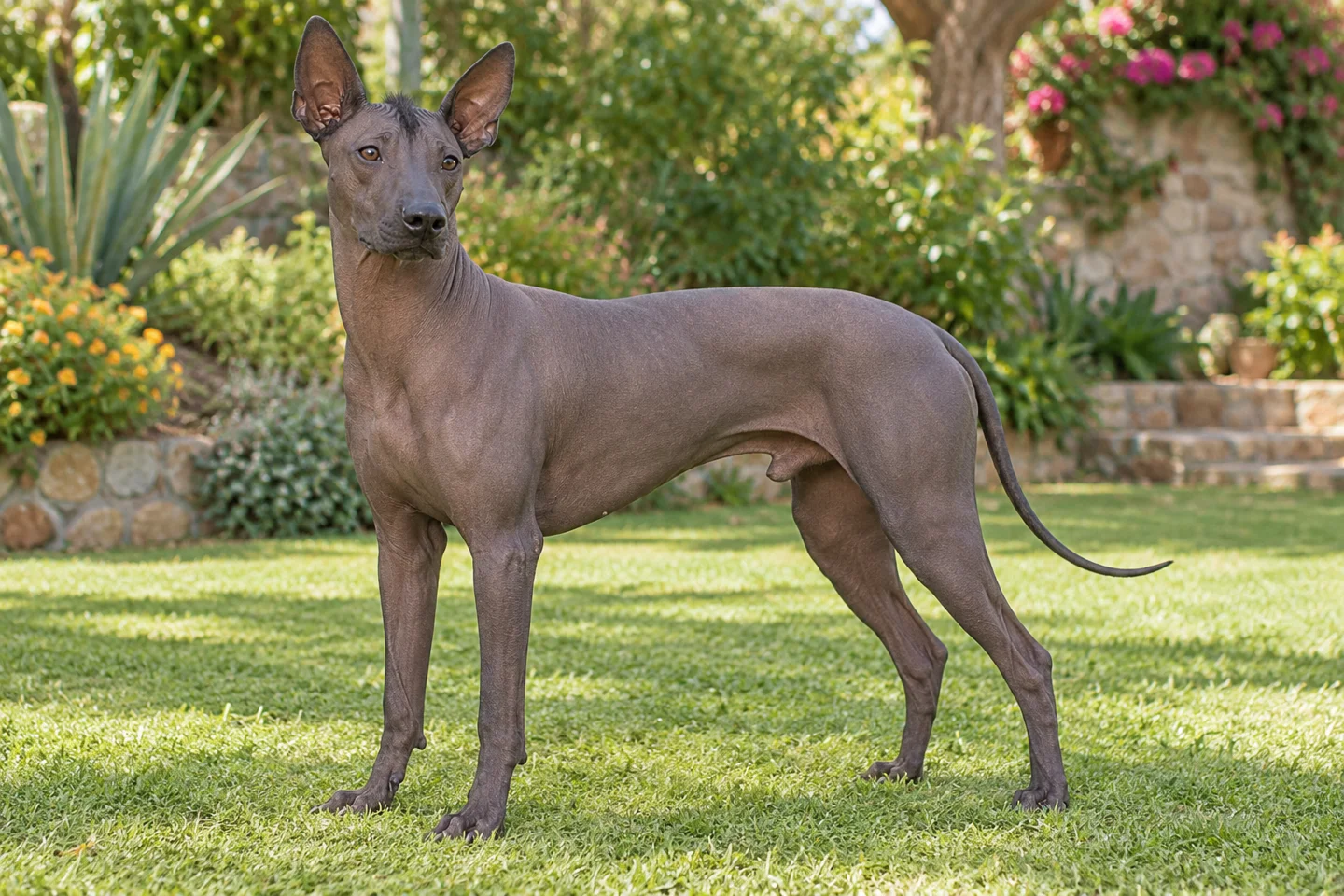
- Dark slate skin, natural erect ears and complete fine tail
General information for owners. These articles have not been reviewed by a veterinarian. Medical decisions need your dog's history and an examination.
The Xoloitzcuintli includes coated and hairless dogs
The Xoloitzcuintli is a Mexican breed with both hairless and coated forms. The name is often shortened to Xolo. A coated dog is not automatically an unrelated mix, and a hairless appearance alone cannot establish ancestry. Check actual registration and family information rather than assuming every bare-skinned dog belongs to this breed.
The illustrations select the standard-size hairless form with dark slate skin, natural large erect ears, and a complete fine tail. Very sparse short crown hair can be present. They do not show the coated form or a miniature body while describing a standard adult. Images provide an appearance reference rather than documentary proof. Meet the individual animal and discuss its ordinary care, movement, handling, and social experience. A striking appearance can distract from the practical needs shared with other dogs: safe activity, protected rest, medical care, and learning appropriate to the household where it will live.
Mexican history without medical or mystical promises
The FCI account places the Xolo in Mexican history and cultural tradition. That context should not become an unsupported claim that skin contact cures illness or that a particular modern puppy has special healing properties. Historical importance also cannot establish current health, family relationships, or household suitability. Ask for evidence tied to the actual animal.
Recent experience is especially useful. How does the dog respond to a visitor reaching toward its body, a change in temperature, a journey, or time with another carer? A breeder should explain ordinary routines, including skin care, without turning them into a performance for a photograph. An adult rescue may know many useful skills while needing a transition to a new home. Discuss that process directly. A household should choose based on the dog's needs and the arrangements it can sustain, rather than novelty or a remote story being treated as a guarantee of effortless companionship.
Three FCI sizes and the form illustrated here
The FCI lists standard size at 46–60 cm, intermediate at 36–45 cm, and miniature at 25–35 cm for both sexes. A limited upper tolerance is described for top-quality standard dogs. The illustrations here choose the standard size. Do not blend these names automatically with every other registry's toy and miniature terminology; identify the system used when discussing a particular dog.
The standard does not prescribe a universal kilogram interval for all three sizes. Have the veterinary team assess the individual's frame, muscle, growth, and condition. Visible skin makes some body changes easier to observe, but owners still need appropriate interpretation rather than equating every contour with underfeeding. Plan equipment and vehicle space for the expected adult. A standard-size dog requires different practical arrangements from a miniature, even where care topics overlap. Teach comfortable restraint and loading before travel becomes urgent, and check fit frequently during growth.
Natural anatomy and skin that is not a costume
The selected hairless Xolo has smooth dark slate skin and large naturally erect ears. Its tail remains long and fine, hanging with a slight curve at rest. The body should not be illustrated with exaggerated wrinkles, exposed fangs, or human-like anatomy. Sparse short hair in specified areas is compatible with the hairless description; a long soft topknot is a different appearance.
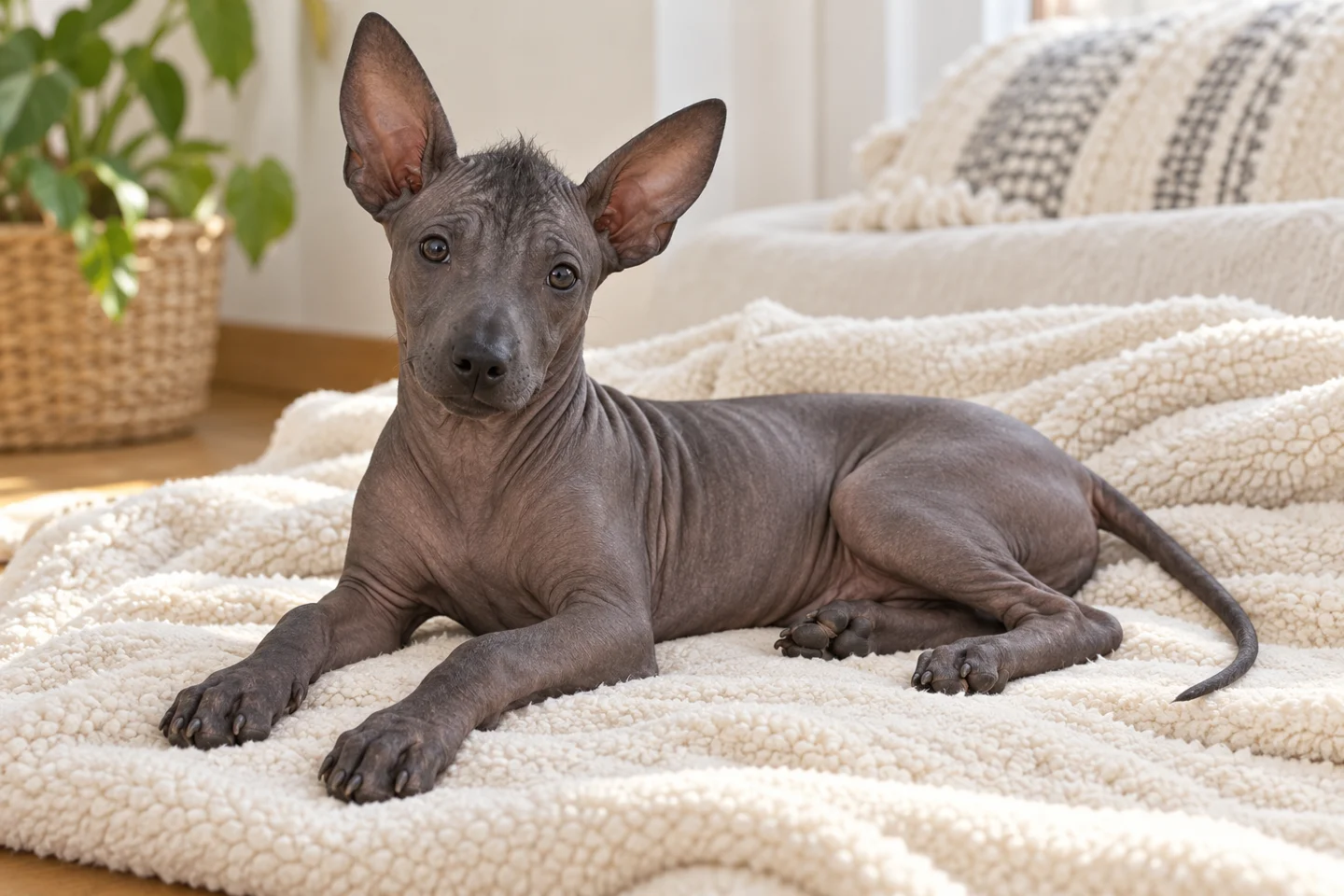
Puppies can have temporary folds and developing ear carriage. Ask about normal development instead of manipulating ears to reproduce an adult pose. The coated form carries short flat hair and needs its own appropriate routine. Neither form should be chosen through unsupported promises of hypoallergenicity or universal skin perfection. A photograph cannot establish how the animal tolerates necessary examination or whether a product is irritating it. For rescue, describe the actual findings and acknowledge uncertain background. The absence of a thick coat does not make the dog a display object; comfort and normal function remain the priorities.
Training touch and equipment without overwhelming contact
Begin with brief predictable contact where the dog is comfortable. Touch a shoulder, reward, and pause, gradually working toward the places that need routine care. A dog with visible skin may attract frequent hands from curious people, so teach the household to ask before touching. Necessary examination should not be confused with unlimited social handling.
Practice equipment fitting, standing on a nonslip surface, and entering travel restraint in small steps. Avoid waiting until painful treatment is urgent to introduce every form of contact. If the dog repeatedly withdraws, lower the demand and consider whether friction, temperature, or pain contributes. A qualified reward-based professional can help where handling already produces warnings. Do not force stillness and assume the animal has become comfortable. Cooperative skills give the veterinary team and carers more options while allowing the dog to predict what happens next. The objective is usable care with manageable demands, not a demonstration of how much handling an unusual-looking breed will tolerate.
Exercise with environmental protection built into the route
Offer regular movement and investigation suited to age, condition, and fitness. Skin exposure changes the planning questions without removing the need for activity. Choose shade, suitable weather, and safe surfaces, and ask the veterinary team about protection appropriate to the individual's skin. Dark pigmentation does not provide permission for unlimited sun exposure.
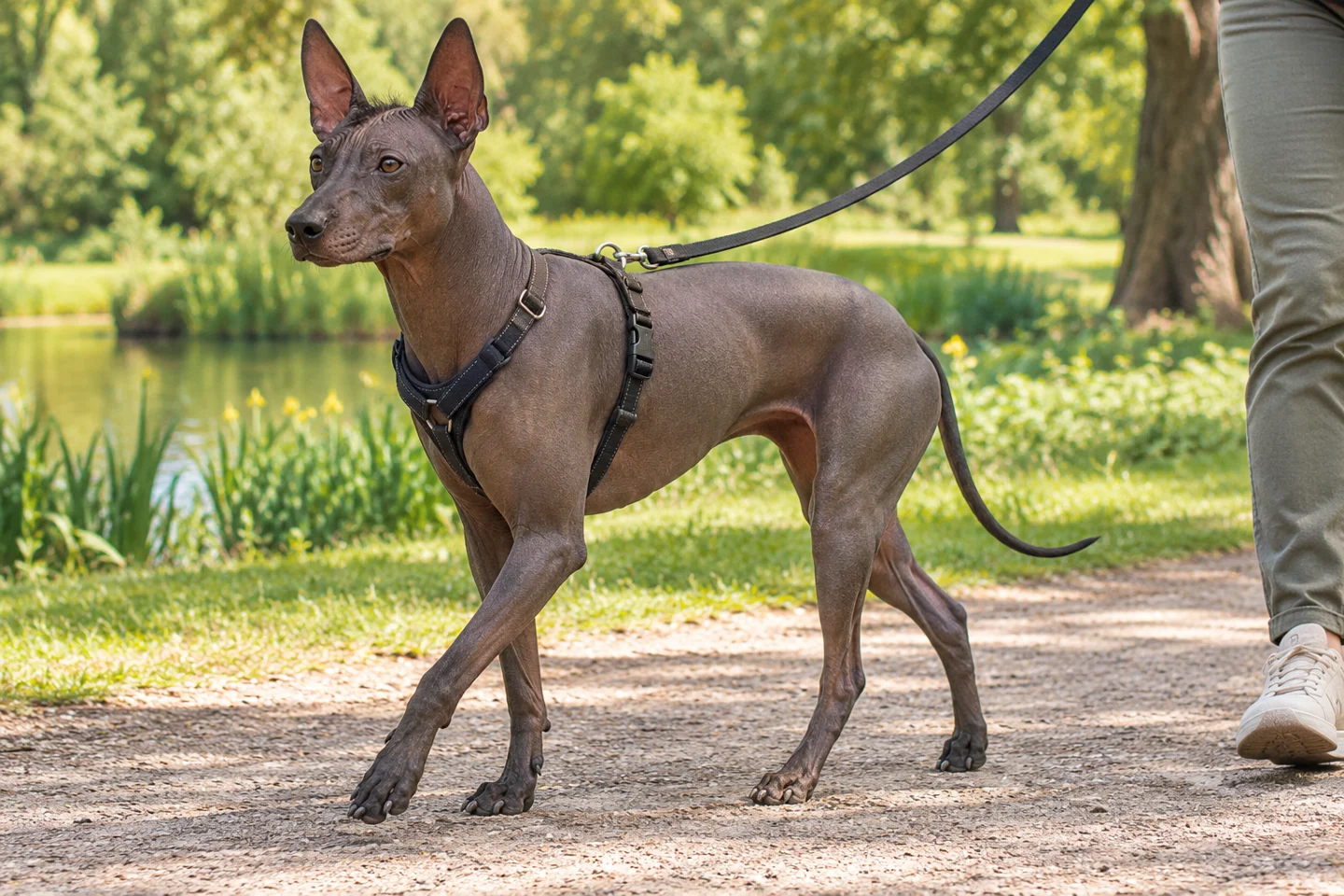
Cold and wet conditions also need assessment. If clothing is useful, introduce it gradually and check for rubbing, restricted movement, moisture, and overheating. A garment is not a reason to continue in unsuitable weather. Puppies need manageable experiences and rest rather than an adult distance target. Older dogs may require easier footing and shorter outings. Carry drinking water and retain an early exit from the route. After activity, inspect feet and areas beneath equipment or clothing. Repeated discomfort, altered breathing, or unusual recovery requires advice. The plan should follow the actual dog and conditions rather than assume Mexican origin supplies universal heat tolerance.
A comfortable resting environment and learned absences
Arrange bedding and a resting place suited to temperature and away from busy routes. The dog should be able to change position without being continually touched or disturbed. Practice calm periods while people perform ordinary tasks nearby. If an outside view keeps prompting vigilance, change access while teaching a quieter alternative.
Introduce time apart through stages the animal can manage and observe sleep, eating, pacing, and recovery. Persistent distress warrants veterinary and qualified behavior advice. Another dog may add a relationship to assess without resolving the original concern. Arrange a trusted carer and practice the routine before a long unavoidable absence. The person needs equipment, feeding and skin-care instructions, current medicines, and emergency contacts. Discuss the actual working week before placement. A dog described as a calm companion still needs practical cover when the usual handler becomes ill or travels, and a novel appearance cannot supply that arrangement.
Socialization when strangers are curious about the breed
People may be especially interested in a hairless puppy, but curiosity does not create a right to contact. Let the animal watch from a comfortable distance and reward relaxed engagement. Ask strangers to wait, avoid crowding, and leave an easy route away. A useful outing can end without anybody stroking the dog.
Include sounds, surfaces, vehicles, and other animals in manageable lessons. A puppy that repeatedly freezes or retreats needs fewer demands and guidance on progression. Adult rescues deserve the same assessment of actual experience. Age does not establish comfort with every person, crowd, or examination room. Continue learning after a move or major household change. Watch how readily ordinary rest and activity return afterward. Prolonged vigilance can mean the next outing should be simpler. Successful socialization supports coping through achievable experience; it is not a requirement to remain still through a long event or accept repeated touching because the owner wants to explain the breed.
Children and respecting exposed skin
Children need to learn that the Xolo's skin is part of a living animal, not a surface for pinching, drawing, or experimenting with products. Prevent rough grabbing, climbing, neck hugging, and pursuit into its bed. Let the dog approach voluntarily and pause after brief contact. Moving away ends the interaction.
Adults manage food, chews, equipment, and exchanges for objects. Children should ask for help rather than reach into the mouth. A standard-size dog also has physical momentum that can knock over a small child without threatening intent, so arrange running games separately. Visiting children need their own supervision even where familiar relationships are relaxed. Before a party or divided adult attention makes observation unreliable, provide comfortable separation. A breed description cannot certify tolerance for every unusual touch or excited group. Suitability includes whether the adults can preserve private rest and safe contact consistently through ordinary family life.
Aggression and investigating the reason for a warning
A dog that objects to touch may have irritation, pain, fear, or another concern. Stop the contact and consider the immediate situation rather than declaring the response a breed characteristic. A warning over food or near a doorway needs different questions. Record approach, resource, touch, location, and the ability to retreat, then prevent another exposure while obtaining help.
New sensitivity or abrupt change needs veterinary assessment. Recurring defensive behavior warrants qualified reward-based support with physical safeguards during learning. Punishment may suppress a growl while leaving the cause intact. A basket muzzle, when advised, needs comfortable conditioning and a specific purpose. It cannot make forced social contact appropriate. After a bite, obtain medical care and review how access occurred before repeating the situation. The wording of an ideal temperament standard cannot predict an individual encounter. Prevention should fit the actual animal, including how painful or irritating care will be avoided while necessary treatment is provided.
Dogs, cats, and an individual compatibility assessment
Begin canine introductions with separate handlers and enough room to move away. Watch whether each dog can pause and disengage. One repeatedly pursuing another that tries to leave needs interruption, even if the pursuing dog seems enthusiastic. A comfortable walk together cannot establish immediate agreement around beds or bowls indoors.
Prepare separate resources and reliable division of space before adding a companion. Cats need protected routes to food, litter, and rest, with introductions that prevent chasing. Small pets require secure accommodation and a plan whenever it opens. Ask about actual history while acknowledging unknowns, particularly for rescue. Acceptance of one familiar animal cannot predict the response to an unfamiliar running animal outside. If ordinary chores or absences would defeat necessary separation, reconsider placement instead of relying on the animals to negotiate safety. Training supports cooperation without guaranteeing the disappearance of every pursuit response throughout life.
Grooming includes skin care, not a human beauty routine
Ask the veterinary team about bathing and products appropriate to the individual skin. More washing or oil is not automatically better, and repeated product changes can make irritation harder to interpret. Avoid squeezing bumps or applying human acne treatments. Record persistent redness, sores, or discomfort and arrange assessment rather than treat a photograph-based diagnosis at home.
Check equipment and clothing contact points, particularly after heat, moisture, or activity. Introduce care in short cooperative sessions on a stable surface. The coated form needs suitable coat and skin inspection too; it is not simply the hairless routine with brushing added without thought. Maintain nails and observe ears for discharge, odor, or pain. Upright carriage does not exclude disease. If one area becomes difficult to touch, stop and investigate discomfort before increasing restraint. A care routine should preserve normal movement and access for examination while avoiding unnecessary cosmetic interventions that leave the animal sore or repeatedly distressed.
Dental differences do not remove the need for dental care
The FCI standard explicitly distinguishes dentition in the hairless and coated forms. Some missing teeth are accepted in hairless dogs, while the coated form is described with a complete normal dentition. An accepted conformation feature is not the same as permission to ignore an unhealthy mouth. Ask the veterinarian to assess the actual teeth, gums, comfort, and feeding function.
Introduce gentle mouth handling and brushing of existing teeth through manageable steps. A missing tooth needs its own interpretation; do not assume every absence has the same cause or that every later loss is normal for the breed. Changes in chewing, dropping food, odor, bleeding, or reluctance around the face warrant attention. Avoid forceful mouth opening or hard items chosen to clean teeth through guesswork. If a procedure is recommended, ask what was found and what home care is appropriate afterward. The practical objective is a comfortable functional mouth, with actual findings guiding care rather than a standard being used as a medical exemption.
Health screening must identify the size and registry system
The Xoloitzcuintli Club of America's AKC-hosted statement is dated January 2015. It distinguishes hip assessment for standard dogs from patella assessment for toy and miniature dogs, alongside eye and cardiac assessment. State its date and size context rather than treating it as an automatically updated worldwide panel. Confirm current expectations for the specific litter and registration.
The FCI size names in this guide do not map automatically onto every U.S. label, so ask exactly which adult category and assessments are meant. Request identifiable reports and veterinary interpretation. A routine puppy appointment differs from parental screening, and a favorable result in one area cannot answer every other question. Family diagnoses appearing later still matter. For an adult rescue, current symptoms, medicines, and previous investigations provide useful information even when ancestry records are limited. A new clinical problem requires its own examination rather than reassurance that the family was once described as healthy.
Sun protection and a plan the individual can tolerate
VCA's breed-care information discusses the exposed skin's need for protection. Ask the veterinary team about suitable shade, clothing, and dog-appropriate products for your animal. Do not copy a human sunscreen routine or apply an unfamiliar preparation without considering licking and irritation. Product choice is only part of the plan; time of day, shelter, and the ability to leave matter too.
Observe skin after outdoor activity. Persistent redness, pain, blistering, or a nonhealing area needs advice. Dark skin does not make every visible change harmless, and a tan is not a reason to extend exposure. Clothing must fit without rubbing and should be checked when damp or warm. Severe breathing difficulty, collapse, major injury, or suspected poisoning requires prompt professional direction regardless of the outing's original plan. Keep transport and out-of-hours contacts available. The absence of hair should lead to thoughtful environmental protection, not a belief that the dog's normal body temperature or medical needs are fundamentally unlike those of every other dog.
Meals, mixes, and the cost of a practical routine
Measure meals and include rewards and chews when reviewing condition. Choose complete food appropriate to life stage and ask for advice about persistent appetite, thirst, digestive, or weight changes. Dental findings may affect feeding arrangements individually, but missing teeth do not automatically justify an unbalanced homemade diet. Proper formulation is needed for alternatives and supplements should have a defined purpose.
A Xolo mix may vary in coat, adult size, dentition, pursuit, and social behavior. A crossbreed label cannot guarantee hairlessness, easy care, or freedom from inherited disease. Ask what ancestry is documented and use the actual findings where it is unknown. Obtain local costs for veterinary care, suitable environmental protection, training, transport, equipment, and competent cover. Another person must understand skin and handling instructions, so practice a handover before absence. Suitability depends on a sustainable ordinary week, not only enthusiasm for an unusual appearance.
dogsDating and a walk that respects individual comfort
A Xolo dogsDating profile should describe preferred pace, actual partner experience, and conditions that affect skin comfort or handling. Keep exact home coordinates private and omit the household address. Use an approximate locality to choose a public starting point with suitable shade or shelter and room for separate preparation.
Agree on an initial gap and an uncomplicated way to pause or finish. Begin with controlled movement and notice whether each animal can see the other and return to ordinary investigation. Contact is optional, including touch from the other handler. Repeated fixation, blocking, or attempts to escape mean the arrangement needs changing. Avoid shared resources during the initial encounter. Afterwards, compare specific observations and decide whether another outing suits both dogs. Either person can decline. A calm parallel walk can remain the useful relationship without close play or a requirement that an unusual-looking dog tolerate extra curiosity.
Sources and editorial notes
Sources checked October 22, 2026. Breed measurements describe reference ranges, not a diagnosis or an individual dog's ideal weight. Images are AI-generated breed illustrations and do not document a particular dog or health condition.
- AVSAB: Humane Dog Training Position Statement
- VCA Animal Hospitals: Food aggression in puppies
- VCA Animal Hospitals: Common emergencies in dogs
- Orthopedic Foundation for Animals: CHIC health screening programs
- VCA Animal Hospitals: Aggression toward unfamiliar dogs, diagnosis
- VCA Animal Hospitals: Grooming and coat care for your dog
- AAHA: Feeding plans for healthy, appropriate weight cats and dogs
- VCA Animal Hospitals: Heat stroke in dogs
- AVSAB: Puppy Socialization Position Statement
- VCA Animal Hospitals: Dog behavior problems, aggression toward children
- FCI Xoloitzcuintle standard 234: size varieties, coated and hairless forms, dentition and natural anatomy
- VCA Animal Hospitals: Xoloitzcuintli care, skin protection and breed forms
- Xoloitzcuintli Club of America: January 2015 size-specific health statement hosted by AKC
- American Kennel Club: current Xoloitzcuintli national-club recommendation list
- Parker and colleagues: hairlessness in domestic dog breeds, including associated dental development
Keep getting to know dogs.
Read another guide or return to your dogsDating community.
Explore breed guidesBack to dogsDating