Afghan Hound
A fast sighthound who needs secure exercise, substantial coat care, patient training, and health assessments interpreted for the individual.
How these guides are researched and reviewed
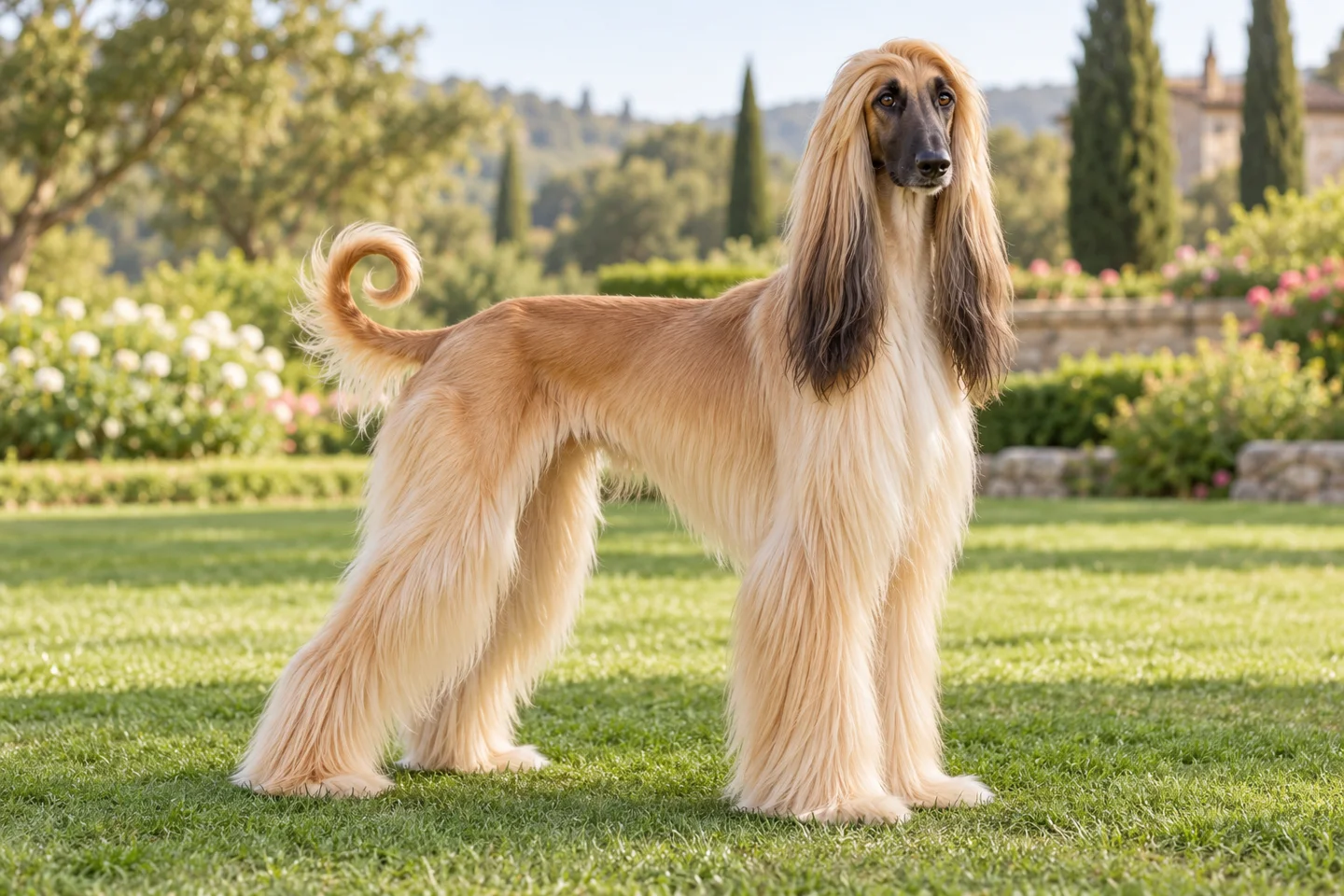
- Standard height
- Males about 27 in; females about 25 in
- Adult coat
- Long silky hair with a shorter saddle
- Care priorities
- Secure running space and coat care
General information for owners. These articles have not been reviewed by a veterinarian. Medical decisions need your dog's history and an examination.
Living with an Afghan Hound
An Afghan Hound needs a home that can accommodate a fast sighthound and a coat requiring substantial care. The practical questions begin with secure exercise space, safe walking equipment, and time for grooming. A long coat does not reduce the need for movement, and a quiet appearance indoors does not tell you how the dog will respond when an animal runs across its path. Plan for the full day rather than the portrait.
Meet adults when possible and ask owners to describe ordinary workdays, wet walks, coat changes, and veterinary visits. An Afghan may suit someone who enjoys a dog with its own interests and can provide careful management outdoors. If your plan depends on unrestricted off-lead walks in unfenced places, reconsider that plan before choosing the breed. A comfortable arrangement should work even when recall is imperfect and wildlife appears unexpectedly.
Breed identity and hunting background
The Afghan Hound developed as a hunting sighthound in Afghanistan. Sight and rapid pursuit are relevant to understanding its needs, while stories claiming precise ancient origins deserve caution unless supported by evidence. In the American Kennel Club system it belongs to the Hound Group. The breed's history provides context for running and pursuit; it cannot establish a particular dog's behavior around every cat, child, or unfamiliar animal.
Ask a breeder or rescue about the dog's actual experiences. A hound who has lived with one household cat may still respond differently to a cat running outdoors. A young dog may show new interests as it matures. Treat previous observations as useful information with limits. Arrange secure separation where needed and avoid placing the responsibility for safety on another animal's ability to stay still or avoid being noticed.
Height, body shape, and coat pattern
The American breed standard gives a reference height of 27 inches for males and 25 inches for females, with an inch of variation either way, and approximate weights of 60 and 50 pounds respectively. The outline is lean, with a long head, large feet, and a tail ending in a ring or curve. These figures describe a standard rather than a prescription for an individual dog's body weight.
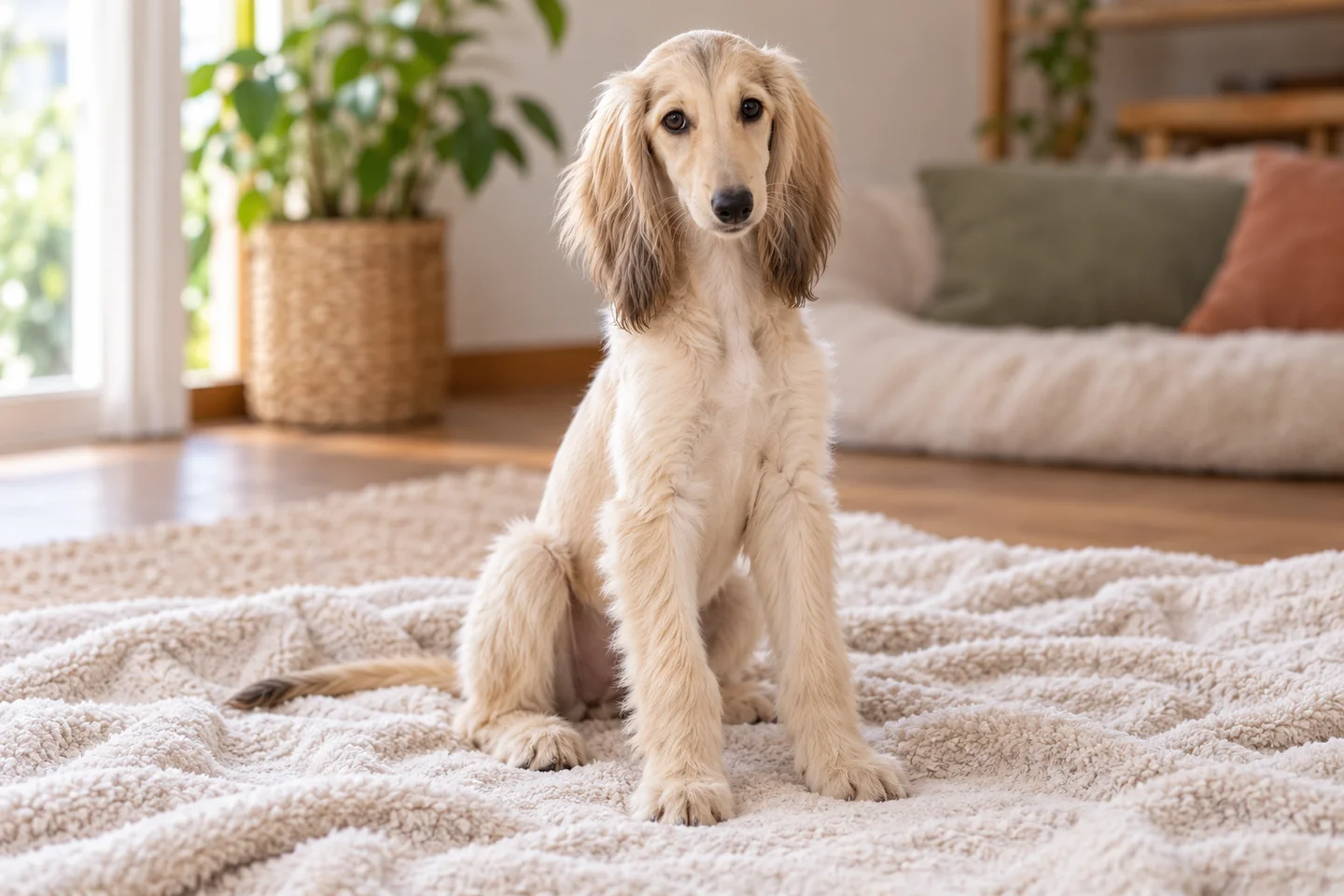
An adult's coat includes long silky hair and a shorter saddle area. A puppy's developing coat can look very different. Do not use a young dog's easier grooming period to estimate the adult workload. Nor should visible hipbones alone decide whether a hound is underweight: ask a veterinarian to assess muscle, fat coverage, and the whole body. The illustrations show breed features and life stages without documenting a real dog's condition or pedigree.
Secure boundaries and safe departures
Check garden boundaries for height, gaps, weak sections, and objects that make climbing easier. An Afghan is tall and athletic, so a boundary suitable for a smaller or less agile dog may be inadequate. Supervise new access and consider the consequences of a gate opened by a visitor. A second barrier at the house entrance can help prevent an accidental escape while bags or equipment are being moved.
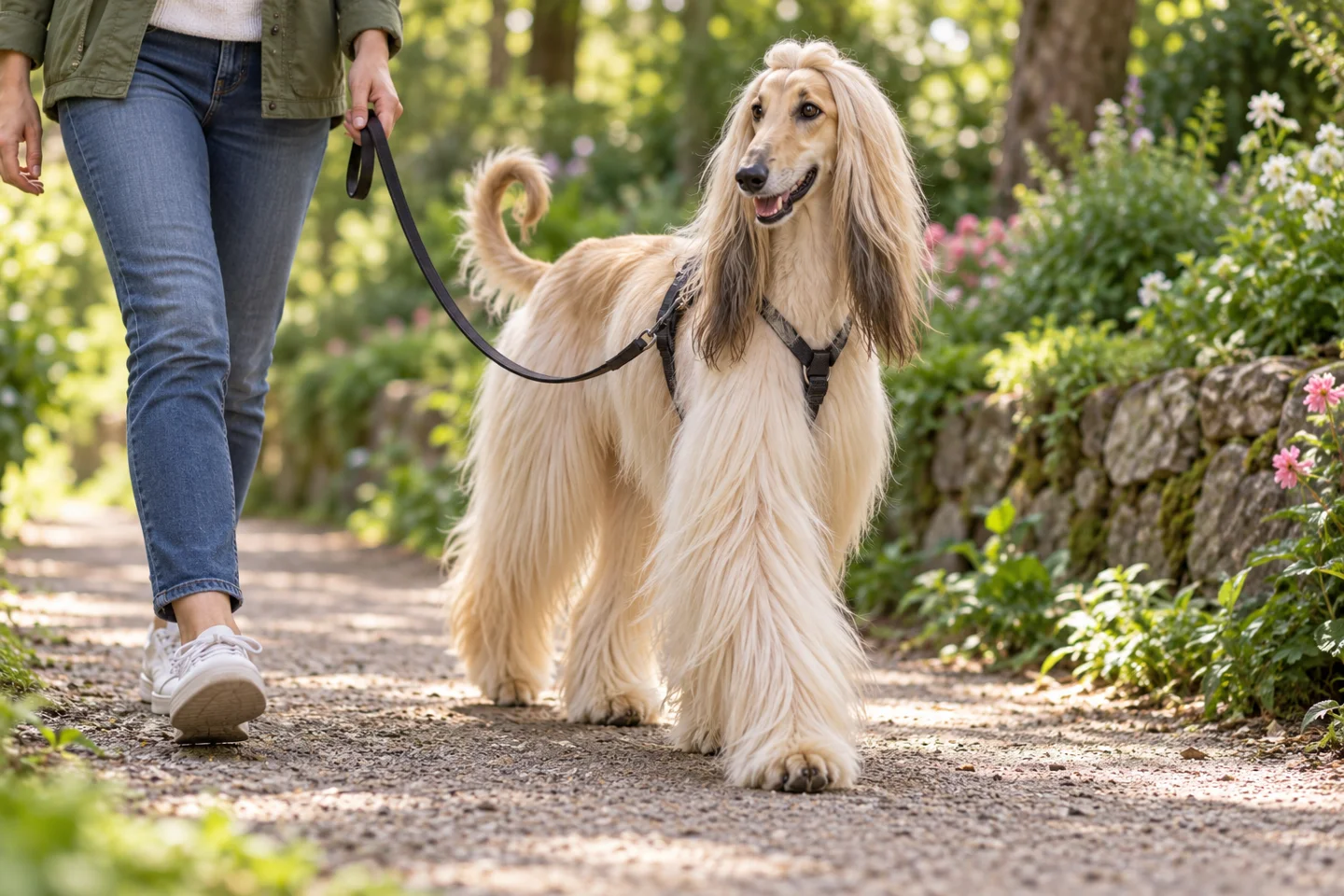
Fit walking equipment carefully and test it in a controlled space. A narrow head can make poorly fitted equipment easier to slip out of, so ask for knowledgeable help with a secure setup. Attach the lead before opening an exterior door. Keep identification current, and teach a pause at thresholds as a useful additional skill. Training supports the physical arrangement; it should not be the only thing between a sudden chase and a road.
Temperament and choosing contact
An Afghan may be affectionate with familiar people while preferring less immediate contact from strangers. Let the individual decide whether to approach. Ask visitors to avoid reaching over the head, crowding, or repeatedly calling a dog who is moving away. A calm visit can succeed while the hound rests at a distance. There is no need to turn every arrival into a demonstration of sociability.
Descriptions of independence should not become a reason to give up teaching or ignore distress. Observe whether the dog can rest, eat normally, explore, and recover after surprises. A dog who becomes unusually withdrawn, irritable, or unwilling to move may need a medical examination. Learn the individual's ordinary behavior so changes are easier to recognize. Quiet dogs still communicate discomfort, even when they do not make a conspicuous fuss.
Children, cats, and dogs of different sizes
Supervise children actively and arrange a resting area they cannot enter. Long hair can tempt grabbing, and a tall dog can be crowded by children moving around its legs. Teach children to leave meals, chews, and sleep alone, and stop interaction when the dog retreats. An adult should manage equipment and introductions. Separate the dog when attention shifts to cooking, visitors, or another activity that prevents close supervision.
With other animals, consider pursuit, physical mismatch, and individual history. A small running dog may trigger an intense response even if earlier still greetings appeared calm. Begin controlled introductions at a distance and use barriers at home. Cats and small pets need secure spaces and escape options. If a placement requires animals to share space safely without management from the first day, seek a different arrangement rather than testing a risky assumption.
Aggression, fear, and handling conflicts
Assess bite risk through behavior, history, health, and context. No breed label establishes whether an Afghan is safe in a particular interaction. Avoidance, stiffening, freezing, growling, and snapping are reasons to stop pressure and create room. Do not corner a reluctant dog or punish it for warning that grooming hurts. A dog whose warnings are repeatedly ignored may escalate, especially when it cannot leave.
Separate animals for meals when needed and avoid disputes over valued objects. Teach exchanges in easy situations, and obtain professional guidance when guarding or fear creates risk. Sudden changes in handling tolerance warrant veterinary assessment for pain or illness. If there has been a bite, describe the circumstances accurately and arrange a plan before repeating the situation. A beautiful coat or a reserved manner should never obscure the need for practical safeguards.
Training recall and cooperative choices
Use rewards that matter to the individual, short sessions, and clear steps. Begin recall in a secure, quiet setting and reward returning. Practice changing direction, walking with a loose lead, and moving away from distractions before those skills are needed near a road. Reward-based methods support learning without adding fear. A long line can support training in an appropriate area, but choose equipment and handling that prevent a fast dog from reaching an abrupt, unsafe stop.
Never assume that a strong response at home will hold during pursuit. Use enclosed space for free running and keep lead management in place elsewhere. Teach settling and cooperative handling alongside movement skills. A hound may need time to consider a task or a better reason to participate; repeatedly forcing positions does not explain the exercise. If progress stalls, adjust the setup or ask a suitable trainer to observe what is happening.
Exercise, running, and recovery
An adult Afghan needs more than brief toilet trips. Plan suitable walks and access to a securely enclosed area where running can occur safely when the dog is fit for it. Check the enclosure, surface, gates, and other occupants first. Avoid crowded sessions where speed, unfamiliar dogs, and limited escape space make collisions or pursuit difficult to manage. Ask about rules and arrangements before releasing the dog.
Build conditioning gradually, particularly after illness or a quiet period. Puppies and growing dogs need age-appropriate movement rather than an adult running schedule. An older hound may enjoy exploring while needing shorter routes and secure footing. Watch for lameness, unusual fatigue, or difficulty recovering, and discuss changes with the veterinarian. Rest and interesting sniffing opportunities also belong in the routine. The aim is comfortable function, not a dog too tired to move afterward.
Grooming the adult coat
Expect a substantial grooming commitment as the adult coat develops. Set aside regular time to work through the hair gently and inspect the skin. Use appropriate brushes, combs, and products with guidance from a groomer familiar with Afghan coats. Tight mats can pull on skin and make handling painful. If the coat has become difficult, ask for a humane recovery plan instead of attempting to pull everything apart in one long session.
Bathing and drying take preparation. Check water temperature, provide secure footing, and prevent the dog from being left unattended where it can slip or jump. Work in manageable sections and watch for fatigue or discomfort. The breed standard describes presentation for showing, while a companion's care should prioritize comfort and a routine the household can maintain. Discuss trimming or other changes with a knowledgeable groomer when health, age, or practical needs require them.
Ears, feet, and life after a muddy walk
Long ear hair and feathering can collect moisture and debris. Check after outings without pulling or probing deep into the ears. Redness, odor, discharge, head shaking, or pain needs veterinary advice. Keep feeding and drinking arrangements clean and consider how the coat comes into contact with bowls. A practical routine prevents a hurried cleanup from becoming a repeated struggle around the head.
Inspect feet, between toes, and beneath feathering for trapped material and skin changes. Dry the dog appropriately after wet walks and check harness contact areas. Keep nails comfortable and introduce tooth brushing gradually. When handling is difficult, identify whether fear, technique, fatigue, or pain is contributing. A grooming table or bath arrangement must be stable and supervised; equipment should make care easier without creating a fall or escape hazard.
Feeding a lean, active hound
Use a complete diet appropriate to life stage and individual needs, and discuss body condition with the veterinarian. A long coat can conceal gradual changes, so monitor weight and assess the body by touch as instructed. Avoid trying to make the dog resemble the outline of a heavier-built breed. Equally, do not dismiss weight loss or poor muscle as normal sighthound leanness without an assessment.
Measure meals and include rewards in the daily intake. Keep notes if appetite changes, especially when there is vomiting, diarrhea, altered thirst, or reduced activity. Repeatedly replacing meals with more exciting options can make it harder to understand what is happening. Ask about a medical cause when changes persist. Supplements and homemade diets need an appropriate professional plan rather than assumptions that athletic dogs automatically require extra products or unusually rich food.
Health screening and individual records
The Afghan Hound Club of America's screening statement lists hip certification, eye assessment, and thyroid testing. Request actual reports with identification, dates, and results for the relevant dogs. A statement that parents were healthy or a puppy was examined does not supply those details. Ask your veterinarian to explain unclear findings and whether further questions should be answered before you commit.
Screening investigates particular concerns and cannot promise lifelong freedom from disease. Family history, current examinations, and the individual dog's signs still matter. A DNA panel cannot replace every clinical assessment. If a dog has a CHIC number, read the underlying results rather than treating the number as a guarantee that all findings were normal. For an adopted adult, gather available records and make a follow-up plan around known findings and gaps in the history.
Veterinary procedures and changes that need attention
Tell the veterinary team about previous anesthetics, medication, test results, and any unusual recovery. Ask how the procedure, monitoring, and recovery plan will be tailored to this dog. Avoid blanket claims that an Afghan cannot safely undergo anesthesia, and do not request a drug or dose from an online breed discussion. Individual clinical assessment is more useful than a rule applied without the dog's medical history.
Persistent skin changes, unexplained weight changes, altered exercise tolerance, or lameness deserve examination. Thyroid testing should be interpreted by the veterinarian alongside the dog's signs and other findings, rather than used as a diagnosis from one isolated number. Keep dated notes and photographs where useful. If grooming reveals a new lump or painful area, arrange an assessment instead of assuming the coat caused it or waiting for the next routine appointment.
Bloat and emergency planning
The AKC identifies bloat as an important concern in this deep-chested breed. A swollen abdomen, repeated unsuccessful attempts to vomit, marked restlessness, weakness, or collapse requires urgent veterinary advice. Contact an emergency clinic and arrange transport promptly. Do not wait for all possible signs or try to treat suspected bloat at home. The clinic can advise on immediate action while preparing for the dog's arrival.
Know where emergency care is available and how you would move an unwell adult hound. Keep a lead, suitable restraint, records, and contact details accessible. Discuss individual risk and prevention questions with the veterinarian, including any appropriate surgical discussion. Avoid treating one feeding rule as a guarantee against a complex emergency. Severe breathing difficulty, poisoning, and sudden inability to stand also require urgent advice regardless of breed or previous health screening.
Afghan Hound mixes and uncertain ancestry
An Afghan Hound cross can vary in coat, size, movement, and behavior. Informal labels for crosses with Poodles or other breeds are not recognized Afghan varieties. Ask whether the parents are known and documented or whether ancestry was estimated from appearance. A long face and flowing coat alone do not establish a pedigree, and a rescue may have far better evidence about the dog's routine than its exact background.
Do not assume mixed ancestry removes pursuit behavior or the need for secure exercise. Nor does it guarantee an easy coat or absence of inherited illness. Consider known parental health concerns and the actual dog's findings. If a household has small animals, judge the proposed management directly. A confident prediction about what a mix should be like cannot substitute for observed behavior, physical safeguards, and an honest account of uncertainty.
Choosing a source and arranging care
Ask a breeder how puppies learn about grooming, handling, household sounds, and brief separation. Meet appropriate adult dogs and request time to examine health records and terms. The source should explain support after placement and what happens if the arrangement fails. Avoid rushing because of coat color, an attractive photograph, or a promise of a rare opportunity. A suitable home needs more information than those selling points provide.
For a rescue Afghan, discuss coat condition, grooming tolerance, pursuit history, escape attempts, and behavior around other animals. Ask whether observations came from foster care or a brief assessment. Plan the first week around predictable outings and quiet rest. Arrange a carer or groomer who understands the dog before an absence makes that help urgent. A supported introduction to necessary services can prevent hurried, difficult handling later.
Costs, housing, and the older Afghan
Budget for grooming time and equipment as well as professional help where needed. Include food, preventive care, training, secure exercise access, transport, and unexpected veterinary treatment. Review insurance exclusions and existing findings before relying on a policy. Ask local providers for estimates because a long coat and an individual dog's tolerance can change the time required for appointments. Make the routine financially and practically sustainable.
An apartment or smaller home requires a workable route outdoors and access to suitable activity. Check stairs, lifts, shared entrances, and housing conditions. In later life, adapt footing, sleeping places, transport, and coat care around comfort. A dog who cannot stand for a long groom needs a revised plan. Preserve enjoyable exploration and companionship without expecting the older hound to maintain its younger pace or tolerate care that has become tiring.
A dogsDating meeting with room to move
Describe pursuit tendencies, preferred partners, exercise restrictions, and any discomfort with handling in your dogsDating profile. Keep exact home coordinates private and select a suitable public meeting place with space and secure lead arrangements. Discuss the other dog's size and play style before meeting. A partner who enjoys rapid chasing games may be a poor first choice when compatibility is uncertain.
Begin with parallel walking and separate handlers, at a distance where both dogs can remain comfortable. Avoid shared toys, food, or releasing the dogs together into an enclosure as an initial test. Allow brief contact only when both can disengage easily. End the outing if either dog stiffens, persistently pursues, hides, or cannot settle. A calm walk can provide enough information for the first meeting; further plans should follow behavior rather than an expectation of immediate play.
Sources and editorial notes
Sources checked October 21, 2026. Breed measurements describe reference ranges, not a diagnosis or an individual dog's ideal weight. Images are AI-generated breed illustrations and do not document a particular dog or health condition.
- American Kennel Club: Afghan Hound care, exercise, and health
- Orthopedic Foundation for Animals: CHIC program and interpretation of numbers
- VCA Animal Hospitals: Common emergencies in dogs
- VCA Animal Hospitals: General feeding guidelines for dogs
- VCA Animal Hospitals: Food aggression in puppies
- Afghan Hound Club of America: Health screening statement, March 2015
- Afghan Hound Club of America: Introduction to the Afghan Hound
- VCA Animal Hospitals: Aggression toward unfamiliar dogs, diagnosis
- Afghan Hound Club of America: Breed standard
- Cornell University College of Veterinary Medicine: Canine thyroid testing
- AVSAB: Humane Dog Training Position Statement
Keep getting to know dogs.
Read another guide or return to your dogsDating community.
Explore breed guidesBack to dogsDating