American English Coonhound
An athletic scent hound whose daily needs include secure exploration, suitable conditioning, attention to vocal behavior, and regular ear and health checks.
How these guides are researched and reviewed
- Standard heights
- Males 24–26 in; females 23–25 in
- Also called
- Redtick Coonhound; English dog
- Care priorities
- Scent outlets, secure walks, and company
General information for owners. These articles have not been reviewed by a veterinarian. Medical decisions need your dog's history and an examination.
Living with an American English Coonhound
An American English Coonhound needs a home prepared for an athletic scent hound and a carrying voice. Begin by considering exercise, secure access outdoors, time with people, and the effect of barking on neighbors. An attractive redtick coat is easy to appreciate. The daily commitment is less visible in a photograph: the early walk, the lead held while a scent becomes interesting, and the routine that allows rest afterward.
Meet adults and ask about ordinary household life before choosing a puppy. An adult from foster care may provide useful information about settling, time alone, cats, and walks in populated areas. A puppy needs frequent care and patient teaching before those patterns are established. Choose a dog whose activity and handling needs fit your available time. A garden can support the routine, but it cannot supply exercise, learning, and company on its own.
Size, markings, and the athletic outline
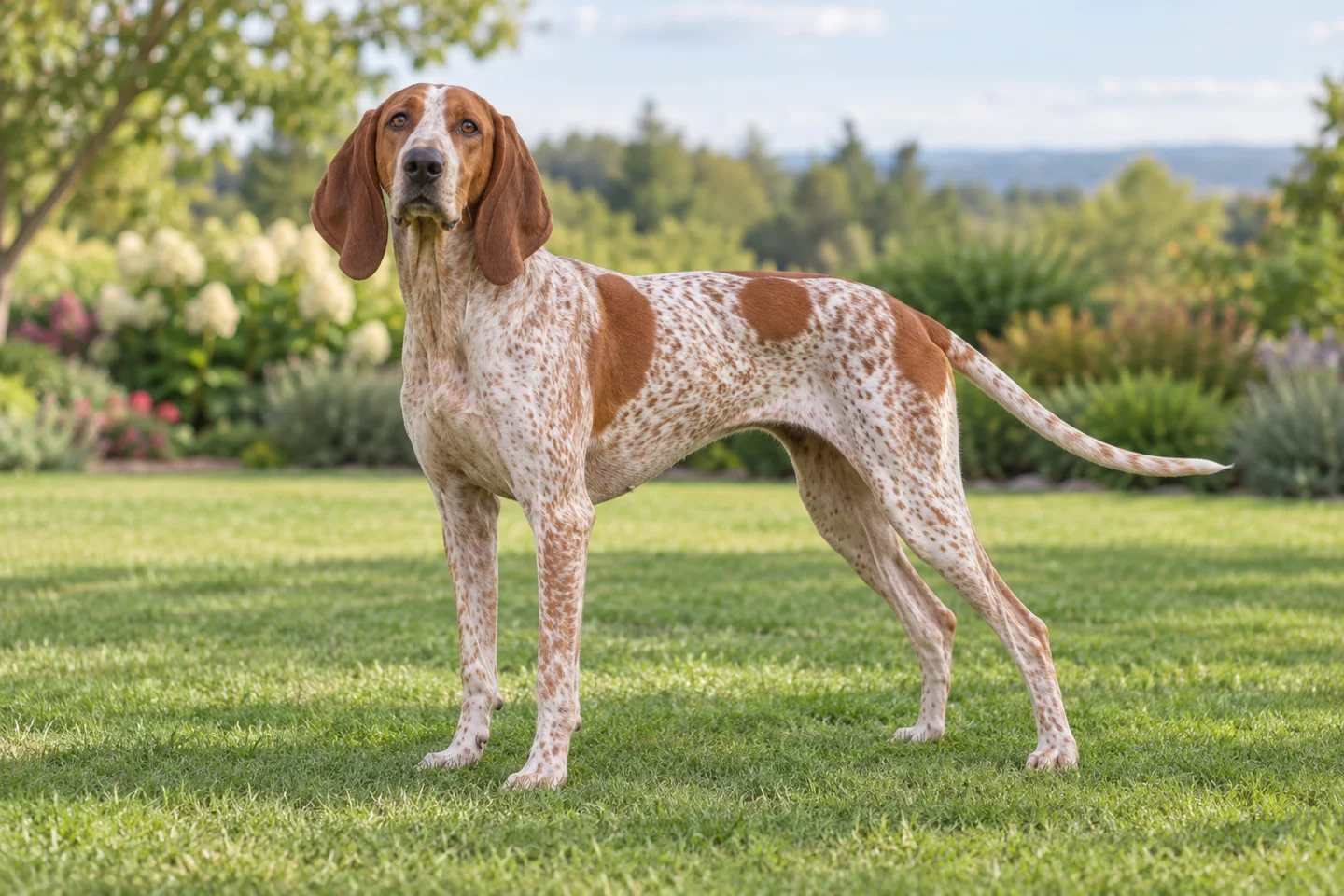
The American standard gives heights of about 24 to 26 inches for males and 23 to 25 inches for females at the shoulder. The body is lean and muscular, with a deep chest, long ears, and a protective coat. Red-and-white ticking is familiar, but the standard includes other color patterns. These descriptions are reference points for breed identity rather than a target for an individual dog's ideal weight.
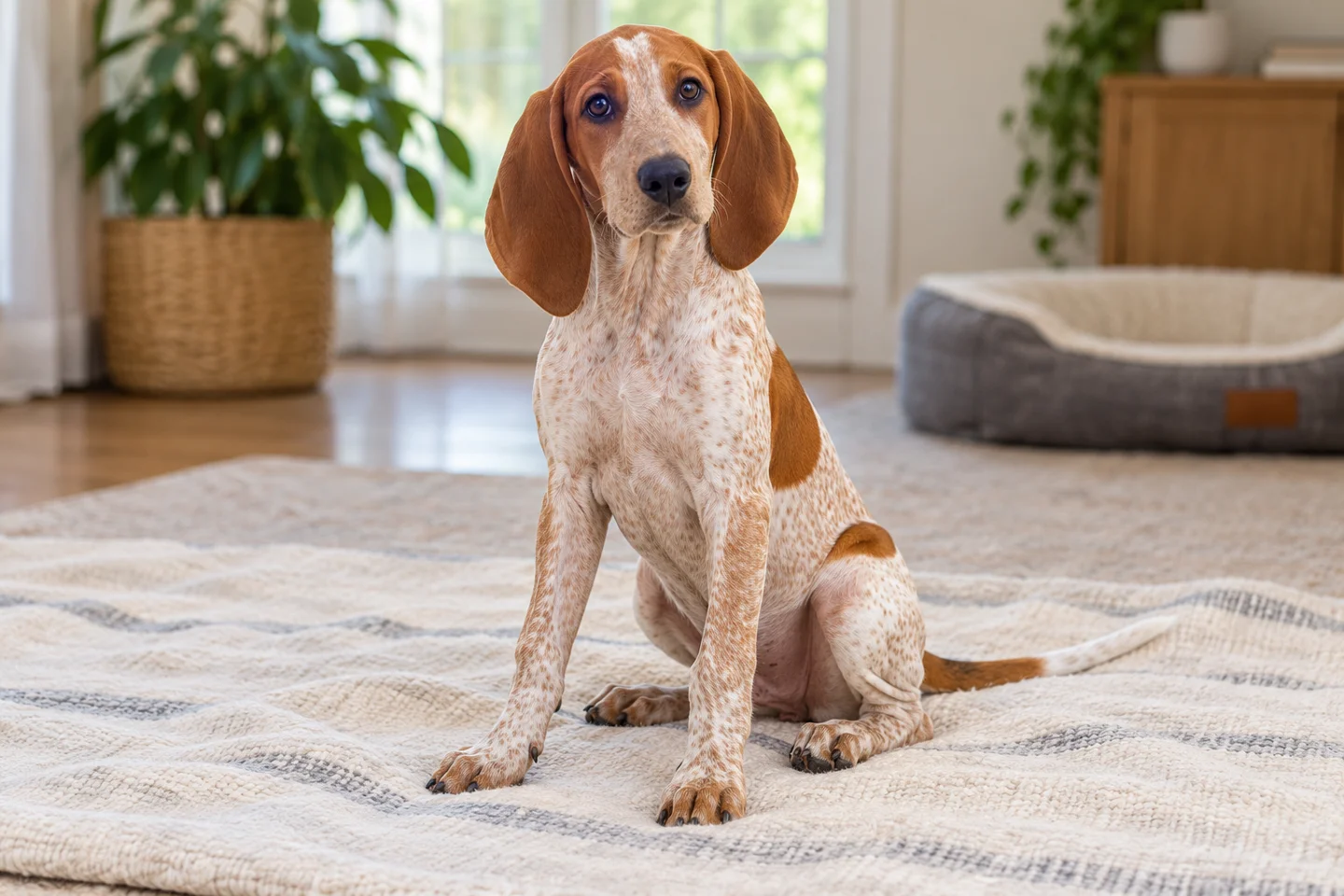
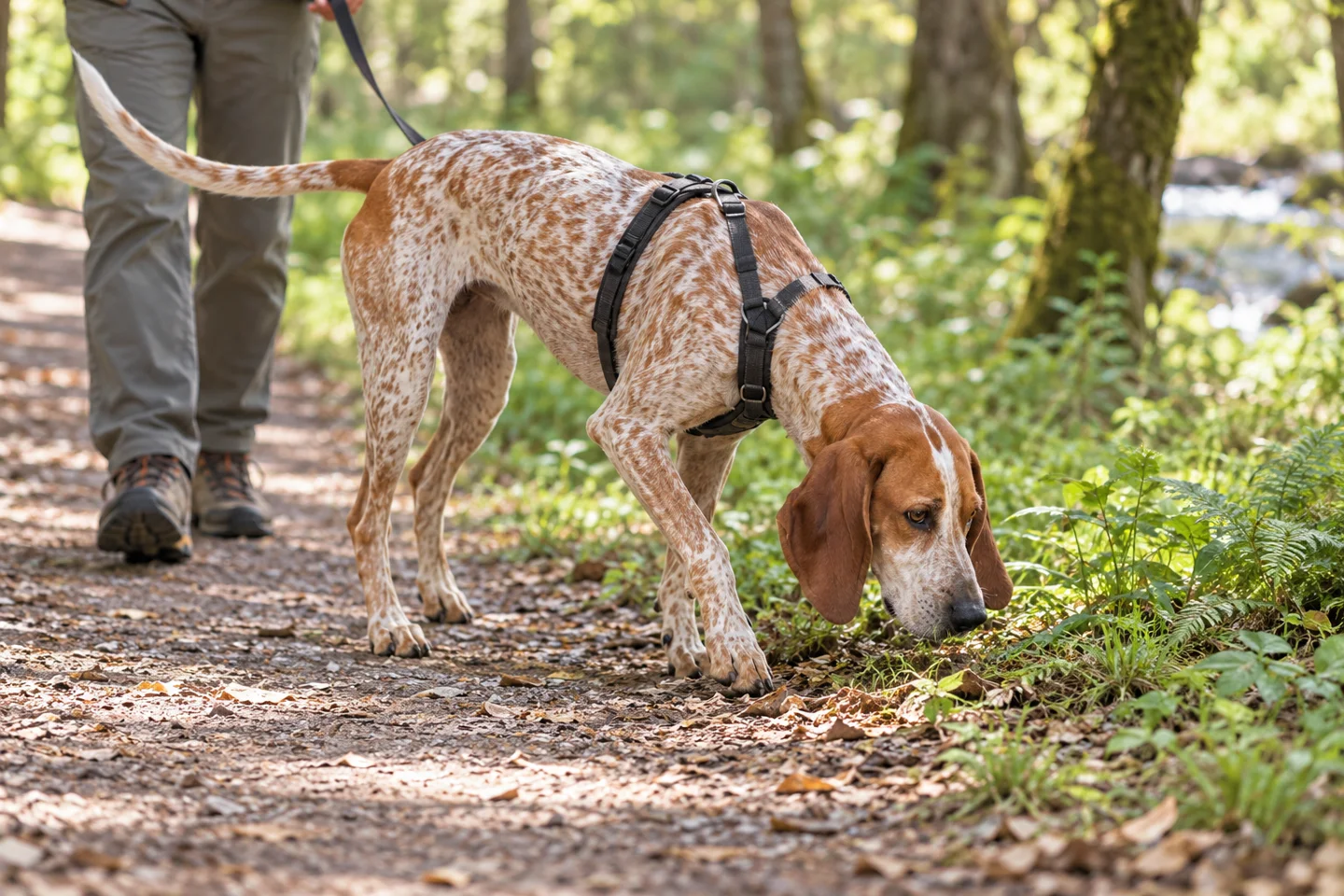
Look at comfortable movement, muscle, and body condition beneath the coat. A lean working outline should not be used to dismiss unexplained weight loss, and an athletic pedigree does not make excess weight useful. Ask the veterinarian to assess the real dog. The three images here are generated breed illustrations showing redtick coloring. They cannot establish pedigree, normal joints, endurance, or the behavior of a dog being offered for adoption or sale.
A nose-led walk needs a secure plan
Use well-fitted equipment and attach the lead before leaving an exterior door. A hound following a scent may become difficult to redirect, so plan routes with space and keep control near traffic, livestock, and wildlife. Do not use an unfenced outing as a test of whether recall has become dependable. Practice skills in manageable conditions while retaining physical safeguards where a mistake would be dangerous.
For long-line exploration, choose suitable space and handling that prevents an abrupt, unsafe stop. Keep the line away from roads, other walkers, and entangling obstacles. A tracking device can support an identification plan but cannot replace a lead or boundary. Check the dog's identification and contact details regularly. Think through what you would do after an escape before the situation occurs, including who can help and where the dog might travel.
Boundaries, gates, and an interesting garden
Inspect fences for gaps, weak sections, accessible latches, and places where digging could create an exit. Consider a second barrier where a gate opens onto a road or shared space. Ask everyone using the property to follow the same routine. A secure garden should remain secure when a visitor carries equipment or a delivery distracts the household, rather than depending on someone noticing every movement.
Provide appropriate things to investigate within that space, such as easy scent searches in a safe area, while supervising unfamiliar activities. Remove hazards and prevent access to wildlife. Outdoor time should not become long isolation accompanied by repeated barking at the boundary. Bring the dog into the household routine and allow comfortable rest. A hound who persistently attempts to escape or cannot settle needs its needs and environment reviewed, with professional help when required.
Children, cats, and household dogs
An active Coonhound can knock a child down through enthusiastic movement. Adults need to supervise, prevent rough chasing, and protect meals, sleep, and chewing time. Teach children to invite gentle contact and accept the dog leaving. A retreat must remain available without a child following. When adult attention moves to cooking, visitors, or another task, separate them rather than expecting the child to manage the interaction.
Hunting ancestry makes pursuit an important question around cats and small animals. Ask about real experience rather than assuming friendliness with people predicts safety for a rabbit or running cat. Introduce residents gradually and prepare secure separation. Other dogs need individual meals, rest, and opportunities to disengage. Enjoying some canine company does not guarantee compatibility with every partner or comfort in crowded communal play. Assess each relationship and the household's ability to manage it.
Aggression, guarding, and overlooked discomfort
Judge aggression through behavior, history, medical findings, and context. A reputation for sociability cannot establish that a particular Coonhound is safe in every interaction. Freezing, stiff posture, avoidance, growling, snapping, or repeated escape attempts are reasons to stop pressure and create space. Avoid reaching into a bed or taking a valued object as a test of tolerance. The dog needs an alternative that does not require escalating to be heard.
For guarding, arrange quiet meals and prevent competition over high-value items. Teach exchanges at an achievable level and get professional help when risk is present. A new objection to touching the head or ears can involve pain, so seek veterinary assessment. If a bite or serious fight has occurred, describe the full event and obtain a management plan before repeating the circumstances. Keep carers informed about practical restrictions instead of relying on a generally friendly first impression.
Training recall and a useful change of direction
Reward returning when called in enclosed space, then increase distractions in manageable steps. Use a cheerful cue and reward coming back even when a sniff delayed the response. The American Veterinary Society of Animal Behavior recommends reward-based methods. A strong interest in scent does not mean learning is impossible, but it does mean the environment and rewards need careful thought.
Practice moving away with you, waiting at doors, and walking without sustained pulling before expecting those skills beside wildlife or unfamiliar dogs. A change of direction is easier to use when it has been rehearsed on quiet routes. Keep physical safeguards where recall is uncertain. If repeated practice fails, reduce the difficulty or ask a suitable trainer to observe. Louder cues and punishment do not remove the odor or explain what response will be rewarded.
Exercise, conditioning, and scent work
An adult Coonhound needs appropriate activity beyond brief toilet breaks. Plan walks that include movement and opportunities to investigate, then adjust the effort to age, fitness, weather, and medical advice. A history of working through a long night does not make every companion ready for demanding running. Increase conditioning gradually and allow recovery after time off. Growing dogs need age-appropriate movement rather than an adult endurance schedule.
Scent games can make use of the dog's interests without pursuing live animals. Begin with easy searches in a hazard-free space and let success guide the next step. Keep food amounts in the daily total and use items that cannot be swallowed dangerously. Notice the difference between enjoyable engagement and frustration. Rest, quiet company, and comfortable sleep belong in the routine too. New weakness, lameness, or unusual fatigue deserves assessment rather than pressure to finish a planned distance.
Voice, neighbors, and the meaning of barking
The breed is known for a loud, carrying voice. Before placement, consider shared walls, close gardens, and neighbors whose schedules differ from yours. Ask the source what actually prompts this dog's vocal behavior. Alerting at the boundary, anticipation of an outing, frustration, and distress when alone can sound similar from another room while needing different changes to the routine.
Keep a record of when barking occurs and what happens immediately before and after. Reduce access to repeated triggers where practical and reward calmer alternatives in manageable settings. Avoid assuming that shouting over the dog teaches quiet. If the pattern reflects persistent worry or inability to rest, seek professional support. A housing arrangement that requires silence throughout every day may be unsuitable for a particular individual, and that limit is better identified before placement.
Company, rest, and periods alone
Build comfortable separation through brief, achievable practice in a familiar area. Begin when the dog has had suitable care and can rest, and observe what actually happens. A camera can help distinguish sleeping from pacing or sustained vocal distress. Returning to a quiet dog does not tell you whether the previous hours were comfortable. Make changes according to the observed response rather than a fixed timetable that ignores difficulty.
Arrange appropriate care while addressing persistent separation problems with the veterinarian and a qualified behavior professional. Avoid leaving a distressed dog for longer periods as a test. A crate is useful only when the dog can use it safely and comfortably; repeated escape attempts or injury requires a different plan. Within the home, protect sleep from constant handling. A sociable dog still needs the option to rest without being invited into every activity.
Grooming the protective coat
Brush regularly with suitable tools and check the skin as you work. A coat that needs less styling than a long-haired breed still sheds and can conceal small injuries. After an outing, look at paws, nails, between toes, and places where equipment rubs. Check for debris and ticks using prevention and removal advice appropriate to your location and veterinarian's recommendations.
Bathing frequency should suit actual dirt, skin condition, and the dog's needs. Provide secure footing and dry appropriately afterward. Persistent odor, redness, itching, discharge, or a sore patch needs examination rather than repeated cosmetic treatment. Introduce handling gradually so routine checks are manageable. A dog who suddenly resists the same brushing or paw touch may be uncomfortable, and the change should prompt a review of technique and health.
Ear care, teeth, and comfortable handling
Long ears need observation, especially after outdoor activity or wet conditions. Look for redness, discharge, odor, repeated head shaking, or discomfort. Ask the veterinary team how to clean this dog's ears and use only the recommended approach. Avoid placing objects deep into the canal or using old medication for a new episode. Different causes of ear trouble can need different treatment.
Teach brief ear looks, tooth brushing, and nail care with rewards and clear pauses. Do not continue handling a painful area to make the dog accept it. Ask about cooperative care and appropriate clinical support when fear or restraint has become difficult. A written note about the dog's tolerance can help carers and veterinary staff. The aim is to make care predictable enough that problems can be noticed and examined without unnecessary struggle.
Feeding for the life the dog actually leads
Choose a complete diet appropriate for life stage and individual needs. Measure meals and include treats, chews, and search-game food. A companion's energy requirement may differ from that of an actively working hound, so assess the actual dog rather than feeding from its ancestral job description. Ask the veterinarian to demonstrate body-condition checks and monitor weight, muscle, and recovery as the routine changes.
Secure food preparation, rubbish, unsafe foods, and medication. Use quiet meal space and prevent competition when other animals are present. If appetite, thirst, weight, or digestion changes, keep a concise record and seek advice when it persists. Avoid adding supplements or switching diets repeatedly without an identified reason. For a dog with a medical condition, review treats and extras alongside the main food so the whole feeding plan fits the clinical recommendations.
Health screening and a careful reading of recommendations
The AKC's breed page discusses hip and elbow dysplasia and inherited eye conditions, including progressive retinal atrophy and cataracts, as screening concerns. Its separate parent-club test field currently lists no recommended tests. That combination should prompt specific questions, rather than an inference that no assessment is useful or that a particular certificate is mandatory for every dog.
Ask which examinations, imaging, or genetic tests were performed, whose identity appears on the report, and what the findings mean. Your veterinarian can help decide what is appropriate for the dog's background and signs. A puppy check, a parent's report, and a broad DNA panel answer different questions. For an adult with limited history, gather available information and make a current plan. State gaps plainly instead of inventing a complete history or treating missing documents as a diagnosis.
Bloat, vision, and changes in movement
The AKC identifies bloat as a concern in this deep-chested breed. Repeated unsuccessful attempts to vomit, abdominal swelling, marked restlessness, weakness, or collapse requires urgent veterinary advice. Contact the emergency clinic and arrange transport promptly. Do not wait for every possible sign or try to resolve suspected bloat at home. Discuss individual prevention questions while the dog is well rather than treating one feeding rule as a guarantee.
Persistent lameness, reluctance to rise, altered stride, or a change in visual confidence needs assessment. Some eye conditions develop over time, so earlier reassuring results do not make new signs irrelevant. Squinting or apparent eye pain also warrants prompt advice. Keep dated observations and provide videos when useful without provoking symptoms. Severe breathing difficulty, poisoning, or sudden inability to stand requires urgent help regardless of breed, activity history, or previous screening.
Coonhound mixes and uncertain ancestry
An American English Coonhound crossed with a Labrador, another hound, or a different breed can vary in build, coat, behavior, and medical needs. Informal cross names are not recognized varieties of this breed. Ask whether parentage is documented or estimated. Ticking and long ears cannot settle ancestry by themselves, and a rescue may have stronger evidence about daily behavior than a precise pedigree.
Consider known parental concerns alongside the actual dog's findings. Mixed ancestry does not guarantee quiet behavior, dependable recall around scent, normal joints, or compatibility with small animals. Ask about handling, time alone, pursuit, and previous relationships. Useful observations can support a suitable placement even when the label remains uncertain. The care plan needs to work for the individual in the home, rather than for the combination of traits someone hopes a cross will inherit.
Choosing a source, budgeting, and later life
Ask a breeder about health information, adult behavior, early handling, and support after placement. Read terms and return arrangements without pressure. For a rescue dog, clarify previous bites or fights, escape behavior, medical care, and the source of observations. A kennel assessment and several weeks in foster care may reveal different information. Describe your household accurately, including cats, noise limits, work hours, and space for separation.
Budget for food, secure equipment, training support, care during absences, and unexpected veterinary treatment. Review insurance terms and ask local providers for estimates. Plan for an older hound who needs easier footing, vehicle access, shorter outings, or more frequent checks. Keep opportunities to sniff and explore available in comfortable forms. Changes in function or behavior deserve assessment instead of being dismissed because the dog once managed a much more demanding routine.
A scent-friendly dogsDating outing
Describe your Coonhound's pace, play style, vocal behavior, pursuit, and any handling or exercise restrictions in its dogsDating profile. Keep exact home coordinates private and choose a suitable public route with space and safe lead arrangements. A partner who enjoys sniffing and parallel walking may be a better first match than one who expects continuous physical play. Discuss the plan with the other owner before meeting.
Use separate handlers and begin at a comfortable distance. Allow investigation of the environment without tangling leads or forcing a nose-to-nose greeting. Skip shared food and toys. Brief dog contact is appropriate only when both remain loose and able to disengage. End the outing if either freezes, hides, persistently pursues, or repeatedly tries to leave. A calm walk can be enough for a first meeting, with later plans based on what both dogs appeared comfortable doing.
Sources and editorial notes
Sources checked October 21, 2026. Breed measurements describe reference ranges, not a diagnosis or an individual dog's ideal weight. Images are AI-generated breed illustrations and do not document a particular dog or health condition.
- Washington State University Veterinary Teaching Hospital: Gastric dilation, volvulus, and bloat
- American Kennel Club: American English Coonhound care and health
- VCA Animal Hospitals: Ear infections in dogs, otitis externa
- VCA Animal Hospitals: Common emergencies in dogs
- VCA Animal Hospitals: General feeding guidelines for dogs
- VCA Animal Hospitals: Food aggression in puppies
- American Kennel Club: American English Coonhound history and names
- VCA Animal Hospitals: Aggression toward unfamiliar dogs, diagnosis
- American Kennel Club: Official American English Coonhound standard
- AVSAB: Humane Dog Training Position Statement
Keep getting to know dogs.
Read another guide or return to your dogsDating community.
Explore breed guidesBack to dogsDating