Dachshund
A determined scent hound with three coat varieties, a need for suitable activity, and care that takes back health and comfortable handling seriously.
How these guides are researched and reviewed
- US sizes
- Standard and Miniature
- Coat varieties
- Smooth, longhaired, wirehaired
- Care priorities
- Back health, weight, and handling
General information for owners. These articles have not been reviewed by a veterinarian. Medical decisions need your dog's history and an examination.
Living with a Dachshund
A Dachshund can occupy a small bed and still have a strong interest in everything beyond the garden fence. Many enjoy following scent, investigating small spaces, and keeping track of household activity. Their size makes some arrangements easier, but it does not remove the need for training, exercise, secure outings, and careful handling.
Before choosing one, look at the home from the dog's height. Consider slippery floors, access to furniture, stairs, and where children play. Decide how you will transport the dog if it becomes painful or cannot walk. These are ordinary care questions for a breed whose spinal health deserves attention throughout life.
Ask about the particular dog rather than relying on a reputation for bravery, stubbornness, or affection. A mature dog with a known home history may need different support from a puppy raised in a busy litter. Useful information includes responses to handling, food, visitors, separation, other animals, and unfamiliar places. Those observations help connect the breed description to the life you can actually provide.
Hunting history and present-day interests
Dachshunds developed in Germany as hunting dogs, including work that required following quarry underground. The long body, short legs, and determined approach to scent have a working background. Today, many live as companions while still enjoying searching, digging, and investigating places people would rather leave undisturbed.
Give those interests suitable outlets. A supervised search for a familiar toy can provide a clear task. A designated digging area may be useful where the garden permits it. Keep the boundaries consistent and prevent access to dangerous holes, wildlife shelters, or places where the dog could become trapped.
Historical purpose does not mean a pet should be encouraged to pursue every animal it sees. Use secure equipment and choose appropriate activities. If you want to explore a recognized canine activity, find instruction that considers this dog's age, fitness, and health. A successful search can be slow and thoughtful. It does not require frightening another animal or sending a dog into an unsafe space.
Sizes, coats, and appearance
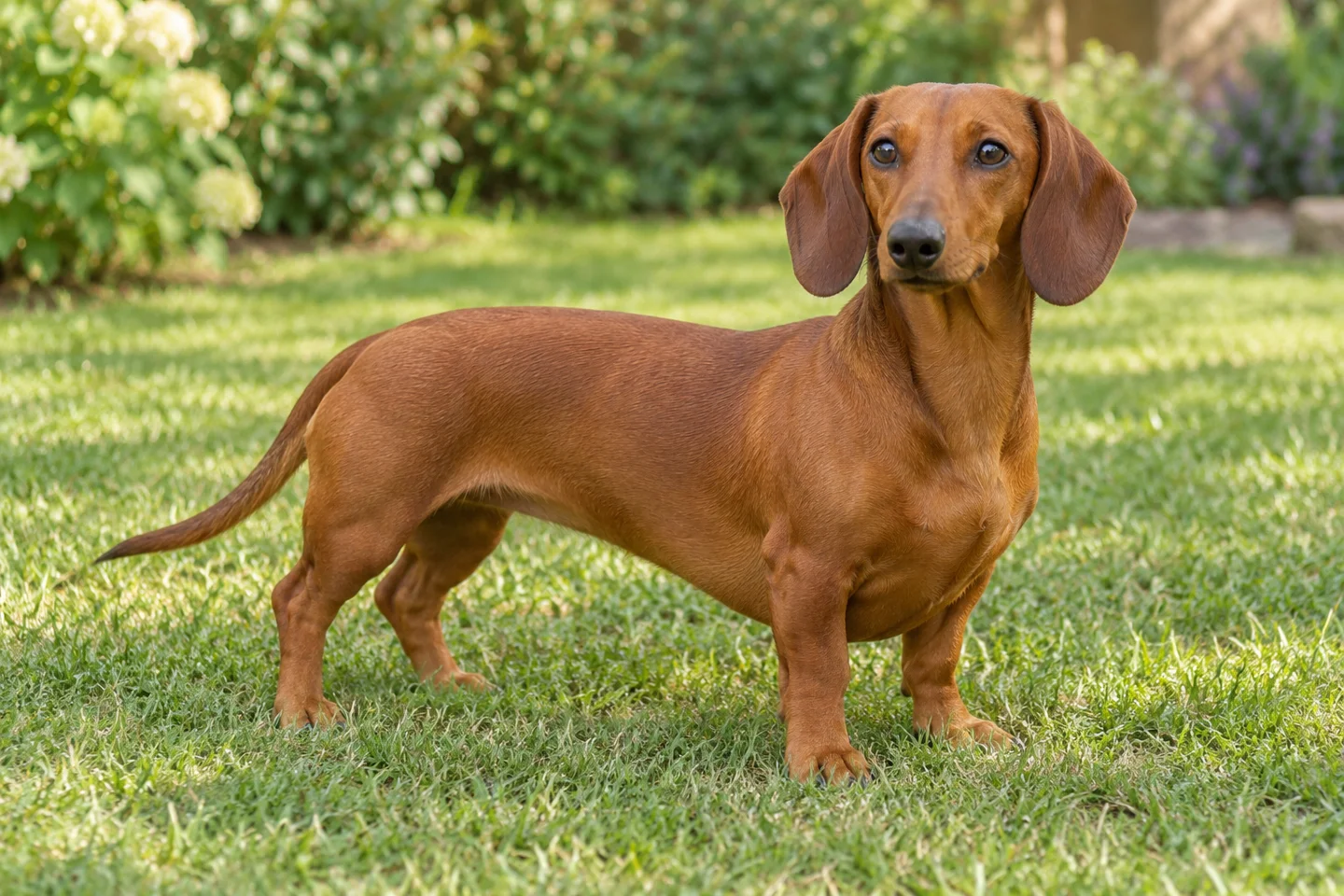
The American standard describes Standard Dachshunds generally weighing 16 to 32 pounds and Miniatures weighing 11 pounds or less at 12 months of age or older. These are breed categories. They should not become a reason to restrict food improperly or overlook excess weight in a dog who happens to fall within a published range.
There are smooth, longhaired, and wirehaired coat varieties. Grooming needs differ, and individuals within each variety can vary in activity and behavior. Ask what care the actual coat requires. A wire coat may need different professional maintenance from the feathering of a longhaired dog.
Choose comfortable proportions and sound movement over an extreme appearance. A photograph cannot establish spinal health, temperament, or ancestry. Labels such as miniature and rare color also do not answer those questions. For equipment, check the neck, chest, and areas behind the front legs for fit and rubbing. A product marketed for Dachshunds still needs to suit the individual wearing it.
A home arranged around comfortable movement
Walk through the routes the dog will use every day. Notice where it may launch from furniture, slip on a polished floor, or rush down steps when the door opens. Discuss suitable changes with your veterinarian, particularly if there is a history of back pain. Useful arrangements depend on the dog's current condition and the layout of the home.
Where a ramp is appropriate, teach it as a simple skill before expecting reliable use. Introduce a stable, nonslip surface and reward comfortable movement. A ramp beside a sofa has limited value if the dog still chooses an unrestricted leap from the other end. Management and training need to work together.
No household modification can promise that disc disease will never occur. Avoid turning prevention into blame when a carefully cared-for dog becomes ill. The practical aim is sensible activity, good body condition, early recognition of discomfort, and access to assessment. Keep a plan for safe transport and urgent veterinary contact so decisions do not begin from scratch during a painful episode.
Back pain and signs that need prompt attention
Intervertebral disc disease, often shortened to IVDD, is an important concern in Dachshunds. Discs between the spinal bones can degenerate and sometimes cause pressure on the spinal cord or nerves. Cornell identifies the breed among those commonly affected. Signs can range from discomfort to serious loss of movement.
Watch for a new reluctance to move, pain when lifted, an unusual posture, paw dragging, weakness, or loss of coordination. Contact a veterinarian promptly. Inability to stand or walk needs urgent attention. Do not repeatedly ask the dog to climb stairs or chase a toy to demonstrate the problem.
Ask the clinic how to handle and transport the dog while care is arranged. Keep activity controlled according to its instructions, and avoid giving human pain medication or attempting spinal manipulation. Similar signs can have different causes. The examination and appropriate testing guide treatment; a familiar breed diagnosis on the internet cannot determine what has happened to your dog.
Children, lifting, and other household animals
Teach children to interact while the dog is supported on a comfortable surface, without pulling, hugging, or trying to carry it. Adults should learn an appropriate lifting technique from the veterinary team and support the dog's body. A new objection to being picked up deserves investigation, especially if it follows a change in movement.
Provide a retreat that children leave alone. Supervise closely around sleep, food, toys, and active play, and use separation when attention is elsewhere. A small dog can be injured by rough handling and can also bite when frightened or painful. Earlier tolerance does not make the next interaction automatically safe.
Introduce dogs with space and calm handling. Consider the difference in strength and play style when a larger dog wants to wrestle. For cats, use barriers and escape routes while observing the response to movement. Rabbits, rodents, and other small animals may need secure permanent separation. Hunting ancestry gives you a reason to take chasing seriously, without using a vulnerable animal to test the dog's intentions.

Aggression and resource guarding
Take growling, freezing, snapping, and biting seriously in a Dachshund. Do not treat these behaviors as amusing because the dog is small. They may occur around pain, fear, unwanted handling, or conflict over something valuable. A veterinary assessment is particularly useful when a previously comfortable dog becomes irritable or resists touch.
If a meal, chew, toy, or resting place causes conflict, reduce the opportunities for confrontation. Feed animals apart, keep children away from valued items, and prevent access to dangerous objects. Avoid repeated bowl removal or grabbing something from the dog's mouth to establish control. Seek individual advice when guarding appears.
Describe an incident with concrete details: what the dog had, who approached, what happened before contact, and whether an injury occurred. Use gates, distance, and a predictable routine while qualified help is arranged. Safety depends on preventing a repeat and understanding the circumstances. A pleasant breed description cannot replace the information in an actual bite or handling history.
Training a useful recall and calm household habits
Reward-based teaching gives the dog a clear way to succeed. The American Veterinary Society of Animal Behavior recommends this approach. Begin with practical tasks such as returning when called, waiting at an exit, moving onto a mat, and exchanging a safe object. Start somewhere quiet before introducing strong scent or moving distractions.
Deliver rewards at a comfortable height so the dog does not need to jump for your hand. Use short sessions and choose rewards the individual values. Permission to investigate a safe area can follow a few steps beside you. That arrangement lets you work with the dog's interests while teaching control over ordinary transitions.
When a lesson stalls, adjust the setup rather than repeating a cue more forcefully. Distance, duration, competing smells, and the clarity of the reward all affect performance. Practice recall with suitable containment or a safely managed line. Do not assume a few successful returns in the kitchen establish reliability near wildlife, traffic, or an open gate.
Exercise, exploration, and rest
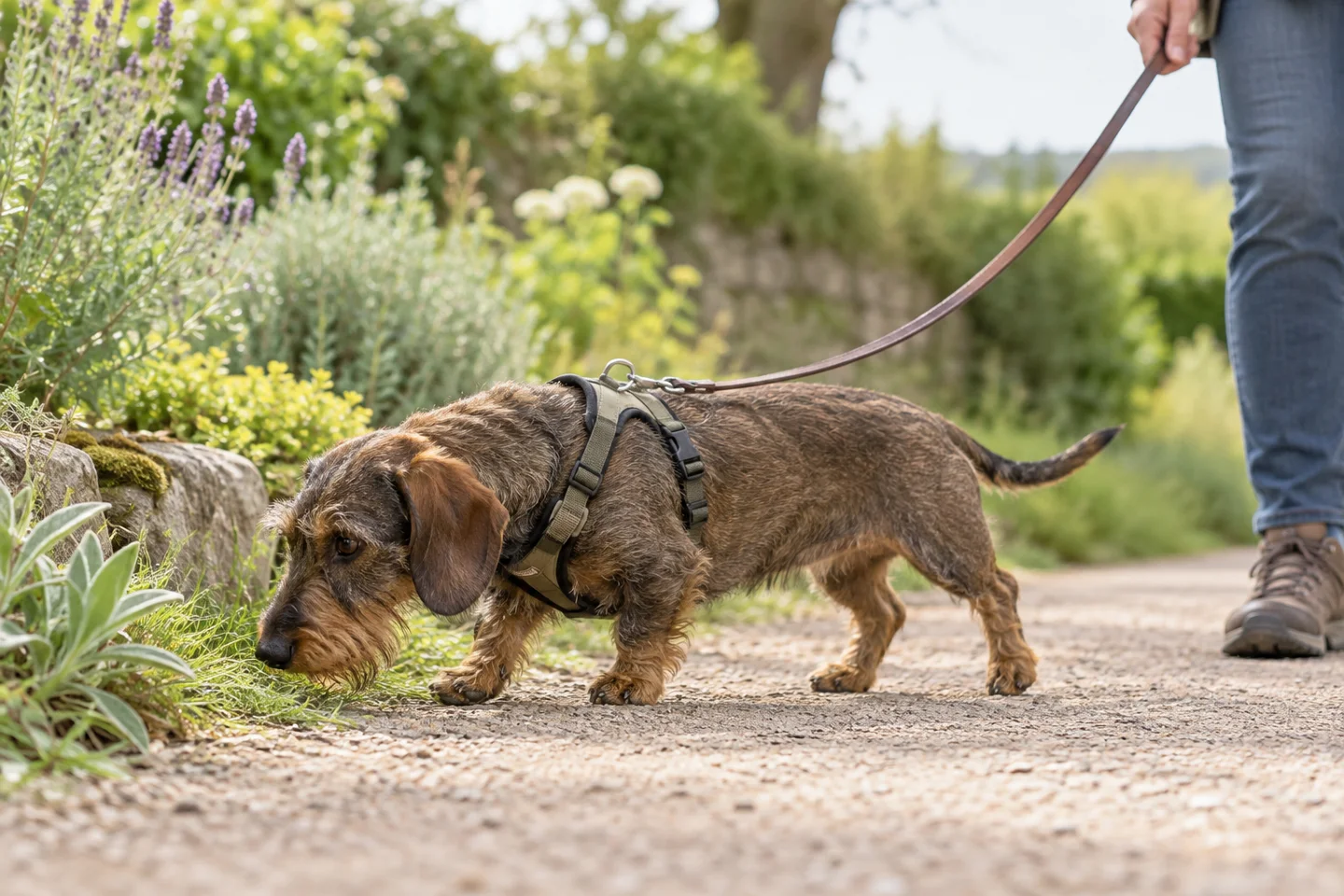
Dachshunds need opportunities to walk and explore at a pace suited to their health and conditioning. Avoid assuming that short legs mean a life without activity. Equally, enthusiasm does not show that a puppy, unconditioned adult, or recovering dog is ready for a demanding route. Build changes gradually with veterinary guidance where needed.
A calm scent walk can provide interest without repeated high jumps or sharp turns. Offer simple searches on safe surfaces and inspect toys for parts the dog could swallow. Plan routes with an easy way home so an outing can be shortened when weather, fatigue, or discomfort changes the situation.
Allow undisturbed sleep. A busy household can keep a small dog moving from event to event without anyone noticing how little rest it receives. If behavior becomes increasingly frantic, review the whole routine rather than adding more exercise automatically. Comfortable movement, predictable endings to games, and a quiet resting place are skills and arrangements worth maintaining together.
House training and time alone
Make toilet opportunities easy to access, especially for a young puppy or a dog adjusting to a new home. Take the dog out at predictable transitions and reward success promptly. If steps or weather complicate access, solve the practical obstacle rather than expecting the dog to understand why a previously available route has become difficult.
Keep a simple record of accidents. A change in frequency, discomfort, thirst, or control can be a medical issue, so discuss persistent or sudden changes with your veterinarian. Punishment after an accident does not explain the preferred location and can make the situation harder to assess.
Build comfortable absences gradually and arrange care for periods the dog cannot yet manage. Observe whether it can rest, eat, and recover while alone. Repeated distress, escape attempts, or injury needs professional assessment. Another pet or a longer confinement period is not a dependable solution by itself. Prepare a realistic weekday routine before taking on the commitment.
Food, body condition, and everyday prevention
Choose a complete diet for the dog's life stage and medical needs. Measure meals consistently, and include training food, chews, and contributions from other caregivers when reviewing intake. Ask the veterinary team to show you how to assess body condition and muscle. Coat and frame can make visual guesses misleading.
Keep a shared feeding record if several people provide meals. An enrichment toy changes the delivery of food, not the amount the dog has eaten. If weight needs to change, agree on a specific plan and review schedule. Avoid supplements advertised as guaranteed protection for the spine; no product can replace an assessment or promise freedom from IVDD.
Store medication, rubbish, and unsafe foods securely. Report repeated vomiting, abnormal stools, unusual thirst, or unexplained weight change rather than repeatedly switching diets without a plan. Suspected poisoning, swallowing a dangerous object, severe breathing difficulty, or collapse warrants urgent contact with a veterinarian. Keep the relevant packaging when available without delaying care.
Grooming for smooth, longhaired, and wirehaired coats
A smooth coat benefits from regular gentle brushing and skin checks. A longhaired coat needs attention to feathering and places where tangles collect. A wirehaired coat may require advice from a groomer familiar with its maintenance. Ask what the dog needs for comfort rather than choosing a service solely for appearance.
Check paws, ears, skin, and areas beneath equipment after outings. Odor, discharge, persistent itching, sores, or pain calls for investigation. Avoid repeatedly applying ear or skin products without understanding the cause. Your veterinary team can demonstrate any care technique recommended for this individual.
Introduce handling through brief cooperative lessons. Practice a few brush strokes or a short paw touch, reward calm participation, and build gradually. Include dental and nail care in the routine. Tell a groomer about back problems, handling concerns, and any restrictions before an appointment. A dog who cannot stand comfortably for a long session needs an adapted arrangement.
Health screening and choosing a source
The AKC's national breed-club testing page lists patella, cardiac, and ophthalmologist evaluations for Dachshunds. Ask a breeder for the parents' identifiable results and read the current recommendations. A statement that puppies have had a veterinary examination does not answer all the questions addressed by breeding evaluations.
Discuss back and neurological problems in relatives as well. Ask what was assessed, which screening scheme was used, and what its limits are. A clear genetic result or a normal examination cannot guarantee that a dog will never develop disc disease. Different tests provide different information, so broad claims of being fully tested need explanation.
A responsible source should also discuss temperament, living conditions, early experiences, and support if a placement fails. For an adult, request available medical records and ask where behavior has been observed. Identify gaps plainly. Missing history can be managed through a current examination and sensible planning, but it should not be presented as proof that no problem exists.
Color genetics and other medical questions
Dapple is the Dachshund term commonly used for a merle-pattern coat. Merle genetics can have consequences beyond appearance, especially in certain pairings. UC Davis explains the risk of hearing or vision impairment associated with some merle combinations. Ask for informed breeding decisions and appropriate testing rather than treating an unusual pattern as a health benefit.
Appearance alone cannot settle every genetic question. A dog with hearing or visual impairment also deserves an individual assessment and an environment that supports its abilities. Discuss the actual findings and care needs. Avoid making assumptions about a puppy's future from a sales photograph or a confident color description.
Routine care still matters alongside breed-specific concerns. Review dental health, vision, hearing, skin, mobility, parasite prevention, and vaccination needs with the clinic. Keep records of medication and changes in function. When a new problem appears, the details of this dog's history are more useful than assuming every symptom must come from its back or its coat pattern.
Dachshund mixes and uncertain ancestry
Chiweenie is commonly used for a Chihuahua and Dachshund cross, while Dorgi is often used for a Corgi and Dachshund cross. These names are informal and do not specify every ancestor or the size and variety of each parent. Ask what is documented and what is a guess based on appearance.
A cross can inherit different combinations of body proportions, coat, activity needs, and health risks. Mixed ancestry does not guarantee protection against spinal disease or other inherited conditions. When parents are known, ask about relevant screening for both. Consider the adult size and handling needs of the actual family rather than assuming a mix name predicts them.
For an adopted adult, observed behavior and current medical findings can guide a household decision without a precise breed percentage. Discuss lifting, other pets, children, separation, and any bite history. A clear account of what the dog has managed comfortably is useful even when the ancestry remains uncertain.
Costs, housing, and later life
Get local estimates for routine care, food, grooming, training, sitting, and emergency assessment. Include suitable transport and any changes needed for safer access around the home. Read insurance terms before relying on coverage for a future problem, particularly exclusions and waiting periods. A small dog's purchase or adoption fee is only one part of long-term care.
Check housing rules and think about barking, access to outdoor space, and stairs. A yard can be useful, but secure walks, company, and training still need a place in the week. Arrange support for times when work, illness, or travel prevents the usual caregiver from meeting those needs.
The Dachshund Club of America gives a general life-expectancy range of 12 to 16 years. It cannot predict an individual's lifespan. As the dog ages, reassess comfort, footing, bedding, activity, and transport. New pain, accidents, confusion, or withdrawal deserves assessment. Adapt familiar searches and social activities so the dog can continue participating at a comfortable level.
A comfortable dogsDating meeting
Explain your Dachshund's current preferences and any limits on handling or play. Include whether food creates competition, whether rough contact is unwelcome, and whether a quiet walk is the better choice. Ask how the other dog responds when a companion wants space. Similar size or a shared breed name does not establish compatibility.
Choose a location with level, comfortable footing and room to move apart. A parallel walk can be a useful beginning. Keep leads from tangling and avoid valued toys if they cause conflict. Discuss recent illness and relevant veterinary precautions, while keeping exact home coordinates private during an initial arrangement.
Watch both dogs throughout the meeting. Stop if one repeatedly freezes, hides, tries to escape, or cannot get a break from pursuit. A calm outing with shared sniffing can be enough. Use the dogs' responses to guide future plans, and reassess if health or circumstances change rather than expecting one successful greeting to settle compatibility permanently.
Sources and editorial notes
Sources checked October 21, 2026. Breed measurements describe reference ranges, not a diagnosis or an individual dog's ideal weight. Images are AI-generated breed illustrations and do not document a particular dog or health condition.
- Dachshund Club of America: Health and general care
- Cornell University College of Veterinary Medicine: Intervertebral disc disease
- VCA Animal Hospitals: Common emergencies in dogs
- VCA Animal Hospitals: General feeding guidelines for dogs
- VCA Animal Hospitals: Food aggression in puppies
- American Kennel Club: Hound Group health testing requirements
- Dachshund Club of America: Introduction to the Dachshund
- VCA Animal Hospitals: Aggression toward unfamiliar dogs, diagnosis
- UC Davis Veterinary Genetics Laboratory: Merle inheritance and health
- Dachshund Club of America: Official breed standard
- AVSAB: Humane Dog Training Position Statement
Keep getting to know dogs.
Read another guide or return to your dogsDating community.
Explore breed guidesBack to dogsDating