American Foxhound
A long-legged scent hound whose household needs include secure walking, a realistic noise plan, suitable company, and attention to bleeding history.
How these guides are researched and reviewed
- Background
- American scent hound
- Coat
- Short; usually low-complexity grooming
- Care priorities
- Scent, boundaries, voice, and health records
General information for owners. These articles have not been reviewed by a veterinarian. Medical decisions need your dog's history and an examination.
A working hound in a household
An American Foxhound needs an owner prepared to organize life around an athletic scent hound. The practical commitment includes secure outings, adequate activity, company, and tolerance for a carrying voice. Start by examining the route outside your home and the hours when you are absent. A large garden helps only when it is secure and the dog also receives interaction and purposeful opportunities to explore.
Ask about the individual dog's daily routine. A hound accustomed to pack kennels and countryside work may need careful support learning household sounds, time alone, traffic, and unfamiliar surfaces. That history is useful information rather than a defect. An adult with established home experience brings a different starting point. Choose a placement with a realistic adjustment plan and support from the source, instead of expecting an energetic dog to become quiet merely because it has moved indoors.
American identity and foxhound history
The American Foxhound developed from imported hounds in the United States. George Washington's breeding activities form part of the documented history, but a famous association should not drive a modern ownership decision. The American and English Foxhounds have related histories and distinct standards. They are also separate from the American English Coonhound, despite the potentially confusing combination of words in those names.
Ask which pedigree and registry a breeder means. In rescue, a long-legged tricolor hound may receive an appearance-based label, and that estimate should remain clearly described as such. A dog's ability to live comfortably with your family depends more on observed behavior, health, and suitable care than on a confident identification from a photograph. Historic work gives context for scent interest and endurance without predicting the exact preferences of every present-day companion.
Build, coat, and an athletic body condition
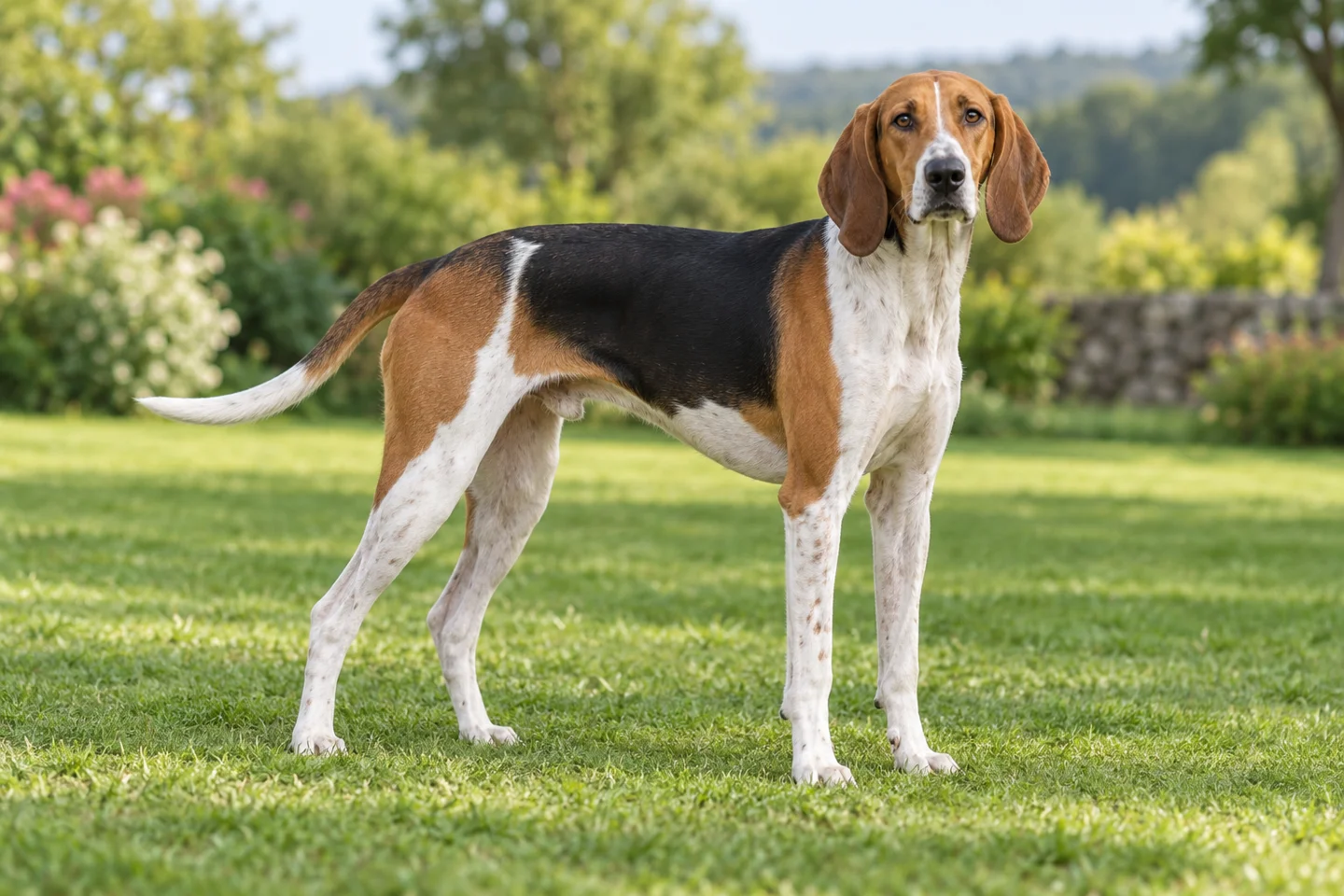
The American Foxhound is a long-legged, lean scent hound with a relatively long muzzle, dropped ears, and a close coat. Tricolor is familiar, but color alone cannot establish breed. A functional outline should allow comfortable movement without excessive bulk. Watch a real dog walk, turn, rise, and recover after appropriate effort. Ask about any previous lameness, injury, or unusually tiring response to ordinary activity.
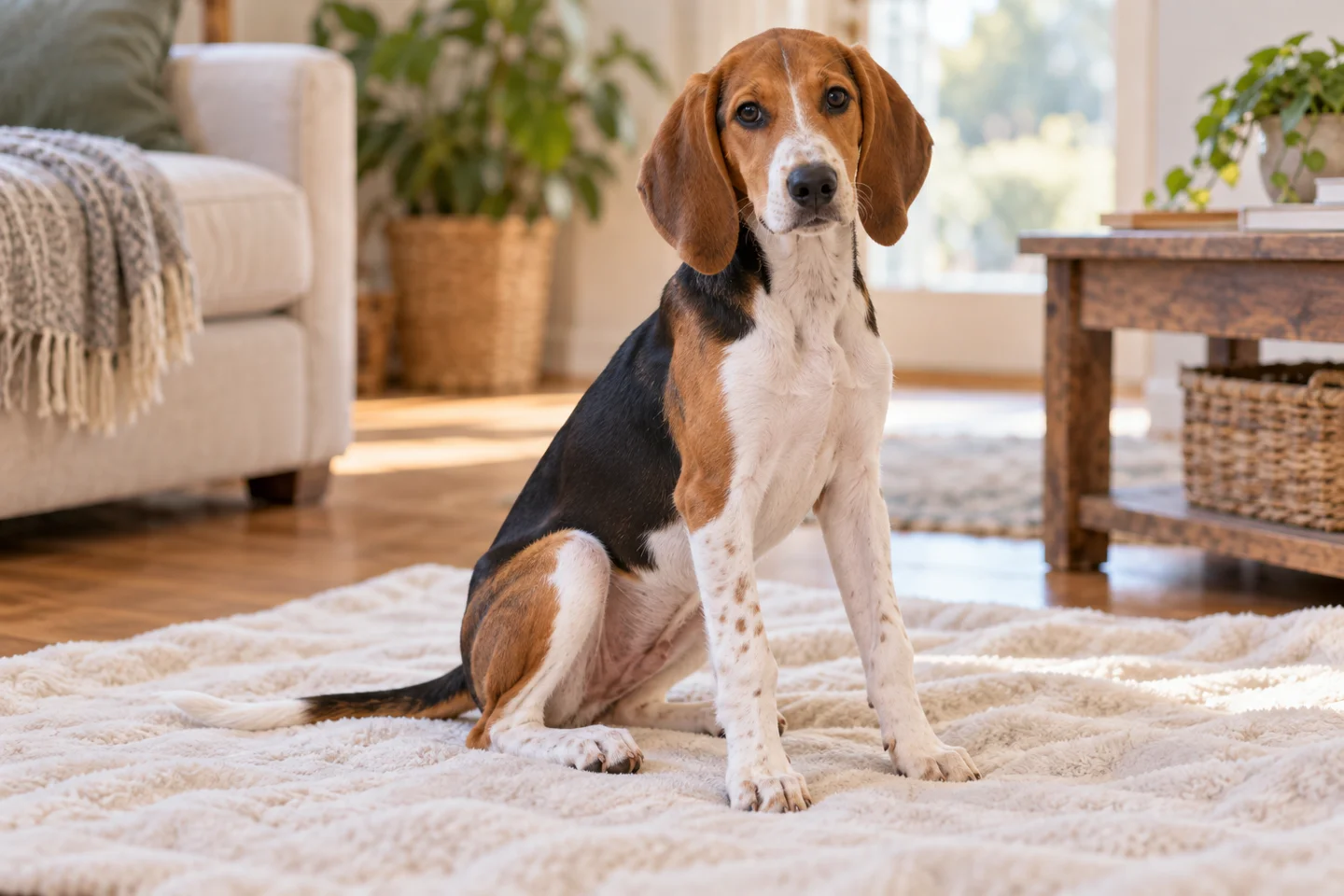
A lean frame should not be used to dismiss weight loss or inadequate muscle. Equally, a household should not feed extra weight onto a hound to make it resemble a heavier breed. Ask the veterinarian to assess the individual and demonstrate useful checks. This guide's images are generated breed illustrations. They show general appearance and life stages without proving pedigree, medical soundness, or the behavior of an actual dog offered for placement.
Secure walks and the pull of a scent
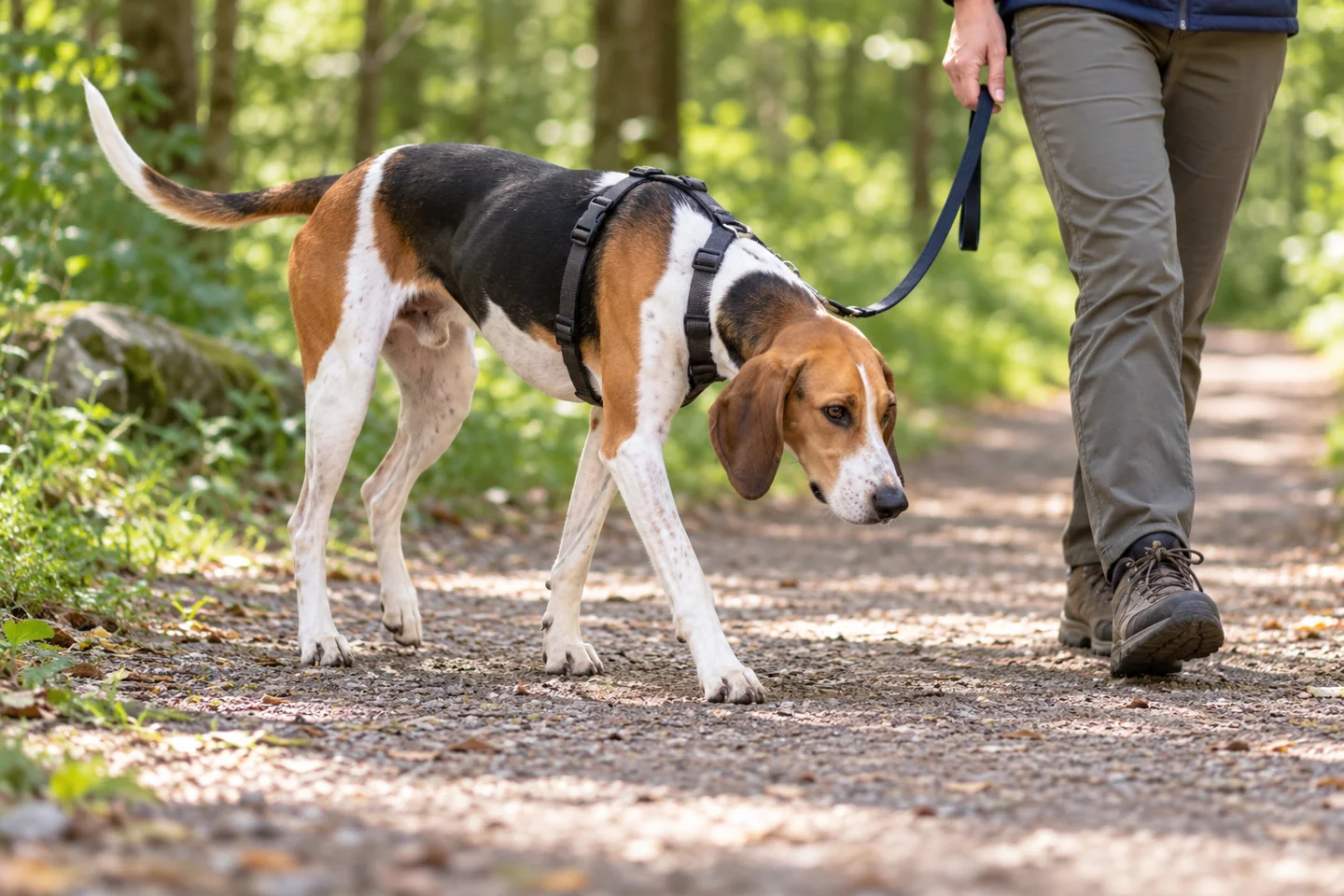
A scent can change a quiet walk quickly. Fit equipment carefully, attach the lead before opening the door, and choose routes with space to move away from traffic and animals. Teach a pause at thresholds, but keep physical safeguards in place. Recall practiced in the kitchen cannot be assumed to hold when a hound encounters an interesting trail outdoors. An unfenced road verge is a poor place to test progress.
Use a long line only where the surface, space, and handling make it safe. Prevent tangles around people, vegetation, or other dogs, and avoid allowing a running animal to hit an abrupt stop. Tracking equipment can support a search plan, but it does not replace boundaries or identification. Check contact details and equipment regularly. Arrange who would help after an escape before you need that help, including a plan for reporting sightings without encouraging unsafe pursuit.
Gardens, gates, and life beyond a kennel
Inspect boundaries for weak sections, gaps, insecure latches, and places where digging could create an exit. Consider a second barrier when a gate opens toward a shared route or road. Explain the routine to guests and contractors. The arrangement needs to work when someone is distracted, carrying shopping, or managing children. Supervise initial access instead of assuming an existing fence will suit a dog with a different size and motivation.
For a dog newly learning household life, introduce rooms and routines gradually. Provide washable bedding, secure footing, predictable toilet opportunities, and a quiet resting place. Reward successful toileting and avoid punishing accidents found later. Sudden accidents after reliable habits, straining, or altered thirst needs medical advice. Ask the previous caregiver what surfaces, schedules, and sleeping arrangements the dog knew so the transition begins with useful information rather than guesses.
Children, cats, and canine company
Children need active adult supervision and protection from energetic collisions. Prevent chasing, hugging, climbing, and disturbance during sleep, meals, or chewing. Let the dog move away and provide a retreat children cannot enter. Separate when adult attention shifts to another task. A child should not be responsible for controlling a strong hound outside or deciding whether an uncomfortable interaction should continue.
Pack ancestry does not guarantee comfort with every dog. Assess play styles, guarding, and the ability to rest separately. Cats, rabbits, and other small animals need particularly careful planning around pursuit. Ask what has been observed directly and keep secure separation available. A peaceful meeting with a still cat cannot establish safety with the same animal running outdoors. Some households will need a different dog or a permanent management arrangement they can genuinely sustain.
Aggression and food or space conflicts
A Foxhound can guard resources, fear handling, or react aggressively in particular situations. A reputation for sociability cannot settle an individual's safety. Freezing, avoidance, rigid posture, growling, snapping, or attempts to escape calls for reduced pressure and distance. Stop the interaction and examine what happened immediately before it. Do not corner a dog or keep taking food to establish whether it will tolerate the intrusion.
Feed separately when competition occurs and teach exchanges in manageable circumstances with appropriate rewards. New sensitivity to ear touching, lifting, or equipment needs veterinary assessment. If a bite or serious fight has occurred, obtain a qualified plan before repeating the situation. Tell carers about known restrictions and provide practical arrangements. The safeguards should work for the actual household, including periods when the usual handler is away, rather than depending on confidence alone.
Training a useful recall and walking routine
Begin with brief sessions where the dog can succeed. Reward coming back, moving alongside you, waiting behind a door, and resting on a mat. The American Veterinary Society of Animal Behavior recommends reward-based methods. A dog interested in scent needs a clear reason to respond and an environment suitable for learning. Repeating a louder cue does not remove the trail or explain which action will pay off.
Practice changing direction on quiet walks before needing that response beside livestock or another dog. Keep physical management where recall is uncertain. For a dog with limited prior home training, start with ordinary skills rather than assuming a lack of response is deliberate defiance. A trainer can help identify the next achievable step. Review fear, fatigue, pain, and the value of the reward when progress stops instead of escalating pressure automatically.
Exercise, conditioning, and acceptable scent work
Plan sufficient activity around the dog's age, health, fitness, and experience. A healthy adult may enjoy exploratory walks and appropriately introduced running or hiking, but an athletic pedigree does not replace conditioning. Increase effort gradually after time off. Puppies need age-appropriate movement and rest rather than an adult endurance schedule. Ask the veterinarian about demanding activities, especially after injury or when the dog's history is incomplete.
Scent searches in a safe area can provide interest without chasing live animals. Start simply, supervise new items, and include food used in the daily intake. Give the hound time to investigate suitable parts of a walk instead of turning every outing into continuous marching. Notice recovery and next-day stiffness. Lameness, unusual fatigue, weakness, or reluctance to rise deserves assessment. A useful routine supports comfortable function and sleep, with variety beyond attempting to tire the dog completely.
Voice, neighbors, and periods alone
Discuss noise before bringing a Foxhound into shared housing. Its carrying voice may be part of what an owner enjoys, while a neighbor experiences it differently. Ask when the individual vocalizes and what happens when alone. Alerting, anticipation, frustration, and separation distress can require different changes. Keep a short record of timing and triggers, and reduce repeated exposure to preventable problems where possible.
Build comfortable time apart through brief, manageable practice in a familiar setting. A camera can show whether the dog rests or paces after departure. Persistent distress or attempts to escape needs support from a veterinarian and suitable behavior professional. Arrange care while working on the problem. Leaving an upset dog longer as a test does not create useful practice. A boarding provider should explain whether individual walks and quiet accommodation are available when communal activity is unsuitable.
Grooming, feet, and ears after an outing
Brush the close coat regularly and check skin, paws, nails, and equipment contact points. Outdoor activity can leave small injuries or debris that a surface glance misses. Check for ticks according to local risk and the veterinarian's prevention advice. Wash when needed using appropriate products and provide secure footing. A short coat requires less styling, but it does not eliminate ordinary maintenance or the need to notice changes.
Long ears deserve observation for odor, redness, discharge, head shaking, or discomfort. Ask the veterinary team how to clean this dog's ears and avoid inserting objects into the canal. Do not reuse medication from a previous episode without advice. Introduce tooth brushing, nail care, and brief body checks with rewards. Stop and investigate a sudden objection to a familiar touch rather than continuing until the dog gives up protesting.
Feeding the companion rather than the job title
Use a complete diet suitable for life stage and individual needs. A companion's requirements can differ substantially from those of an actively working pack hound. Measure portions, count treats and chews, and monitor body condition as activity changes. Ask the veterinarian to demonstrate assessment instead of relying on another dog's weight. Keep a clear record when several people share feeding or medication duties.
Secure rubbish, unsafe foods, and tablets, including items in visitors' bags. Give meals in a calm area and manage competition between animals. Persistent appetite change, weight loss, altered thirst, vomiting, or diarrhea deserves advice rather than repeated unplanned diet changes. Supplements should address an identified need. When a medical condition requires a particular diet, review treats and extras too so the whole intake fits the clinical plan.
Health screening and platelet problems
The AKC breed page discusses hip dysplasia and thrombocytopathy as health concerns, while its separate parent-club testing field lists no recommended tests. Ask specifically what was assessed instead of treating the empty formal list as evidence that screening has no value. Request identifiable reports with dates and findings and discuss appropriate evaluation with your veterinarian. A puppy check cannot replace investigating a later problem.
Thrombocytopathy concerns platelet function and can affect blood clotting. It should not be confused with every condition that lowers platelet numbers. Report unusual bleeding, easy bruising, or previous treatment complications and make sure relevant results are available before a procedure. Significant bleeding needs prompt veterinary help. Ask the clinician to interpret the exact diagnosis and report. A healthy appearance does not rule out a clotting concern, and a general DNA panel cannot establish freedom from every bleeding disorder.
Changes in comfort and emergency preparation
Observe how the dog rises, turns, climbs, and recovers after activity. A hound may remain eager to go outside while uncomfortable, so do not wait for complete refusal before reporting a persistent change. Altered stamina, lameness, skin irritation, ear trouble, or changes in digestion and thirst deserve assessment. Dated observations can make an intermittent pattern easier for the clinic to understand without making the dog repeat a painful movement.
Know where emergency care is available and how to transport an adult who cannot walk. Severe breathing difficulty, collapse, suspected poisoning, heavy bleeding, or abdominal swelling with unsuccessful retching requires urgent advice. Keep medication and prior findings accessible. Avoid human painkillers and leftover prescriptions while deciding what to do. Arrange a backup carer and transport help before an absence or injury makes the usual plan unavailable.
Mixes and the limits of a breed estimate
An American Foxhound crossed with another hound, Labrador, or different breed can vary in body shape, voice, coat, behavior, and medical needs. Informal mix names do not establish recognized Foxhound varieties. Ask whether parentage is documented or estimated. A long-legged tricolor rescue dog may resemble several breeds, and household observations can be more dependable than an exact ancestry claim based on appearance.
Mixed ancestry does not guarantee dependable recall, quiet behavior, normal joints, or compatibility with small animals. Consider known parental concerns alongside the individual findings. Ask about handling, time alone, food, pursuit, and previous relationships. Choose through a plan that works for the animal in front of you, with practical ways to manage uncertainty. A favorable reputation attached to one possible parent should not replace assessment of the actual needs.
Choosing a source and planning later years
Ask a breeder about adult temperament, health information, early experiences, and support after placement. Read terms and return arrangements before committing. For an adopted Foxhound, clarify the previous environment, current medication, bites or fights, escape behavior, and veterinary follow-up. Distinguish direct foster observations from a short kennel assessment. Describe your home honestly, including cats, work hours, noise limits, and secure space.
Budget for food, equipment, preventive care, training support, a sitter or boarding, and unexpected illness. Review insurance terms and request local estimates. In later life, adapt flooring, vehicle entry, distances, and care routines around comfort. Preserve scent exploration in manageable forms even when endurance decreases. New accidents, avoidance, or reduced function needs assessment instead of being dismissed because the dog was once capable of demanding work. A supported plan should cover the older years too.
Travel and learning an unfamiliar routine
Practice manageable journeys before a long trip and secure the dog appropriately in the vehicle. Check that it can enter and rest comfortably and that an opened door cannot become an escape route. Bring water, familiar bedding, identification information, and veterinary contacts. Schedule breaks around the dog rather than the shortest possible journey. Never leave it in a parked vehicle while everyone else goes inside.
For a hound previously accustomed to working kennels, a holiday cottage or busy hotel may introduce unfamiliar lifts, stairs, corridors, and close neighbors. Arrange a quiet first arrival and keep lead management in place. Ask the accommodation provider about actual conditions instead of interpreting a pet-friendly description as a guarantee that the setting suits this dog.
A carer needs to know the dog's food, medication, comfortable walking routes, and response to scents or other animals. Explain what to avoid and who may authorize emergency treatment. Arrange a meeting before an urgent absence and let the carer practice equipment under supervision. Familiarity and clear instructions make the arrangement more dependable than assuming any experienced dog owner can improvise the same routine.
A dogsDating walk with space to investigate
Describe the Foxhound's pace, scent interest, voice, preferred company, and any guarding or medical restrictions in its dogsDating profile. Keep exact home coordinates private and choose a public place with enough space and safe lead arrangements. Discuss the other dog's expectations beforehand. A companion who enjoys parallel exploration may be a better first fit than one who immediately seeks close physical play.
Begin with separate handlers at a comfortable distance, allowing suitable sniffing without tangling lines. Skip shared food and favorite toys. Allow brief contact only when both dogs remain loose and able to turn away. Increase distance or end the outing if either freezes, hides, persistently pursues, or repeatedly tries to leave. A quiet first walk can provide enough information. Plan further contact around the dogs' responses and the owners' ability to manage the arrangement.
Sources and editorial notes
Sources checked October 21, 2026. Breed measurements describe reference ranges, not a diagnosis or an individual dog's ideal weight. Images are AI-generated breed illustrations and do not document a particular dog or health condition.
- VCA Animal Hospitals: Ear infections in dogs
- VCA Animal Hospitals: Common emergencies in dogs
- VCA Animal Hospitals: General feeding guidelines for dogs
- VCA Animal Hospitals: Food aggression in puppies
- American Kennel Club: George Washington and American Foxhound history
- American Kennel Club: American Foxhound care and health
- VCA Animal Hospitals: Aggression toward unfamiliar dogs, diagnosis
- AVSAB: Humane Dog Training Position Statement
Keep getting to know dogs.
Read another guide or return to your dogsDating community.
Explore breed guidesBack to dogsDating