Airedale Terrier
An active, substantial terrier whose daily needs include useful training, secure outings, wiry-coat care, and informed kidney and joint screening.
How these guides are researched and reviewed
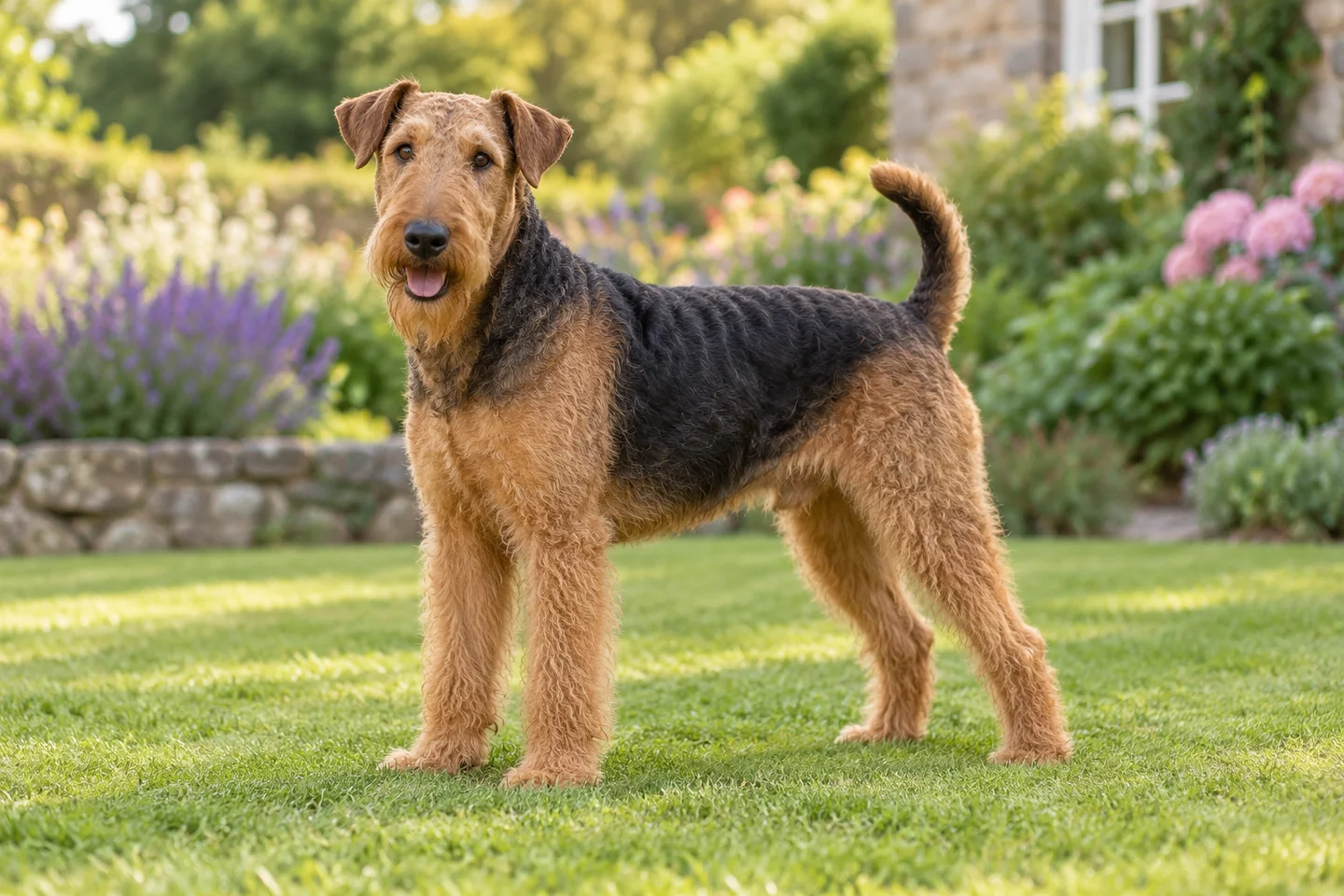
- Standard height
- Males about 23 in; females somewhat smaller
- Coat
- Wiry, tan with a dark saddle
- Health focus
- Joint, eye, cardiac, and kidney screening
General information for owners. These articles have not been reviewed by a veterinarian. Medical decisions need your dog's history and an examination.
Living with an Airedale Terrier
An Airedale Terrier needs a home prepared for a substantial, active dog who can reach the kitchen counter and act quickly when something interests it. Think about daily walks, useful training, grooming, and quiet time before choosing one. A garden provides space, but it will not organize those needs. A workable household gives the dog suitable things to do and makes unwanted habits harder to rehearse.
Consider who will handle the dog when an outing goes wrong, who can provide a midday break, and where it will rest when visitors arrive. An adult with a known household history may provide more useful information than a prediction about a puppy. A puppy needs frequent attention and patient teaching through adolescence. Choose the individual and life stage you can support, including the ordinary days when work, weather, or family responsibilities limit your options.
Yorkshire origins and working interests
The Airedale developed in Yorkshire's Aire Valley, where terriers and Otterhound ancestry contributed to a dog used for varied work, including hunting around waterways. It belongs to the American Kennel Club Terrier Group. The history helps explain why accounts discuss scent, pursuit, and practical activity. It does not establish that a particular Airedale will retrieve, enjoy swimming, accept every dog, or welcome unfamiliar people without preparation.
Let the individual show you which activities it enjoys. A dog who likes following a scent may enjoy a simple search game without needing a sporting career. One who dislikes water does not need to be pushed into it because of ancestral work. Ask breeders and rescues for observations from ordinary life. A description of what the dog does, how easily it disengages, and how it recovers is more useful than a list of impressive historical jobs.
Size, outline, and familiar markings
The American breed standard describes males at approximately 23 inches at the shoulder, with females somewhat smaller. The outline is sturdy and athletic, with a long head, beard, small folded ears, and a dense, wiry coat. Tan on the head and legs contrasts with a darker saddle. Assess the actual dog's body condition and movement rather than selecting for the greatest possible size.
Advertisements may emphasize unusually large Airedales or use informal labels for a particular line. Ask what those labels mean and which registry or standard is being referenced. They do not supply evidence of better health or a predictable temperament. The illustrations here show recognizable breed features with natural tails. They are generated illustrations, so they cannot document sound joints, correct movement, or the condition of any dog offered for sale or adoption.
Setting up a manageable home
Create a secure entrance routine before the dog arrives. Use a gate or separate room when the front door needs to remain open, and keep walking equipment within adult reach. Check garden boundaries for gaps, weak panels, and places where digging might create an exit. Avoid leaving tempting objects where the dog can repeatedly steal them while people chase. Prevention reduces conflict and makes training easier.
Provide a comfortable resting place outside the busiest traffic through the house. Teach family members to let the dog sleep there without interference. Store food, medication, rubbish, and cleaning products securely. A growing Airedale may reach surfaces that were safe a month earlier, so review the arrangement as the puppy develops. Choose an environment that still works when someone is tired or distracted rather than depending on uninterrupted supervision every minute.
Temperament, visitors, and settling
An Airedale may investigate visitors enthusiastically or prefer a slower approach. Arrange greetings around the individual. Start behind a barrier if excitement makes jumping likely, and reward calm behavior without requiring immediate touch. Visitors can ignore the dog while everyone settles. An uneventful visit is a useful result even if the dog spends it resting separately with something suitable to do.
Teach quiet time during ordinary household activity. After an appropriate outing, help the dog settle while people work or relax. If it repeatedly paces, patrols, or demands activity, look at sleep, stimulation, anxiety, and physical comfort rather than assuming it needs constant entertainment. Persistent difficulty resting deserves professional advice. Keep a short record of when the problem occurs so a veterinarian or behavior professional can assess more than an isolated description of restlessness.
Children, cats, and other household dogs
An Airedale's size and energetic movement can overwhelm children. Adults need to supervise closely, prevent rough chasing, and protect sleep, meals, and chewing time. Teach children to invite contact gently and accept the dog moving away. A retreat should remain available without a child following. When adult attention is elsewhere, use separation. A history of good interactions does not remove the need to manage the next one.
Introduce resident animals gradually with secure barriers and individual space. A dog may coexist with a familiar cat while still chasing animals outdoors. Small pets need reliable separation, and another dog needs the ability to rest without being followed. Feed separately when there is tension and watch play for imbalance. If one animal hides, freezes, or repeatedly tries to leave, pause the interaction and reconsider the arrangement before allowing more contact.

Aggression, guarding, and bite prevention
Judge risk from the dog's behavior, previous incidents, current health, and the situation. Neither a terrier label nor a reassuring family description tells you whether a particular interaction is safe. Notice stiffening, avoidance, hard staring, growling, or snapping. Stop the pressure and create space. Do not encourage someone to continue touching a dog who is warning, and do not make children responsible for reading or managing those warnings.
Prevent disputes over food and valued objects. Repeatedly taking a bowl away to test the dog can add conflict instead of teaching useful behavior. Practice exchanges in easy situations and seek a qualified plan when guarding is established. A sudden reduction in tolerance needs veterinary assessment for pain or illness. If there has been a bite, obtain a detailed assessment and management advice before arranging visitors or meetings that repeat the circumstances.
Training a recall and practical household skills
Reward returning when called, moving with a loose lead, waiting at doors, and releasing an object in exchange for something suitable. Begin in low-distraction settings and increase difficulty gradually. The American Veterinary Society of Animal Behavior recommends reward-based methods. Avoid treating independence as a reason for intimidation. Clear steps and appropriate rewards give the dog a way to understand what is being asked.
Teach an easy turn away from a distraction and practice it before you need it beside a barking dog or wildlife. Use a long line only where the environment and handling are safe, and retain physical management where recall is uncertain. For counter surfing, remove access to food and reward an alternative resting place. Chasing a stolen object around the house may create an enjoyable game for the dog and a recurring problem for the people.
Exercise, scent work, and rest
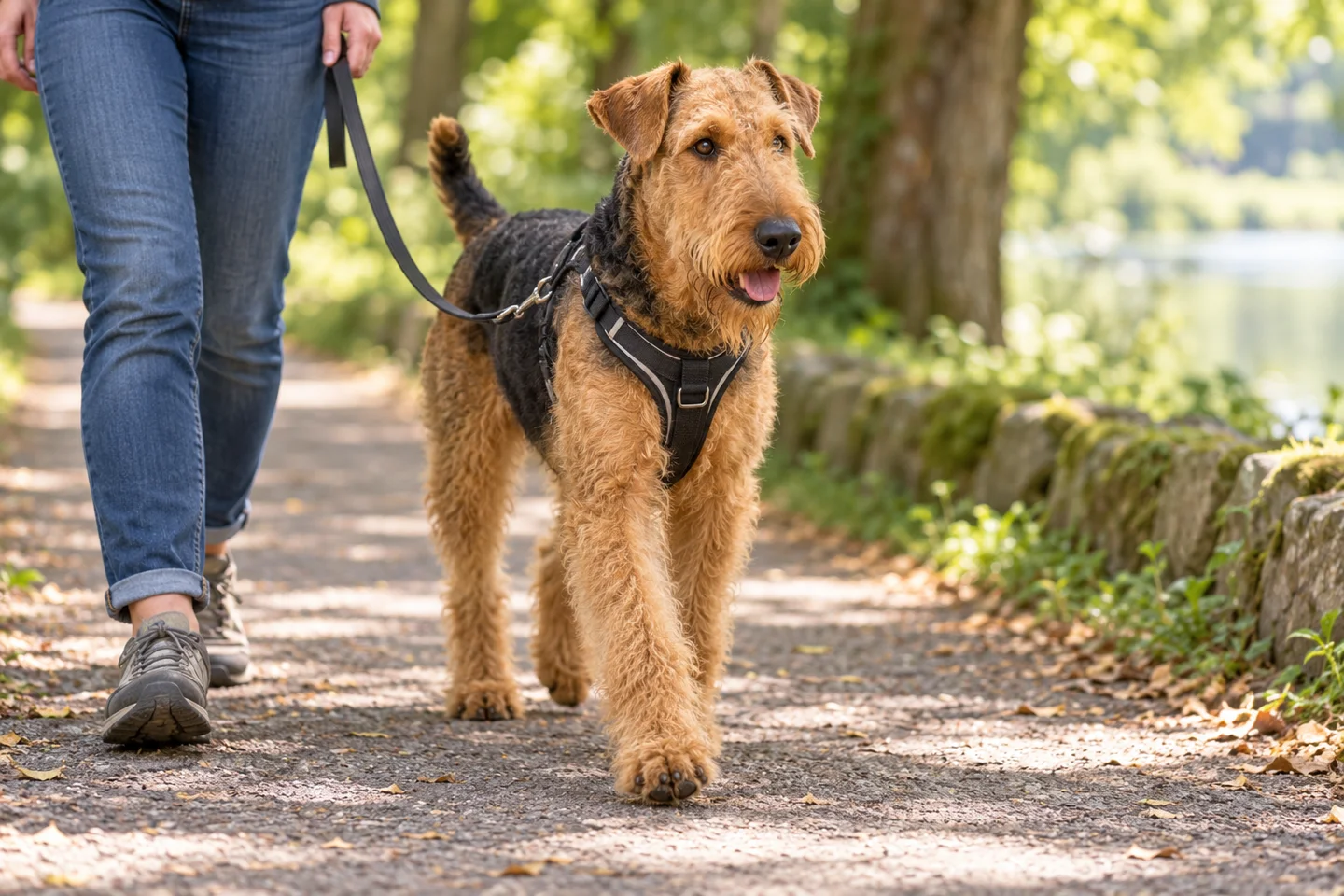
Plan activity according to age, fitness, weather, and medical needs. Walks can include exploration and sniffing rather than continuous marching. A healthy adult may enjoy training games, suitable retrieving, or other activities introduced at a manageable level. Puppies need movement and play without being made to complete an adult endurance routine. Discuss planned running, jumping, and sport with the veterinarian as the dog develops.
Simple scent searches can provide interest without requiring a large space. Begin with an easy task and watch the dog succeed before hiding things more carefully. Check the area for hazards and account for food used in games. Physical and mental activity both need recovery afterward. New stiffness, limping, unusual fatigue, or reluctance to rise deserves attention. Do not increase the workload to solve a behavior problem that may involve discomfort.
Grooming the wiry coat
Regular brushing and combing helps prevent tangles and lets you check the skin. Discuss hand stripping and clipping with a groomer familiar with Airedales. These approaches can produce different coat results, and the choice should consider the actual coat, the dog's comfort, and what the household can maintain. Showing requirements do not need to dictate every companion's care. Ask for a practical schedule and a demonstration of safe home maintenance.
Do not persist with coat work that causes distress or pulls on sore skin. Tight mats and difficult areas may need professional attention. Check the beard, legs, and places where the harness rubs, rather than judging the visible back coat alone. Keep grooming equipment in good condition and avoid attempting close scissor work near moving eyes or skin. A comfortable, manageable coat is a better daily goal than a style that cannot be maintained without struggle.
Ears, teeth, feet, and water outings
Introduce brief ear checks, paw handling, nail care, and tooth brushing with rewards. The dog should have a chance to learn each step before a long appointment requires it. Redness, odor, discharge, or a new objection to touch needs an examination rather than repeated cleaning with different products. Use the veterinary team's recommended approach for the individual. Avoid putting objects deep into the ears or using leftover medication for a new problem.
After muddy or wet outings, check between toes, dry the dog appropriately, and look for trapped debris beneath the coat. If the dog enjoys water, choose safe access and an easy exit, supervise closely, and avoid forcing swimming. A breed's history around waterways does not establish swimming ability or judgment about currents. Ask about appropriate flotation equipment for boating and keep the outing within the dog's fitness and confidence.
Feeding, growth, and body condition
Provide a complete diet appropriate for the dog's life stage and discuss individual requirements with the veterinarian. Measure food and count training rewards, chews, and household snacks. Monitor growth and body condition rather than feeding toward a desired imposing size. A thick coat can hide gradual weight changes. Ask to be shown how to assess the body and keep records when several people share feeding duties.
Changes in appetite, thirst, urine, digestion, or weight deserve attention, particularly when they persist or occur together. Avoid treating every change as food fussiness. Keep medication and dangerous foods inaccessible, and supervise unfamiliar chews. Supplements should meet an identified need under professional guidance. If a medical condition requires a therapeutic diet, discuss treats and other additions too, because small extras can interfere with a plan designed around the dog's clinical findings.
Health screening and reading the results
The AKC's Terrier Group screening page lists hip evaluation, cardiac examination, ophthalmologist evaluation, and kidney disease screening for Airedales. Ask for actual reports tied to the relevant dog's identity, with dates and findings. A general statement that parents were checked does not show which assessments were performed. Ask your veterinarian to explain results and any recommended follow-up before you make a commitment.
A CHIC number indicates participation in a defined testing and disclosure program, rather than a promise that every result was normal. Read the underlying information and discuss relevant illness in relatives. Clinical examinations, imaging, urine testing, and DNA tests investigate different questions. No single panel replaces the complete history. For a rescue dog with limited records, acknowledge what remains unknown and build a plan around current findings instead of assuming missing information means normal health.
Kidney screening and protein-losing nephropathy
Protein-losing nephropathy, or PLN, involves abnormal loss of protein through the kidneys. PennGen offers testing for disease-associated variants relevant to Airedale Terriers and explains that results describe risk. A genetic result is not the same as a diagnosis of current kidney disease. Ask what was tested, how the result should be interpreted, and which clinical follow-up the veterinarian recommends. Avoid translating a report into an unconditional prediction about the dog's future.
Screening an apparently well dog can answer a different question from investigating signs of illness. Ask about appropriate urine and other checks as part of the individual care plan. Report altered thirst or urination, appetite loss, vomiting, weight loss, or reduced energy, while recognizing that many conditions can produce those signs. Do not start a kidney diet or change medication from a breed discussion alone. Diagnosis and treatment need the dog's examination and results.
Joints, other medical concerns, and emergencies
Keep an eye on how the dog rises, turns, climbs, and recovers after activity. Hip screening is relevant to breeding decisions, but an individual with lameness still needs an examination regardless of parental reports. Persistent skin irritation, ear problems, a new lump, or a change in stamina also deserves assessment. Keep dated notes and describe the pattern rather than attributing every problem to the breed or waiting until the dog can no longer manage.
Establish the nearest emergency service and a safe transport arrangement before they are needed. Severe breathing difficulty, collapse, poisoning, or a swollen abdomen with unsuccessful retching requires urgent veterinary advice. Do not give human pain medication or leftover prescriptions while deciding what to do. Keep current medication and previous findings accessible for the clinic. A strong dog who cannot walk may require more help to move safely than the household usually needs.
Airedale mixes and informal varieties
An Airedale crossed with a Poodle or another breed can vary in coat, size, behavior, and grooming needs. Informal crossbreed names are not recognized Airedale Terrier varieties. Ask whether parentage is documented or estimated and avoid presenting an appearance-based guess as certainty. A bearded dog with a dark saddle may resemble more than one breed, and the rescue's observations may be more dependable than the proposed ancestry.
Consider known parental health concerns alongside the actual dog's medical findings. Mixed ancestry does not guarantee an easy coat, normal joints, or compatibility with small animals. A wiry or curly coat also cannot guarantee that an allergic person will tolerate the dog. Seek advice for the affected person and assess the real situation. Select a companion through a realistic care plan, rather than assuming a combination will inherit only the traits you prefer.
Choosing a breeder or adopting an adult
A breeder should explain health records, selection decisions, early handling, and support after placement. Ask how puppies experience ordinary household sounds, gentle grooming, and brief separation. Meet appropriate adults and discuss what is known about the individual puppy. Read the agreement and return arrangements without pressure. An attractive pedigree or unusual size claim should not replace answers about health and everyday behavior.
For an adopted Airedale, ask about time alone, escape attempts, food guarding, handling, previous bites, and relationships with other animals. Clarify which observations came from foster care and what remains uncertain. Describe your own limits accurately, including space for separation and the people available to handle the dog. Plan a quiet adjustment period. Filling the first weekend with visitors and demanding outings can make assessment and settling harder for everyone.
Costs, housing, and later-life support
Budget for food, equipment, grooming, preventive care, training, a sitter or boarding, and unexpected medical needs. Ask local providers for estimates and review insurance exclusions before relying on coverage. Housing arrangements should allow a secure route outside and comply with applicable conditions. Consider noise, shared entrances, stairs, and what happens when the usual handler is away. A plan that works only when one person is always available needs a backup.
As the dog ages, reassess flooring, beds, car access, and comfortable activity. A dog who needs shorter walks can still enjoy exploration and easy searches. Long grooming appointments may need to be broken into shorter visits. Arrange help with transport and lifting before a sudden illness makes those decisions urgent. Report new accidents, reluctance to move, or changed behavior to the veterinarian rather than assuming those changes are an unavoidable part of aging.
A useful dogsDating introduction
Write a dogsDating profile that describes your Airedale's current behavior and preferred activities. Mention pursuit, guarding, handling concerns, exercise restrictions, and whether a parallel walk is preferable to active play. Keep exact home coordinates private and choose a suitable public place with space to move apart. Discuss the other dog's size and style before deciding the meeting is appropriate.
Begin on leads with separate handlers and enough distance for comfortable observation. Avoid shared food, favorite toys, and a crowded face-to-face greeting. Allow brief contact only if both dogs remain loose and able to disengage. Interrupt persistent chasing and end the outing if either dog freezes, hides, or cannot get a break. An uneventful first walk provides useful information. Plan another meeting around what the dogs actually did, rather than what their owners hoped they would enjoy.
Sources and editorial notes
Sources checked October 21, 2026. Breed measurements describe reference ranges, not a diagnosis or an individual dog's ideal weight. Images are AI-generated breed illustrations and do not document a particular dog or health condition.
- VCA Animal Hospitals: Hypoallergenic dog breeds
- Orthopedic Foundation for Animals: CHIC program and interpretation of numbers
- VCA Animal Hospitals: Common emergencies in dogs
- VCA Animal Hospitals: General feeding guidelines for dogs
- Airedale Terrier Rescue and Adoption: Grooming guidance
- VCA Animal Hospitals: Food aggression in puppies
- American Kennel Club: Terrier Group health screening requirements
- American Kennel Club: Airedale Terrier history
- Airedale Terrier Club of America: Introduction to the Airedale Terrier
- VCA Animal Hospitals: Aggression toward unfamiliar dogs, diagnosis
- University of Pennsylvania PennGen: PLN-associated variant genes and result interpretation
- AVSAB: Humane Dog Training Position Statement
- VCA Animal Hospitals: Water sports for dogs
Keep getting to know dogs.
Read another guide or return to your dogsDating community.
Explore breed guidesBack to dogsDating