American Pit Bull Terrier
An athletic terrier whose care requires clear breed naming, individual behavior assessment, secure handling, and careful interpretation of health and legal information.
How these guides are researched and reviewed
- Registry reference
- UKC American Pit Bull Terrier
- Coat
- Short; skin and body checks remain useful
- Care priorities
- Individual behavior, handling, and clear records
General information for owners. These articles have not been reviewed by a veterinarian. Medical decisions need your dog's history and an examination.
Choosing an American Pit Bull Terrier
An American Pit Bull Terrier needs a household able to manage an athletic, strong dog with clear routines and an honest assessment of the individual. Begin with ordinary logistics: doorways, walking routes, visitors, transport, and backup care. A successful placement should remain workable when another dog appears unexpectedly or the main handler is unavailable. Neither enthusiasm for the breed nor fear of its reputation replaces that preparation.
Ask for direct observations about handling, food, other animals, and time alone. An adult with a detailed history may give useful information that a puppy cannot yet provide. A puppy requires frequent care and leaves uncertainty about adult social preferences. Choose a source that discusses difficulties openly, and a dog whose needs fit the people and environment actually available. Avoid expecting a particular training course to make every placement suitable for every household.
The breed name and broader pit bull labels
The American Pit Bull Terrier has a standard published by UKC and is also registered by other organizations. The general label pit bull is used more broadly in everyday conversation and some legal settings. It can therefore mean something different from a documented pedigree. Ask exactly which breed, registry, and records are being discussed, especially when an advertisement uses several similar names interchangeably.
American Staffordshire Terrier, Staffordshire Bull Terrier, and American Bully have related histories or similar appearances but their own standards and registration contexts. They have separate entries in this collection. A rescue's appearance-based estimate should remain clearly identified as an estimate. Useful information about the dog's daily behavior and clinical findings can support a placement even when ancestry is uncertain. A photograph of a broad-headed dog cannot settle every question about breeding or legal identification.
History without a behavior guarantee
The breed's history includes bull-and-terrier ancestry and dog fighting, alongside later breeding and use in other roles. That history should be described accurately without treating it as a verdict on every individual. It gives reason to ask careful questions about dog relationships, pursuit, and management. It does not establish that a dog is inevitably aggressive, safe with children, or suited to a particular household.
Likewise, favorable stories about individual dogs do not create a guarantee for a new placement. Ask what this dog does when approached during rest, when another dog enters view, or when something unexpected happens. Learn what the source has observed and what remains unknown. A practical owner can take history seriously while making decisions through present behavior, health, environment, and the ability to maintain reliable safeguards.
Athletic build and comfortable movement
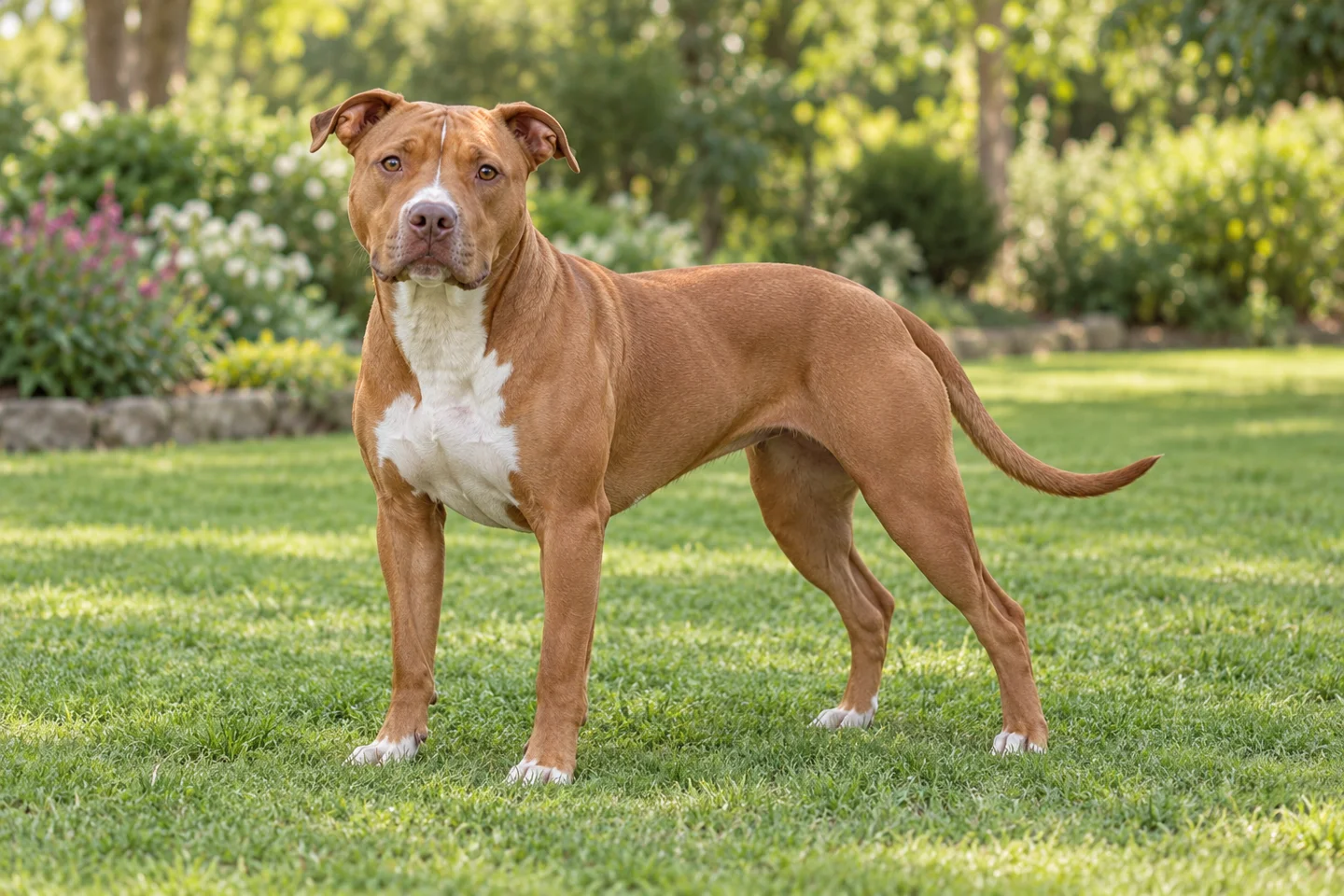
UKC describes a medium-sized, solidly built, short-coated dog with well-defined muscle and agility. The functional outline matters more than maximum head width or weight. Watch walking, turning, rising, and recovery after ordinary effort. Ask about previous injury, lameness, surgery, and exercise limits. A muscular appearance does not establish healthy joints or justify feeding an animal beyond a comfortable body condition.
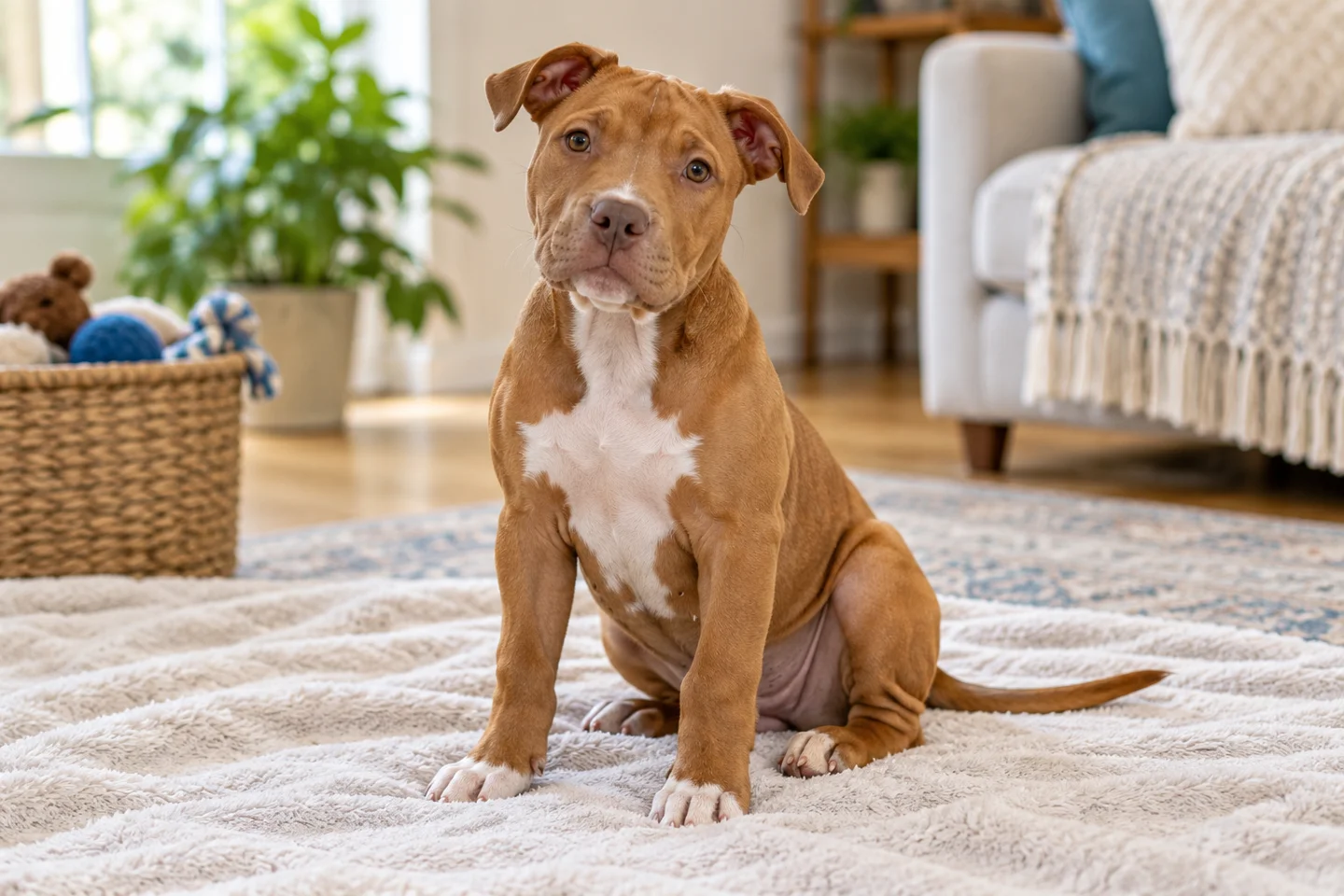
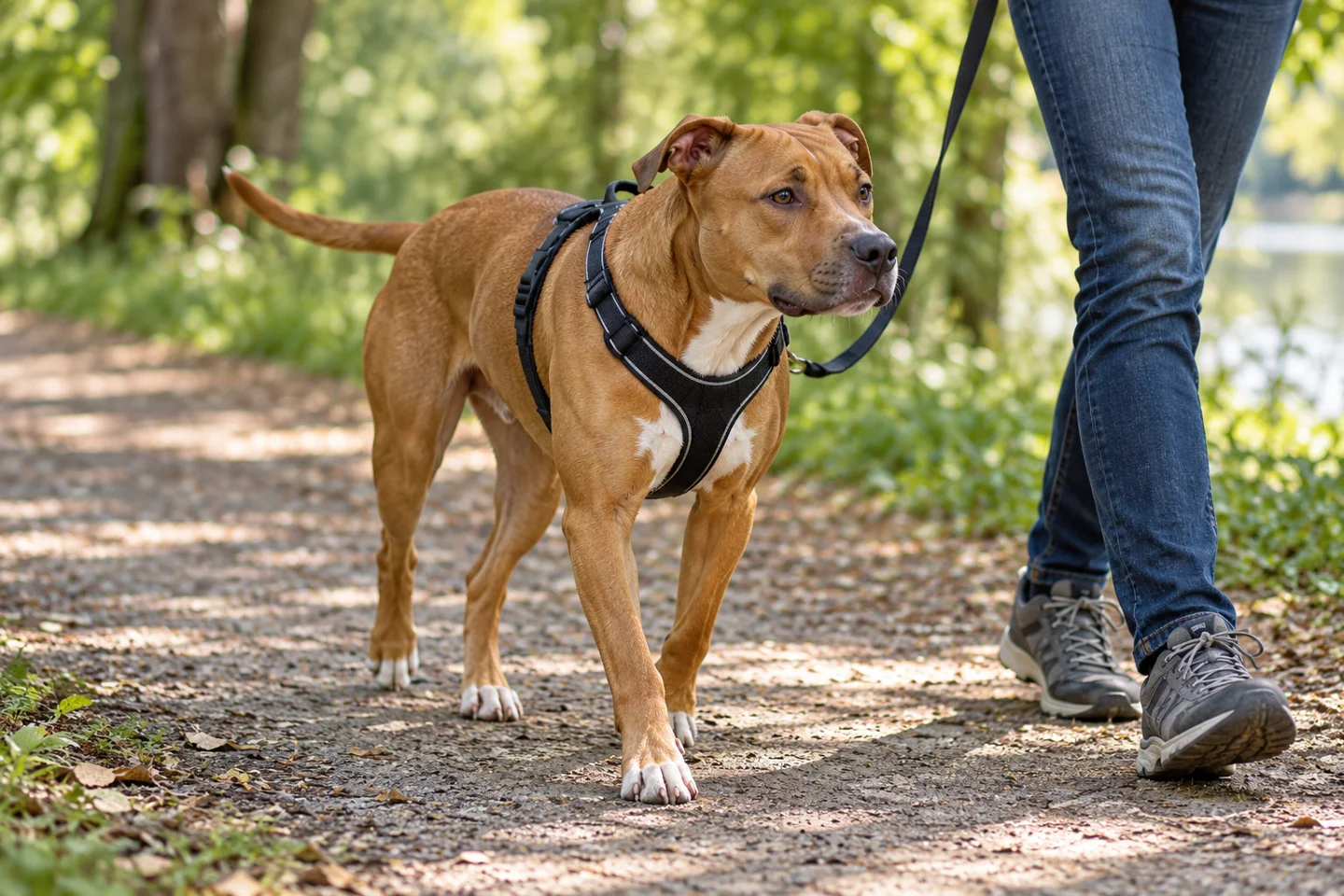
The illustrations here show an athletic red-fawn dog with a white chest, natural ears, and a long tail. They are generated images rather than documentary photographs of a particular animal. They cannot prove ancestry, a normal examination, or temperament. Coat and nose color should not become substitutes for medical records or observations. Choose the actual dog through evidence and a realistic care plan rather than resemblance to an appealing picture.
Doors, equipment, and household space
Arrange a secure entrance before the dog arrives. A second barrier or separate room allows deliveries and visits without immediate contact. Practice moving to a resting place with rewards, and keep walking equipment within adult reach. Fit the harness or collar in a controlled setting and check clips and stitching regularly. Avoid relying on catching the dog's collar while an exterior door remains open.
Inspect garden boundaries, including gaps, latches, and opportunities to dig beneath them. Explain the arrangement to visitors and contractors. Provide a resting area outside the busiest household traffic and protect sleep from repeated disturbance. Keep medication, food, rubbish, and cleaning products secure. The arrangement should support predictable daily decisions and still work when someone is tired or occupied, rather than requiring perfect attention throughout every moment.
Children, cats, and other dogs
Children need attentive adult supervision, dog-free energetic play, and clear boundaries around sleep, food, and valued objects. Prevent climbing, hugging, tail grabbing, and interruption of retreat. A friendly dog's physical movement can still knock a child over. Separate when adult attention shifts. Do not make a child responsible for reading warnings or holding the lead of an excited dog outside.
UKC cautions that dog aggression can occur in this breed. Ask about actual relationships, previous incidents, pursuit, and recovery after seeing another animal. Early puppy play does not guarantee every adult relationship. Introduce residents gradually and prepare secure separation before placement. Cats and smaller animals need particular consideration. Some combinations require a different home or continuing management that the household can reliably sustain. Avoid using unrestricted group play as a casual test of compatibility.
Aggression and meaningful warning signs
Assess aggression through the full history, current behavior, medical findings, and circumstances. Freezing, hard staring, rigid posture, avoidance, growling, snapping, or attempts to escape calls for reduced pressure and distance. Do not approach to prove confidence, corner the dog, or punish a warning while leaving the same pressure in place. Record what happened immediately beforehand so professional advice is based on more than a label.
For guarding, prevent repeated confrontations over meals, chews, and resting places. Teach exchanges at an achievable level with appropriate rewards. Sudden handling sensitivity needs veterinary assessment for pain or illness. If a bite or serious fight has occurred, obtain a detailed qualified plan before repeating the situation. Tell carers and other owners about restrictions. Good intentions and strength are insufficient when the household cannot implement the practical safeguards the dog requires.
Reward-based training and useful distance
Teach recall, loose-lead movement, waiting at thresholds, and settling on a mat where success is likely. Reward small steps and increase distraction gradually. The American Veterinary Society of Animal Behavior recommends reward-based methods. Confrontation can add fear or conflict while leaving the desired behavior unexplained. A powerful dog still needs clear teaching, and a handler needs environments where that teaching can be practiced safely.
Rehearse an easy turn away on quiet walks before needing it beside another dog. Keep leads and barriers in place where recall is uncertain. A properly fitted basket muzzle may support a professional plan when introduced gradually with rewards, but it does not make an overwhelming encounter acceptable. The animal still needs appropriate space, pain assessment where relevant, and treatment of the underlying concern. Ask for help early if ordinary handling exceeds your physical ability.
Exercise without forcing performance
Match activity to age, fitness, health, conditions, and the dog's actual interests. Walks can include sniffing and learning as well as movement. A healthy adult may enjoy suitable games or sports introduced progressively. Growing dogs need age-appropriate play instead of an adult endurance or loading program. Ask the veterinarian about running, jumping, pulling, and return to activity after injury or a quiet period.
Avoid treating maximum bulk or spectacular effort as the purpose of conditioning. Watch recovery and next-day movement. New stiffness, lameness, weakness, unusual fatigue, or reluctance to rise requires assessment. Mental activity through easy searches and training can add variety without repeated physical strain. Protect comfortable sleep too. A dog who cannot settle after a busy day may need a different routine, help with anxiety, or medical attention rather than a further increase in effort.
Rest, separation, and adjustment
Plan predictable meals, toilet opportunities, rest, and manageable outings during arrival. A new adult may need support learning a household schedule or unfamiliar surfaces. Reward toileting success and avoid punishment for accidents discovered later. Straining, altered thirst, sudden regression, or persistent accidents needs medical advice. A useful routine helps distinguish what the dog is learning from changes that may need examination.
Teach comfortable time apart gradually and observe what happens after departure. A camera can reveal pacing, sustained distress, or escape attempts. Persistent problems warrant veterinary and behavior support, with appropriate care arranged during treatment and training. A crate is suitable only when it can be used safely and comfortably. Do not leave an animal repeatedly injuring itself in an escape attempt or assume that longer exposure will resolve distress without a plan.
Grooming, skin, teeth, and nails
Brush the short coat and check skin, feet, nails, and contact areas beneath equipment. Persistent redness, odor, itching, sores, hair loss, or a new lump requires assessment rather than a diagnosis from appearance. Avoid assuming every skin problem is a food allergy or repeatedly applying stronger products. A dated photograph and a note of new equipment or treatments can support the veterinary history without replacing an examination.
Introduce ear observation, nail care, and tooth brushing through small rewarded steps. A sudden objection to touch may indicate discomfort. Ask the veterinary team for cooperative-care support if routine tasks become difficult. Use only the recommended ear-cleaning approach and avoid objects deep in the canal or leftover medication. Stop painful handling rather than continuing until the dog tolerates it. Necessary care should become predictable enough that a new problem can be noticed promptly.
Feeding and body condition
Use a complete diet appropriate to life stage and individual needs. Measure meals and count training rewards, chews, and shared snacks. Assess fat coverage and muscle with veterinary guidance rather than feeding to produce an imposing outline. Keep records when several people share feeding or medication. The goal is a dog who moves comfortably, maintains appropriate condition, and has a plan that can be adjusted as activity and health change.
Secure rubbish, unsafe foods, tablets, and cleaning products, including items in guests' bags. Provide calm meal space and separate animals where food creates tension. Report persistent changes in appetite, thirst, digestion, weight, or energy. Supplements should address an identified need with professional guidance. A broad promise about strength, immunity, or skin does not establish that a product is appropriate for this dog, especially when a condition or medication affects the feeding plan.
Health records and genetic-test limits
Ask which clinical assessments and genetic tests were performed, on which dogs, and when. Request identifiable reports and discuss joint, cardiac, skin, eye, and other findings with the veterinarian according to the documented background. Avoid inventing a universal checklist from a similarly named breed. A registry certificate, a routine puppy check, and a broad DNA panel cannot replace a complete individual assessment.
The University of Missouri lists testing for an ARSG-associated neurological condition under American Pitbull Terrier. Ask the laboratory or veterinarian to explain the precise condition and result rather than treating all ataxia or NCL tests as interchangeable. New changes in coordination, function, vision, or behavior need clinical investigation regardless of previous results. A test for one variant cannot exclude other causes of similar signs or guarantee lifelong freedom from inherited and acquired illness.
Medical changes and emergency care
Watch how the dog rises, turns, sleeps, climbs, and recovers after activity. An animal can keep eating and seek attention while uncomfortable. Persistent lameness, altered stamina, skin problems, changed thirst, or new handling sensitivity deserves assessment. Keep observations dated and concise. A video may help describe an intermittent change if recording does not delay care or require provoking discomfort.
Know the nearest emergency service and how to transport an adult who cannot walk. Collapse, severe breathing difficulty, suspected poisoning, heavy bleeding, or abdominal swelling with unsuccessful retching requires urgent advice. Keep current medication and previous findings accessible. Do not give human painkillers or old prescriptions while deciding what to do. A backup carer and suitable transport plan should be arranged before illness, absence, or injury removes the household's usual options.
Legal type and local requirements
Check current official requirements where the dog will live and travel before committing. Breed registration and a legal type definition are different systems. For example, official government guidance for England and Wales explains that identification of a prohibited type can depend on physical characteristics rather than the name used by the owner. A pedigree or a seller's statement therefore may not settle how local rules apply.
Use the relevant authority's guidance and obtain qualified local advice where status or compliance is uncertain. Housing, insurance, travel, and care providers may have additional conditions to check in advance. This article cannot determine an individual dog's legal status from its label or an image. Keep applicable documents and ask questions before a move or booking. Do not assume the rules for another person's dog or another country provide an answer for your own circumstances.
Mixes, sources, and the long-term commitment
A cross involving an American Pit Bull Terrier can vary in size, coat, behavior, and medical needs. Informal names are not recognized varieties. Ask what ancestry is documented and keep estimates honest. Mixed ancestry does not guarantee normal joints, easy social behavior, or compatibility with small animals. A rescue's household observations can remain useful even when exact ancestry is unknown, provided the limitations are clear.
Ask a breeder or rescue about health information, adult behavior, early experiences, support, and return arrangements. Clarify bites, fights, guarding, escapes, medication, and veterinary follow-up. Describe your household accurately and allow a quiet adjustment period. Budget for food, equipment, training, ordinary care, holiday arrangements, and unexpected illness. In later life, adapt flooring, vehicle access, walks, and care duration around comfort, while reporting changes rather than dismissing reduced function automatically as age.
Travel and a familiar backup carer
Practice short journeys before a long trip and use suitable restraint. Check that opening a vehicle door cannot create an escape route, and keep water, identification, medication, and veterinary contacts available. An injured dog may need a different entry arrangement or extra help. Plan that possibility while the animal is well rather than assuming the usual jump into the vehicle will always remain comfortable.
A backup carer should meet the dog and practice equipment before an urgent absence. Explain walking routes, feeding separation, handling boundaries, and situations to avoid. Provide written instructions about medication and emergency decisions. General experience with dogs is useful, but familiarity with this individual and its actual plan makes care more dependable.
A careful dogsDating introduction
Describe the dog's actual animal relationships, play style, comfortable distance, pursuit, guarding, and medical or handling restrictions in its dogsDating profile. Keep exact home coordinates private and agree on a suitable public place with room to separate. Follow applicable local requirements. A first meeting may be unsuitable for some individuals, while others benefit from a quiet parallel walk with no expectation of close contact.
Use separate handlers and begin at a manageable distance. Avoid shared food, favorite toys, and a crowded face-to-face greeting. Allow brief contact only if both dogs remain loose and can disengage. Increase space or end the outing if either becomes rigid, hides, persistently pursues, or repeatedly tries to escape. Plan further contact from observed comfort and both owners' ability to manage the arrangement, rather than assuming every dog needs a new physical playmate.
Sources and editorial notes
Sources checked October 21, 2026. Breed measurements describe reference ranges, not a diagnosis or an individual dog's ideal weight. Images are AI-generated breed illustrations and do not document a particular dog or health condition.
- VCA Animal Hospitals: Common emergencies in dogs
- VCA Animal Hospitals: General feeding guidelines for dogs
- University of Missouri Canine Genetics Laboratory: Available tests including APBT NCL-ARSG
- VCA Animal Hospitals: Food aggression in puppies
- Orthopedic Foundation for Animals: Disease screening information
- American Kennel Club: Shared bull-and-terrier history and the AmStaff
- United Kennel Club: American Pit Bull Terrier standard
- VCA Animal Hospitals: Aggression toward unfamiliar dogs, diagnosis
- UK Government: Banned dog types and rules for England and Wales
- AVSAB: Humane Dog Training Position Statement
Keep getting to know dogs.
Read another guide or return to your dogsDating community.
Explore breed guidesBack to dogsDating