Australian Terrier
A small rough-coated Australian terrier whose care needs secure exploration, respectful handling, suitable coat maintenance, and clear screening records.
How these guides are researched and reviewed
- Coat
- Harsh outer coat with softer topknot
- Identity
- Distinct from Silky and Yorkshire Terriers
- Care priorities
- Pursuit, digging, coat, teeth, and screening
General information for owners. These articles have not been reviewed by a veterinarian. Medical decisions need your dog's history and an examination.
Choosing an Australian Terrier
An Australian Terrier needs the activity, teaching, and boundaries of a capable small dog. Its size can make transport and housing easier than with a large breed, but it does not remove interest in movement, digging, or investigating a gap beneath a fence. Decide how walks, rest, grooming, and time alone will fit your week. A household seeking a dog that can simply be carried past every difficulty may overlook skills the terrier needs to feel comfortable on the ground.
Meet adults and ask about ordinary behavior around visitors, other dogs, and handling. A puppy's confident approach can be appealing while telling you little about later responses to small animals or shared resources. An adult foster assessment may provide useful information about indoor settling and absences. Choose the individual rather than relying on a description of a small dog with a big personality. Specific observations give an owner something to plan around, while a slogan leaves practical questions unanswered.
Shape, coat, and natural features
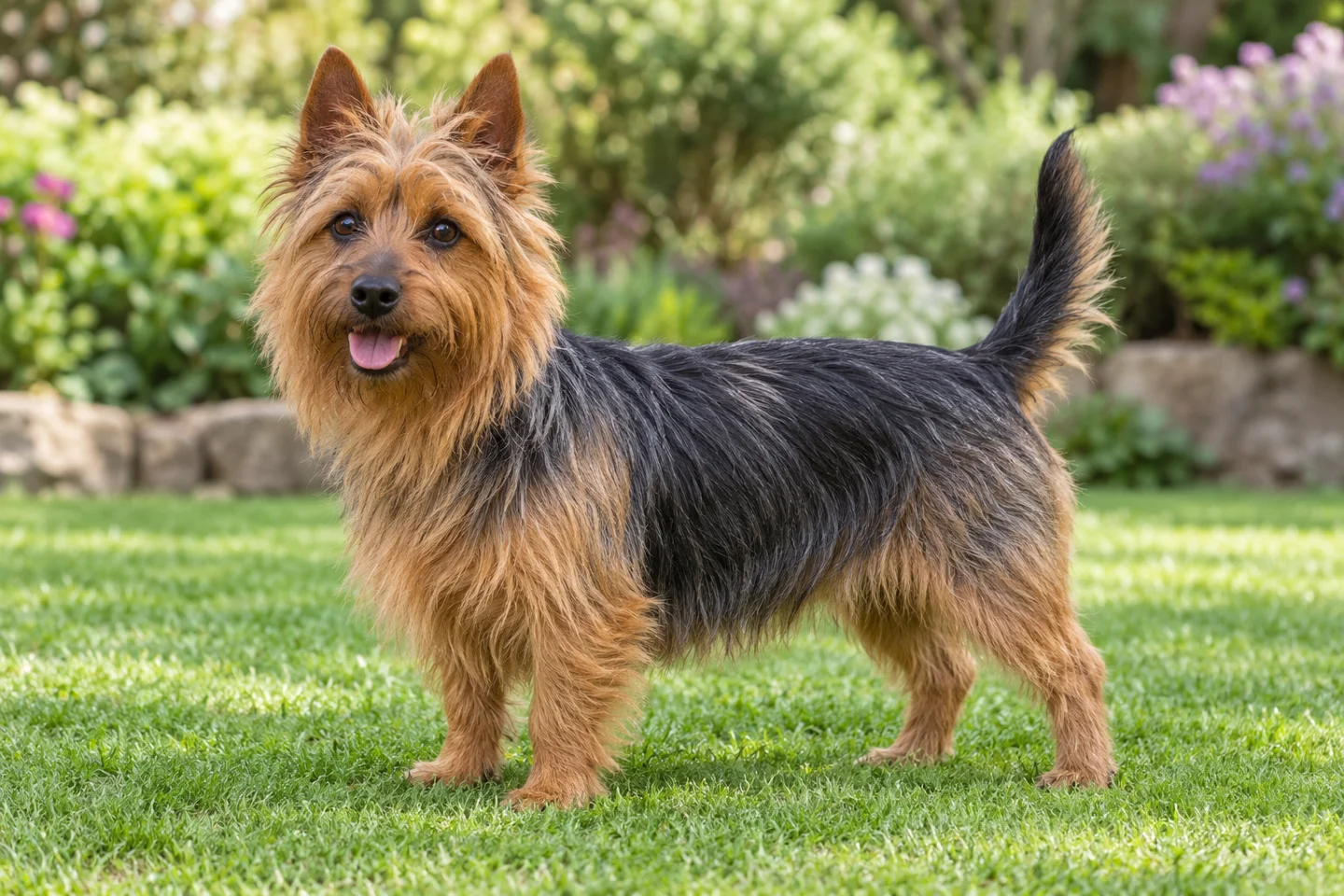
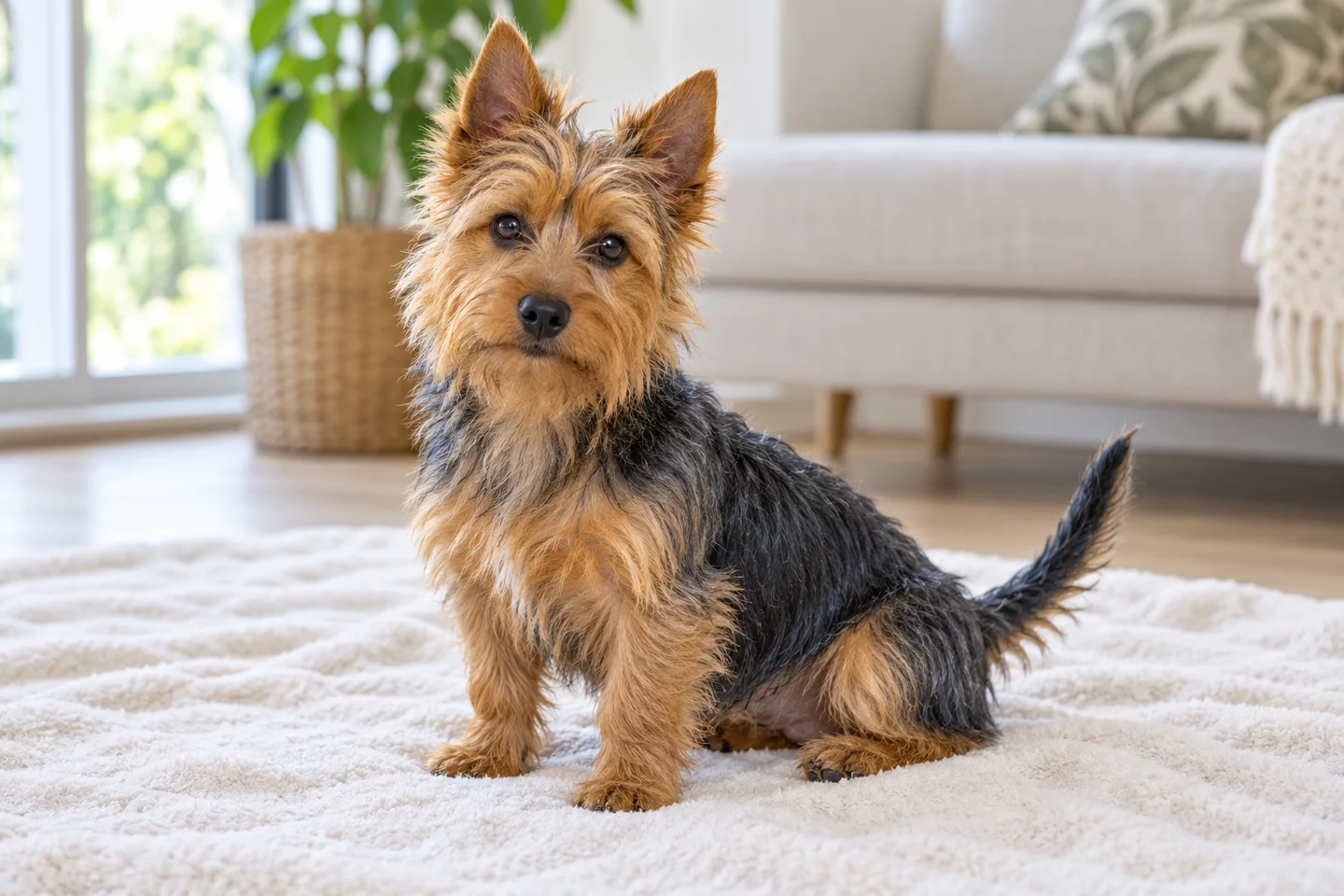
The Australian Terrier has a sturdy, relatively long body, short legs, erect ears, and a harsh coat with a softer topknot and noticeable furnishings around the neck. Blue and tan, sandy, and red descriptions occur in the breed standard. The illustrations show a blue-and-tan example with a natural long tail. They represent generated examples, not a record of particular dogs or every permitted appearance. Coat color cannot establish health, temperament, or suitability for a household.
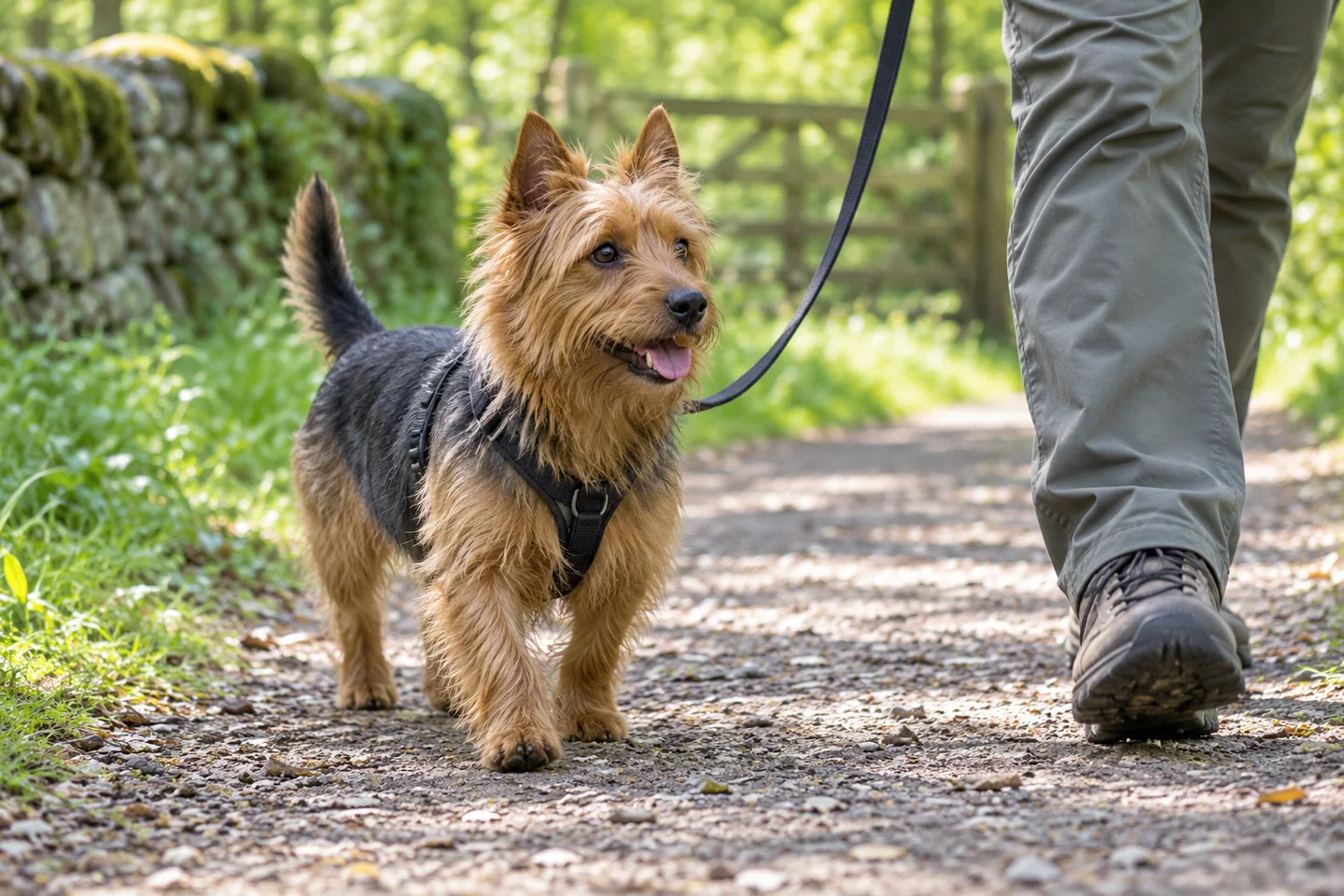
Assess comfortable movement and body condition in the real dog. Watch it turn, climb a manageable step, and rise after rest without forcing a performance. Ask about repeated skipping, stiffness, or reluctance to move. Fit a harness to actual measurements and check that straps do not rub the furnishings or restrict the shoulders. Small dogs can escape loose equipment or be injured by rough handling, so reliable fittings and patient teaching matter as much as choosing an attractive accessory.
Digging, boundaries, and the garden
A terrier may investigate below a fence as readily as it looks through it. Check ground-level gaps, loose soil around posts, and access beneath gates before allowing unsupervised garden time. Store garden chemicals, tools, and traps securely. An owner should not assume a small dog cannot reach a dangerous area or become trapped. Identification and a microchip are backup measures, while a sound boundary and supervised access prevent the initial escape.
Provide an appropriate place to investigate or dig if the dog enjoys it, and make the permitted option rewarding. Protect areas where digging would be dangerous rather than expecting a verbal rule to work when nobody is present. Check paws and coat afterward. A garden supplements daily care but does not establish that the dog receives enough activity or company. Observe what it actually does outside, including whether fence-running and barking have become a repeated part of the day.
Voice, visitors, and neighboring homes
Alerting may be part of the dog's behavior, but an owner still needs a plan for door sounds and passing activity. Reduce repeated exposure at a busy window and teach a turn toward the handler or movement to a resting station. Practice with mild versions of the trigger before attempting the routine during a social gathering. Visitors should wait while the dog is secured. Asking them to crowd an excited or wary dog makes the situation harder to assess.
If noise occurs during absences, investigate what happens after people leave. A recording can reveal persistent distress, pacing, or responses to outside sounds. Shouting or a stronger correction does not identify the cause. Build short comfortable absences gradually and obtain qualified support when the dog struggles. A second dog is not a dependable treatment for separation-related distress. Consider neighbors and housing layout before adoption, particularly where shared entrances and thin walls make frequent alerting difficult to manage.
Children and respectful handling
Small size can make a dog vulnerable to being picked up, squeezed, or carried without choice. Teach children to interact on the floor under adult supervision and let the dog leave. Avoid hugging, climbing, pulling hair, or approaching its face. Children should not take objects from its mouth or move it from a resting place. An adult needs to handle those situations with a suitable routine rather than assuming a small dog poses little risk.
Keep meals and chews separate from children, including visiting friends unfamiliar with the rules. During running games, use a comfortable separate area if the dog becomes excited or starts chasing clothing. A familiar child and a crowded gathering create different conditions. Supervision needs to be active, and barriers are useful when adult attention is divided. If handling brings warnings or attempts to escape, stop and assess comfort. A dog should not have to escalate its response to obtain a break from unwanted contact.
Other dogs, cats, and small pets
Choose dog companions according to the individuals and their play styles. A size mismatch can cause injury even without aggression, so supervise carefully and interrupt rough collisions or repeated pursuit. Start introductions with parallel walking and room to move away. At home, manage bowls, toys, doorways, and rest areas separately while observing comfort. Do not assume that a terrier's willingness to approach a large dog establishes that the interaction is safe or welcome on both sides.
The breed's vermin-working background makes small-animal safety a serious question. Cats need gradual introductions, escape routes, and dog-free areas. Rabbits, rodents, and similar pets require secure protection rather than a test of intentions. Familiarity with one cat does not establish safety with an unfamiliar animal running outside. Stop access if fixation, stalking, or chasing appears and seek help. Calling pursuit play does not protect the smaller animal or establish that a future verbal interruption will always work.
Aggression, guarding, and bite prevention
A small dog can be frightened, uncomfortable, or concerned about a resource. Notice stiffness, freezing, growling, snapping, and efforts to retreat. Give space and stop the immediate pressure. Avoid lifting the dog to end every dispute, particularly when it is already warning about touch. Teach comfortable handling separately and use barriers where appropriate. Repeatedly taking food or toys to prove ownership can create confrontations without teaching a useful exchange or reducing the underlying concern.
Arrange a veterinary examination for new irritability or handling sensitivity, because pain and illness can affect tolerance. Record the context of recurring problems and consult a veterinary behaviorist or qualified reward-based professional. Punishing warnings can make the next incident harder to predict while leaving fear unresolved. A positively introduced basket muzzle may be useful for appropriate situations alongside treatment and management. Its fit needs care on a small face, and it cannot make unwanted handling comfortable or replace supervision.
Training that gives the dog useful choices
Teach attention to a name, a hand target, recall over short distances, waiting at a door, and releasing an object for a reward. Begin in quiet conditions and increase difficulty gradually. Use food, an appropriate game, or access to a safe sniff as meaningful rewards. A terrier can become occupied with an interesting trail or movement, so prepare useful responses before attempting them near traffic or wildlife. Secure equipment remains necessary where a mistake could cause injury.
Keep sessions clear and short. If the dog loses interest, consider whether the task is understandable, the reward is worthwhile, and the setting is manageable. Avoid interpreting every delay as an attempt to challenge authority. Practice calm body handling and a comfortable end to play as well as more visible tricks. A reward-based instructor can help an owner adapt timing and equipment to a small dog without repeated pulling, looming over it, or physically forcing a position it has not learned.
Exercise and a sustainable routine
Provide daily walks and opportunities to investigate, with activity adjusted to age, health, and fitness. Short legs do not mean the dog should never walk a meaningful distance, yet an enthusiastic adult still needs gradual conditioning before a long outing. Scent games, simple searches, and learning household skills can add variety. A garden alone may leave the dog waiting for company or rehearsing barking, so look at its actual routine rather than the amount of outdoor space available.
Monitor gait and recovery, and obtain veterinary advice for repeated limping, skipping, or reluctance to climb. Puppies need suitable activity and sleep without forced endurance exercise. In heat, shorten outings and provide water and shade; severe breathing trouble or collapse requires urgent advice. On quiet days, manageable walks and calm tasks can fit the plan. Avoid trying to compensate for a missed outing through frantic chasing that creates more arousal than the household can comfortably manage afterward.
Grooming the harsh coat
Brush through the coat regularly and check for tangles around furnishings and equipment. The Australian Terrier's texture differs from a silky flowing coat, so ask a groomer familiar with the breed how to maintain it for your purposes. Show preparation and a comfortable companion routine may involve different choices. Bathing should use suitable products and an individual schedule rather than a rigid rule copied from another coat type. Check the skin beneath the hair for redness, wounds, and parasites.
Keep the eyes and mouth area comfortable and introduce foot handling and nail care gradually. Tooth brushing and veterinary dental assessment matter for a small dog as for any other. Stop to investigate when a familiar procedure becomes painful or difficult. Persistent ear odor, discharge, or scratching needs veterinary advice. Tell professionals about handling concerns before an appointment so they can prepare. Pulling through a painful tangle or prolonged restraint can make future grooming harder even when the immediate task gets finished.
Health screening and actual results
The AKC's terrier-group recommendations include patellar, ophthalmologist, and thyroid evaluations for Australian Terriers. Ask for identifiable reports for both parents, including dates, methods, and findings. A routine puppy examination is different from a formal assessment or specialist eye examination. Check the result itself rather than accepting that testing was performed. A CHIC number records completion and disclosure of specified tests and does not establish that every result was normal.
Discuss family illness and the scope of any DNA panel with the veterinarian. Testing selected variants cannot rule out every inherited disease or future medical problem. The breed club publishes health information that needs to be read in context, including the limitations of risk-associated genetic findings. Avoid selecting or rejecting a dog based on a result whose meaning has not been explained. New symptoms need investigation regardless of prior screening, and an adopted adult with incomplete history deserves a plan based on current findings.
Knees, endocrine signs, and medical assessment
A dog that repeatedly skips, holds up a hind leg, or becomes reluctant to move needs examination rather than an owner diagnosing patellar luxation from appearance. Screening records can inform a breeding discussion, while a current movement problem requires clinical assessment. Keep a note of when it happens and provide a short video if safe. Do not repeatedly provoke the movement to demonstrate it. Advice about activity and treatment should follow the veterinarian's findings for the individual dog.
The Australian Terrier club discusses endocrine concerns, including diabetes, within its health material. Increased thirst, changes in urination, unexplained weight loss, or appetite changes warrant veterinary advice. Those signs have several possible causes and cannot be diagnosed through breed identity. Avoid changing medication or using another dog's treatment plan. Keep records of symptoms and any prescribed care available for backup carers. Prompt assessment provides more useful information than waiting for the dog to look obviously unwell despite its usual interest in walks or food.
Feeding and resource routines
Use a complete diet suited to age and health and measure portions carefully. Small amounts of extra food can become a meaningful share of a small dog's intake, particularly during frequent training. Count rewards within the daily allowance and adjust according to weight and body condition. Ask the veterinarian to demonstrate a suitable ribs-and-waist assessment. A lively dog can still gain excess weight, while a thin appearance may need investigation rather than being assumed to reflect natural terrier activity.
Feed away from children and other animals and avoid shared chews during introductions. Teach exchanges with rewards instead of repeatedly taking meals away. Keep rubbish, medications, and unsafe foods inaccessible, including items on furniture the dog can reach by climbing. For a home-prepared diet, obtain qualified veterinary nutrition advice. Review intake when injury, age, or weather reduces activity. Persistent digestive changes or altered thirst need assessment, and a feeding adjustment should not substitute for investigating an unexplained medical change.
Mixes and allergy expectations
An Australian Terrier mix can vary in coat texture, size, shedding, and interest in pursuit. A name such as Australian Terrier and Poodle cross does not define a standardized grooming requirement or temperament. Ask what parentage is documented and what is inferred from appearance. DNA ancestry results may add context while leaving behavior and many health questions unanswered. Mixed ancestry does not guarantee an easier dog or eliminate inherited concerns that matter in either family.
No cross or coat description guarantees tolerance for a person with allergies. Allergens are not confined to loose hair, so low-shedding claims should not become medical promises. Discuss the situation with the affected person's clinician and assess contact with the actual dog appropriately. When adopting, ask about visitors, cats, grooming, and absences in the foster home. A practical description of daily life can be more useful than a confident breed guess or a marketing label chosen to make the dog sound universally suitable.
Costs, older dogs, and emergency preparation
Budget for food, preventive care, grooming, dental assessment, training help, and unexpected treatment. Arrange a backup carer who understands small-dog handling and can maintain secure gates and leads. Practice a short visit before a necessary absence and provide written instructions with veterinary contacts. Check the fit and ventilation of travel equipment, and teach comfortable use before a long journey. If travel causes nausea or distress, obtain advice rather than assuming repeated exposure will resolve it.
As the dog ages, review footing, furniture access, and the length of walks. Pain can appear as reluctance to jump or new sensitivity during grooming. Seek assessment instead of labeling every change stubbornness or ordinary ageing. Know where emergency care is available for collapse, major injury, severe breathing trouble, or rapidly worsening illness. A small dog still needs secure transport when unwell. Retain enjoyable scent exploration and learning with demands adjusted to comfort rather than requiring the dog to maintain its earlier pace.
An Australian Terrier dogsDating outing
Describe the individual dog's preferences and experience in its dogsDating profile, keeping exact home coordinates private. Choose a quiet public route and a companion whose size and movement can be managed safely. Use separate capable adult handlers and begin with parallel walking at a comfortable distance. Do not allow a larger dog to rush in simply because its owner describes it as friendly. Both dogs need an opportunity to investigate and disengage without being trapped by the leads.
Leave toys and shared food out of the first meeting. Increase space or end if either dog stiffens, repeatedly pursues, hides, or cannot recover after excitement. A calm walk provides useful information without requiring physical greeting or play. Share observations about the conditions that worked rather than declaring compatibility everywhere. A pleasant outing does not establish that the dogs can share a home, vehicle, or high-value resource without a separate assessment and suitable arrangements.
Sources and editorial notes
Sources checked October 21, 2026. Breed measurements describe reference ranges, not a diagnosis or an individual dog's ideal weight. Images are AI-generated breed illustrations and do not document a particular dog or health condition.
- VCA Animal Hospitals: Hypoallergenic dog breeds
- Orthopedic Foundation for Animals: CHIC program and interpretation of numbers
- Australian Terrier Club of America: Genetic risk interpretation and health information
- VCA Animal Hospitals: Common emergencies in dogs
- Australian Terrier Club of America: 2015 health survey discussion, including endocrine concerns
- VCA Animal Hospitals: General feeding guidelines for dogs
- VCA Animal Hospitals: Food aggression in puppies
- American Kennel Club: Terrier group health screening recommendations
- VCA Animal Hospitals: Heat stroke in dogs
- Australian Terrier Club of America: Breed background and care flyer
- American Kennel Club: Australian Terrier identity and care
- VCA Animal Hospitals: Aggression toward unfamiliar dogs, diagnosis
- American Kennel Club: Official Australian Terrier standard
- AVSAB: Humane Dog Training Position Statement
Keep getting to know dogs.
Read another guide or return to your dogsDating community.
Explore breed guidesBack to dogsDating