American Staffordshire Terrier
A muscular, agile terrier whose care includes thoughtful introductions, comfortable activity, and current club guidance on ataxia and ALPP testing.
How these guides are researched and reviewed
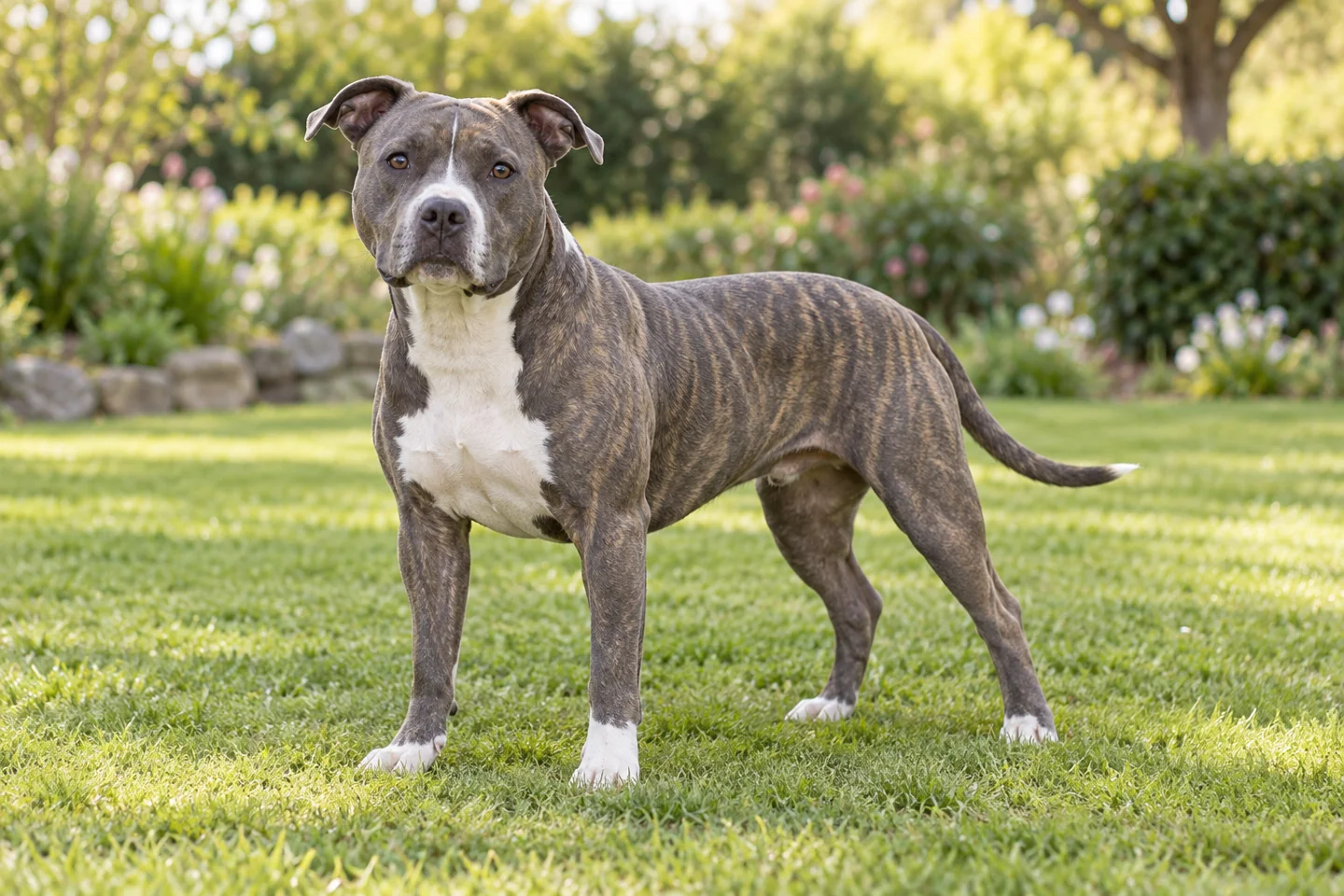
- Standard heights
- Males 18–19 in; females 17–18 in
- Coat
- Short and close
- Care priorities
- Handling, individual behavior, and health reports
General information for owners. These articles have not been reviewed by a veterinarian. Medical decisions need your dog's history and an examination.
A practical home for an AmStaff
An American Staffordshire Terrier needs a household that can support a strong, active companion through suitable activity, clear teaching, and realistic social arrangements. Begin with the front door, the walking route, visitors, resident animals, and backup care. A dog who is comfortable in one home may struggle in another with different demands. Choose through those everyday details rather than a flattering photograph or a general claim about the breed.
Ask what the individual does around food, unfamiliar dogs, handling, and time alone. An adult with a detailed foster history may provide useful information, while a puppy needs frequent attention and leaves uncertainty about adult preferences. A responsible source should distinguish observations from predictions. Be honest about physical handling limits and separation space. A workable placement should not depend on a person being available every moment or on the dog learning to enjoy every situation.
Size, muscle, and movement
The American standard gives desirable heights of roughly 18 to 19 inches for males and 17 to 18 inches for females at the shoulder. The outline combines substance and agility, with a short coat and broad head. These descriptions should not become a contest for maximum mass. Ask a veterinarian to assess the individual's frame, fat coverage, muscle, and movement instead of feeding toward an impressive silhouette.
Watch the real dog walk, turn, rise, and recover after appropriate activity. Ask about previous lameness, surgery, injury, and restrictions. A strong appearance cannot establish normal joints or unlimited stamina. This guide's images are generated illustrations showing natural ears, long tails, and moderate proportions. They do not document a particular dog's health, ancestry, or temperament. Return to examination, records, and observed behavior when making a placement or exercise decision.
Doors, boundaries, and predictable space
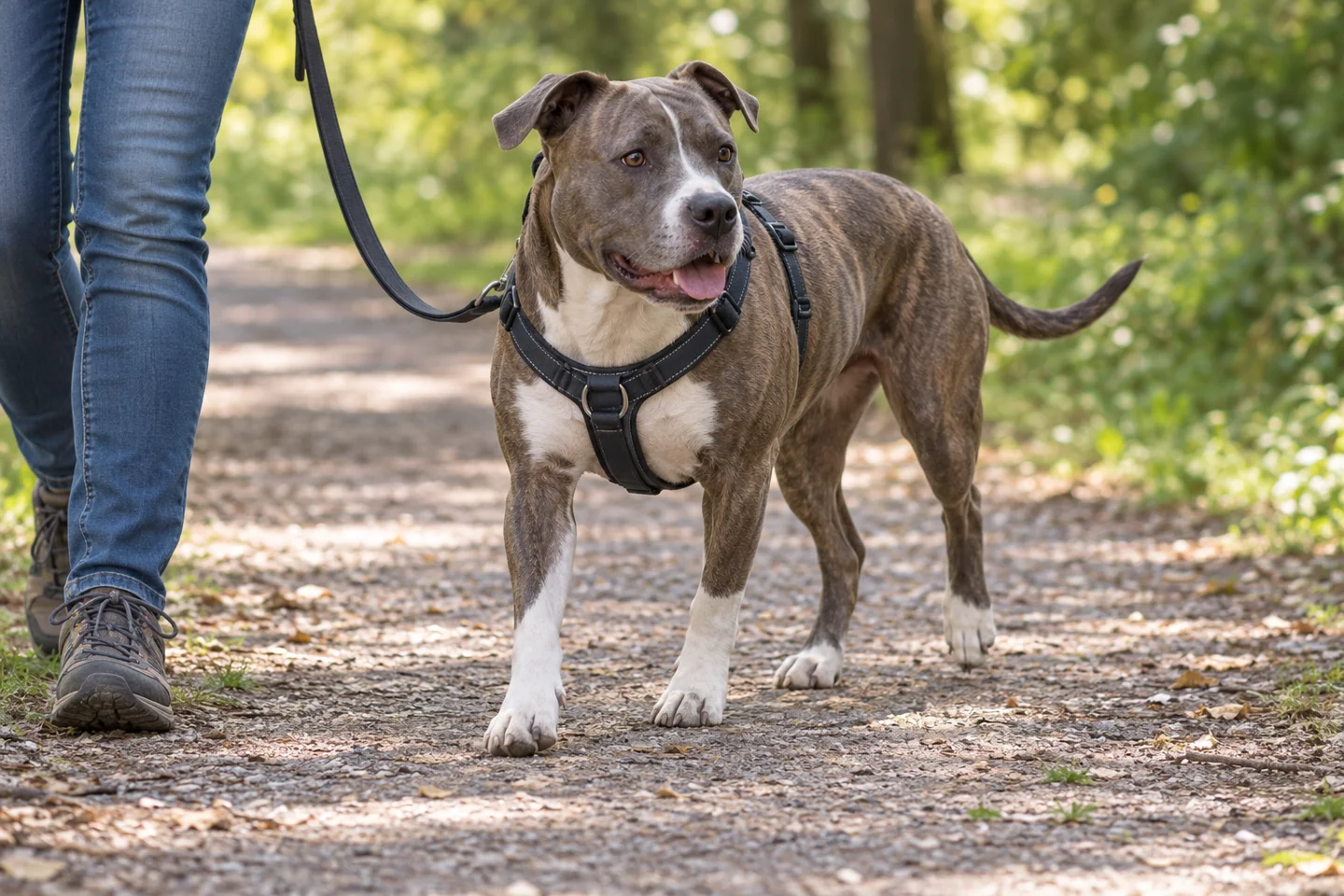
A second barrier or separate room can make the front entrance manageable during deliveries or visits. Teach a comfortable resting routine before relying on it during excitement. Keep walking equipment accessible, fit it carefully, and inspect clips and stitching. Avoid depending on a collar grab while an exterior door remains open. The arrangement should work when someone carries shopping or needs to focus briefly on another task.
Check garden latches, gaps, weak sections, and places where digging could create an exit. Explain the routine to guests and contractors. Provide a bed away from constant foot traffic and protect rest from repeated interference. Secure food, medication, rubbish, and cleaning products. Environmental management reduces conflict and gives the dog familiar choices. It also helps other household members move comfortably without requiring an immediate greeting or uninterrupted attention throughout the day.
Visitors and comfortable human contact
A visitor can enter and sit down while the dog observes at a distance or rests separately. Touch is optional. Ask people to avoid reaching over the head, cornering, or continuing contact when the dog withdraws. A calm visit can succeed without the animal meeting everyone. Base the pace on current comfort and the source's observations, rather than on an assumption that a companion breed owes strangers physical access.
Teach settling during ordinary household activity as well as during arrivals. If the dog repeatedly paces, patrols, or cannot rest, review sleep, worry, stimulation, and medical comfort. Persistent difficulty warrants support. New withdrawal, irritability, or avoidance of a familiar task also needs attention, particularly when movement or appetite changes. A dog may remain affectionate while painful, so do not use willingness to seek company as proof that nothing is wrong.
Children, cats, and other dogs
Children need attentive adult supervision and clear boundaries around sleep, meals, chews, and retreat. Prevent climbing, hugging, grabbing, or rough chasing. An enthusiastic dog can cause an accidental collision without intending harm. Give it a resting place children cannot enter and separate when adult attention shifts. A child should not be expected to interpret every warning or hold an excited, strong dog outside.
Assess animal relationships individually and ask about pursuit, previous conflicts, guarding, and recovery after seeing another dog. Friendly puppy play does not guarantee every adult relationship. Introduce residents gradually with reliable separation prepared before arrival. Small animals need particular care. A quiet meeting with one cat cannot establish safety when an unfamiliar cat runs. Some combinations require continuing management or a different placement; decide according to the actual behavior and what the household can maintain.

Aggression, guarding, and useful warnings
No pedigree, color, or breed description guarantees that an interaction is safe. Assess past incidents, current behavior, health, and the situation. Freezing, hard staring, rigid posture, avoidance, growling, snapping, or attempts to escape means pressure should stop. Create distance and examine what happened beforehand. Avoid confrontation intended to prove authority or repeatedly testing whether a warning is serious by recreating the same intrusion.
Feed separately where necessary and manage valued objects to prevent disputes. Teach exchanges at an achievable level with rewards. Sudden sensitivity to touch requires medical assessment for pain or illness. If a bite or serious fight has occurred, obtain a detailed qualified plan before planning more contact. Tell carers about restrictions and provide practical arrangements. The safeguards need to remain usable during ordinary life, including times when the main handler cannot be present.
Training with clear steps and appropriate rewards
Reward recall, loose-lead walking, waiting at doors, and resting on a mat in manageable conditions. The American Veterinary Society of Animal Behavior recommends reward-based methods. Increase difficulty gradually instead of expecting a response practiced at home to hold beside an intense distraction. If progress stalls, review the environment, task, reward, fear, and possible discomfort rather than automatically adding pressure or repeating a louder command.
Practice an easy change of direction on quiet walks before it is needed near another animal. Keep leads and barriers where recall is uncertain. A basket muzzle may support a professional handling plan if introduced gradually and fitted appropriately for panting and drinking. It cannot make an overwhelming situation suitable by itself. Maintain distance, assess pain where relevant, and address the underlying concern. Ask for help early when routine handling exceeds the household's physical ability.
Exercise, play, and comfortable recovery
Plan activity according to age, fitness, health, weather, and the individual's interests. Walks can include sniffing and learning as well as movement. A healthy adult may enjoy suitable games or sports introduced progressively. Puppies need age-appropriate exploration and rest rather than adult endurance, repeated jumping, or loading exercises. Discuss demanding activities and return after injury with the veterinarian before increasing effort.
Watch recovery and the following day's movement. New stiffness, lameness, unusual fatigue, weakness, or reluctance to rise deserves assessment. Physical strength should not become a reason to exercise through a problem. Easy searches and short training sessions can provide variety without repeated strain. During play, pause to check whether both partners want to return. A dog who cannot disengage or a partner repeatedly hiding needs the activity changed or ended rather than encouragement to continue.
Grooming, skin checks, and cooperative care
Brush the close coat and inspect skin, feet, nails, and equipment contact areas. Persistent odor, redness, itching, discharge, sores, hair loss, or a changing lump needs examination. Avoid diagnosing every skin problem as a food allergy or repeatedly trying stronger products while delaying assessment. A dated photograph and notes about new equipment or preparations can support the history without replacing a clinical examination.
Introduce tooth brushing, nail care, ear looks, and brief body checks through rewarded steps with pauses. Use the veterinarian's ear-cleaning plan and avoid objects deep in the canal or leftover medication for a new episode. A sudden objection to a familiar touch may indicate pain. Ask the veterinary team about cooperative care or appropriate clinical handling when fear makes tasks difficult. The goal is predictable care that helps the household notice changes promptly.
Feeding and healthy condition
Use a complete diet appropriate for life stage and clinical needs. Measure meals and count rewards, chews, and shared snacks. Monitor muscle and fat coverage with veterinary guidance rather than feeding toward maximum bulk. Several caregivers should keep a clear record of meals and medication. An athletic dog still needs adjustments as activity, age, and medical findings change, rather than a fixed amount chosen from an idealized image.
Secure unsafe foods, rubbish, tablets, and cleaning products, including things left in visitors' bags. Give meals in a quiet place and manage competition where needed. Report persistent appetite, thirst, digestion, weight, or energy changes. Supplements should address an identified need with professional advice. When a therapeutic diet is required, review treats and extras too. A broad claim about strength or skin cannot establish that a product fits an individual's medical plan.
Health screening and current club guidance
The Staffordshire Terrier Club of America recommends hip, cardiologist-performed cardiac, thyroid, NCL-A, and ALPP testing, and lists eye and elbow evaluations as optional. Ask for the actual reports, identities, dates, methods, and findings. The club's guidance is relevant to breeding decisions; an individual's new symptoms still need assessment. A puppy check cannot replace adult screening reports or clinical investigation when something changes.
Read underlying results rather than treating a CHIC number as a guarantee of normal findings. The number indicates completion and public disclosure of specified tests. Genetic tests, imaging, and clinical examinations answer different questions. Ask about illness in relatives and what follow-up the veterinarian recommends. For an adopted adult with incomplete history, identify the gaps and build a plan around current findings. No one panel establishes freedom from every inherited or acquired condition throughout life.
Ataxia, ALPP, and changes in function
NCL-A, described by the club as cerebellar ataxia, and ALPP, AmStaff juvenile laryngeal paralysis and polyneuropathy, are different testing concerns. The club advises against breeding two carriers together for either condition. Ask the laboratory or veterinarian to explain the exact test, including whether a report uses a linked marker. Similar names on different breeds' panels should not be assumed to mean interchangeable tests.
New incoordination, weakness, changed voice, unusual breathing, or reduced function needs examination regardless of earlier results. Those signs have several possible causes and do not establish a diagnosis from breed alone. Give the veterinarian a dated account and previous reports. Videos can help with intermittent signs if recording does not delay care or provoke discomfort. Severe breathing difficulty or collapse requires urgent advice rather than waiting for the next ordinary appointment.
Other medical changes and emergency planning
Observe how the dog rises, turns, climbs, sleeps, and recovers after activity. It can keep eating or seek attention while uncomfortable. Persistent lameness, altered stamina, skin problems, thirst changes, or new handling sensitivity deserves assessment. Describe the pattern concisely instead of dismissing it as laziness or assuming strength protects against pain. Keep current medication and previous findings available for every clinician involved in care.
Know the nearest emergency service and how to move an adult who cannot walk. Poisoning, severe breathing difficulty, collapse, heavy bleeding, or abdominal swelling with unsuccessful retching requires urgent veterinary advice. Do not give human painkillers or old prescriptions while deciding what to do. Arrange backup care and transport help before illness or absence makes the usual routine unavailable. The practical plan may require equipment or another adult even when everyday walks are easy to manage.
Mixes, legal questions, and honest labels
An AmStaff cross can vary in size, appearance, behavior, and medical needs. Informal mix names do not establish recognized varieties. Ask what ancestry is documented and keep appearance-based estimates honest. Mixed ancestry cannot guarantee normal joints, easy social behavior, or compatibility with small animals. A rescue's household observations may remain useful even when exact pedigree is unavailable, provided uncertainty is acknowledged.
Check current official requirements for housing, insurance, ownership, and travel in the places involved. A registry name and a legal type definition are different systems, so avoid assuming a pedigree or seller's statement resolves local status. Obtain qualified local advice when uncertain. Keep relevant documents and ask care or transport providers about their conditions before booking. This guide cannot classify a particular dog's legal status through a name, photograph, or ancestry estimate.
Choosing a source and planning later years
Ask a breeder about health information, adult behavior, early handling, environmental experience, and support after placement. Read the agreement and return arrangements without pressure. For a rescue, clarify bites or fights, guarding, escape attempts, medication, veterinary follow-up, and which observations came from foster care. Describe your household accurately, including visiting children and resident animals. Allow predictable care and quiet rest during adjustment instead of demanding immediate participation in a busy social schedule.
Budget for food, equipment, training support, ordinary care, holidays, and unexpected illness. Review insurance terms and request local estimates. Practice appropriate vehicle restraint and arrange a carer familiar with the dog's boundaries. As it ages, adapt flooring, access, walks, and care sessions around comfort. Preserve enjoyable sniffing, gentle learning, and familiar company while reporting changes. A long-term commitment includes the dog who needs help entering a vehicle or cannot manage its younger routine.
A useful dogsDating introduction
Describe the AmStaff's actual relationships, preferred pace, play style, comfortable distance, and medical or handling restrictions in its dogsDating profile. Keep exact home coordinates private and choose an agreed public place with room to separate. Follow applicable local requirements. Discuss the other dog's size and expectations in advance. A quiet parallel walk may be appropriate where physical play or close greetings are not.
Begin with separate handlers at a manageable distance and skip shared food and favorite toys. Allow brief investigation only when both remain loose and can disengage. Increase space or end the meeting if either becomes rigid, hides, persistently pursues, or repeatedly tries to escape. Some individuals will be better served by familiar company or declining a meeting. Let later plans follow observed comfort and what both owners can manage rather than an expectation that every dog needs a new playmate.
Preparing another trusted carer
Arrange backup care before travel or an emergency changes the household routine. Let the carer practice fitting the harness, opening the correct gates, and taking a short familiar walk while you are available. Provide written instructions about meals, medication, separation from other animals, and situations that need veterinary advice. Include the clinic's contact details and an alternative person who can help. A dog that behaves comfortably with you may need a gradual introduction to someone else's handling. Review the arrangement after the trial visit and correct problems before relying on it for an overnight stay.
Sources and editorial notes
Sources checked October 21, 2026. Breed measurements describe reference ranges, not a diagnosis or an individual dog's ideal weight. Images are AI-generated breed illustrations and do not document a particular dog or health condition.
- VCA Animal Hospitals: Common emergencies in dogs
- VCA Animal Hospitals: General feeding guidelines for dogs
- VCA Animal Hospitals: Food aggression in puppies
- Staffordshire Terrier Club of America: Health testing, NCL-A, and ALPP guidance
- Staffordshire Terrier Club of America: Breed history
- American Kennel Club: American Staffordshire Terrier care and identity
- VCA Animal Hospitals: Aggression toward unfamiliar dogs, diagnosis
- UK Government: Banned dog types and rules for England and Wales
- AVSAB: Humane Dog Training Position Statement
Keep getting to know dogs.
Read another guide or return to your dogsDating community.
Explore breed guidesBack to dogsDating