American Hairless Terrier
An active small terrier with hairless and coated varieties, whose care needs include skin comfort, weather protection, training, and health screening.
How these guides are researched and reviewed
- Varieties
- Hairless and coated
- Origin
- Developed from Rat Terriers
- Care priorities
- Sun, cold, skin, and small-dog handling
General information for owners. These articles have not been reviewed by a veterinarian. Medical decisions need your dog's history and an examination.
A terrier with exposed skin
An American Hairless Terrier needs the activities and boundaries of a small active dog, with additional attention to exposed skin. Hairlessness changes how you plan sunshine, cold, rough vegetation, and equipment contact. It does not remove the need for walks, learning, dental care, or comfortable independence. Start by deciding how those needs fit your actual day, including work hours, outdoor conditions, and the people available to provide care.
Ask about the individual rather than choosing solely through appearance or an allergy claim. A dog may enjoy familiar people while finding strangers, grooming, or other animals difficult. An adult's foster history can provide useful information about ordinary household routines. A puppy needs frequent care and leaves uncertainty about adult size and preferences. Choose a source willing to describe limitations and help build a practical plan, including what happens if the placement does not work.
Rat Terrier roots and breed identity
The American Hairless Terrier developed in Louisiana from hairless dogs arising in Rat Terrier lines. It has its own breed standard and includes hairless and coated varieties. A coated American Hairless Terrier is therefore not automatically a mix or an incorrectly identified Rat Terrier. Ask for documented ancestry where available and use the exact breed name when discussing health or registration instead of assuming the word hairless explains every individual.
UC Davis identifies the breed's hairlessness as involving a recessive mutation, distinct from the mutation responsible for hairlessness in some other breeds. That distinction is relevant to genetics, but it should not become a complete health prediction. A coat-trait test answers a particular question about inheritance. It cannot establish normal joints, a healthy heart, comfort outdoors, or suitability for a household. Let medical records and observation answer those separate questions.
Build, skin patterns, and the illustrations
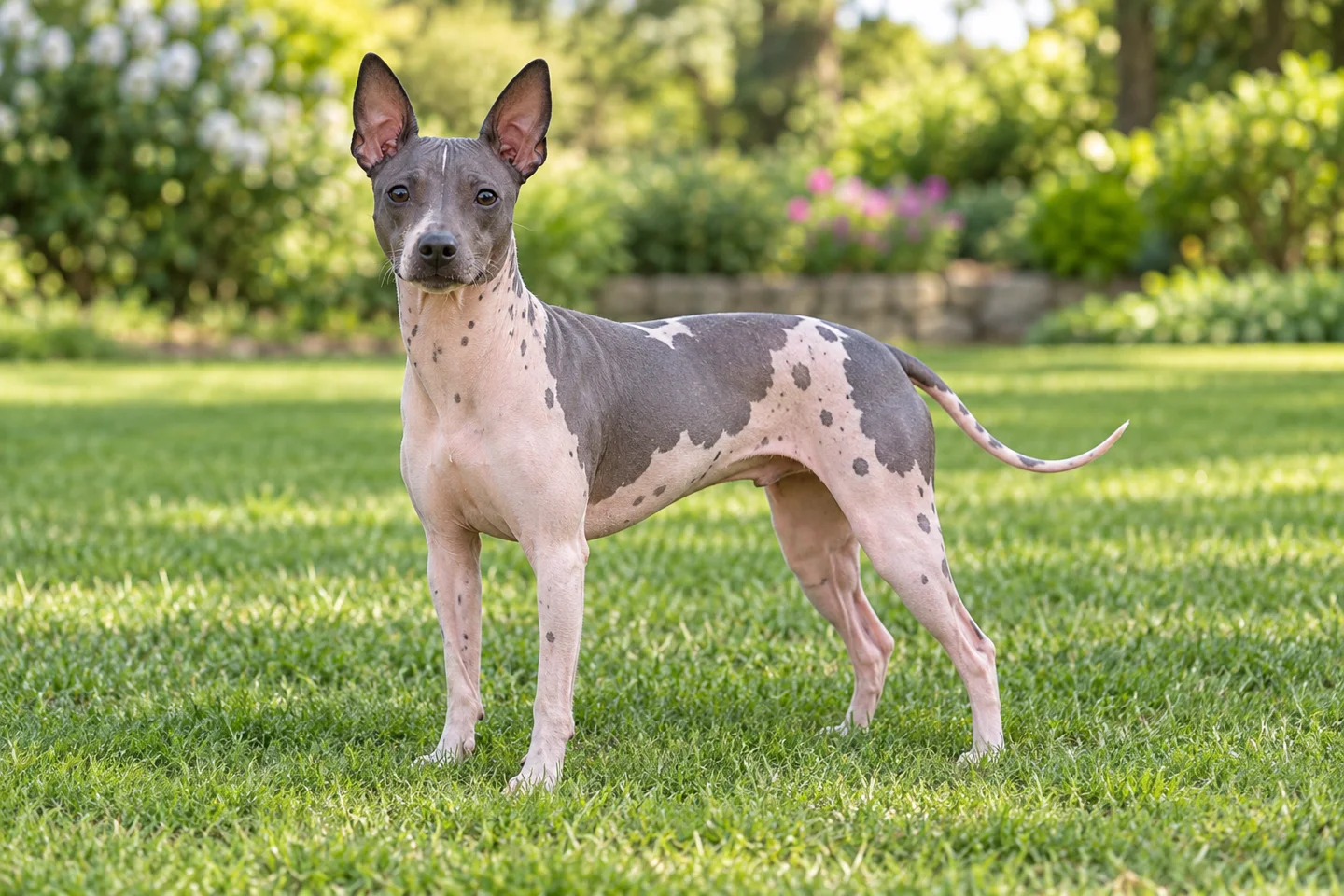
The American standard describes a small to medium, smoothly muscled, active terrier with a functional body. Exposed skin can have varied pigmentation, while coated dogs have a close coat. Ears and expression contribute to appearance without providing a temperament assessment. Watch the real dog walk, turn, rise, and settle. Ask about discomfort, lameness, skin lesions, and previous procedures rather than choosing through a striking pattern alone.
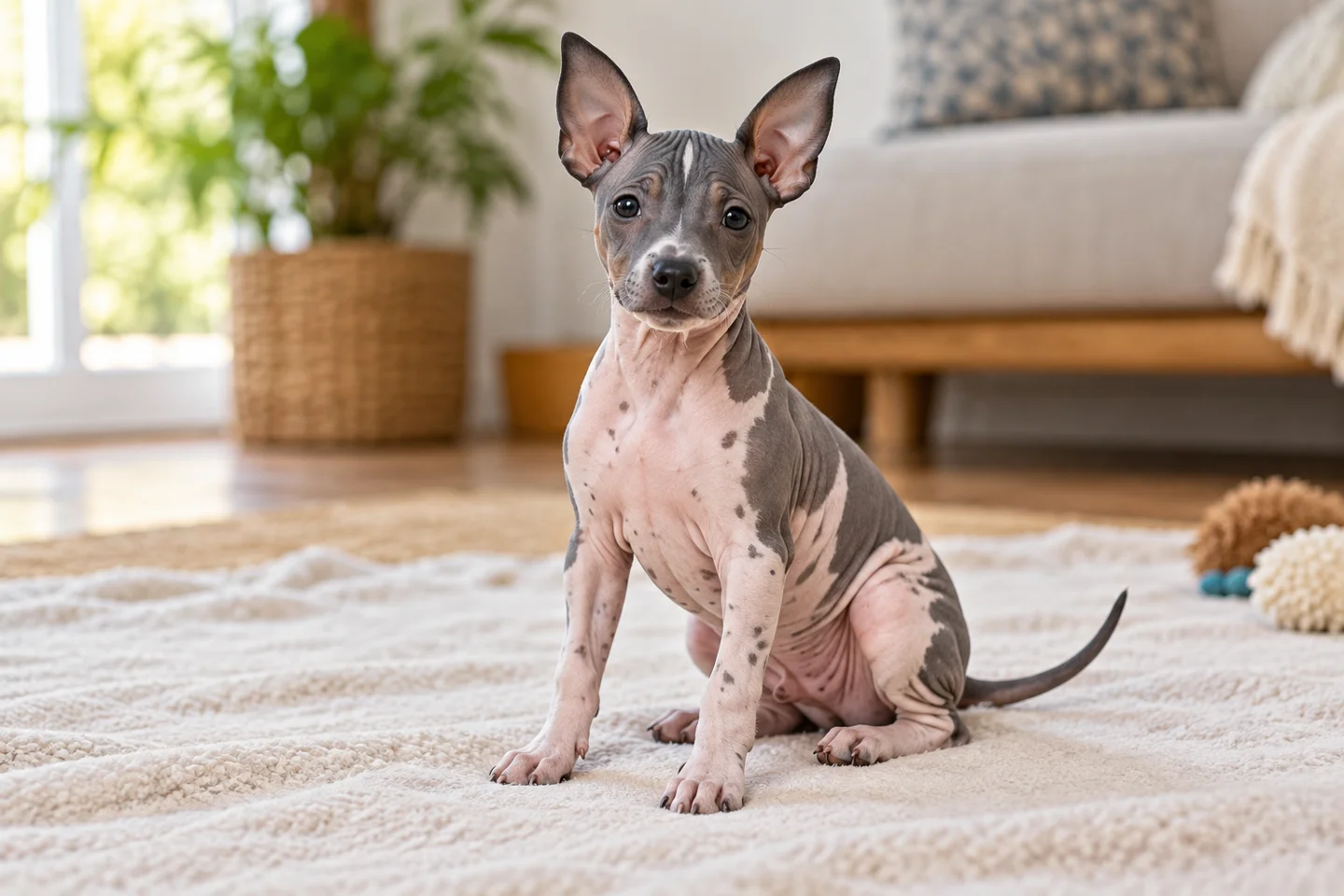
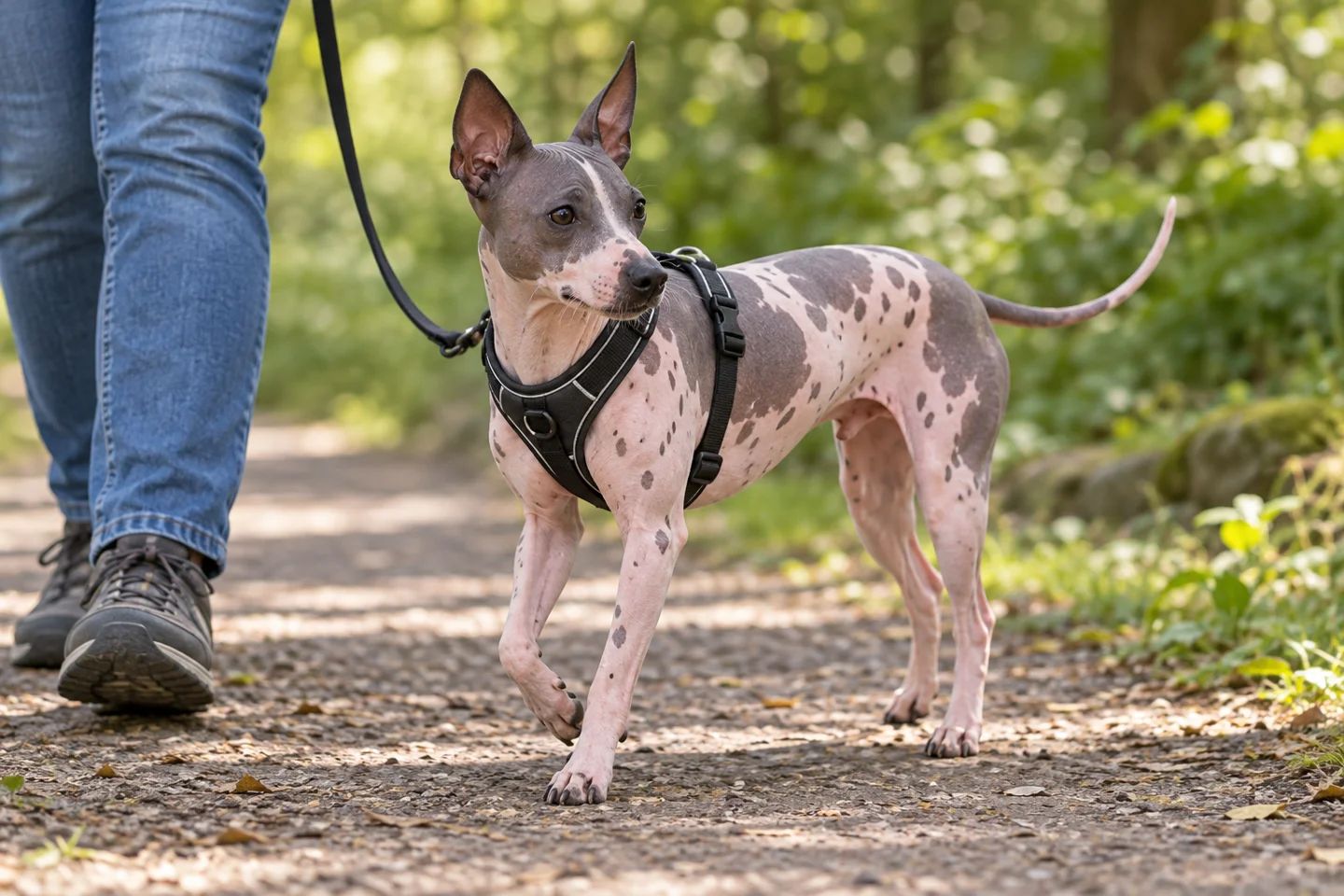
The three images in this guide are generated illustrations of hairless dogs, with natural ears and long tails. They do not show every permitted appearance or prove that a real animal has healthy skin. A clean-looking image cannot replace an examination. A pale patch is not itself evidence of disease, and visible redness cannot be diagnosed from a photograph. Assess the individual with a veterinarian when something changes or a source's explanation seems incomplete.
Sun protection without product guesswork
Hairless skin is vulnerable to sunburn. Plan shade, cooler hours, and protective clothing appropriate for the conditions. Ask the veterinarian about a dog-safe sunscreen if one is needed, including where to apply it and how to prevent licking. Do not assume a human product is suitable or apply a new preparation over irritated skin without advice. Check exposed areas after outings and change the plan before discomfort develops.
Clothing must fit without restricting movement or rubbing. Recheck contact areas beneath seams, straps, and fastenings, and remove damp or dirty garments promptly. Protective clothing does not make unlimited midday exposure sensible. The dog's response, conditions, and skin findings still guide the outing. Persistent redness, blistering, sores, or a changing lesion needs examination. Avoid treating a recurring problem with stronger products while leaving the cause or the amount of exposure unchanged.
Cold, indoor comfort, and sleeping places
A hairless dog has less coat insulation, so watch comfort in cold, wind, rain, and chilly indoor spaces. Suitable clothing and a warm dry bed can help, but an individual plan matters more than a fixed temperature rule. Age, health, activity, and dampness change tolerance. Shorten an outing when the dog appears uncomfortable and provide a way home rather than expecting it to complete the route because a person is dressed adequately.
Keep bedding clean and check that heated products cannot burn skin or trap the dog where it cannot move away. Avoid improvised hot-water arrangements without appropriate safeguards. Give the dog choices between comfortable resting places where possible. A puppy, senior, or recovering animal may need a revised setup. If shivering, discomfort, lethargy, or other signs persist after the environment is corrected, seek veterinary advice instead of assuming temperature explains everything.
Children, larger dogs, and small pets
Children need gentle handling rules and an attentive adult. Prevent squeezing, carrying without permission, rough chasing, and interruption during sleep or meals. Exposed skin also makes it important to stop scratching, pulling, or games with abrasive materials. Provide a retreat children cannot enter and separate when adult attention shifts. A small dog still has boundaries and can bite when frightened, painful, or unable to escape.
A larger dog's friendly play can cause a physical mismatch. Choose calm partners, watch both animals, and pause when one hides or repeatedly tries to leave. Ratting ancestry makes careful assessment around small pets sensible. Ask what has been observed directly and prepare secure separation. A quiet introduction beside a cage cannot establish safety with an animal moving freely. Residents need comfortable rest, individual food, and a reliable way to disengage from contact.
Aggression, warning signs, and skin discomfort
Avoidance, freezing, stiff posture, growling, or snapping should stop pressure. Do not dismiss warnings because the dog is easy to pick up. Look at the context: rubbing equipment, a sore patch, nail care, an approach to food, or blocked escape may matter. A new objection to touch warrants medical assessment. A breed's reputation for playfulness cannot establish an individual's safety in every interaction.
For guarding, prevent repeated disputes and teach exchanges at a manageable level with rewards. Avoid taking possessions continually as a test of control. If a bite or serious attempt has occurred, obtain a qualified assessment before recreating the situation. Tell carers what is known and what safeguards help. A suitable plan protects the dog and the people around it without depending on someone overpowering a frightened animal whenever necessary care arises.
Training that supports ordinary care
Reward recall, loose-lead walking, waiting at doors, and resting on a mat in easy settings. The American Veterinary Society of Animal Behavior recommends reward-based methods. A dog can learn useful routines without being frightened into stillness. Keep sessions short enough for comfortable participation and adjust when the environment is too distracting. Clear teaching matters for small dogs too, even when carrying seems quicker than practicing a skill.
Include voluntary approaches to clothing and harnesses. Let the dog investigate, reward brief contact, and build gradually toward fastening and movement. Practice on a stable surface with equipment that fits. If the dog repeatedly avoids the setup, check for rubbing, pain, heat, or difficult handling. A trainer or veterinary team can help with cooperative care. Do not assume repeated resistance means the dog needs firmer restraint rather than a different approach.
Exercise with skin and terrain in mind
Provide walks, sniffing opportunities, and appropriate games according to age, health, fitness, and conditions. Choose routes that avoid unnecessary exposure to rough brush, abrasive surfaces, or unsuitable weather. A puppy needs movement and exploration without an adult endurance program. An older dog may still enjoy searching and gentle outings while needing shorter routes and more rest. Ask about demanding activities after illness, injury, or a long quiet period.
Inspect skin and paws afterward and notice recovery. New lameness, weakness, unusual fatigue, or reluctance to rise needs assessment. Easy scent searches and brief training provide variety at home; supervise unfamiliar toys and remove damaged pieces. Mental activity also needs pauses. A dog who cannot settle after a busy day may need help with anxiety, sleep, or physical comfort instead of further stimulation added simply because the breed is active.
Time alone and a predictable arrival period
Plan a quiet first week with regular meals, toilet opportunities, rest, and manageable outings. A new adult may need to learn a different surface and schedule just as a puppy does. Reward toileting success and avoid punishment for accidents discovered afterward. Sudden regression, straining, increased thirst, or frequent accidents needs medical advice. A familiar routine should help you notice a change rather than conceal it behind assumptions about training.
Teach periods apart gradually and observe whether the dog actually settles. A camera can reveal pacing or distress vocalization after departure. Persistent distress, destructive escape attempts, or injury requires a review with the veterinarian and a suitable behavior professional. Arrange care during treatment and training. A crate is appropriate only when it can be used safely and comfortably, with bedding and conditions suitable for the dog's skin and temperature needs.
Grooming means skin care as well as bathing
A hairless dog still needs cleaning and routine care. Ask the veterinary team about products and frequency suited to the individual. Too much washing or unsuitable products can irritate skin; leaving accumulated dirt beneath equipment can also create problems. Check contact areas, feet, nails, mouth, and ears rather than focusing only on the visible back. Coated dogs need their own appropriate brushing routine as well as skin observation.
Persistent odor, itch, discharge, scaling, sores, or a change in skin texture needs an examination. Avoid diagnosing food allergy or infection from appearance alone. Keep a dated record when useful and note new products, clothing, or equipment. Do not apply leftover medication to a different problem. Comfortable tooth brushing and nail care should be introduced in small rewarded steps. A sudden handling change deserves attention before it becomes a recurring struggle at every appointment.
Food, body condition, and household safety
Use a complete diet appropriate for life stage and clinical needs. Measure meals and count rewards, chews, and snacks. Exposed skin makes an outline visible, but a veterinarian can assess fat and muscle more reliably than a photograph. Avoid feeding extra calories simply because the dog wears clothing in winter. Adjust to actual condition and activity with appropriate advice, and keep a shared record if several people provide meals or medication.
Secure rubbish, unsafe foods, tablets, and cleaning products. Include visitors' bags and low surfaces in the check. Report persistent changes in appetite, thirst, weight, stool, or energy rather than repeatedly replacing food without a plan. Supplements should address an identified need. If the dog has a therapeutic diet, review treats and other additions too. A broad promise that a product improves skin does not establish suitability for a particular medical condition.
Health screening and actual reports
The AKC's Terrier Group recommendations for American Hairless Terriers include patella, hip, and cardiac evaluation. Request identifiable reports with dates and findings for the relevant dogs. Ask what an examination or test establishes and whether further assessment is appropriate. A routine puppy check answers different questions from adult breeding assessments. Your veterinarian can help interpret results before commitment and plan current care for an adopted adult.
A CHIC number records completion and public disclosure of specified screening; it does not mean every finding was normal. Read the reports and discuss relevant illness in relatives. Coat genetics, joint imaging, and cardiac assessment investigate different things. No one panel establishes that a dog is free of every inherited or future condition. Where history is missing, state the gap plainly and build a plan around current findings rather than inventing a clean record.
Allergies in people and medical changes in dogs
Hairlessness cannot guarantee that a person with allergies will tolerate a dog. Allergens are not limited to loose hair, so avoid treating a marketing claim as a medical promise. Discuss the situation with the affected person's clinician and assess contact with the actual animal appropriately. A coated variety or a mix also needs individual consideration. Choose a placement with realistic expectations and clear arrangements if a serious problem occurs.
For the dog, persistent lameness, altered activity, eye discomfort, skin changes, or reduced handling tolerance warrants examination. Keep relevant findings available before planned procedures. Severe breathing difficulty, collapse, poisoning, unusual heavy bleeding, or sudden inability to stand needs urgent veterinary advice. Know where emergency care is available and how to transport the dog warmly and safely. Avoid human painkillers and leftover prescriptions while deciding what to do.
Mixes, sources, and support after placement
An American Hairless Terrier cross can vary in coat, size, behavior, and health. A hairless appearance alone does not confirm exact ancestry, and informal cross names do not create recognized varieties. Ask which parents are documented and keep estimates honest. Mixed ancestry cannot guarantee an easy temperament, normal joints, or a favorable human allergy response. The actual animal and available observations remain central to a suitable decision.
A breeder should explain health records, early handling, environmental experience, and support later. Read terms and return arrangements without pressure. For adoption, ask about medication, skin care, time alone, bites, guarding, and relationships with other animals. Distinguish foster observations from a brief assessment. Explain your household and climate accurately. A source willing to discuss care difficulties gives you more useful information than one promising a maintenance-free dog because it lacks a coat.
Travel, costs, and later life
Use suitable vehicle restraint and practice manageable trips before a long journey. Check temperature and ventilation and avoid leaving the dog in a parked vehicle. Bring water, clean bedding, appropriate protection, medication, and veterinary contacts. A sitter needs written information about skin products, clothing, feeding, and handling boundaries. Arrange a meeting before an emergency absence rather than assuming a new person can improvise the same routine immediately.
Budget for ordinary care, appropriate clothing and equipment, training support, holiday care, and unexpected illness. Review insurance terms and obtain local estimates. In later life, adjust footing, beds, access, activity, and the duration of care sessions to comfort. Keep opportunities to sniff, learn gently, and spend time with familiar people. Report changes rather than assuming every new difficulty is age. A backup carer should understand the revised routine and know when to call the clinic.
A comfortable dogsDating outing
Describe your terrier's preferred pace, play style, skin or medical needs, and handling boundaries in its dogsDating profile. Keep exact home coordinates private and choose a suitable public place with shade, comfortable terrain, and space to separate. Discuss the other dog's size and style before arranging contact. Rough play or abrasive surfaces may make another meeting format more appropriate for this individual.
Begin with separate handlers and a parallel walk at a manageable distance. Skip shared food and favorite toys. Allow brief contact only when both dogs remain loose and able to disengage. Pause or end the meeting if one freezes, hides, persistently pursues, or repeatedly tries to leave. Check skin and equipment afterward. A short calm outing can be enough, with future plans based on comfort rather than an expectation that every pair needs to play physically.
Sources and editorial notes
Sources checked October 21, 2026. Breed measurements describe reference ranges, not a diagnosis or an individual dog's ideal weight. Images are AI-generated breed illustrations and do not document a particular dog or health condition.
- VCA Animal Hospitals: Hypoallergenic dog breeds
- VCA Animal Hospitals: Common emergencies in dogs
- VCA Animal Hospitals: General feeding guidelines for dogs
- UC Davis Veterinary Genetics Laboratory: Hairlessness in American Hairless Terriers
- VCA Animal Hospitals: Food aggression in puppies
- American Kennel Club: Terrier group health testing recommendations
- American Kennel Club: American Hairless Terrier origins
- American Kennel Club: American Hairless Terrier care and varieties
- VCA Animal Hospitals: Aggression toward unfamiliar dogs, diagnosis
- American Kennel Club: Grooming and protecting a hairless dog
- AVSAB: Humane Dog Training Position Statement
Keep getting to know dogs.
Read another guide or return to your dogsDating community.
Explore breed guidesBack to dogsDating