Akita
A substantial companion whose care calls for reliable boundaries, thoughtful handling, careful animal introductions, and informed health screening.
How these guides are researched and reviewed
- Scope
- Akita, often called American Akita
- Adult height
- About 24–28 in across sexes
- Care priorities
- Boundaries, handling, and health records
General information for owners. These articles have not been reviewed by a veterinarian. Medical decisions need your dog's history and an examination.
Is an Akita a workable choice for your home?
An Akita needs adults who can manage a large dog, protect its space, and make careful decisions about visitors and other animals. Begin with the ordinary logistics: the shared entrance, the route past neighboring dogs, the person available when you are ill, and the room where the dog can rest separately. Those arrangements matter more than an attractive puppy photograph or a story about loyalty.
A suitable home does not have to arrange constant social activity. Some dogs are most comfortable with familiar people and predictable outings. Ask what the individual actually enjoys and what it finds difficult. If your ideal routine involves busy dog parks, casual greetings with every passing dog, or frequent changes of carer, discuss those expectations before committing. Choose a dog whose needs you can meet without depending on its personality changing to fit the plan.
Akita and Japanese Akitainu are distinct names
This guide covers the breed called Akita by the American Kennel Club, often called American Akita internationally. Japanese Akitainu is a separate breed in several registries and has its own entry in the dogsDating writing queue. Both trace their history to Japan, but their modern standards differ. Ask which breed and registry a seller means rather than assuming the names can always be used interchangeably.
The Akita's history includes hunting in northern Japan and later development along different breeding paths. That background can explain features of the modern breed without predicting the behavior of every dog. Avoid choosing through a romantic account of a famous animal. A real placement needs medical records, an account of temperament, and a household prepared for the particular dog being considered.
Size, coat, and assessing the actual dog
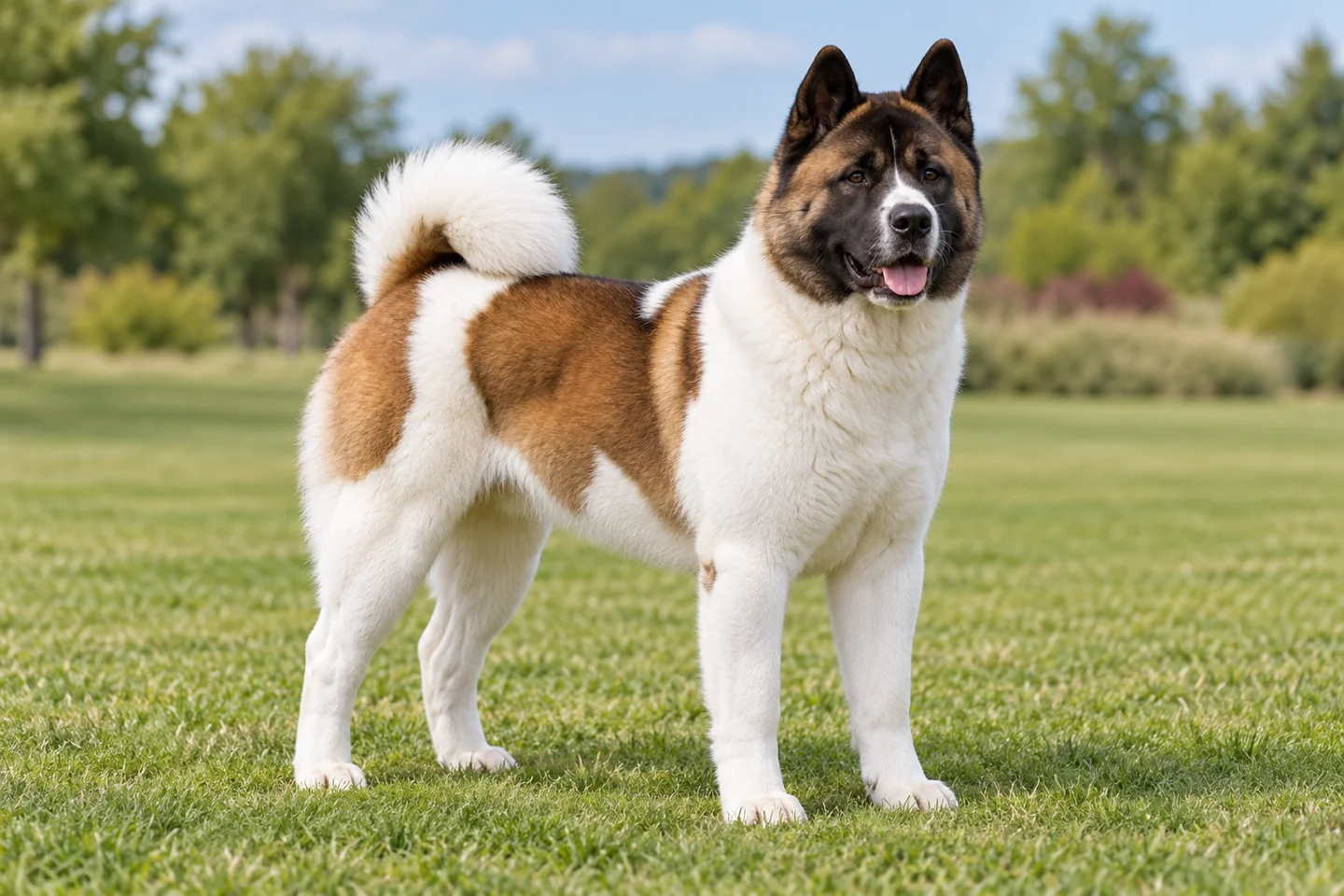
The AKC describes Akitas at about 24 to 28 inches at the shoulder across sexes. The body is substantial, with a broad head, upright triangular ears, a dense double coat, and a full curled tail. The American standard permits several colors and patterns. A black mask or pinto pattern can occur in this breed; it should not be confused with the color rules for Japanese Akitainu.
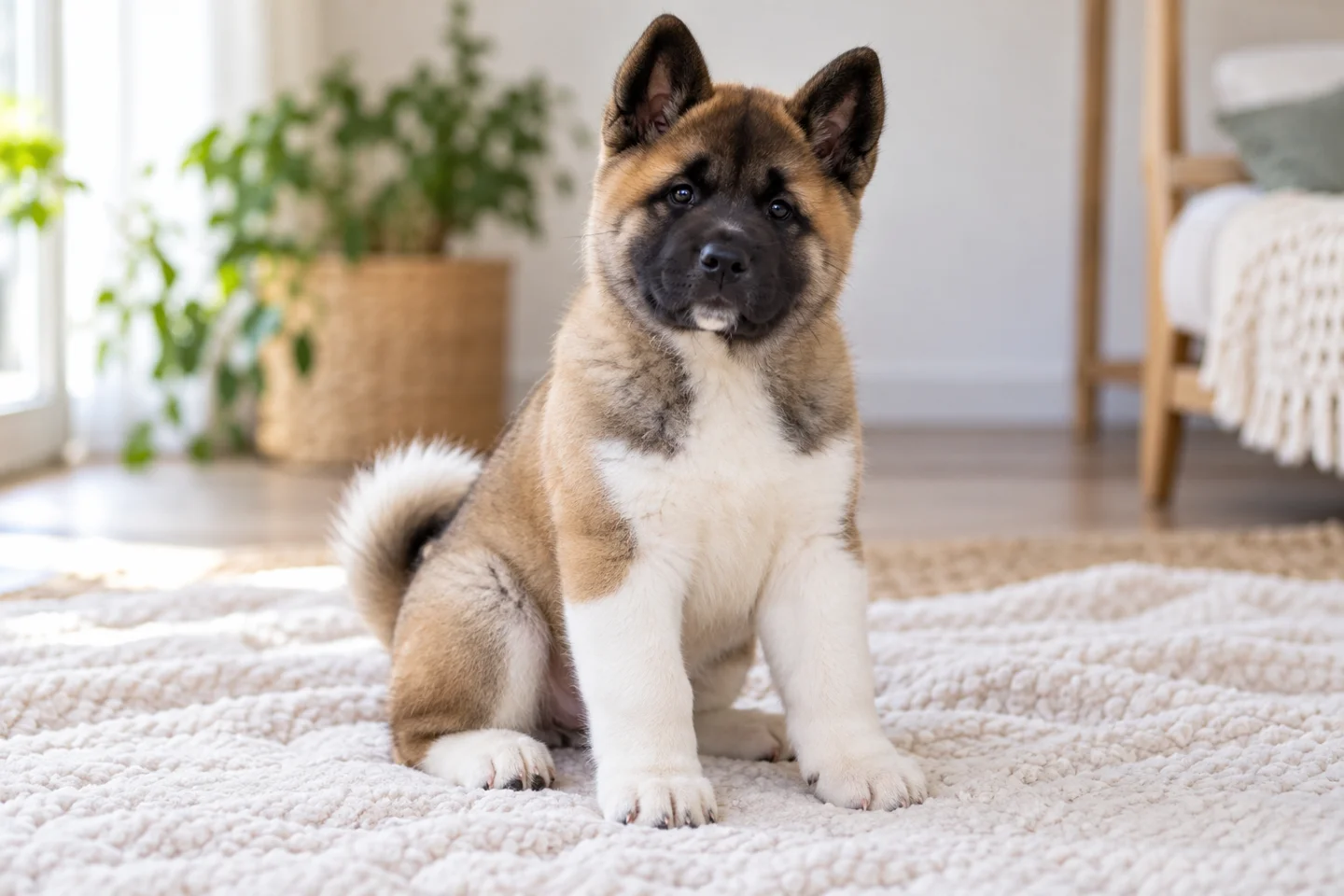
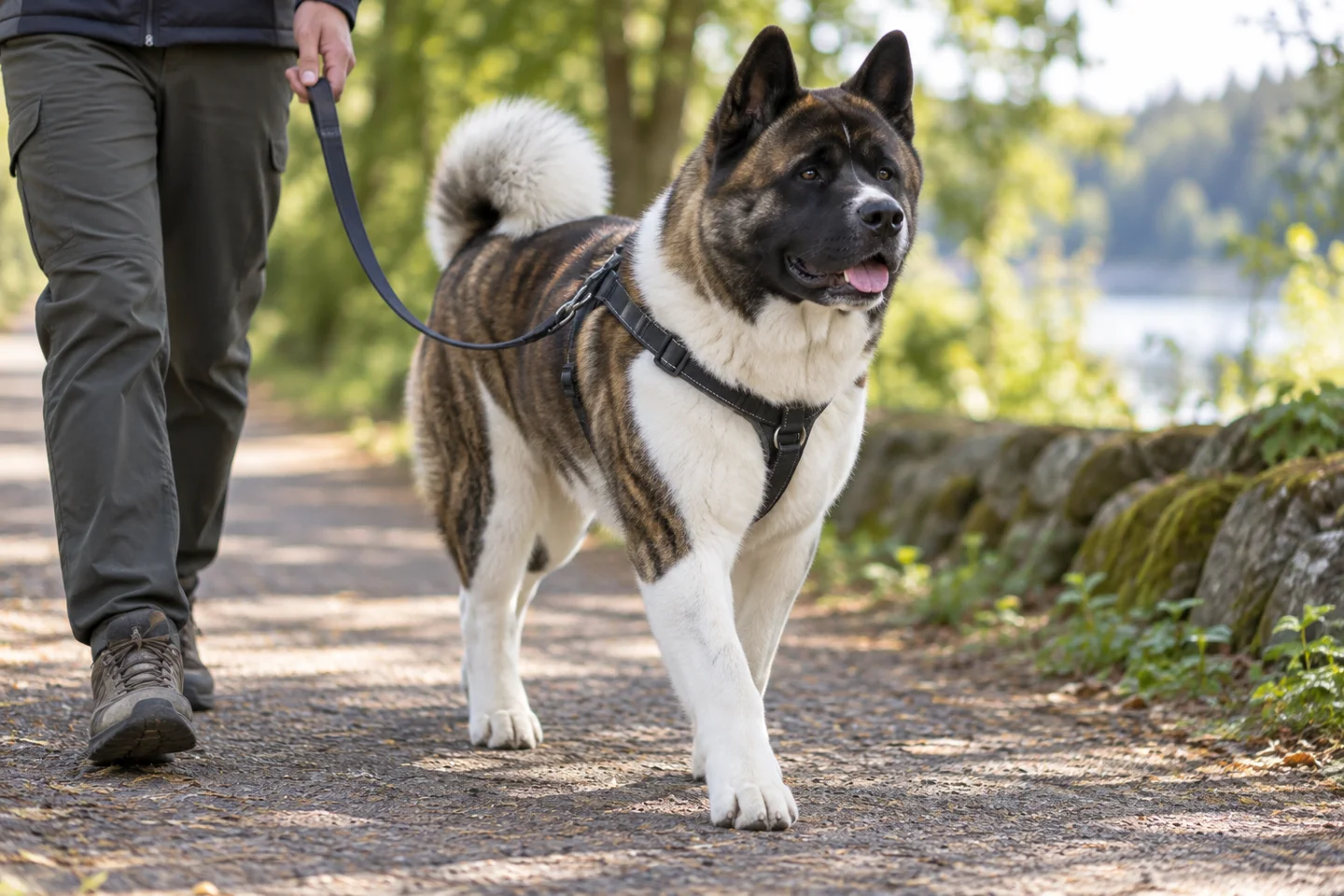
An imposing outline should not become a goal of maximum weight. Ask a veterinarian to assess body condition, growth, and comfortable movement. Watch the dog turn, rise, and walk rather than relying on a carefully posed picture. The three images here are generated breed illustrations. They show appearance and life stages without documenting health, ancestry, sound joints, or the behavior of any actual dog offered for placement.
Boundaries, entrances, and ordinary visitors
Prepare a secure boundary and an entrance routine that everyone can use. A dog should not have to decide what to do with a delivery worker while someone struggles with an open door. A second barrier, separate room, or other reliable arrangement can allow deliveries and visits without immediate contact. Practice the routine before it becomes urgent and check that gates remain secure when children or contractors use them.
Tell visitors how the household works. They can enter, sit down, and let the dog remain at a distance or in a separate comfortable area. Touch is optional. If you cannot supervise, use separation rather than asking a guest to manage the dog. Consider shared paths and communal gardens too. A workable arrangement gives other people predictable access and gives the Akita a clear, familiar routine.
Company, reserve, and changes in behavior
An Akita may interact differently with familiar people and strangers. Learn the dog's comfortable distance and allow time to observe. Describing reserve does not excuse a dog being frightened repeatedly, and describing affection does not establish safety in every situation. Ask about recovery after surprises, comfort during handling, and the ability to rest while ordinary household activity continues.
Pay attention when the familiar pattern changes. A dog who becomes irritable, withdraws, follows people anxiously, or avoids a previously comfortable activity may need help. Record when the change began and what else has altered, including medication, sleep, appetite, and movement. Discuss persistent changes with the veterinarian. Quiet behavior can conceal discomfort, so do not wait for an obvious protest before taking a new pattern seriously.
Children and other household animals
Children need attentive adult supervision and a dog-free way to carry on energetic play. Prevent climbing on the dog, hugging, grabbing a tail, or interrupting sleep and meals. Provide a retreat that children cannot enter. An adult should manage the dog when visitors bring children who do not know the routine. If supervision becomes divided, separate everyone before a difficult interaction develops.
The Akita Club of America and AKC caution owners about compatibility with other animals. The club specifically cautions about aggression toward other dogs, particularly dogs of the same sex, and notes that difficulties can emerge with maturity. A puppy's early sociability cannot guarantee its adult preferences. Ask about actual household experience, pursuit, previous fights, and recovery after seeing another dog. Introduce animals with professional support where needed, and establish secure separation before placement. Do not assume a resident pet will make an unsuitable arrangement work through patience alone.
Aggression, warning signals, and prevention
Assess aggression through the dog's history, current behavior, physical health, and the situation. Breed can guide questions, but it cannot deliver a verdict about an individual's bite risk. Freezing, rigid posture, hard staring, avoidance, growling, and snapping call for reduced pressure and more space. Avoid confrontational tests, cornering, or asking a person to approach to prove that the dog will accept them.
Food, resting places, handling, and unfamiliar dogs can require different management plans. Prevent repeated disputes, feed animals apart when necessary, and teach exchanges at an achievable level. A sudden change in tolerance warrants a medical assessment. If a dog has bitten or seriously attempted to bite, obtain detailed professional advice before repeating the situation. Good intentions and physical strength are insufficient substitutes for a plan the household can follow consistently.
Training useful responses without confrontation
Reward moving with you, returning when called, waiting behind a door, and resting on a mat. Begin where distractions are manageable and increase difficulty slowly. The American Veterinary Society of Animal Behavior recommends reward-based methods. A strong dog needs understandable teaching and safe management. Treating ordinary mistakes as a contest can add conflict while leaving the desired response unexplained.
Practice an easy turn away during quiet walks, then use it to create distance before arousal rises. Keep leads and barriers in use where recall is uncertain. If a professional recommends a basket muzzle, introduce it gradually with rewards and choose a fit appropriate for panting and drinking. A muzzle does not authorize forced greetings. Continue managing distance and seek a plan for the fear, aggression, or handling concern that made the equipment useful.
Exercise, exploration, and physical maturity
Plan walks around fitness, age, health, and conditions. Give the dog time to investigate scents and move comfortably instead of making every outing an obedience exercise. Young dogs need opportunities for play and exploration without being pushed into an adult endurance program. Discuss planned running, jumping, or sport with the veterinarian. A large puppy's willingness to continue is not a complete assessment of suitable activity.
For an adult, choose activities the dog actually enjoys and can recover from comfortably. Secure searches, gentle games, and quiet exploration can provide variety. Notice stiffness the next morning, altered gait, unusual fatigue, or reluctance to rise. Those changes deserve assessment rather than a harder workout. Keep enough energy and attention available for calm handling at the end of an outing, particularly when the route home passes other dogs.
Grooming a dense double coat
Brush and comb regularly, working through the coat without scraping the skin. Seasonal shedding can require more time and a cleaning routine the household can maintain. Check behind ears, beneath equipment, and around the hindquarters rather than grooming only the visible back. Ask a groomer for an appropriate technique and tools when you are unsure. A coat that looks tidy at the surface can still hide tangles or irritation.
Keep bathing and drying comfortable, with secure footing and enough breaks. Avoid shaving the coat as a routine response to shedding or summer weather; discuss any medical clipping with the veterinarian. Check skin, nails, ears, and teeth as part of ordinary care. Start cooperative handling early, but stop and investigate a new objection to touch. A painful adult may need a clinical handling plan instead of a longer attempt to restrain it.
Food, growth, and preventing avoidable conflict
Feed a complete diet appropriate for the dog's life stage and review portions with the veterinarian. Measure meals and include training food in the daily amount. Track growth and body condition without trying to produce an exceptionally heavy adult. If several people share care, use a clear record of meals and medication. This prevents double feeding and gives useful information when appetite changes.
Offer a quiet meal area and keep children and animals away while the dog eats. Teach useful exchanges separately from mealtimes, at a comfortable level of difficulty. Store rubbish, unsafe food, and medication securely. Supplements chosen from promises about size, coat, or immunity can complicate a sensible feeding plan. Ask about an identified need before adding them, especially when the dog has an established condition or takes regular medication.
Health screening and what reports tell you
The AKC's Working Group page lists hip, ophthalmologist, and thyroid evaluations among the Akita parent club's recommended screening. Request the actual reports, the dog's identity, examination dates, and findings. A routine check of a puppy does not supply adult screening results for its parents. Ask your veterinarian to explain unclear findings and what follow-up questions to take back to the breeder.
A CHIC number records completion and public disclosure of a specified testing program. It does not establish that every result was normal. Read the underlying reports and discuss illness in relatives as well as results for the parents. Screening reduces some uncertainty at a particular time; it cannot exclude every inherited condition or future illness. An adopted adult with incomplete history needs a care plan based on current findings and clearly identified gaps.
Skin, coat changes, and eye discomfort
Sebaceous adenitis is a recognized concern discussed by the Akita Club of America. It affects the skin's oil glands and can change coat quality, shedding patterns, and skin condition. Diagnosis may involve a skin biopsy. Patchy hair loss or unusual odor has other possible causes too, so arrange an examination rather than choosing treatment from photographs or assuming that a seasonal coat change explains everything.
The club also discusses uveodermatologic syndrome, sometimes called VKH-like syndrome, an immune-mediated condition involving the eyes and potentially skin pigmentation. Eye pain, redness, squinting, or a change in vision needs prompt clinical attention. Pigment change alone is not a diagnosis. Tell the veterinarian what changed and when, and follow referral advice if given. Do not apply leftover eye drops or wait for coat symptoms before seeking help for a painful eye.
Medical follow-up and urgent signs
Bring previous thyroid results, medication details, and relevant family information to appointments. A test should be interpreted alongside the dog's signs and other findings rather than used as a diagnosis from one number. Report persistent changes in weight, appetite, thirst, coat, movement, or stamina. Keep dated observations when signs are intermittent. A large, stoic-looking dog can still be uncomfortable while continuing to eat or walk.
Know how to reach emergency care and move an unwell adult safely. Repeated unsuccessful retching, a swollen abdomen, severe weakness, collapse, breathing difficulty, or suspected poisoning requires urgent veterinary advice. Do not give human pain medication or old prescriptions while deciding whether to travel. Keep a lead, suitable restraint, and the clinical records accessible. Discuss individual preventive questions with the veterinarian while the dog is well, including concerns about bloat and safe transport.
Akita mixes and uncertain ancestry
An Akita crossed with a Labrador, Husky, Shepherd, or another breed can vary substantially in adult size, coat, behavior, and care needs. Informal names for crosses are not recognized Akita varieties. Ask whether parentage is documented and describe estimates honestly. A curled tail or broad head in a rescue photograph cannot establish exact ancestry or tell you which behaviors will appear as the dog matures.
Assess known parental health concerns alongside the actual dog's results. Mixed ancestry does not remove the need for secure handling, careful introductions, or medical screening where appropriate. A friendly response to one dog during a brief meeting cannot guarantee compatibility in a shared home. For adoption, ask about observed routines, handling, time alone, and previous conflicts. Useful behavioral information remains valuable even when a precise breed label is unavailable.
Choosing a breeder or rescue placement
Ask a breeder to discuss adult temperament, screening limitations, early handling, and support after placement. Request time to examine records and terms before committing money. A source should be willing to describe difficult traits and unsuitable homes. Avoid promises that a particular sex, color, pedigree label, or training approach guarantees a dog who accepts every visitor or protects a household safely without adult management.
For a rescue Akita, ask which observations came from foster care and which remain uncertain. Clarify bites, animal conflict, escape attempts, medication, and handling restrictions. Explain your own circumstances accurately, especially resident pets and visiting children. A supported meeting and adjustment plan can help, but they need reliable separation space. Declining an unsuitable placement can protect the existing household and leave the dog available for a more workable home.
Costs, housing, travel, and later life
Check housing conditions and insurance requirements before placement, using information relevant to your location and contract. Budget for equipment, food, training help, veterinary care, and appropriate care during absences. Ask providers how they handle dogs who need individual walks or limited contact with strangers. A backup carer needs both the ability and the dog's familiarity, so arrange introductions before an emergency removes the usual handler.
Plan for a heavy dog becoming less mobile. Stairs, vehicle entry, slippery floors, and long periods standing for grooming can become difficult. Suitable equipment and extra help may be necessary. Keep enjoyable activities available at a comfortable pace and report changes rather than treating reduced function as something to ignore. The care plan should continue working when the dog is old, needs medication, or cannot use the route it managed easily as a young adult.
A considered dogsDating introduction
Describe your Akita's actual preferences in its dogsDating profile, including distance needs, pursuit, guarding, exercise limits, and any history relevant to safe handling. Choose a potential partner through that information rather than appearance or shared ancestry. Keep exact home coordinates private and meet in a public place with enough room to separate. Some dogs will be better served by walks without close greetings or by declining a meeting entirely.
When a meeting is appropriate, use separate handlers and begin with parallel walking at a comfortable distance. Skip toys, shared food, and tight face-to-face introductions. Allow brief contact only if both dogs remain loose and able to disengage. End the outing if either becomes rigid, persistently pursues, or tries to escape. Future contact should depend on what the dogs showed and what both owners can manage safely, without an expectation that every dog needs a new playmate.
Sources and editorial notes
Sources checked October 21, 2026. Breed measurements describe reference ranges, not a diagnosis or an individual dog's ideal weight. Images are AI-generated breed illustrations and do not document a particular dog or health condition.
- Akita Club of America: Akitas and other animals
- Orthopedic Foundation for Animals: CHIC program and interpretation of numbers
- American Kennel Club: Care of double-coated dogs
- VCA Animal Hospitals: Common emergencies in dogs
- Akita Club of America: VKH-like or uveodermatologic syndrome
- VCA Animal Hospitals: General feeding guidelines for dogs
- VCA Animal Hospitals: Food aggression in puppies
- American Kennel Club: Working Group health screening requirements
- American Kennel Club: Akita history and breed distinction
- American Kennel Club: Akita breed information
- VCA Animal Hospitals: Aggression toward unfamiliar dogs, diagnosis
- Akita Club of America: Breed health concerns
- Akita Club of America: Sebaceous adenitis
- Akita Club of America: AKC Akita standard
- Cornell University College of Veterinary Medicine: Canine thyroid testing
- AVSAB: Humane Dog Training Position Statement
Keep getting to know dogs.
Read another guide or return to your dogsDating community.
Explore breed guidesBack to dogsDating